
White, Unnatural Front-Tooth Veneers — Retreated into Natural, Translucent Teeth
In aesthetic dental treatment, the most important thing isn't simply making teeth white.
Many people think "white teeth = beautiful teeth," but that isn't actually the case.
When teeth are made too white and flat, they can end up looking artificial and unnatural instead.
If the shade doesn't match the surrounding teeth, or translucency and dimensionality are lacking, it becomes obvious the moment you smile.
Front-tooth veneers in particular connect directly to a patient's first impression, so looking natural matters more than anything else.
Teeth were never a plain white canvas to begin with — they look three-dimensional because the translucency of the enamel and the depth of the dentin layer on top of each other.
Only by recreating this original structural beauty can a truly natural result be achieved.
The problem is that many clinics provide veneers quickly, or through mechanical fabrication methods,
which often results in teeth that are "white but unnatural."
Right after treatment they may look shiny and eye-catching, but as time passes dissatisfaction builds up, and quite a few patients end up considering retreatment.
Patients like this keep coming to our clinic.
It's because their existing veneers are too thick, or the color is only white with no translucency, making them look artificial.
In cases like this, what matters most is minimizing tooth reduction while safely removing the existing restoration,
and, based on a precision diagnosis, remaking a natural, translucent veneer that suits the patient's face shape and surrounding teeth.
Over the past 20 years, I have handled a great many veneer retreatment cases,
authored Korea's first veneer textbook, and given monthly lectures to fellow dentists.
Through this experience, one thing I can say clearly is that the essence of veneers lies in naturalness and preserving tooth structure.
Today I'd like to show two cases where white, unnatural front-tooth veneers were retreated into translucent, dimensional, natural-looking front teeth.
For each case, I'll walk through before-and-after photos and explain in detail how we resolved the patient's concerns.
Case 1. A Mix of Bridge, All-Ceramic Crown, and Veneers
Initial condition
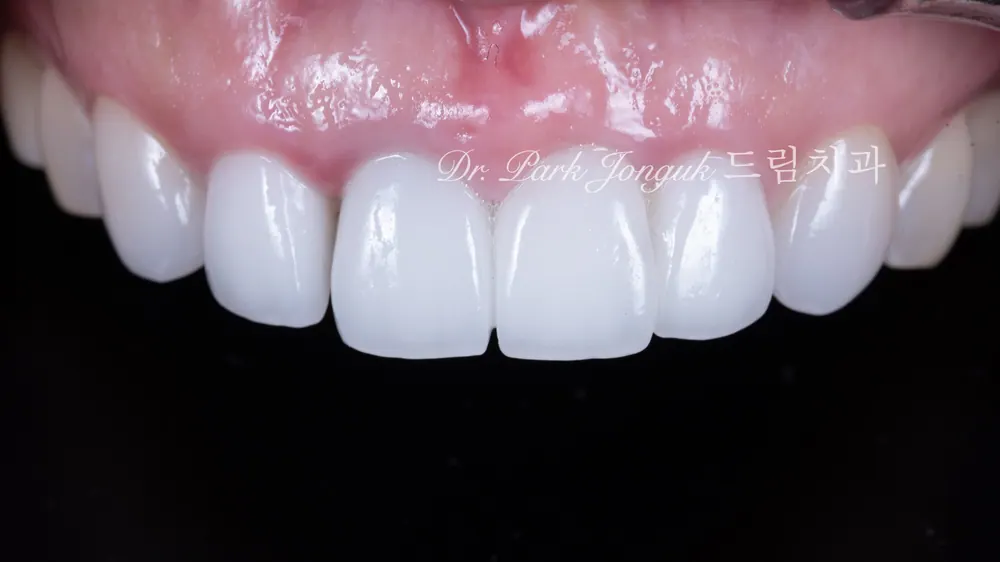
This patient came in with a complex mix of previous veneers, all-ceramic crowns, and a bridge.
The teeth had already been reduced quite extensively,
and the bridge section in particular had been made with almost no sense of separation between the teeth, which made it look unnatural.
There was a strong unnatural impression when smiling, and overall the teeth looked white but artificial.
Precision wax-up diagnosis
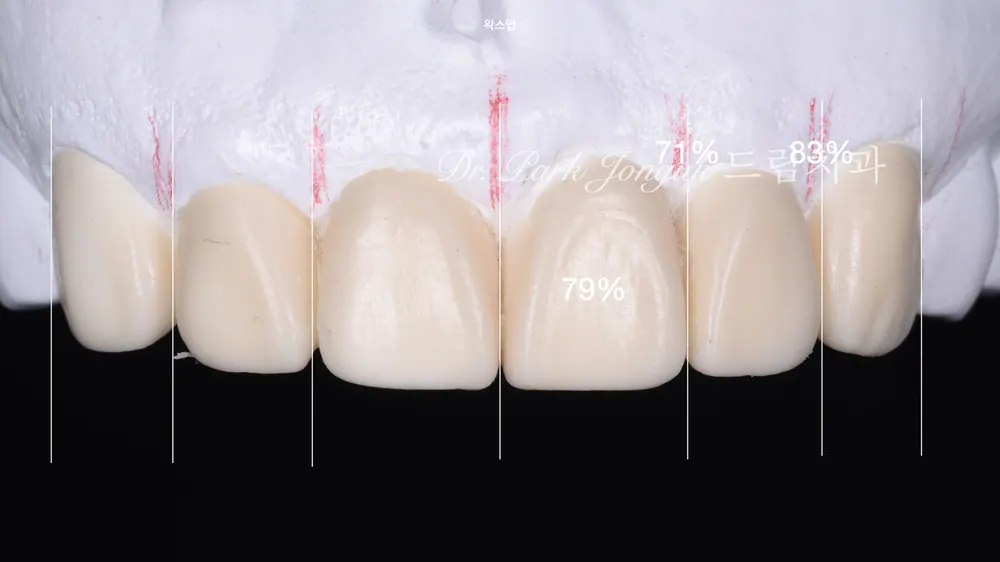
Retreatment began with a precision wax-up diagnosis.
We built the final tooth shape in wax on a model and consulted with the patient together based on it.
The wax-up allowed the patient to feel confident about the post-treatment result,
while we as the clinical team could pin down how much to reduce and the design direction.
After removing the bridge and crowns
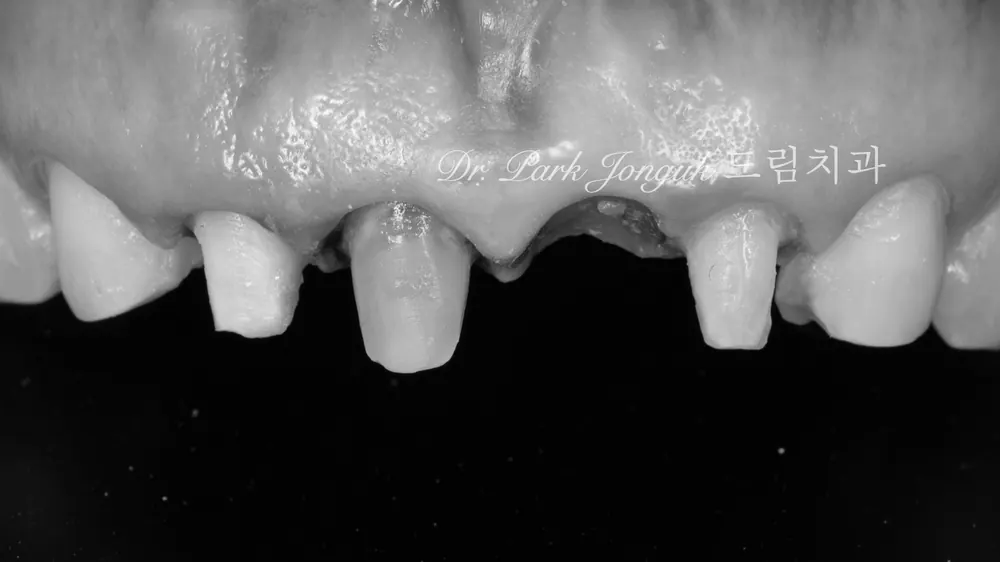
Once the existing bridge and crowns were removed,
the amount of tooth reduction turned out to be so excessive that the condition wasn't pleasant to look at.
In a case like this, tooth preservation must be the top priority, restoring aesthetics with only minimal additional reduction.
Temporary teeth
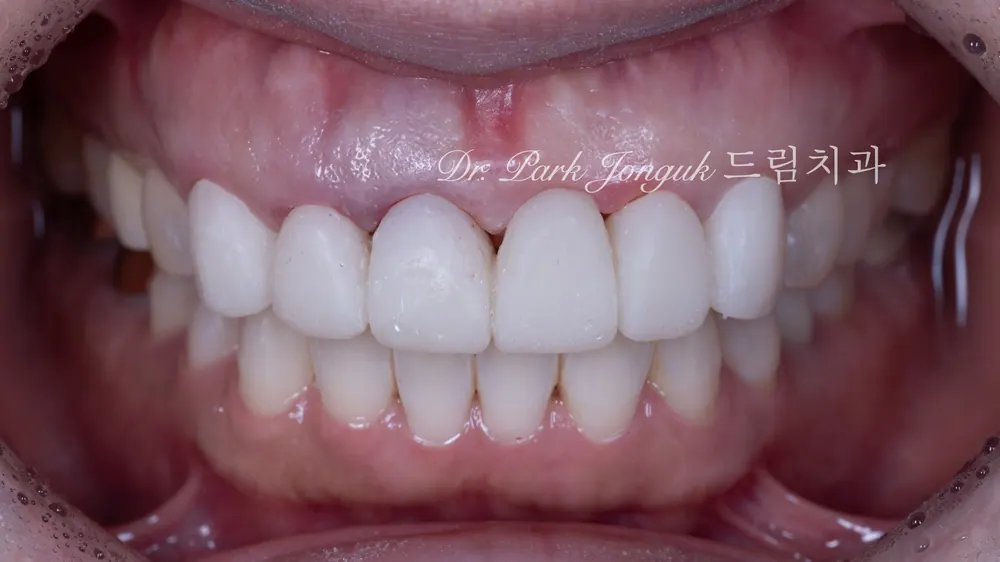
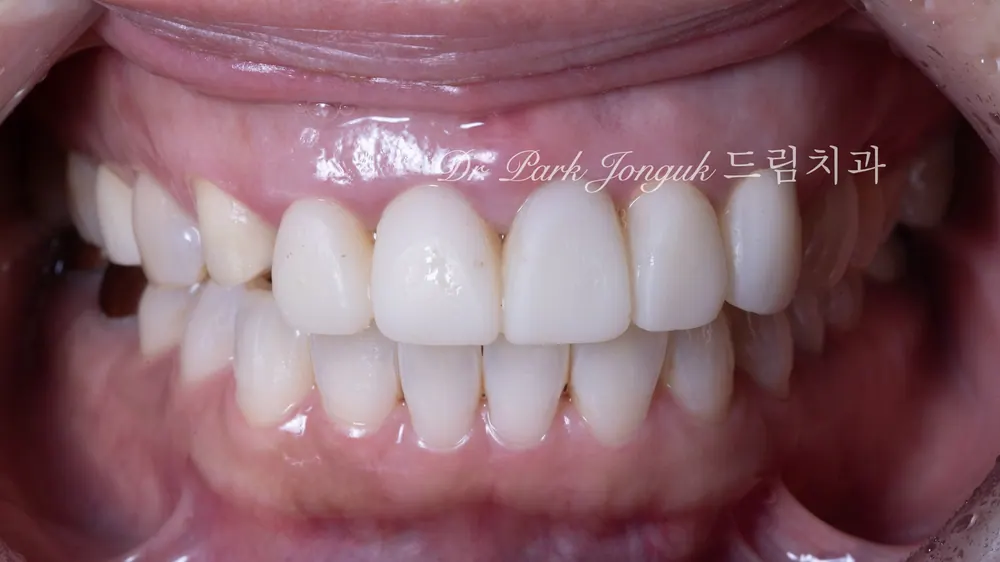
Temporary teeth were fabricated and fitted. The first photo shows the state right after fitting, and the second photo shows the gums about 2 weeks later, once stabilized.
During the temporary-tooth stage, we consulted closely with the patient about shape, size, and proportion, fine-tuning things so the final result would come out looking natural.
After final treatment
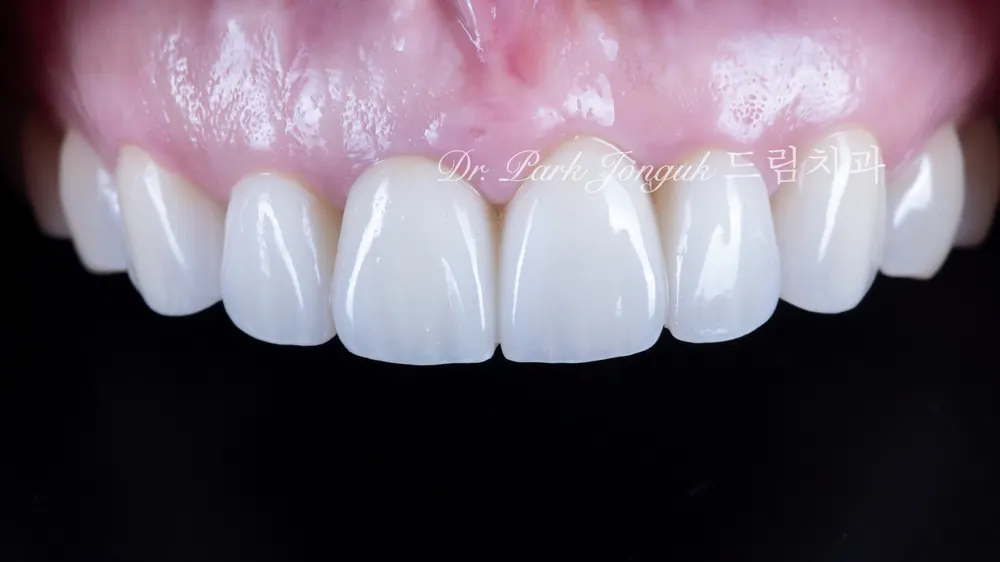
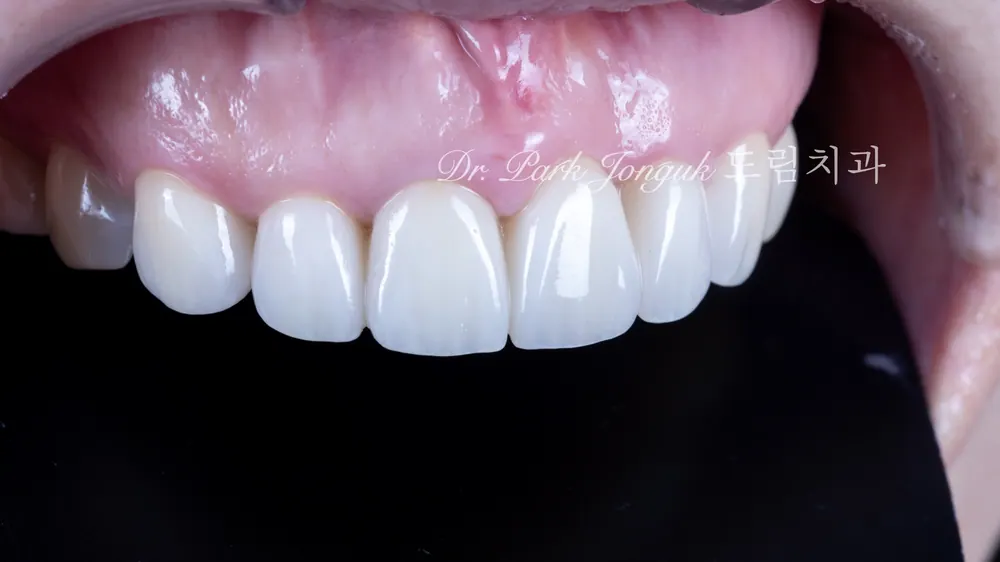
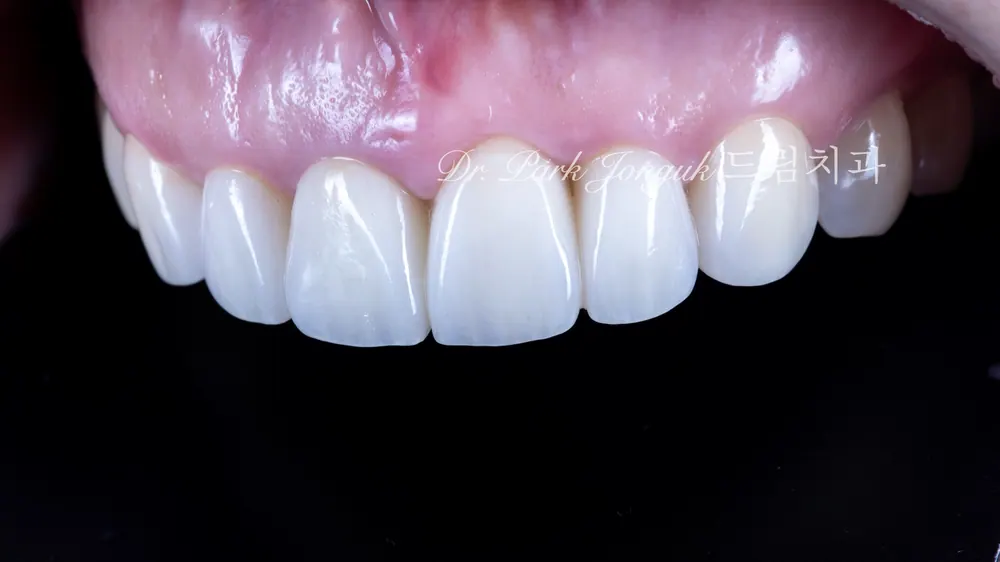
The finally completed veneers and restoration came together as natural front teeth with living translucency and dimensionality.
The previous unnatural, artificial feel disappeared, the teeth and gums harmonized well, and the patient showed a great deal of satisfaction.
Case 2. Over-Reduced Veneers
Before treatment
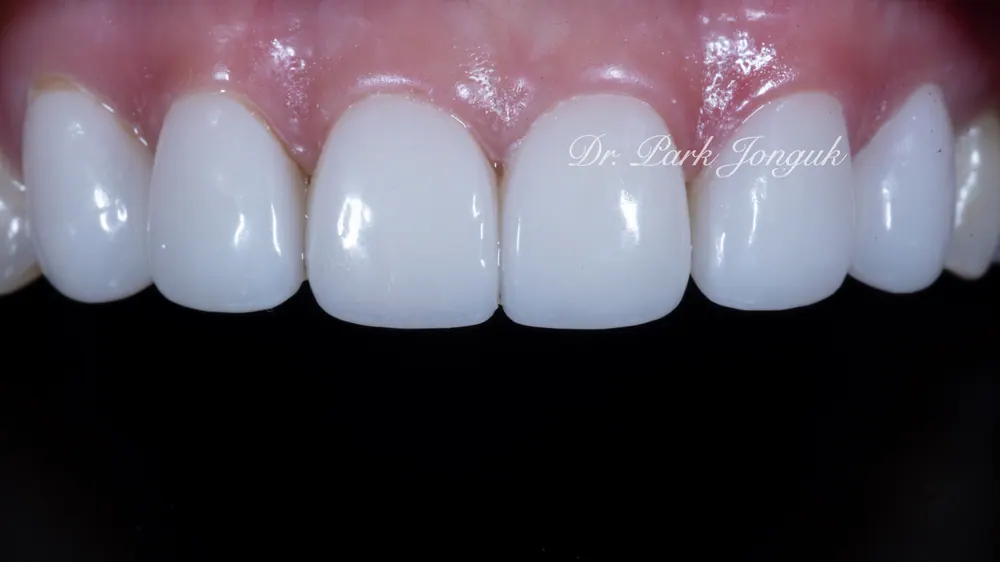
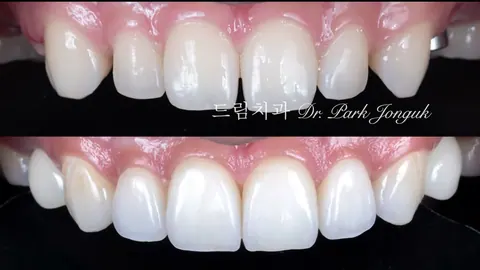
This patient came to us because of existing veneers.
The teeth had been made too white and opaque, so the shade didn't match the surrounding teeth at all.
On top of that, excessive tooth reduction had occurred during the veneer process, and the patient had been suffering from severe sensitivity ever since.
The condition was unsatisfactory both aesthetically and functionally.
Precision wax-up diagnosis
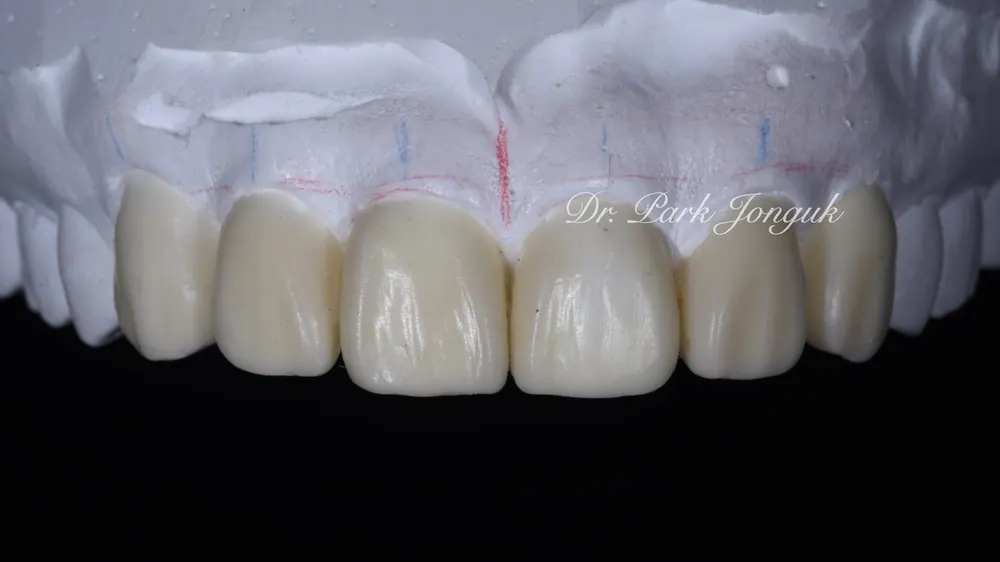
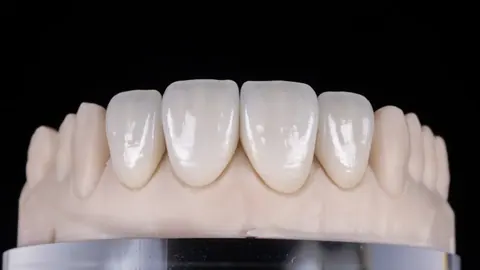
Before starting retreatment, we carried out a precision wax-up diagnosis.
We built the natural, translucent front teeth the patient wanted in wax on a model beforehand.
This let the patient preview the post-treatment result,
while the clinical team could minimize the amount of reduction and finalize the design.
After removing the existing veneers
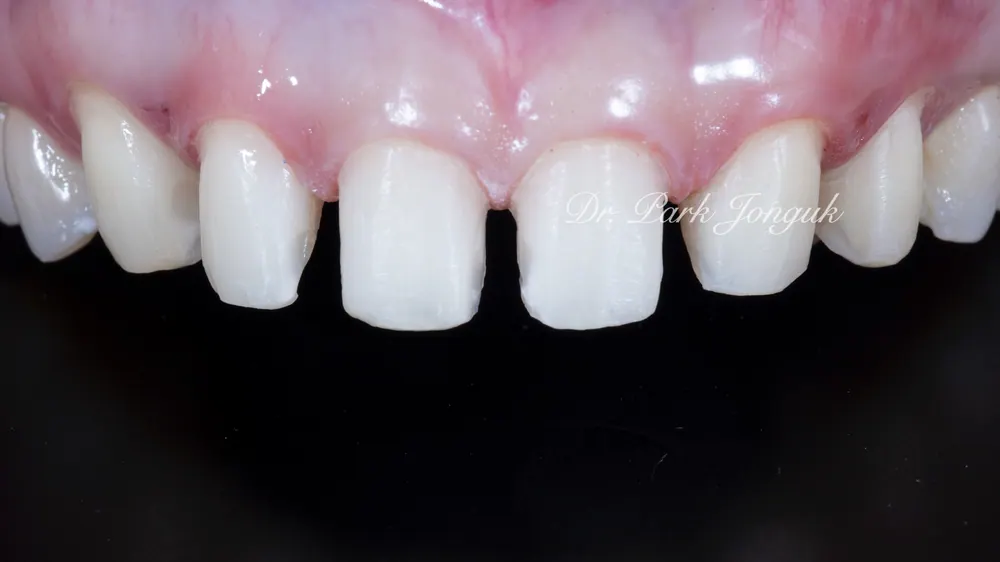
Once the existing veneers were removed, the extent of over-reduction in the teeth was fully exposed.
The excessive reduction had weakened the tooth structure, and we could confirm the cause of the sensitivity the patient had been experiencing.
At this stage, we also explained to the patient the importance of preserving tooth structure.
After final treatment
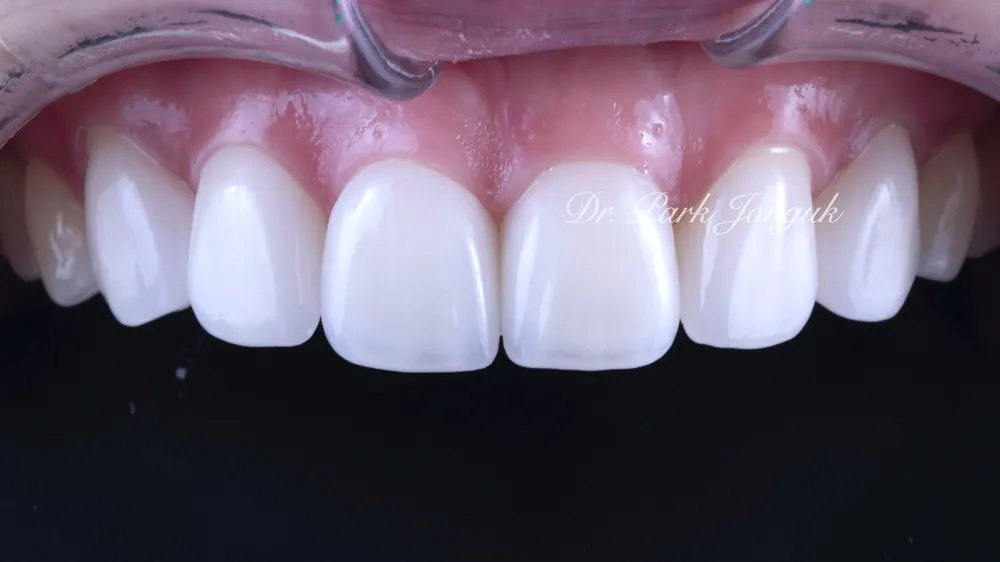
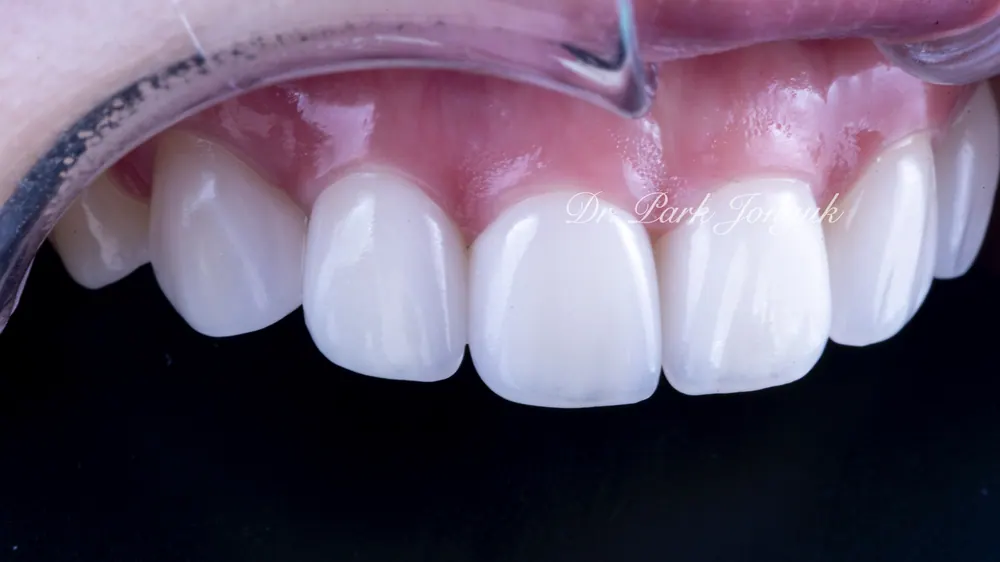
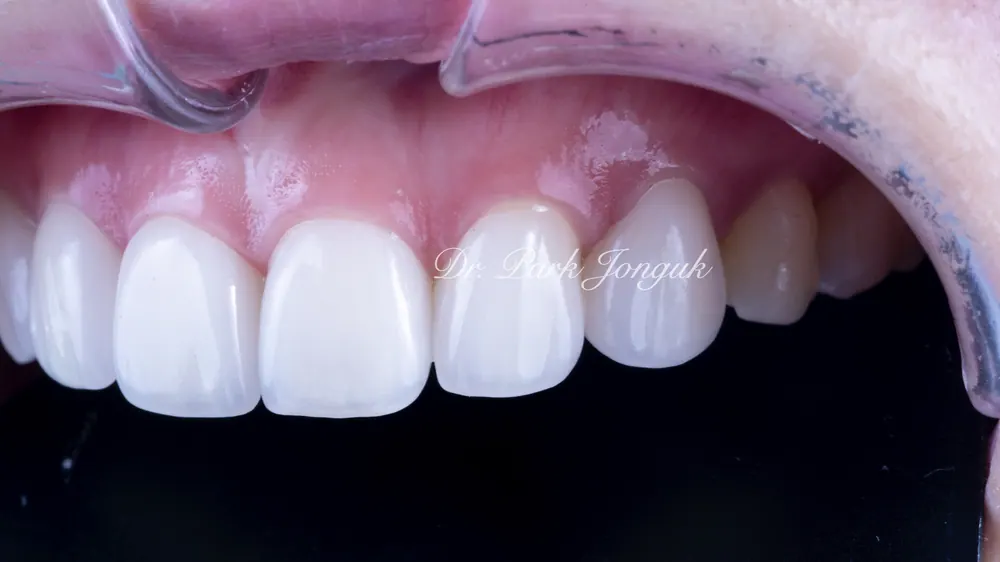
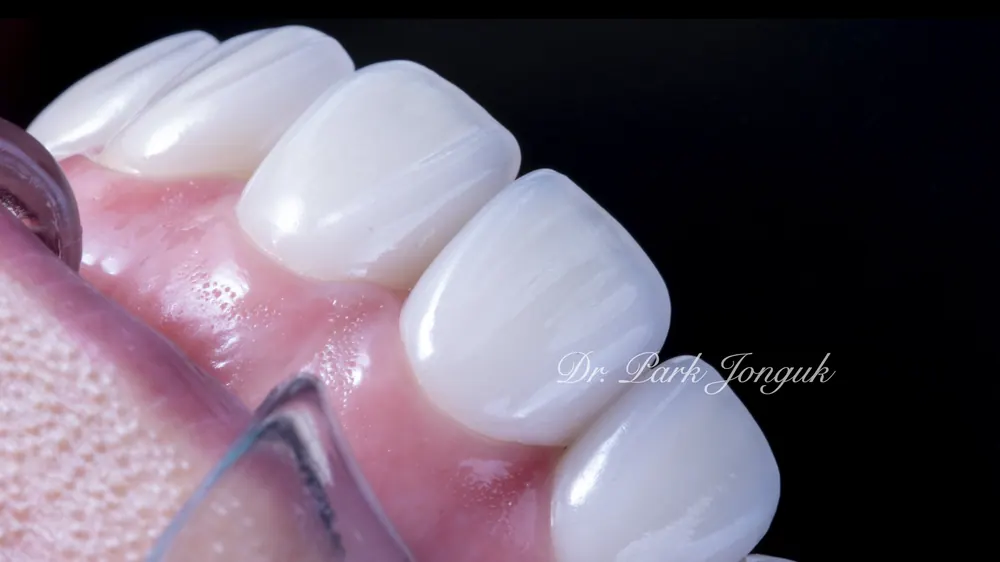
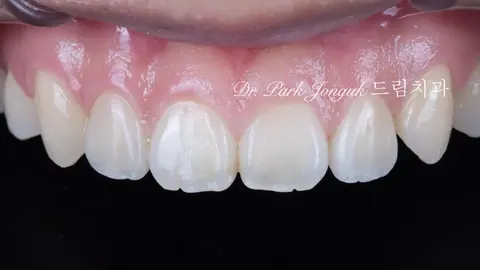
The newly fitted veneers were natural front teeth with living translucency and dimensionality.
They looked distinctly different from the previous opaque, artificial teeth, and blended well in shade with the surrounding teeth.
Above all, because the work was finished with only minimal adjustment and no further excessive reduction, the patient was freed from the sensitivity as well.
The sensitivity was completely gone after retreatment.
Smile photo
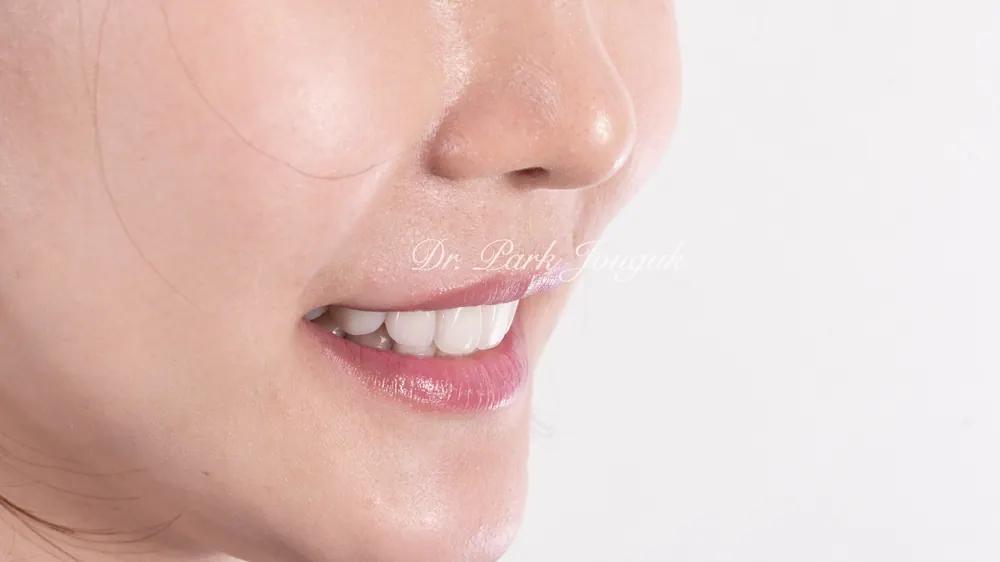
Looking at the patient's smile photo after treatment, the natural, beautiful harmony is immediately apparent.
Previously, every smile carried a strong unnatural, artificial impression, but now it has changed into a comfortable, attractive smile.
It was a result that restored both aesthetics and function at the same time.
In this case, the existing veneers had been made too opaque and white, which was not only aesthetically unnatural but had also caused the patient sensitivity due to excessive reduction. During retreatment, we avoided any further unnecessary reduction and focused, through wax-up and precision diagnosis, on preserving the teeth as much as possible while restoring a natural look.
In the end, the newly fitted veneers came out as front teeth with living translucency and dimensionality, and the patient's smile became far more natural and attractive. This case shows that what matters in veneer treatment isn't simply making teeth white — tooth preservation and natural harmony must be considered together.
Q&A
Q1. Is retreatment possible even when existing bridge and veneers are mixed together?
A. Yes. Even in cases with a great deal of tooth reduction, safe retreatment is possible through precision diagnosis and a temporary-tooth process.
Q2. Why do opaque veneers look artificial?
A. Because a lack of translucency and dimensionality makes the tooth look flat, preventing it from harmonizing with natural teeth.
Q3. Is there significant tooth damage when removing existing veneers or crowns?
A. Using methods such as laser removal can reduce unnecessary damage and allow safe removal.
Q4. What is the standard for a natural-looking veneer?
A. A natural veneer is one where translucency, dimensionality, and shade harmony with the surrounding teeth are all present, making it hard to distinguish from a real tooth.
This article is a clinical note written by Dr. Park Jonguk of Dream Dental Clinic, Gangnam; the original was published on his blog. The photographs shown are real cases he treated. Results vary with each patient’s condition, and every procedure carries the possibility of individual variation and side effects.
Quick Consult
Request a Callback
Leave your number and we will call you back during clinic hours.
Request Received
We will contact you during clinic hours. For urgent matters, please call +82-2-3448-0028.