
Buck Front Teeth Veneer Treatment: A Natural Result Through Minimal-Reduction Precision Diagnosis
Front-tooth veneers draw more attention than almost any other cosmetic dental treatment.
Because the front teeth are the first thing people notice when you smile,
even a small difference can completely change your overall impression.
This is especially true for what's commonly called "buck teeth"—when the two central incisors look large and protruded—which can easily become a cosmetic complex.
In these cases, patients often struggle to decide between orthodontic treatment and veneers.
Orthodontics can be the fundamental solution,
but many patients find it difficult because of the years spent wearing appliances, the cost, and the demands of their profession.
In this kind of situation, veneers—which can achieve a natural cosmetic improvement in a short time—can be a good alternative.
But veneers for buck-teeth-looking front teeth are not an easy case.
Making just two prominently large teeth look natural requires precisely controlling the amount of tooth reduction,
and matching the proportions, shade, and translucency with the surrounding teeth.
Without a sufficiently precise diagnosis, too much tooth structure can be removed, and the result can easily look artificial.
That's why it's essential to plan based on precise diagnosis while following the principle of minimal-reduction veneers.
Drawing on the experience we've built from thousands of veneer cases over the past 20 years,
and the expertise of having authored Korea's first veneer textbook, we provide customized veneer treatment tailored to each patient.
We also share clinical knowledge every month through lectures for fellow dentists,
applying to our patients only treatment methods that have been clinically verified.
In this article, I'll introduce the case of a patient who was troubled by buck-teeth-looking front teeth,
and show step by step how a natural improvement was achieved through minimal reduction and precise diagnosis.
Before Treatment
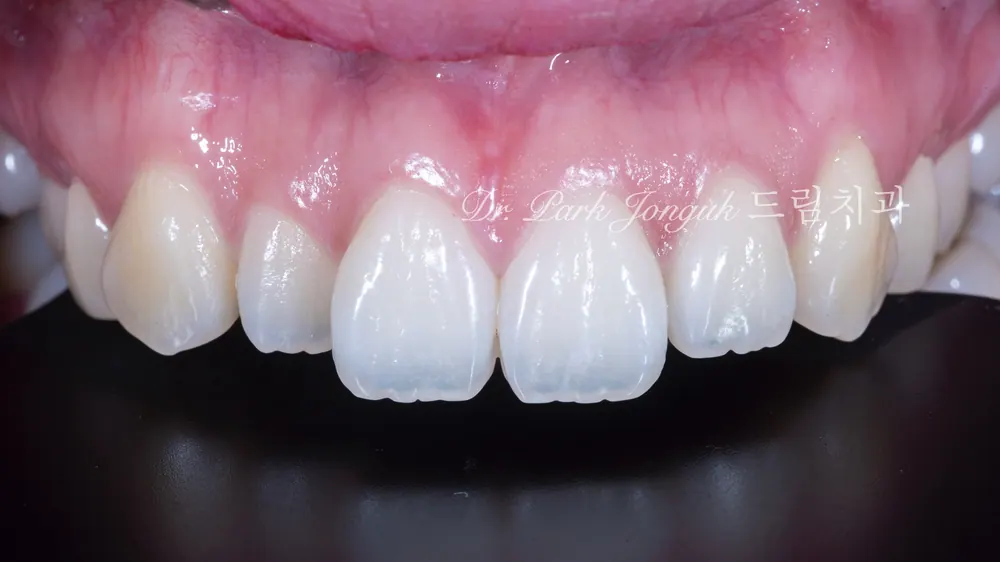
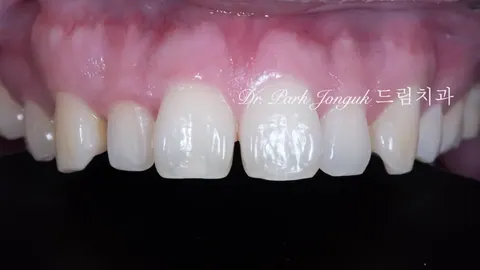
The patient's two central incisors were large and slightly protruded, giving a buck-teeth-like impression every time she smiled.
The most fundamental solution would have been orthodontics, but due to time and financial constraints, the patient wanted a faster improvement rather than braces.
So we chose front-tooth veneer treatment.
Wax-Up Precision Diagnosis
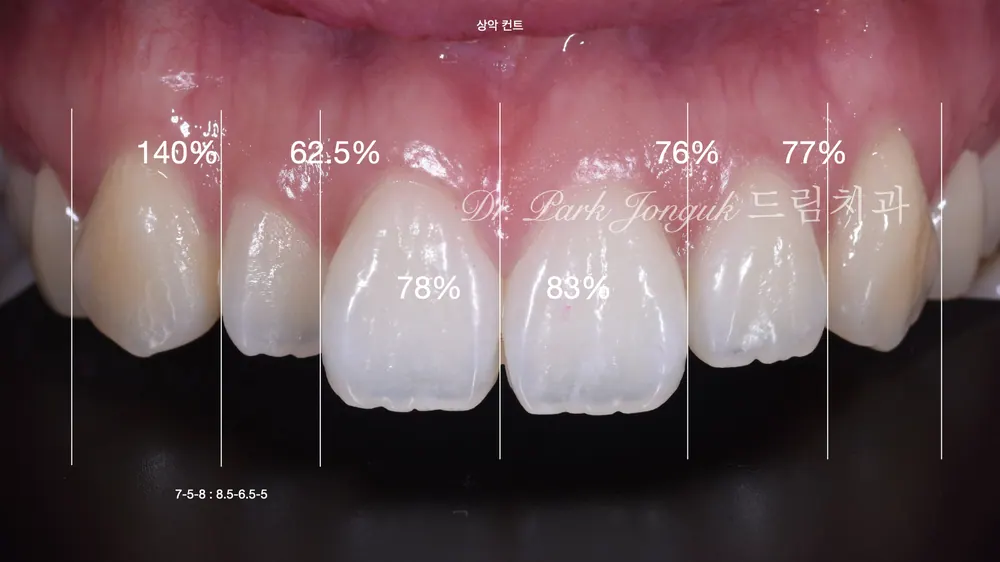
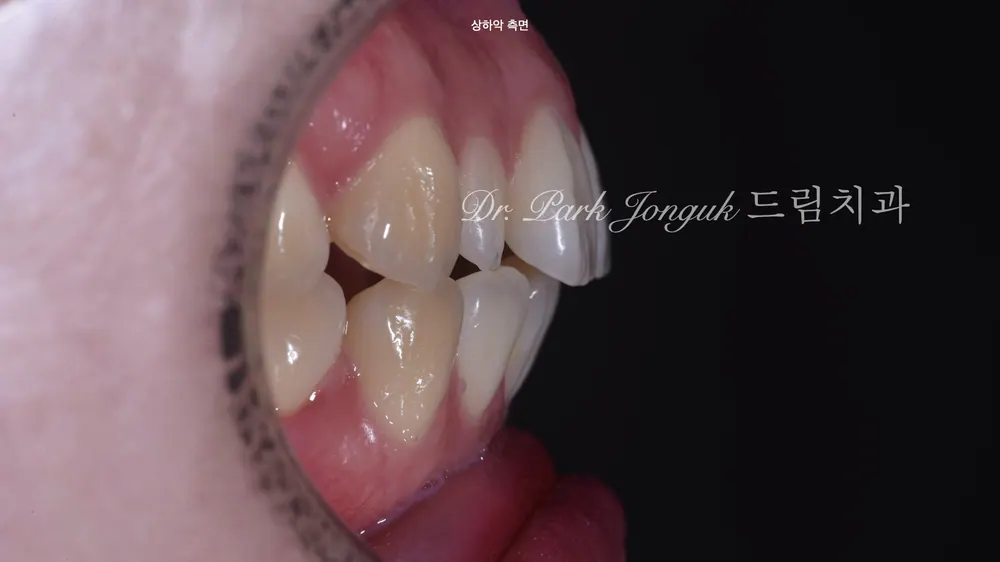
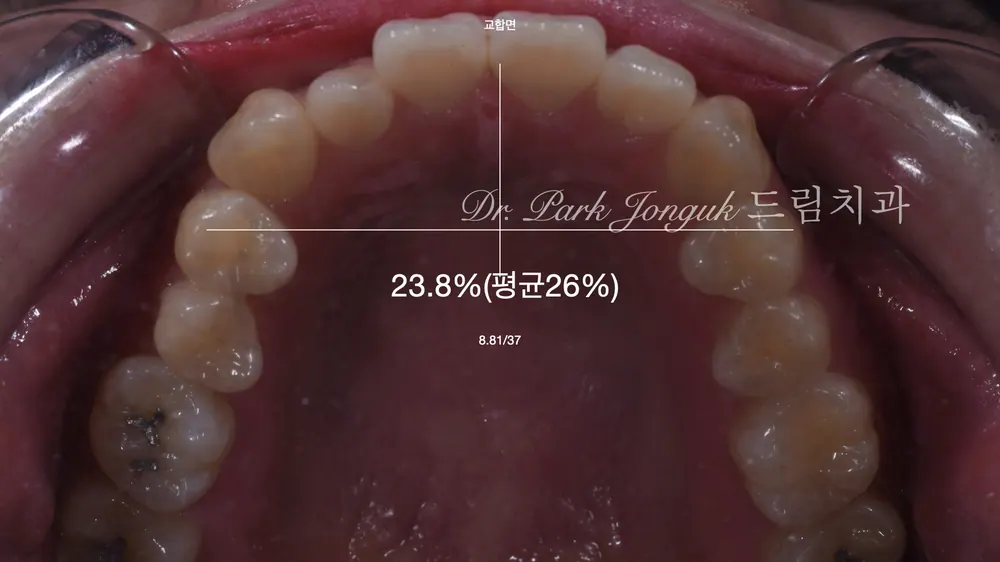
The most important element in veneer treatment is precise diagnosis.
Rather than reducing the teeth right away, we go through a wax-up process that simulates the final shape and proportions.
Wax was built up on the model to reproduce the expected shape, and we consulted with the patient while showing the anticipated result in advance.
For this case, we decided to apply veneers not only to the upper arch but the lower arch as well, to achieve overall harmony.
Condition of the Lower Teeth
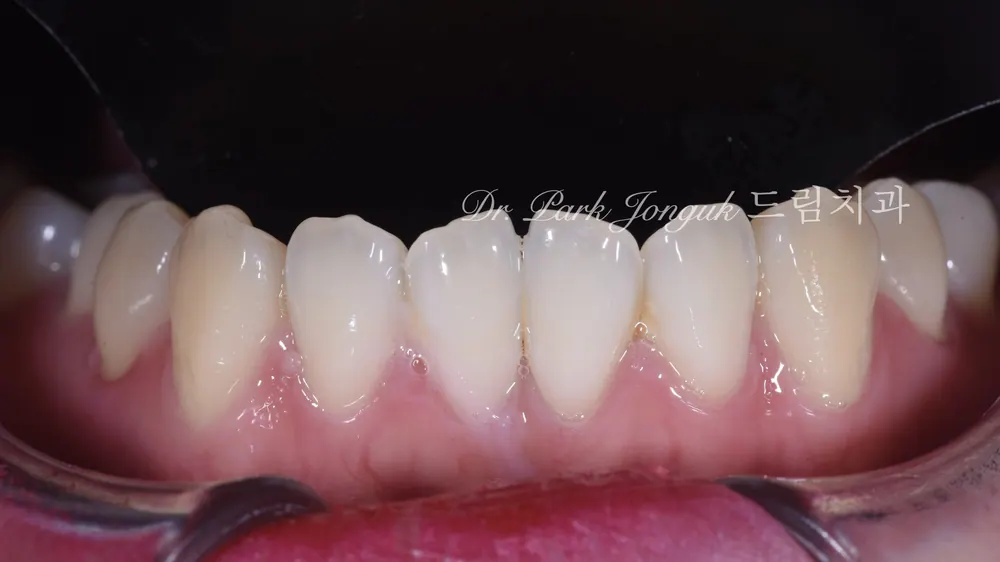
The lower front teeth also needed improvement.
Treating only the upper arch could look unnatural, so we secured overall balance and esthetics with simultaneous upper and lower veneers.
Wax-Up Result
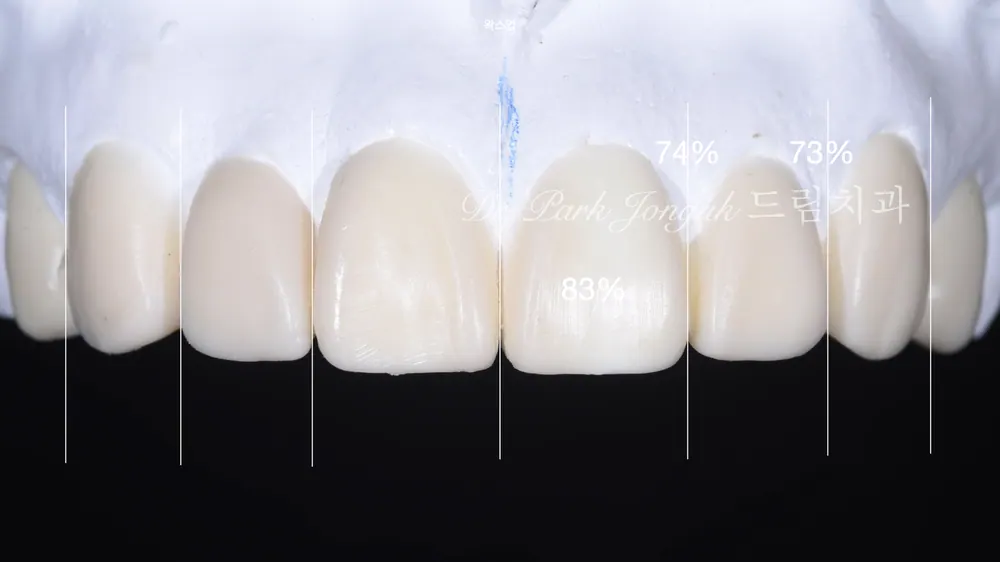
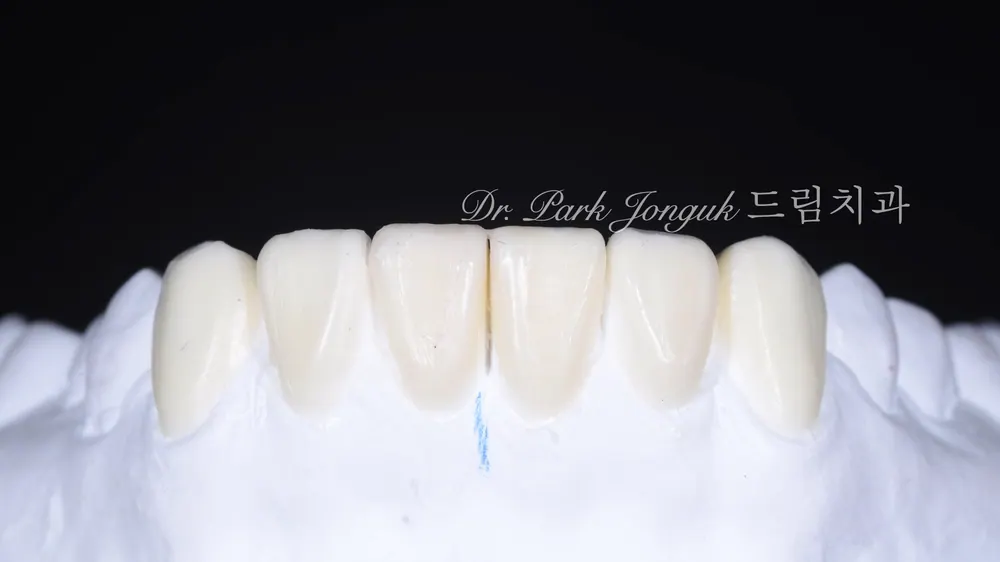
Through the completed wax-up model, the patient could directly see what the result would look like after treatment.
The clinical team was able to finalize the amount of reduction and the final design, and the patient and clinical team decided on the treatment direction while sharing the same picture.
3D Scan
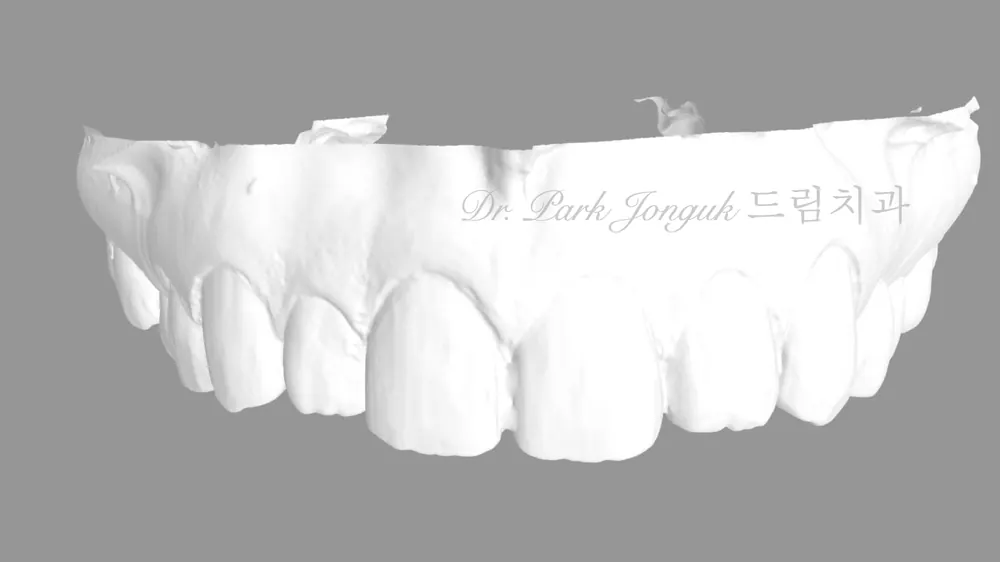
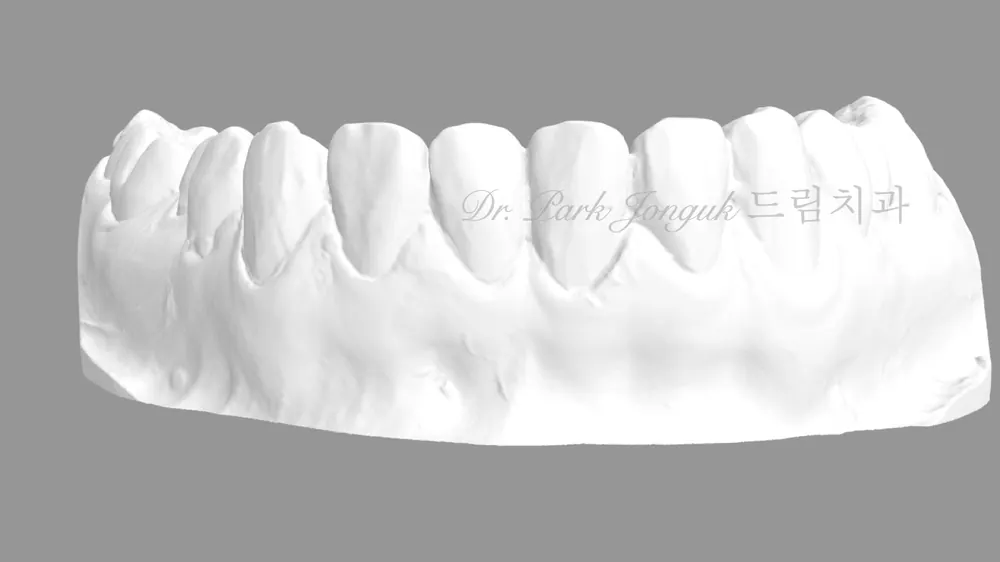
We show the patient the expected amount of tooth reduction. Consulting this precisely with the patient before treatment is essential.
We were able to precisely analyze the amount of reduction and the fit of the final restoration, reducing unnecessary reduction and upholding the minimal-reduction veneer principle.
Actual Tooth Reduction
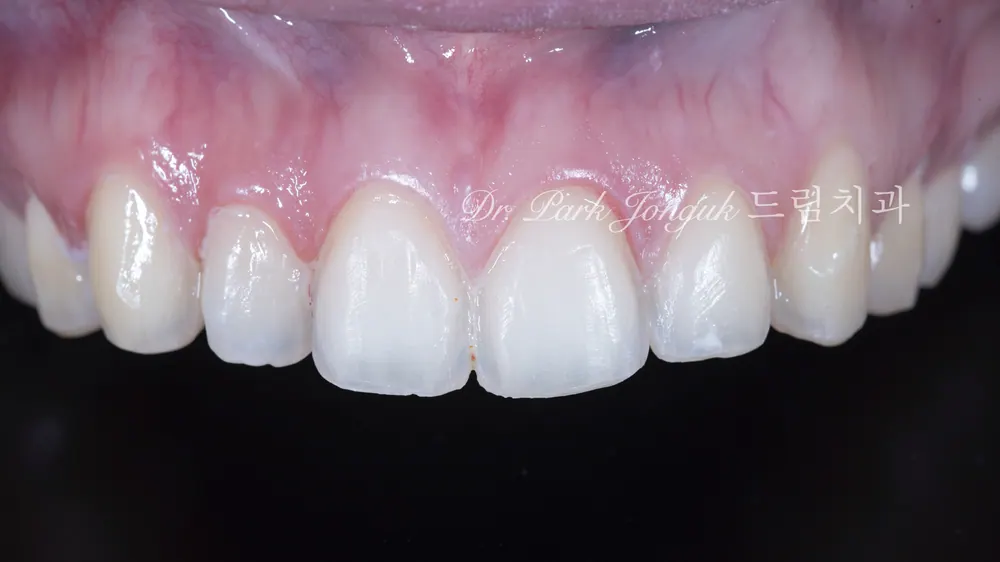
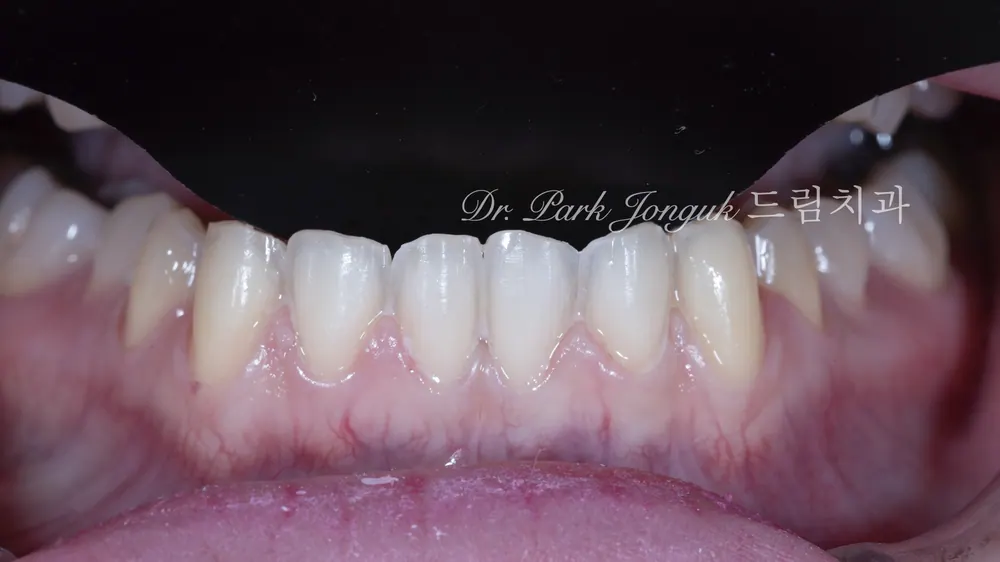
The actual tooth reduction was carried out precisely, based on the simulation.
Reducing prominent buck-teeth-like front teeth carelessly can easily cause greater damage,
so we proceeded safely, adjusting only the minimum necessary based on the precise diagnosis.
The Temporary Veneer Stage
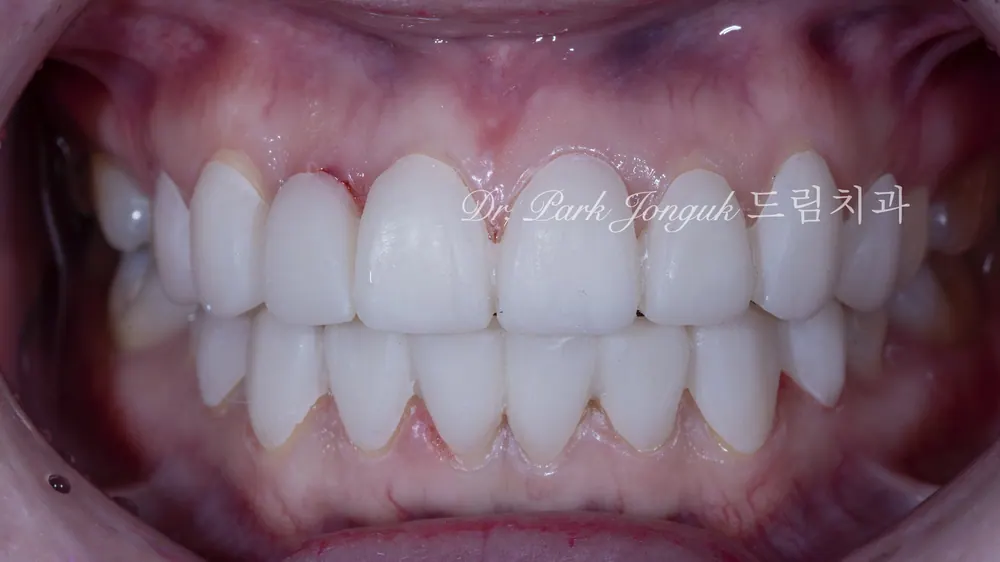
An essential step in veneer treatment is fabricating temporary veneers.
Before the final restoration is placed, this stage lets the patient experience the shape, size, and proportion of the teeth directly in daily life.
In this case as well, we fabricated temporary veneers and fitted them to the patient before the final veneers were bonded.
This lets the patient check a state similar to the actual post-treatment appearance in advance, and evaluate whether the esthetic result matches what she wanted.
With the temporary veneers in place, the patient and I looked in the mirror together and discussed in detail whether the shape looked natural, whether the length harmonized with her face, and what impression the teeth gave when she smiled. Sufficient discussion at this stage is necessary for the final result to match the patient's expectations.
In the end, the temporary veneer stage isn't simply a placeholder before the final restoration—it's an important trial stage that determines the final veneer result.
After Treatment and One Year Later
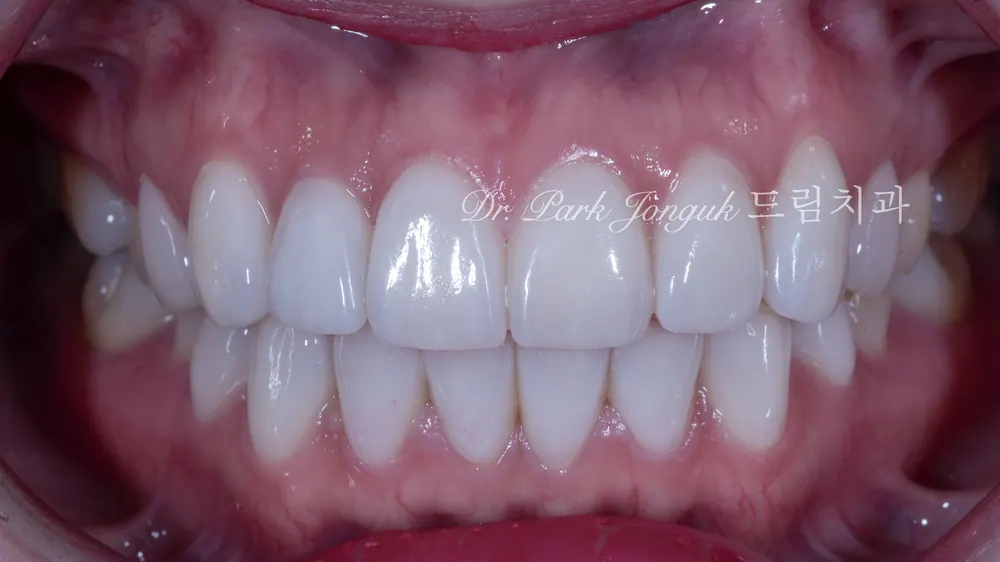
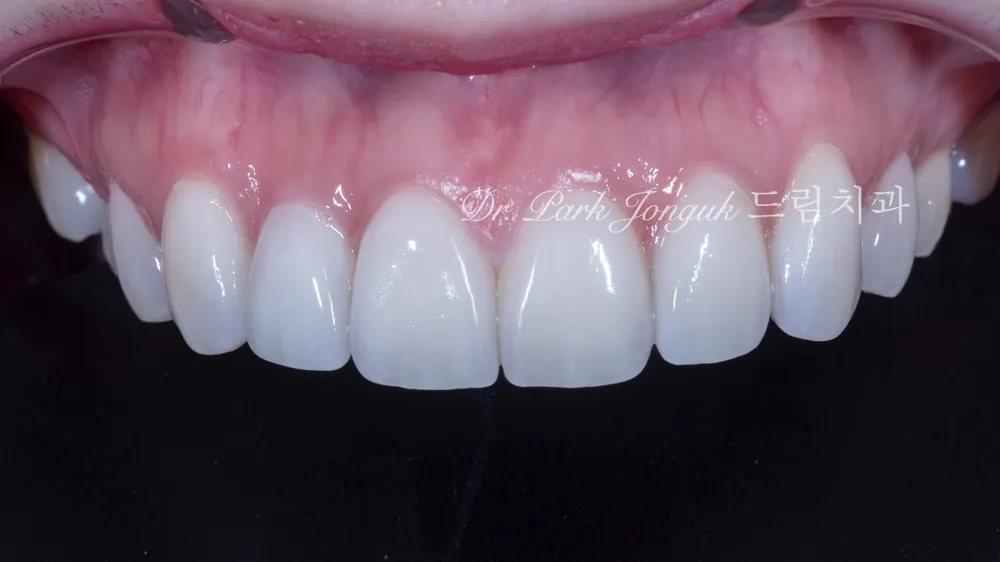
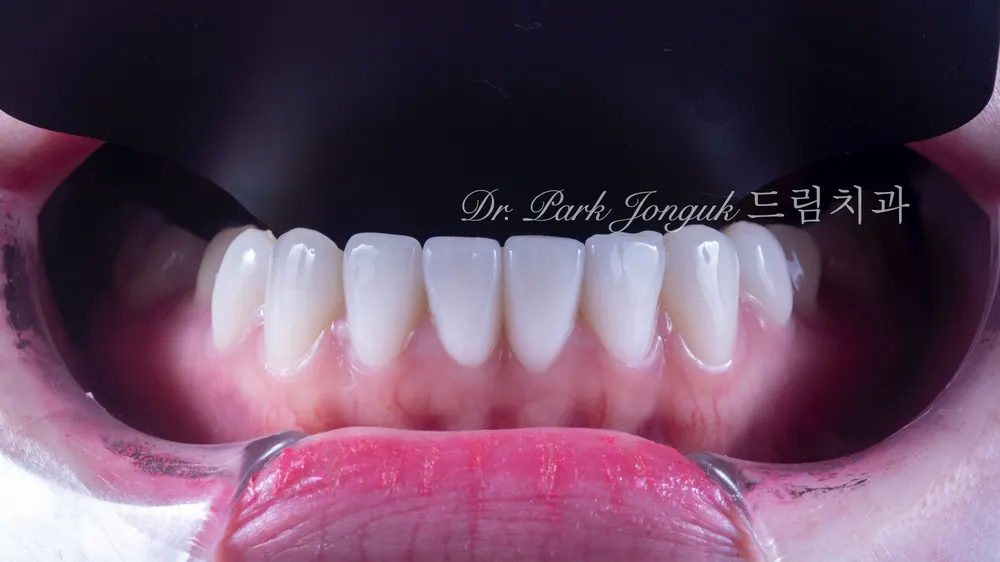
The final veneers were completed as natural, harmonious front teeth.
The protruded, buck-teeth-like impression was resolved, and the smile became softer and more balanced.
That said, it's important to note that in a case like this, proceeding without precise diagnosis can lead to excessive reduction.
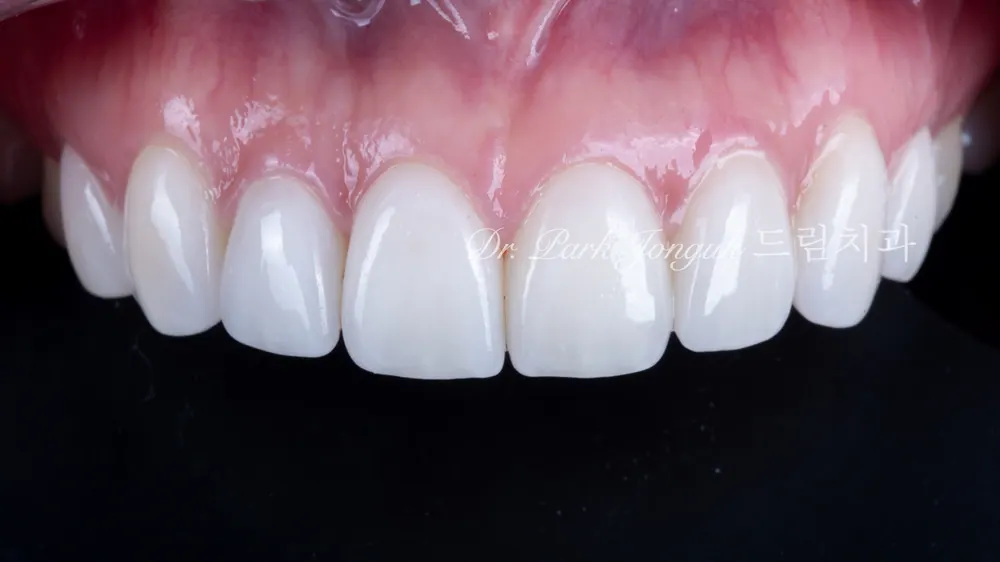
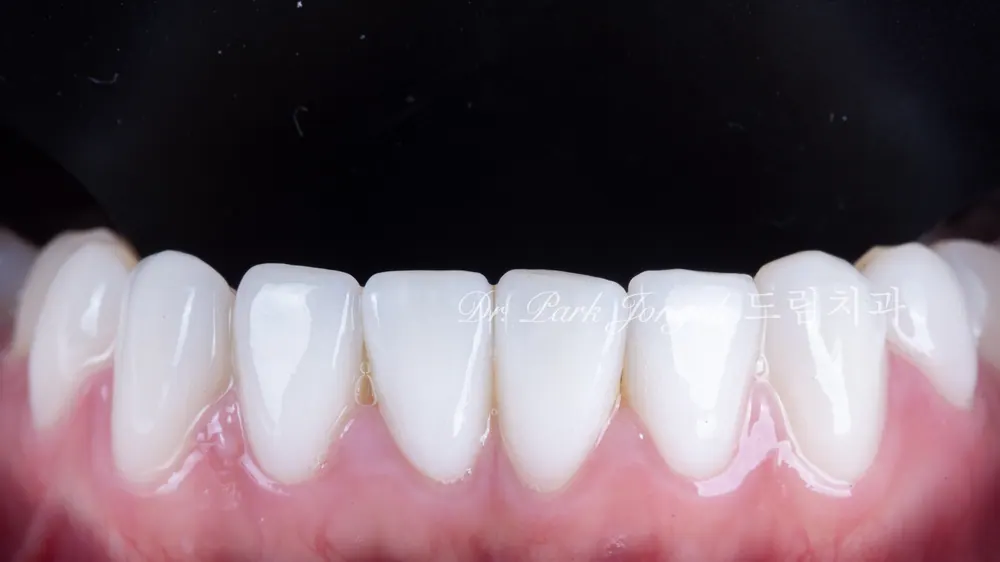
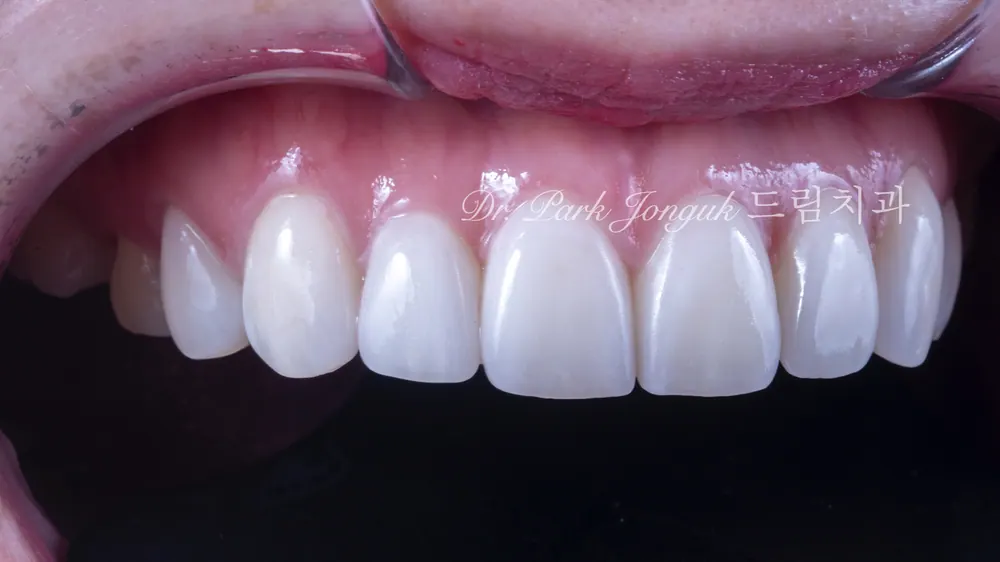
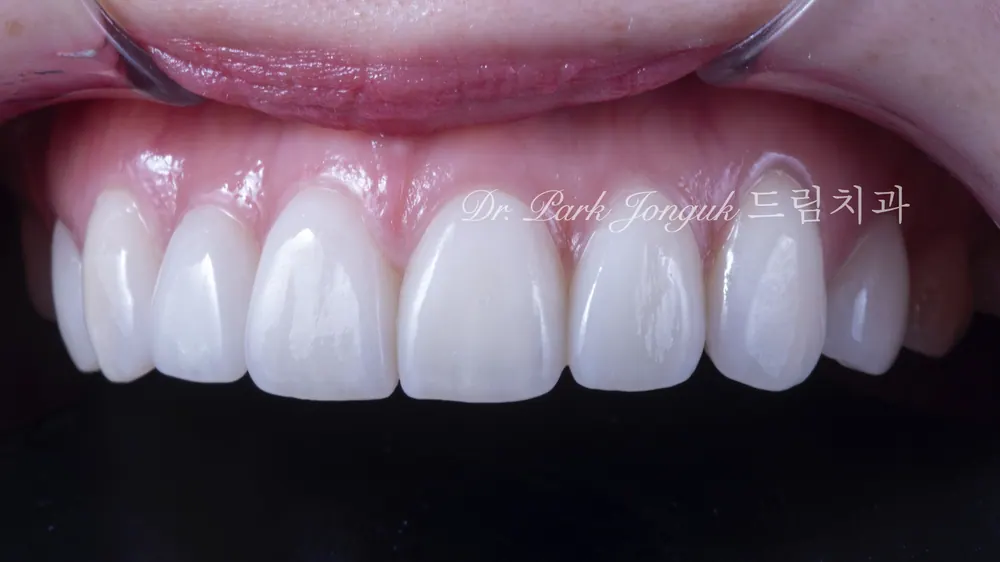
The last two photos show the result one year after treatment.
The veneers remained stably in place, and the natural, beautiful result was well maintained. The patient was also very satisfied with the outcome.
Even front teeth that look like buck teeth can be improved naturally enough with veneers, without orthodontics.
However, this type of case is especially demanding—only by going through precise diagnosis, wax-up, 3D simulation, and a temporary-veneer stage can you minimize reduction while achieving a stable, esthetic result.
Through 20 years of experience and a proven treatment process, our clinic continues to create natural, beautiful results while preserving the patient's own teeth.
Q&A
Q1. Can front teeth that look like buck teeth be treated with veneers?
A. Yes. Orthodontics can be the fundamental approach, but if precise diagnosis and the minimal-reduction principle are followed, veneers can also achieve a sufficiently natural result.
Q2. Why is diagnosis so important for buck-teeth veneers?
A. Proceeding without a diagnosis can lead to excessive reduction and greater tooth damage. Planning minimal reduction through wax-up and 3D scanning is essential.
Q3. Why are temporary veneers necessary?
A. The temporary-veneer stage lets the patient check the shape and proportions while actually living with them, and adjust anything she wants changed—making it a key step in maximizing final satisfaction.
Q4. How long do veneers last?
A. With the right diagnosis, treatment, and regular maintenance, veneers can remain natural and stable for many years. In this case as well, the result was confirmed to still look beautiful one year later.
This article is a clinical note written by Dr. Park Jonguk of Dream Dental Clinic, Gangnam; the original was published on his blog. The photographs shown are real cases he treated. Results vary with each patient’s condition, and every procedure carries the possibility of individual variation and side effects.
![[Peg Lateral Veneers] From a Strong-Looking Impression to a Soft, Feminine Smile — The Esthetics of Front-Tooth Veneers](/column-media/224178565168/thumb.webp)
Quick Consult
Request a Callback
Leave your number and we will call you back during clinic hours.
Request Received
We will contact you during clinic hours. For urgent matters, please call +82-2-3448-0028.