
Naturally Retreating Artificial-Looking, Awkward Veneers
Hello. I'm Park Jonguk, director of Dream Dental Clinic.
Patients who come in for veneer retreatment
have all kinds of reasons.
Sometimes it's because an old veneer has cracked or come off and needs to be redone,
and sometimes it's because the teeth have shifted and the shape looks off.
Another common case
is when nothing has cracked, shifted, or come off,
but many patients want it redone simply because the shape looks far too artificial.
In cases like this,
even though it hasn't been long since the treatment,
quite a lot of patients come back to have it redone.
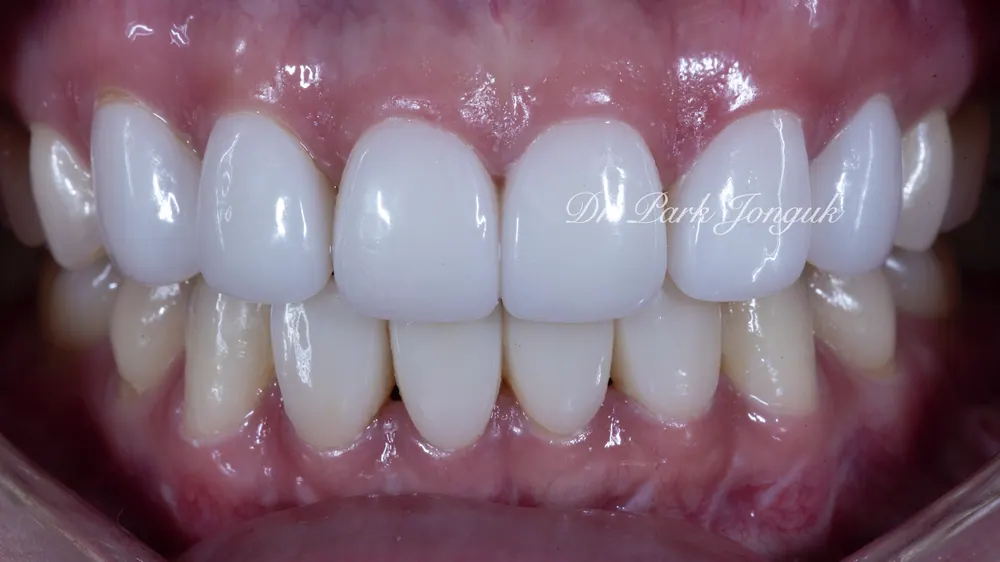
I always describe it
as looking like a strip of xylitol gum stuck onto the teeth.
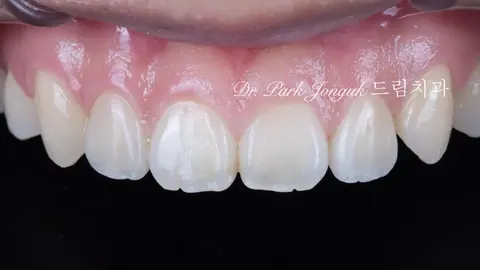
The whole tooth is opaque,
the tooth color is excessively white,
and the entire tooth is made from just one single color of veneer.
It looks far too different from a natural tooth.
When I talk with these patients,
it feels like all you can see is the teeth.
You could say the teeth look like they're floating on the face.
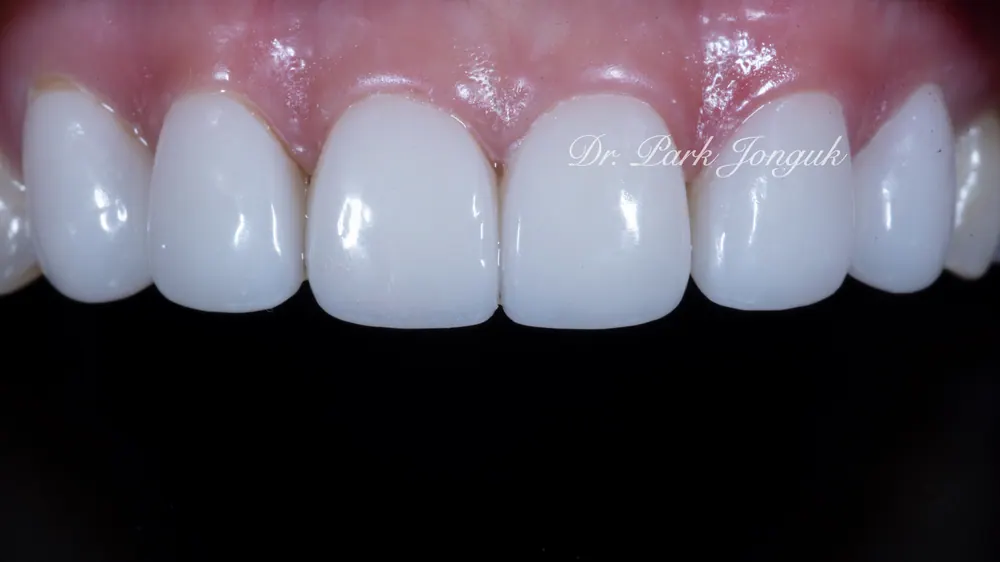
The proportion between the teeth looks awkward too,
and since the size ratio between the front teeth and the lateral incisor beside them isn't good,
the awkward feeling grows even stronger.
How can a case like this
be made to feel more natural?
The characteristics of a natural-looking tooth are:
1) The tooth's three-dimensionality
2) Expression of varied color
3) Translucency at the incisal edge
4) A natural proportion between the teeth
5) The texture of the tooth surface
6) Detailed tooth design
7) A natural connection with the gums
All of these elements need to be included.
For this, a thorough diagnosis is required.
Please see the link below for the precision diagnostic process.
For this patient, improving the tooth shape mattered,
but even though a fair amount of time had passed since her veneers were done,
she still had ongoing sensitivity,
so resolving that sensitivity was also an important issue.
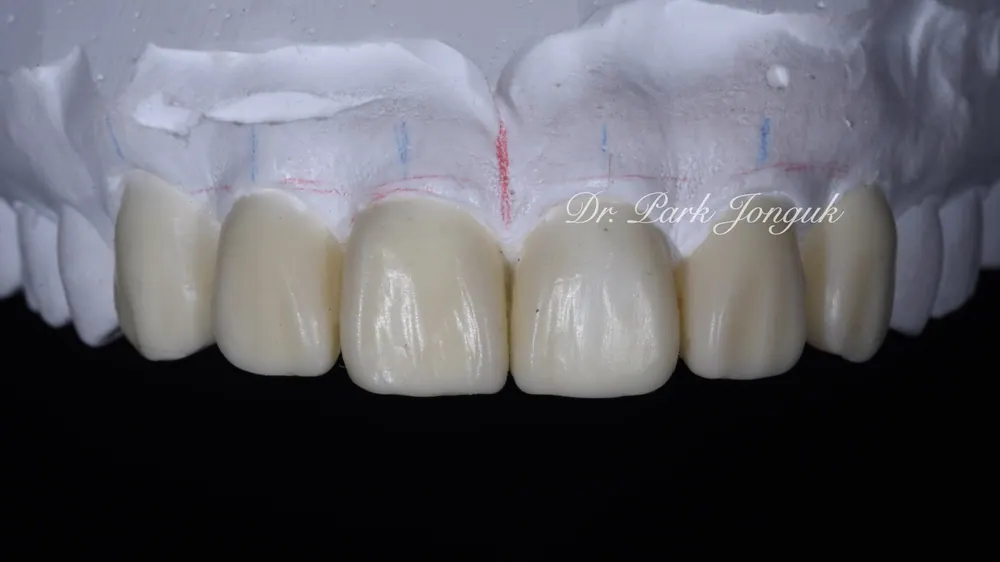
After going through the diagnostic process, we use a wax-up
to preview the tooth shape in advance.
We change the proportion between the teeth to something more natural
and fully express detailed tooth design.
After that, the existing veneers have to be removed.
Removing a veneer is a very important process.
At most clinics, veneers are simply ground off to remove them,
and in the process, the tooth can be reduced further and affected again.
To minimize any further damage that could occur to the tooth,
the veneer has to be removed carefully,
and for this, laser-assisted veneer removal is very important.
We remove the veneers using the method described above.
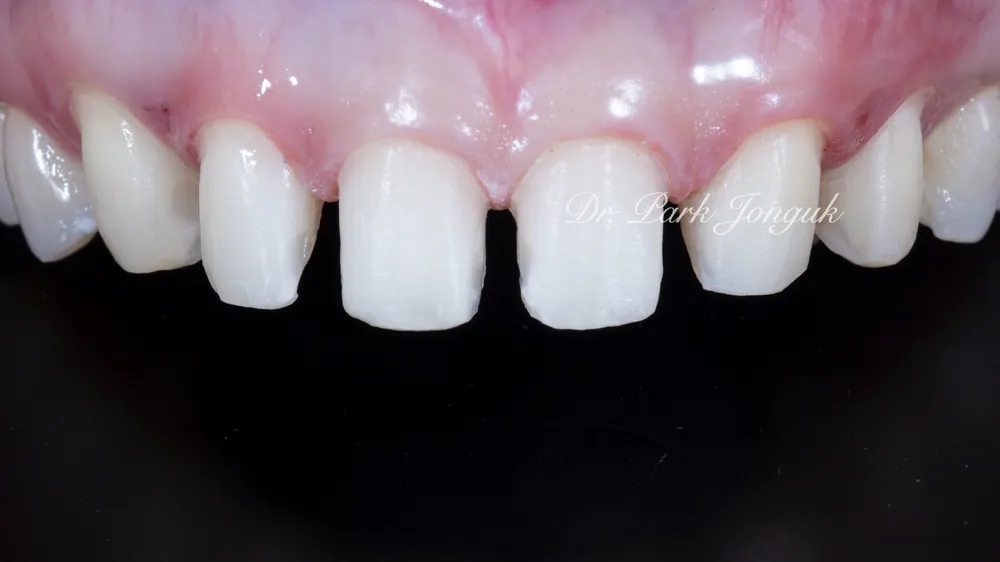
Although it's called a veneer,
in practice, the tooth had already been reduced
almost as much as for an all-ceramic crown.
It was a truly unfortunate situation.
With this much reduction already done, the tooth was bound to keep experiencing sensitivity.
To reduce that sensitivity,
very precise, accurate bonding of the veneer is essential.
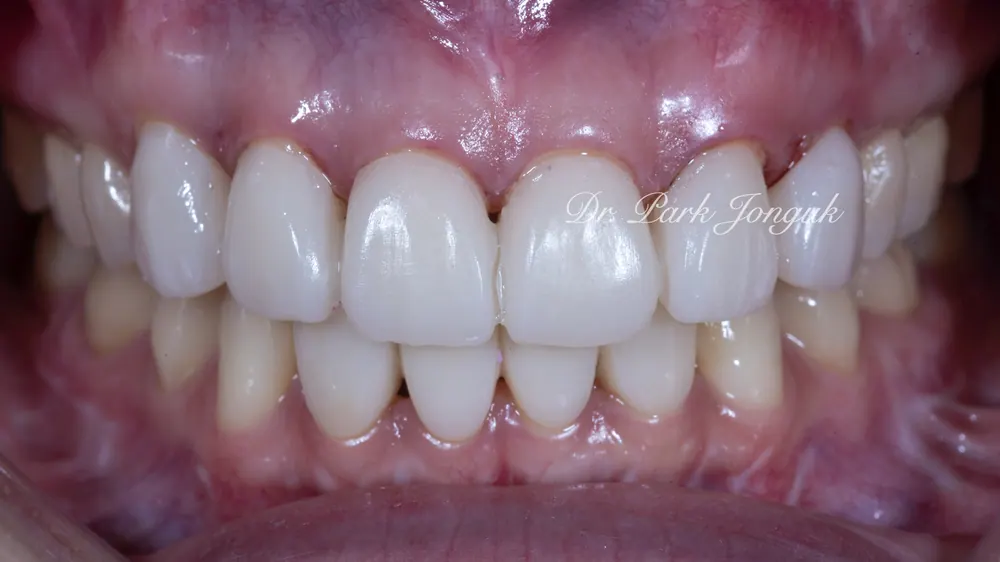
We make temporary teeth
to protect the tooth during the fabrication period for the veneer.
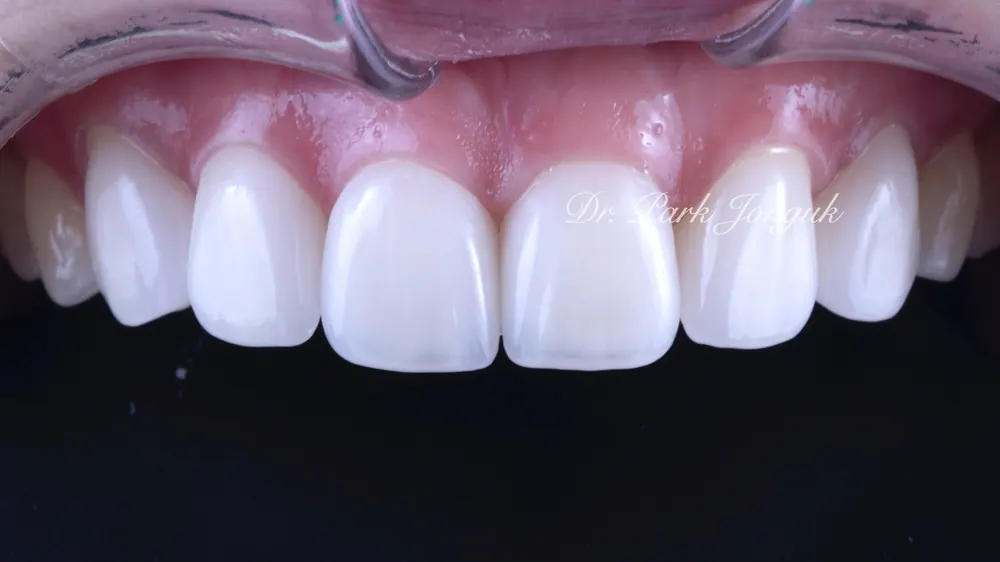
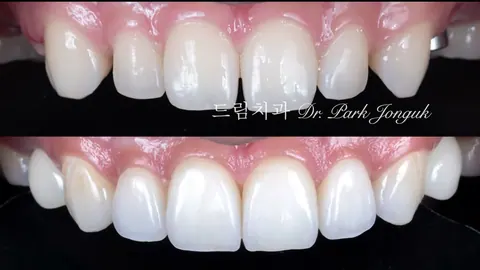
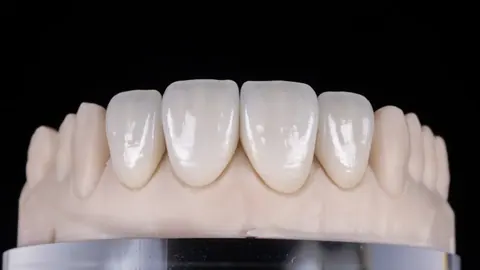
You can see a dramatically different result.
The teeth now have a natural-tooth-like sense of dimensionality
Rather than that flat, rounded,
awkward feeling,
you can see a clear sense of three-dimensionality has developed.
A translucent area is built into the incisal edge,
expressing a young, beautiful tooth.
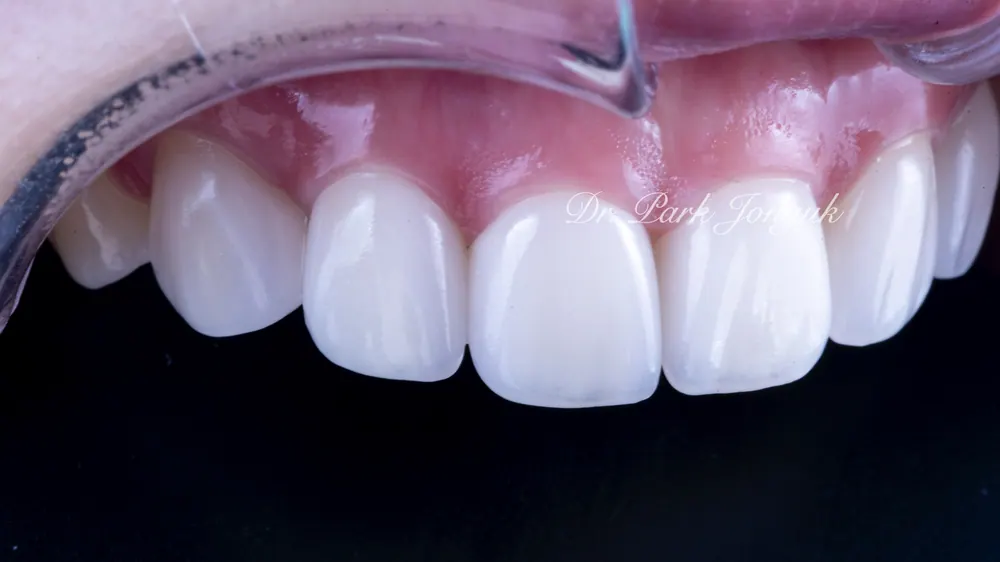
The size proportion between the teeth was arranged appropriately.
Visual proportion matters a great deal.
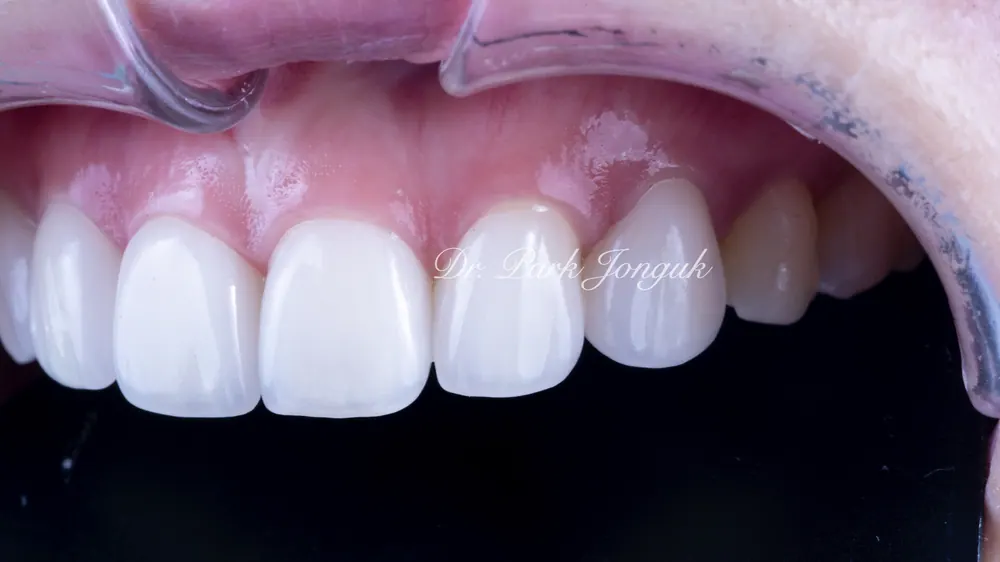
It blends naturally with the gums as well.
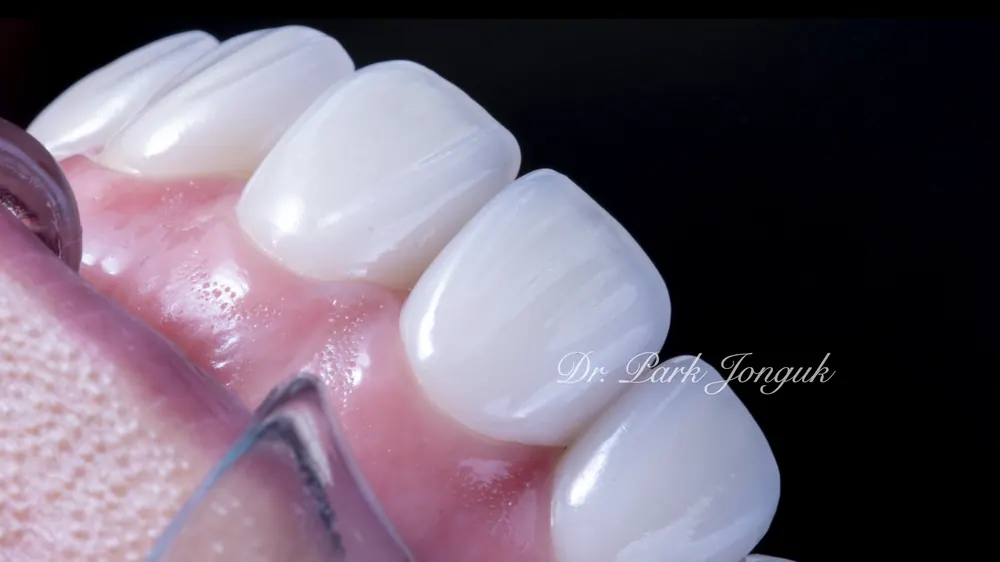
Rather than a simply smooth tooth surface,
we expressed the varied surface texture of a natural tooth.
This kind of detail is Dream Dental Clinic's biggest hallmark,
and it's the part that lets us express teeth that look truly natural.
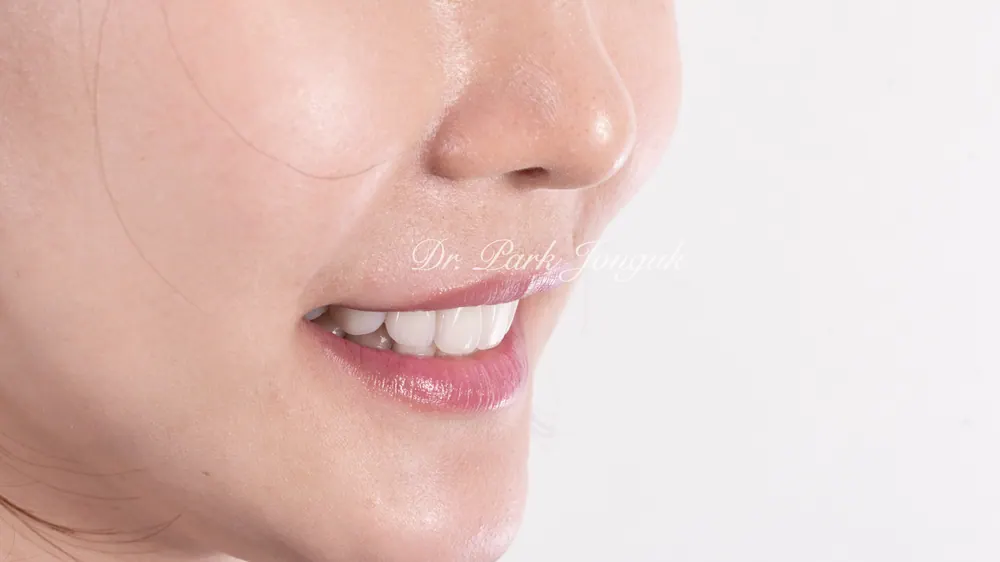
You can see it blends well with the face and the smile as well.
Small details are what make something a masterpiece.
A veneer machine-made in a single day can never come close to matching this.
Since 2006, Dream Dental Clinic
This article is a clinical note written by Dr. Park Jonguk of Dream Dental Clinic, Gangnam; the original was published on his blog. The photographs shown are real cases he treated. Results vary with each patient’s condition, and every procedure carries the possibility of individual variation and side effects.
Quick Consult
Request a Callback
Leave your number and we will call you back during clinic hours.
Request Received
We will contact you during clinic hours. For urgent matters, please call +82-2-3448-0028.