
How Front Veneers Naturally Transformed a Man in His 30s
Front teeth that still look aesthetically lacking even after orthodontics — can veneers fix that? A director with 28 years of veneer experience in Apgujeong shares a minimal-reduction front veneer case for a man in his 30s.
Aesthetics That Orthodontics Alone Couldn't Deliver
Hello. I'm a dentist who has been treating veneers in Apgujeong for 20 years.
"I've already had orthodontics, but something still feels lacking."
Many patients come in with this exact concern.
Male patients in particular don't want anything too white or artificial, but they do want a naturally polished look.
The case I'll introduce today is a male patient in his 30s,
who had already completed orthodontic treatment but still felt something was aesthetically lacking.
He wanted a more polished, refined look, and above all, he wanted a natural result achieved with minimal tooth reduction.
Issues Found at the Initial Visit
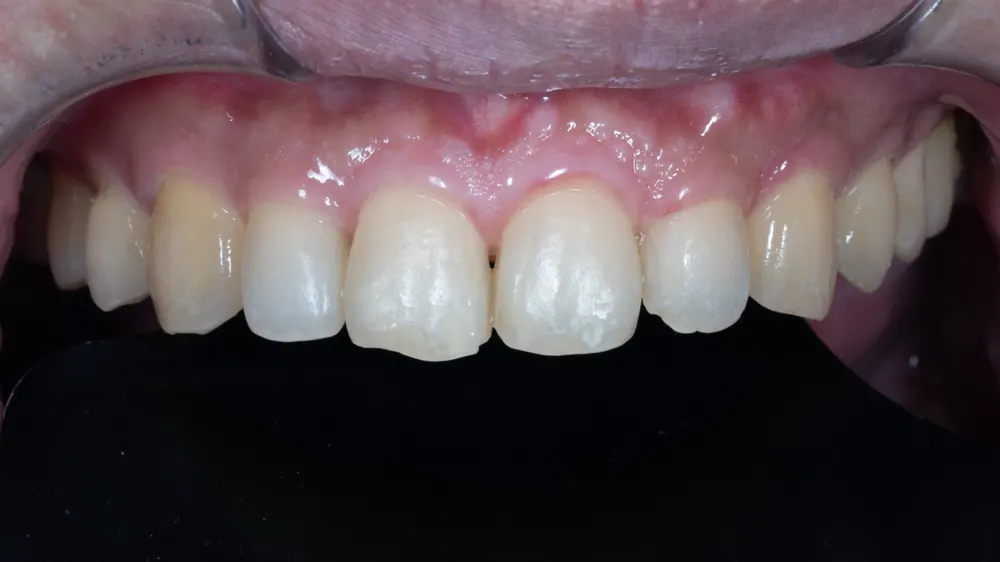
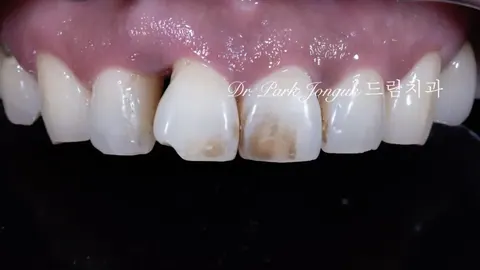
The patient's teeth were generally on the larger side, and while the alignment wasn't bad, there was a lot left to be desired aesthetically (Photo 1).
Many people misunderstand this — even alignment doesn't automatically mean attractive teeth.
Several issues were visible from the photo alone.
The shape of the teeth lacked harmony, and the color wasn't even.
The incisal edge line was irregular, giving an overall unpolished impression.
Orthodontics corrects the position of the teeth,
while front veneers improve the shape, color, and even texture of the teeth.
Precise Analysis and Planning
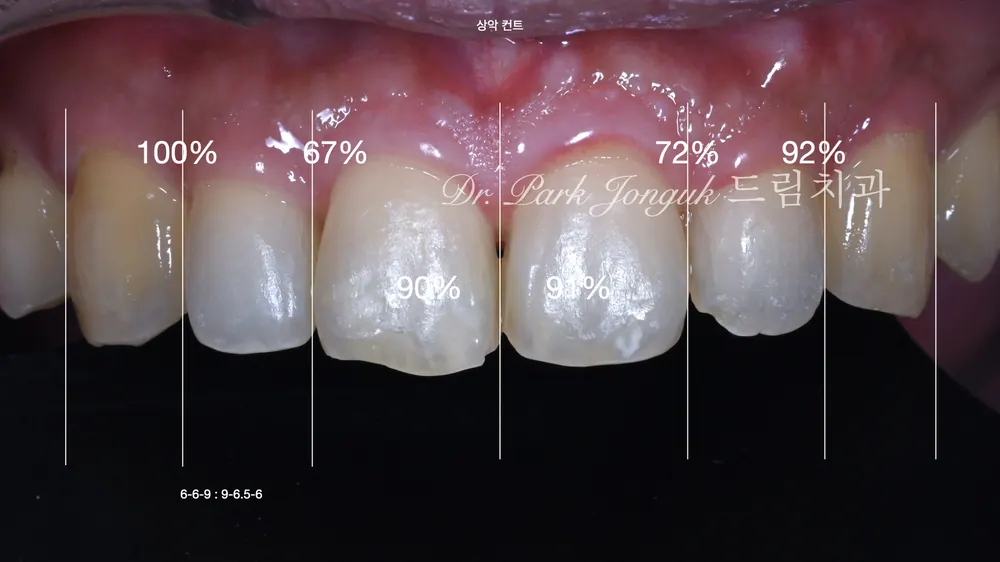
An analysis of the teeth was carried out (Photo 2).
The teeth were larger than average, so they couldn't be allowed to get any bigger.
Minimal reduction was therefore needed.
The incisal edge line had no sense of evenness at all, with each tooth at a different height.
Clear treatment goals were set.
Keep the tooth size the same or slightly reduce it, align the incisal edge line,
bring out a natural color and texture while preserving a masculine, angular feel,
and keep to the principle of minimal reduction.
The tooth shape was built in wax to preview the final result (Photo 3).
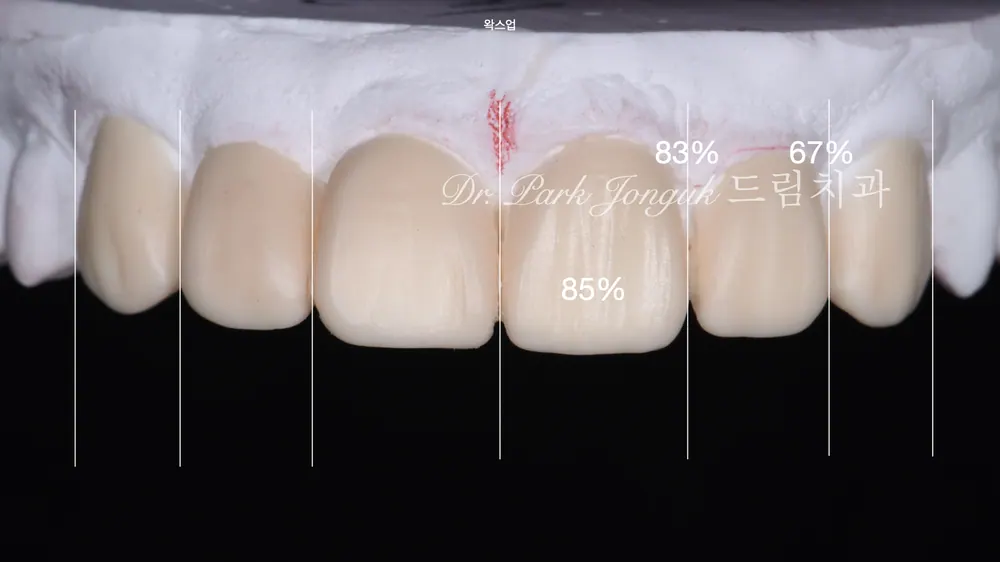
While keeping the teeth from getting any bigger where possible and maintaining balance with the face,
a conservative approach was taken, reducing only what was necessary to preserve healthy tooth structure.
Treatment Carried Out with Minimal Reduction
This shows the teeth after reduction (Photo 4).
Only the areas between the teeth were minimally reduced, and the overall tooth surface was left almost untouched.
Preserving as much enamel as possible extends the life of the tooth and helps prevent sensitivity.
In this case, no-prep treatment wasn't possible since the teeth were already large,
but by minimally reducing only between the teeth, enough space was secured for the veneers while keeping the overall size the same.
The Finished Handmade Build-Up
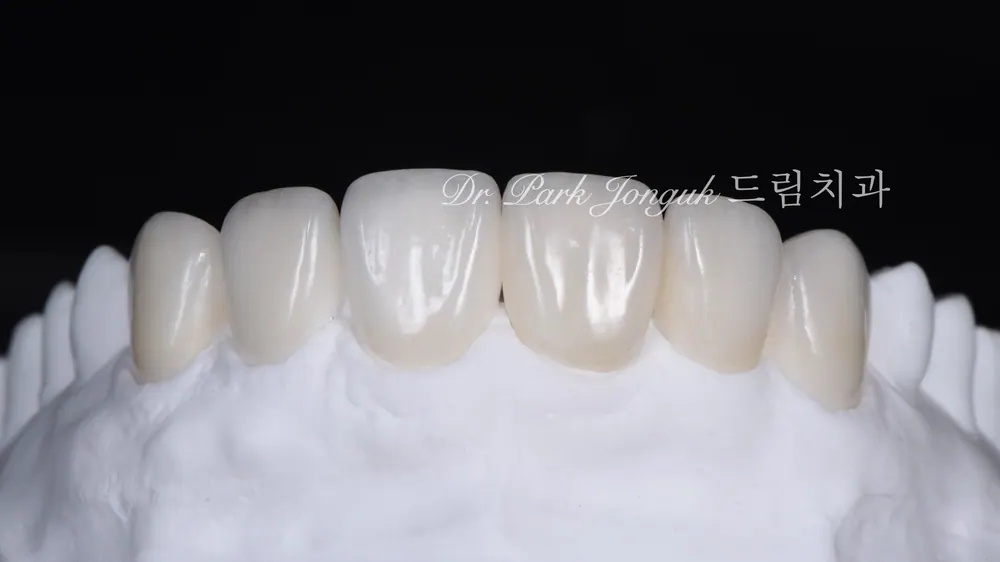
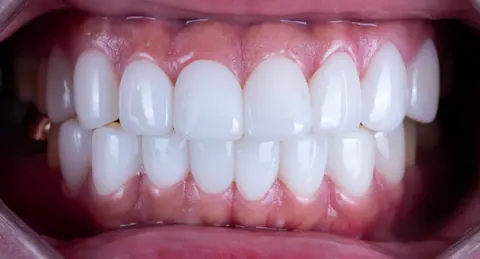
The veneers, fabricated in our in-house dental lab, express a natural, varied range of color (Photo 5).
Rather than a single color, there are color variations from one area to another,
with a striking sense of depth: an opaque core, a body color layer, a translucent enamel layer, and translucency at the tip of the tooth —
all reproduced with great care.
The masculine character was well captured too.
The tone is natural rather than overly bright, with a slight warmth, yet nothing about it looks artificial.
This is the advantage of the handmade build-up method.
A Final Result Full of Detail
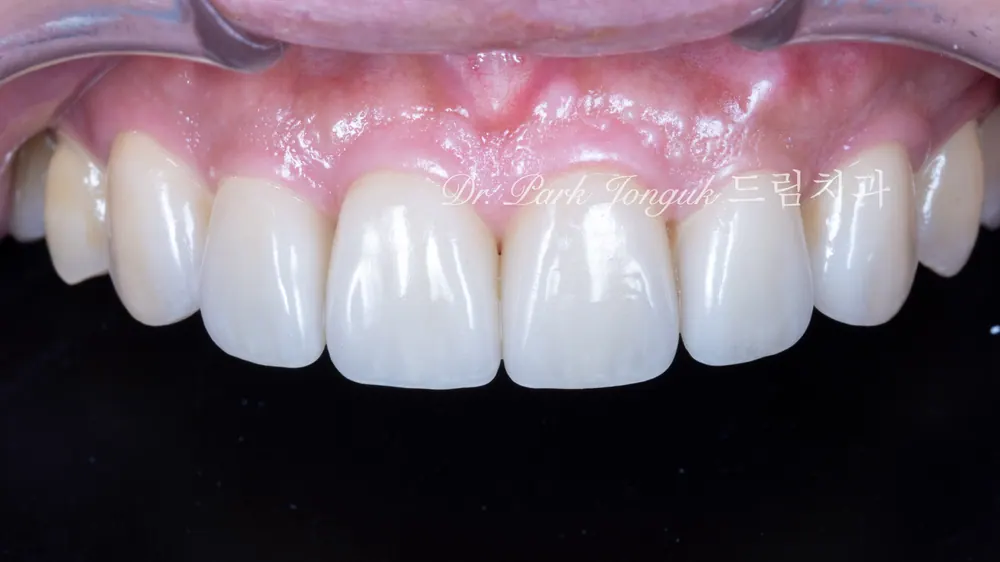
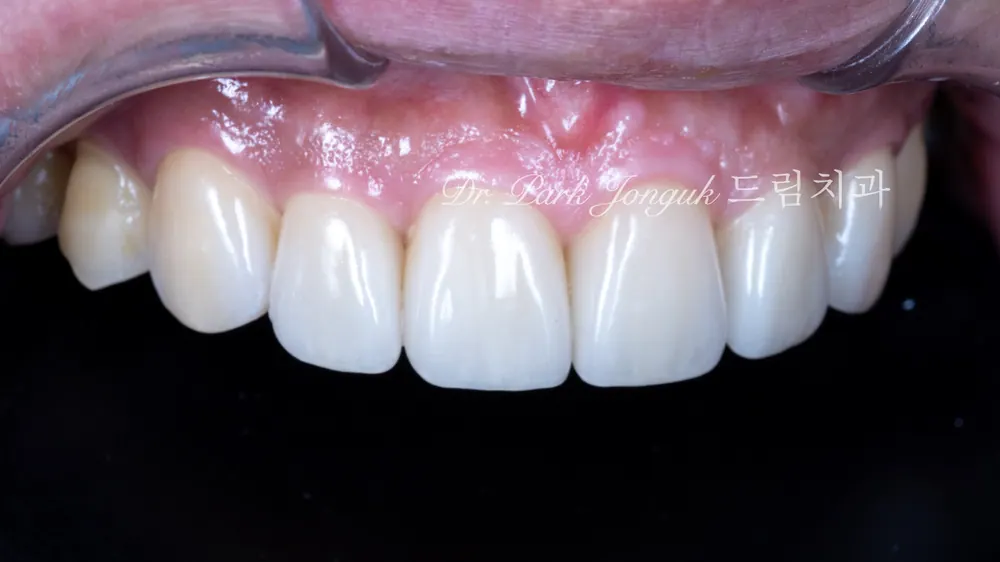
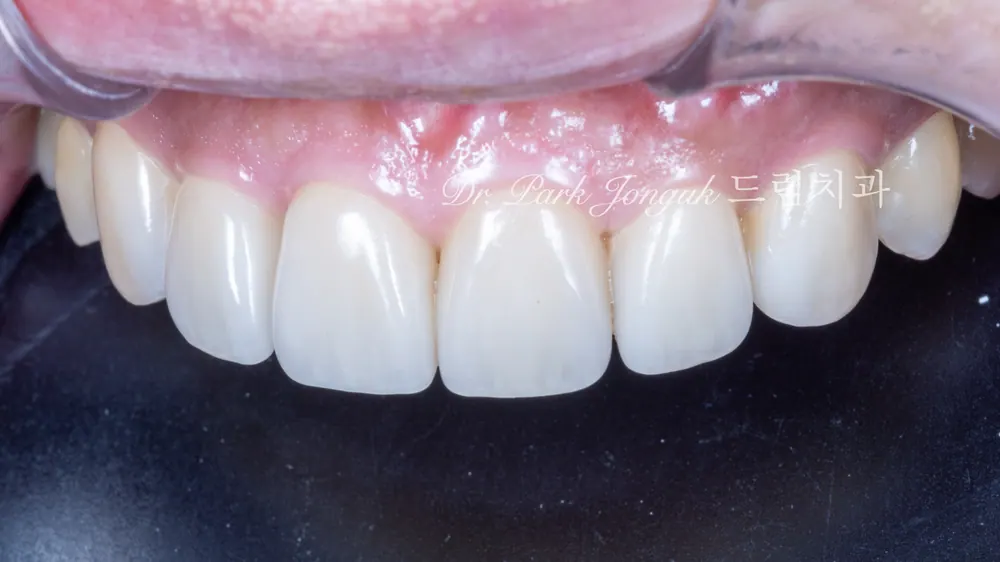
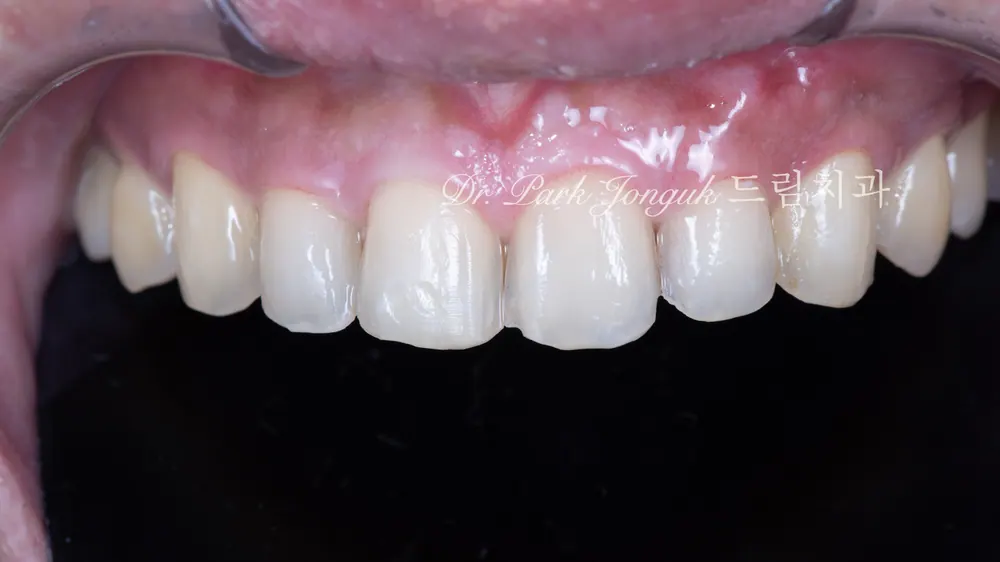
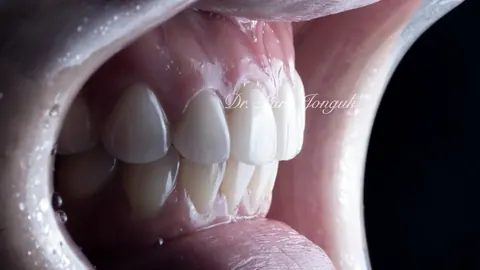
The completed veneer setting shows a striking transformation (Photos 6, 7, 8).
Before treatment, the irregular incisal edge line, rough surface, and uneven color gave an unpolished look,
while after treatment, an even incisal edge line, refined surface texture,
and harmonious color together create a polished, refined impression.
The size of the teeth barely changed,
but the improvements in shape, line, color, and texture created overall harmony and balance,
bringing out a look that's natural yet still distinctly masculine.
The texture on the surface of the teeth was also expressed with considerable variety (Photo 9).
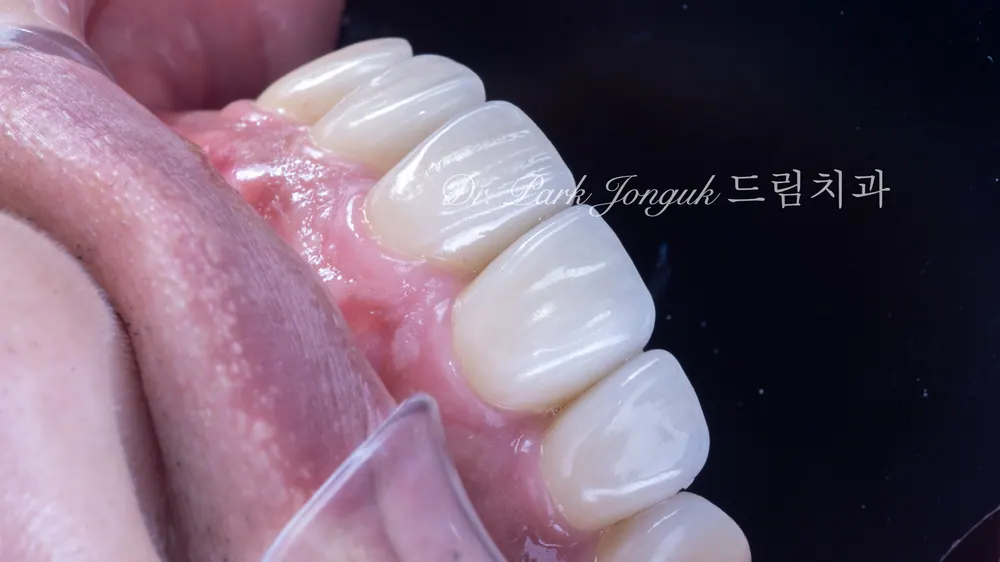
Developmental lobes were recreated and fine horizontal lines expressed,
along with a natural wear pattern and a three-dimensional surface structure.
That fine texture, like a natural tooth's, is what makes it look like a real tooth.
The Key to Front Veneers for Men
Veneers for men require a completely different approach than for women.
Women tend to go for soft curves and bright color,
while men need angular contours, strong lines, and natural color to keep a masculine look.
You can't design them by looking at the teeth alone.
The shape of the face, the lips, skin tone, and the overall impression all need to be considered.
For a man in his 30s, the result needs to look refined and trustworthy.
The principle of minimal reduction matters too.
Since a tooth can never be un-reduced once it's cut, minimal reduction pays off in the long run.
The finishing detail can't be overlooked either — the shape, color, and texture all matter.
Conclusion: The Difference Detail Makes
After 28 years of doing front veneers for countless male patients, there's something I've come to be certain of.
Veneers done properly can change a person's life.
Patients gain confidence in business meetings, feel more at ease in photos, and become more comfortable in conversation.
An improvement that isn't excessive, that looks natural, but that's still unmistakable —
that's the goal of front veneers for men.
Even alignment and aesthetic beauty are two different things.
Detail makes all the difference.
Q&A - Common Questions About Front Veneers for Men
Q1. Do many men actually get front veneers?
A. Yes. Over the past five years, the proportion of male patients has risen sharply, and men now make up close to 40% of all patients. It's especially common among office workers, business owners, and professionals in their 30s and 40s. When it's done naturally, no one notices — instead, people just hear, "you look better somehow."
Q2. How is veneer treatment for men different from for women?
A. It's completely different. Women tend to go for soft curves and bright color, while men need angular contours and natural color. The shape of the incisal edge differs too — rounder for women, slightly more angular for men. The most important thing is keeping a look that's handsome in a masculine way.
Q3. Do I still need veneers if I've already had orthodontics?
A. Yes, orthodontics and veneers serve different purposes. Orthodontics corrects the position of the teeth, while veneers improve their shape, color, and texture. Even alignment and aesthetic beauty are simply different things.
Q4. Do a lot of teeth need to be shaved down?
A. Following the principle of minimal reduction, there's no issue. We only minimally reduce the areas between the teeth and leave the overall surface almost untouched. Because reduction stays safely within the enamel, there's no risk of sensitivity or nerve damage.
Q5. How long do they last?
A. With proper care, they can last 15-20 years or more. Patients I treated 20 years ago are still using theirs without any problems. Getting regular checkups every six months, avoiding biting hard objects with the front teeth, and wearing a nightguard if you grind your teeth can make them last a lifetime.
This article is a clinical note written by Dr. Park Jonguk of Dream Dental Clinic, Gangnam; the original was published on his blog. The photographs shown are real cases he treated. Results vary with each patient’s condition, and every procedure carries the possibility of individual variation and side effects.
Quick Consult
Request a Callback
Leave your number and we will call you back during clinic hours.
Request Received
We will contact you during clinic hours. For urgent matters, please call +82-2-3448-0028.