
Veneer Treatment for Buck-Tooth-Like Protruding Teeth
Hello. I'm Park Jonguk, director of Dream Dental Clinic.
Over nearly 20 years of veneer treatment,
the thing I've always wrestled with
is the amount of tooth reduction.
Reducing as little as possible
while still achieving the most natural, beautiful veneers
is always the goal.
This concern grows even bigger in cases
involving teeth that protrude like buck teeth —
that's when veneer treatment is used.
Treatment for protruding teeth
inevitably requires a good deal of tooth reduction,
so choosing between doing extensive reduction and getting veneers,
or taking the time for orthodontic treatment instead,
becomes a serious point of deliberation between the two options.
In cases like this, through thorough simulation,
we precisely measure the amount of tooth reduction needed,
and based on that result, we consult with the patient in detail before deciding.
For that process, along with Dream Dental Clinic's natural, beautiful veneer treatment process,
please see the link below.
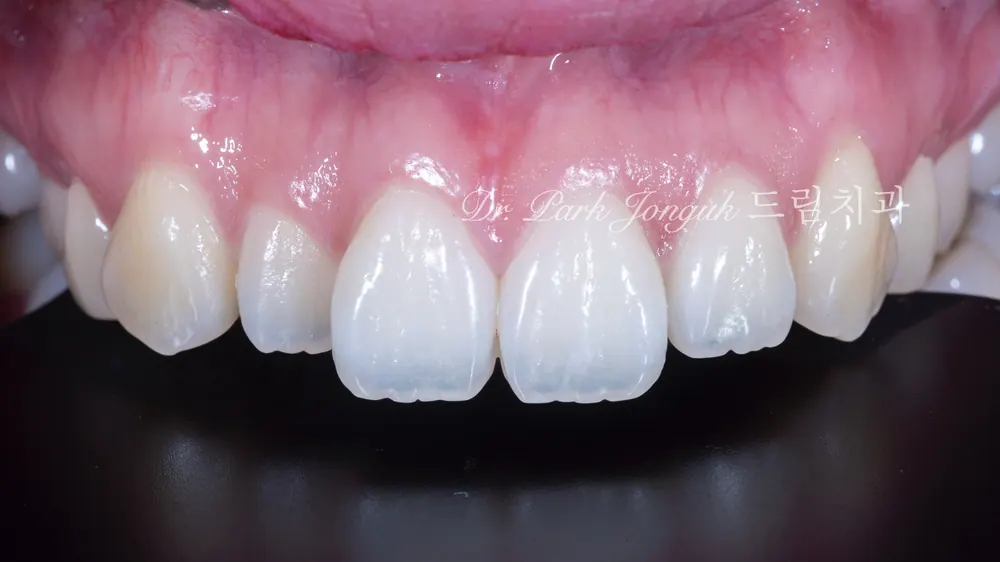
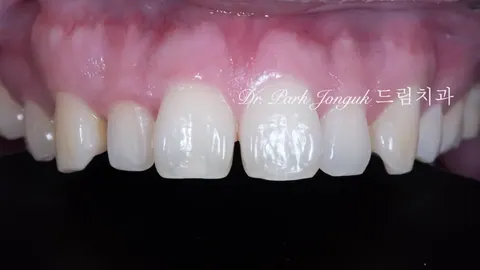
Large front teeth like buck teeth,
lateral incisors tucked inward, and even a canine that had rotated and pushed outward —
because of these various alignment problems and the large teeth,
we decided to proceed with veneer treatment.
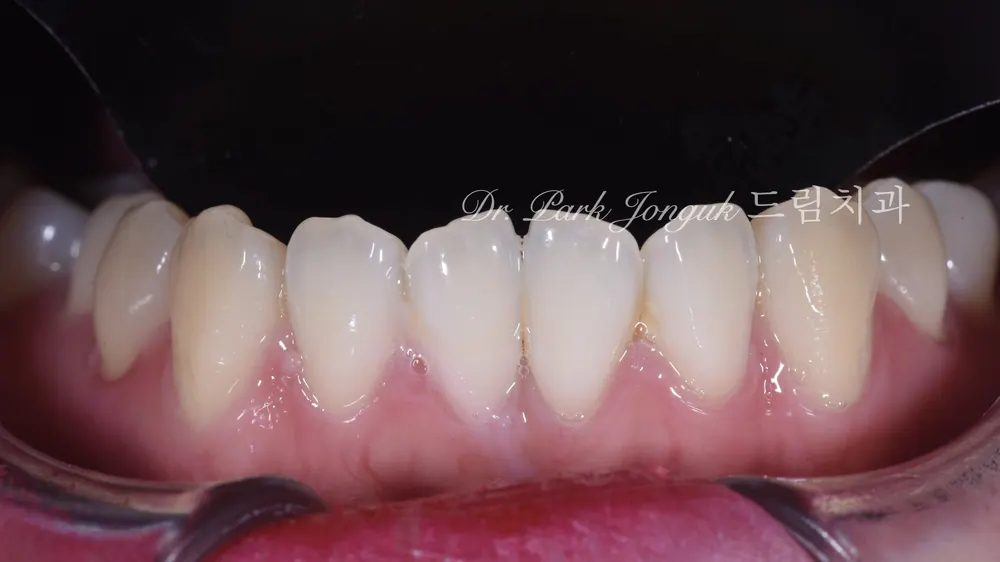
The alignment of the lower teeth wasn't good either,
so they also needed either veneers or orthodontic treatment.
We had to diagnose
which treatment — orthodontics or veneers — would be better.
In veneer treatment, diagnosis means
first analyzing the current state and the post-treatment result,
and then determining the amount of tooth reduction needed to achieve it.
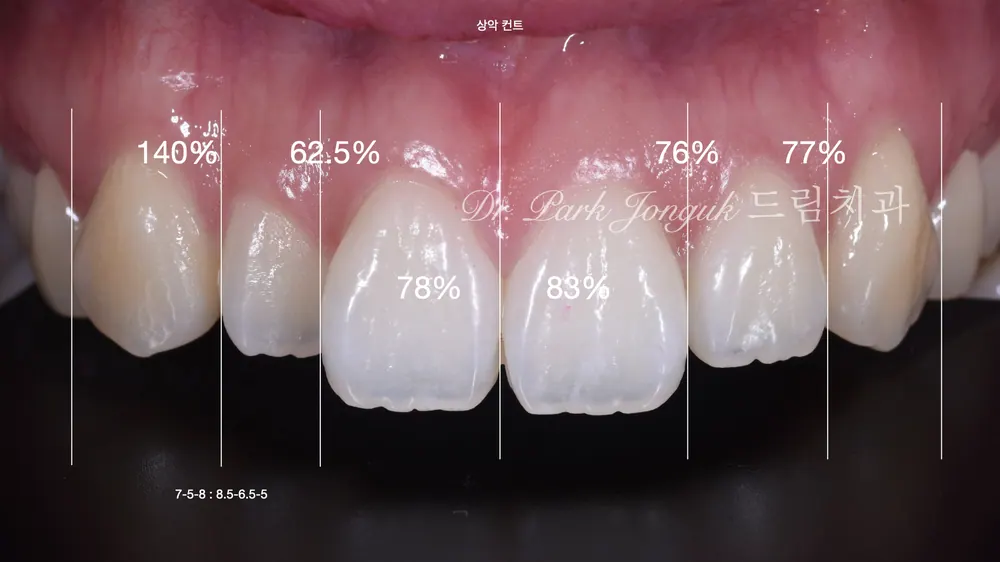
In analyzing the current teeth,
proportion and symmetry matter a great deal.
In this particular case,
the two front teeth were asymmetrical,
protruding like buck teeth, with different sizes and different angles as well.
Because of the position problem with the lateral incisors, the proportion between the teeth
deviated considerably from the average.
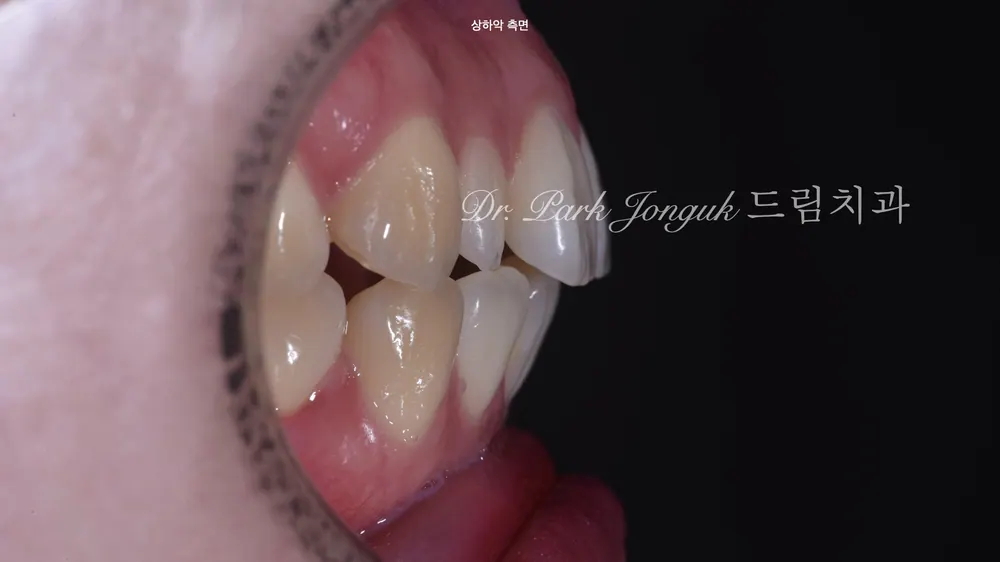
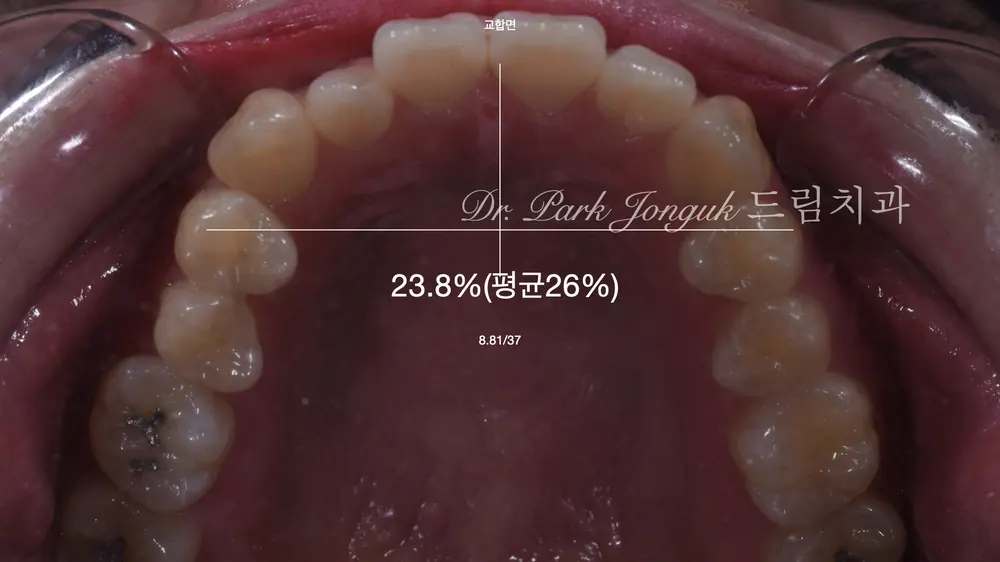
We check the degree of protrusion in teeth that stick out like buck teeth.
This can be checked visually,
but we also apply criteria I've developed over nearly 20 years of veneer practice
to guide the diagnosis and evaluation.
All of this process
has to be evaluated together with the face.
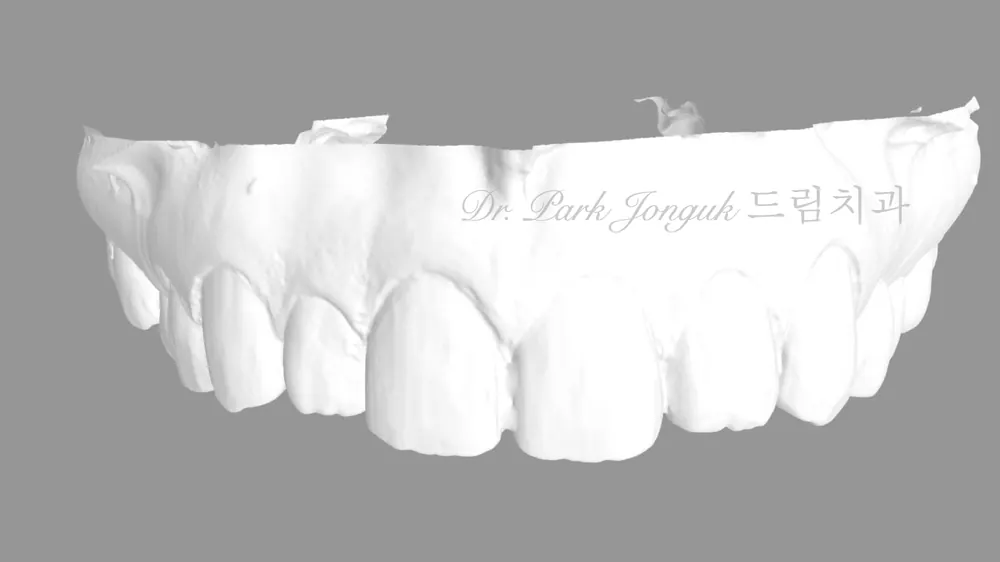
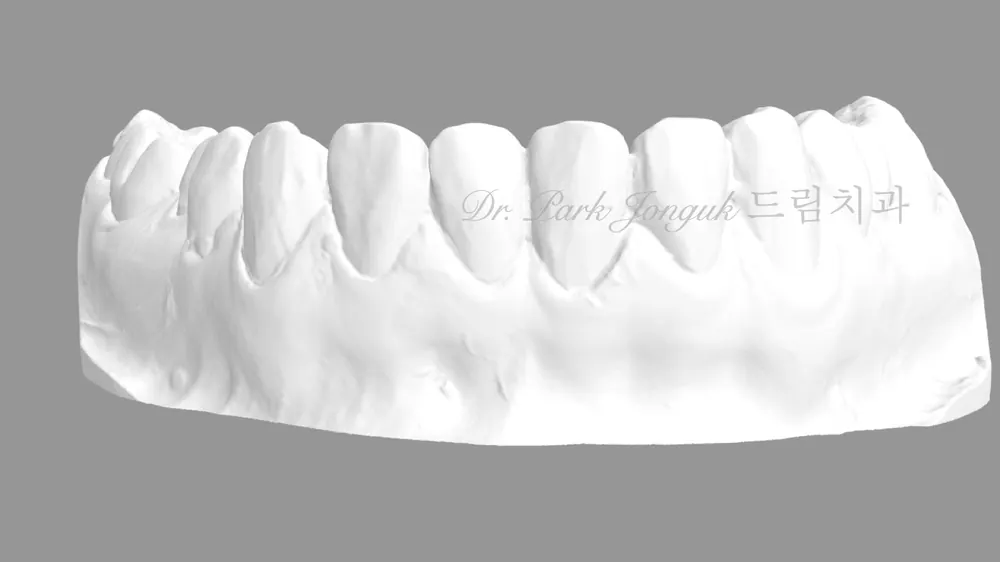
Once the analysis of the reduction amount is finished,
this whole process is shared with the patient.
During the consultation, we show the reduced shape
and also explain any side effects that could arise from veneer treatment.
If the amount of reduction needed
would be enough to cause ongoing sensitivity in the tooth,
we don't recommend veneer treatment in that case.
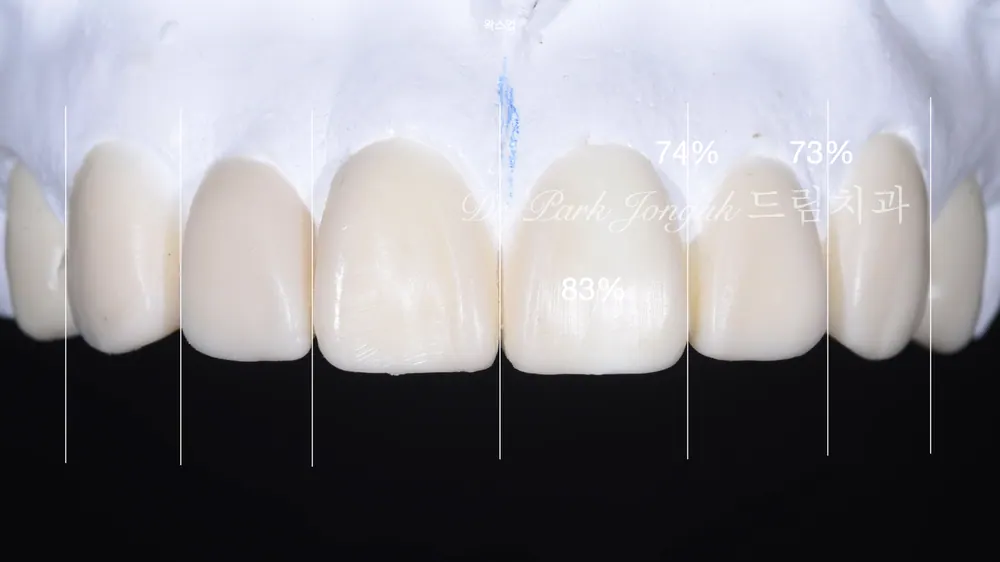
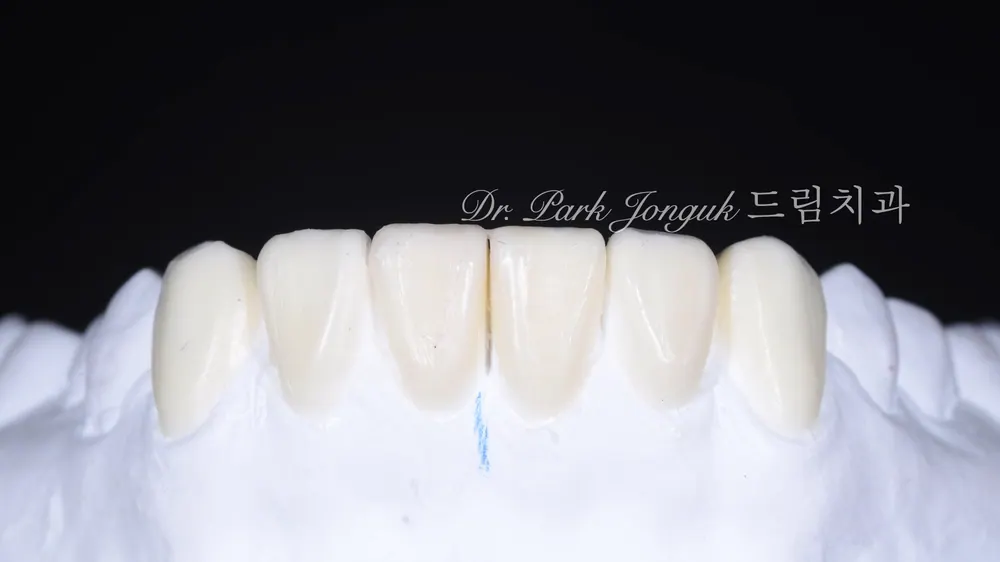
We also review, together with the patient,
the post-treatment shape built in wax.
This shape becomes the basis for making the temporary teeth.
For buck teeth, various deliberations happen alongside orthodontic treatment as well.
In this case, because of the tooth shape problem,
even if orthodontics were done, veneer treatment would still be needed
to achieve the desired esthetic goal.
Since the cost and time would then more than double,
we decided to go with veneer treatment
that could fully achieve the esthetic result with as little reduction as possible.
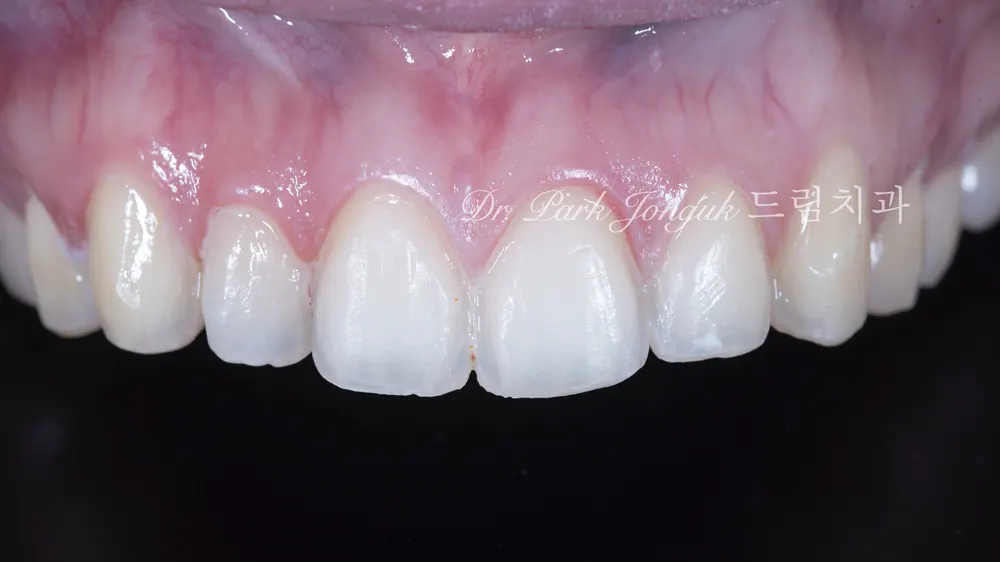
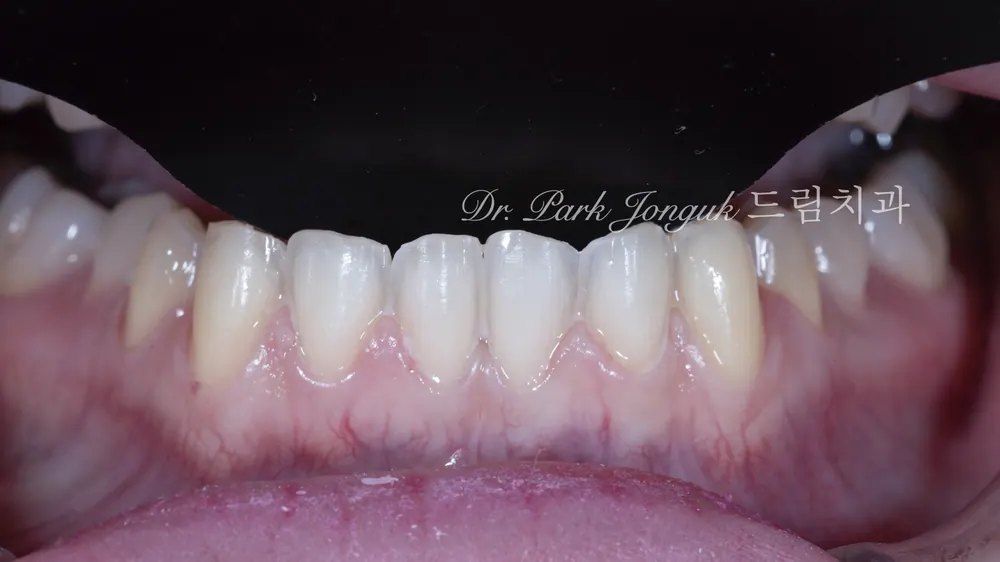
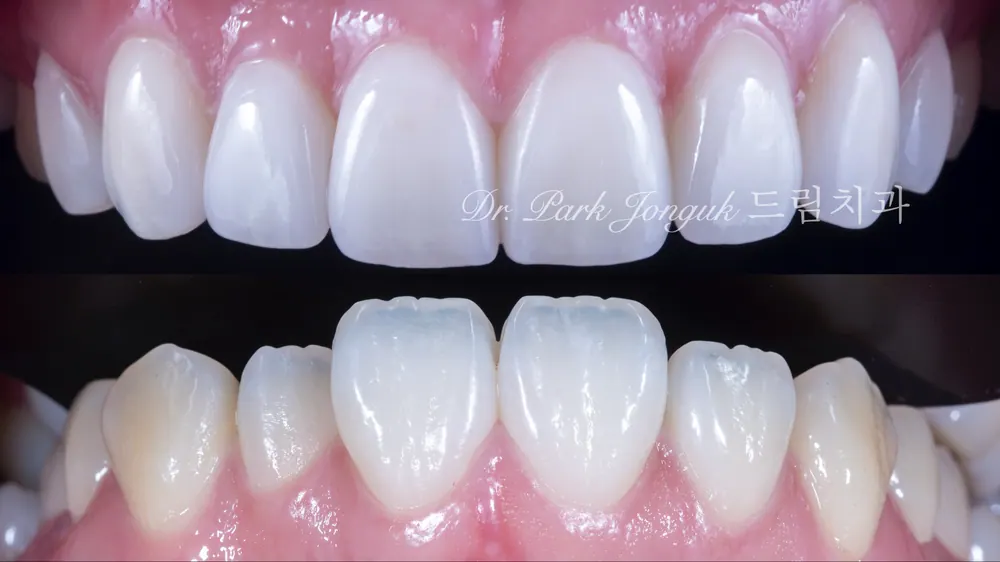
This is the state after reducing the teeth for the veneers.
Even though this was buck-tooth treatment, we kept the reduction quite limited.
All reduction is finished under a microscope.
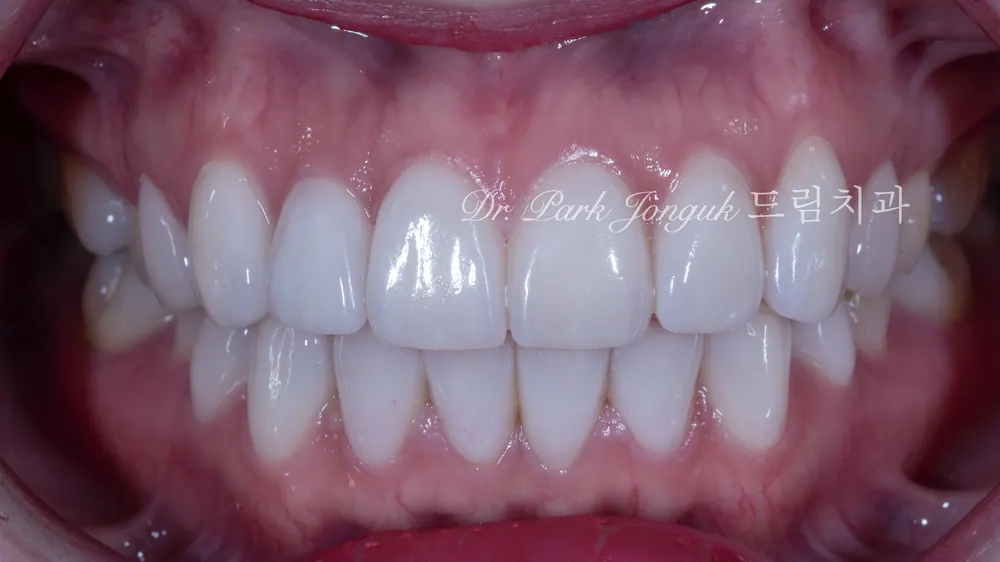
The front-tooth veneer treatment for the buck teeth has been completed.
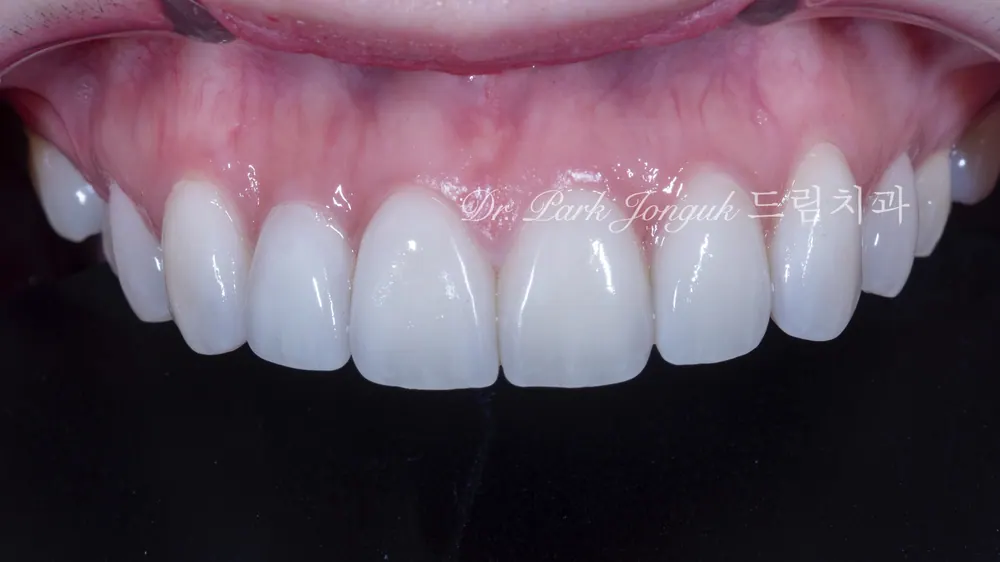
We added dimensionality to each individual tooth
and translucency at the incisal edges to express a natural tooth shape and color.
The once-large, protruding front teeth are now smaller, and the protrusion has been resolved.
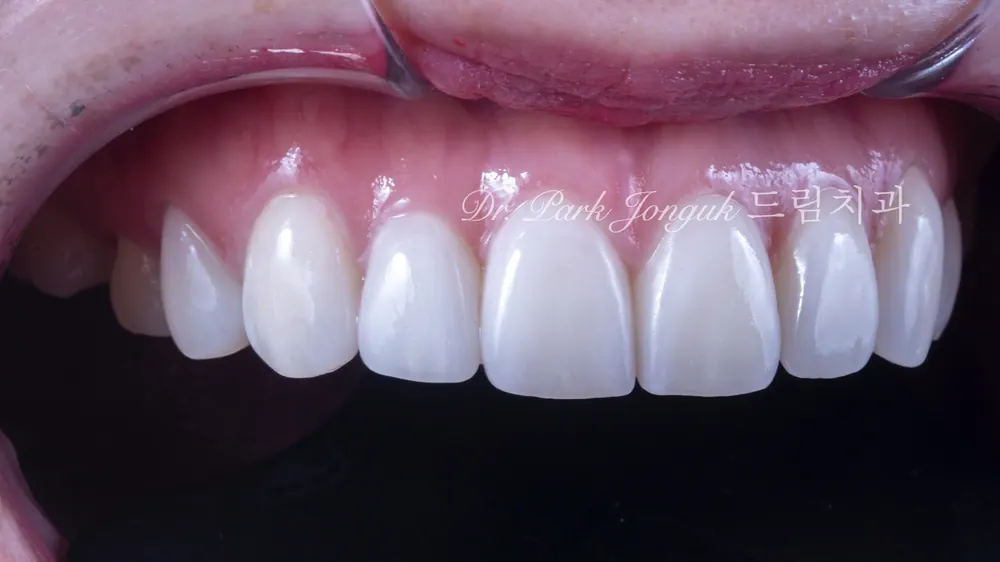
The harmony between the teeth and gums is excellent as well,
with almost no irritation to the gums.
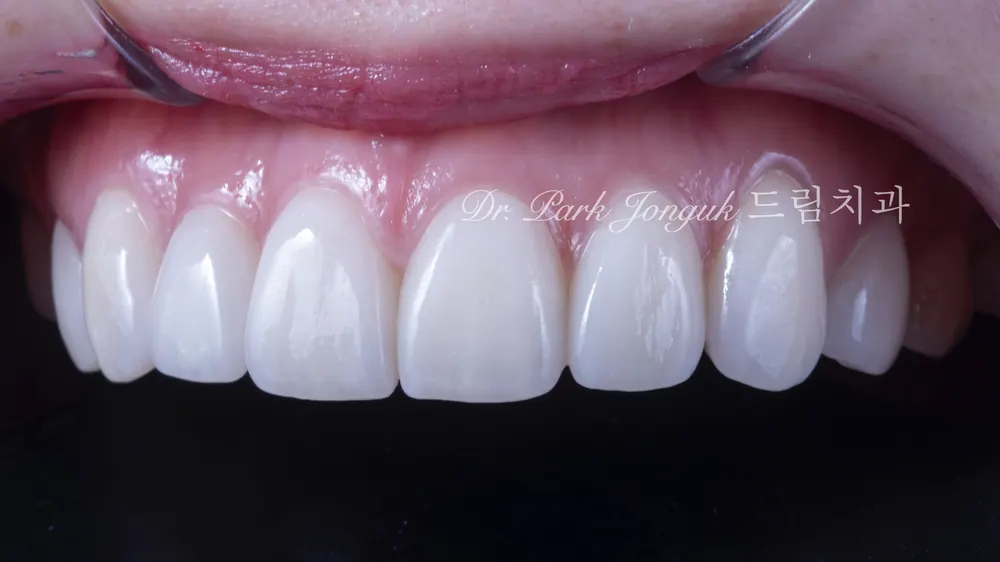
You can see that each individual tooth
expresses a natural color and shape.
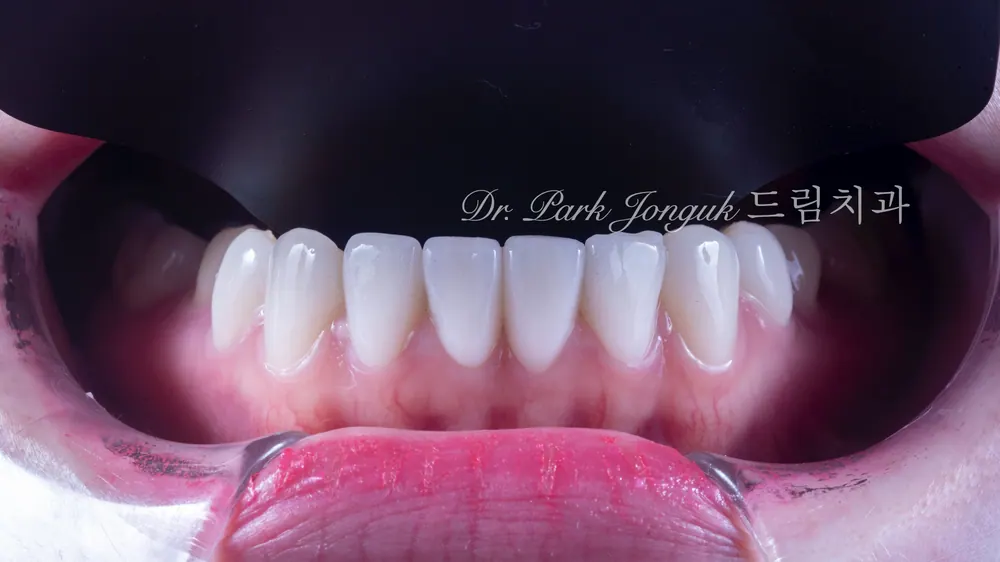
The lower teeth were also finished naturally.
Natural beauty
Since 2006, Dream Dental Clinic
This article is a clinical note written by Dr. Park Jonguk of Dream Dental Clinic, Gangnam; the original was published on his blog. The photographs shown are real cases he treated. Results vary with each patient’s condition, and every procedure carries the possibility of individual variation and side effects.
![[Peg Lateral Veneers] From a Strong-Looking Impression to a Soft, Feminine Smile — The Esthetics of Front-Tooth Veneers](/column-media/224178565168/thumb.webp)
Quick Consult
Request a Callback
Leave your number and we will call you back during clinic hours.
Request Received
We will contact you during clinic hours. For urgent matters, please call +82-2-3448-0028.