
Receded Gums on Front Teeth, Solved Naturally with Pink Ceramic
Hello. I'm Park Jonguk, director of Apgujeong Dream Dental Clinic.
Today we talk about veneers that reproduce even the shape of the gums.
"My gums have receded a lot."
"My front teeth look too long."
"Gum surgery feels like too much."
Pink ceramic can solve it.
What problems come from receded gums?
When the gums recede, the tooth root becomes exposed.
The teeth look abnormally long. Black triangles appear between the teeth. Sensitivity can occur.
Above all, it's not esthetically pleasing.
It's especially bothersome for people whose gums show when they smile.
Treatment options when gums have receded
Method 1: Gum graft surgery
This is a surgery that grafts gum tissue.
Gum tissue is taken from somewhere like the roof of the mouth and grafted onto the receded area.
If it succeeds, it's the best option. A natural gumline can be restored.
But there are downsides too.
It takes a long time. A healing period is needed after surgery. Multiple procedures may be needed.
It often doesn't turn out as hoped. The gums can recede again. 100% recovery can be difficult.
Method 2: Pink ceramic
This method uses gum-colored ceramic.
The receded gum area is reproduced with pink ceramic.
The gum-facing part of a veneer or all-ceramic crown is made in a gum color.
It can resolve the esthetic problem without surgery.
It takes far less time as well. A predictable result can be achieved.
Case 1: Gum recession with combined problems
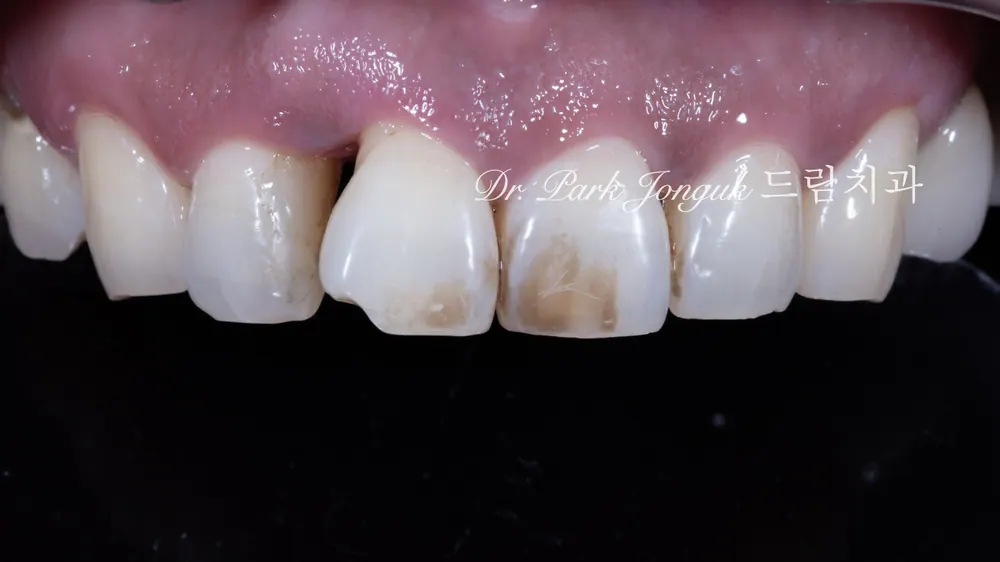
Before treatment
Looking at Photo 1, several problems exist together.
The gums have receded a lot. The tooth root area is exposed.
The tooth shape isn't good either. The form is irregular.
Color is also a problem. The teeth are yellowed and discolored.
The alignment isn't even either. It's crooked.
Everything is in poor condition.
Gum surgery alone can't solve this. The tooth problems have to be solved too.
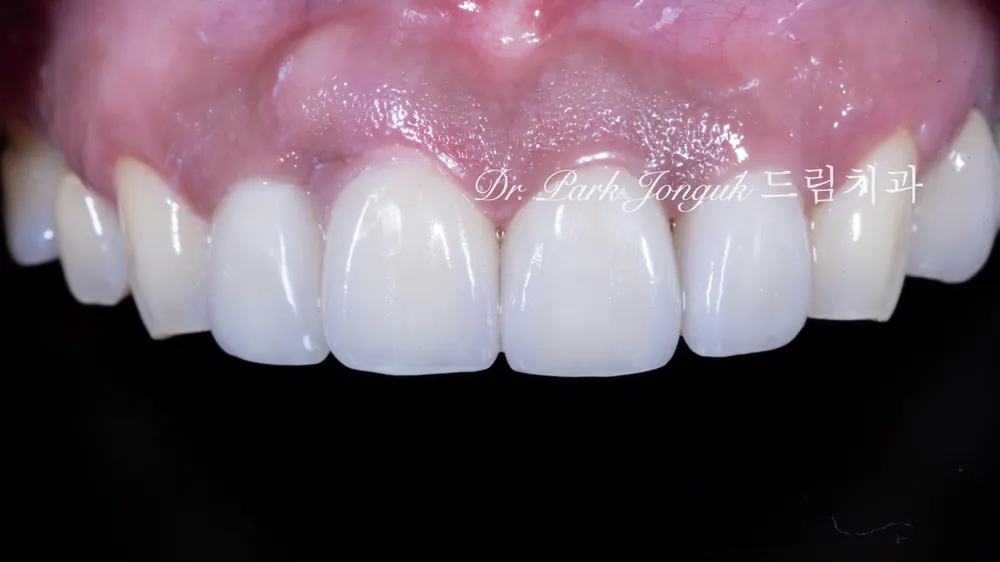
After treatment
Photo 2 shows the result after treatment.
It's completely different.
We expressed the gum area with pink ceramic.
The receded gum area was naturally filled in. It looks as if the gum tissue is really there.
The teeth became beautiful too. The shape is neat. The color is brighter. The alignment is even.
It's natural. The pink ceramic doesn't look awkward. It looks like real gum tissue.
Case 2: A problem after cleft lip and palate surgery
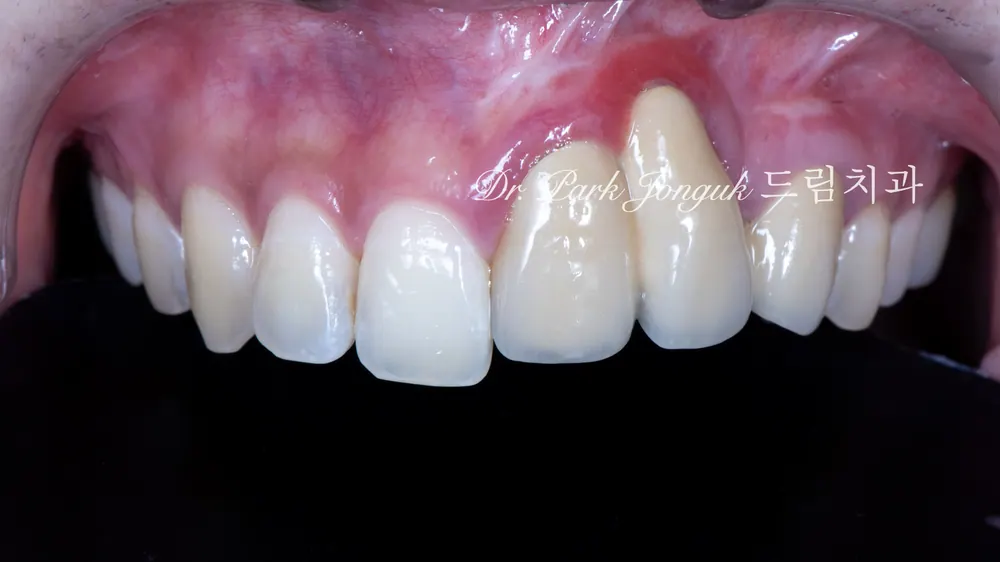
Before treatment
Photo 1 is a special case.
This patient had undergone cleft lip and palate surgery.
After cleft lip and palate surgery, tooth position problems often occur.
This patient's tooth position wasn't normal either. A bridge had been forced into place, which caused many esthetic problems.
The tooth shape looks unnatural. The gumline is irregular. The overall look is awkward.
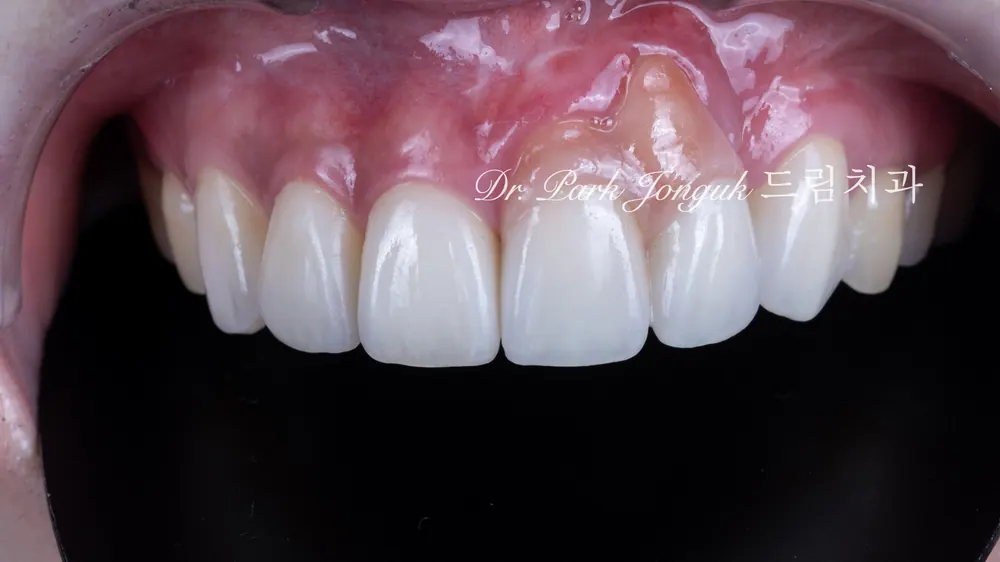
After treatment
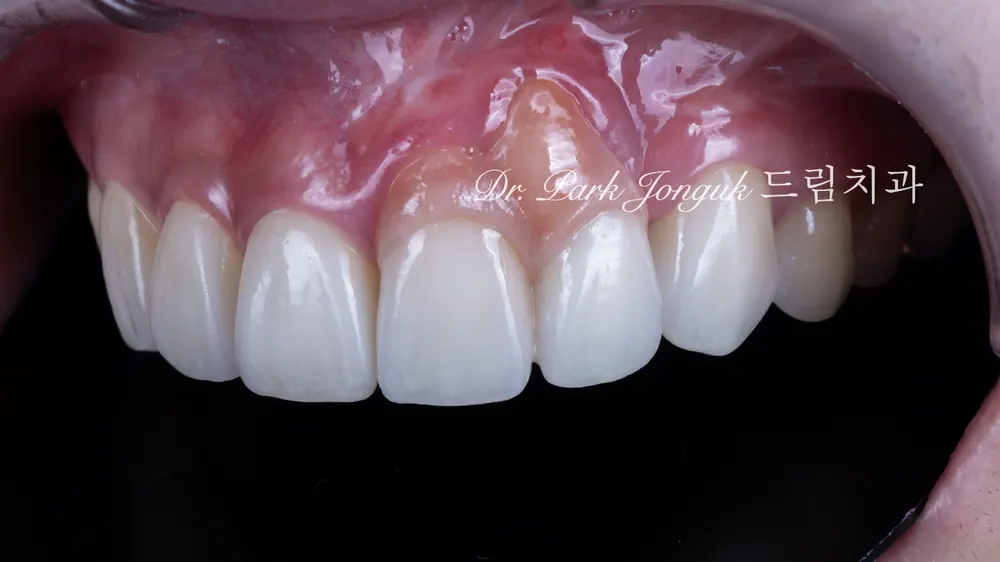
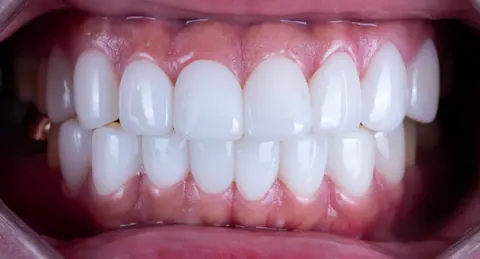
Photos 2 and 3 show the result after treatment.
It became far more natural.
We straightened the gumline with pink ceramic. The once-irregular gumline became natural.
The shape of the teeth was also made beautiful. The awkwardness of the old bridge disappeared.
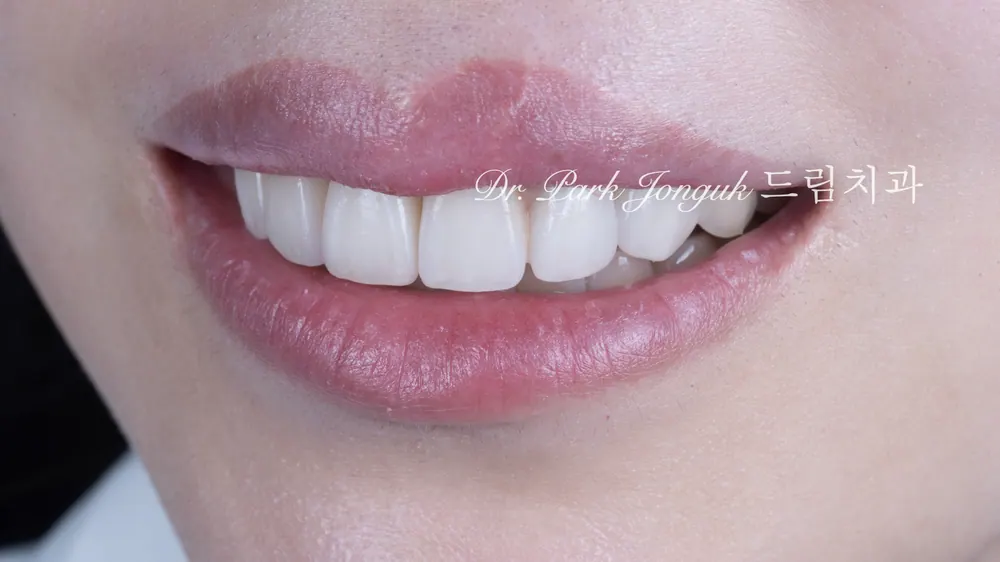
Photo 4 is a smile photo.
The smile became beautiful too. It looks natural when she smiles. She's now able to smile with confidence.
This is a case where the remaining esthetic problems after cleft lip and palate surgery were solved with pink ceramic.
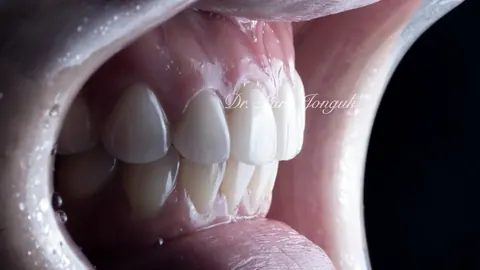
Case 3: When too much gum shows
Before treatment
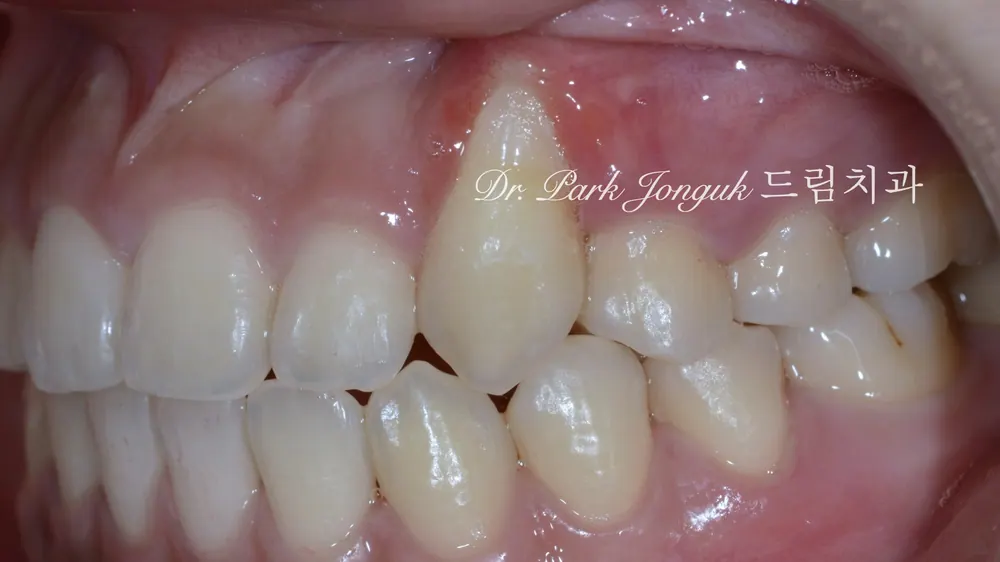
Photo 1 is a somewhat unusual case.
This is the opposite situation from what we've seen so far.
The gums had grown up too much. It was especially severe around the canine area. Too much gum shows when smiling.
This kind of case usually needs gum surgery. Surgery that lowers the gumline.
But this patient was young.
If surgery is performed before growth is complete, the result can be unstable.
Treatment plan
We decided to treat it with no-prep veneers for now.
We solve the esthetic problem first. Surgery is planned for after the patient becomes an adult.
After treatment
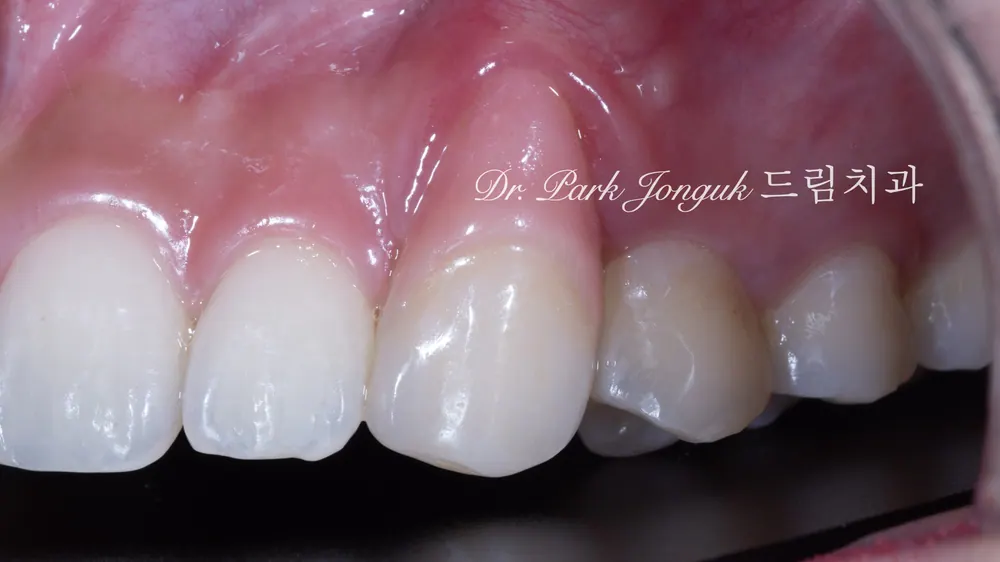
Photo 2 shows the result after no-prep veneers.
The esthetic problem was resolved.
We adjusted the tooth shape so less gum shows. The overall proportions improved.
Because it was done without any reduction, there's no issue with doing surgery later either. Since the tooth wasn't cut, it's reversible.
If needed after growth is complete, gum surgery can be added later.
What is pink ceramic?
Gum-colored ceramic
Pink ceramic is, quite literally, gum-colored ceramic.
A regular veneer or crown is tooth-colored (in the white range). Pink ceramic is gum-colored (in the pink range).
Where is it used?
It's used on areas where the gums have receded.
The gum-facing part of a veneer or crown is made from pink ceramic. It serves to visually fill in the receded gum area.
Does it look natural?
Yes, it can be made to look natural.
Pink ceramic also comes in a variety of shades. It's crafted to match the patient's actual gum color.
The border area is also blended naturally. It's made hard to tell where the real gum ends and the ceramic begins.
Pink ceramic vs. gum surgery
Advantages of pink ceramic
Predictable results: it can be made exactly as planned.
Short treatment period: no healing period is needed after surgery.
Simultaneous solution: tooth problems can be solved at the same time.
Non-invasive: no gum surgery is required.
Considerations for pink ceramic
Managing the ceramic border: keeping the border area clean is important.
Limits with extreme recession: there are limits when the recession is too severe.
Advantages of gum surgery
Recovery of natural tissue: real gum tissue can be restored.
Most ideal when successful: full recovery is possible.
Considerations for gum surgery
Long treatment period: healing and stabilization take time.
Uncertain results: recovery may not reach the desired level.
Possibility of recurrence: the gums can recede again.
Which one should you choose?
It depends on the case.
If the recession is mild and the gum tissue is healthy, surgery can be a good option.
If the recession is severe or there are also tooth problems, pink ceramic is more efficient.
The optimal method should be chosen after a precise diagnosis.
Dream Dental Clinic's pink ceramic veneers
Apgujeong Dream Dental Clinic has been doing gum-reproducing veneers for 20 years.
Natural-looking pink ceramic
We match it precisely to the patient's actual gum color. We blend the border area naturally.
Solving teeth and gums at the same time
We solve gum problems and tooth problems together in one treatment. It's an efficient, predictable treatment.
Experience with a wide range of cases
From simple gum recession to complex cases after cleft lip and palate surgery. Our wide-ranging experience produces the optimal result.
Frequently Asked Questions (Q&A)
Q1. Doesn't pink ceramic look awkward?
A. It can be made to look natural. Pink ceramic comes in a variety of shades, so it can be matched precisely to the patient's actual gum color. The border area is also blended naturally, making it hard to tell where the real gum ends and the ceramic begins. Over 20 years of varied cases, we've built up the know-how to express pink ceramic naturally.
Q2. Which is better, gum surgery or pink ceramic?
A. It depends on the case. If the gum recession is mild and the gum tissue is healthy, restoring the natural gum with surgery is ideal. But surgery takes a long time and often doesn't turn out as hoped. If the recession is severe or there are also tooth problems (shape, color, alignment), pink ceramic is more efficient. It can solve both tooth and gum problems at once and gives a predictable result.
Q3. How do you care for the pink ceramic area?
A. You care for it the same way as a regular veneer or crown. Brush thoroughly, and keep the space between teeth clean with floss or an interdental brush. Just make sure plaque doesn't build up at the border between the pink ceramic and the gum. Regular dental checkups to monitor the condition are important too.
This article is based on the actual clinical experience of Dr. Park Jonguk, director of Apgujeong Dream Dental Clinic. He has practiced esthetic dentistry for 20 years and has treated many cases of gum-reproducing veneers using pink ceramic. He published Korea's first veneer clinical textbook.
This article is a clinical note written by Dr. Park Jonguk of Dream Dental Clinic, Gangnam; the original was published on his blog. The photographs shown are real cases he treated. Results vary with each patient’s condition, and every procedure carries the possibility of individual variation and side effects.
Quick Consult
Request a Callback
Leave your number and we will call you back during clinic hours.
Request Received
We will contact you during clinic hours. For urgent matters, please call +82-2-3448-0028.