
Translucent Veneers vs Opaque Veneers: What's the Difference?
Hello, I'm Dr. Park Jonguk of Dream Dental Clinic, Apgujeong.
Today we're talking about the difference in how veneers are made.
"Why do some veneers look natural while others look off?"
"Why do some veneers have translucency while others look flat and stiff?"
The answer lies in how they're made.
Two ways to make veneers
There are broadly two ways veneers are made.
The first is the build-up method. Various ceramics are layered one on top of another.
The second is the one-day method. A single ceramic block is machine-milled.
These two methods produce very different results.
Build-up method: translucent veneers
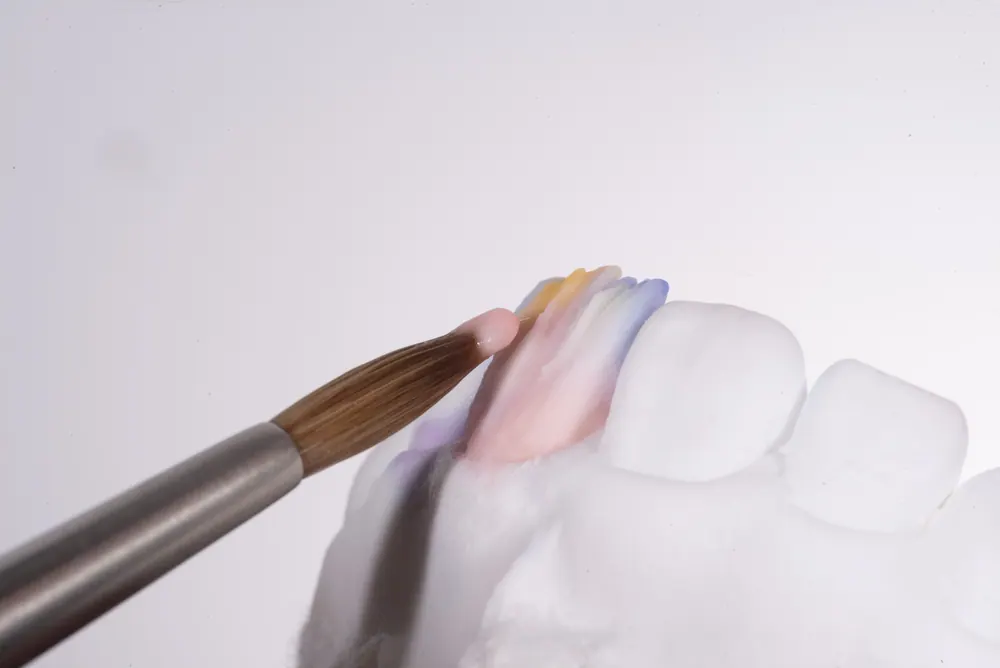
Photo 1 shows the build-up process underway.
Porcelain powder is being applied with a brush. A skilled ceramist builds up the ceramic layer by layer.
How is it made?
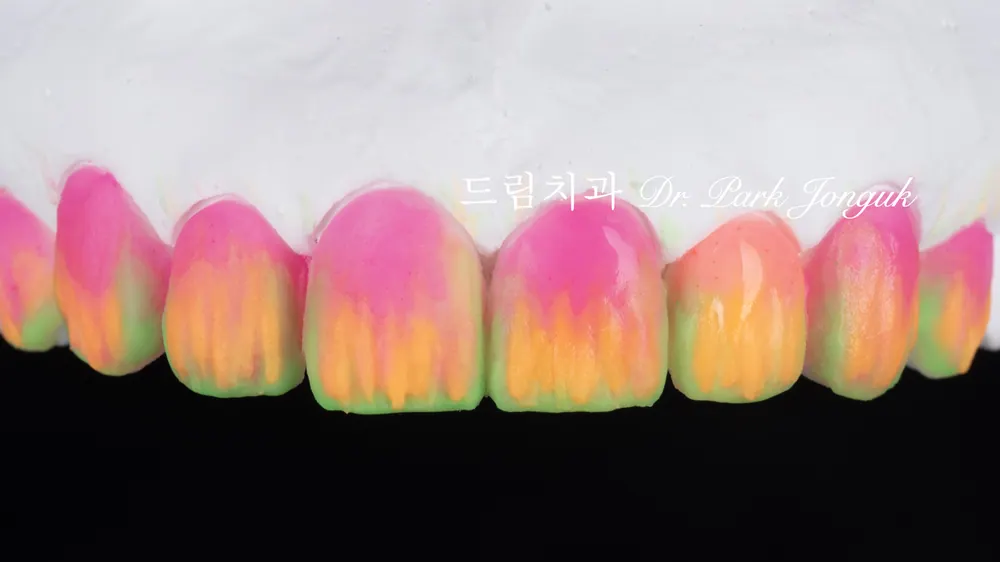
Photo 2 shows the state after the powder has been built up.
Several types of ceramic powder are used. Opaque dentin ceramic is applied near the root side. Semi-translucent enamel ceramic is applied in the middle section. Translucent ceramic is applied at the incisal edge.
Each layer differs in color and translucency. These are carefully layered one at a time. Each layer is fired at high temperature.
It takes a long time. A great deal of care goes into it. But the result is different.
The finished veneer
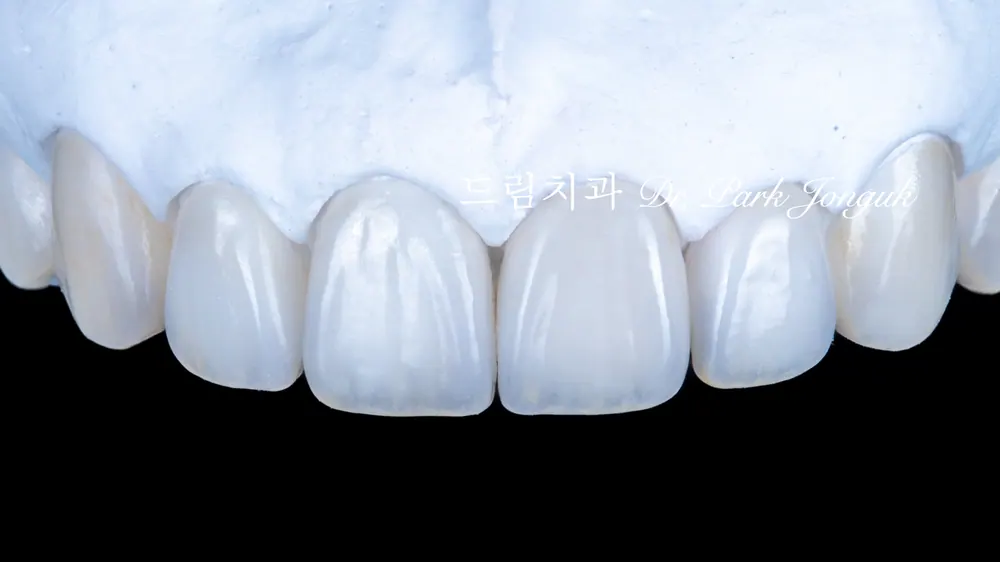
Photo 3 is the finished veneer restoration made this way.
The translucency is alive. The incisal edge is as translucent as a natural tooth. The color varies from area to area. When light hits it, it shimmers like a natural tooth.
A natural tooth is not simple. Translucency and color vary by area. Only the build-up method can reproduce this.
Various cases
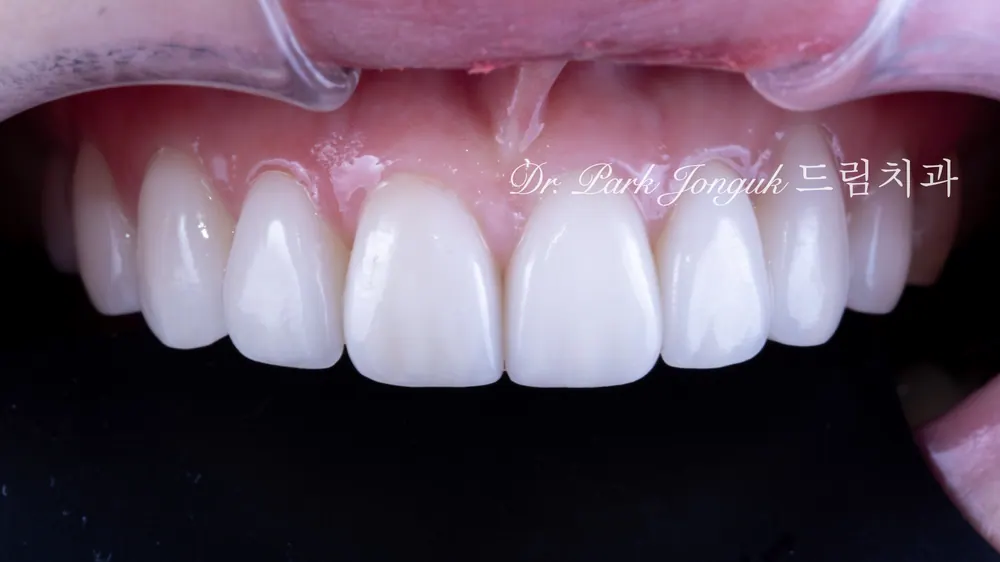
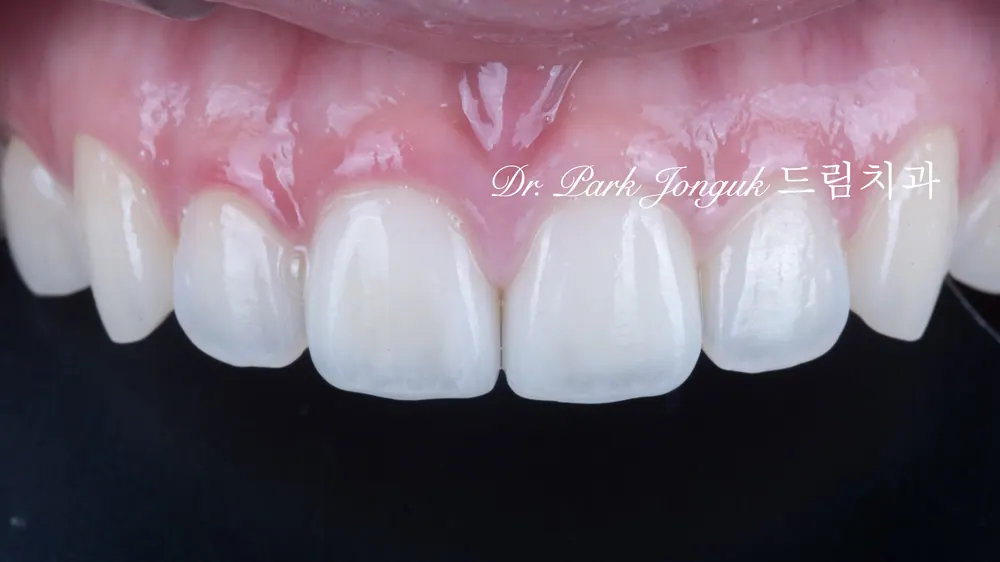
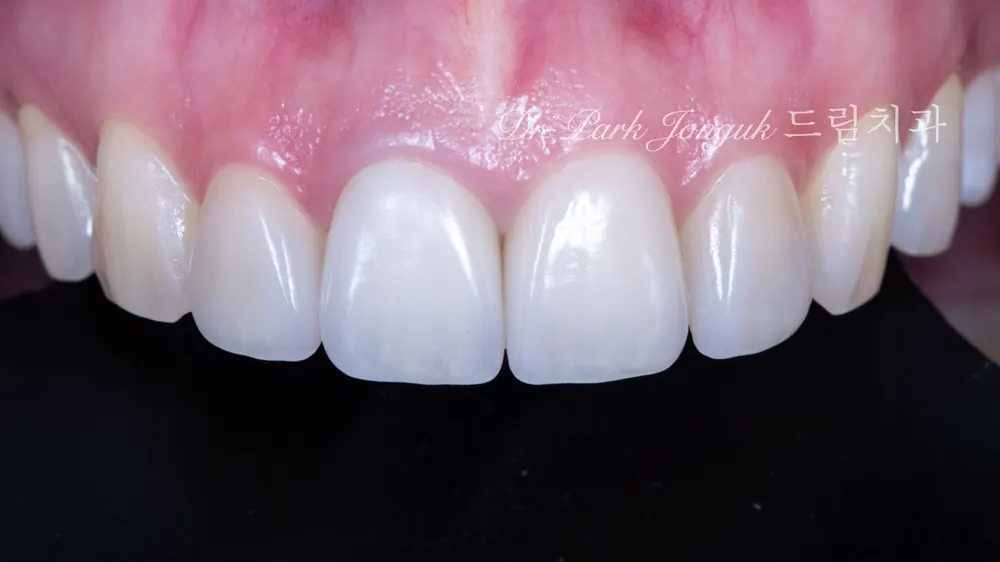
Photos 4, 5, and 6 are other cases made with the build-up method.
All of them have the translucency alive. They look like natural teeth. You can't tell they're veneers.
This is what a translucent veneer looks like.
One-day method: opaque veneers
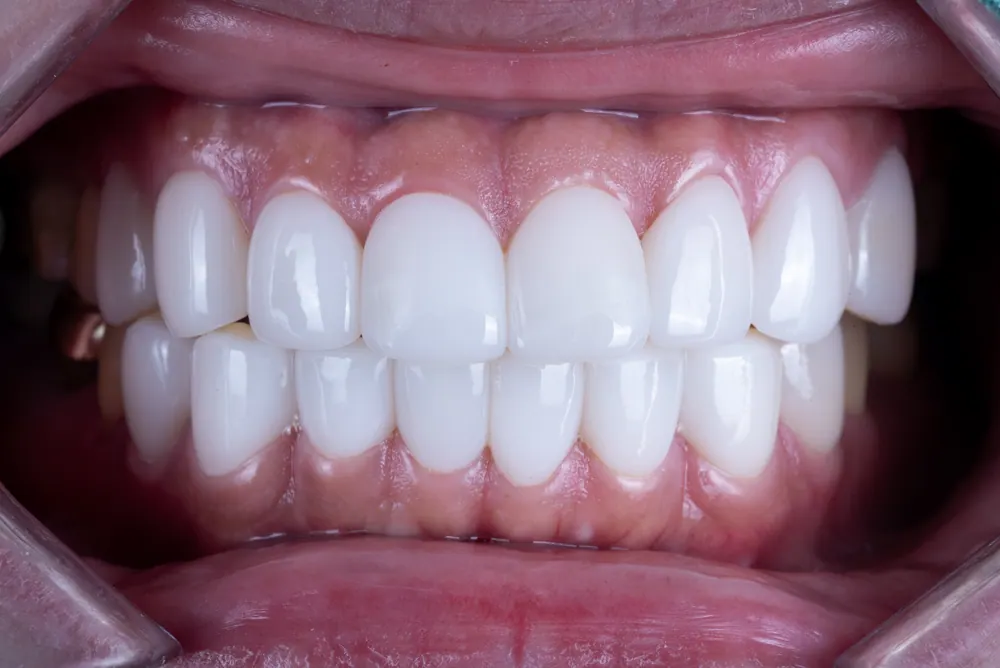
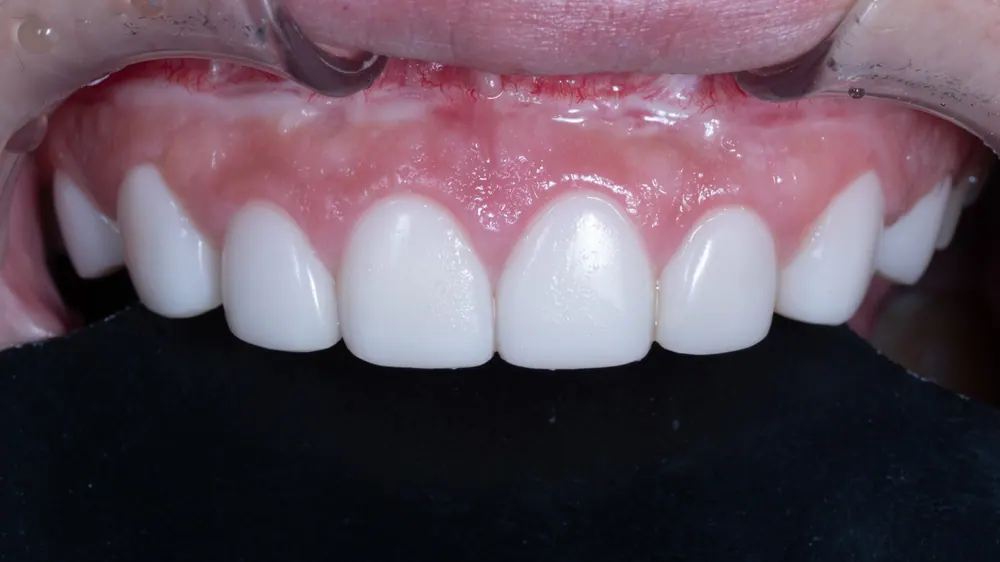
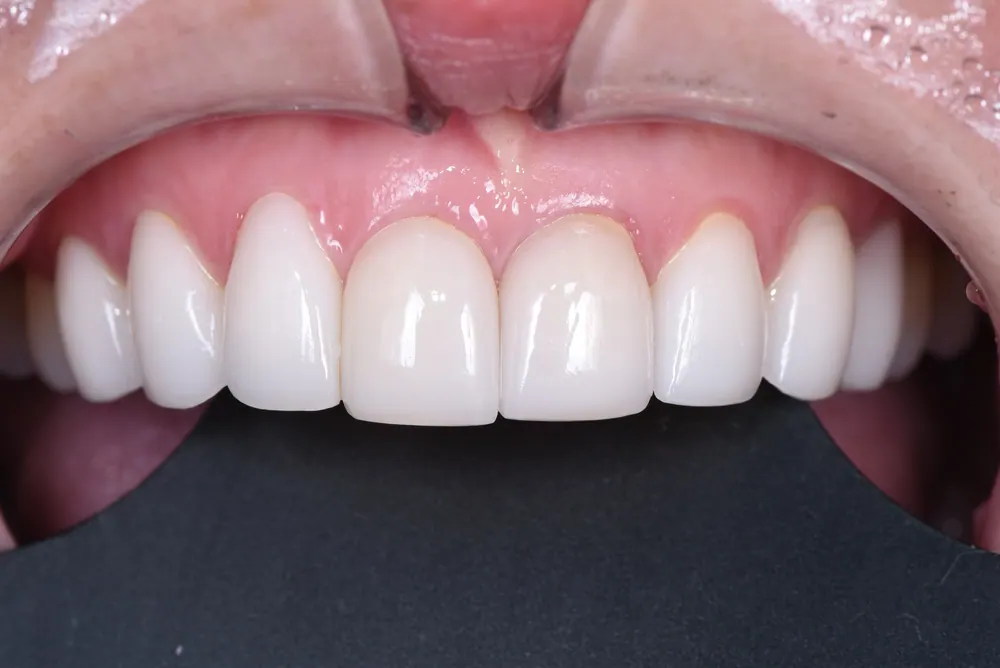
Photos 7, 8, and 9 are of patients who were treated with the one-day method at other dental clinics.
How is it made?
A single ceramic block is used. It's designed by computer and cut down by a milling machine. It's finished in 20-30 minutes.
It's fast. It's simple. It's cheap.
Because the process is cheap, simple, and fast, factory-style dental clinics often use this method. They usually don't even call it a veneer — they give it a different name.
The problem with the result
But when you look at the result, the problem is visible.
It's opaque. Because it's a single ceramic block, there's no difference in translucency by area. The incisal edge is also opaque. Light doesn't pass through.
It's just white. There's no color variation by area. It's monotonous. Like a piece of xylitol gum.
It looks off. It's completely different from a natural tooth. Anyone can tell it's a veneer.
This is the limitation of an opaque veneer.
Why does this difference occur?
The structure of a natural tooth
A natural tooth has a complex structure.
Enamel is semi-translucent. Dentin is opaque and yellowish. The incisal edge has only enamel, so it's more translucent. The neck of the tooth shows more dentin through it, so it's more opaque.
Translucency and color differ from area to area.
How the build-up method reproduces this
The build-up method reproduces this complex structure as it is.
Several types of ceramic are used. Different ceramics are applied to different areas. The layered structure of a natural tooth is mimicked.
That's why it looks like a natural tooth.
The limitation of the one-day method
The one-day method uses only a single ceramic block.
A single material, a single color, a single translucency. It can't create differences by area. It can't reproduce the complexity of a natural tooth.
That's why it looks artificial.
The difference in detail
The detail of a build-up veneer
A veneer made by the build-up method has the detail alive.
There's translucency at the incisal edge. Light passes through it like a natural tooth. There's a color gradation between the neck of the tooth and the incisal edge. The color changes naturally from area to area.
Surface texture is also expressed. There are fine contours and light reflections. Opalescence is reproduced. There's the subtle sheen unique to natural teeth.
The limitation of a one-day veneer
A veneer made by the one-day method has no detail.
There's no translucency. It's opaque all over. There's no color variation. It's a single, monotonous color throughout.
The surface is flat. There's only an artificial shine. The complex light reflection of a natural tooth is absent.
The difference in cost and time
Why the one-day method is cheap
It's fast because a machine cuts it. A skilled ceramist isn't needed. Mass production is possible. The cost is low.
That's why it's cheap. That's why factory-style dental clinics prefer it.
Why the build-up method is expensive
A skilled ceramist makes it by hand. It takes several days. Mass production is impossible. It requires a lot of labor and time.
That's why it's expensive. But the result is different.
Which should you choose?
If you want something fast and cheap
You can choose the one-day method.
But you need to understand the limitations of the result. It lacks translucency and is opaque. It's hard to expect a natural look.
If you want a natural result
Choose the build-up method.
It takes more time and costs more. But the translucency is alive. It's as beautiful as a natural tooth. It doesn't look like a veneer.
Dream Dental Clinic's build-up veneers
Dream Dental Clinic in Apgujeong uses only the build-up method.
For 20 years, we have pursued natural-looking veneers. We make veneers with translucency and living detail.
A skilled ceramic technician makes each one with great care. Layer by layer, the complexity of a natural tooth is reproduced.
Natural enough that you can't tell it's a veneer. This is the kind of veneer Dream Dental Clinic pursues.
Frequently Asked Questions (Q&A)
Q1. How can you tell a build-up veneer from a one-day veneer?
A. The biggest difference is translucency. A build-up veneer has translucency at the incisal edge, and the color changes naturally from area to area. A one-day veneer is opaque overall and a single, monotonous color. The difference is even clearer in natural light. With a build-up veneer, light passes through so it looks like a natural tooth; with a one-day veneer, light is blocked so it looks artificial.
Q2. Is there a reason one-day veneers are cheaper?
A. Yes, it's because the manufacturing process is simple. In the one-day method, a machine mills a single ceramic block. It's finished in 20-30 minutes and doesn't require a skilled ceramist. Mass production is possible, so the cost is low. The build-up method, on the other hand, has a skilled ceramist layer several types of ceramic by hand one at a time, which takes several days. It requires a lot of time and labor, so the cost is higher, but the result is that much more natural.
Q3. Aren't translucent veneers weaker?
A. No. Translucency and strength are separate matters. Build-up veneers also use high-strength ceramics such as lithium disilicate, so they have sufficient strength. Translucency comes from layering several types of ceramic, while strength comes from the properties of the ceramic material used. If anything, the build-up method is structurally stable because each layer bonds with the others. You can choose natural translucency without worrying about strength.
This article was written based on the actual clinical experience of Dr. Park Jonguk of Dream Dental Clinic, Apgujeong. He has practiced esthetic dentistry for 20 years and specializes in translucent, build-up veneers. He has published Korea's first veneer clinical textbook.
This article is a clinical note written by Dr. Park Jonguk of Dream Dental Clinic, Gangnam; the original was published on his blog. The photographs shown are real cases he treated. Results vary with each patient’s condition, and every procedure carries the possibility of individual variation and side effects.
Quick Consult
Request a Callback
Leave your number and we will call you back during clinic hours.
Request Received
We will contact you during clinic hours. For urgent matters, please call +82-2-3448-0028.