
White Spots and Discoloration After Braces, Solved With No-Prep Veneers
Hello. This is Park Jonguk, director of Dream Dental Clinic in Apgujeong.
Today I'm introducing a no-prep veneer case after braces.
"My braces are off, but now I have discoloration on my teeth."
"The white spots won't go away."
No-prep veneers can solve this.
White spots and discoloration that appeared after braces
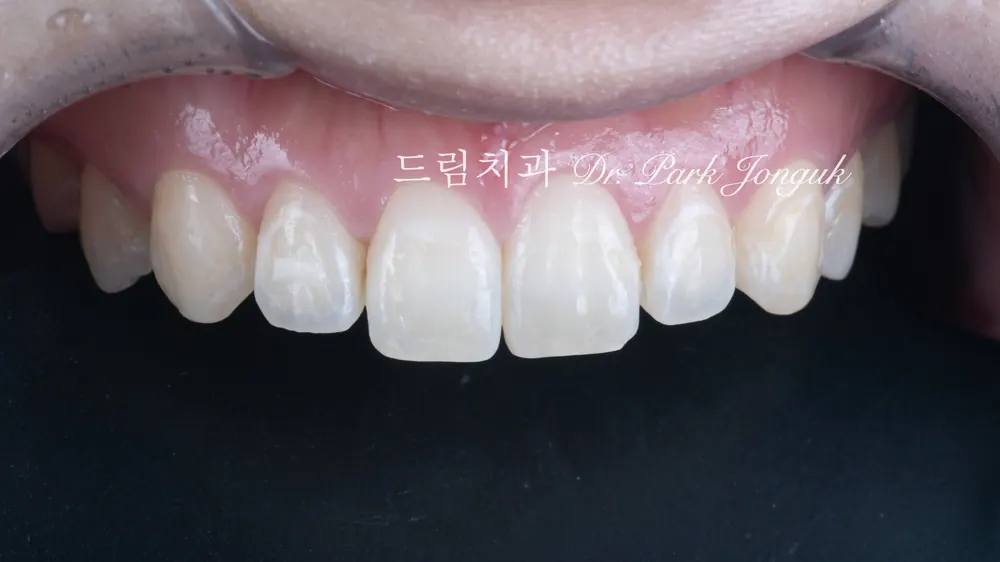
Photo 1 shows the patient's teeth at the initial consultation.
What's the problem here?
Early-stage decay had developed around the orthodontic brackets.
It was hard to brush around the brackets during orthodontic treatment. White spots developed in that area — patches that are demineralized and appear white.
There's also visible discoloration. There's a color difference between the areas where the brackets were attached and the areas where they weren't.
The orthodontic treatment finished successfully, but the tooth surface isn't in a pretty state.
Why does this happen?
Brushing around the brackets during orthodontic treatment is really difficult.
No matter how carefully you brush, plaque tends to build up between the bracket and the tooth. That leads to early-stage decay, or demineralization, in that area.
Once the brackets come off, the traces remain as white spots. Whitening doesn't remove them. In fact, it can make them stand out even more.
Solved with no-prep veneers
A case like this can be solved with no-prep veneers.
Why is no-prep possible?
Teeth that have finished orthodontic treatment usually have even alignment.
And after braces, the teeth don't protrude. In fact, they're often tilted inward.
Tooth size is also usually small or normal.
Do you remember the three conditions for no-prep veneers?
The teeth need to be small
The alignment needs to be even
The teeth must not protrude
Teeth after braces often meet these conditions.
That's why veneers after orthodontics are often no-prep.
After treatment: a natural surface texture
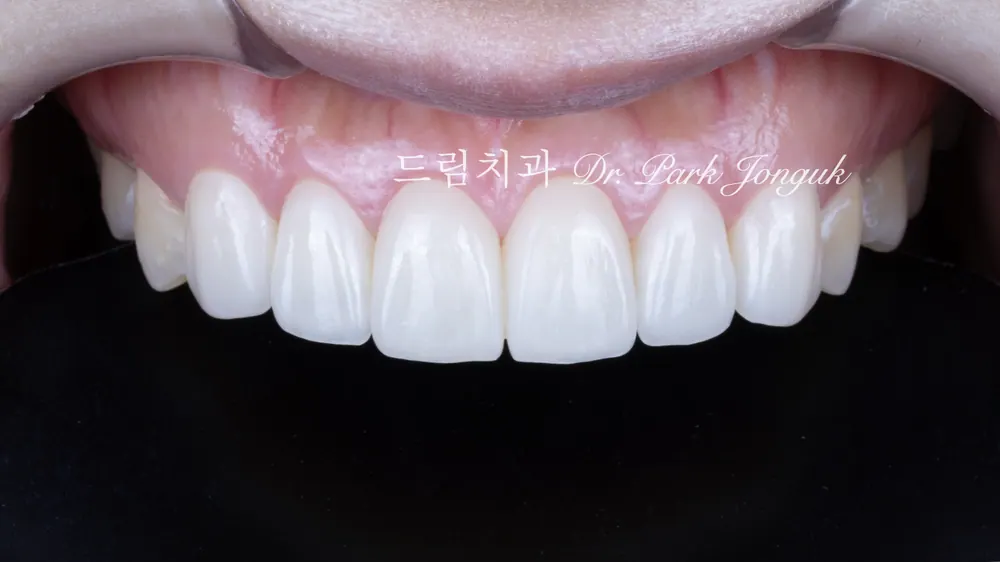
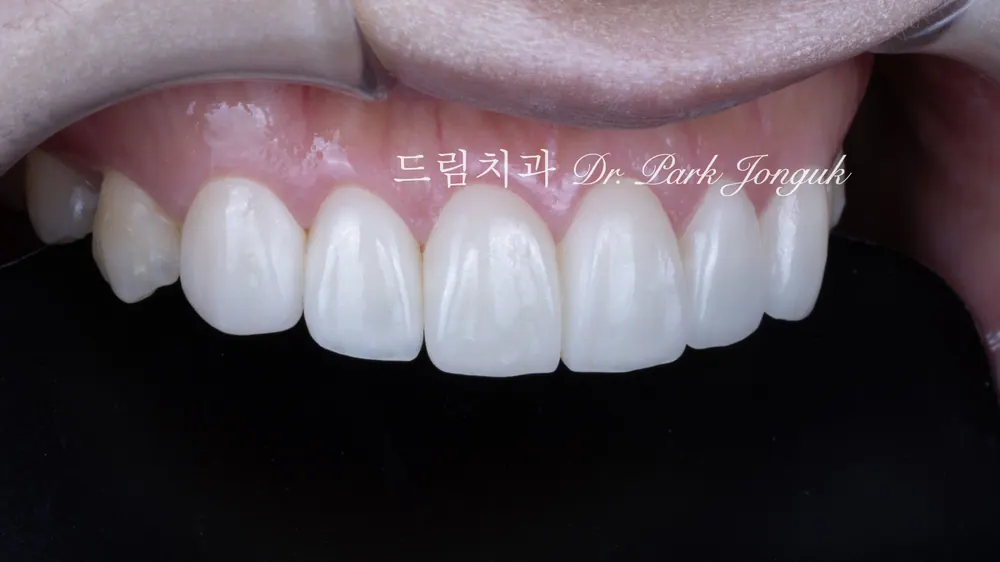
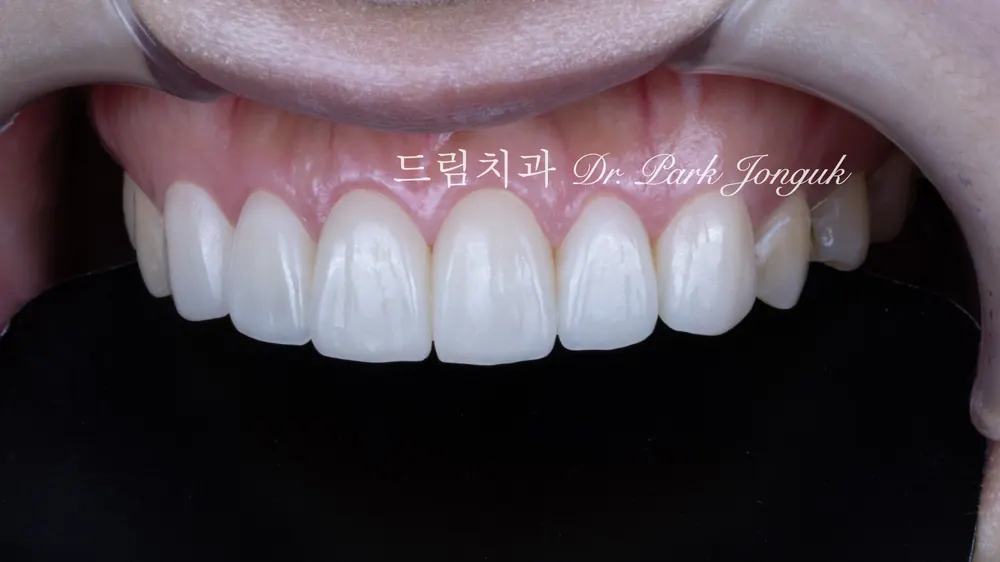
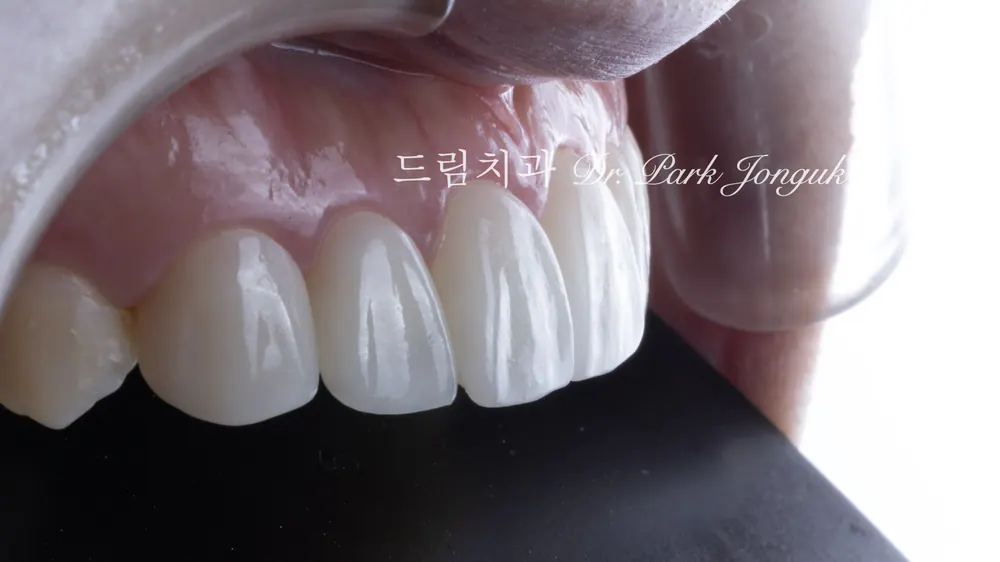
Photos 2, 3, 4, and 5 show the appearance after the no-prep veneers.
The white spots and discoloration are gone
The white spots around where the brackets were are completely covered.
The discoloration is nowhere to be seen either.
The tooth surface has become clean and even.
We emphasized surface texture
There's an important point here.
We emphasized the expression of the tooth's surface texture.
A natural tooth is smooth, but it's not perfectly flat. It has subtle contours and texture.
It reflects light in subtle ways.
We reproduced this natural surface texture faithfully.
So it doesn't look like a veneer at all. It just looks like a clean, healthy natural tooth.
No-prep, 100% tooth preservation
The best part is that the tooth wasn't reduced at all.
Because all that needs to be covered is the white spots and discoloration.
The healthy tooth structure was preserved 100% as it was.
Why veneers after braces are often no-prep
Reason 1: the alignment is even
The purpose of orthodontics is to align the teeth.
After braces, the teeth are neatly arranged. This meets the first condition for no-prep veneers.
Reason 2: they don't protrude
After braces, the teeth don't stick out toward the front.
In fact, they're often tucked inward. So even bonding ceramic on the front with no-prep doesn't make them stick out excessively.
Reason 3: the shape change is minimal
The purpose of veneers after braces is usually to fix color or surface issues.
It's mostly about white spots, discoloration, and minor shape refinement. Since there's no need to significantly change the tooth size, no-prep is enough.
White spots can't be fixed with whitening
Why doesn't whitening work?
White spots are demineralized enamel.
Whitening is a treatment that removes pigment. It can't change the demineralized structure.
In fact, whitening can make only the normal areas whiter, making the white spots stand out even more.
What about resin infiltration treatment?
In the early stage, resin infiltration treatment can be tried.
But it's difficult to remove completely. It has particular limits when the area is large or combined with discoloration.
Veneers are the definitive solution
Veneers completely cover the white spots.
It's a sure solution because the ceramic covers the area. The discoloration is resolved together with it.
When the conditions after braces are right, this can be done without any reduction.
The secret to natural surface texture
It's possible because of the build-up method
Dream Dental Clinic fabricates veneers using the multilayer build-up method.
Several types of ceramic are stacked layer by layer. At the end, the surface texture is expressed with fine detail.
It reproduces the natural tooth's subtle contours, light reflection, and even its sheen.
The difference from the one-day method
The one-day method, which mills a single ceramic block, struggles to express surface texture.
It looks flat and artificial.
The build-up method can reproduce every characteristic of a natural tooth.
Dream Dental Clinic's no-prep veneers after braces
Dream Dental Clinic in Apgujeong has done many no-prep veneer cases after orthodontic treatment.
Accurate assessment of indication
We precisely judge whether no-prep is possible. If the conditions are right, we go with no-prep; if not, we proceed with minimal reduction.
A natural surface texture
We reproduce even the surface texture with fine detail. It doesn't look like a veneer at all.
Tooth preservation comes first
If it doesn't need to be reduced, we don't reduce it. The patient's tooth health comes first.
Frequently asked questions (Q&A)
Q1. Can't white spots after braces be fixed with whitening?
A. No, whitening won't solve it. White spots are a problem with the demineralized enamel structure, while whitening is a treatment that removes pigment. In fact, whitening can make only the normal areas whiter, causing the white spots to stand out even more. Resin infiltration treatment can be tried early on, but it's difficult to remove completely. Veneers are the definitive solution, and when the conditions after braces are right, this can be done without any reduction.
Q2. Why are veneers after braces often no-prep?
A. It's because teeth after braces often meet the three conditions for no-prep veneers. First, the alignment is even (that's the goal of orthodontics). Second, the teeth don't protrude forward. Third, since the purpose is usually to fix color or surface issues, there's no need to significantly change the tooth size. So no-prep veneers, bonding ceramic on the front without reducing the tooth, become possible.
Q3. Do no-prep veneers still look natural?
A. Yes, making them look natural is the key. Surface texture in particular is important. Dream Dental Clinic fabricates with the multilayer build-up method, reproducing the natural tooth's subtle contours, light reflection, and even its sheen. It doesn't look like a veneer at all — it looks like a clean, healthy natural tooth. With 20 years of experience, we complete natural-looking no-prep veneers.
This article is based on the actual clinical experience of Dr. Park Jonguk, director of Dream Dental Clinic in Apgujeong. He has practiced esthetic dentistry for 20 years and has treated many cases of no-prep veneers after orthodontic treatment. He published Korea's first veneer textbook.
This article is a clinical note written by Dr. Park Jonguk of Dream Dental Clinic, Gangnam; the original was published on his blog. The photographs shown are real cases he treated. Results vary with each patient’s condition, and every procedure carries the possibility of individual variation and side effects.
Quick Consult
Request a Callback
Leave your number and we will call you back during clinic hours.
Request Received
We will contact you during clinic hours. For urgent matters, please call +82-2-3448-0028.