
[Peg Lateral Veneers] Restoring 'Anatomical Structure' by the Author of Korea's Veneer Textbook — Six Years Prove a Young Tooth's Unchanging Vitality (Front-Tooth Veneers)
Hello. I'm Park Jonguk, board-certified specialist in conservative dentistry and head director of Apgujeong Dream Dental Clinic.
I've been performing front-tooth veneer treatment in Apgujeong for 20 years.
I'm the author of Korea's first dedicated veneer textbook,
and through Lamista Academy, I teach fellow dentists the fundamentals of esthetic design.
My treatment philosophy is clear.
It's to perfectly reproduce the anatomical structure and vitality of a natural tooth through minimal tooth reduction.
The front-tooth veneer case I'll show you today is a peg lateral treatment case.
This goes beyond simply enlarging a small tooth —
it's a high-difficulty area that requires restoring broken proportions and the delicate detail of a young tooth.
I'll reveal the secret behind how this treatment has stayed unchanged even six years later.
1. Case Study: A Man in His 20s with Broken Proportions
Teeth and Diagnosis (Photo 1)
[Photo 1] Before treatment
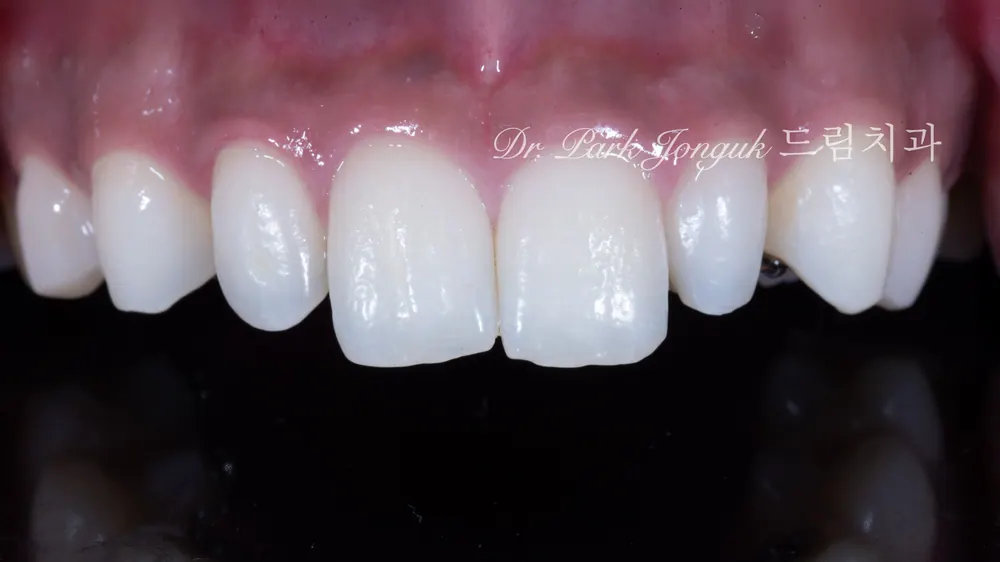
This patient, a man in his early 20s, presented with a severe imbalance in tooth proportion.
His central incisors were large, while his lateral incisors were very small, breaking the balance of his overall smile.
The treatment plan wasn't simply about "adding" material.
Central incisor adjustment: since the central incisors were oversized, they needed minute reduction to bring them into overall harmony.
Peg lateral enlargement: the peg laterals needed to be built up to fill in what was lacking and match the ideal golden proportion.
This kind of advanced proportion correction — requiring both reduction and addition at the same time — is exactly the core difficulty of peg lateral veneers.
2. The Key to Success: Perfectly Replicating the Tooth's Anatomical Structure
The beauty of a young tooth lies in the translucency and three-dimensional structure that appear when light hits it.
This is an area that only hand-made build-up technique can achieve.
The importance of lobes and grooves: the facial surface of a natural tooth isn't flat.
It's made up of three developmental lobes and the fine grooves between them.
This anatomical structure scatters light, giving the tooth a sense of depth and vitality.
If this structure is damaged or not replicated, the veneer looks flat and artificial.
The principle behind building it up: we work by hand, not by machine —
Color reproduction: we layer up powders that replicate dozens of shades found in the patient's surrounding teeth.
Adding translucency: a thick layer of translucent material is built up at the incisal edge so light can pass through, completing the clear vitality unique to a young tooth.
3. The Finished Result and Detail After Treatment (Photos 2, 3, 4)
[Photo 2] After treatment
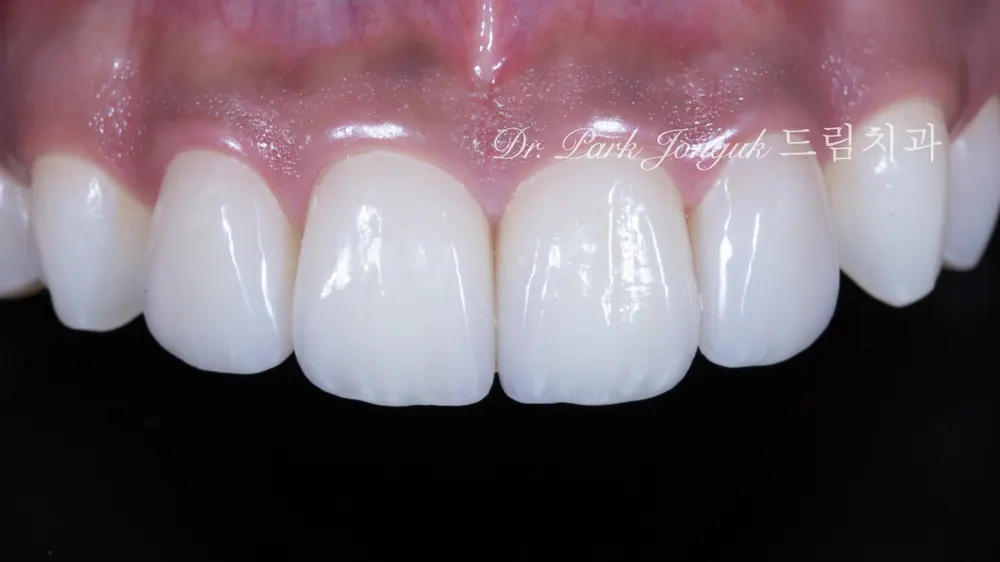
The peg lateral veneers are complete.
The peg lateral was restored perfectly in proportion,
and despite being reduced in size, the central incisor looks completely natural.
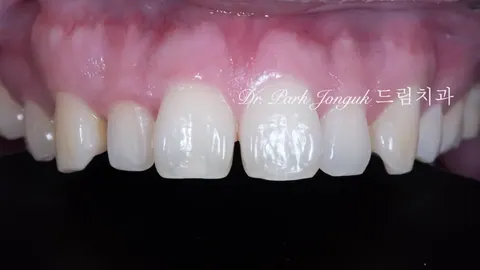
The most striking part is the reproduction of the tooth's anatomical structure.
The expression of the lobes and grooves is alive, creating a three-dimensional look every time light hits the teeth.
In addition, the translucency at the tooth's incisal edge gives the young patient the vitality that matters most.
[Photos 3, 4] Detail from other angles
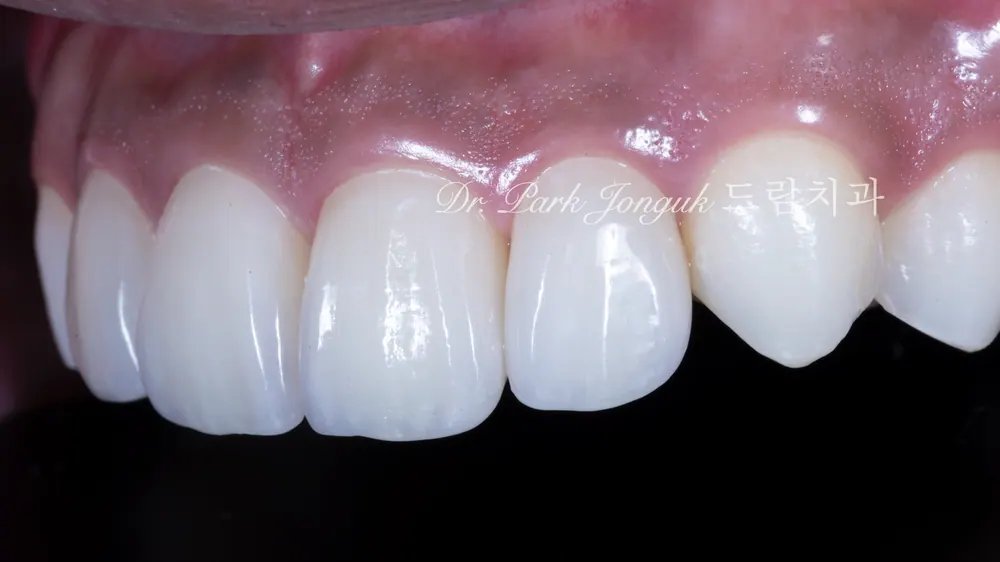
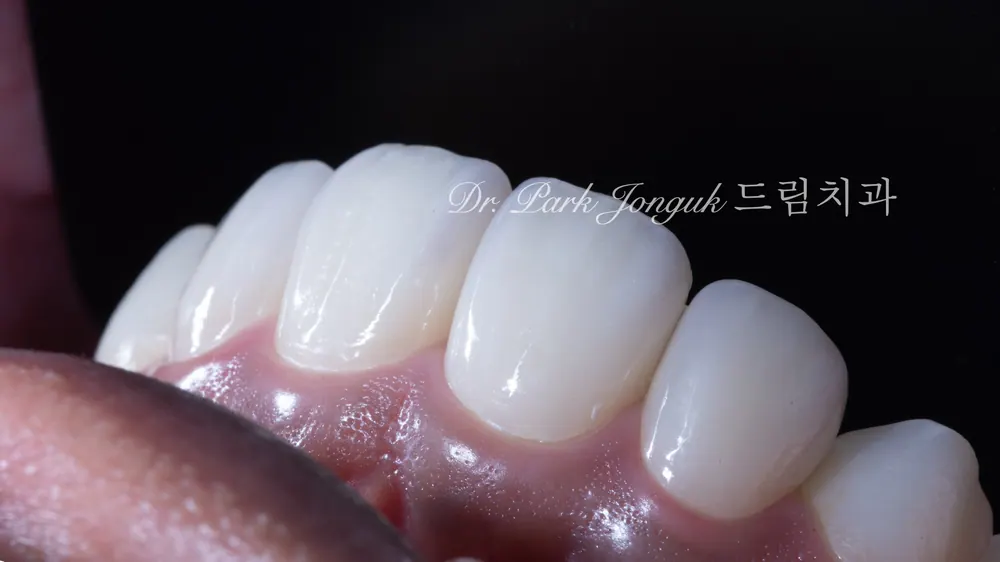
Even from other angles, you can confirm that this three-dimensional surface texture and depth of color are perfectly maintained.
This level of detail is the result of decades of accumulated know-how from our ceramist combined with a conservative-dentistry specialist's anatomical understanding.
4. Proof After Six Years: Unwavering Long-Term Stability (Photos 7, 8, 9)
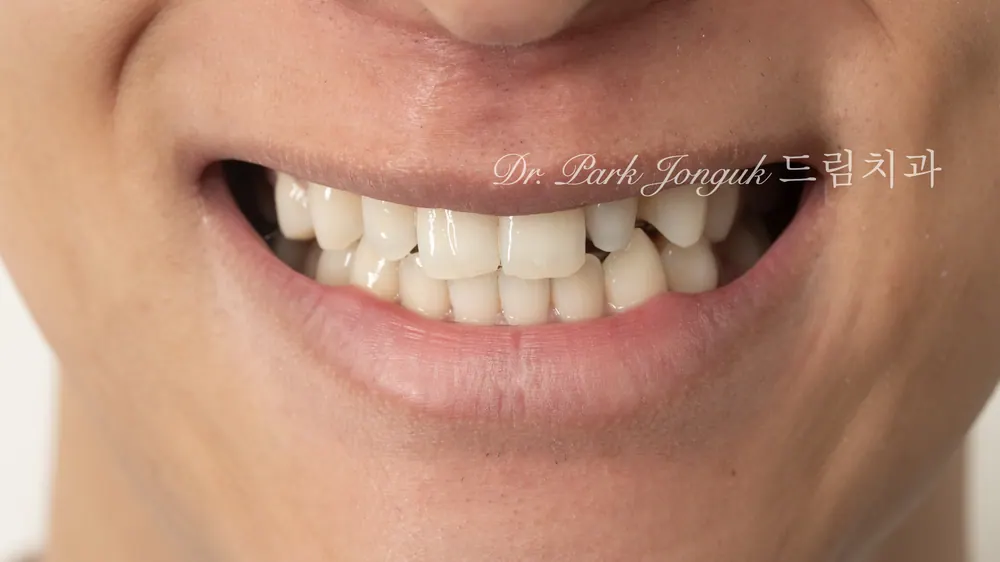
[Photos 5, 6] Smile photos before and after treatment
![[Peg Lateral Veneers] Restoring 'Anatomical Structure' by the Author of Korea's Veneer Textbook — Six Years Prove a Young Tooth's Unchanging Vitality (Front-Tooth Veneers) — photo 6](/column-media/224102311061/06.webp)
The change in the smile before and after treatment is clear.
As the broken tooth alignment and proportions were restored, the patient regained a confident smile.
[Photos 7, 8, 9] Follow-up after six years
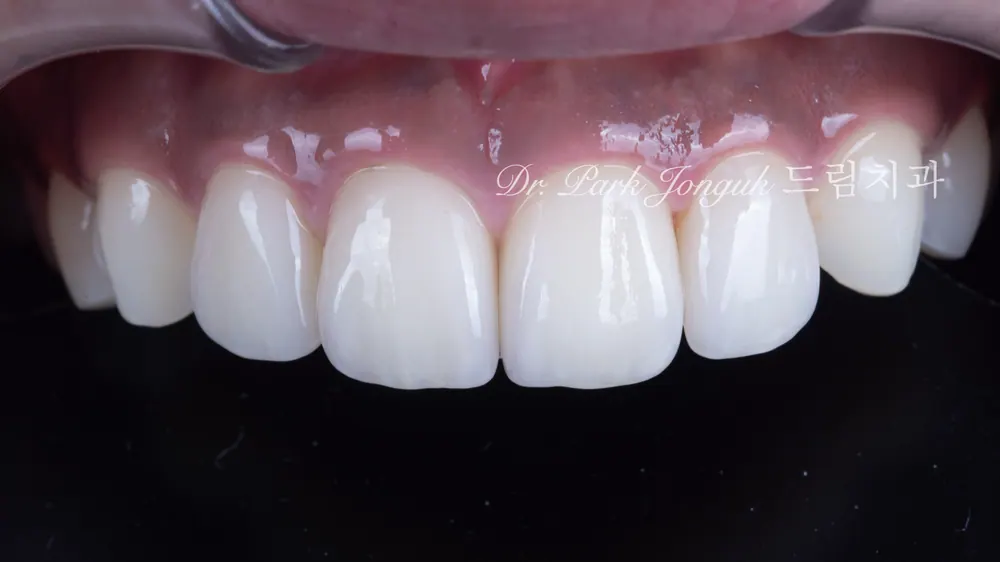
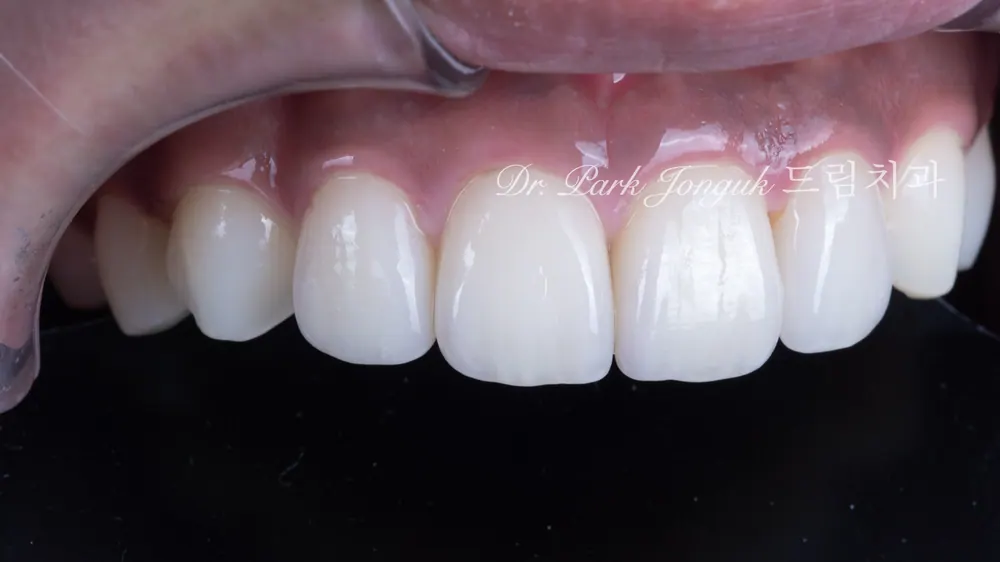
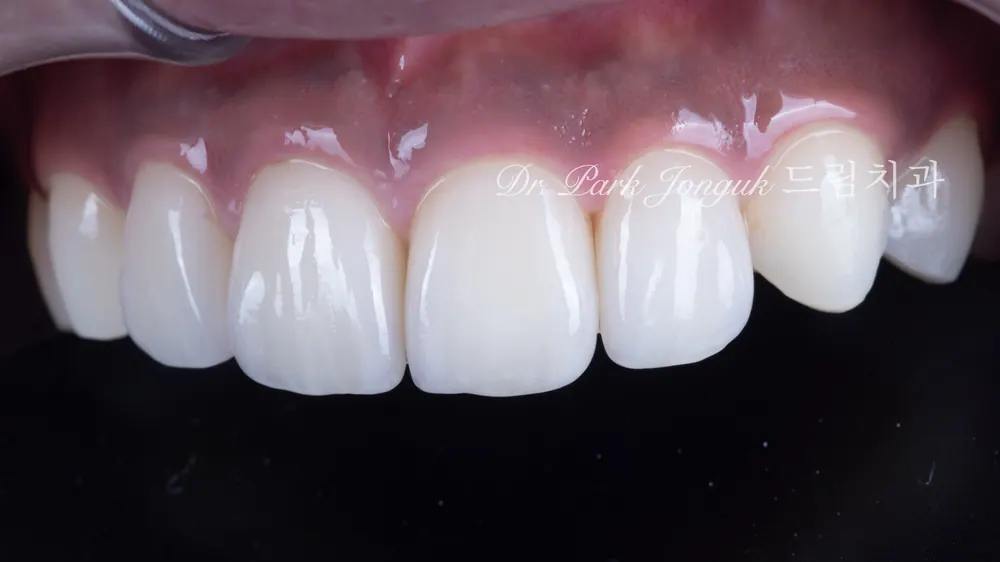
This is what it looks like now, six years after treatment.
The veneers haven't discolored or worn down,
and the anatomical detail — the lobes and grooves — remains perfectly preserved, exactly as it was at the time of treatment.
Peg lateral veneers are difficult to fabricate,
but stability over a period this long is the strongest possible evidence of skill.
Precise bite adjustment and stable bonding to the enamel,
along with durable, hand-made fabrication, are essential conditions for long-term success.
5. Conclusion: Anatomical Restoration and Guaranteed Tooth Longevity
Peg lateral veneers aren't simply about making a tooth bigger.
You have to fully understand the tooth's anatomical structure, strictly follow the principle of minimal reduction,
and use hand-made build-up to express detail that feels genuinely alive.
At our clinic, natural beauty that remains unchanged even after six years,
and guaranteeing the longevity of the patient's teeth, are our top priorities.
If you're considering front-tooth veneers,
choosing a conservative-dentistry specialist who can demonstrate long-term stability is the way to get a result you won't regret.
Peg Lateral Veneers — Top 5 Q&A
Q1. Can peg lateral veneers minimize tooth reduction?
A. Yes, it's far more favorable than with regular veneers.
Because the peg lateral itself is already small, the veneer is bonded only onto the area that's lacking,
so treatment can proceed with no-prep or minimal-prep, hardly reducing the tooth at all.
Q2. Why are "lobes" and "grooves" esthetically important?
A. These fine anatomical structures create three-dimensionality and translucency on the tooth surface.
Without this detail, veneers look flat and artificial.
It's an essential element for expressing a young, natural-looking tooth.
Q3. What's the secret to peg lateral veneers lasting more than six years?
A. Precise bite adjustment and stable bonding to the enamel are the key.
In addition, the hand-made fabrication method we insist on has excellent durability, giving it high long-term stability.
Q4. How should I care for my teeth after peg lateral veneer treatment?
A. Care for them the same way you would natural teeth,
and since gaps can develop between teeth, in particular, make flossing a habit,
and it's important to check the margins of the veneers through regular checkups.
Q5. I'm worried the tooth proportions still won't match even after peg lateral veneers.
A. Through precision wax-up diagnosis before treatment,
we calculate and design the ideal proportion between the central and lateral incisors precisely.
Because we calculate the proportions first, we can achieve a harmonious result without failure.
![[Peg Lateral Veneers] Restoring 'Anatomical Structure' by the Author of Korea's Veneer Textbook — Six Years Prove a Young Tooth's Unchanging Vitality (Front-Tooth Veneers) — photo 10](/column-media/224102311061/10.webp)
This article is a clinical note written by Dr. Park Jonguk of Dream Dental Clinic, Gangnam; the original was published on his blog. The photographs shown are real cases he treated. Results vary with each patient’s condition, and every procedure carries the possibility of individual variation and side effects.
![[Peg Lateral Veneers] From a Strong-Looking Impression to a Soft, Feminine Smile — The Esthetics of Front-Tooth Veneers](/column-media/224178565168/thumb.webp)
Quick Consult
Request a Callback
Leave your number and we will call you back during clinic hours.
Request Received
We will contact you during clinic hours. For urgent matters, please call +82-2-3448-0028.