
[No-Prep Veneers] The Textbook Case for a Teen's Gapped Teeth and Peg Lateral — Dr. Park Jonguk's 3 Principles
Hello.
I'm Park Jonguk, a dentist who has focused on cosmetic front-tooth treatment in Apgujeong for 20 years.
With the know-how built from resolving countless front-tooth concerns,
preserving my patients' precious natural teeth is my number one treatment philosophy.
Today I'd like to talk about no-prep veneers,
something many people dream of but are often confused about whether they can actually get.
I'll explain in detail why no-prep veneers were the most ethical and ideal treatment for a patient in her late teens, and what conditions made that possible.
1. An Expert's View: The Conditions for No-Prep Veneers Are Limited
The word 'no-prep' is appealing, but it cannot be applied to every patient.
When a restoration is bonded on without reducing the tooth,
the tooth's volume can become excessive, causing it to look 'protruding' or bulky.
For the sake of our patients' lifelong tooth health,
we only recommend no-prep veneers when the following three principles are met.
The patient in her late teens featured today met all three of these principles,
especially having small teeth with gaps between them,
making her the perfect candidate for no-prep veneers.
2. Case Study: Diagnosis of a Teen Patient Where Tooth Preservation Was Essential
[Photo 1] Before treatment — gapped teeth and a peg lateral
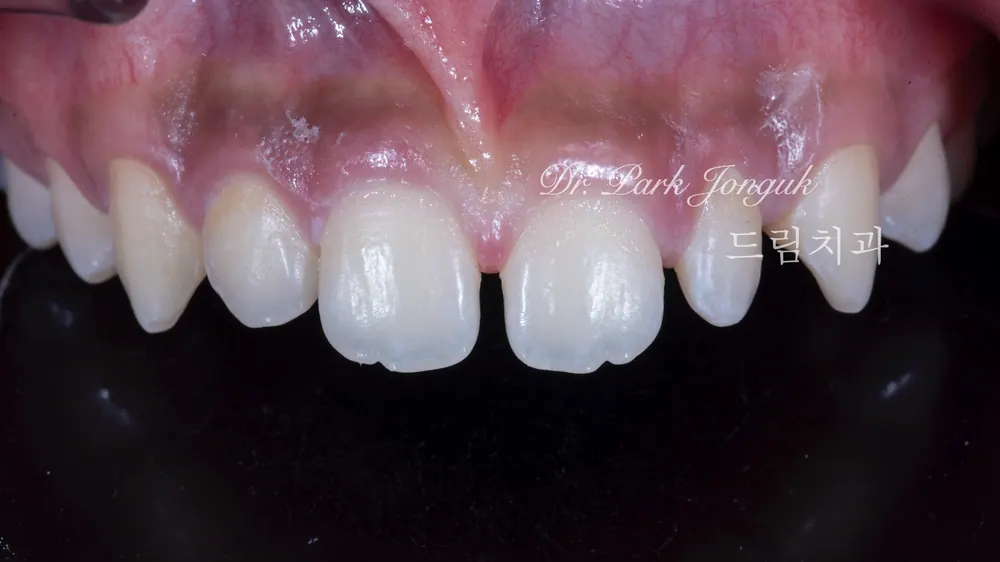
The patient was young, in her late teens,
and even her central incisors were smaller than average,
while the lateral incisor was a classic peg lateral.
The most noticeable issue was that spaces (diastemas) had opened up between all the teeth.
These gaps caused aesthetic concern,
but at the same time they became golden extra space for no-prep veneers.
The younger the patient, the more important it is not to damage the enamel
and to use a no-prep approach that only builds up shape, for the sake of the teeth's long-term lifespan and stability.
So we addressed the gapped-teeth veneers and the peg-lateral veneers together,
and finalized a treatment plan that preserved 100% of the natural tooth structure.
3. Precision Design for No-Prep: Verification Through Wax-up and Trial
[Photo 2] Precision wax-up diagnosis — the treatment's design blueprint
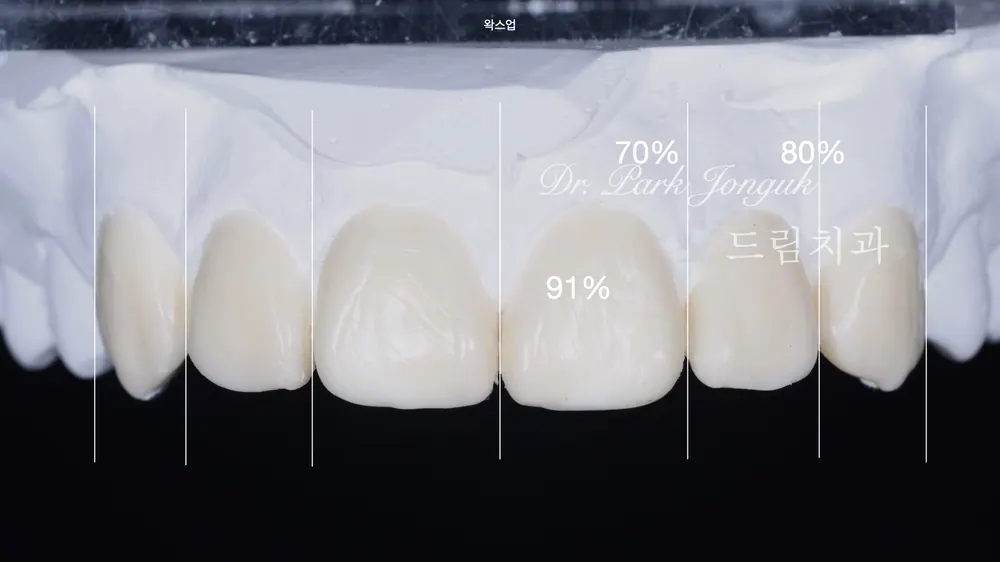
To eliminate any margin of error, a precision wax-up diagnosis is essential.
How much to fill the gaps,
and how much to enlarge the shape of the peg lateral so it forms
the most ideal proportion with the surrounding teeth, is all mapped out in advance.
Without this process, the gaps might be closed once the veneers are made,
but the teeth could end up too large, looking awkward or even protruding.
A precise wax-up prevents this kind of failure from the outset.
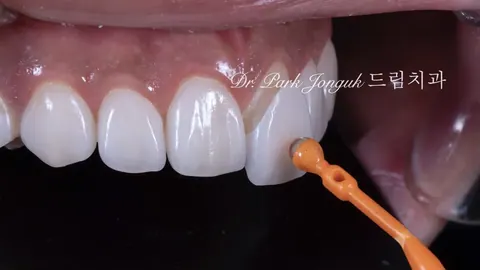
[Photos 3, 4] Veneer trial — proof of no-prep
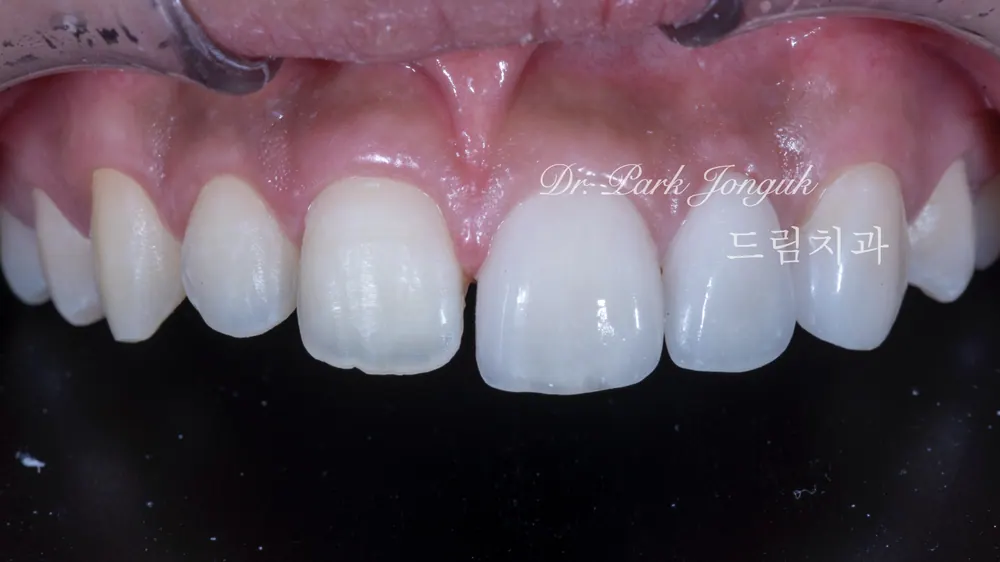
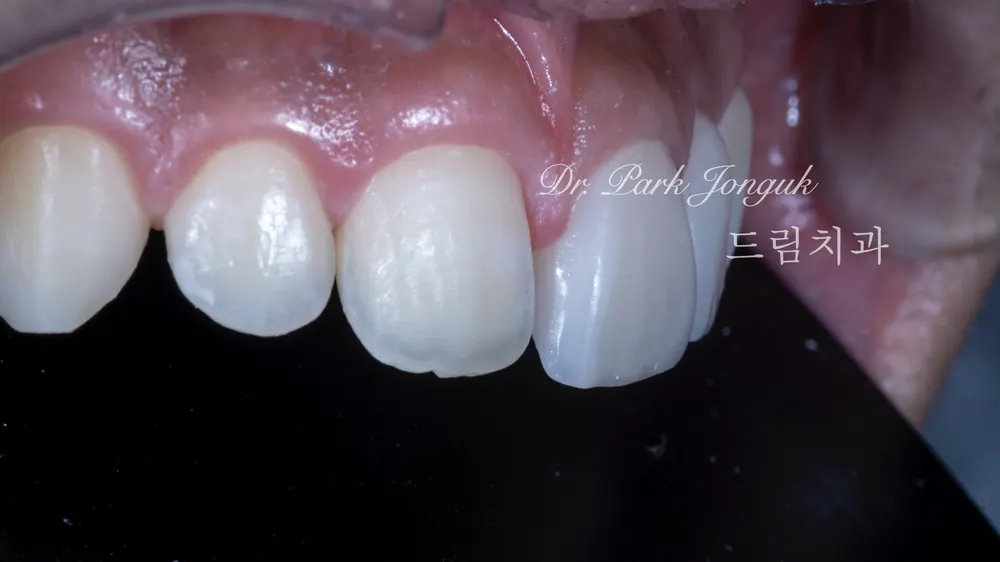
This is the clearest evidence photo that we performed truly no-prep veneers.
The finished veneer was placed on only one side,
and since none of the patient's tooth was reduced at all, you can see the restoration
is simply added on top of the existing tooth.
The shape and size of the tooth were improved without reducing even 0.1mm.
100% tooth preservation: a procedure like this, which improves shape without touching the tooth surface at all, preserves 100% of the patient's precious natural teeth,
and dramatically reduces the chance of side effects such as sensitivity after treatment.
4. Mastery of Technique: A Natural Tooth Recreated Through Hand-Made Build-up
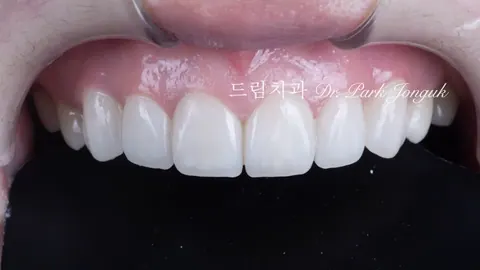
[Photos 5, 6, 7] Final result after treatment — lifelike detail
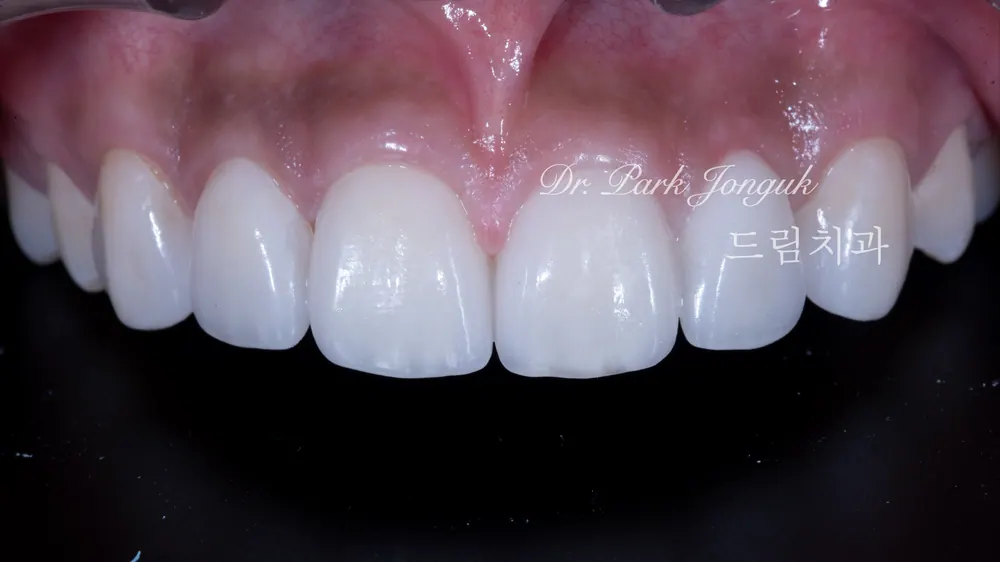
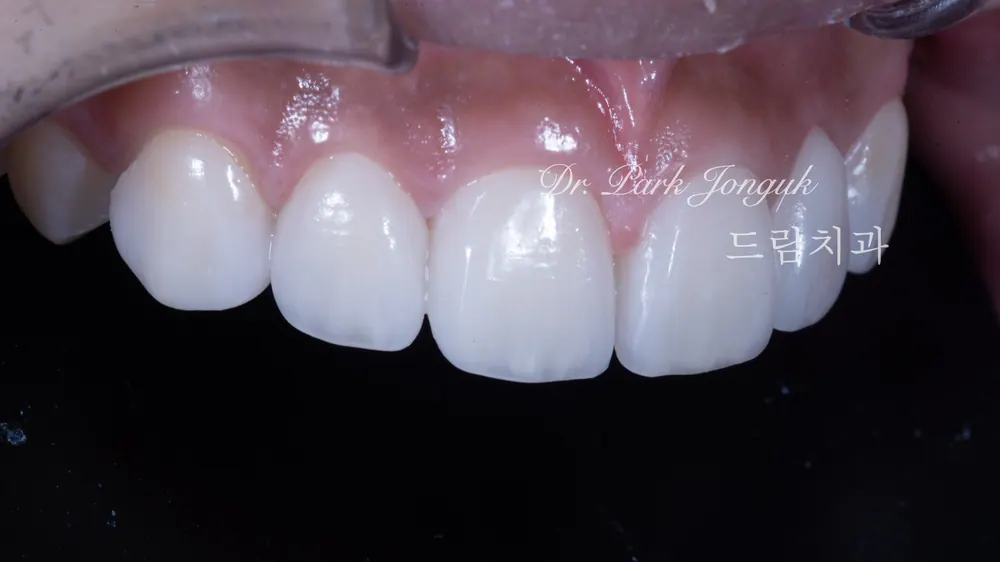
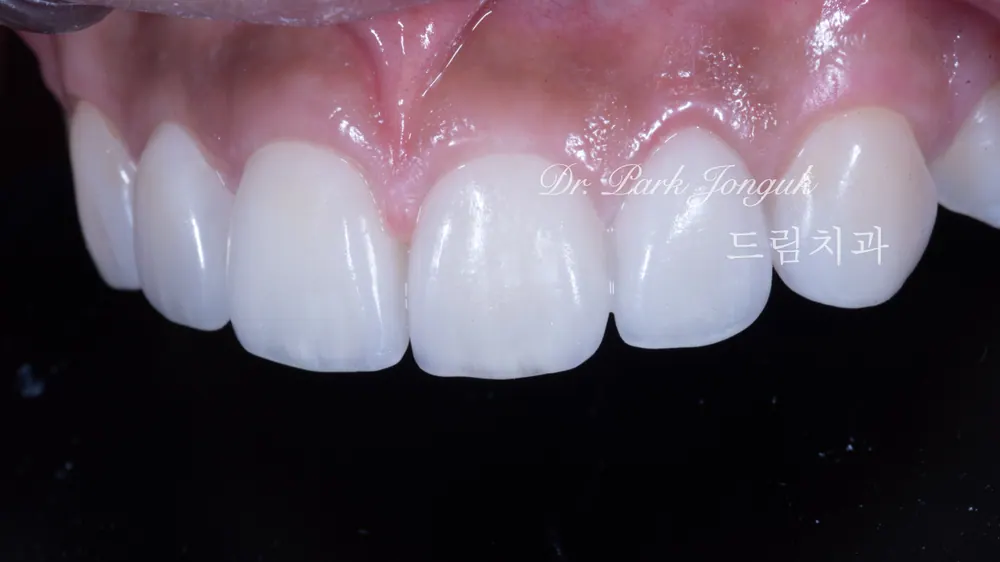
The no-prep veneer treatment was completed successfully.
The small, gapped teeth are gone without a trace, and a well-balanced smile is complete.
But this wasn't simply about filling in shape and closing gaps.
The hand-made build-up method we've insisted on for 20 years is what completed the true value of this treatment.
Restoring dimensionality: ordinary machine-milled veneers
tend to have a flat, monotone color that looks artificial.
But hand-made build-up reproduces the natural tooth's varied color layers and translucency,
reviving fine anatomical details such as lobes and grooves.
The vitality of youthful teeth: thanks to these fine anatomical details,
even though the tooth volume increased to fill the gaps, the teeth don't look bulky at all,
and they keep a clear, lively feel when they catch the light.
This gives a vibrant smile that suits a teenage patient best.
5. Conclusion: Combining Ethical Principle with Aesthetic Perfection
No-prep veneers, whether for peg-lateral veneers or
gapped-teeth veneers, are the most ethical and ideal treatment when specific conditions are perfectly met,
resolving aesthetic concerns without damaging the teeth.
Get an accurate diagnosis from Dr. Park Jonguk, who has 28 years of experience as a dentist and 20 years of front-tooth cosmetic know-how,
and complete the most beautiful smile while preserving your precious natural teeth.
6. Frequently Asked Questions (FAQ)
Q1. With no-prep veneers, is tooth reduction really 0%?
A. Yes, in principle, tooth reduction is 0%. However, there may be times when the tooth edge is sharp and needs minor smoothing, but this is always kept within limits that preserve the enamel on the tooth surface.
Q2. What are the pros and cons of no-prep veneers?
A. Pros: no tooth reduction means no sensitivity, 100% of the tooth's natural lifespan is preserved, and removal is easy later on. Cons: it isn't possible if there's protrusion or irregular alignment, and because the tooth volume increases, you may feel some sense of bulkiness at first.
Q3. If a peg lateral gets no-prep veneers, don't they come off easily?
A. No. Bonding to enamel, the hardest layer of the tooth, actually creates stronger adhesion. We use a protocol that maximizes bond strength, and since the tooth is small, no-prep veneers have a proportionally larger bonding area, making them stable.
Q4. Is it okay to perform veneer treatment on a teenager?
A. It should only be done carefully once the permanent teeth are fully settled and growth has finished, and only when, as in this case, a no-prep approach that preserves the tooth is possible. The younger the patient, the more essential it is to choose a conservative treatment that doesn't damage the teeth.
Q5. Do no-prep veneers also require hand-made build-up?
A. Yes, it's essential. Because no-prep veneers are bonded on top of the tooth and add thickness, hand-made build-up technique is absolutely necessary to resolve any artificial bulkiness and give the veneer natural translucency and dimension.
![[No-Prep Veneers] The Textbook Case for a Teen's Gapped Teeth and Peg Lateral — Dr. Park Jonguk's 3 Principles — photo 8](/column-media/224103172039/08.webp)
This article is a clinical note written by Dr. Park Jonguk of Dream Dental Clinic, Gangnam; the original was published on his blog. The photographs shown are real cases he treated. Results vary with each patient’s condition, and every procedure carries the possibility of individual variation and side effects.
Quick Consult
Request a Callback
Leave your number and we will call you back during clinic hours.
Request Received
We will contact you during clinic hours. For urgent matters, please call +82-2-3448-0028.