
Chipped-Tooth Veneers: A Smile-Line Makeover Story for a Woman in Her 20s
A woman in her 20s whose front teeth were chipped bit by bit and whose smile line wasn't attractive,
how did veneers change things for her?
A Gangnam veneer director with 28 years of experience shares a real case of restoring chipped teeth to a natural, clean, open look.
Chipped Front Teeth: She Couldn't Just Keep Hiding Them
Hello. I'm Park Jonguk, director of Dream Dental Clinic, who has practiced veneer treatment in Gangnam for 20 years. When your front teeth are chipped bit by bit, it's distracting every time you smile, and your confidence takes a hit too.
Chipped front teeth are an especially heavy worry at a young age, in your 20s.
You end up covering your mouth every time a photo is taken, and hesitate to laugh out loud.
The case I'd like to introduce today is about chipped front teeth and an unattractive smile line
that were completely improved with veneers — the story of a patient in her 20s.
This patient was a woman in her 20s who came to us with several concerns.
Her front teeth were chipped bit by bit, the tooth shape wasn't attractive, and her alignment was a little off as well.
Above all, she said she wanted her teeth to look cleaner and more open.
Her smile line in particular looked quite unattractive when she smiled, so we made sure to focus on this part.
Before Treatment: What Was the Problem?
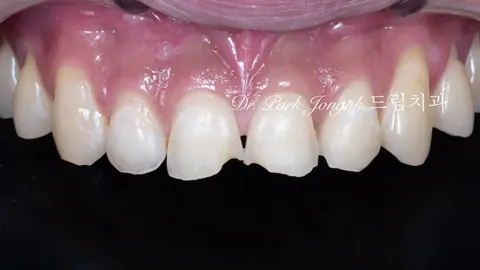
Looking at her condition before treatment, several problems were visible (Photo 1).
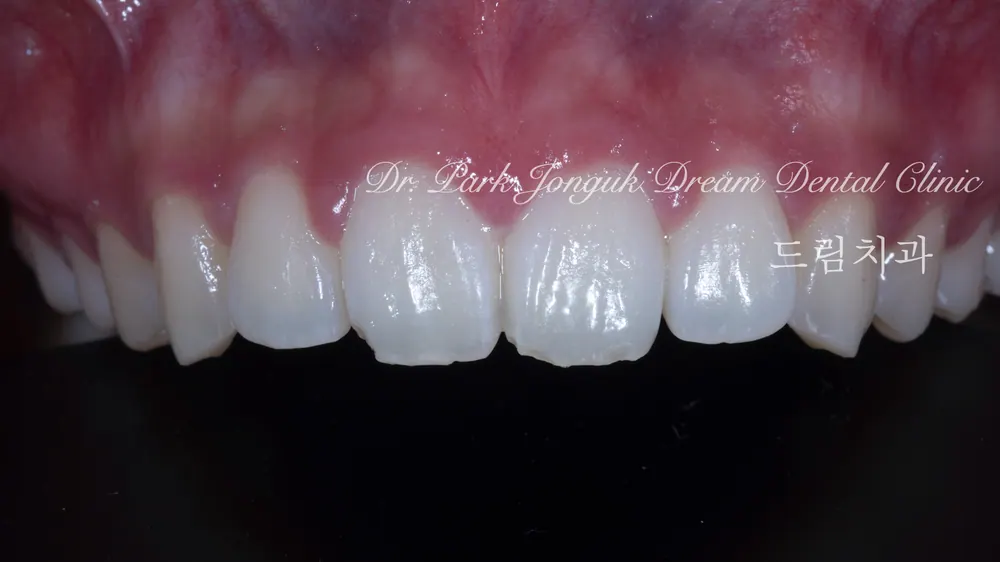
Her front teeth were chipped bit by bit, the tooth-edge line was irregular, and the tooth shapes weren't in harmony.
Her alignment wasn't fully even either, the smile line looked unnatural, and overall there was no clean, open feel.
Chipped front teeth aren't just a cosmetic problem.
Food tends to get caught in the chipped area, there's a risk of further chipping, and it can weigh on you psychologically as well.
We carried out a precise analysis of her teeth (Photo 2).
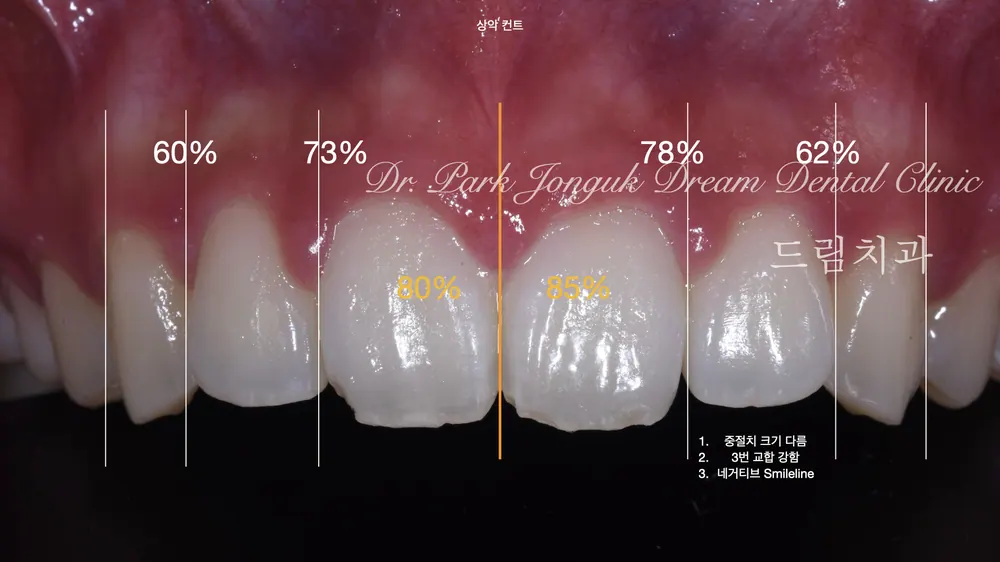
For veneer treatment to succeed, you can't just look at the chipped part alone —
the teeth as a whole need to be analyzed comprehensively.
We measure the size and proportions of the teeth, identify problems with the tooth shape, and also take bite issues into account.
We analyzed the ratio between the central and lateral incisors, the overall tooth size, and the harmony with her face size,
and also checked the shape of each tooth, the tooth-edge line, and left-right symmetry.
We also analyzed how the upper and lower teeth meet and the bite force, and factored in the bite after the veneers as well.
The smile line was another important part of the analysis.
We checked the harmony between the tooth edges and the lower lip, how much tooth shows when smiling, and the overall balance of the smile.
Only by taking all of this into account can you achieve a natural, beautiful result.
Previewing the Result with a Wax-Up Precision Diagnosis
We estimated the amount of tooth reduction and checked the tooth shape built in wax (Photos 3, 4).
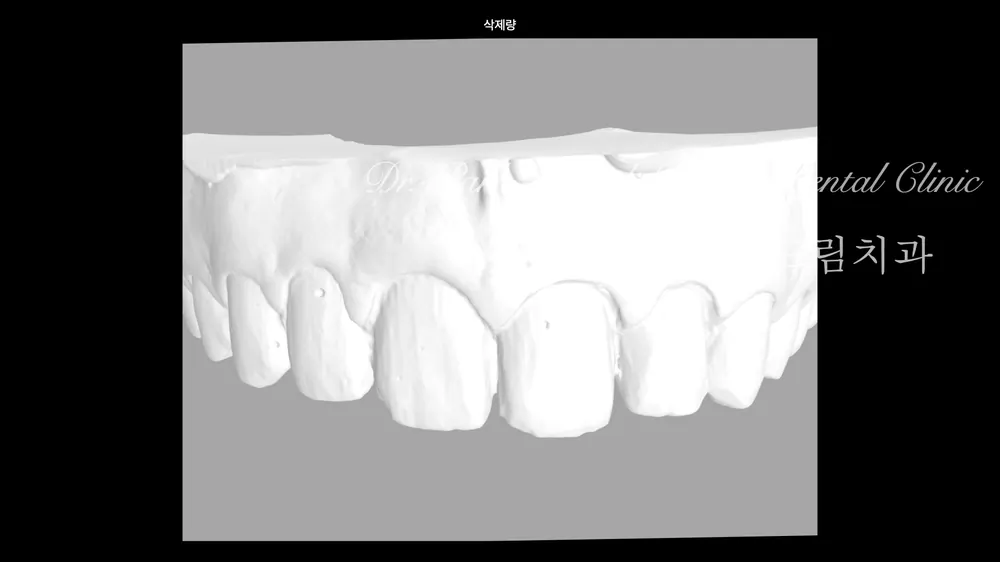
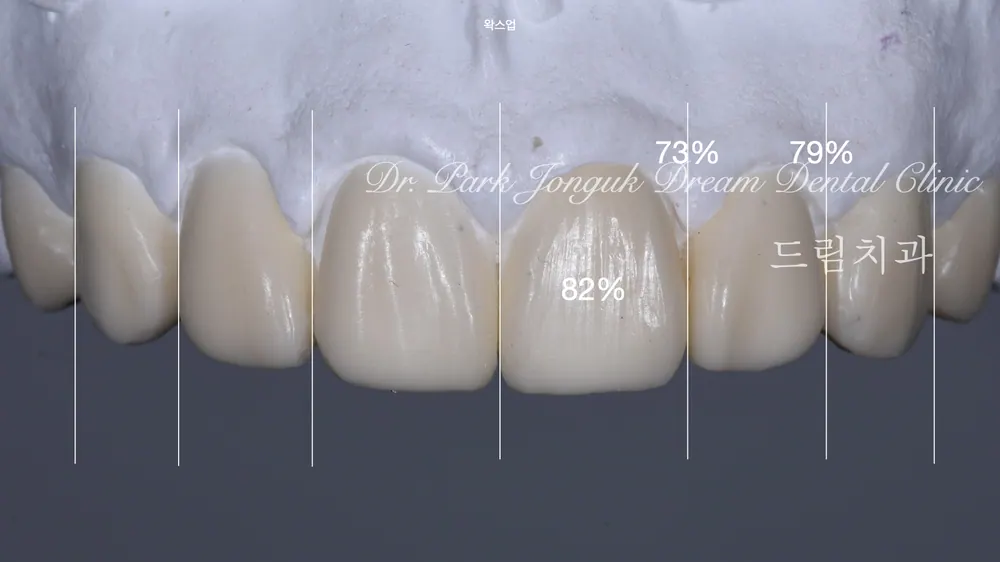
This process is called a wax-up precision diagnosis.
The wax-up precision diagnosis is the single most important step in veneer treatment.
It's the process of shaping the teeth in wax to preview the final result in advance,
and at this stage we also estimate the amount of tooth reduction and decide on the final tooth shape.
In the wax-up, we decided which areas to reduce and by how much,
how to preserve healthy tooth structure through minimal reduction, and how to remove the chipped areas.
We decided to make the final tooth shape clean and open, with natural proportions and an attractive tooth-edge line.
Improving the smile line mattered too. We planned to create a harmonious line when she smiled,
balance it with the lower lip, and produce a bright, radiant smile.
The importance of the wax-up can't be overstated.
Without a wax-up, the final result can't be predicted,
a gap opens up between the patient's and the dentist's expectations, controlling the amount of reduction becomes difficult, and satisfaction ultimately suffers.
With a wax-up, on the other hand, the result can be checked in advance, adjustments and refinements are possible,
the exact amount of reduction can be predicted, and a clear goal can be shared with the patient.
A Precise Treatment Process
Here the teeth have actually been reduced according to the wax-up plan (Photo 5).
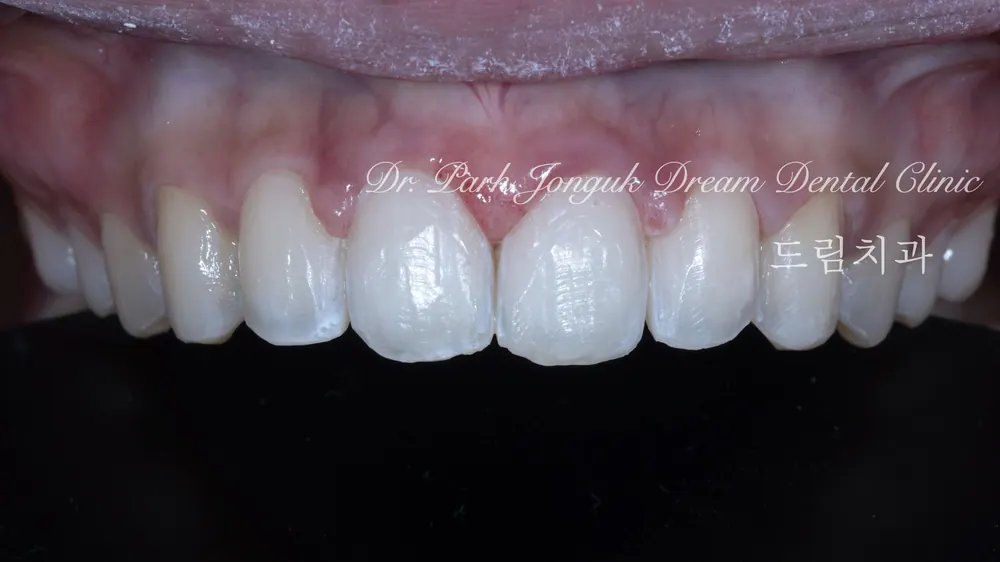
We reduced only where it was truly necessary, and only by a minute amount.
The reduction principle was clear.
Reduce only where truly necessary and only minutely, remove the chipped areas,
preserve as much healthy tooth structure as possible, and stay within the enamel when reducing.
There are several reasons minimal reduction matters.
For tooth health, enamel needs to be preserved, sensitivity needs to be prevented, and the lifespan of the tooth needs to be extended.
For the long-term outlook, it helps if retreatment is ever needed, and tooth damage needs to be kept to a minimum.
For a natural look, a thinner veneer becomes possible, which allows for a more natural result.
The advantage of veneers for chipped teeth is that since the chipped part has to be removed anyway,
the rest of the healthy tooth structure can be preserved as much as possible.
A Natural, Clean Final Result
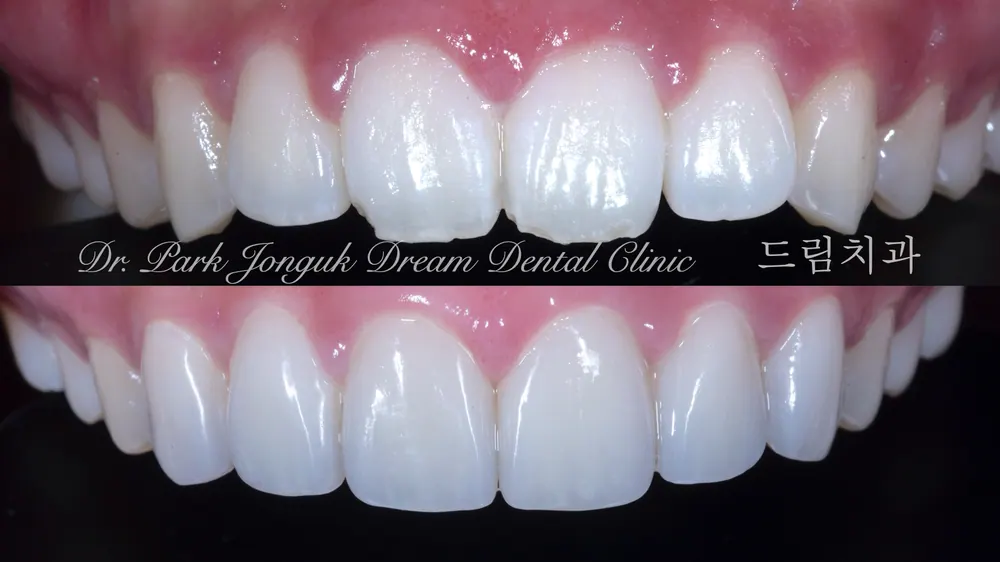
Her look after treatment was genuinely natural, bright, clear, and clean (Photos 6, 7, 8).
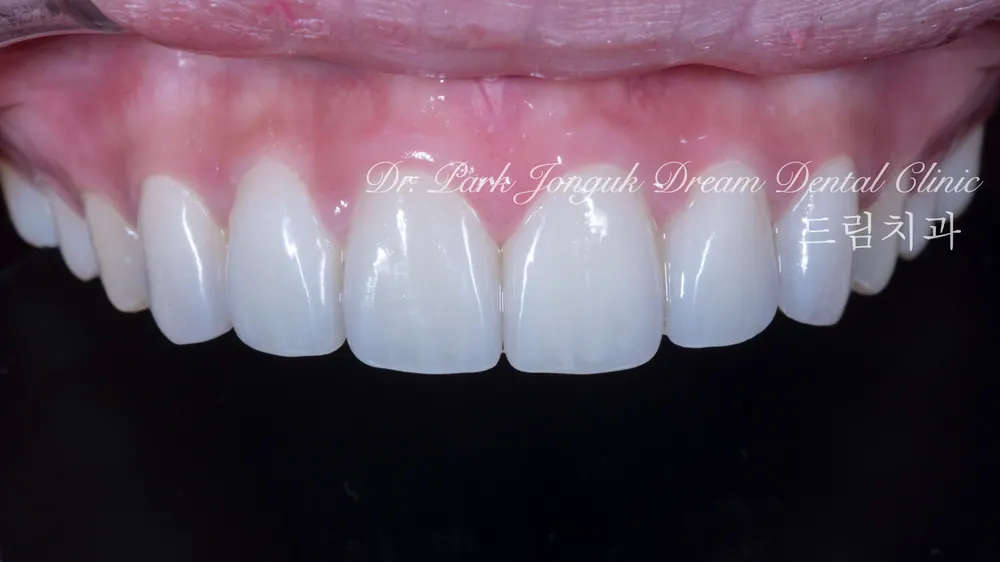
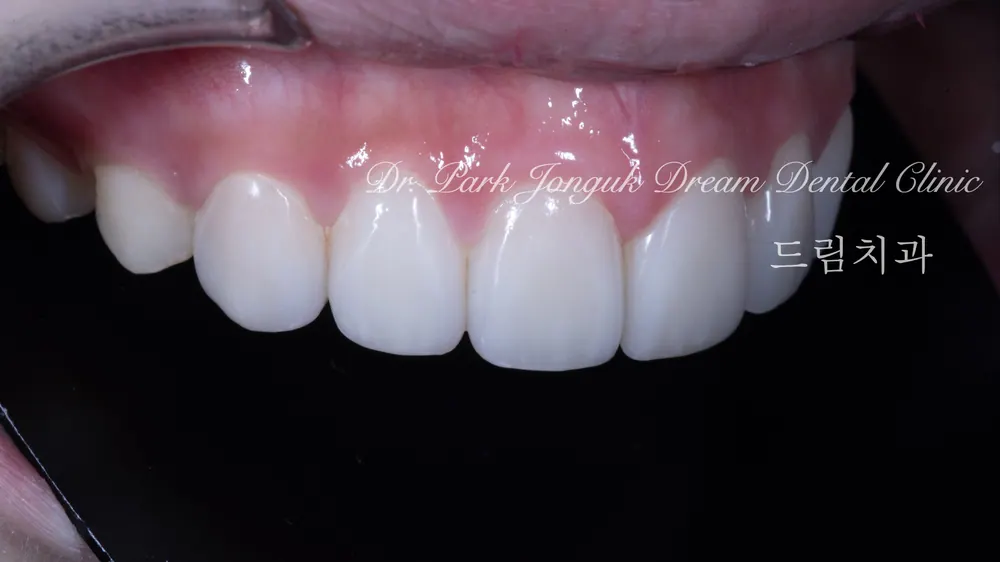
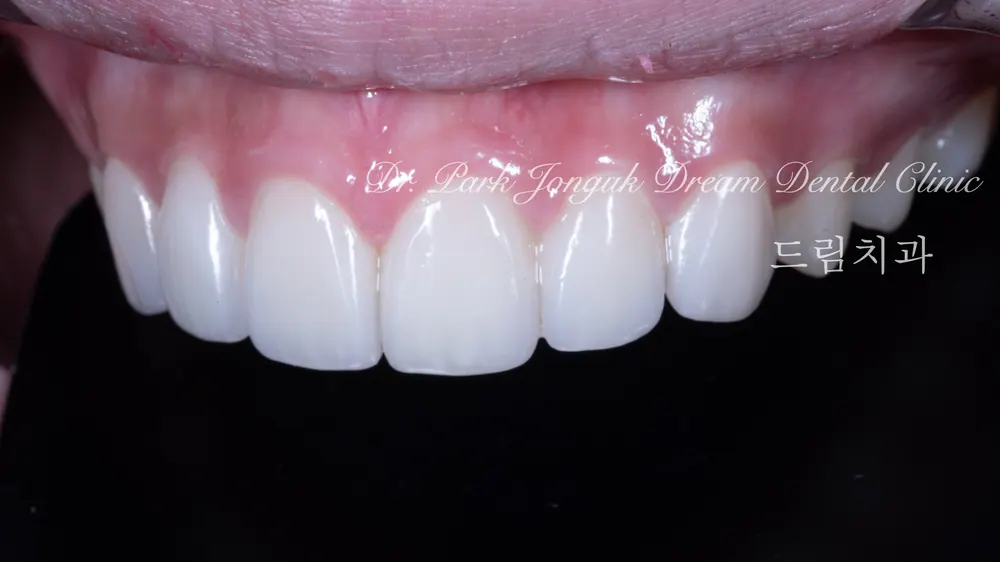
Before treatment, she had chipped front teeth, an irregular tooth-edge line,
an unattractive tooth shape, and uneven alignment, all giving a cramped, stifled impression.
After treatment, her teeth were completely restored with an even tooth-edge line,
harmonious tooth shapes, and tidy alignment, giving off a clean, open feel.
There were three keys to the natural look.
First, a bright, clear shade. We used a bright tone suited to her 20s with a translucent expression to create a lively feel.
Second, a clean shape. We used a size that wasn't cramped, with a generous feel to the teeth, to create a bright smile.
Third, a natural texture. We brought out the surface texture, light reflection, and three-dimensionality so the teeth would look just like real ones.
The before-and-after smile photos show the change vividly (Photos 9, 10).
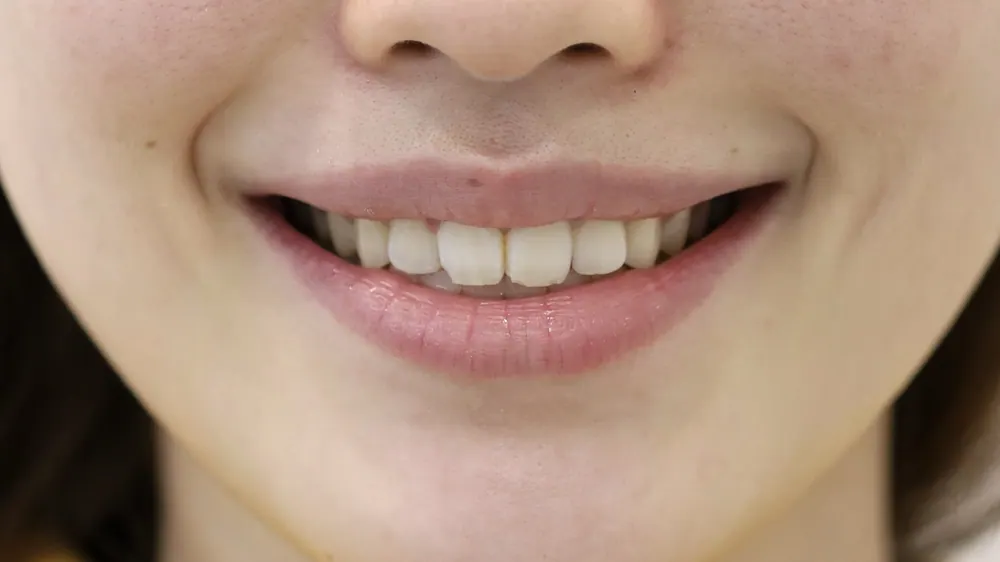
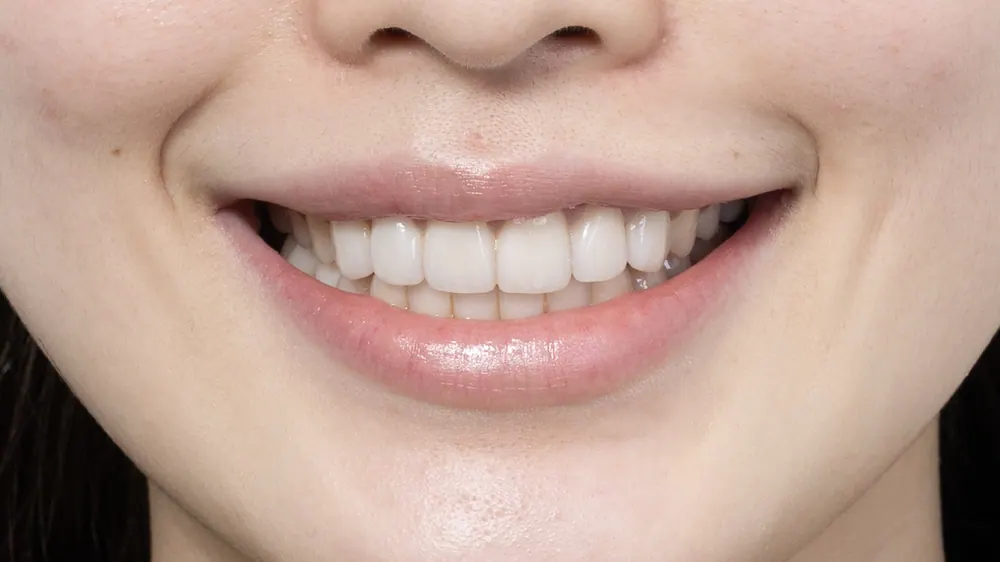
It turned out wonderfully. Her smile before treatment showed an irregular tooth-edge line with chipped areas visible,
an unnatural feel, and a lack of confidence,
while her smile after treatment showed a smoothly flowing tooth-edge line with flawless teeth,
a harmonious, radiant feel, and an air of confidence.
The smile line refers to the curve formed by the tooth edges and the lower lip when you smile.
When this line is smooth and harmonious, the smile looks beautiful.
In this case, we precisely designed the tooth-edge line to completely improve the smile line.
We designed the tooth-edge line so that the curve formed by the tooth edges and the lower lip flows smoothly when she smiles,
adjusted the height of each tooth, matched left-right symmetry, and considered the overall harmony.
We analyzed everything from her lip shape and smiling habits to her face shape to find the most attractive smile line for her.
Chipped Teeth: Why Veneers Are the Best Option
There are several ways to treat a chipped tooth.
It can be filled with resin, or it can be covered with a crown.
For front teeth, however, veneers are the best choice.
Resin treatment is inexpensive and quick, but it chips again easily, discolors, and has weak durability.
A crown has high strength, but it requires reducing a lot of tooth structure and is thick.
Veneers offer excellent aesthetics, good durability, and can be done with minimal tooth reduction.
The cost is higher, but in the long run it's the wisest choice.
Veneers completely cover the chipped area, improving both color and shape,
and making the tooth look like a natural one.
They act as a protective layer so the tooth doesn't chip further, and they increase its strength too.
They can correct the tooth shape, tidy up the alignment, and even improve the smile line.
Treatment is completed in 3-4 weeks with no need for orthodontics, giving an immediate result.
What Makes a Successful Veneer Case for Chipped Teeth
After handling countless chipped-tooth cases over 28 years, there's something I've become certain of.
Veneers for chipped teeth are not a simple treatment.
Restoring the tooth is just the basics — it's about creating a beautiful smile by considering the overall harmony and the smile line as well.
Especially at a young age, in your 20s, a bright, radiant, clean feel matters.
The key to success is predicting the exact result with a wax-up precision diagnosis,
preserving healthy tooth structure with the minimal-reduction principle, creating a beautiful smile through smile-line design,
achieving a natural look through handmade build-up,
and designing with a sense that suits the patient's age.
Do you cover your mouth every time you smile because of chipped front teeth?
Reclaim a confident, radiant smile with veneers.
Q&A: Common Questions About Veneers for Chipped Teeth
Q1. Can't a chipped tooth just be filled with resin?
A. Resin can be used to treat it, but it has limits. Resin discolors over time and chips again easily. Front teeth in particular take a lot of force when chewing, so resin often comes off or chips. Veneers are ceramic, so they don't discolor and are far stronger, making them much less likely to chip. The initial cost is higher, but in the long run it's far more economical and aesthetic.
Q2. Can a chipped tooth also be treated with minimal reduction?
A. Yes, it can. This case is a good example. The chipped part has to be removed regardless, but the remaining healthy structure can be preserved as much as possible. Through a wax-up precision diagnosis, we plan out exactly which areas to reduce and by how much beforehand, and reduce only where it's truly necessary, and only minutely.
Q3. How do you make the smile line look attractive?
A. The smile line is precisely designed at the wax-up stage. We design the tooth-edge line so that the curve formed by the tooth edges and the lower lip flows smoothly when smiling. We analyze everything from the patient's lip shape and smiling habits to their face shape to find the most attractive smile line.
Q4. How is veneer treatment different for someone in their 20s?
A. A design suited to the patient's age matters. A bright, lively, energetic feel suits someone in their 20s. The shade is kept bright rather than too dark, bringing out translucency for a young, vibrant look. The shape is also designed to feel clean and radiant.
Q5. Can veneers chip again after treatment?
A. With proper care, they almost never chip again. Veneers are ceramic, so they're stronger than natural teeth. As long as you avoid biting down on very hard foods with your front teeth, and wear a night guard if you grind your teeth, you can use them without issue for 15-20 years or more.
This article is a clinical note written by Dr. Park Jonguk of Dream Dental Clinic, Gangnam; the original was published on his blog. The photographs shown are real cases he treated. Results vary with each patient’s condition, and every procedure carries the possibility of individual variation and side effects.

Quick Consult
Request a Callback
Leave your number and we will call you back during clinic hours.
Request Received
We will contact you during clinic hours. For urgent matters, please call +82-2-3448-0028.