
A Case of Partial No-Prep Veneers for Gapped Teeth
Hello, I'm Park Jonguk, director of Dream Dental Clinic.
There are cases where spaces open up between the teeth.
Sometimes it's because the teeth are too small,
and sometimes the teeth are a normal size,
but the jawbone is too large,
and either way, spaces form between the teeth.
There are also people who didn't have gaps when they were young,
but developed them as they got older.
After orthodontic treatment, the force pulling the teeth back to their original position can be strong,
and that too can cause gaps to reopen.
There are three treatment options when there are gaps like this:
orthodontics, veneers, and resin (bonding) treatment.
First, orthodontics
is a good method up through the teens and twenties.
But for someone in their 30s or older who didn't have gaps before and developed them with age,
if there's an occlusal issue or the retainer isn't worn properly after orthodontics,
the gaps can reopen right away,
so I recommend veneers or resin bonding over orthodontics in that case.
For people in their 40s and 50s,
orthodontics is often difficult,
so I recommend veneers or resin bonding for this group as well.
For patients still growing, or those in their early-to-mid twenties who have had gaps since childhood,
orthodontics works well.
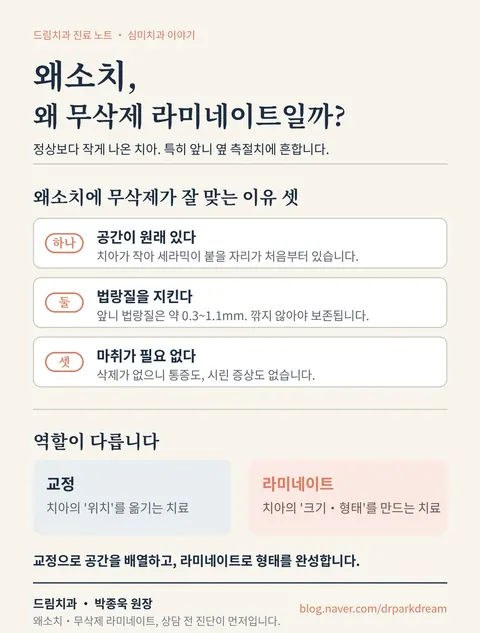
Resin and veneers differ greatly in material.
You can think of resin as a kind of plastic.
It starts to discolor after 1 to 2 years.
Discoloration is a serious drawback for front teeth,
and while the treatment is simple and inexpensive,
it has the problem of not being a long-lasting solution.
With veneers, on the other hand,
a ceramic called 'feldspathic' is used,
and making ceramic this extremely thin
without any tooth reduction, entirely no-prep,
is technically quite demanding,
so you can think of it as something only a specialized clinic can do.
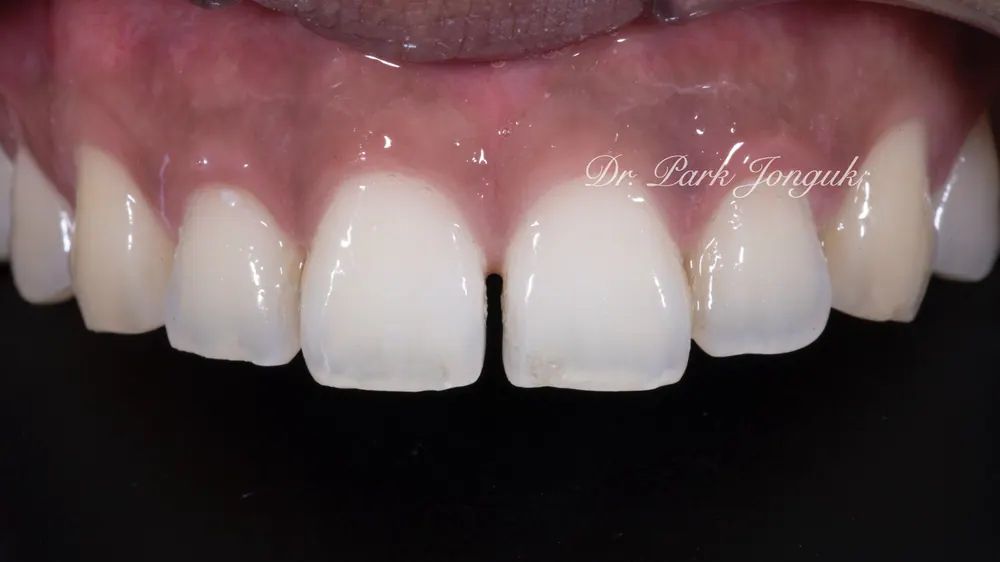
Having a gap right in the middle
of the front teeth is actually quite common.
As I mentioned earlier,
given her situation, veneer treatment rather than orthodontics was needed.
Since the gap developed with age and she was already over 40,
orthodontics carries a high risk of relapse,
and in terms of the bite relationship with the lower teeth as well,
it wasn't a good option, so the gapped-teeth veneer above
was a case that could be treated as no-prep, so she decided to proceed with it.
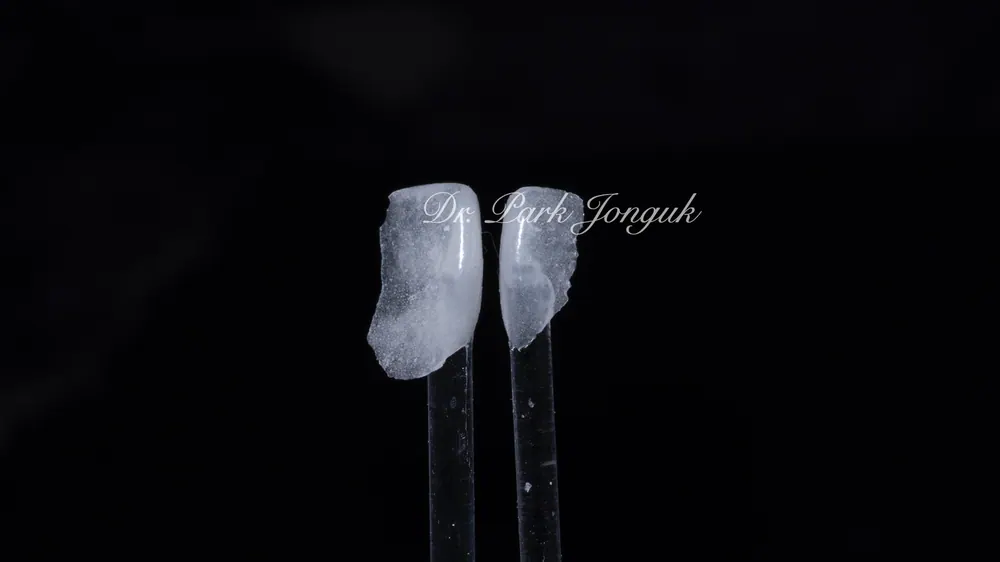
This is how an extremely thin ceramic veneer is made.
This process is only possible by hand, without exception.
With the one-day method,
you can consider it absolutely impossible.
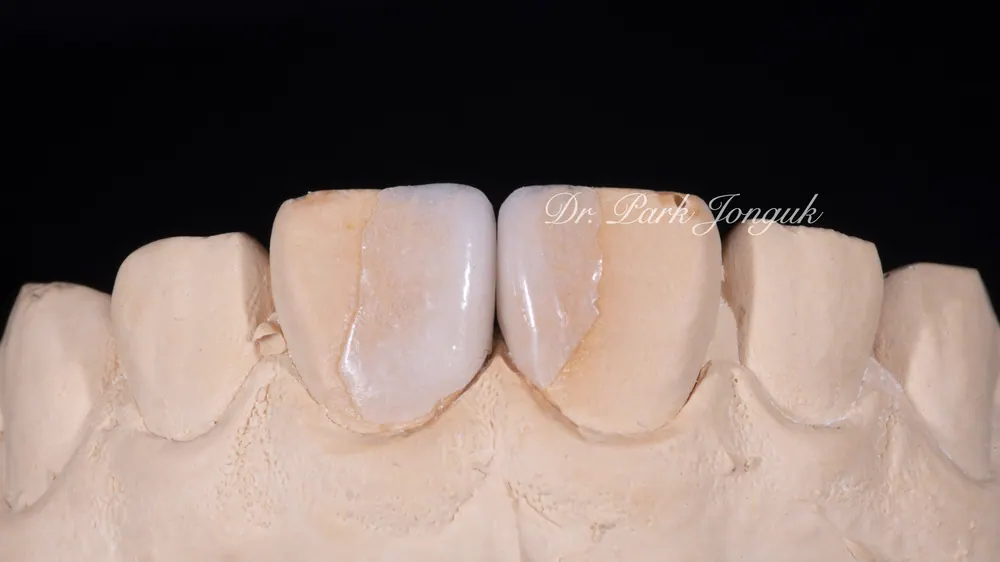
Because the fabrication is also technically very demanding,
only a dental technician who has worked with ceramic
for a very long time
is able to make it.
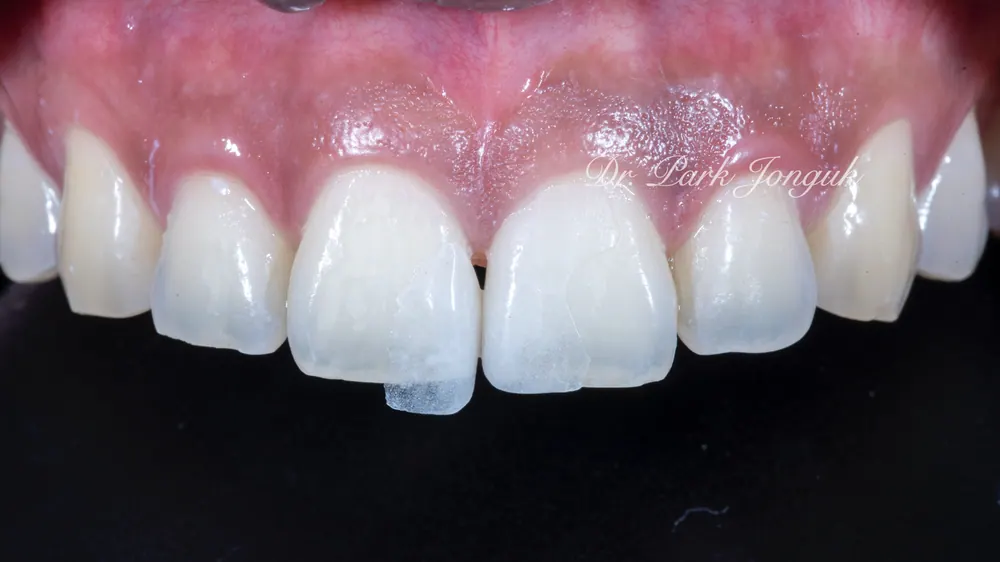
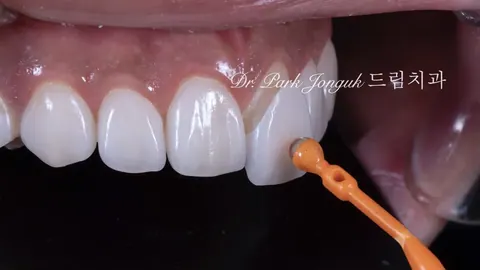
When performing gapped-teeth veneers like this,
the veneer is bonded on almost as if it were slotted into place.
Naturally, the tooth isn't reduced at all.
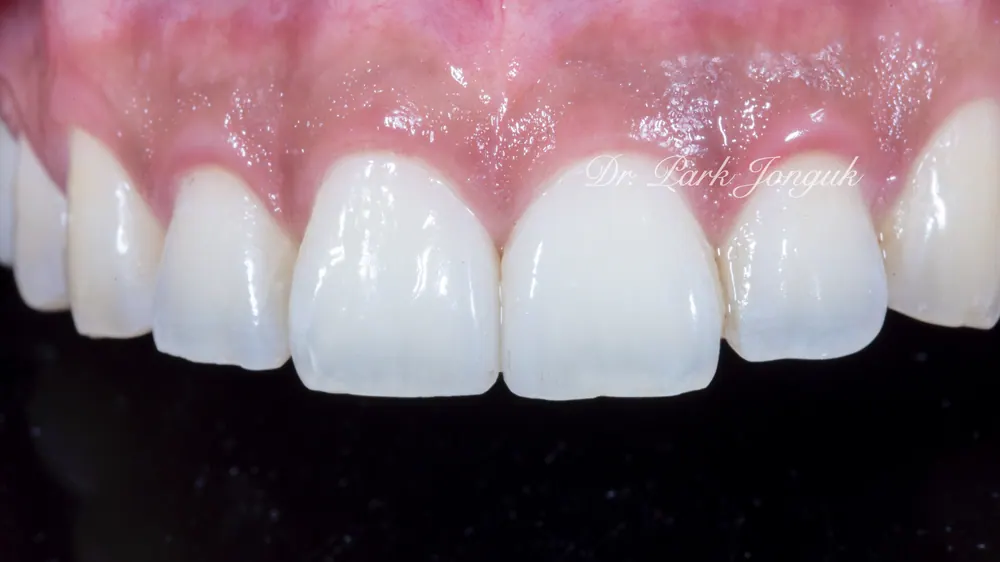
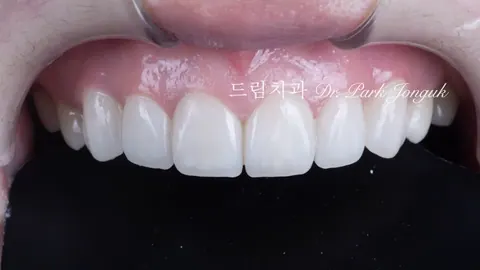
Once it's bonded on with adhesive,
the ceramic is so translucent
that it becomes genuinely hard to tell apart from the tooth.
This is a level of result resin simply can't achieve.
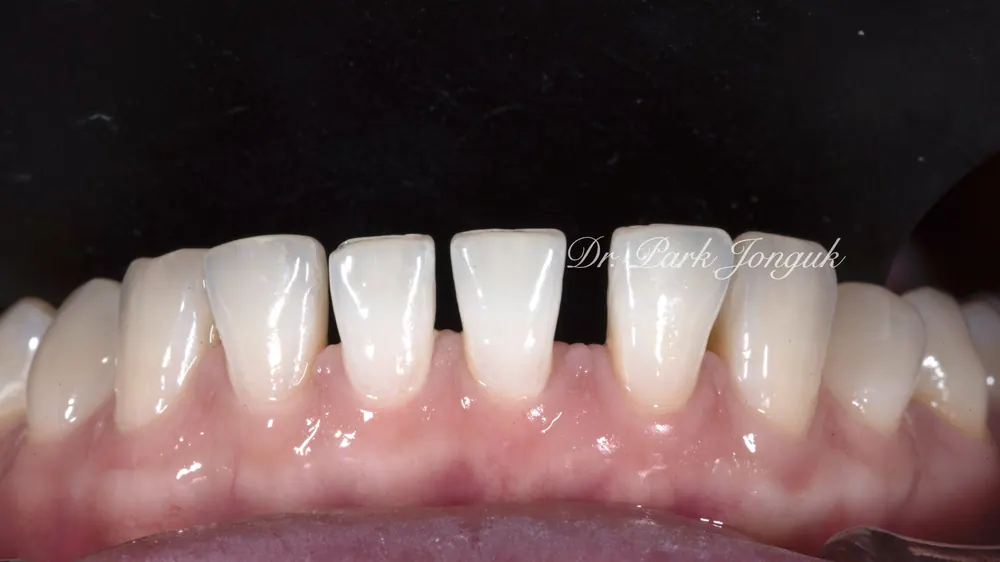
This method works even when there are
several gaps in the lower teeth as well.
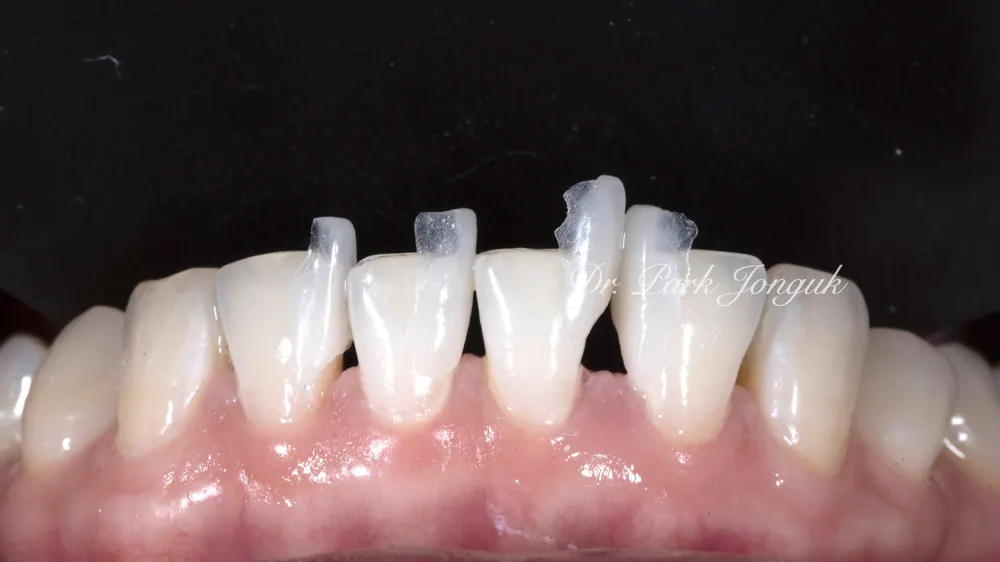
Just as in the case above,
an extremely thin ceramic veneer is made.
It's made with such incredible precision that some areas
are less than 0.1mm thick.
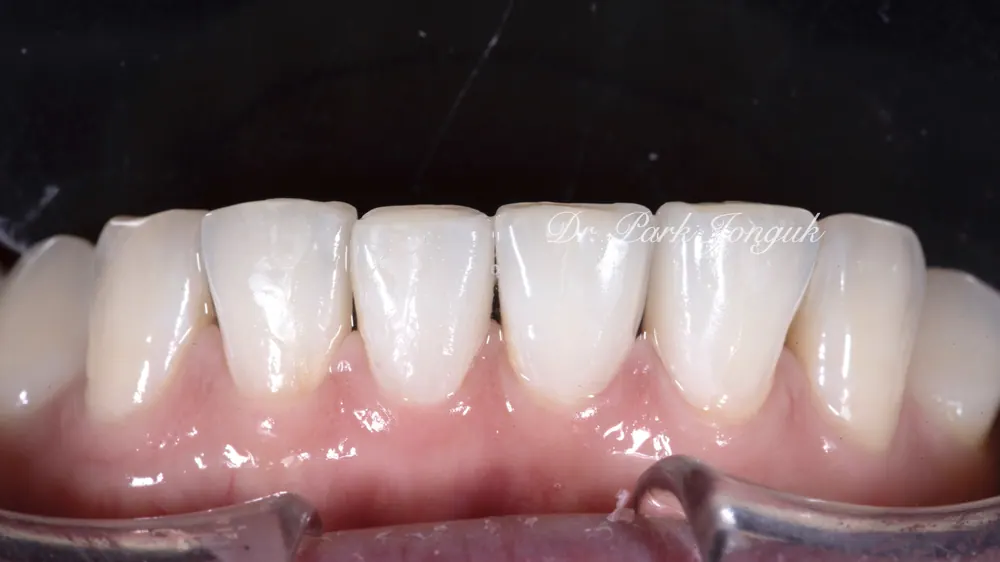
Once it's bonded onto the tooth,
because it's translucent,
it becomes hard to distinguish from the tooth.
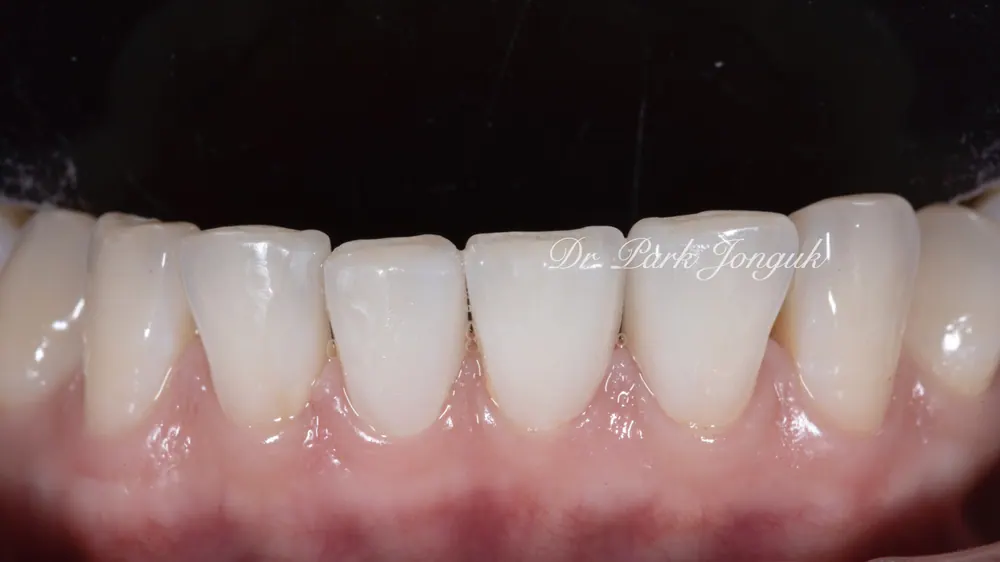
Even viewed from a bit higher up, the gapped-teeth veneer
shows absolutely no sense of anything being off.
Feldspathic veneers made this way
are considered, even among dental technicians,
the ultimate veneer.
Only when long experience and skill come together
can it be made.
For more on basic no-prep veneers otherwise, please see the link below.
Since 2006, Dream Dental Clinic
This article is a clinical note written by Dr. Park Jonguk of Dream Dental Clinic, Gangnam; the original was published on his blog. The photographs shown are real cases he treated. Results vary with each patient’s condition, and every procedure carries the possibility of individual variation and side effects.
Quick Consult
Request a Callback
Leave your number and we will call you back during clinic hours.
Request Received
We will contact you during clinic hours. For urgent matters, please call +82-2-3448-0028.