
Retreatment of One-Day Veneers
Hello, I'm Park Jonguk, director of Dream Dental Clinic.
If you search for veneers these days,
you'll notice a few patterns.
First, a lot of interesting names get attached to it.
It's all the same veneer treatment,
but it's advertised as if 'what we do isn't a veneer, it's something else'...
in that kind of way...
From a dentist's perspective, it's a bit absurd, and honestly kind of funny.
Slapping a fancy name on it doesn't make it a different treatment.
Another pattern is that more and more veneers are now made using methods that finish in a short time.
There are two ways to make veneers:
the hand-made method, like what we do,
and the computer-made method.
The computer-made method is easy and fast, but the results still fall short in many ways.
Please see the link below for more on this.
The case we'll look at today
is a retreatment of veneers made this way, using the one-day method.
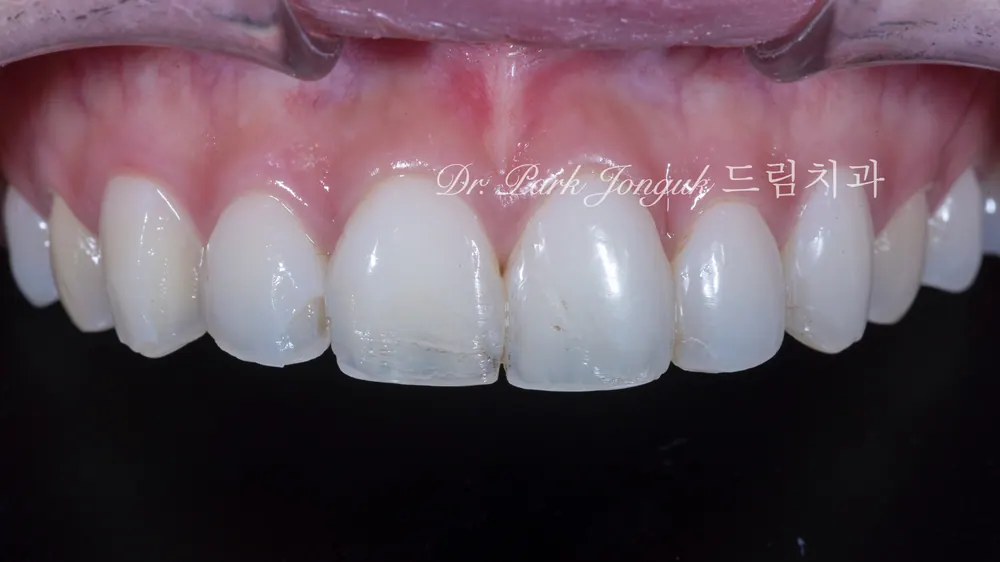
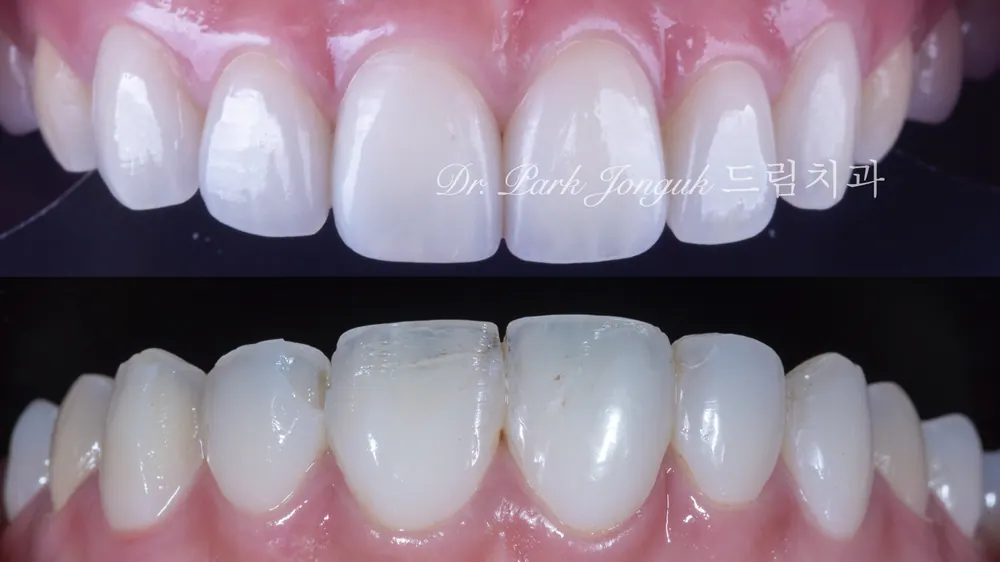
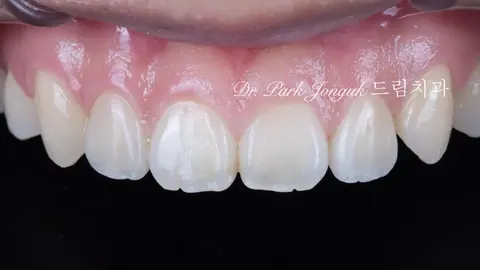
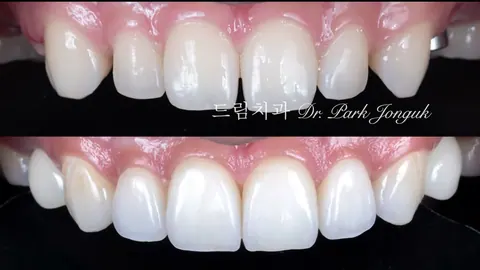
The veneers had cracked and chipped extensively, and some had even partially come off.
It hadn't even been long since the treatment,
so the situation was fairly serious.
The one-day method has a computer design the shape and a milling machine fabricate it.
Since the ceramic has to be milled extremely thin,
making a truly thin veneer this way is fundamentally difficult.
This is a fabrication method done by machine rather than by a person.
Claims that the thickness is thinner than other veneers,
or that 'what we do isn't a veneer, so it can be made thinner,'
aren't actually true, theoretically speaking.
But in this particular case, even though it was made with the one-day method, it had been made quite thin.
There are two ways this kind of thinness is achievable.
One is to mill it to the minimum thickness the machine can produce,
usually considered to be around 0.5-0.6mm,
and then grind it even thinner by hand afterward.
This applies uneven pressure to the ceramic,
which raises concerns about cracking,
and there's also the issue that if it's ground down by hand after the computer design is finished,
the computer design becomes essentially meaningless.
The other method
is to make it thick first, bond it onto the tooth, and then start grinding it down.
Since this, too, isn't precisely machined,
a lot of cracking occurs in the ceramic,
and no matter how skilled the dentist is,
producing an aesthetic result in the mouth in a single day is no easy task.
This case above is a representative example of that,
and since it was ground down by hand again after machining,
the cracks grew larger over time
and parts of it chipped or came off.
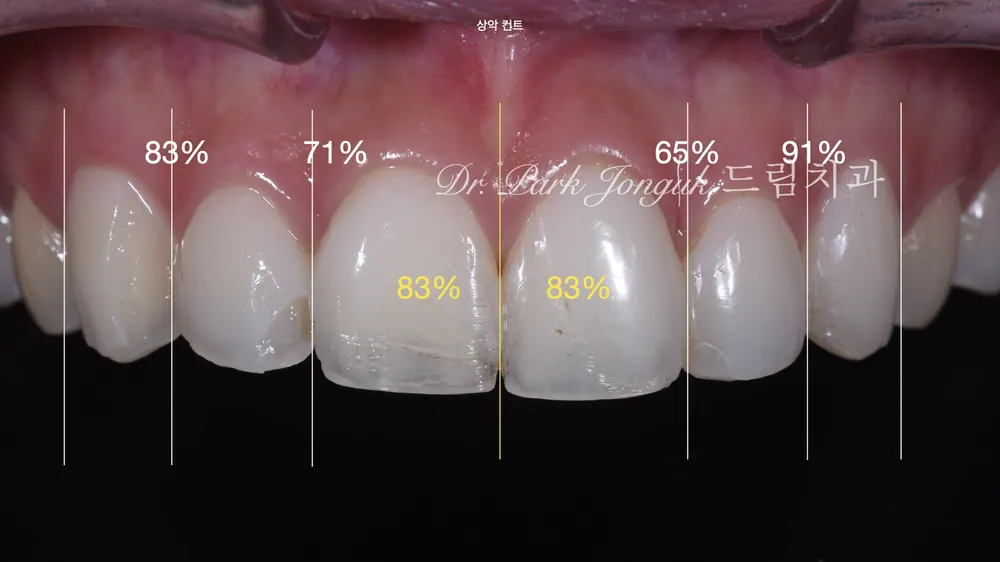
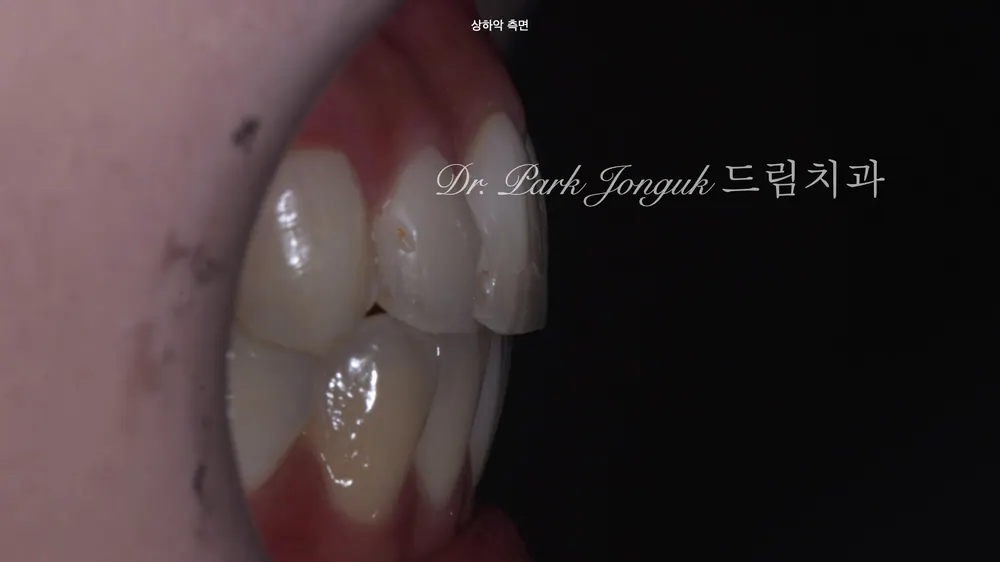
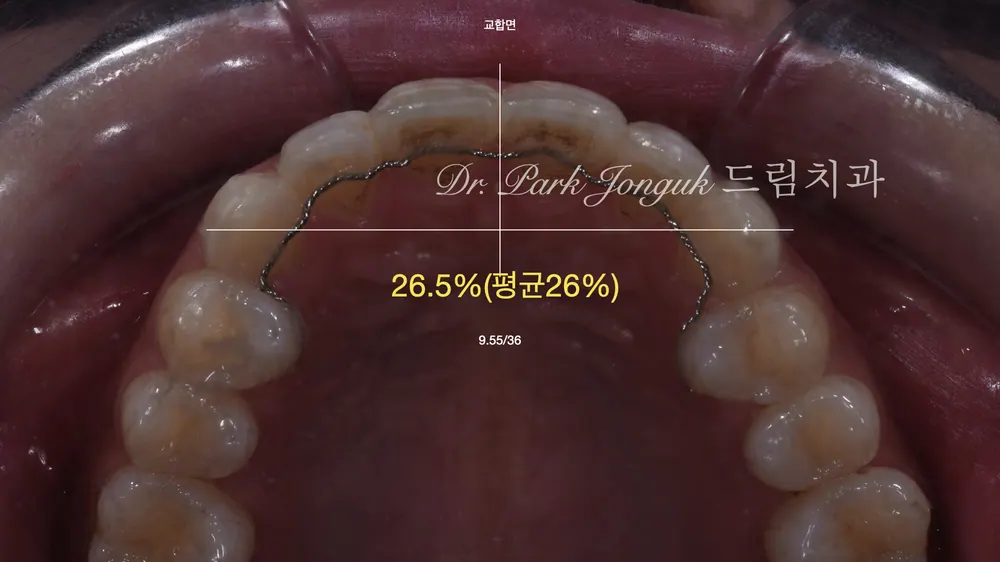
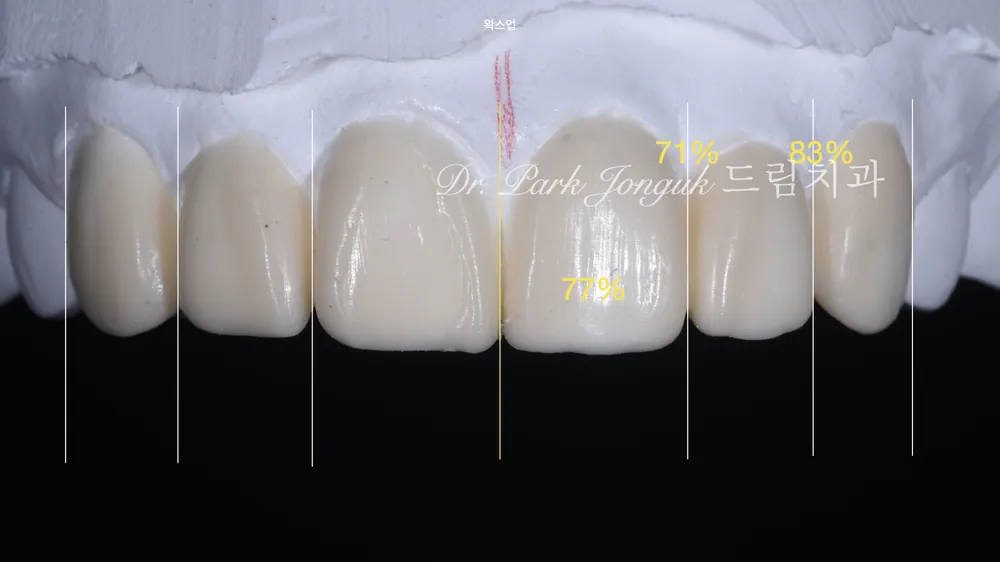
For the retreatment,
various diagnoses were needed.
We measured the current tooth proportions
and decided how to improve them.
The retreatment was prompted by fracturing and debonding,
but she hadn't liked the shape even before that.
The symmetry was off, and the two front teeth were different sizes.
The shape was even bulky enough to look heavy...
It was a situation where, if this was the result, there'd have been no point in getting veneers at all.
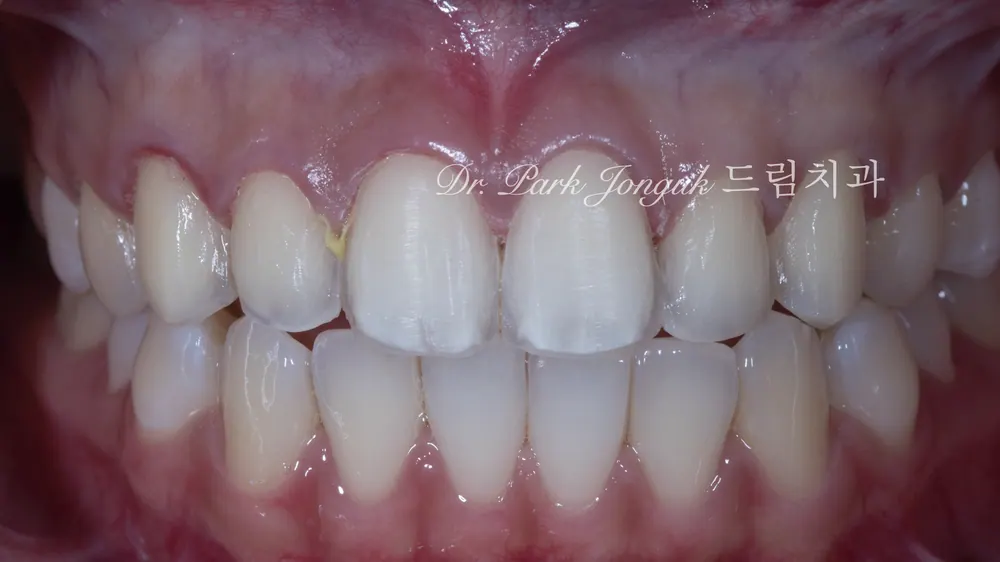
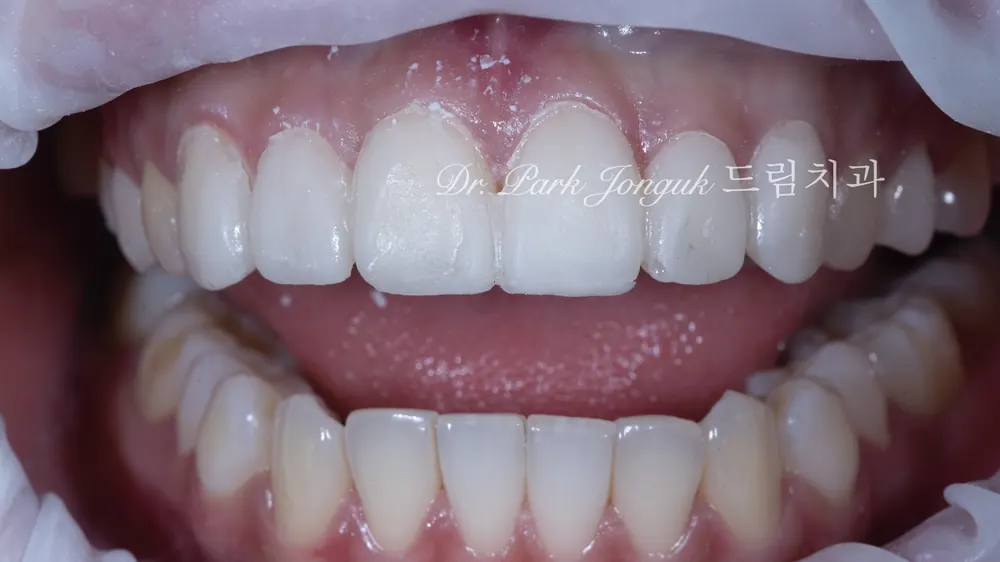
We removed the veneers and made temporary ones.
Minimizing damage to the tooth is very important when removing veneers,
and laser veneer removal can minimize that damage.
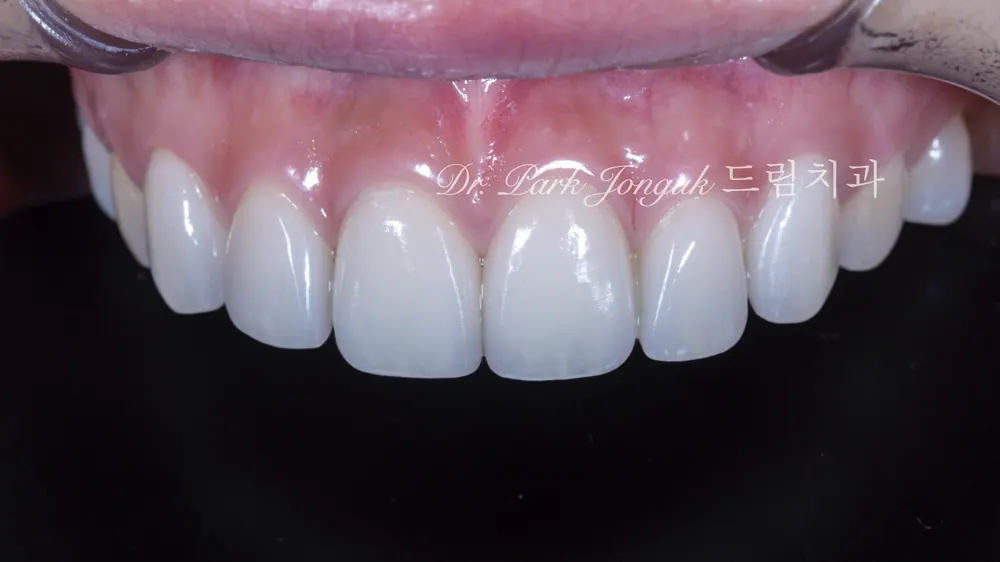
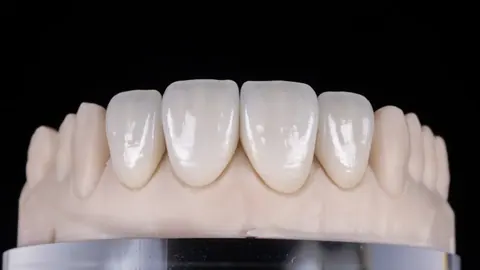
The treatment is complete.
A more natural proportion and symmetry,
visible dimensionality,
natural color, and even translucency at the tooth tips,
we recreated young, beautiful teeth.
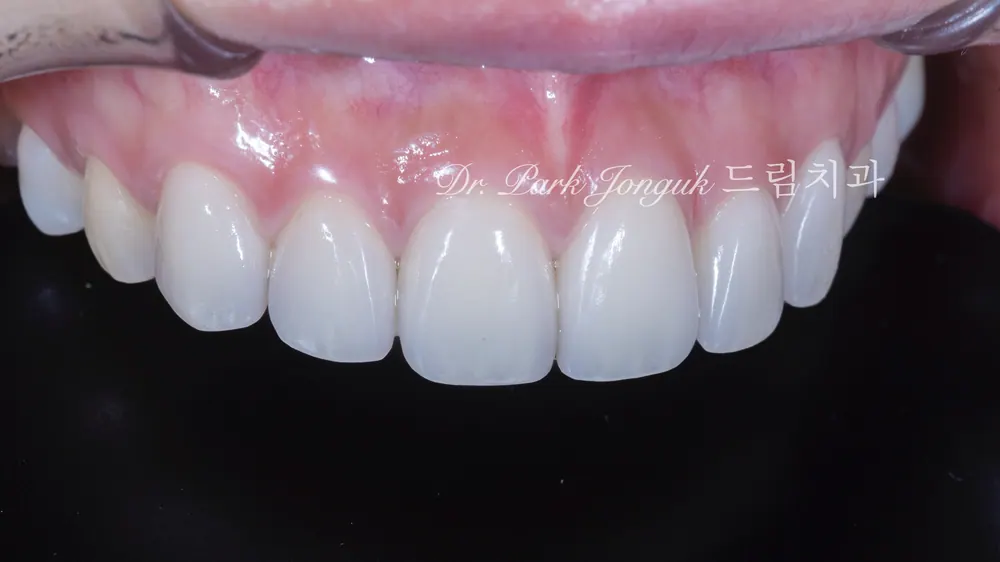
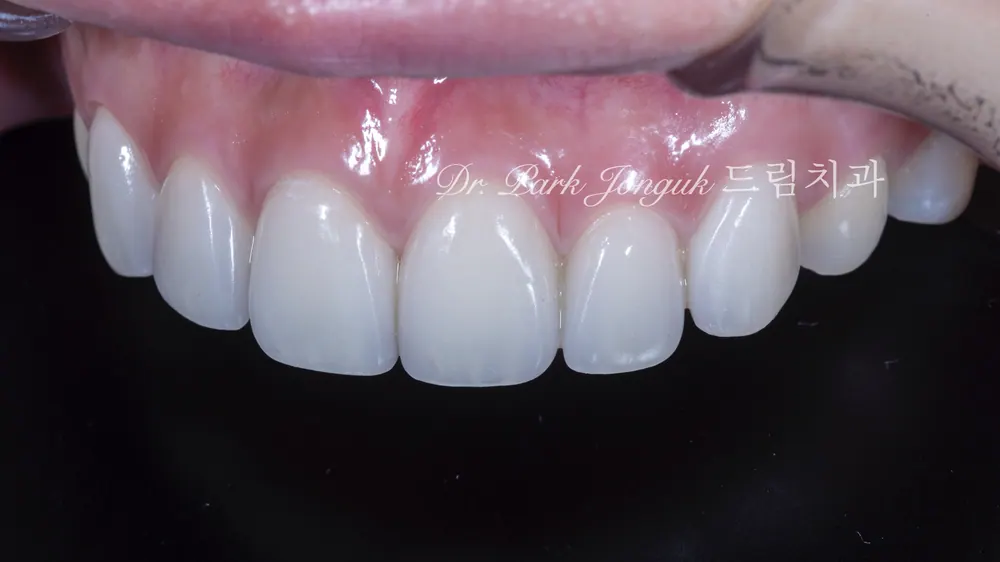
Even from the side, you can confirm the natural color
and proportion.
Each individual tooth looks like a natural tooth,
finished beautifully.
Natural beauty
Since 2006, Dream Dental Clinic
This article is a clinical note written by Dr. Park Jonguk of Dream Dental Clinic, Gangnam; the original was published on his blog. The photographs shown are real cases he treated. Results vary with each patient’s condition, and every procedure carries the possibility of individual variation and side effects.
Quick Consult
Request a Callback
Leave your number and we will call you back during clinic hours.
Request Received
We will contact you during clinic hours. For urgent matters, please call +82-2-3448-0028.