
Retreatment After One-Day Veneer Failure: Safe Removal with a Laser
Hello, I'm Park Jonguk, director of Dream Dental Clinic in Apgujeong.
"Doctor, my veneers keep breaking. Can they be redone?"
The number of patients coming in for veneer retreatment consultations has really increased. In particular, many who received quick one-day treatment develop cracking or breaking problems not long afterward.
Today I'll share in detail the retreatment process for a patient who developed fractures and cracks after one-day veneer treatment at another clinic. I'll explain, in particular, how laser removal works and what a proper retreatment looks like.
Before treatment: what went wrong?
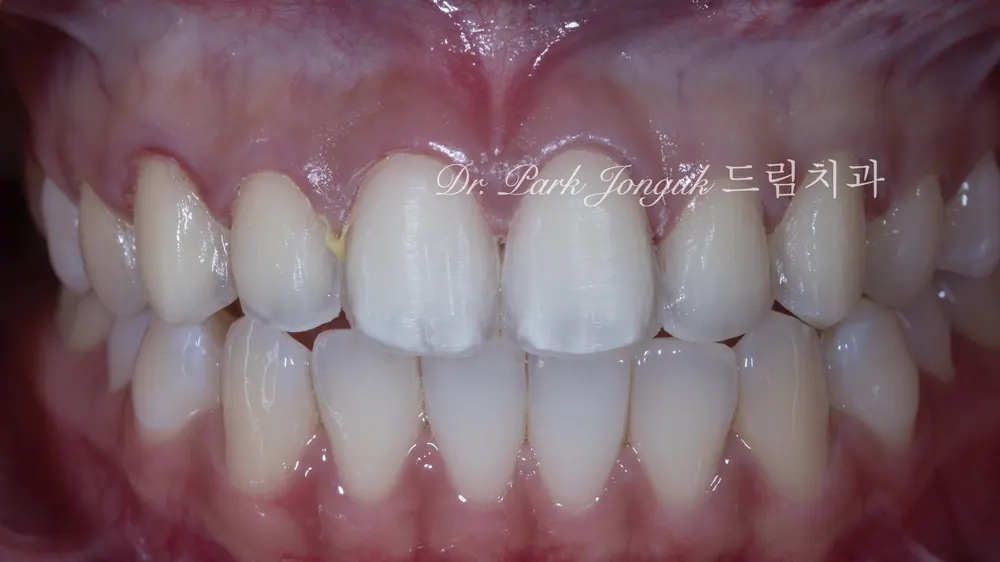
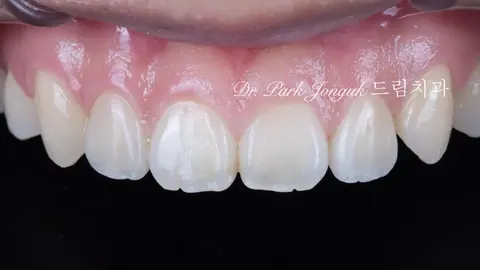
[Photo 1 – Before treatment]
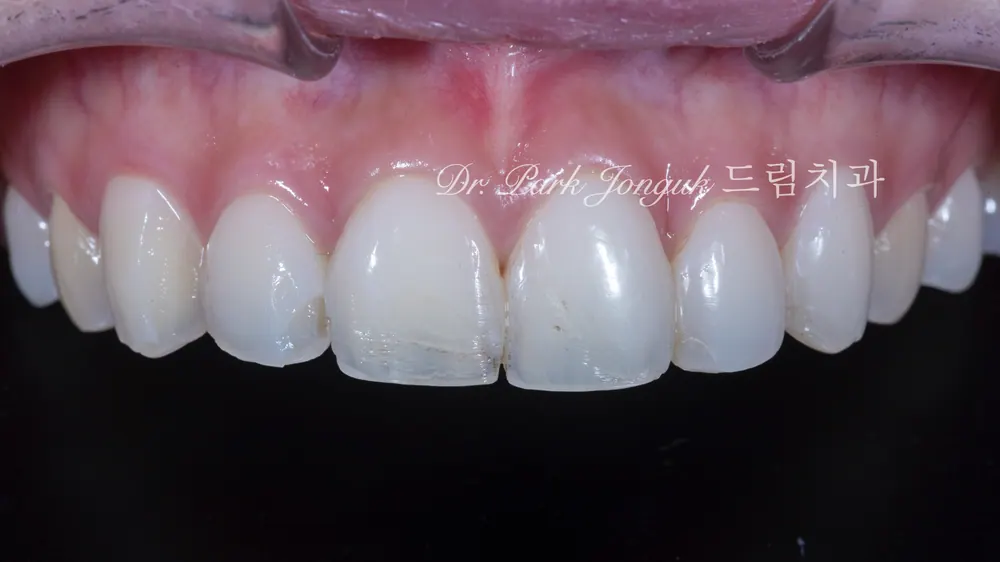
This patient had received one-day veneer treatment at another clinic.
It was a fast method that finished all the treatment in a single day. But before long, serious problems appeared.
Main problems: ❌ Cracks appeared in most of the teeth
❌ Several veneers fractured (broke)
❌ Unnatural tooth shape
❌ Awkward color
Why did this happen?
Properly made veneers can be used for 15 years or more. This patient had no occlusal issues, so having several veneers break in such a short time clearly means there was a problem in the fabrication or treatment process.
The limits of the one-day method: one-day veneers are made by milling a ceramic block with CAD/CAM equipment. It has the advantage of speed, but:
Vibration occurs during milling → micro-cracks can form
Additional vibration during manual adjustment → cracks can enlarge
Insufficient firing (kiln) time → reduced strength
Use of a single ceramic block → lacking naturalness
In this patient's case too, it's presumed that micro-cracks formed during fabrication gradually enlarged over time and led to fracture.
Precision diagnosis: redesigning shape and size from scratch
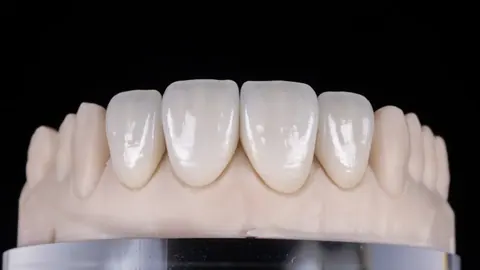
[Photos 2, 3, 4, 5 – Precision wax-up diagnosis]
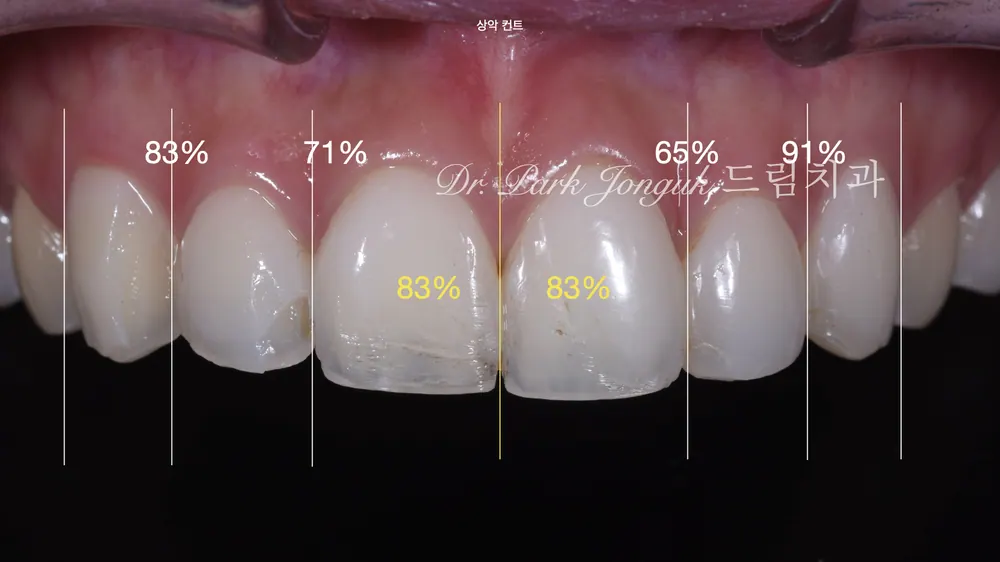
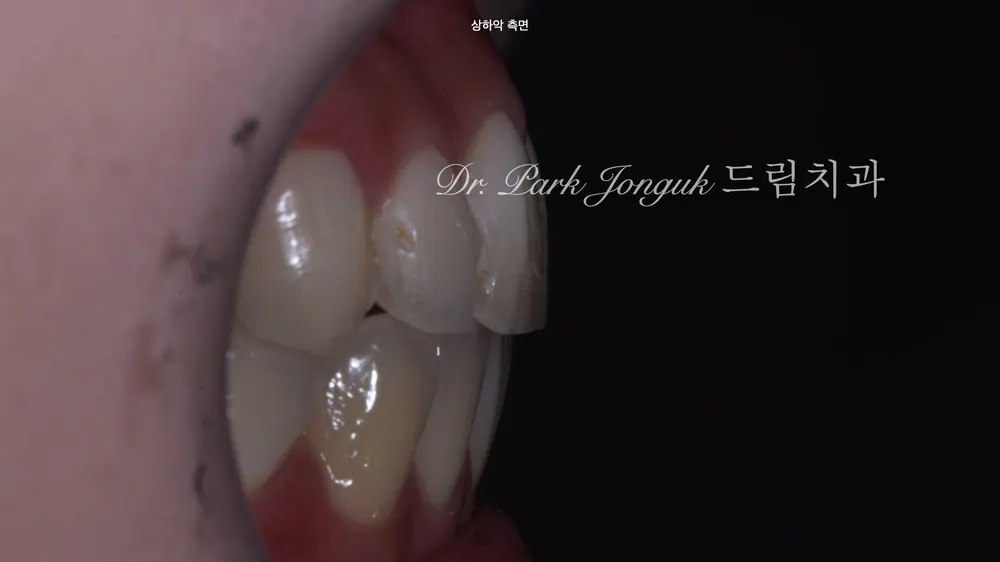
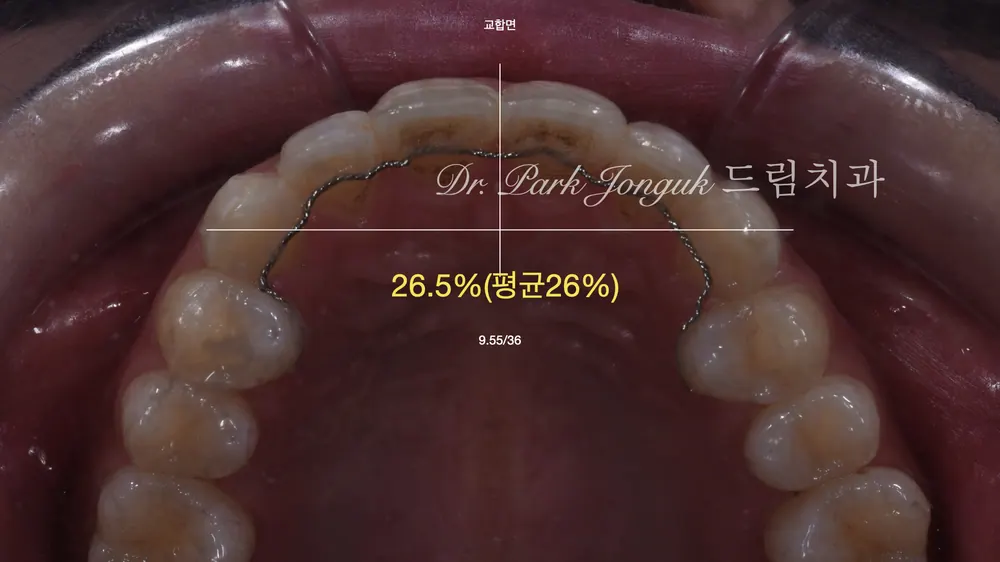
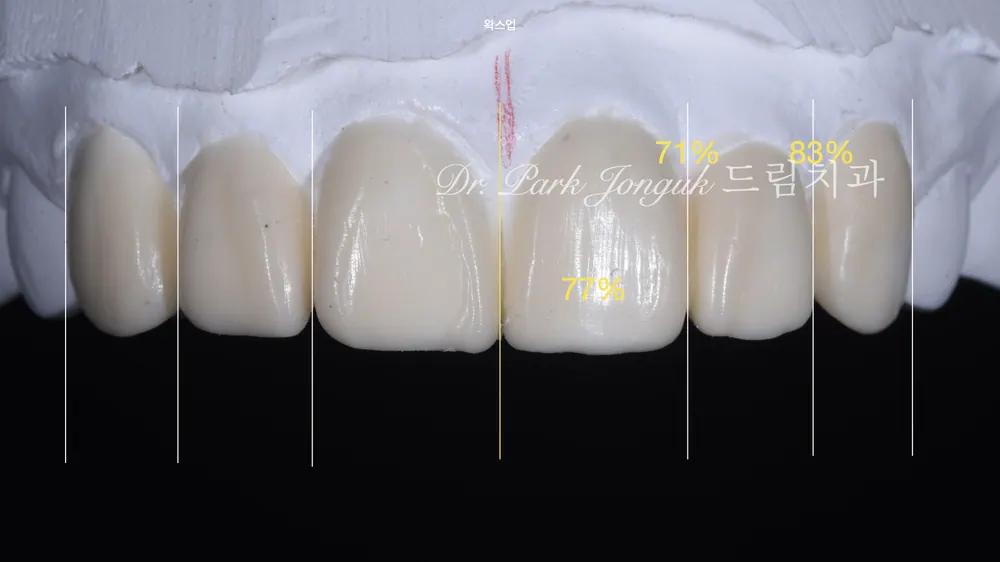
The most important thing in veneer retreatment isn't simply re-bonding what broke, but fundamentally resolving why the problem occurred in the first place.
For this patient, cracking and fracture were problems, but the tooth shape and size themselves were also an issue.
The precision wax-up diagnosis process
I applied the diagnostic method described in detail in my textbook, 『최소 삭제를 위한 라미네이트 임상』.
1. Analyzing harmony with the face
Precisely measuring the patient's face shape, lip line, and smile line
Calculating how much of the tooth shows and its proportion
Determining a natural size that suits the patient's age and gender
2. Setting the optimal proportion. These days, we don't use the golden ratio. The golden ratio (1:1.618) is beautiful in theory, but applying it to a real face often looks unnatural.
The modern proportion system introduced in my textbook is:
Realistic harmony between the central and lateral incisors
Balance between tooth length and width
A natural proportion suited to the patient's age
3. Three-dimensional shape design
Not just size, but the tooth's dimensionality
Surface design that accounts for light reflection
Expressing fine texture like a natural tooth
Through this precision diagnosis, we made a wax-up model and, after thorough consultation with the patient, decided on the final design.
Removing the veneers: why the laser matters
[Photo 6 – Laser veneer removal]
The step that requires the most caution in veneer retreatment is removing the existing veneer.
The risks of the conventional removal method
Many clinics simply grind it off with a high-speed handpiece (a rapidly spinning drill). This method:
❌ Makes it hard to tell the boundary between the natural tooth and the veneer
❌ Risks accidentally over-reducing the natural tooth
❌ Can damage the tooth through heat and vibration
❌ Risks creating micro-cracks on the tooth surface
A natural tooth, once damaged, never comes back.
Safe removal using a laser
At Dream Dental Clinic, we perform veneer removal using a laser.
Advantages of the laser:
✅ Selectively weakens the adhesive
The laser selectively weakens only the resin adhesive between the veneer and the tooth
As the adhesive discolors, the boundary becomes clearly visible
Minimizes damage to the natural tooth
✅ Safe separation
Almost no damage to the tooth surface
Enamel is preserved
✅ Minimizes pain and heat
The laser generates little heat
Minimizes patient discomfort
✅ Improves the success rate of retreatment
When a healthy tooth surface is preserved intact,
the new veneer bonds with excellent strength
increasing long-term success
Laser veneer removal is key to a successful retreatment.
In my 20 years of specializing exclusively in veneers, safe removal without a laser is nearly impossible.
Retreatment complete: achieving naturalness
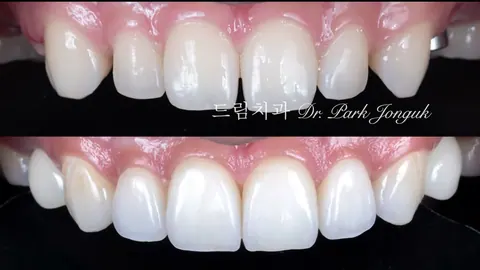
[Photos 7, 8, 9 – After veneer retreatment]
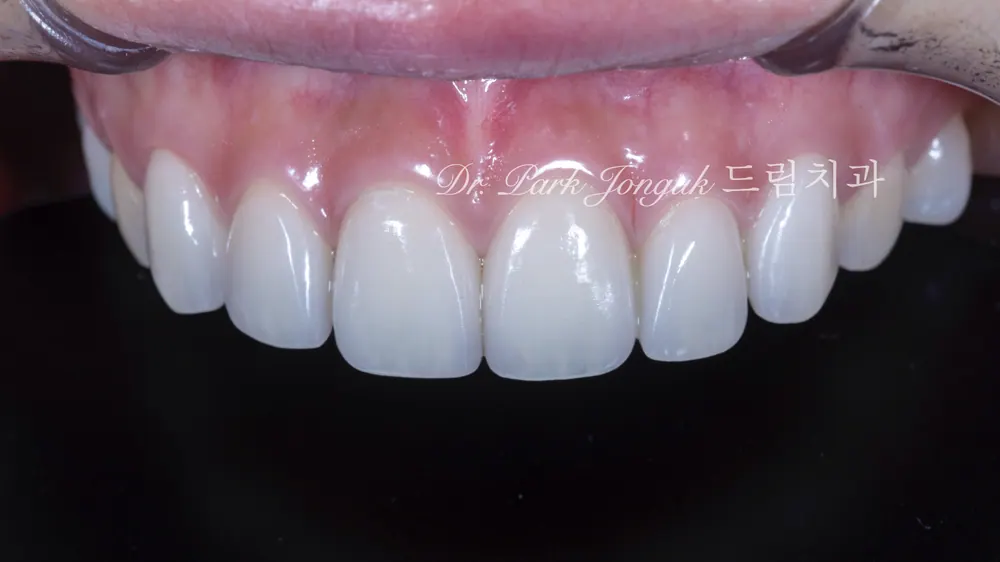
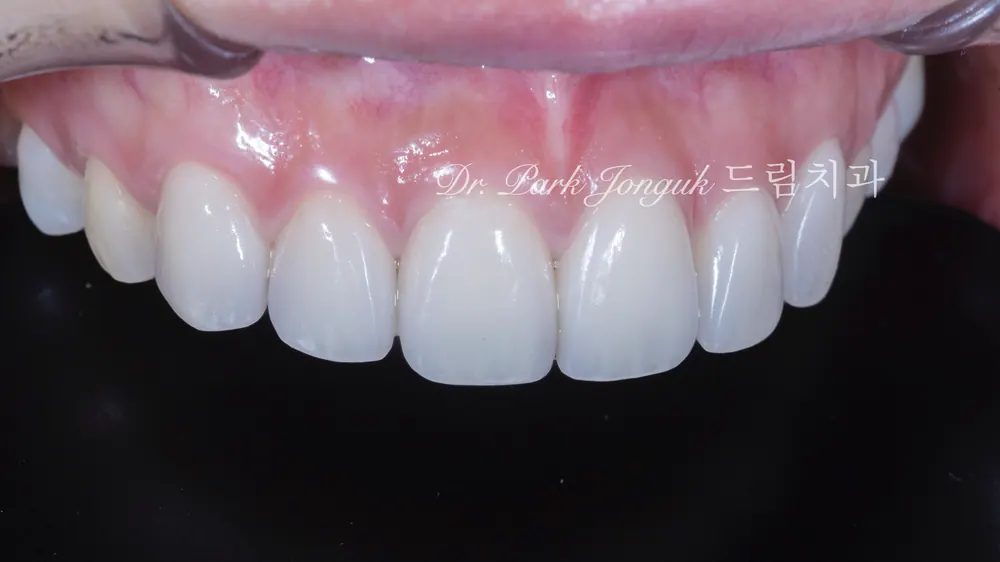
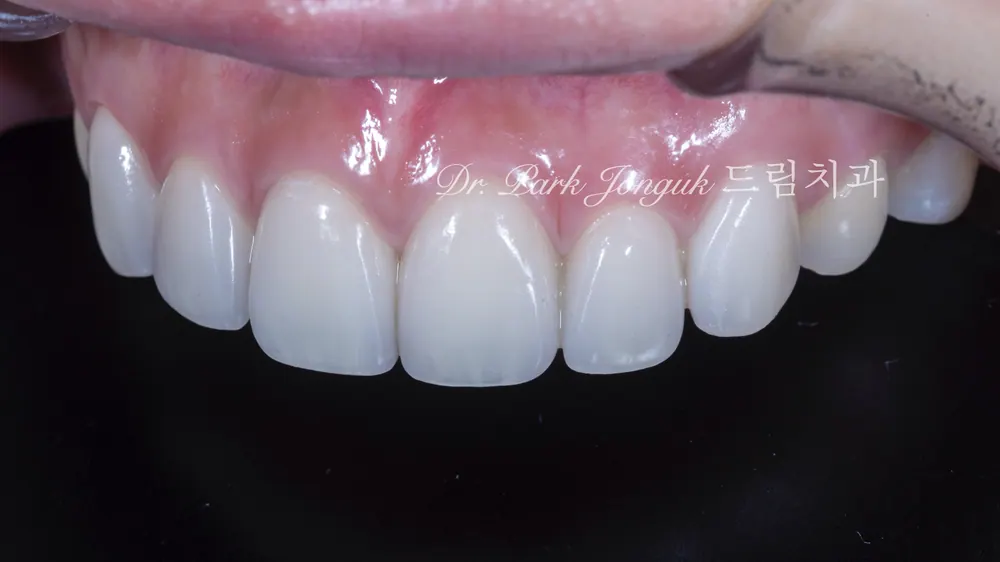
The veneer retreatment is finally complete!
What changed:
✅ Cracking and fracture completely resolved
Made using the hand-made build-up method
Multilayer ceramic secures both strength and aesthetics at once
A stable structure with no internal stress
✅ Natural shape and size
Optimal proportion applied through precision diagnosis
Perfect harmony with the face
A three-dimensional, lively shape
✅ Beautiful color
Multilayer stacking rather than a single block
Translucency and depth like a natural tooth
Natural under various lighting conditions
✅ Long-term stability
A healthy tooth surface removed without damage using the laser
Excellent bond strength
Durability that allows 15 years or more of use
Most importantly: the patient was thrilled, saying it looked so natural and beautiful. There's no telltale sign at all that she went through dental treatment again.
Conclusion: how to do veneer retreatment right
Veneer retreatment isn't simply re-bonding what broke.
Identifying the cause of the failed veneer
Why did it break? (Fabrication process, occlusal issues, material issues)
Was the shape and size appropriate?
Was the color natural?
Safe removal
Laser veneer removal
Minimizing damage to the natural tooth
Securing a healthy surface for retreatment
Precise rediagnosis
A new design through a wax-up
Re-analyzing harmony with the face
Applying a modern proportion system
High-quality fabrication
The hand-made build-up method
Multilayer ceramic stacking
Sufficient fabrication time (2-3 weeks)
Over 20 years of specializing exclusively in veneers, and while writing my textbook 『최소 삭제를 위한 라미네이트 임상』, I came to realize something.
"Precise and natural, rather than fast and cheap, is ultimately the most economical choice."
Rather than finishing in a single day and needing a retreatment soon after, it's far better to get proper diagnosis and fabrication from the start and use it for 15-20 years.
If your veneers are currently cracked or discolored, I recommend not simply redoing the same thing, but getting a proper retreatment instead.
Q&A: Questions about veneer retreatment
Q1. Does veneer retreatment reduce more of the tooth? A. When removed with a laser, there's almost no damage to the natural tooth. In fact, the amount of additional reduction is similar to or even less than the original veneer treatment. Since the tooth was already reduced before, only minimal further reduction is needed.
Q2. Does every clinic use a laser to remove veneers? A. No. Even clinics with laser equipment need the specific know-how to use it for veneer removal. Be sure to confirm whether laser removal is available when you consult.
Q3. How much does veneer retreatment cost? A. It varies by case, depending on the number of veneers to remove, the degree of damage, and the difficulty of remaking them. But it's not cheaper than the original treatment, since precise removal and rediagnosis are required.
Q4. Could it break again after retreatment? A. If the cause is properly identified and it's made to a high quality, it can last 15 years or more. When made with the hand-made build-up method without internal stress, and occlusal issues are resolved through precision diagnosis, the chance of re-fracture is very low.
Q5. Do all one-day veneers have problems? A. Not all one-day veneers are bad. But there are risks that can arise from the fast fabrication process (micro-cracks, internal stress), and naturalness falls short compared to hand-made veneers. If quality matters more to you than speed, it's better to have them made over a longer, more thorough timeframe.
Q6. How long does veneer retreatment take? A. From laser removal to final placement, it usually takes about 3-4 weeks. This is because it goes through the entire process of precision diagnosis, wax-up, temporary veneers, and final ceramic fabrication. Sufficient time produces the best results.
Q7. How do I find a clinic skilled at veneer retreatment in Gangnam? A. Check the following:
Specialized veneer experience (15 years or more recommended)
Whether they have a laser removal system
Academic background such as writing textbooks or lecturing at conferences
A portfolio of retreatment cases
Whether they perform precision wax-up diagnosis
I'm the author of the textbook 『최소 삭제를 위한 라미네이트 임상』, and every month I teach veneer techniques to dentists from across the country at Lamista Academy. My 20 years of specializing exclusively in veneers raise the success rate of retreatment.
This article is a clinical note written by Dr. Park Jonguk of Dream Dental Clinic, Gangnam; the original was published on his blog. The photographs shown are real cases he treated. Results vary with each patient’s condition, and every procedure carries the possibility of individual variation and side effects.
Quick Consult
Request a Callback
Leave your number and we will call you back during clinic hours.
Request Received
We will contact you during clinic hours. For urgent matters, please call +82-2-3448-0028.