
No-Prep Veneers That Don't Cut Down the Tooth — Is It Really Possible? A Case of Fixing a Front-Tooth Gap Plus a Peg Lateral
Hello, this is Dream Dental Clinic in Apgujeong.
"Doctor, can I get veneers without having my teeth reduced?"
This is one of the most common questions we get in consultation. Interest in no-prep veneers has really grown, but the truth is, not every case can be done without reduction.
Today I'll share a real no-prep veneer case for a patient whose front teeth had a gap and whose lateral incisor was a peg lateral, and explain in detail under what conditions treatment is possible without reducing the tooth, along with the process.
Before treatment: the patient's concern
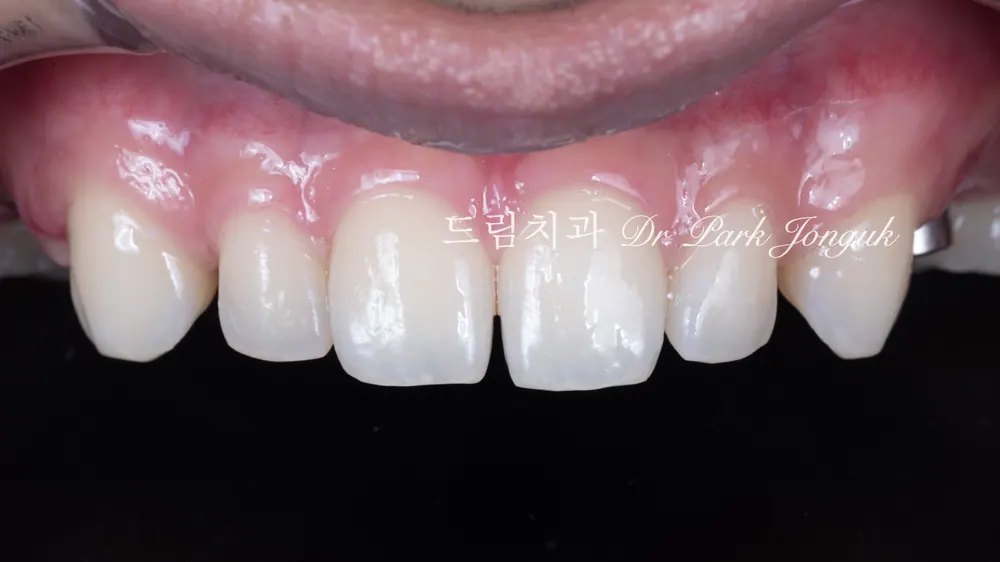
[Photo 1 - before treatment]
This patient's tooth condition was as follows:
✓ The two front teeth (central incisors): on the larger side, but with a gap between them
✓ The adjacent front tooth (lateral incisor): a peg lateral — small and narrow in shape
✓ Between the canine and lateral incisor: there was space, so overall there appeared to be a lot of gaps
From the start, the patient said, "I want to be treated without having my teeth cut down." I completely understand the desire to preserve as much of the healthy natural tooth as possible.
The three conditions that make no-prep veneers possible
Having specialized exclusively in veneers for 20 years, I've established three essential conditions for no-prep veneers:
Condition 1. The teeth need to be small
If the original tooth size is small, or smaller than average, bonding a veneer on without reduction won't make the overall look excessively large.
Condition 2. The alignment needs to be even
If there are crooked or rotated teeth, no-prep has its limits for correcting shape. No-prep is more favorable when the alignment is relatively even.
Condition 3. The teeth must not protrude forward
No-prep veneers work better when the teeth are actually tilted inward, in an over-retracted shape. If the teeth already stick out forward, doing no-prep veneers can make them look even more protruding.
Analyzing this patient's case
Applying this patient's condition to the three criteria:
❌ Condition 1 (small teeth): doesn't apply, since the central incisors are on the larger side
✅ Condition 2 (even alignment): the alignment was good
✅ Condition 3 (over-retracted shape): not protruding, in an appropriate position
Two of the three conditions were met, but the size of the central incisors was the issue. Still, I judged that we could proceed without reduction through tooth-shape design and space distribution.
This is how I set up the treatment plan:
Central and lateral incisors: full-coverage veneers (a form that wraps the entire tooth)
Canine: partial veneer (covering only the needed part)
Precise diagnosis: a wax-up is essential even for no-prep
[Photo 2 - wax-up precision diagnosis]
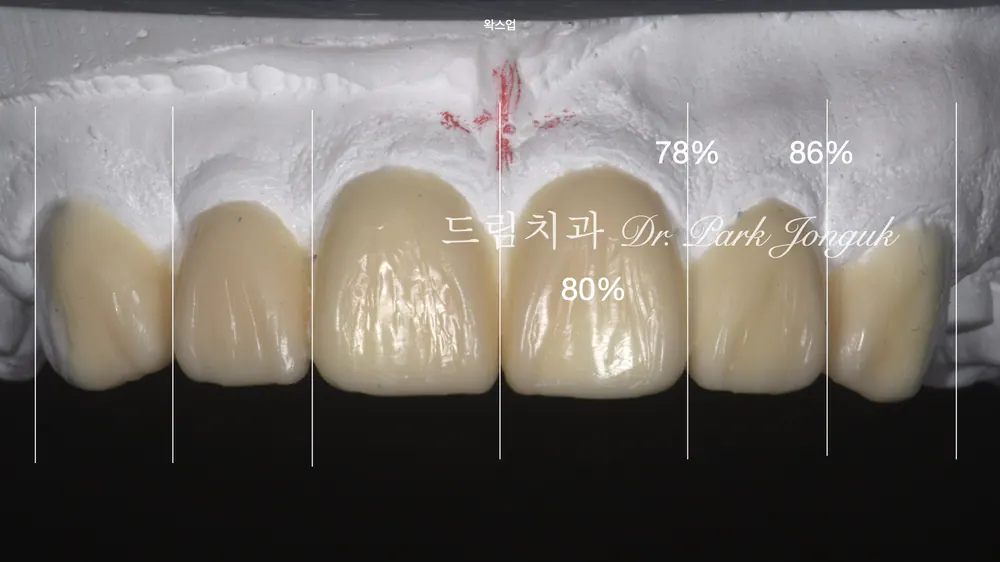
Many people think, "No-prep veneers should be simple since the tooth isn't being cut," but it's actually the opposite. The more no-prep it is, the more precise the diagnosis needs to be.
In the wax-up stage, here's what I focused on:
Harmony with the face
Calculating how much of the teeth show, matched to the patient's lip line and smile line
Determining a tooth size that matches the size and proportions of the face
Size distribution strategy
Adjusting the central incisors, which were originally large, to an appropriate size while filling the gap between them
Enlarging the peg lateral to a normal size
Covering the canine only partially to maintain a natural look
Making use of the space
Designing a fuller smile overall by filling in the gapped space
Naturally filling in the space between the canine and lateral incisor as well
[Photo 3 - making the temporary teeth and consultation]
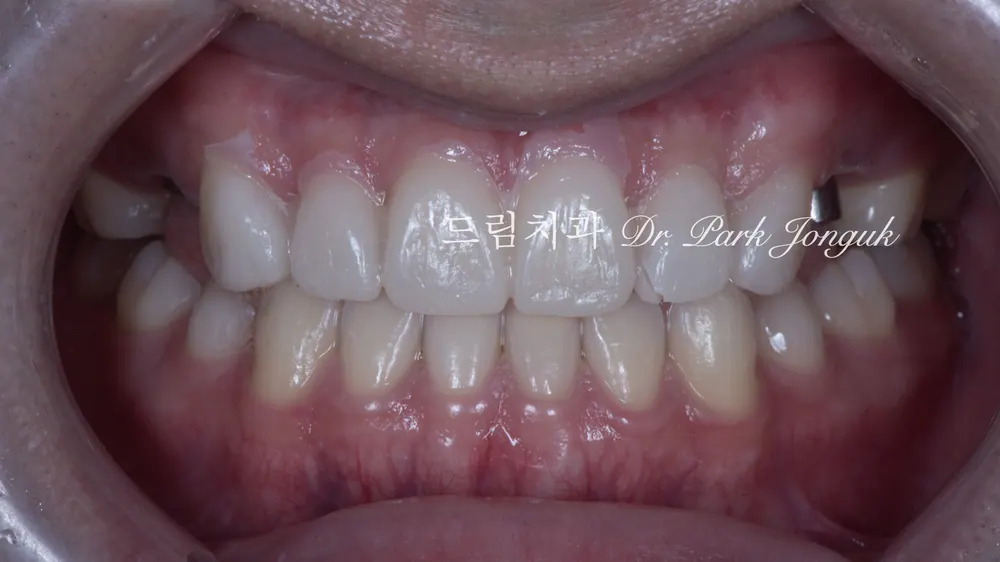
An important point here! Some clinics skip making temporary teeth just because it's a no-prep case. This is a very risky way of thinking.
Whether no-prep or regular veneers, the temporary-teeth stage is essential. Because:
✓ The patient can actually feel the size and shape in their own mouth
✓ They can check for any discomfort while going about daily life (speaking, eating, smiling)
✓ Any needed adjustments can be coordinated before the final fabrication
✓ Clear communication between patient and doctor raises satisfaction
I consulted thoroughly with the patient while she wore the temporary teeth, and only after gaining her agreement on the size and shape did I move on to fabricating the final veneers.
Fabricating and placing the veneers
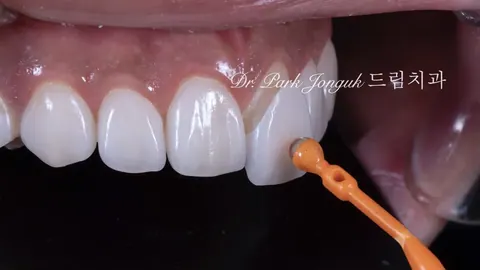
[Photo 4 - comparison shot with only one side placed]
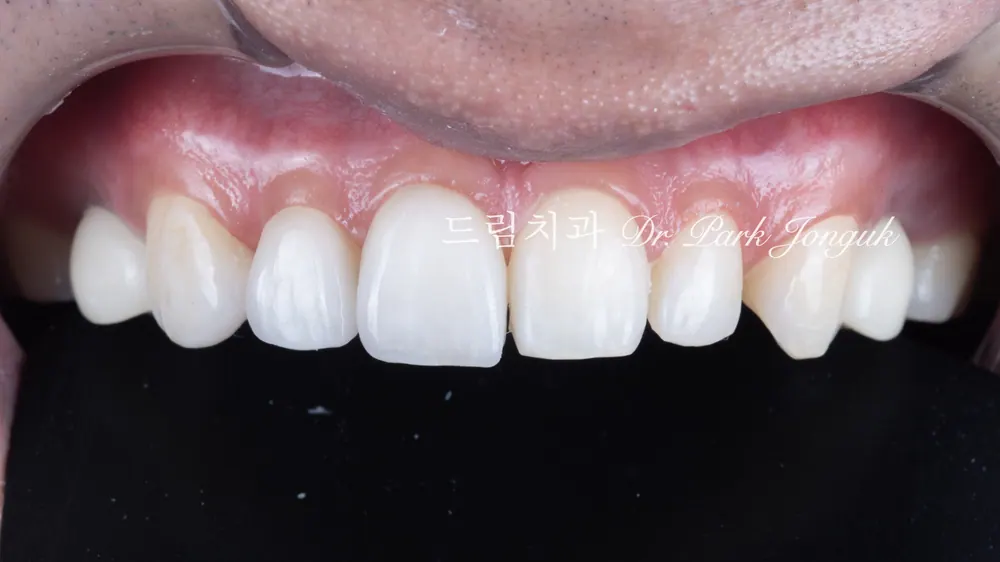
The final ceramic veneers were completed, and this shows the state with them placed on just one side first. This photo lets you compare before and after at a glance.
The core of no-prep veneers is natural thickness control. Since it's placed on top of the tooth without any reduction, if the veneer becomes too thick it can look unnatural or protruding.
Our clinic's handmade build-up method:
Precise fabrication that achieves maximum effect with minimum thickness
Multilayer ceramic that creates a thin yet translucent naturalness
A three-dimensional shape that reflects light just like a real tooth
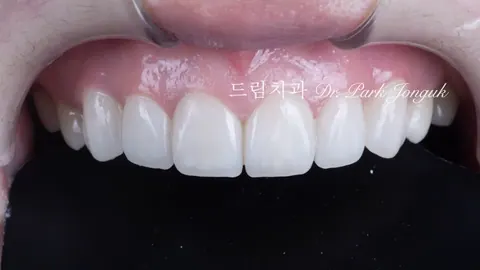
[Photos 5, 6, 7, 8 - final result of the no-prep veneers]
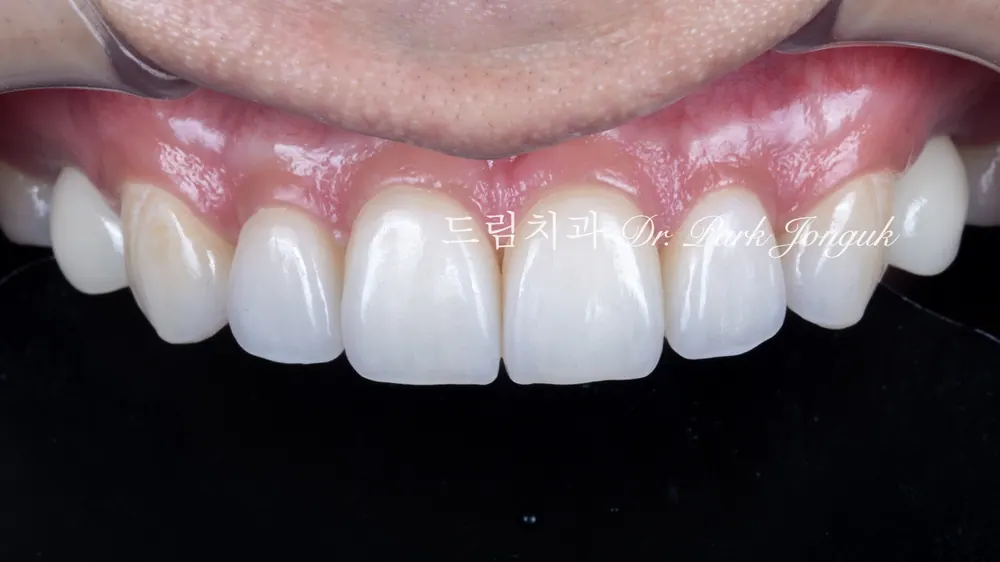
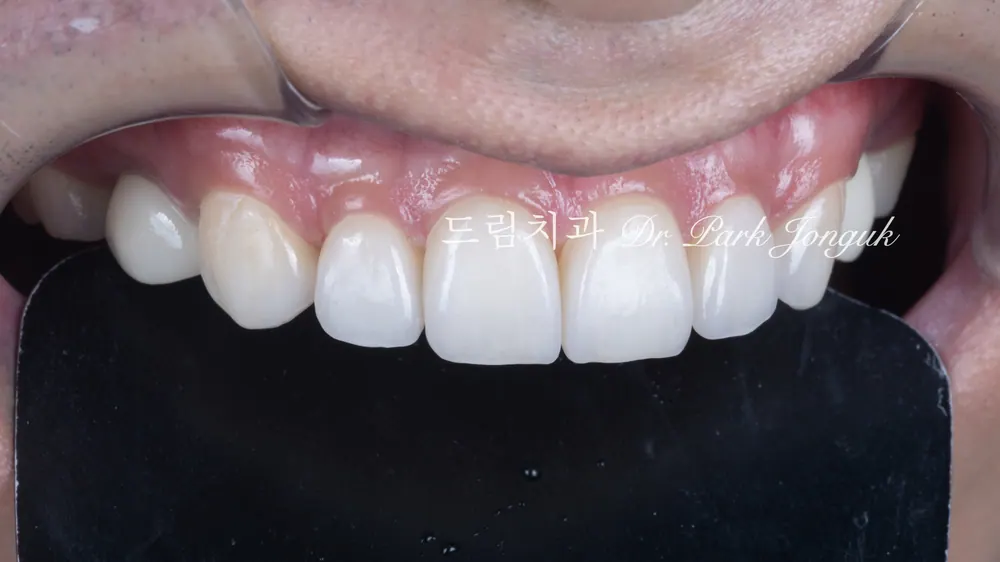
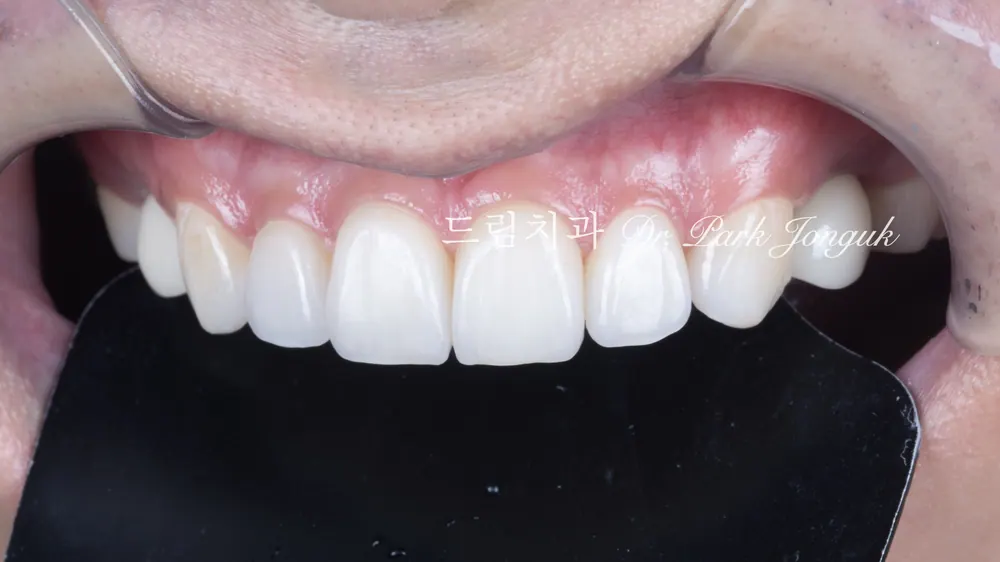
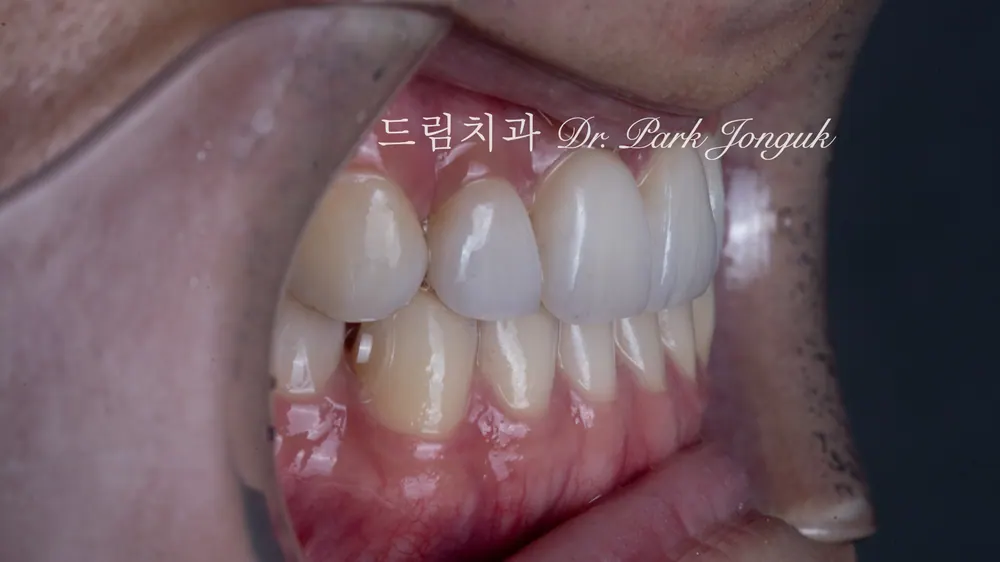
The no-prep veneer treatment is finally complete!
What changed: ✅ The gap between the front teeth is now naturally filled in
✅ The peg lateral is now a normal size and shape
✅ The space between the canine and lateral incisor is also resolved
✅ Not a single healthy natural tooth was reduced
✅ An overall fuller, younger-looking smile
The most important thing is that it looks natural. Even though the teeth weren't reduced, they don't look artificially large or protruding — it's as harmonious as if these had always been her natural teeth.
Conclusion: is no-prep possible for every case?
To be honest, no.
No-prep veneers are an attractive treatment option, but they can't be applied to everyone. The patient's tooth size, alignment, and tooth position all need to be judged comprehensively.
Cases where no-prep is possible
When the teeth are small or a peg lateral
When the alignment is relatively even
When the teeth don't protrude forward
When there's a gap that needs to be filled
Cases where minimal reduction is needed
When the teeth are large and protruding
Severe malocclusion or rotated teeth
Redoing existing veneers
When a major color change is needed
My philosophy, after specializing exclusively in veneers for 20 years, isn't "no-prep no matter what" but finding "the method best suited to the patient." Sometimes 0.3mm of minimal reduction produces a more natural, longer-lasting result.
When I lecture dentists nationwide at Lamista Academy, I always emphasize this: "Whether no-prep or minimal-prep, never skip precise diagnosis and the temporary-teeth stage."
Q&A: questions about no-prep veneers
Q1. Do no-prep veneers come off faster? A. No. In fact, since they bond directly to the enamel, the bond strength is excellent. Choosing the right case and precise technique are what matter.
Q2. Don't no-prep veneers make the teeth look thick? A. If the wrong case is chosen, that can happen. But with precise diagnosis to select the right patient, and thin, precise fabrication, they look very natural.
Q3. Are no-prep veneers cheaper than regular veneers? A. Not reducing the tooth doesn't make it cheaper. In fact, it requires even more precise diagnosis and design, and the fabrication difficulty is higher. Price is determined by the difficulty of the case.
Q4. Do no-prep veneers also require making temporary teeth? A. Yes, it's essential. Skipping the temporary-teeth stage just because it's no-prep is improper treatment. The temporary-teeth stage must always be included for the sake of patient satisfaction and the quality of the final result.
Q5. How do I care for no-prep veneers afterward? A. It's the same as regular veneers. With basic care — regular scaling, proper brushing, caution with hard foods, preventing teeth grinding — they can last 15-20 years or more.
Q6. How do I find a good place for no-prep veneers in Gangnam? A. The director's career and actual experience with no-prep cases matter. Check whether they have a precision diagnostic process (wax-up), whether they make temporary teeth, and whether they use handmade fabrication. A published textbook that has become a bestseller, and monthly lectures at Lamista Academy for dentists nationwide, are clear evidence of expertise.
This article is a clinical note written by Dr. Park Jonguk of Dream Dental Clinic, Gangnam; the original was published on his blog. The photographs shown are real cases he treated. Results vary with each patient’s condition, and every procedure carries the possibility of individual variation and side effects.

Quick Consult
Request a Callback
Leave your number and we will call you back during clinic hours.
Request Received
We will contact you during clinic hours. For urgent matters, please call +82-2-3448-0028.