
Retreatment of an Old All-Ceramic Crown and Bridge
Hello, I'm Park Jonguk, director of Dream Dental Clinic.
There are two ways to change the shape of the front teeth:
veneers and all-ceramic crowns.
Veneers are a treatment that reduces the front surface of the tooth and bonds on a thin ceramic sheet,
while an all-ceramic crown reduces the entire tooth
and covers it completely, like putting on a cap.
What should you do if a front tooth is missing entirely?
These days, the most common method for a missing tooth
is an implant.
This involves placing an artificial root into the bone and building a tooth on it,
but before implants existed,
the teeth on either side of the gap were covered with all-ceramic crowns,
and a tooth was built in between like a bridge,
a method called a bridge.
Of course, this method is still widely used today,
and depending on the case, a bridge can often be aesthetically
more favorable than an implant.
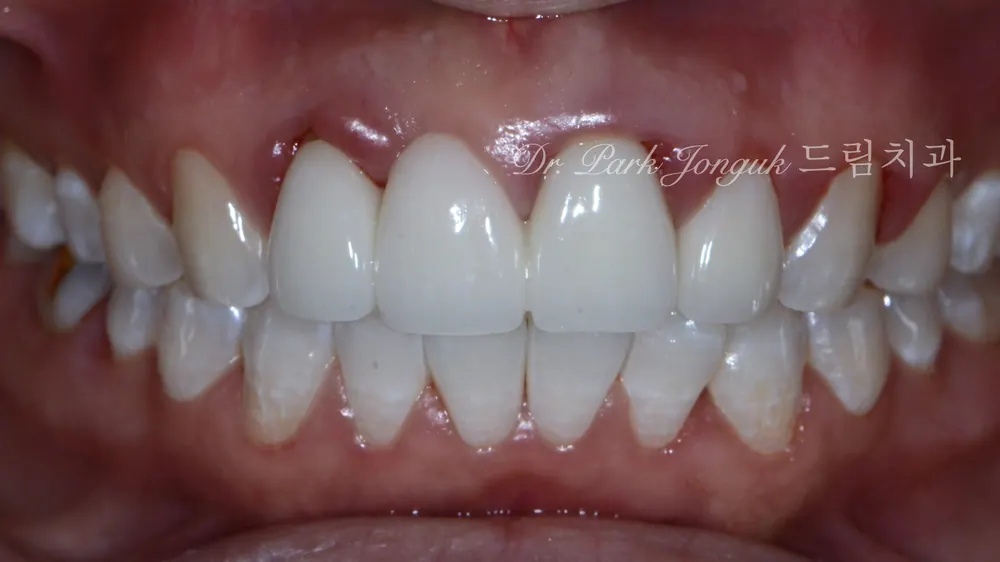
The patient had a bridge done a long time ago,
and the gums kept developing recurring inflammation,
and the teeth also looked awkward, so we decided to redo the treatment.
Retreating an old bridge
can be easy or difficult
depending on the condition of the remaining tooth,
but in most cases it's a fairly challenging process.
The most important thing is that all the gum inflammation must be completely resolved first.
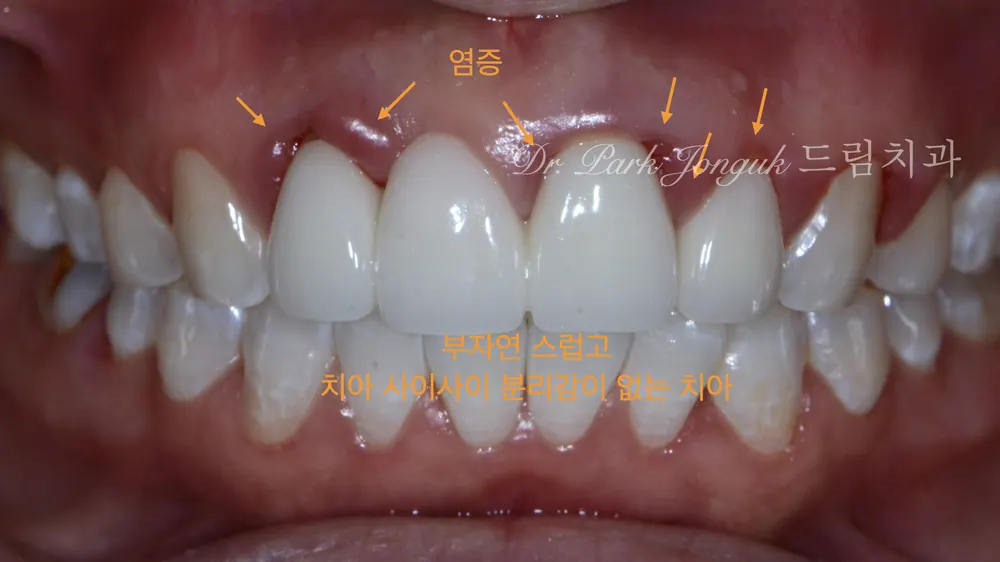
Since the inflammation had been severe for so long,
it inevitably takes a long time to heal.
We need to use a temporary bridge and monitor the inflammation until it clears.
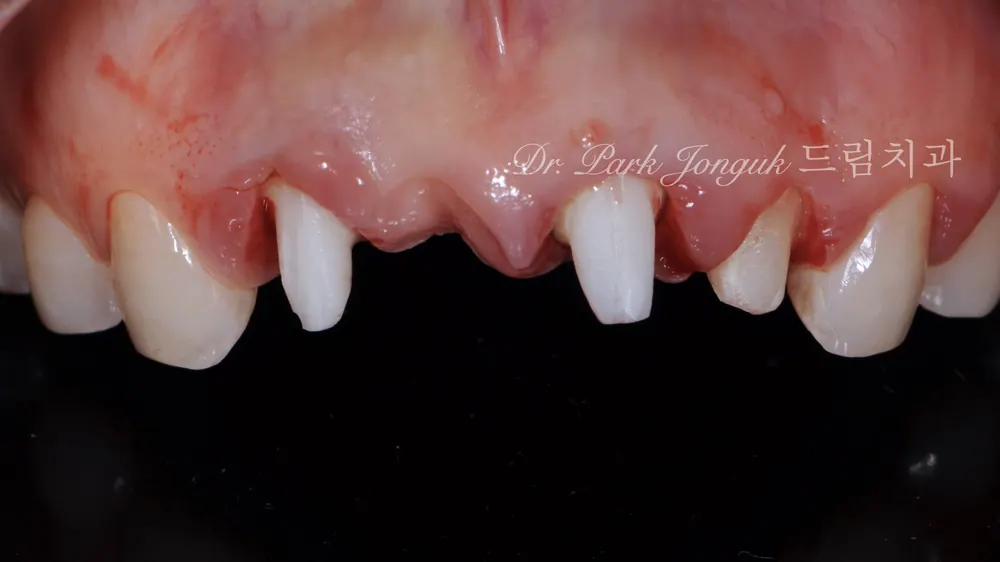
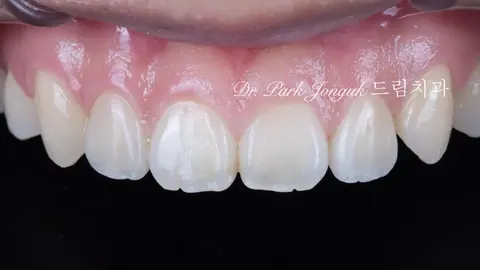
When we removed the bridge,
the condition was quite serious.
The tooth had been broken, and a post had been forced in with difficulty to barely make the treatment work,
so completely eliminating the inflammation wasn't an easy situation,
and it wasn't likely that the tooth would have a long lifespan either.
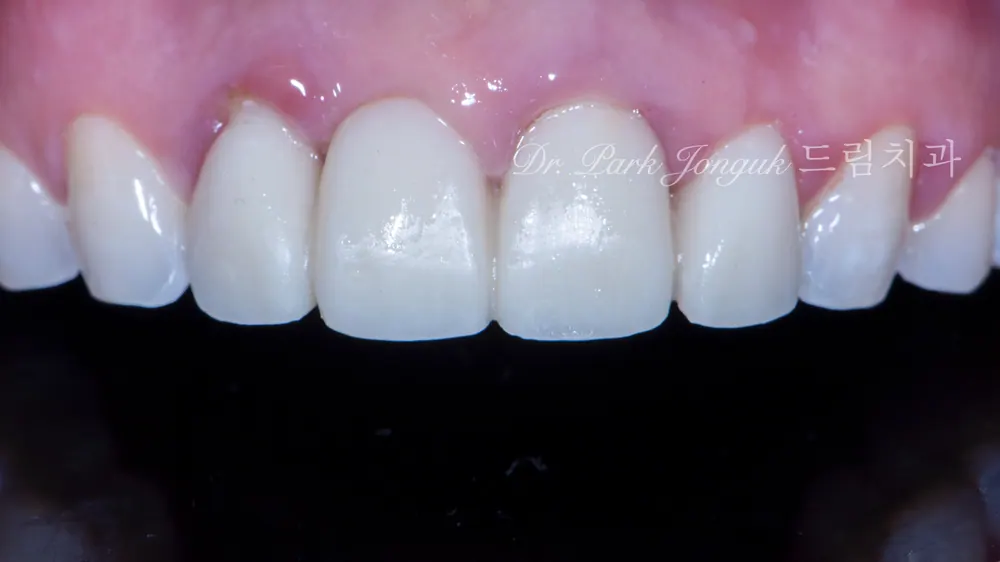
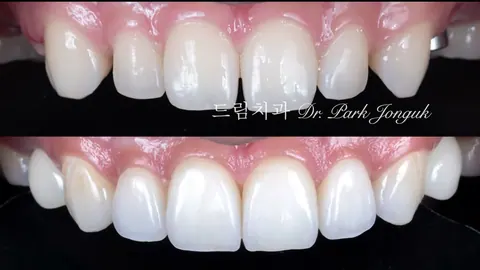
We made a temporary bridge.
We need to monitor the inflammation for about 2 to 4 weeks in this state,
but since the earlier treatment had already been pushed too far,
it was a difficult situation for the inflammation to disappear completely.
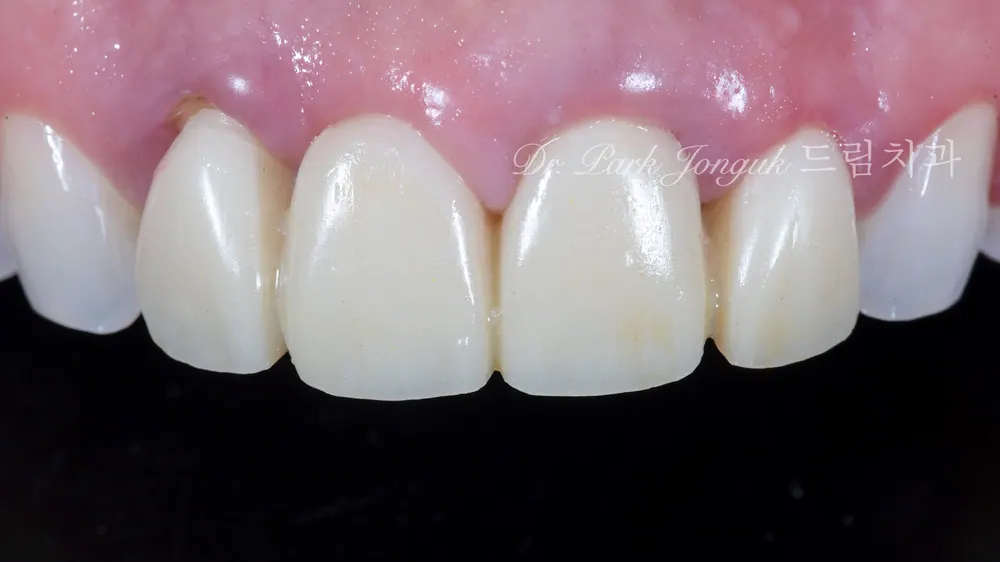
As time passed, the gums gradually stabilized.
Since the temporary bridge is made of resin, it discolors over time.
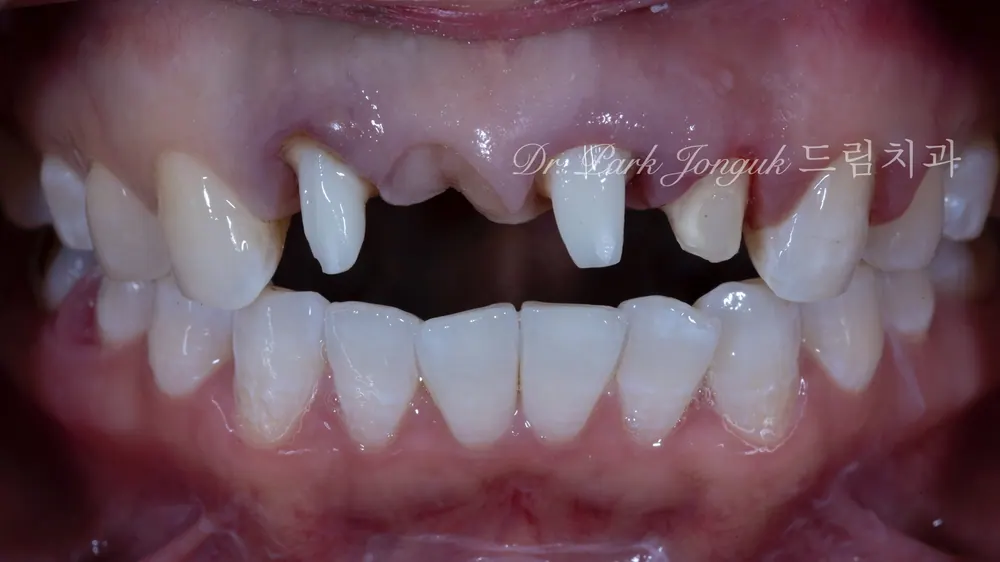
Now that the gums have stabilized considerably,
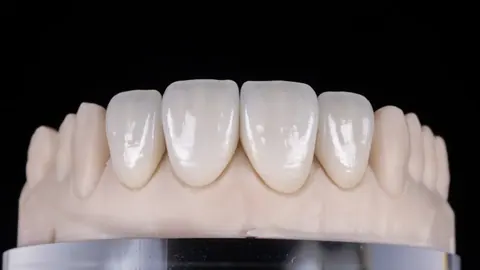
we go on to make the bridge out of ceramic.
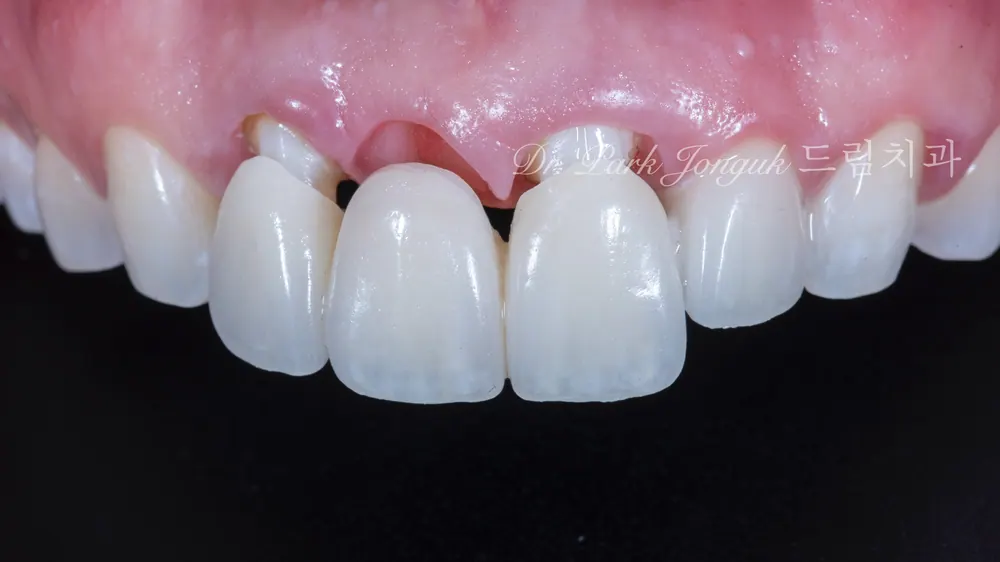
Made to fit the gum shape precisely,
we tried setting the bridge.
The gums healed beautifully and are very healthy.
There's a slight bit of remaining regret,
but given the condition of the tooth, having the gums improve this much is close to a miracle.
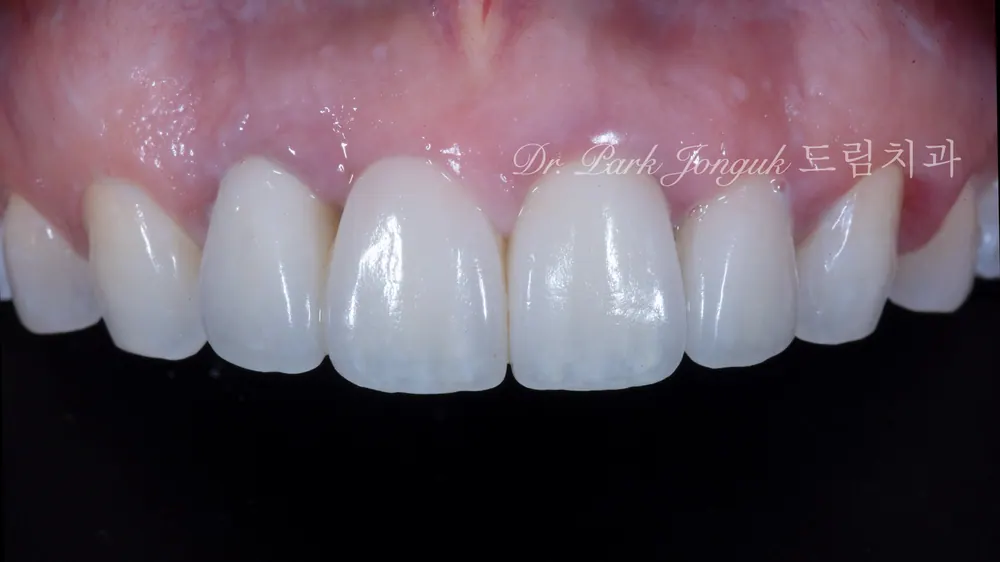
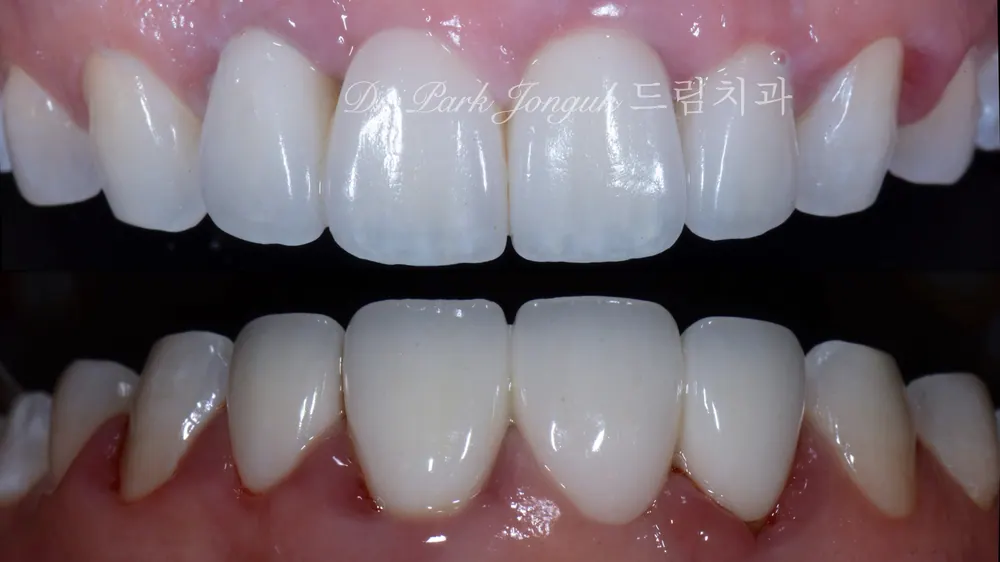
The feel of a natural tooth was captured well.
Even though it's a connected bridge,
we fully preserved the sense of separation between the teeth.
The translucent feel at the tooth tips came through well, and the natural dimensionality is preserved too.
In a case like this, ongoing gum care matters most of all.
Since 2006, Dream Dental Clinic
This article is a clinical note written by Dr. Park Jonguk of Dream Dental Clinic, Gangnam; the original was published on his blog. The photographs shown are real cases he treated. Results vary with each patient’s condition, and every procedure carries the possibility of individual variation and side effects.
Quick Consult
Request a Callback
Leave your number and we will call you back during clinic hours.
Request Received
We will contact you during clinic hours. For urgent matters, please call +82-2-3448-0028.