
The Difference Between No-Prep and Minimal-Prep Veneers
Hello, I'm Director Park Jonguk.
The part we're most careful about in veneer treatment is tooth reduction.
With no-prep veneers, even from the treating dentist's perspective,
treatment can proceed without much burden, but once reduction is involved,
considerable effort is needed to keep that reduction to a minimum.
Before veneer treatment like this,
the process of precisely diagnosing how to proceed is also extremely important.
The decision on how much to reduce the tooth during veneer treatment
is made through a precision wax-up diagnosis.
Veneer treatment without a diagnostic process cannot be done properly.
Let me talk about the process of deciding on tooth reduction during veneer treatment.
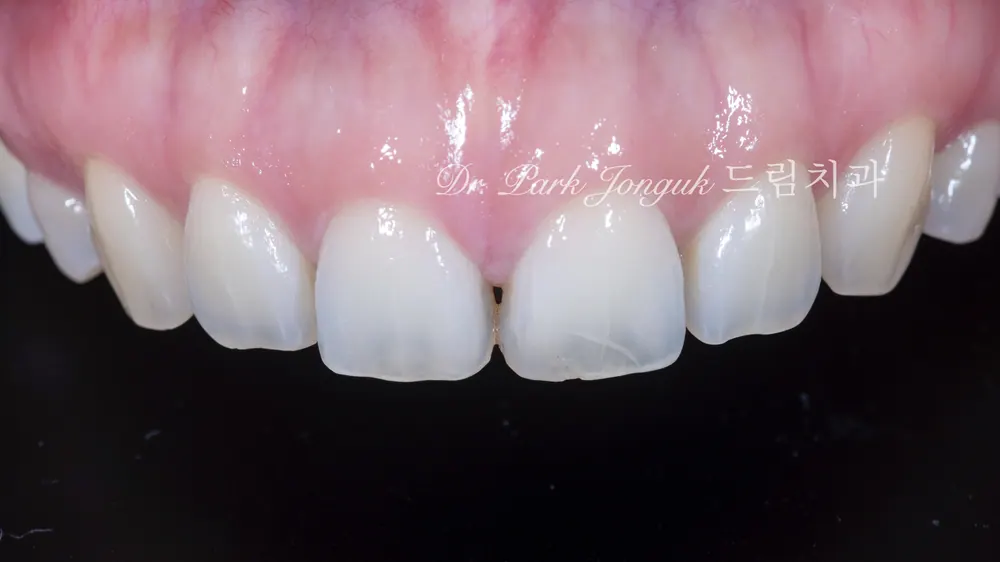
Due to the size and shape of her front teeth and black triangles between them,
the patient visited for veneer treatment.
Her teeth were relatively large, so she wanted them to look smaller,
but making teeth look smaller with veneers isn't easy.
To actually make the teeth smaller, too much tooth reduction would be needed,
but if the goal is simply to make them look smaller, the amount of reduction can be reduced.
If a strictly no-prep approach is required, the teeth would end up larger.
No matter how much I explain this verbally,
it isn't easy for the patient to fully understand.
That's why it's essential to show it visually.
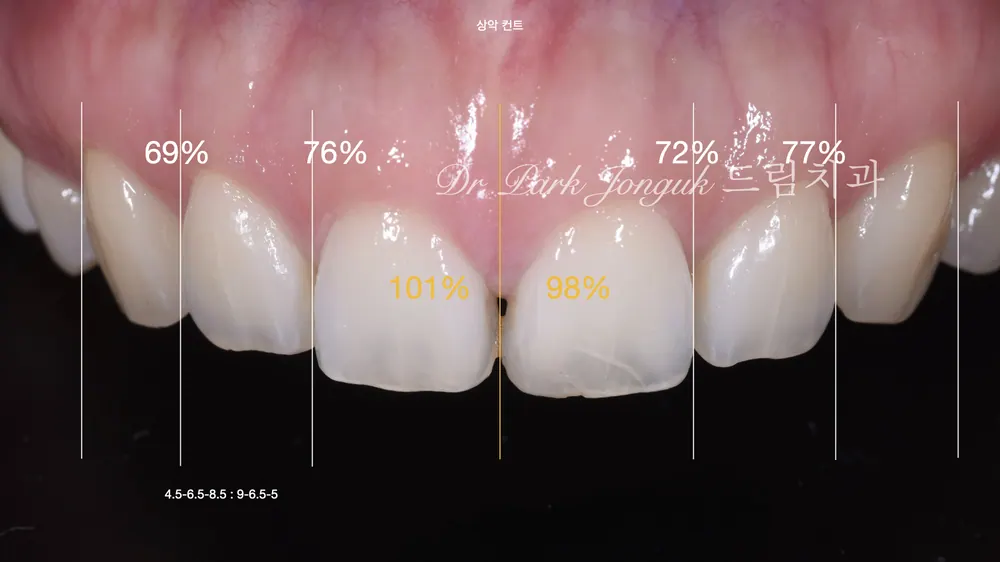
We carried out an analysis of the current teeth.
Since the front teeth were larger than average, it wouldn't be good for them to get even bigger.
However, since the length was too short, lengthening them a little would actually help the tooth proportion.
By keeping the size close to what it is now while carefully shaping the teeth,
we thought it would be better to make them look smaller through design.
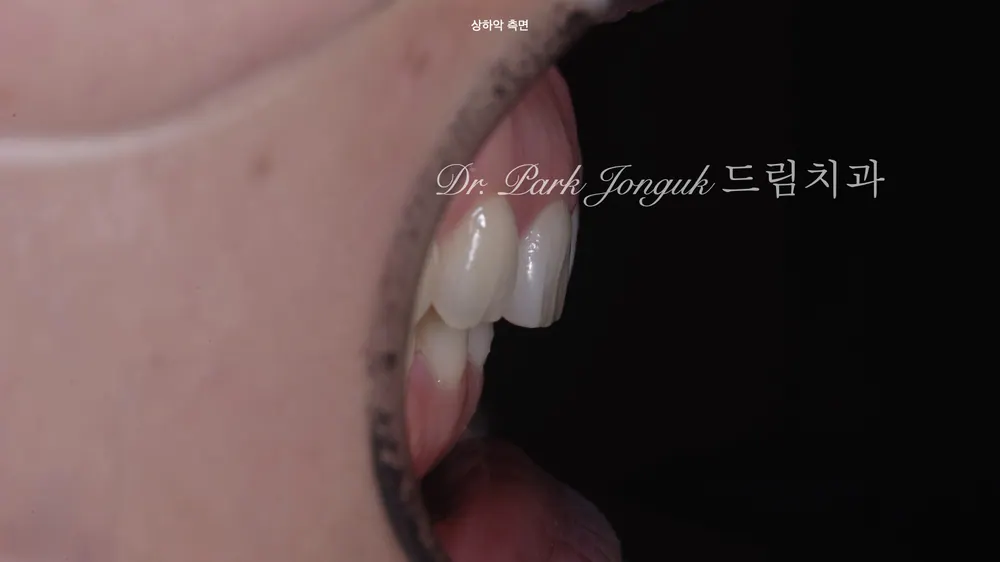
Since the teeth were slightly inward-tilted, the veneers also needed to correct that inward tilt.
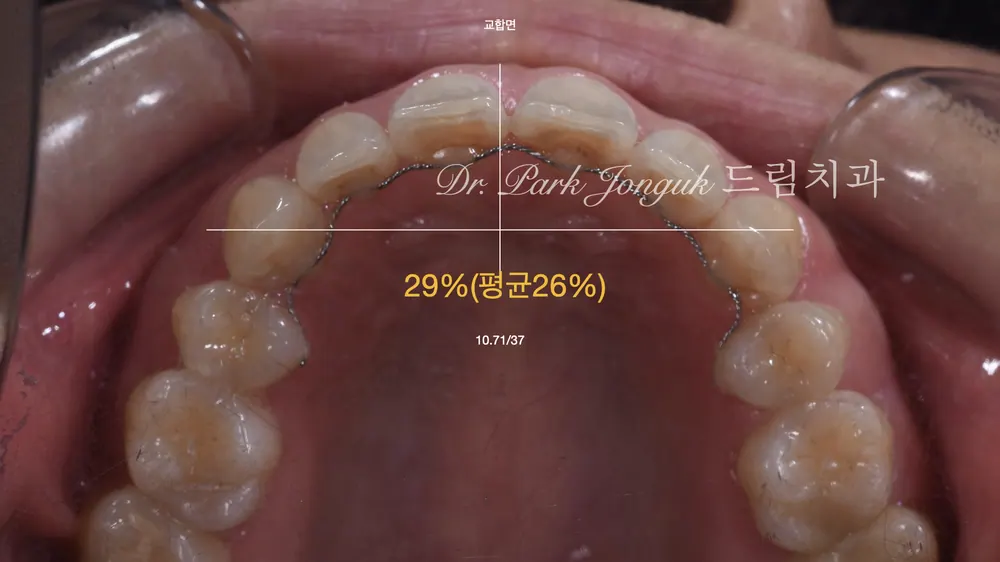
The degree of tooth protrusion is also very important.
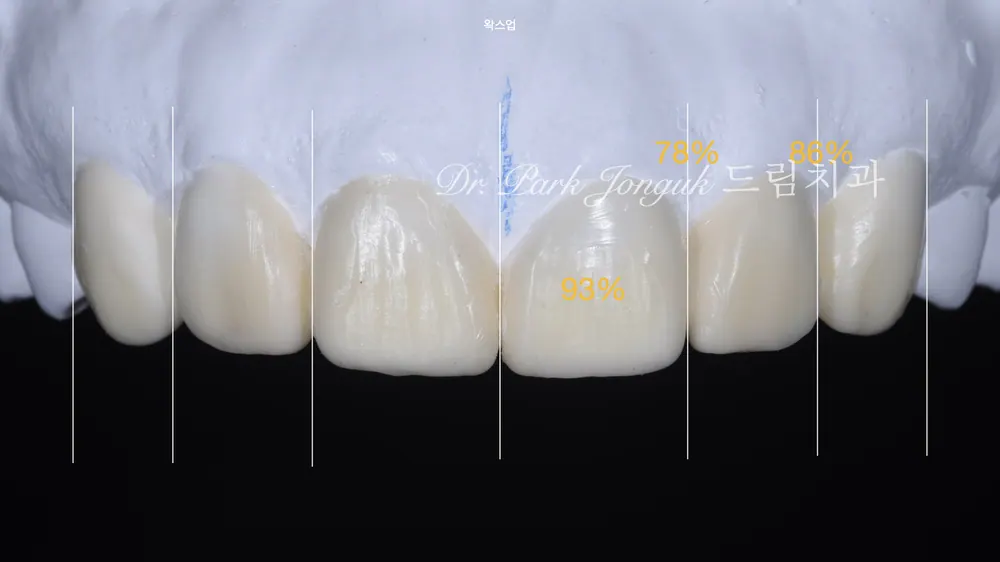
First, we made a wax model of no-prep veneers.
Without reducing any tooth at all,
we checked what the veneers would look like.
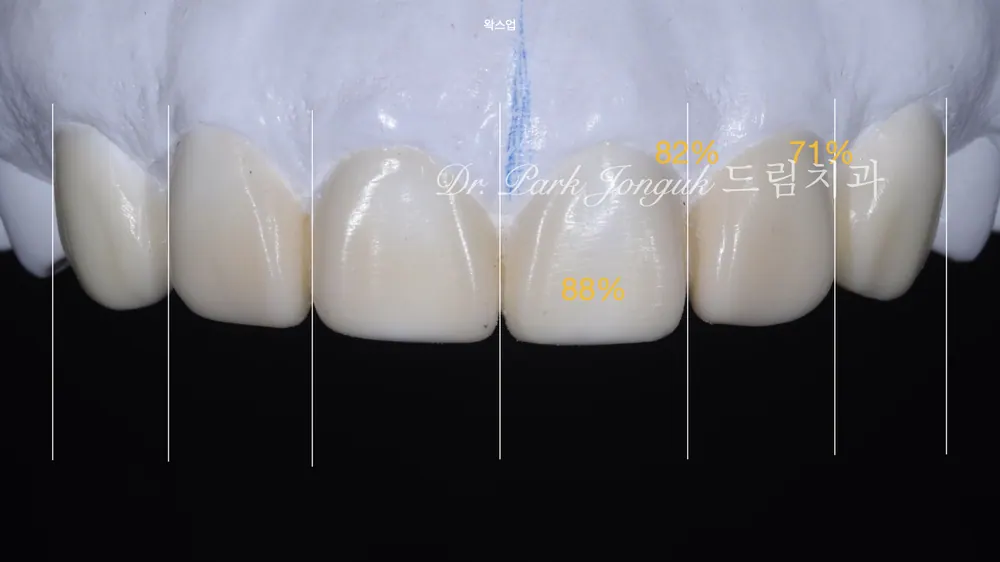
This is the case with a micro-reduction.
It's hard to tell the difference just by looking.
That's because the size difference is only about 0.5mm.
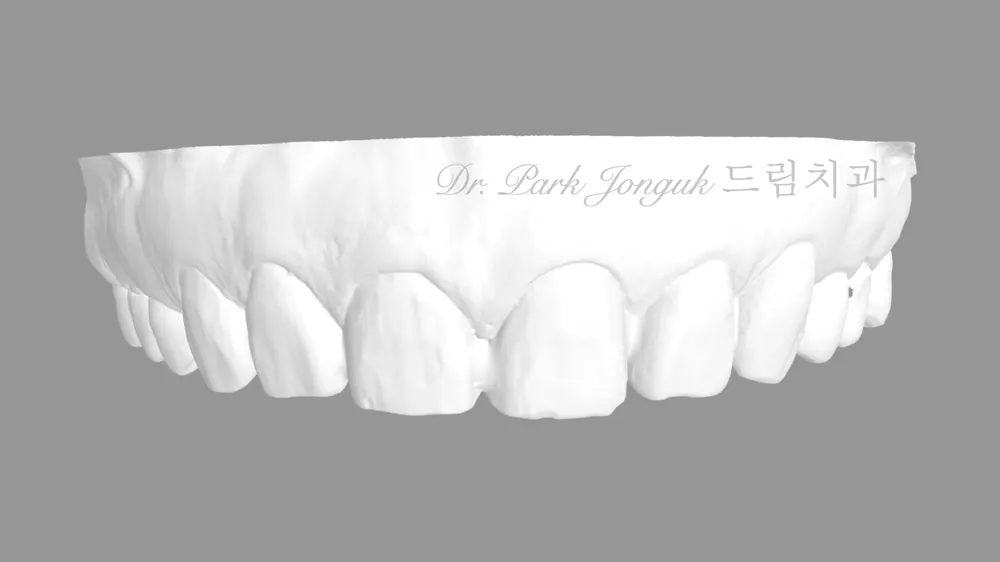
This is the expected amount of reduction.
In the case of no-prep veneers,
we can make a temporary veneer directly on the tooth using resin, in the exact same shape.
If the teeth feel too large at this point, we then proceed with reduction.
To summarize,
we carry out a precision wax-up diagnosis for both no-prep veneers and minimal-prep veneers,
and first check the shape by making a temporary no-prep veneer in the mouth.
If the teeth feel too large at that point, we proceed with veneers using some reduction,
and if the size doesn't feel too large, we proceed with no-prep veneers.
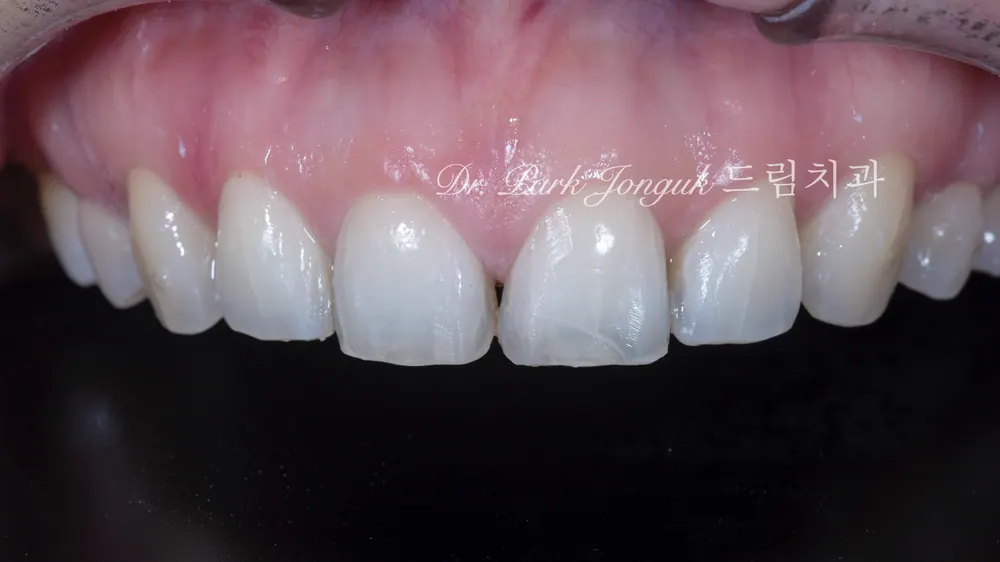
When the temporary veneer was made, the teeth felt too large,
so we decided to go with a micro-reduction.
The photo above shows the state after the micro-reduction.
Even with such a small amount of reduction that no anesthesia was needed,
we could perform veneer treatment without the teeth becoming larger.
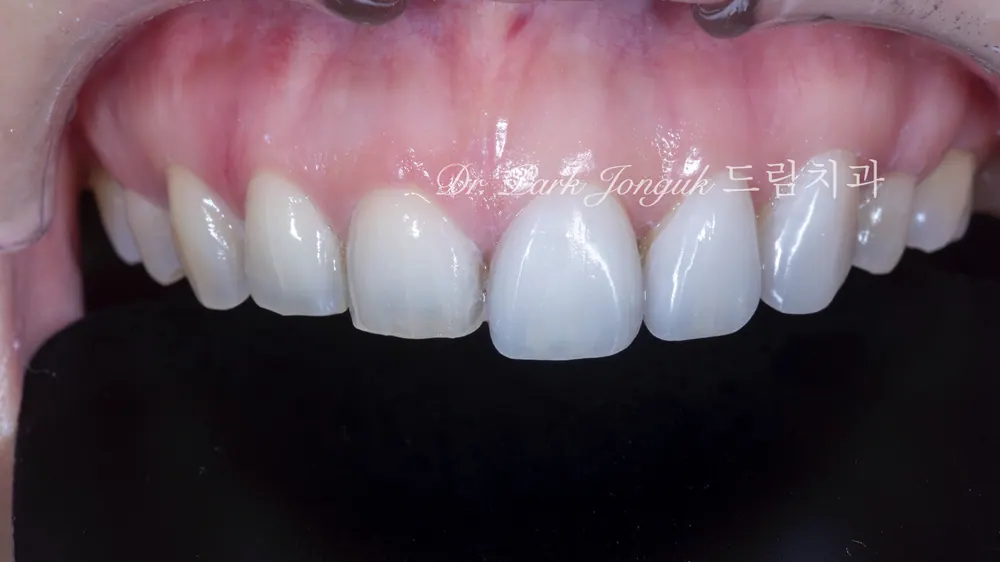
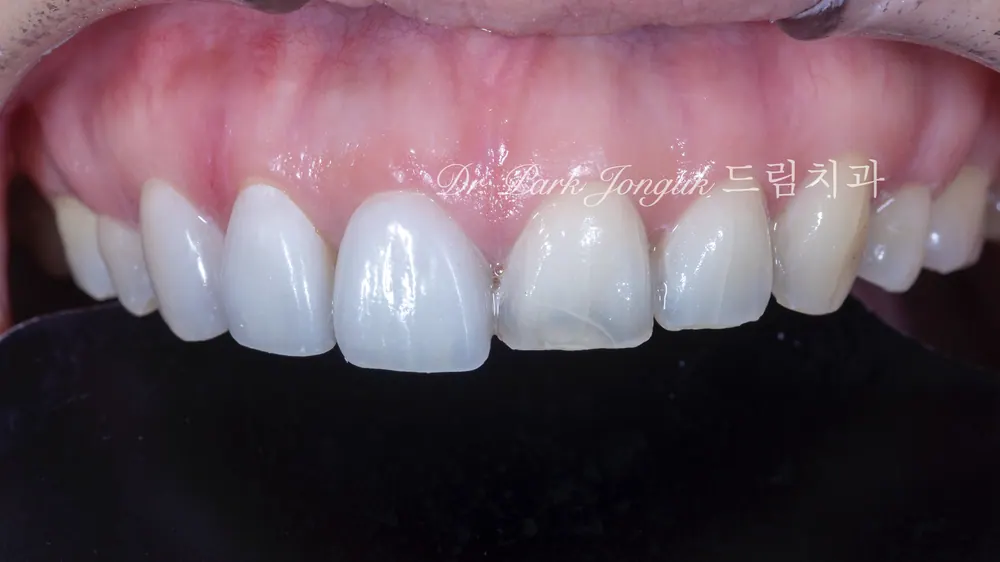
We placed the finished veneers on half at a time.
You can feel the change in the teeth.
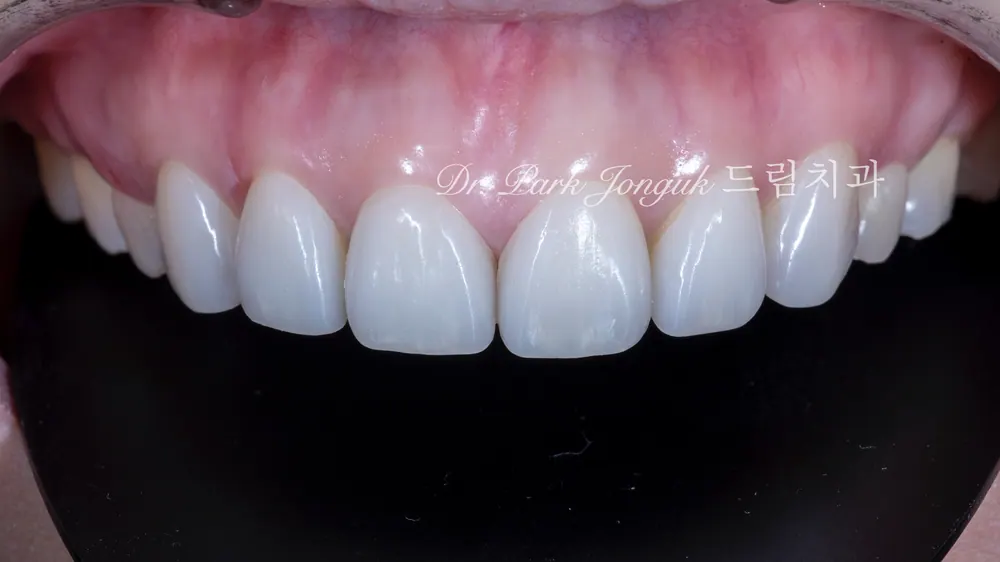
This is how the veneer treatment was completed.
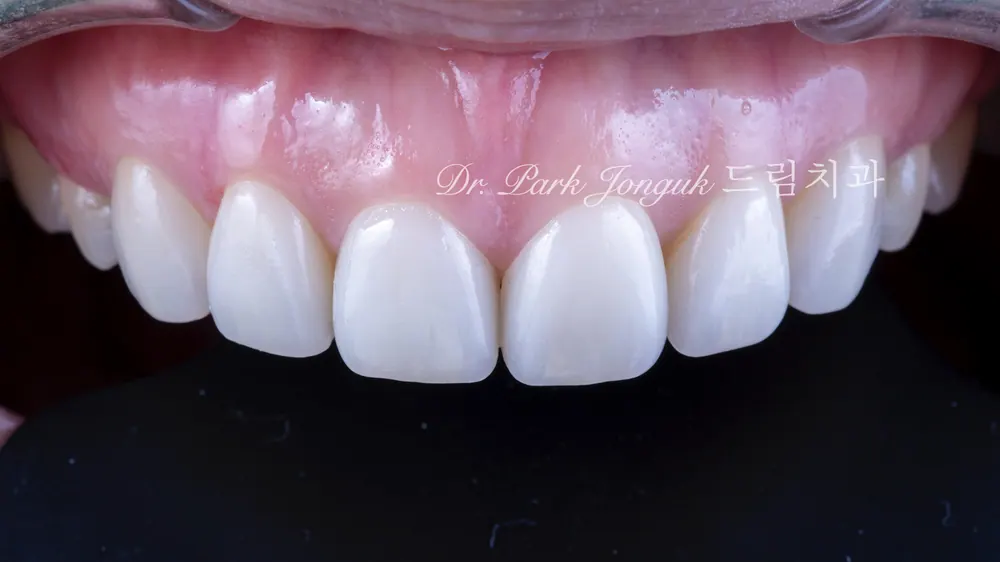
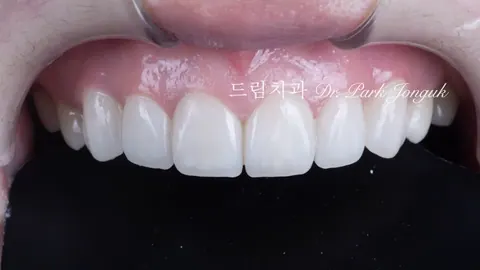
These are veneers that preserve the naturalness of a real tooth well.
Even though so little reduction was done,
the result isn't an artificial, opaque, awkward-looking veneer,
but a natural-looking one.
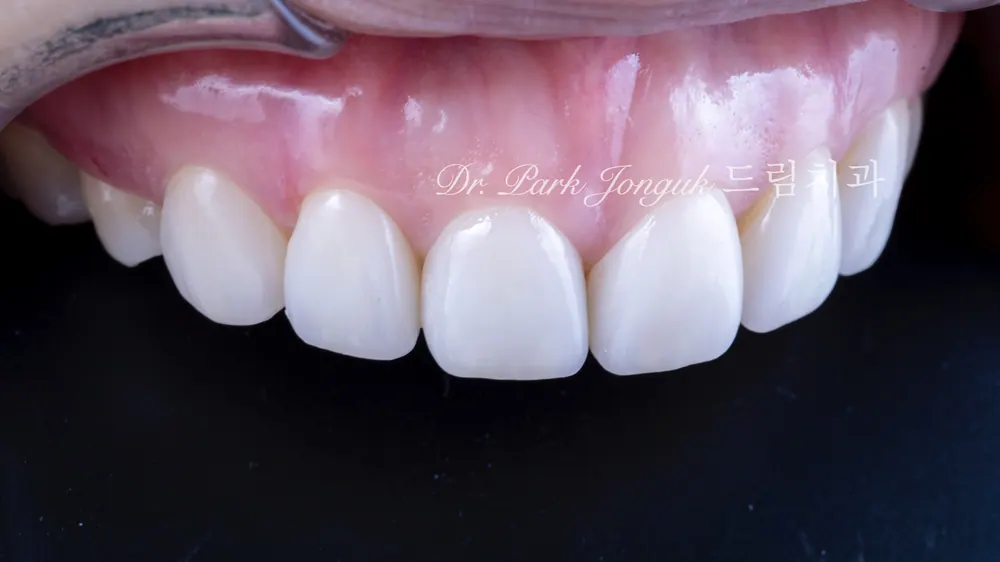
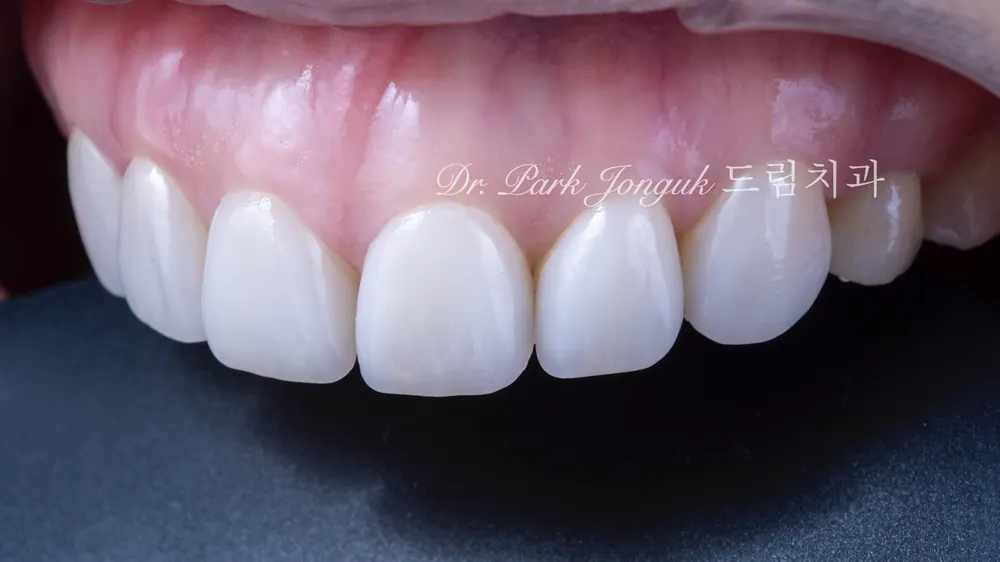
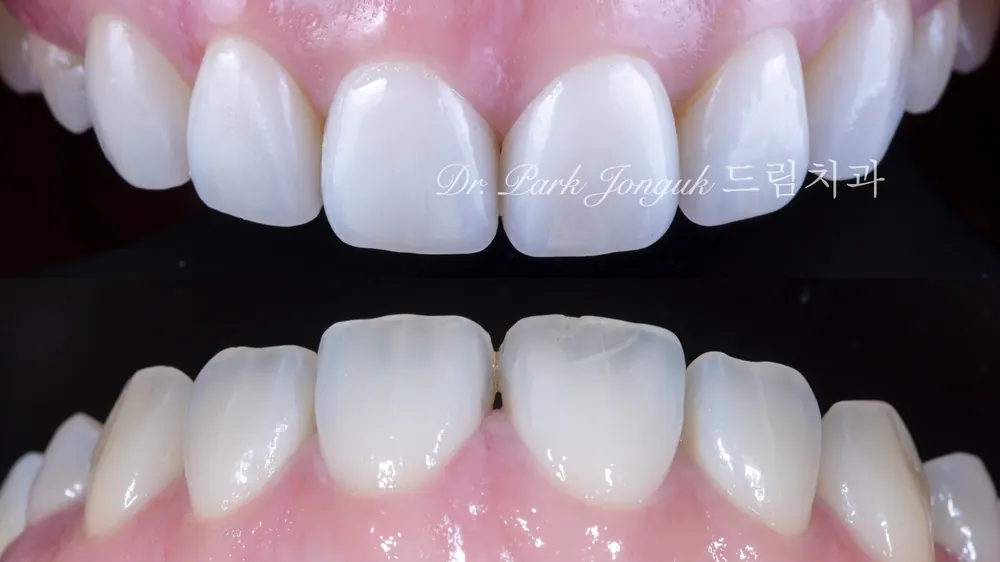
The veneer treatment is fully complete.
The change in tooth shape is clearly visible.
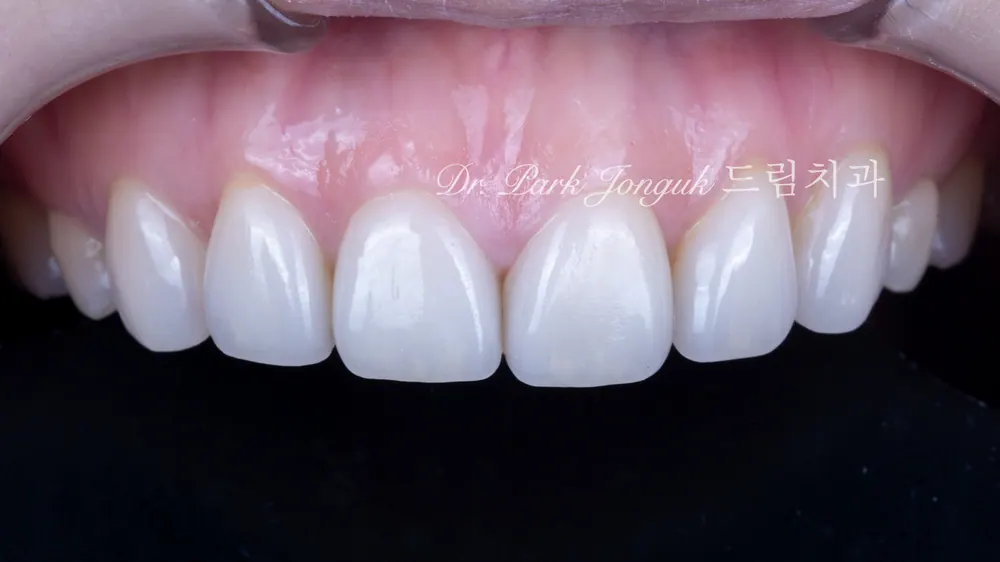
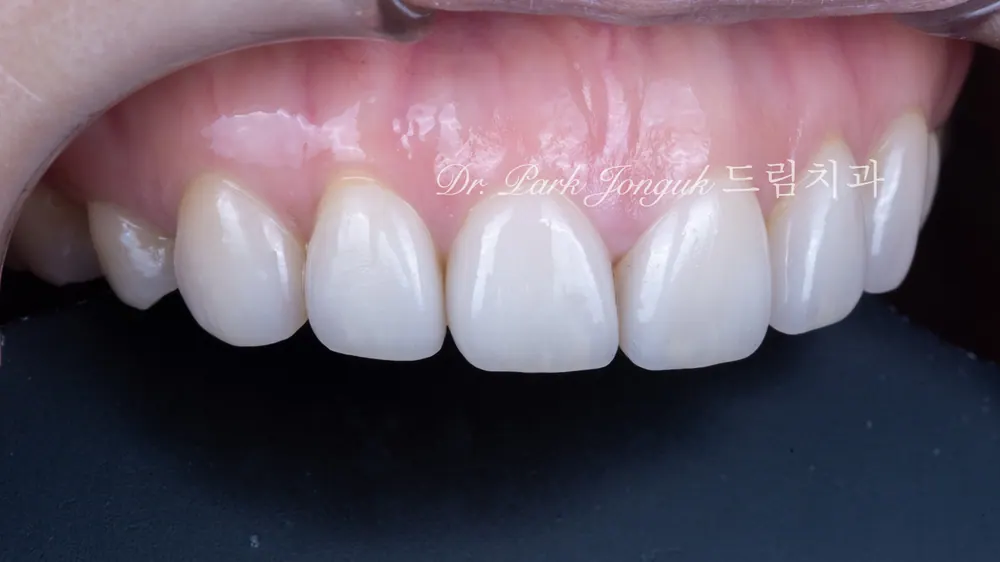
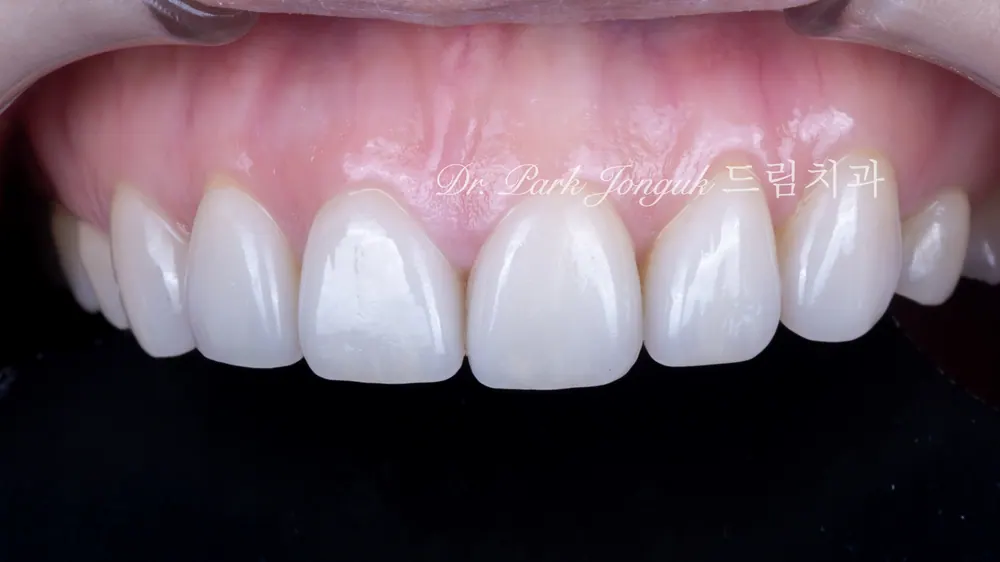
Three years have passed since treatment.
You can see that they've been well maintained.
Natural beauty. Since 2006.
This article is a clinical note written by Dr. Park Jonguk of Dream Dental Clinic, Gangnam; the original was published on his blog. The photographs shown are real cases he treated. Results vary with each patient’s condition, and every procedure carries the possibility of individual variation and side effects.
Quick Consult
Request a Callback
Leave your number and we will call you back during clinic hours.
Request Received
We will contact you during clinic hours. For urgent matters, please call +82-2-3448-0028.