
No-Prep Veneers: A Perfect Fit for Small, Inward-Tilted Teeth
Hello, I'm Park Jonguk, director of Dream Dental Clinic in Apgujeong.
Today I'd like to introduce another case of no-prep veneers.
It's a special treatment that can create a beautiful smile without reducing the teeth at all.
No orthodontics, yet perfect conditions for no-prep veneers
This patient did not undergo orthodontic treatment.
But she had the perfect conditions for no-prep veneers.
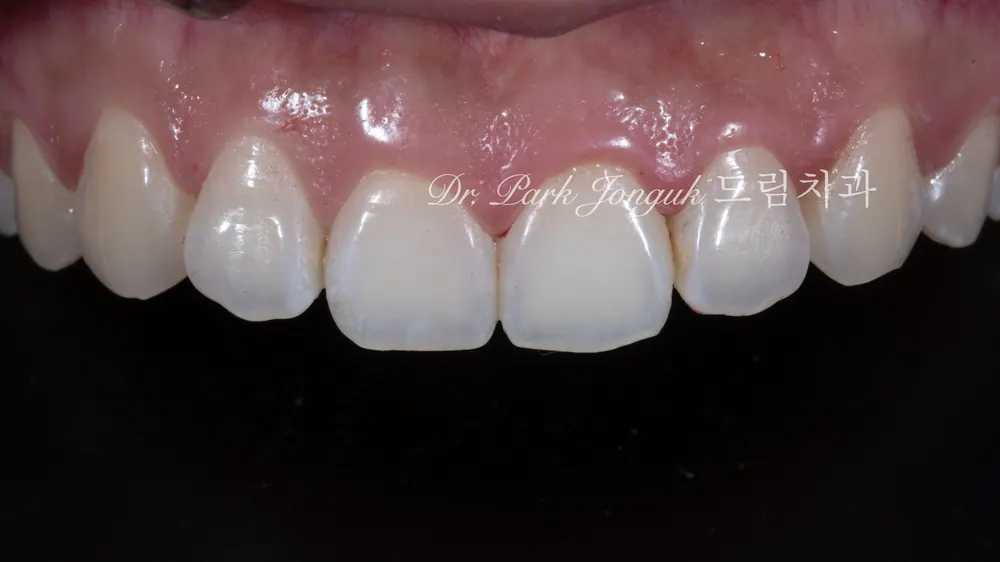
Photo 1 is the initial examination photo.
The teeth are small
The teeth are small overall.
The front teeth in particular are small, making the smile look cramped.
Since the teeth need to be enlarged, there's no need to reduce them at all.
The alignment is good
She never had orthodontics, but her natural alignment is good.
The teeth are arranged neatly and evenly.
Since there's no need to correct their position, reduction is unnecessary.
Inward-tilted teeth
The teeth are angled inward.
Rather than protruding, they're actually retruded.
Since they need to be brought forward, they can be built up without any reduction.
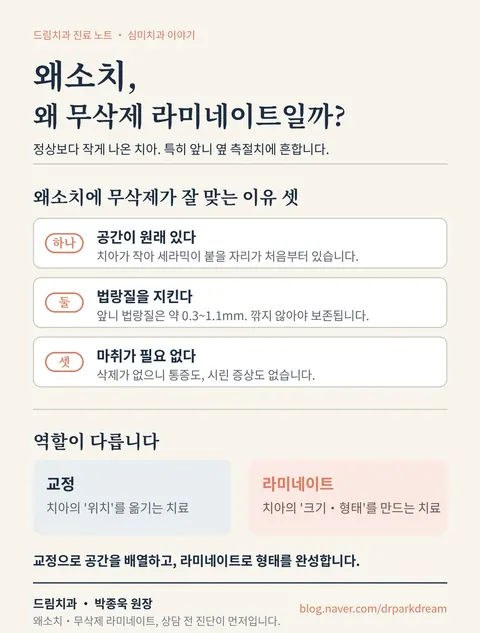
These three conditions are the three key requirements for no-prep veneers.
Regardless of whether you've had orthodontics, no-prep veneers are possible if these conditions are met.
The finished veneers — thin, yet richly detailed
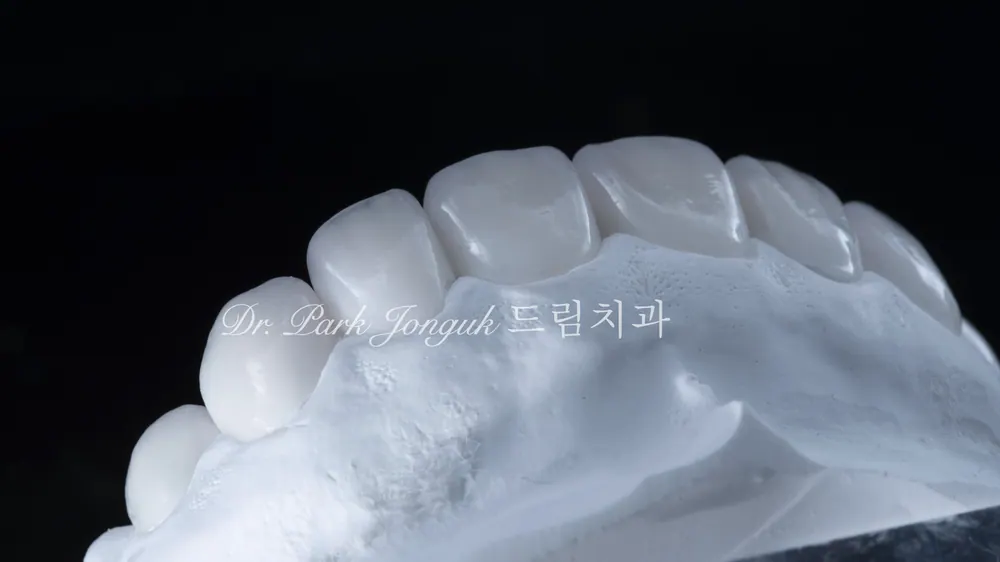
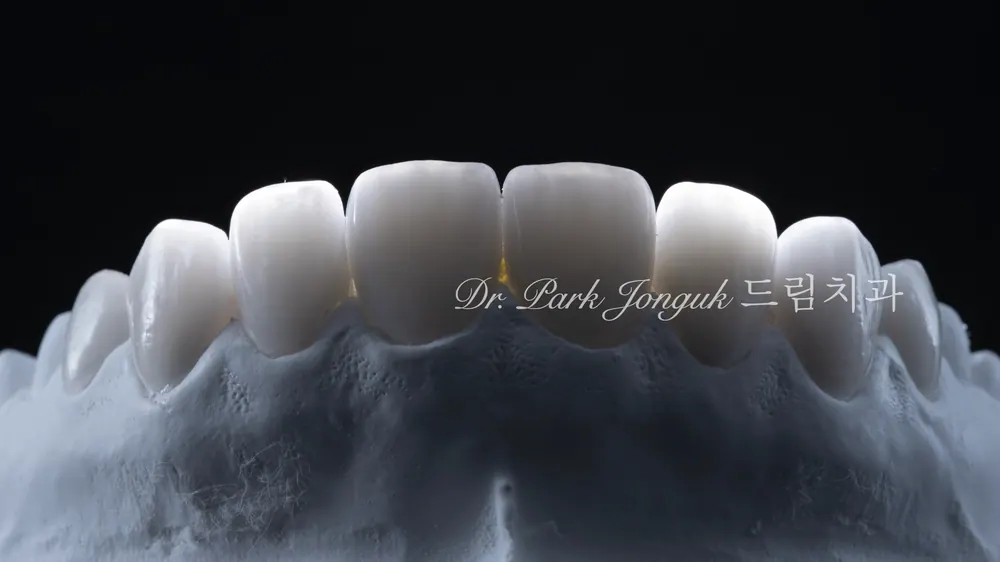
Photos 2 and 3 show the finished veneers.
You can see something truly remarkable.
They're really thin
Since these are no-prep veneers, they were made extremely thin.
They're ultra-thin, about 0.2-0.3mm.
The thickness is close to that of a contact lens.
They're thin enough to let light pass through.
Every nuance of a natural tooth is captured
Despite being this thin, remarkably, the full feel of a natural tooth is preserved.
You can see the translucency at the tooth edge.
There is color variation across the tooth surface.
Developmental lobes, subtle contours, and other three-dimensional details are reproduced.
This is an effect that a one-day method, milled from a single ceramic block, can never achieve.
It's only possible with a hand-layered build-up technique using multiple layers of different ceramics.
You can tell just from a single veneer
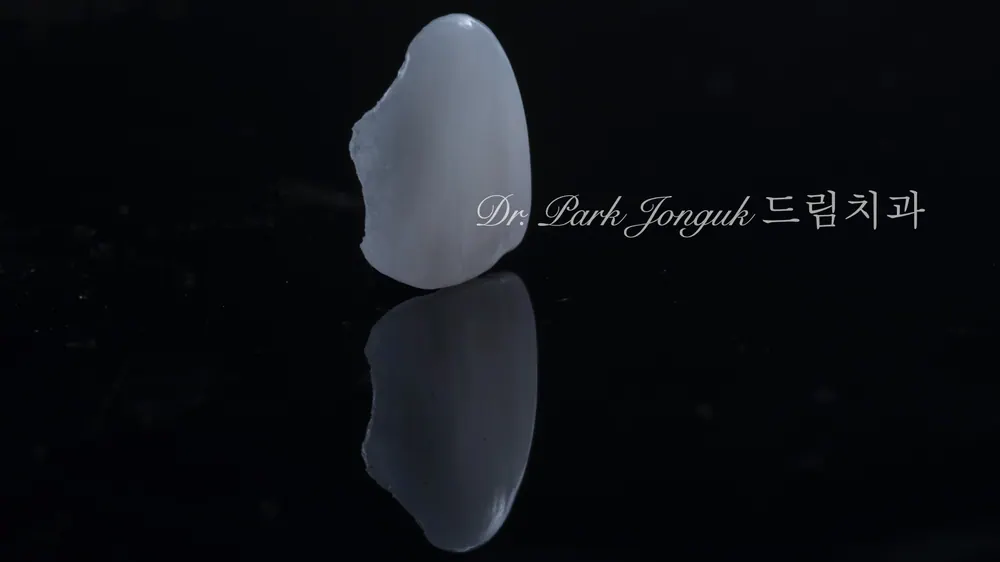
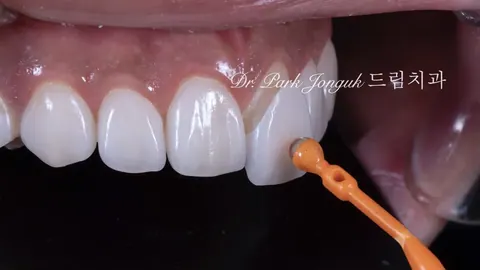
Photo 4 is a close-up of a single veneer.
Thin, yet the natural tooth feel comes through
It's really thin.
Placed on a fingertip, it's almost transparent.
But everything is contained within this thin veneer.
You can see the warm ivory tone near the root side.
There's a brighter shade in the middle section.
You can see the translucency at the tooth edge.
Subtle surface contours and texture are also reproduced.
This is the power of hand-layered multilayer build-up.
Multiple types of ceramic are carefully layered to perfectly reproduce the complex structure of a natural tooth.
Half placed — the difference is striking
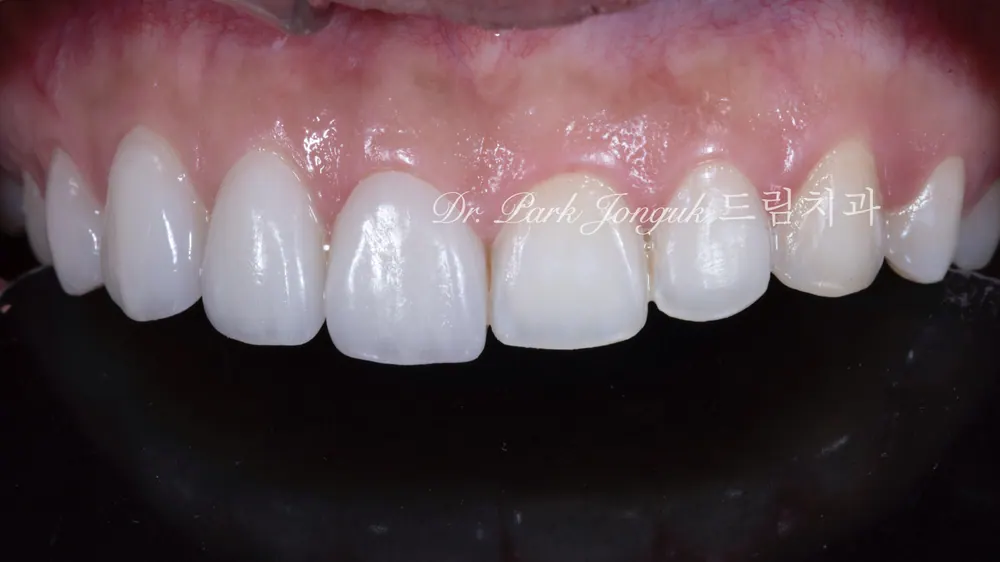
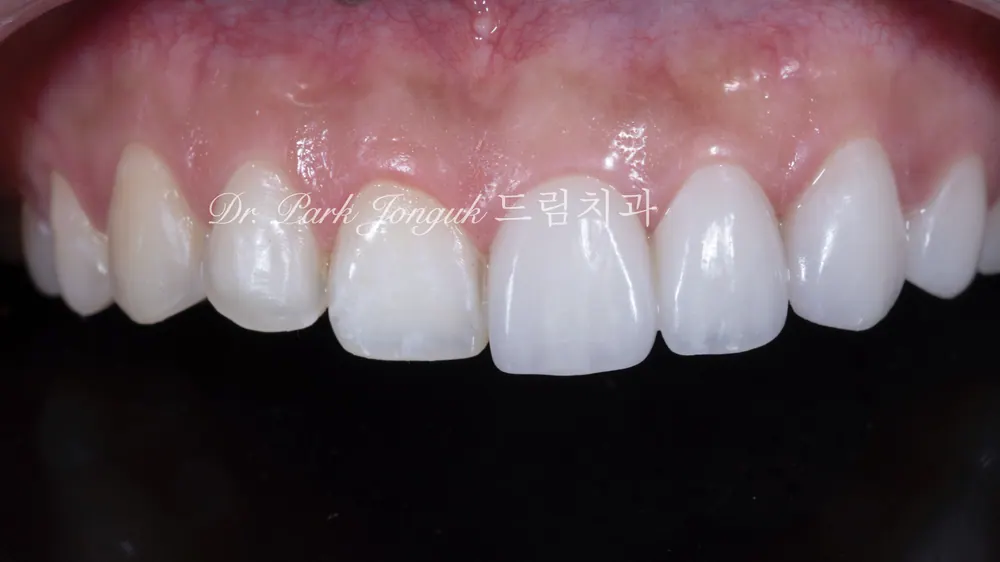
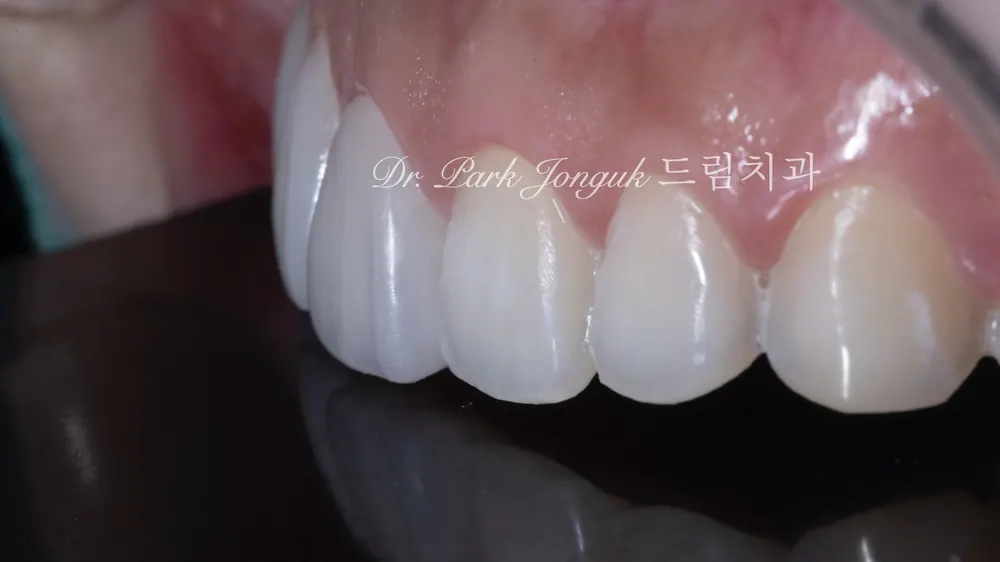
Photos 5, 6, and 7 show the veneers placed on only half.
During the try-in process, you can compare left and right.
Veneer placed on one side only
One side has the veneer placed, the other side does not yet.
The difference is truly striking.
Side with the veneer:
The tooth comes forward and is clearly visible
The size is appropriate and well-balanced
It's bright and full of life
Side without the veneer yet:
The tooth is angled inward
It looks small and cramped
It looks dull and lifeless
It wraps well around the sides too
Looking closely, the veneer wraps well around not only the front but also the sides of the tooth.
Even though it's a no-prep veneer, it extends to cover the sides of the tooth.
Since inward-tilted teeth sit further back, the veneer can bring the tooth forward while naturally wrapping the sides as well.
This is what allows the tooth to be effectively brought forward while keeping a natural shape.
If the teeth were already protruding, there would be no room to wrap the sides, making a no-prep approach difficult.
The final result with all veneers placed — perfect
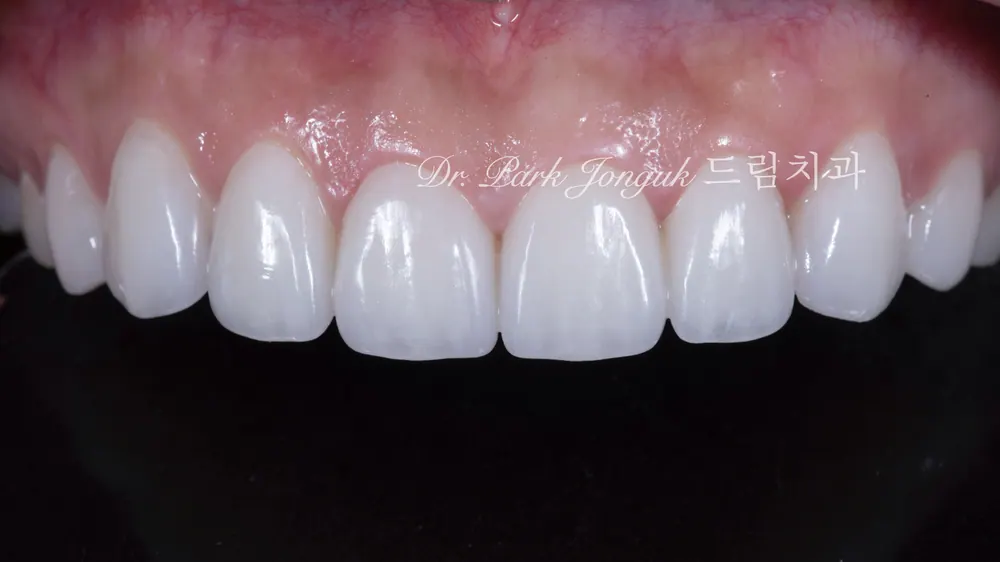
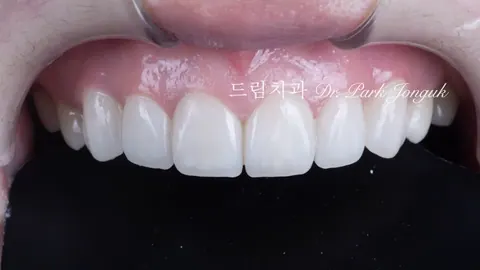
Photo 8 shows all the veneers placed.
This is the final look with all veneers tried in.
Everything is in harmony
All the teeth are in perfect harmony.
Size, shape, and color are all well-balanced.
The left-right symmetry is beautiful.
It looks natural
There's no sign at all that veneers were done.
They're indistinguishable from real teeth.
The translucency, color variation, and three-dimensional depth are all just like natural teeth.
Bright, yet not artificial
The teeth became brighter, but not fluorescent-light white.
They're bright while keeping a natural tone.
Thanks to the translucency, light passes through and diffuses softly.
This is exactly what a properly made veneer looks like.
No-prep veneers — good for these people
No-prep veneers aren't possible for everyone.
Specific conditions are required.
Those with small teeth
Those whose teeth are naturally small and want them enlarged
Those concerned about undersized teeth
Those with spaces between their teeth
Those with even tooth alignment
Those whose natural alignment is already good
Those whose alignment is even after orthodontics
Those who don't need their tooth position changed
Those without protruding teeth
Those with inward-tilted teeth (retruded)
Those with insufficient lip support
Those who need their teeth brought forward
Those who want to preserve their teeth
Those who don't want to reduce healthy teeth
Those who want a reversible treatment
Those who prefer minimally invasive treatment
If all these conditions apply, it's a perfect case for no-prep veneers.
Advantages of no-prep veneers
No tooth reduction at all
The biggest advantage is that the teeth aren't reduced at all.
100% of the healthy tooth structure is preserved.
The enamel remains fully intact.
It's reversible
If you're not satisfied, you can remove them at any time.
Removing them returns the teeth to their original state.
It's a fully reversible treatment.
No sensitivity
Since the teeth aren't reduced, there's no sensitivity.
Since the dentin is never exposed, sensitivity issues don't occur.
No anesthesia needed
Since the teeth aren't reduced, no anesthesia is used.
You can receive treatment comfortably.
Strong bonding
Since bonding is directly to the enamel, the bond is even stronger.
It can actually be more stable than conventional veneers.
Hand-layered build-up is essential
No-prep veneers must be made extremely thin.
But being thin doesn't mean giving up expressive detail.
Not possible with a one-day method
A one-day method, milled from a single ceramic block, cannot achieve a natural look.
There's no translucency and no color variation.
It looks flat and monotonous.
Hand-layered build-up is the only answer
Multiple layers of different ceramics must be built up.
A dentin layer, an enamel layer, and a translucent layer are each built separately.
Only this way can a thin veneer still achieve natural translucency and color.
It takes time and care, but the result is completely different.
Frequently Asked Questions (Q&A)
Q1. Aren't no-prep veneers thick?
A. No. They're made ultra-thin at 0.2-0.3mm, close to the level of a contact lens. With inward-tilted teeth, since the teeth sit further back, there's ample room to bring them forward, so there's no thick feeling at all.
Q2. Can I get no-prep veneers even without orthodontics?
A. Yes, you can. What matters isn't whether you've had orthodontics, but three conditions: small teeth, even alignment, and inward-tilted teeth. If these conditions are met, no-prep veneers are possible without orthodontics.
Q3. Do no-prep veneers also last a long time?
A. Yes. When properly made and bonded, they can last 10 years or more, just like conventional veneers. In fact, bonding directly to enamel can make the bond even better.
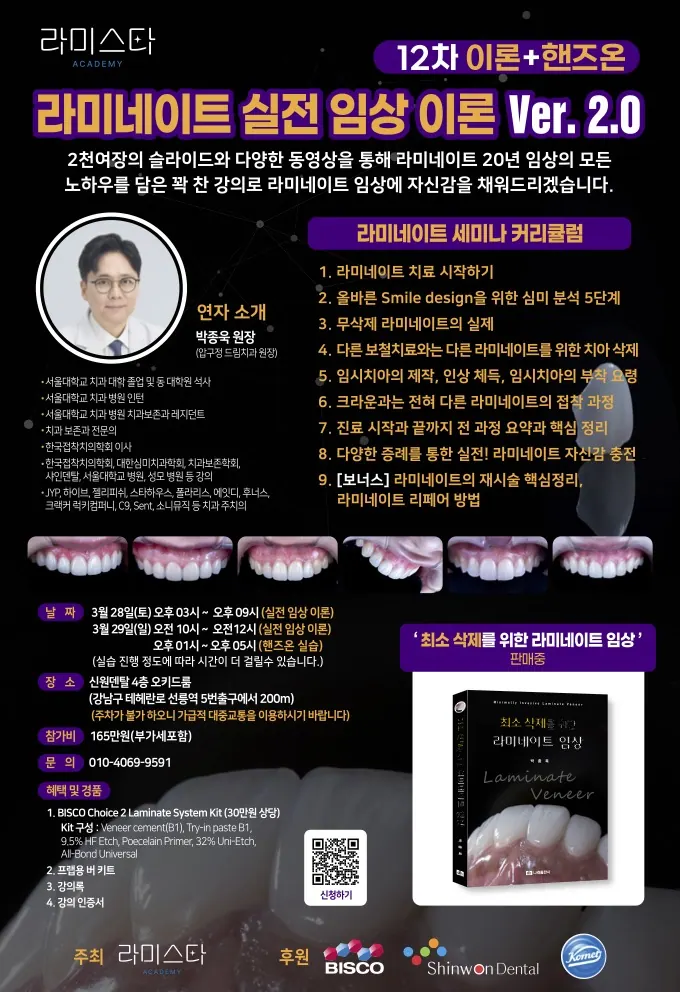
This article is based on the real clinical experience of Dr. Park Jonguk, director of Dream Dental Clinic in Apgujeong. He has practiced cosmetic dentistry for 20 years and teaches no-prep veneer techniques to fellow dentists every month at Lamista Academy. He has published Korea's first laminate veneer textbook.
This article is a clinical note written by Dr. Park Jonguk of Dream Dental Clinic, Gangnam; the original was published on his blog. The photographs shown are real cases he treated. Results vary with each patient’s condition, and every procedure carries the possibility of individual variation and side effects.
Quick Consult
Request a Callback
Leave your number and we will call you back during clinic hours.
Request Received
We will contact you during clinic hours. For urgent matters, please call +82-2-3448-0028.