
No-Prep Veneers: From the Procedure to Aftercare
Hello. This is Park Jonguk, director of Dream Dental Clinic.
With veneer treatment,
the biggest worry is side effects.
Since it's a treatment done purely for esthetic reasons,
the side effects shouldn't be significant.
The real side effects of veneers,
over the long term, are debonding and gum inflammation.
Besides that, in cases with a lot of reduction,
there can be ongoing tooth sensitivity.
Gum inflammation is a problem that can be resolved
depending on how well it's cared for,
so in the end, the side effects come down to lifespan issues like debonding or fracture,
and the long-term sensitivity of the tooth.
Neither of these two problems occurs when tooth reduction is kept minimal.
In particular, the sensitivity issue
simply doesn't happen at all, the less the tooth is reduced.
In the past, there were clinics that performed veneer treatment after excessive reduction,
which is why tooth sensitivity is listed as a side effect of veneers,
but in reality, if tooth sensitivity would actually become a real problem,
a treatment other than veneers should be considered instead.
Fracture or debonding of a veneer
also becomes less likely the less the tooth is reduced.
The outermost part of the tooth is where a veneer bonds best.
For this reason,
no-prep veneers are the method
with the fewest side effects among all veneer treatments.
It isn't possible in every case,
so it's only possible in limited situations.
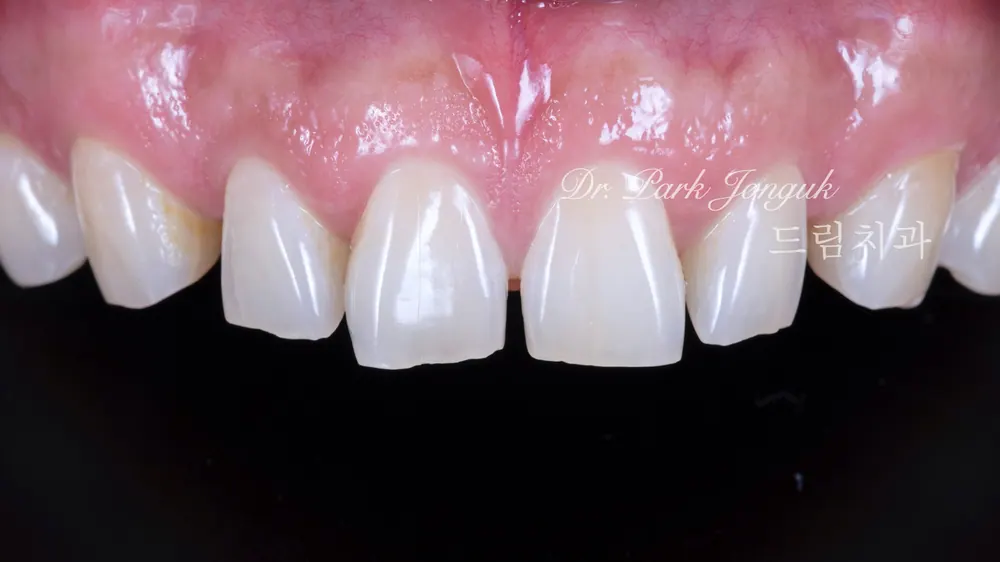
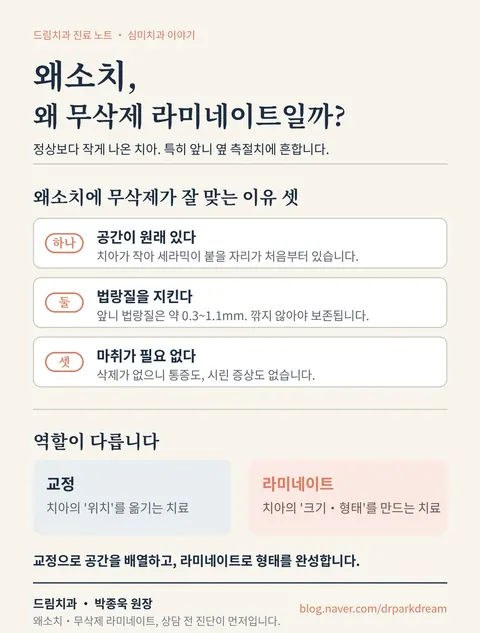
In general, when talking about cases where no-prep veneers are possible,
three conditions are mentioned.
The teeth need to be small, the alignment needs to be good, and the teeth must not be protruding —
those are the three.
In the case above, there's also space between the teeth.
Space between the teeth can sometimes make no-prep veneers work even better.
The case above is exactly that kind of situation.
That said, doing it completely without any reduction is a bit of a stretch.
For the canine, no-prep veneers are possible,
while the other teeth need minimal reduction.
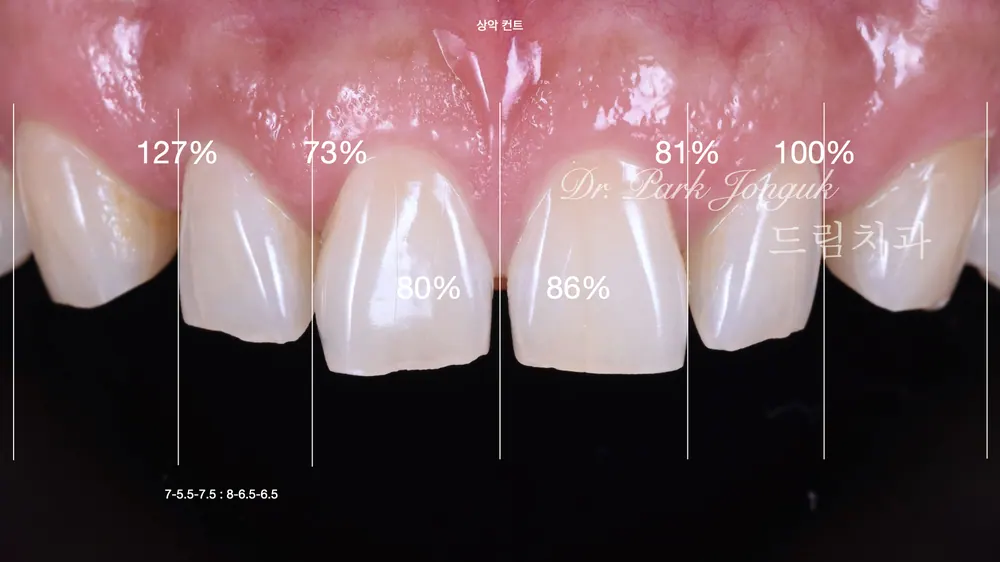
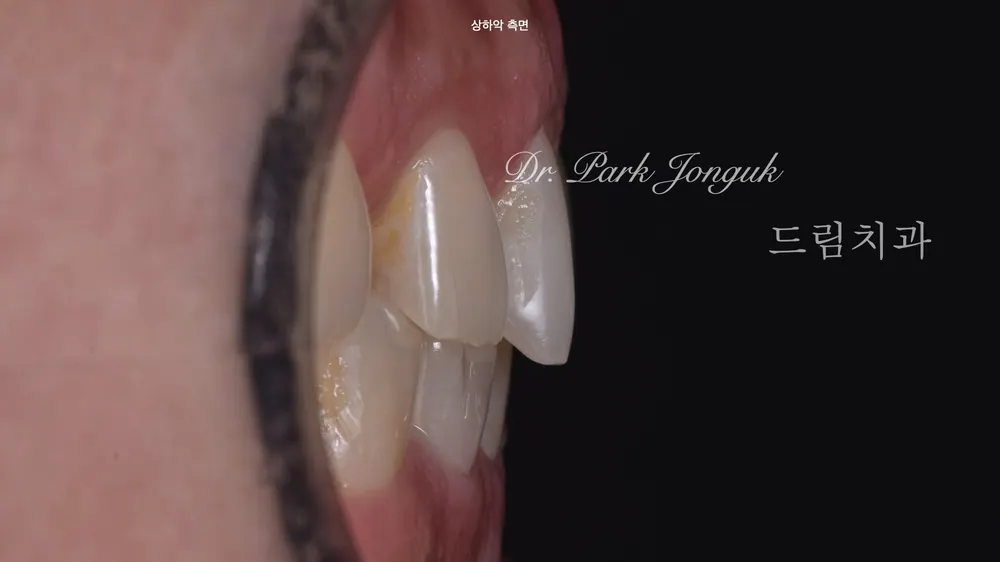
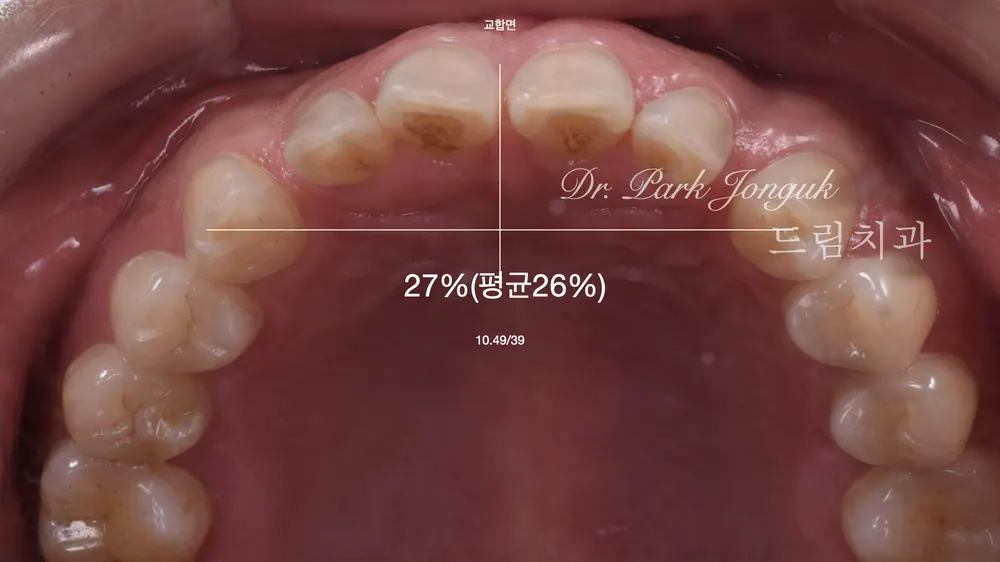
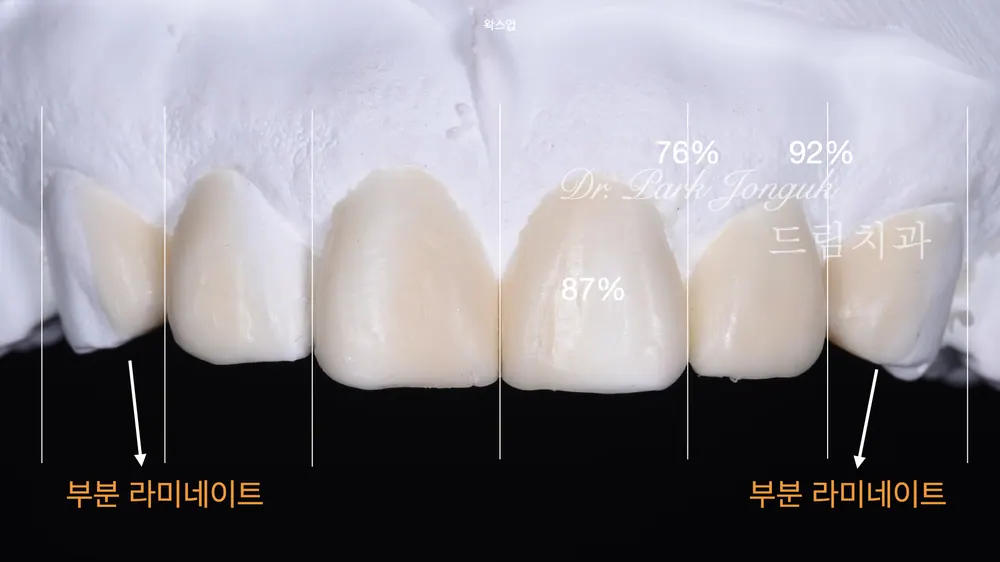
What matters with no-prep veneers
is precise diagnosis.
In every veneer treatment, the wax-up precision diagnosis process
is an essential and very important step,
and it's especially important in no-prep cases.
We need to confirm whether it's possible,
and since it's a process that lets us preview the result in advance,
through this process, before the veneer treatment,
we need to consult extensively with the patient using a simulation close to the actual result.
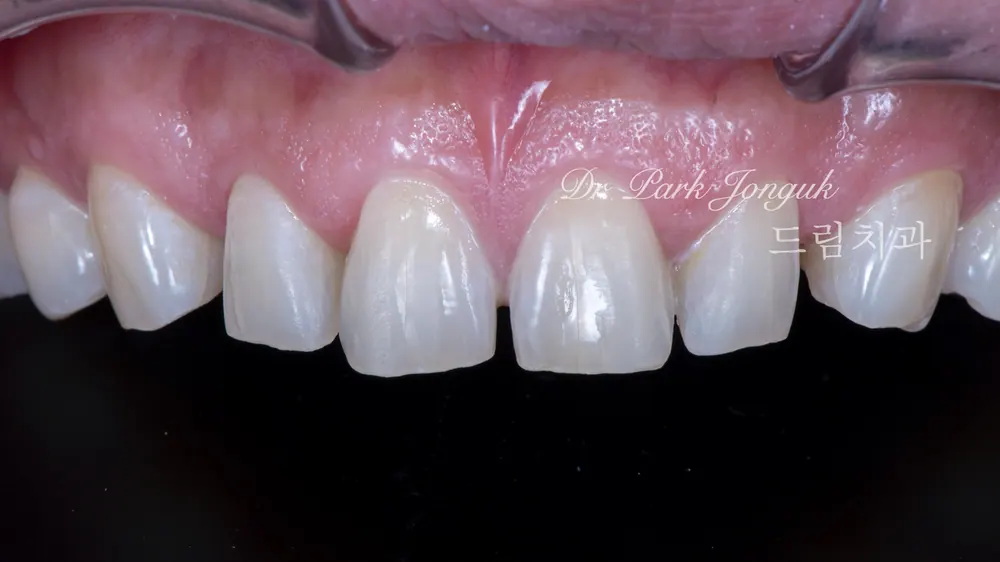
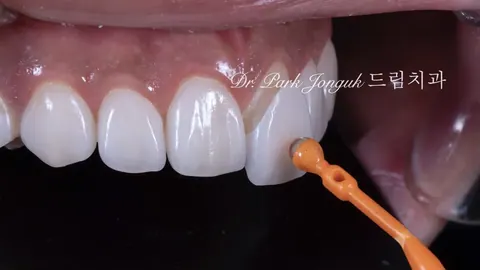
We perform minimal reduction for the treatment.
We smoothed only the sharp areas.
It's almost exactly the same as the natural tooth.
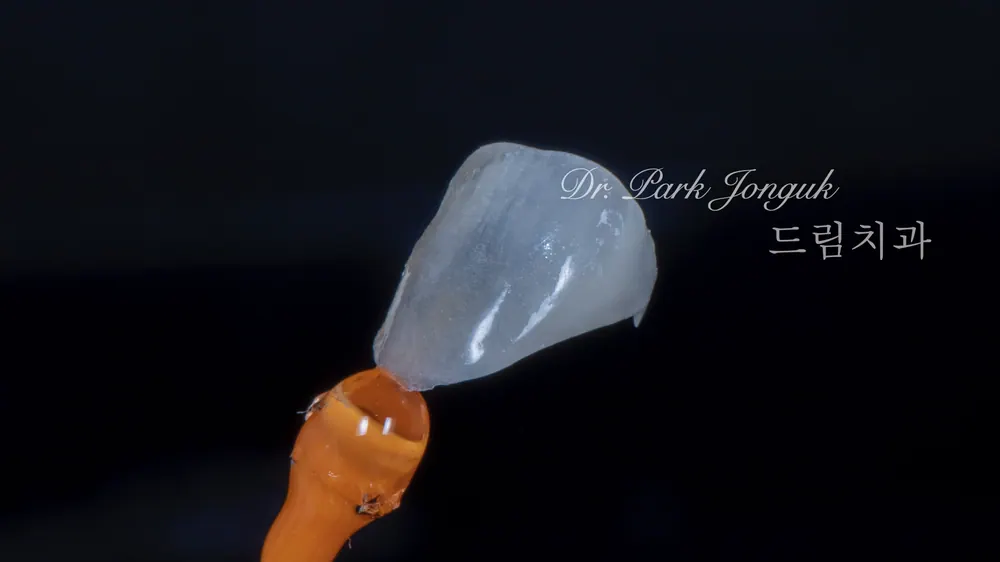
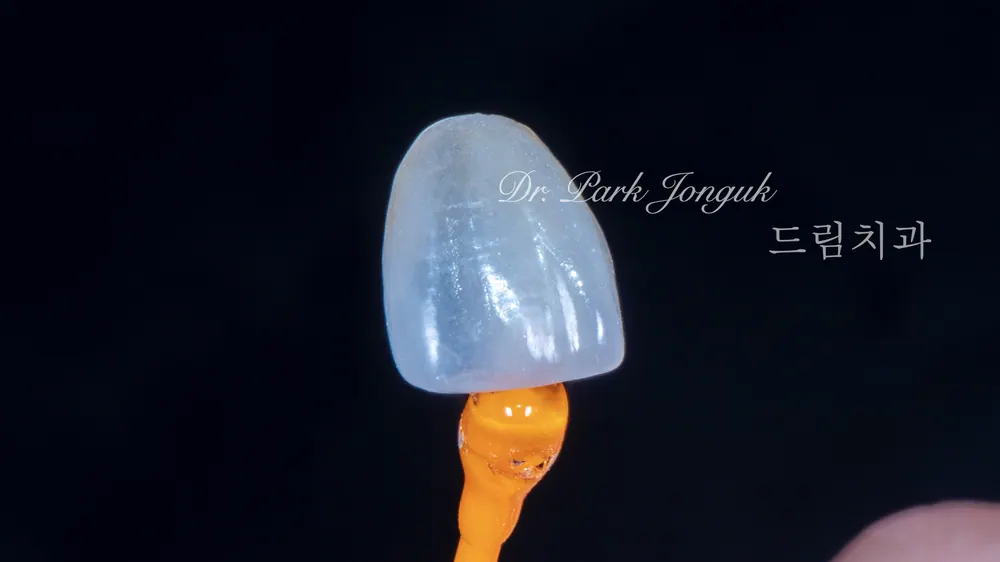
Now we move on to fabricating the no-prep veneers.
As shown in the photo above,
they're fabricated using extremely thin ceramic.
The thickness varies by area, but in the thinnest spots it can be under 0.1mm.
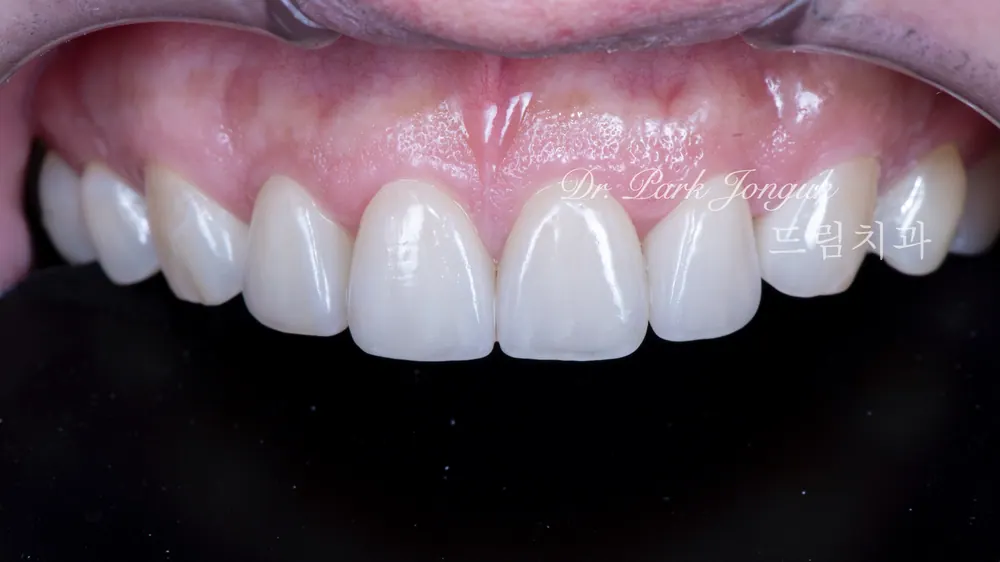
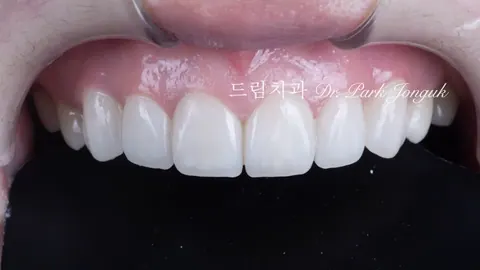
The no-prep veneer treatment has been completed.
In many cases, when no-prep veneers are done,
the result often ends up looking awkward and unnatural.
Dream Dental Clinic's no-prep veneers
always express a natural beauty.
The three-dimensional feel and shape capture every characteristic of a natural tooth,
and a variety of coloring and tooth translucency were expressed.
Capturing all of this expression in ceramic this thin is exactly what defines Dream Dental Clinic.
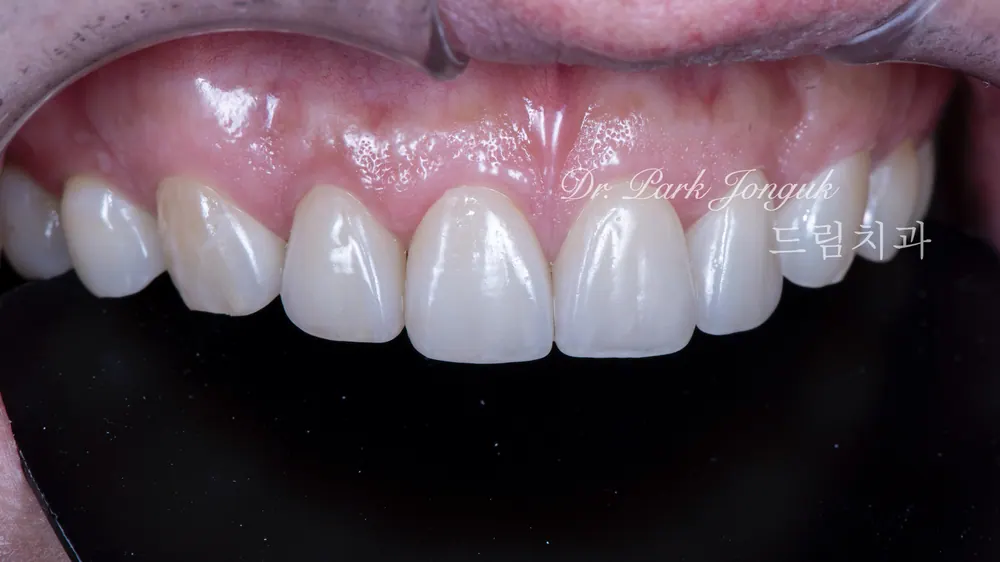
You can see that even the texture of the tooth surface is naturally expressed.
Expressing this level of detail
is something a factory-produced, computer-milled veneer simply cannot match.
The one-day method in particular finds it very difficult to fabricate ceramic this thin.
Being thin while still preserving this level of detail
is only possible at a place with years of accumulated know-how.
Not all no-prep veneers are the same.
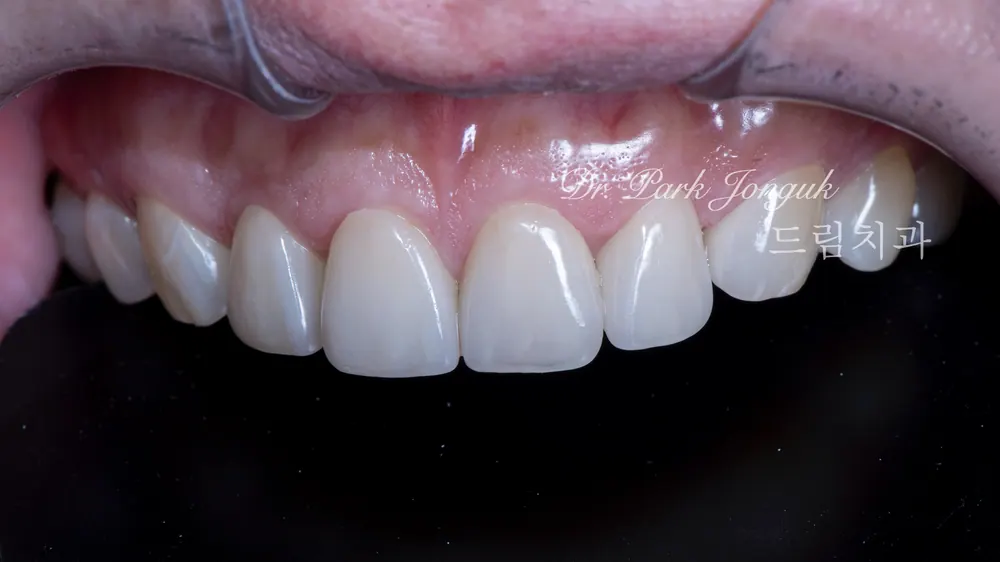
So that gum health can be maintained as well,
harmony with the gum is also extremely important.
Ongoing maintenance at the dental clinic is also very important.
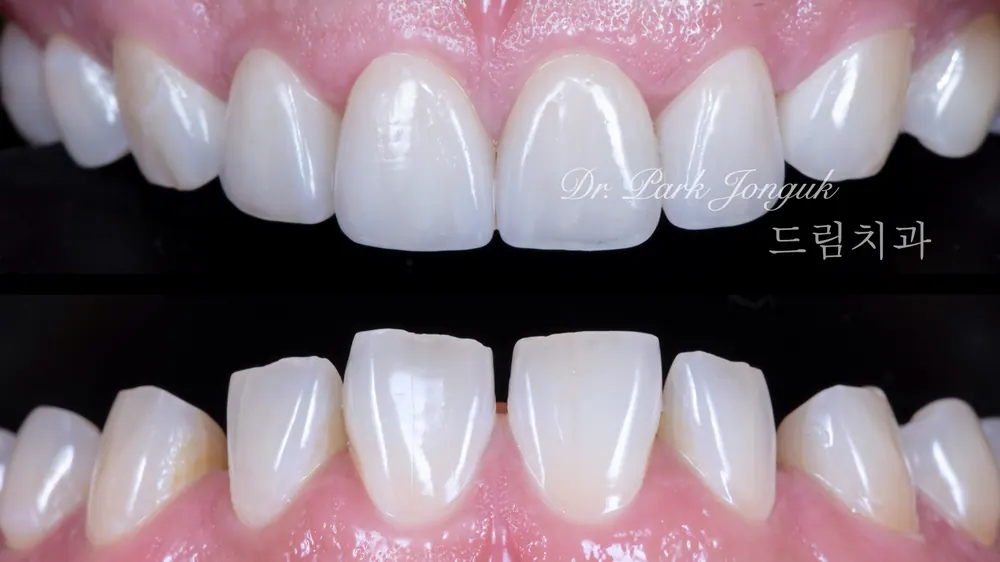
Natural beauty.
Since 2006, Dream Dental Clinic
This article is a clinical note written by Dr. Park Jonguk of Dream Dental Clinic, Gangnam; the original was published on his blog. The photographs shown are real cases he treated. Results vary with each patient’s condition, and every procedure carries the possibility of individual variation and side effects.
Quick Consult
Request a Callback
Leave your number and we will call you back during clinic hours.
Request Received
We will contact you during clinic hours. For urgent matters, please call +82-2-3448-0028.