
No-Prep Veneers for Retroclined Teeth After Orthodontic Treatment
Hello, I'm Dr. Park Jonguk, director of Dream Dental Clinic.
Orthodontic treatment is divided into extraction and non-extraction orthodontics.
Correcting the bite by removing small premolars is called extraction orthodontics,
and correcting it without removing any teeth is called non-extraction orthodontics.
Usually, when the teeth are heavily crowded
or the mouth protrudes, extraction orthodontics is used,
and if not, non-extraction orthodontics is used.
The problem lies in the borderline cases.
Cases where extraction seems like it would pull the mouth in too far,
but not extracting leaves too little space...
In cases like this, if extraction orthodontics is chosen,
the result is often retroclined (ok-ni) teeth.
In a situation like this, where orthodontics has left the teeth retroclined,
the treatment options for improving it
include redoing the orthodontic treatment,
or doing veneers on the front teeth.
With re-orthodontics, whether it's even possible needs to be assessed first.
There are often cases where it isn't possible, or where it doesn't actually improve things.
The case we'll look at today
is the process of using no-prep veneers
to improve retroclined teeth left over after orthodontic treatment.
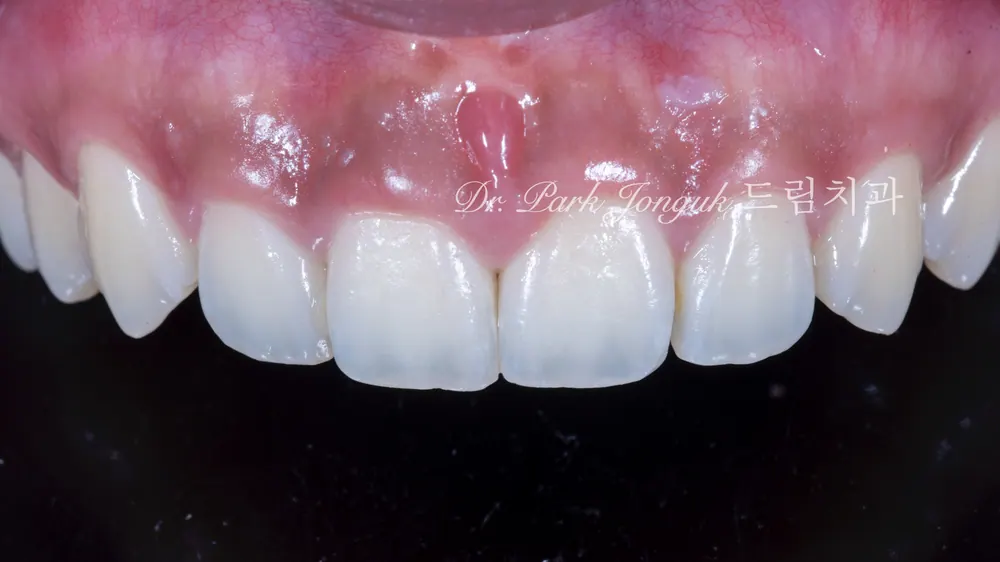
Orthodontic treatment had improved the alignment,
but the angle of the teeth themselves had shifted quite far inward.
Teeth that have shifted inward like this are called retroclined, or "ok-ni."
Re-orthodontics wasn't an option due to time constraints,
and since no-prep veneers, which cause no damage to the teeth, were possible in this case,
we decided to go with no-prep veneers.
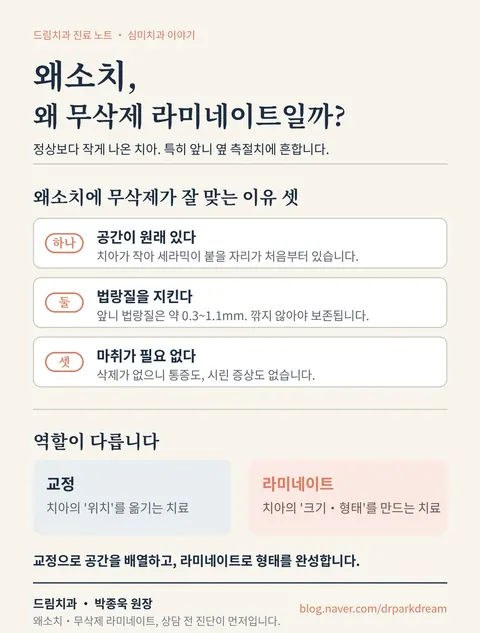
Cases where no-prep veneers are possible require
small teeth,
good alignment,
and teeth that don't protrude.
These are the three conditions,
and this case met all three.
In particular, teeth that have become retroclined after orthodontic treatment make for one of the best cases for no-prep veneers.
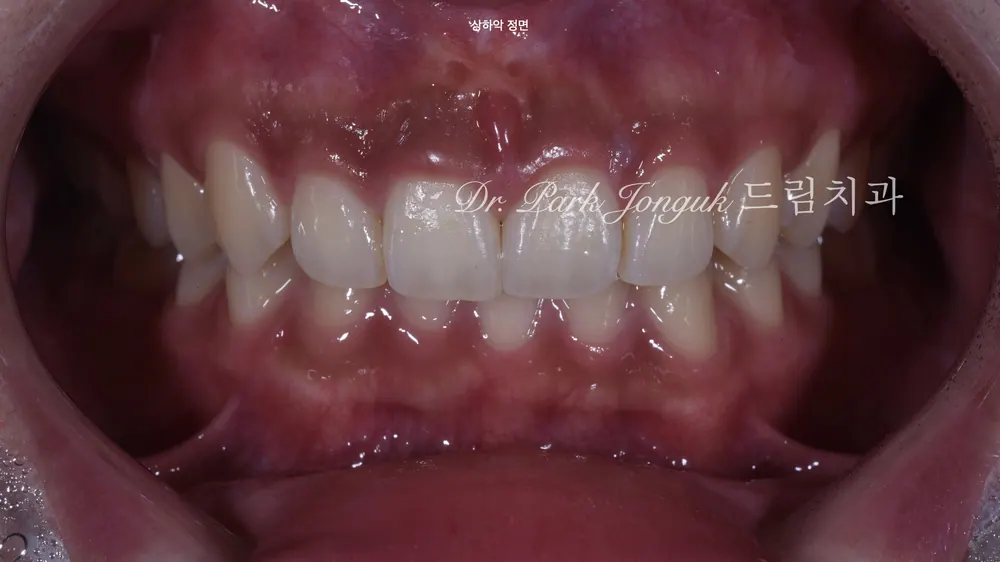
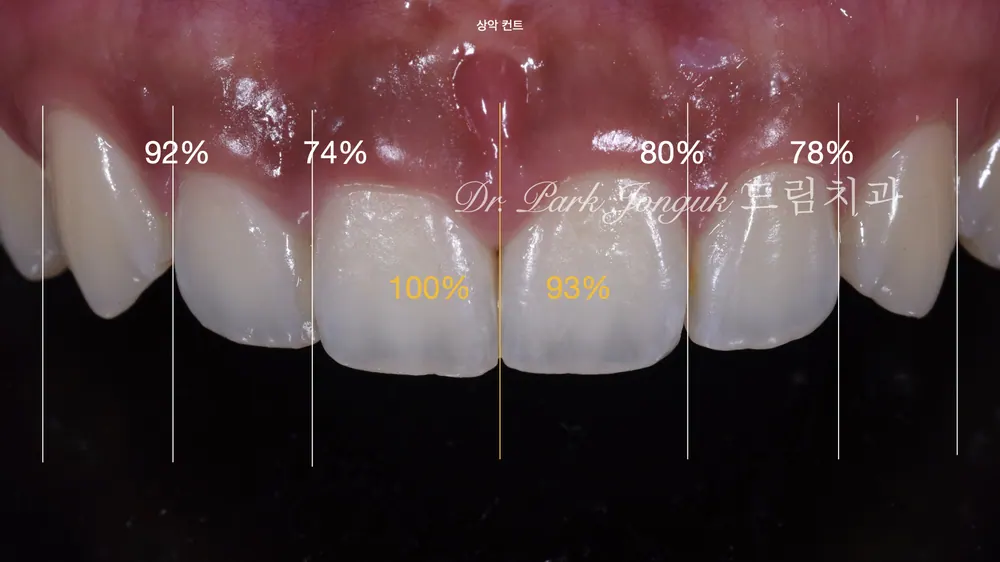
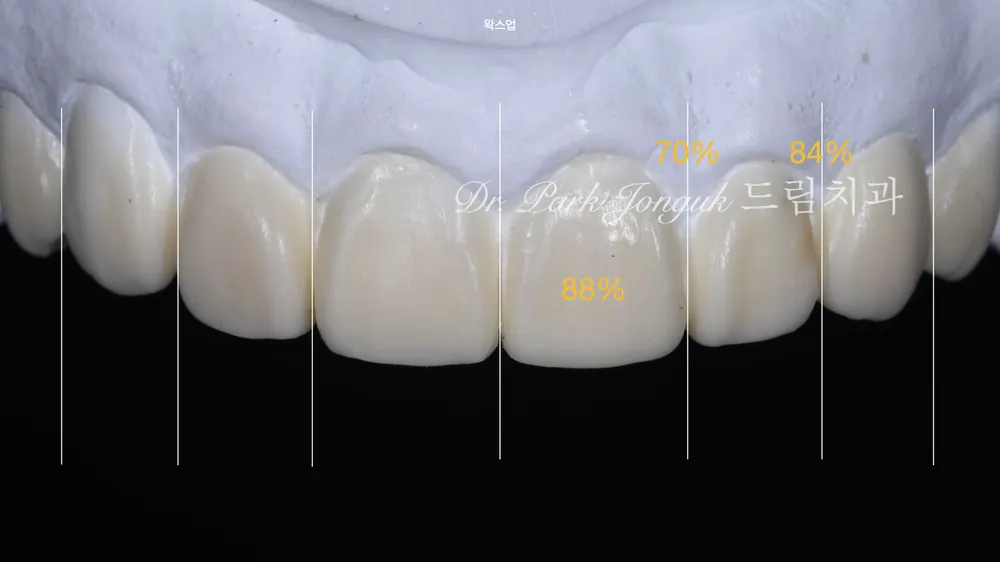
Whatever the veneer case,
the precision wax-up diagnosis process is extremely important.
It's the process of building a precise treatment plan,
one that includes a precise analysis of the current state of the teeth
and lets us confirm how much tooth reduction, if any, will be needed for treatment,
and even predict what the veneers will look like after treatment.
Please see the link below for more detail.
With no-prep veneers,
without any tooth reduction at all,
we can make temporary teeth in advance in the shape the final teeth are expected to take.
This process lets us confirm ahead of time how much the retroclined teeth will improve.
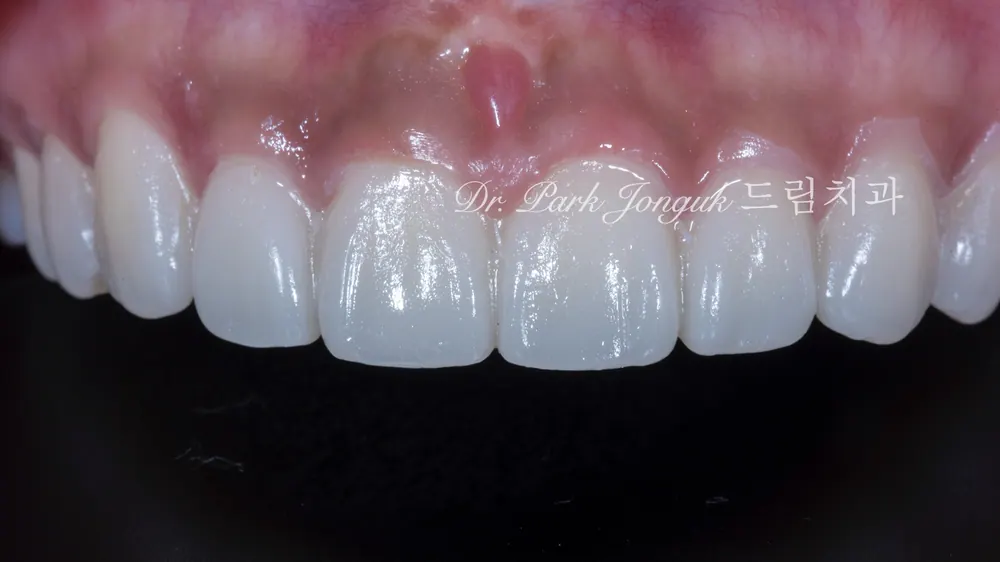
This is the shape of the temporary teeth.
I go over the size and proportion of the teeth with the patient in great detail.
Since these are no-prep veneers, we don't actually bond temporary teeth in place.
though in cases involving gum contouring, we sometimes do.
In this case, there was some asymmetry in the gum shape,
but since the patient didn't want gum contouring, we didn't proceed with it.
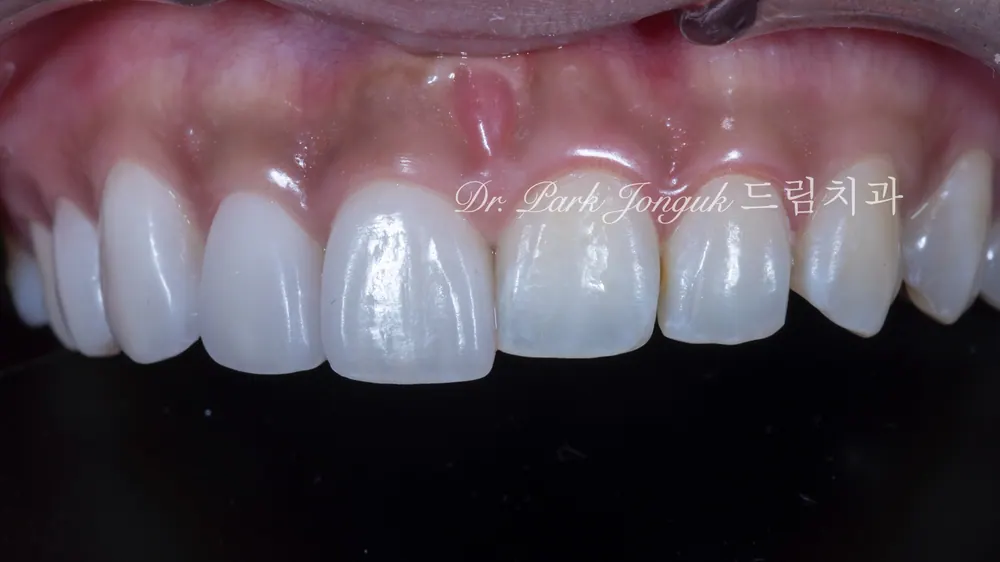
After fabricating the veneers,
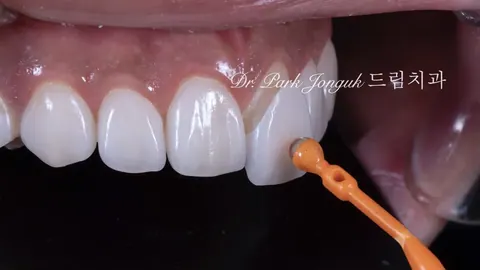
we took a photo with the veneer temporarily placed on just half.
You can see how the tooth becomes larger compared to the original natural tooth.
That's exactly why one of the conditions for no-prep veneers is that the teeth need to be small.
If no-prep veneers are done on teeth that are already large,
they'll only get bigger, which can't produce a good esthetic result.
That's why, in cases like this where the teeth are normal-sized or small and retroclined,
no-prep veneers are a good treatment option.
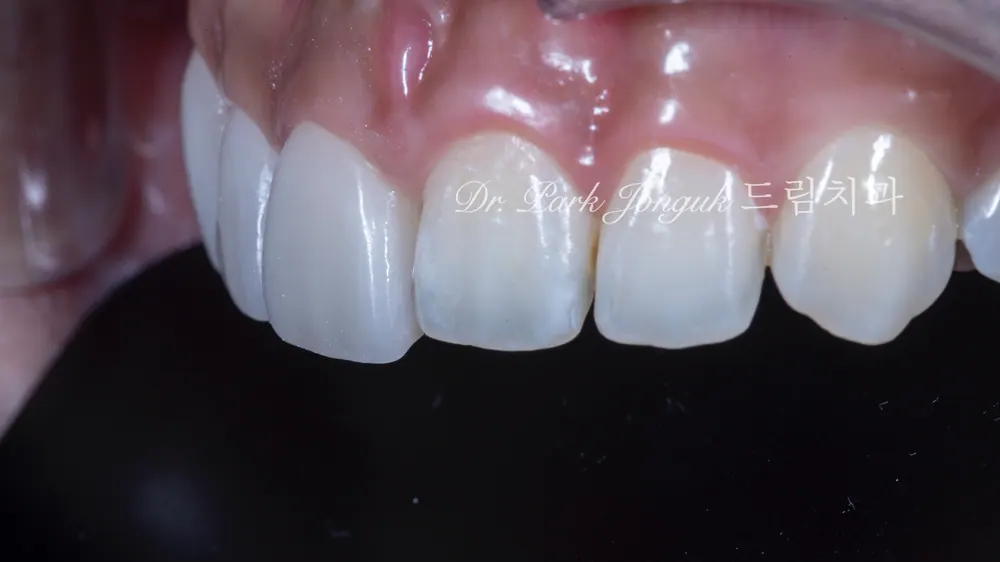
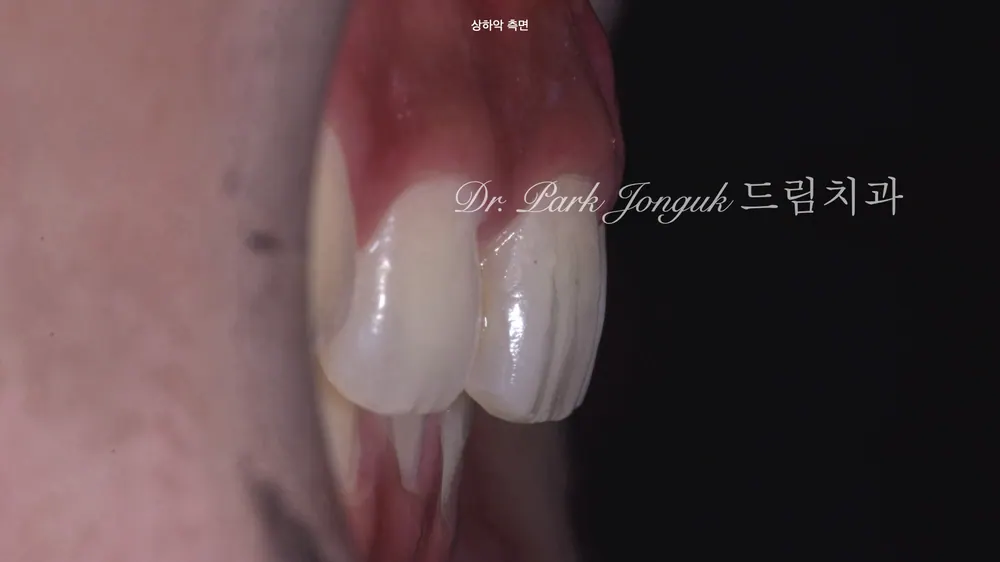
Seen from the side, you can see how much the retroclined position has improved.
In particular, the veneer needs to be made to wrap well around the sides of the tooth like this,
and this part has to be made extremely thin.
This is something a computer-designed, computer-milled same-day method
simply cannot match.
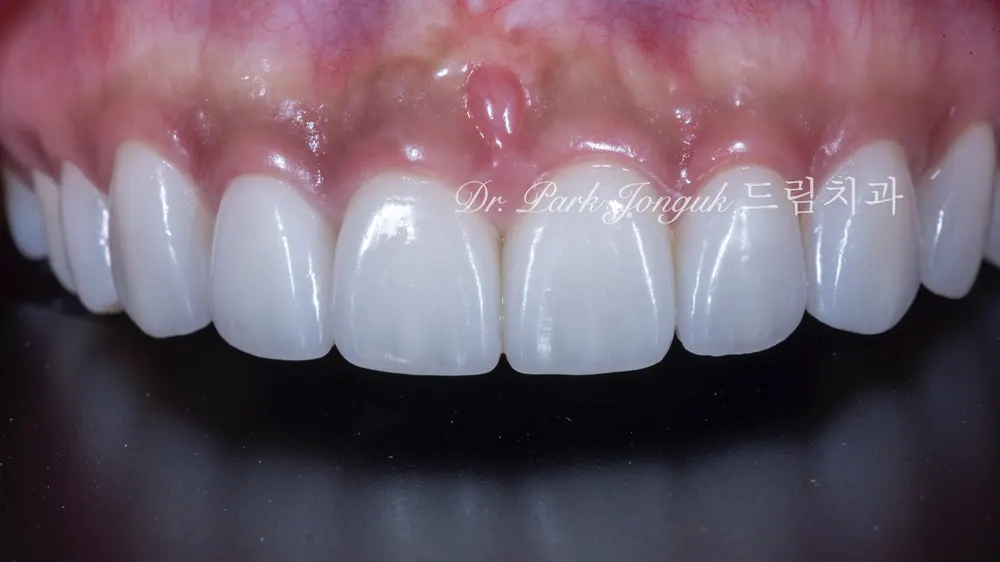
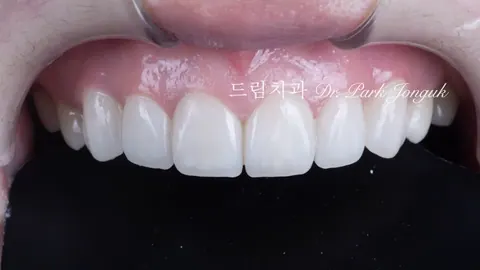
The front-teeth veneer treatment for retroclined teeth after orthodontics has now been completed.
The teeth are brighter and more even now,
and their shape has improved as well.
While preserving the dimension and form of a natural tooth,
a natural color and translucency were achieved.
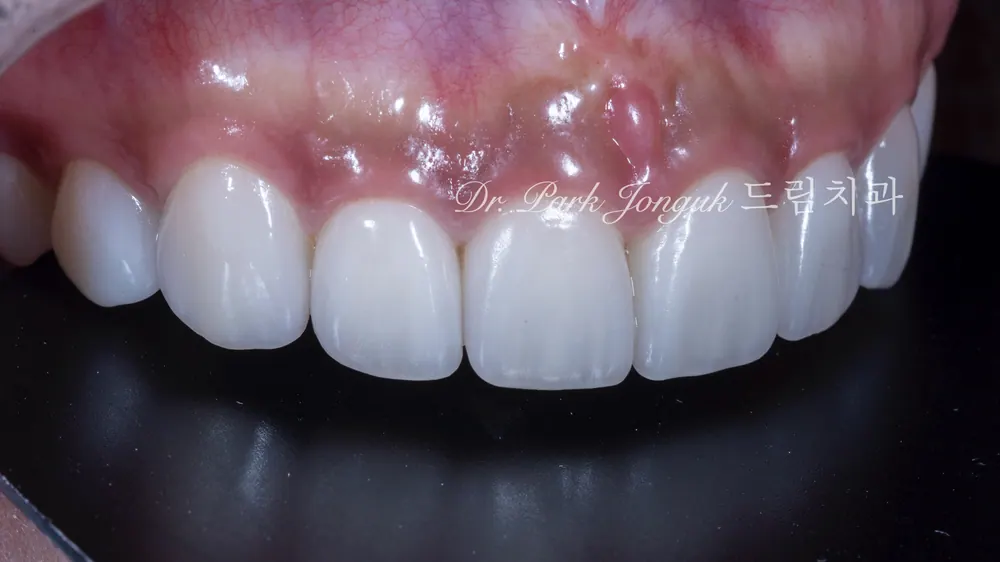
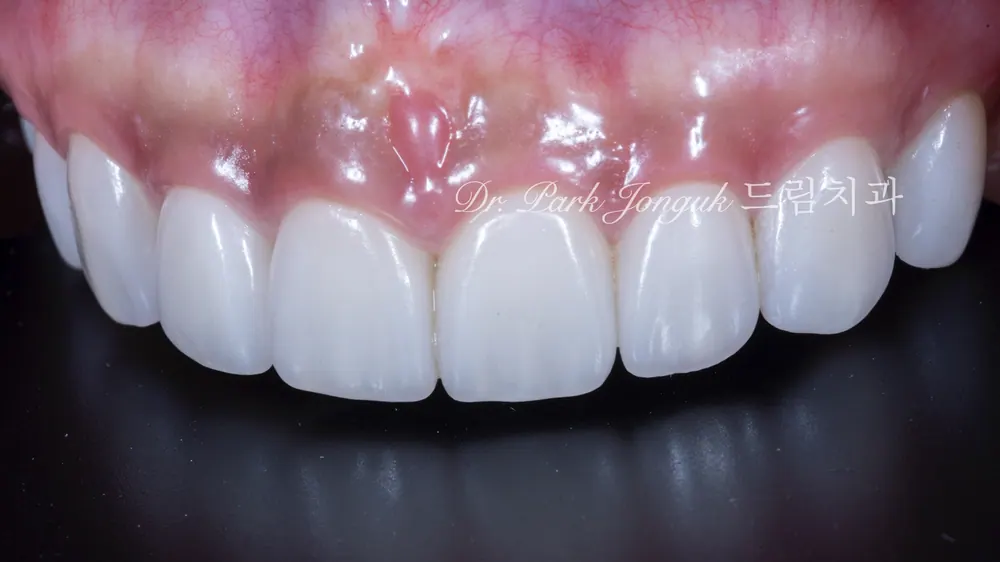
Even from other angles,
you can see how natural the shape and color of the teeth look.
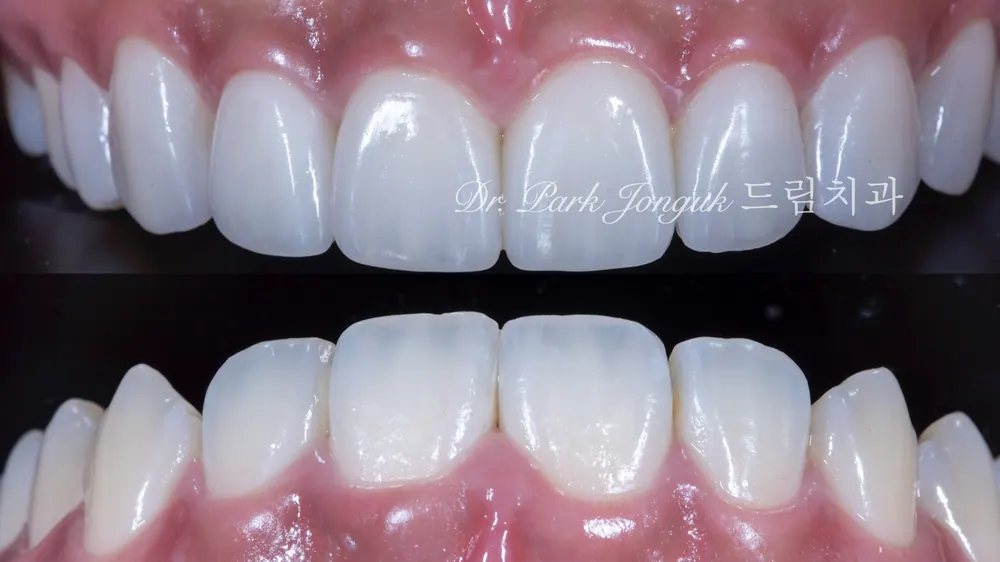
Natural beauty
Since 2006, Dream Dental Clinic
This article is a clinical note written by Dr. Park Jonguk of Dream Dental Clinic, Gangnam; the original was published on his blog. The photographs shown are real cases he treated. Results vary with each patient’s condition, and every procedure carries the possibility of individual variation and side effects.
Quick Consult
Request a Callback
Leave your number and we will call you back during clinic hours.
Request Received
We will contact you during clinic hours. For urgent matters, please call +82-2-3448-0028.