
Front-Teeth Veneers: How to Make Them Look as Translucent and Beautiful as Natural Teeth
Hello, this is Dream Dental Clinic in Apgujeong.
"Won't it be obvious that I got veneers?"
"Won't they look artificial because they're white and opaque?"
These are the concerns I hear most often from patients considering veneer treatment.
Today, I'll walk through in detail
the front-teeth veneer treatment process for a patient whose teeth were uneven and chipped at the edges.
In particular, I'll show you how, with our clinic's handmade buildup method,
we can make the result
so translucent and beautiful that it's indistinguishable from a natural tooth.
Before treatment: What was the problem?
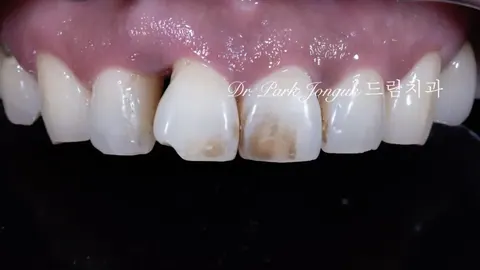
[Photo 1 - Before treatment]
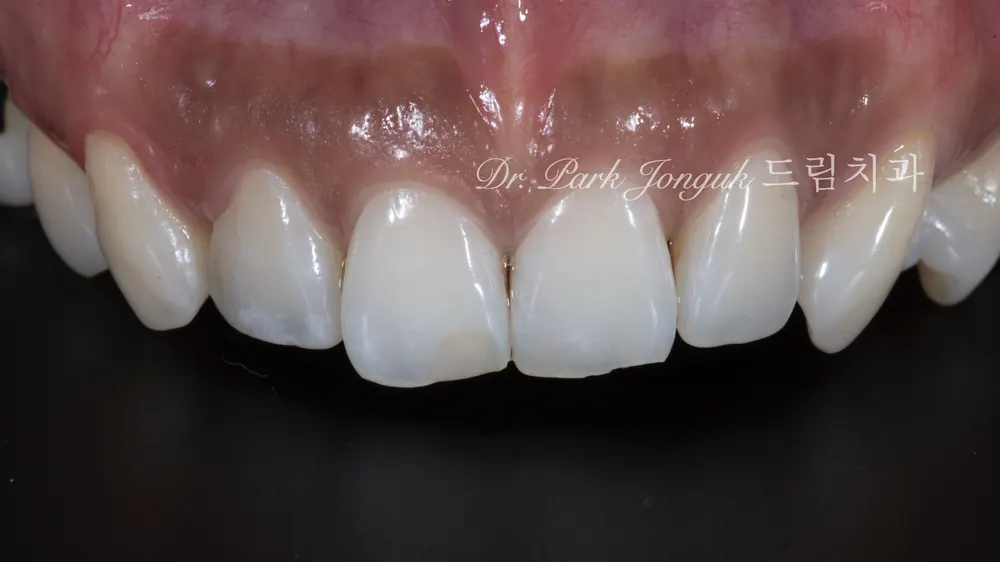
This patient came to us with the following concerns.
Main issues:
❌ The alignment was slightly uneven
❌ The tips of the front teeth were chipped
❌ There was existing resin treatment
❌ Overall dull, yellow discoloration
❌ A lack of confidence when smiling
Fortunately, the bite was normal, so without needing orthodontics,
veneers alone were enough to achieve a beautiful improvement.
More than anything, the patient wanted naturalness above all.
"I hope it doesn't look like I've had dental work done."
Precision diagnosis: The secret to minimal reduction
A flawless plan that starts with a wax-up
The single most important thing in front-teeth veneer treatment is precision diagnosis.
Many clinics skip this step,
but at our clinic, we always go through a wax-up diagnosis.
What is a wax-up?
It's a process of shaping the final tooth form in wax on a plaster model beforehand.
Through this process:
✓ Determine a tooth size that's in harmony with the face
✓ Calculate a tooth length that matches the lip line
✓ Set left-right symmetry and proportions perfectly
✓ Determine precisely how much reduction will be needed, in advance
That last point really matters.
Knowing the final shape in advance through the wax-up means the tooth only needs to be reduced by exactly the amount necessary.
This avoids unnecessary reduction and preserves as much of the healthy natural tooth as possible —
making minimal-reduction veneers possible.
Tooth reduction: Precise and minimal
[Photo 2 - After tooth reduction]
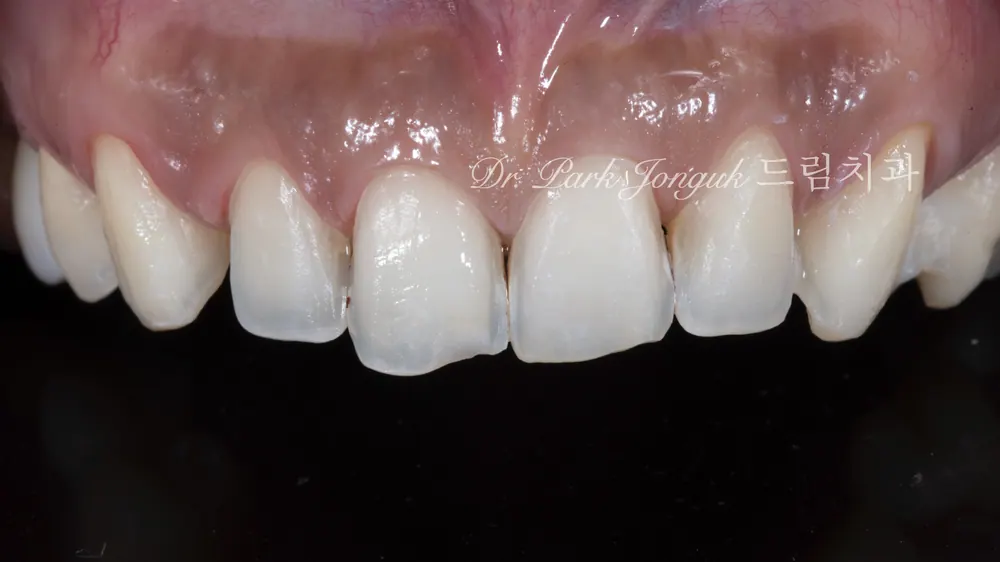
Following the wax-up diagnosis,
this shows the teeth after being precisely reduced.
The principles of minimal reduction:
✅ Reduce precisely only where needed
✅ Smooth out the chipped areas
✅ Remove the areas that had resin treatment
✅ Clean up uneven areas with the minimum necessary
✅ Preserve as much healthy enamel as possible
As you can see, we don't reduce a lot just for the sake of it.
We reduce precisely, exactly as planned in the wax-up.
This is the know-how built up from 20 years of specializing exclusively in veneers.
Veneer fabrication: The art of handmade work
The secret to naturalness: multilayer buildup
The thing our clinic is proudest of
is our handmade buildup veneers.
These days, many clinics fabricate them quickly with CAD/CAM,
but at our clinic, even if it takes longer, a master ceramist builds them up
by hand, layer by layer.
Why handmade?
A natural tooth isn't a single color.
The inside is slightly yellow dentin, the outside is translucent enamel,
and the tip is an even more translucent incisal edge. To reproduce all these layers,
several different types of ceramic have to be layered one at a time.
The buildup process:
Layer 1. Inner dentin layer - a warm shade
Layer 2. Transition layer - expressing the shift in color
Layer 3. Enamel layer - realizing translucency
Layer 4. Incisal edge layer - translucency at the tip
Layer 5. Surface texture - fine detail
Finally, it's fired, refined, fired again, and polished to completion.
It takes 2-3 weeks, but the result is unmistakably different.
Treatment complete: The height of naturalness
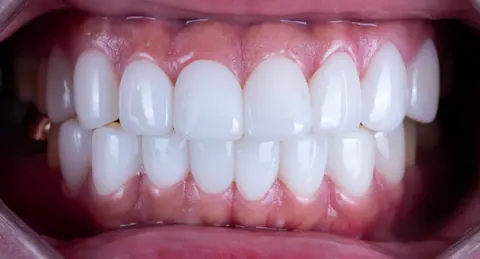
[Photo 3 - Front view after treatment]
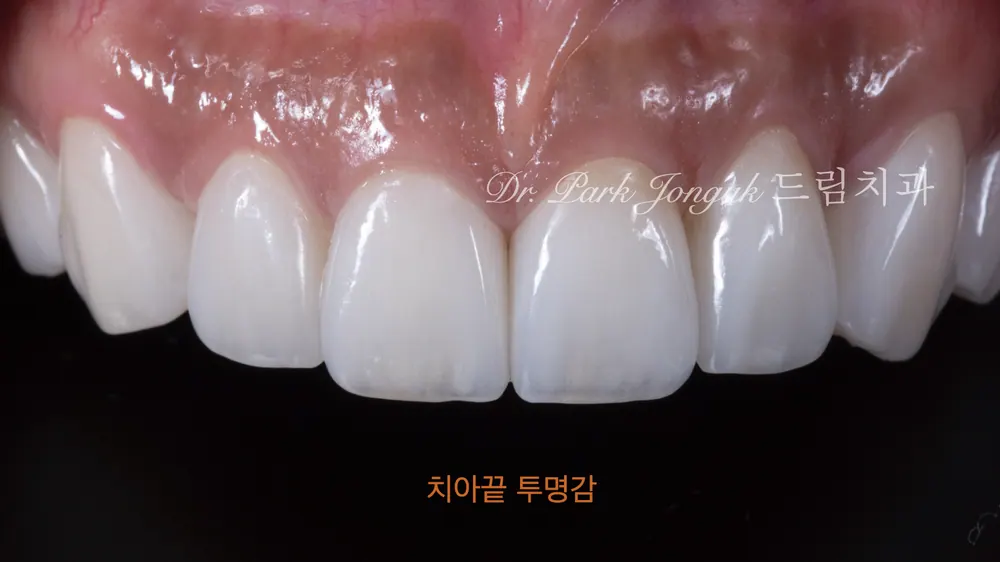
The front-teeth veneer
treatment is finally complete!
The first thing that stands out is the translucency at the tip of the tooth.
Just like a natural tooth, becoming more translucent toward the tip —
that gradation has been rendered perfectly.
The overall shape is neither too square nor too round —
it's a natural shape.
It's in perfect harmony with the patient's lip line.
[Photo 4 - Harmony with the gums]
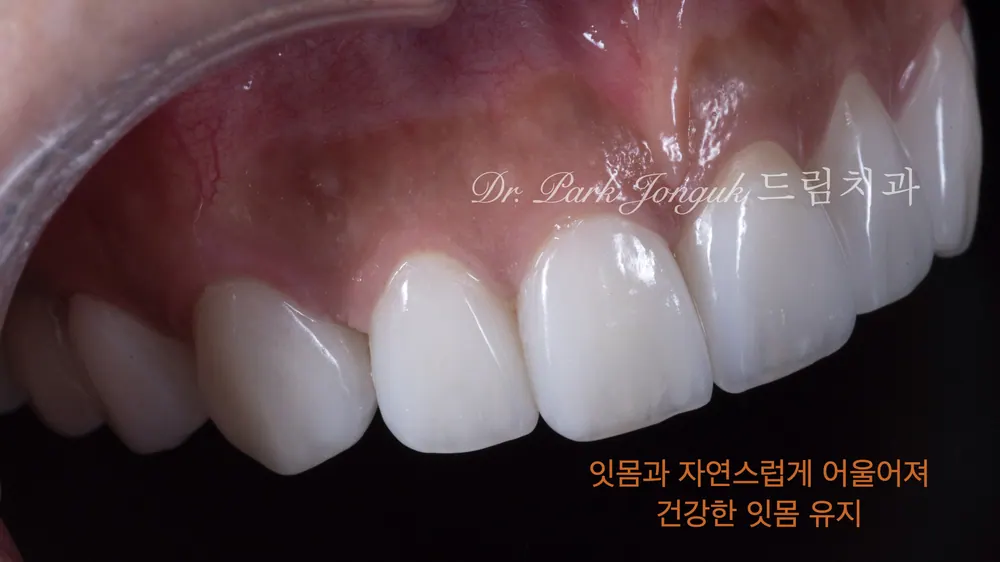
If you look at this photo,
the border between the veneer and the gum has been rendered so naturally
that it's genuinely hard to tell it apart from a natural tooth.
This is possible because of:
✓ Precise margin finishing
✓ An angle that emerges naturally from the tooth
✓ A cervical (gum-line) color in harmony with the gum color
✓ A smooth surface that minimizes plaque buildup
This is truly good veneer work, one that also keeps the gums healthy.
[Photo 5 - The technique of color adjustment]
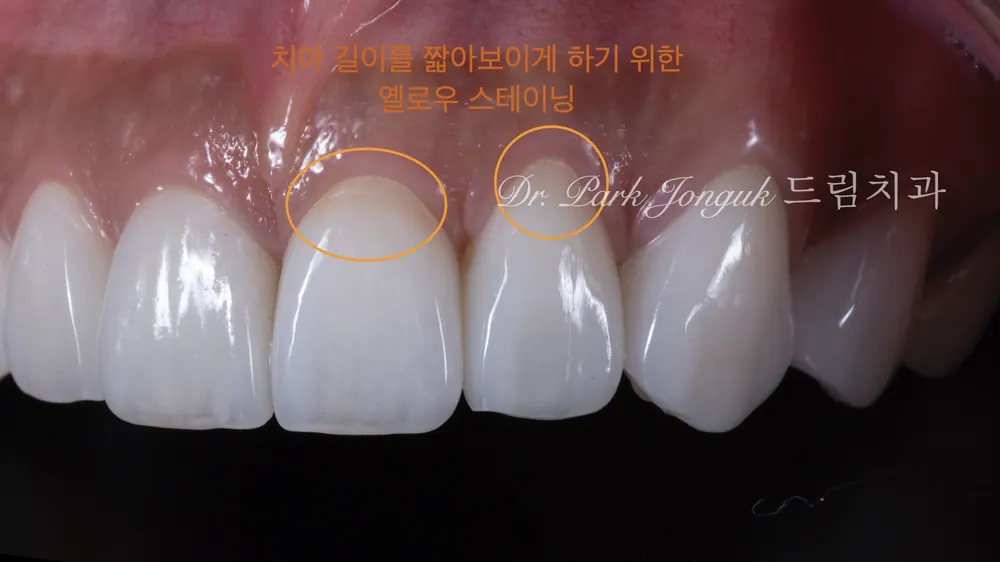
In this patient's case,
some of the teeth were a bit longer than usual.
So we varied the shade.
The method for making them not look too long:
For the longer parts of the tooth, a slightly brighter tone
creates an optical illusion that makes it look visually shorter.
This kind of detailed color adjustment
is only possible with handmade buildup.
It's a technique that's impossible with a single block of ceramic.
[Photos 6, 7 - Texture and translucency]
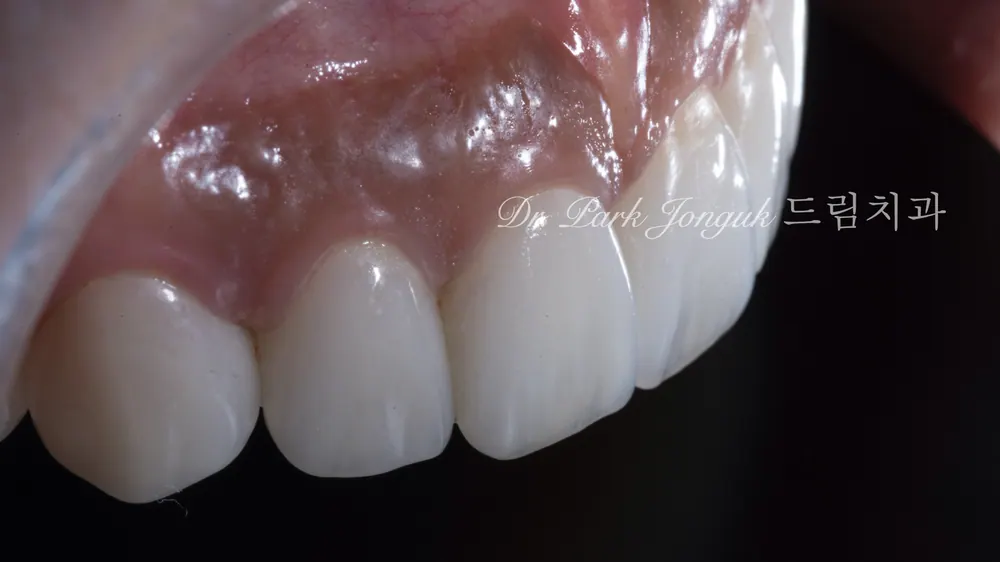
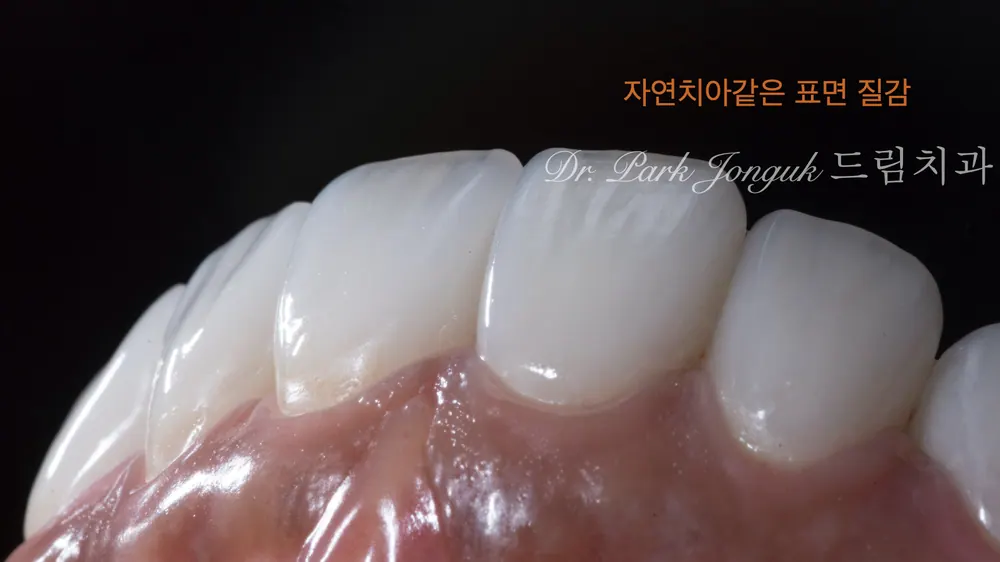
The last thing worth noting
is the texture of the tooth surface.
Magnified, you can see fine vertical lines (mamelon lobes), just like a natural tooth,
along with horizontal lines (perikymata).
And once again,
the translucency at the tip of the tooth!
As sunlight passes through it, it shows the exact same
translucency as a natural tooth.
All of this is the true value
of handmade buildup veneers.
Conclusion: What a truly natural veneer looks like
Accuracy over speed
In veneer treatment,
the three most important things are:
1. Precision diagnosis (wax-up)
A design in harmony with the face
An accurate plan for minimal reduction
2. Minimal reduction
Maximum preservation of healthy natural tooth structure
Reducing precisely only where needed
3. Handmade fabrication
Realizing translucency through multilayer buildup
Expressing a natural shade and texture
Rather than finishing quickly in a single day, even if it takes 2-3 weeks,
making it properly is what ultimately produces the most beautiful
and long-lasting result.
Having specialized exclusively in veneers for 20 years,
『최소 삭제를 위한 라미네이트 임상』
I wrote this textbook,
and the reason I teach dentists from across the country every month at Lamista Academy
is exactly this.
"Naturalness is a value that can't be compromised on."
If you're considering front-teeth veneers, rather than fast and cheap,
I'd recommend choosing precise and natural.
Q&A: Common questions about veneers
Q1. Will it be obvious that I got veneers?
A. It depends on the fabrication method.
A single block made with the CAD/CAM method is opaque, so it can look obvious,
but handmade multilayer buildup is nearly indistinguishable from a natural tooth.
When translucency and texture are reproduced perfectly, as in this case,
it isn't noticeable at all.
Q2. Does a lot of the tooth need to be reduced?
A. With a precision wax-up diagnosis, reduction can be kept to a minimum.
On average, only about 0.3-0.7mm is reduced,
and depending on the case, no-prep is also possible.
Unnecessarily heavy reduction happens because of insufficient diagnosis.
Q3. How is the veneer color decided?
A. It's decided by considering the patient's skin tone, age, and preferences.
Being simply too white looks unnatural,
and it needs a bit of yellow tint and translucency, just like a natural tooth,
to look genuinely real.
In this case as well, we reproduced a natural dentin color.
Q4. How long do veneers last?
A. When made properly, they can last 15-20 years or more.
The handmade buildup method has no internal stress
and has excellent strength, so fracture is rare.
Regular checkups and proper care matter.
Q5. Is veneer treatment possible even if the alignment isn't even?
A. It's possible as long as there's no problem with the bite.
Slight irregularity, like in this patient's case,
can be sufficiently corrected with veneers.
But for a severe malocclusion, orthodontic treatment comes first.
Q6. What's the difference between handmade and CAD/CAM veneers?
A. The biggest difference is naturalness.
Q7. Where's a good place in Gangnam for natural-looking front-teeth veneers?
A. Check the following:
✓ Whether a precision wax-up diagnosis is performed (essential)
✓ Use of the handmade buildup method
✓ Veneer-specialty experience (15+ years)
✓ An academic background such as authoring a textbook or lecturing at conferences
✓ A portfolio of genuinely natural-looking cases
I'm the author of 『최소 삭제를 위한 라미네이트 임상』,
and every month at Lamista Academy, I teach
veneer techniques to dentists from across the country.
20 years of experience specializing exclusively in veneers
is what produces results this natural.
This article is a clinical note written by Dr. Park Jonguk of Dream Dental Clinic, Gangnam; the original was published on his blog. The photographs shown are real cases he treated. Results vary with each patient’s condition, and every procedure carries the possibility of individual variation and side effects.
Quick Consult
Request a Callback
Leave your number and we will call you back during clinic hours.
Request Received
We will contact you during clinic hours. For urgent matters, please call +82-2-3448-0028.