
Ended Up With Over-Retracted Teeth After Braces? Solve It With No-Prep Veneers
Do your teeth sit too far back after braces, so they barely show when you smile?
Do you feel your smile isn't open because of over-retracted teeth?
A director with 28 years of veneer experience in Apgujeong shares a real case solved with no-prep veneers.
An unexpected concern that showed up after braces
Hello. I'm a dentist who has been doing veneer treatment in Apgujeong for 20 years.
Most people are satisfied with the results once orthodontic treatment is finished,
but sometimes a new concern shows up.
That concern is: "the teeth sit too far back, so they barely show when I smile."
Why does this over-retraction happen after braces?
Orthodontic treatment moves the teeth backward to make the alignment neat.
In the process, the lips also get pulled in along with them,
and depending on the case, this can result in:
The teeth barely showing when speaking
The teeth being hidden behind the lips when smiling
A smile that looks closed off and unopen rather than bright
An appearance that looks older
This condition is called being "over-retracted."
It refers to a state where the teeth sit too far inward.
An actual case: braces finished, but a new concern appeared
Why the patient came in
The patient I'm introducing today had also finished orthodontic treatment and had perfectly even alignment.
But a new problem appeared.
The patient's concern:
The mouth sat too far back
The teeth also sat far back along with it, so they barely showed when speaking or smiling
The smile didn't feel open
It looked even more closed off than before the braces
Cases like this are actually very common
A significant number of the patients who come to my clinic come in with exactly this concern.
The orthodontic treatment was successful, but as the over-retraction worsened, the aesthetic result wasn't satisfying.
Fortunately, there is a solution. It's no-prep veneers.
Why no-prep veneers are the answer
What are no-prep veneers?
Regular veneers involve reducing the tooth a little before bonding the ceramic on.
But no-prep veneers involve bonding the ceramic directly onto the tooth without any reduction at all.
Why is no-prep possible?
Cases that become over-retracted after braces tend to have the following three conditions:
Relatively small teeth: making them larger doesn't look unnatural
Good alignment: the braces have already made the arrangement perfect
An over-retracted state: since the teeth sit inward, there's room to bring them back out
These three conditions together are the golden conditions for no-prep veneers.
So a case like this, after braces, is one of the best-suited cases for no-prep veneer treatment.
The precision diagnostic process: a thorough analysis
Initial consultation analysis (Photo 1)
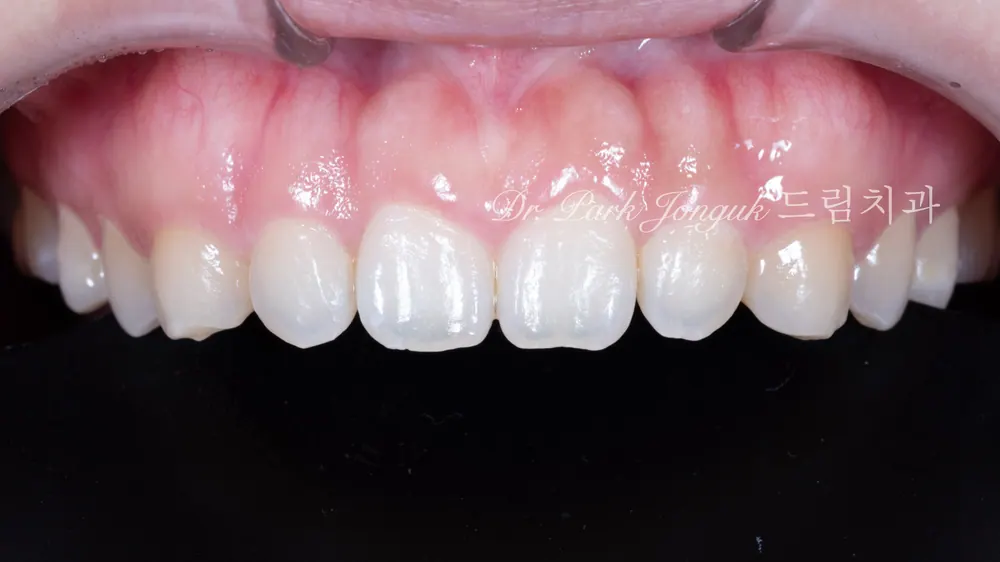
This is how the patient looked when she came to our clinic after finishing braces.
Initial diagnostic findings:
The teeth are on the smaller side
The alignment is very even (thanks to the braces)
The teeth are positioned inward, in an over-retracted state
The teeth barely show when smiling
This is a perfect indication for no-prep veneers.
Tooth size measurement (Photo 2)
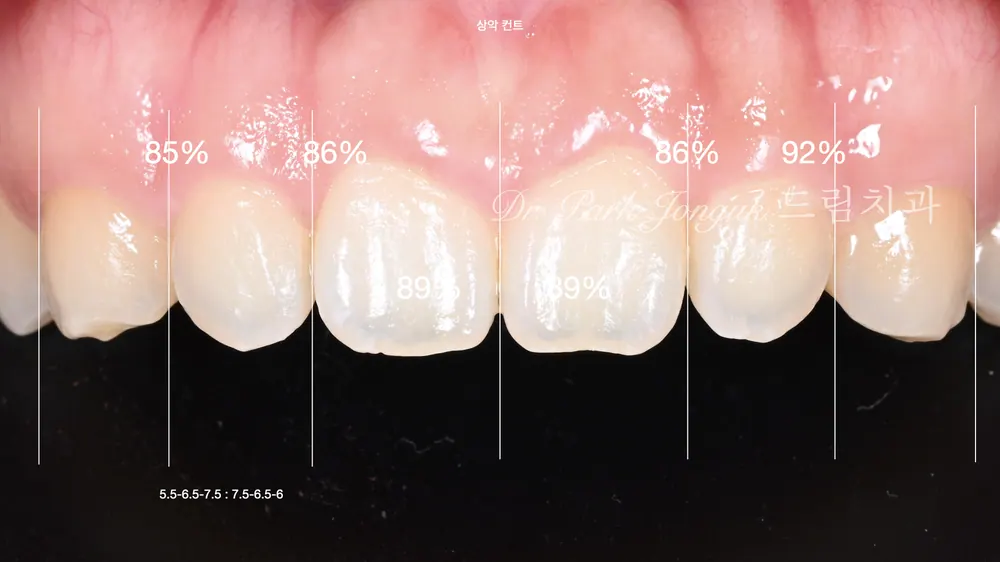
We precisely measure the size of the teeth and analyze the proportions.
Why is measurement necessary?
Since no-prep veneers involve placing ceramic on top of the tooth, the tooth ends up larger.
So we need to know the original tooth size exactly, in order to plan how much larger we can make it.
If the teeth are too small: they can be built up enough
If the teeth are already large: no-prep isn't suitable
For this patient, the teeth were on the smaller side, so there was enough room to build up the size.
Checking the degree of over-retraction (Photos 3, 4)
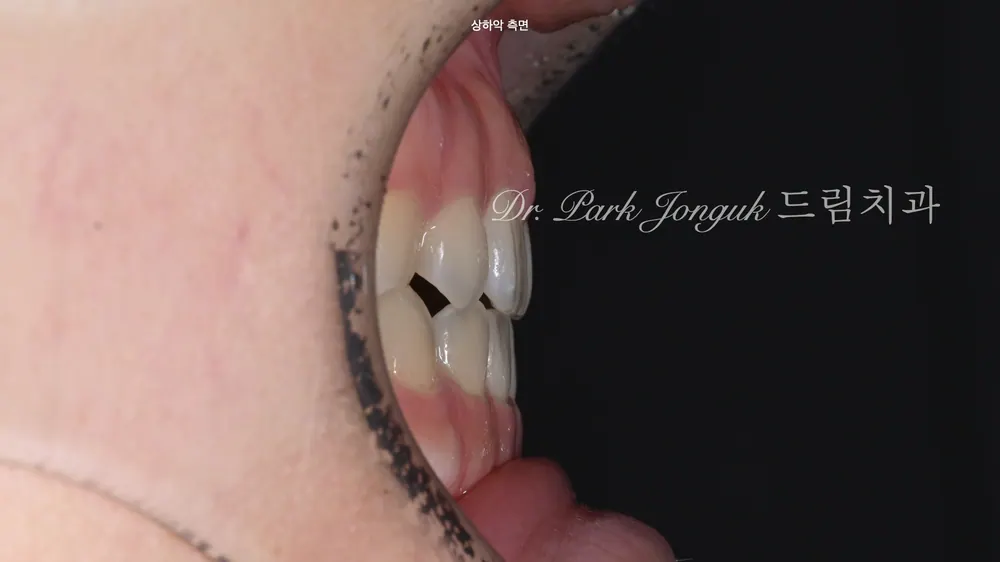
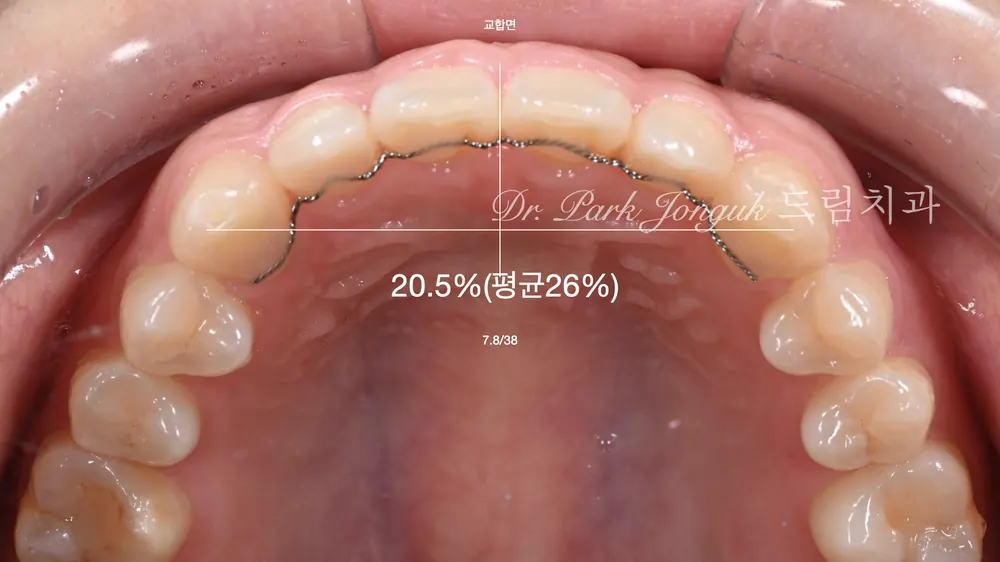
We check the degree of over-retraction from the side.
Items evaluated for over-retraction:
How far inward the teeth are positioned
The relationship between the lips and teeth
The degree of tooth exposure when smiling
The position of the smile line
This analysis determines how far outward the ceramic needs to bring the teeth.
Wax-up precision diagnosis (Photo 5)
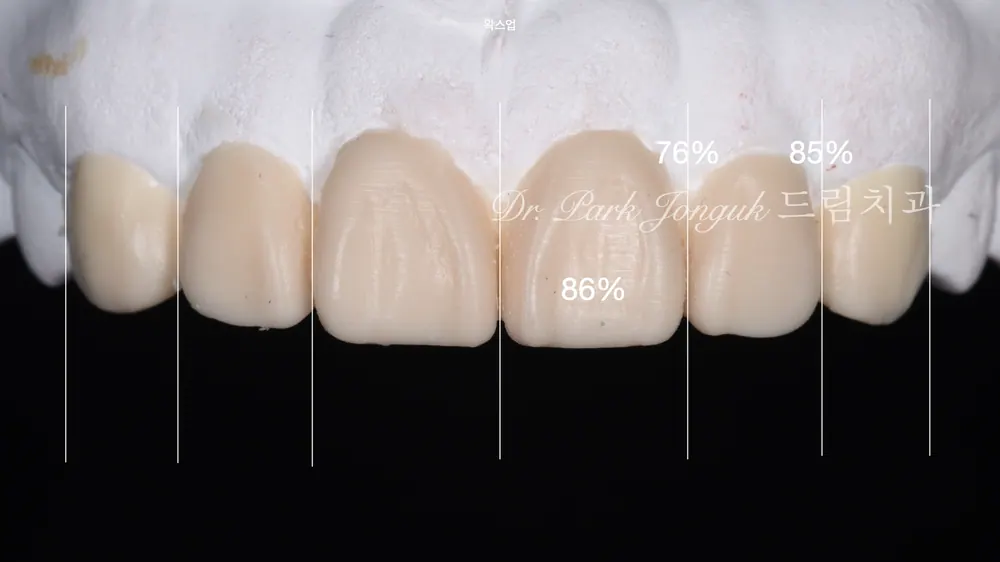
We use a wax-up to predict the final result in advance.
What we check in the wax-up:
The final tooth size and shape
How far out the teeth will come
The overall harmony and balance
Sharing the goal with the patient
Just because it's a no-prep veneer doesn't mean it can be done carelessly. In fact, it requires even more precise planning.
The treatment process: proceeding step by step
Making the temporary teeth (Photo 6)
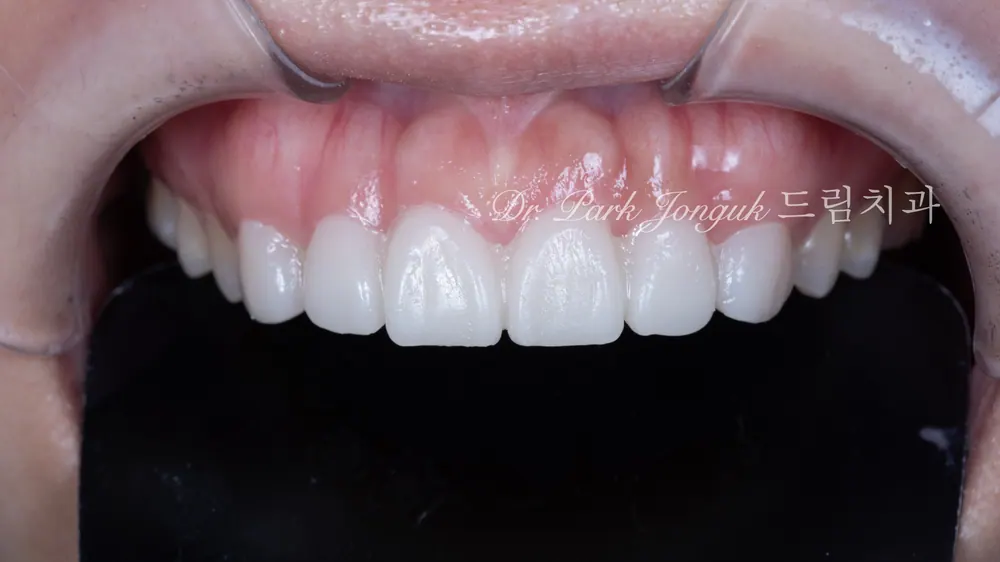
Even with no-prep veneers, you absolutely have to make and wear temporary teeth first.
Why the temporary stage is essential:
Many people ask, "Since it's no-prep, can't we just skip the temporaries and go straight to the final?"
But you should never do that.
Problems that arise from skipping the temporaries:
The teeth may look bigger than expected
The lips might end up looking like they're protruding
There's no way to check pronunciation or the feeling of a foreign object in the mouth
There's no way to properly consult with the patient
Gum contouring (Photo 7)
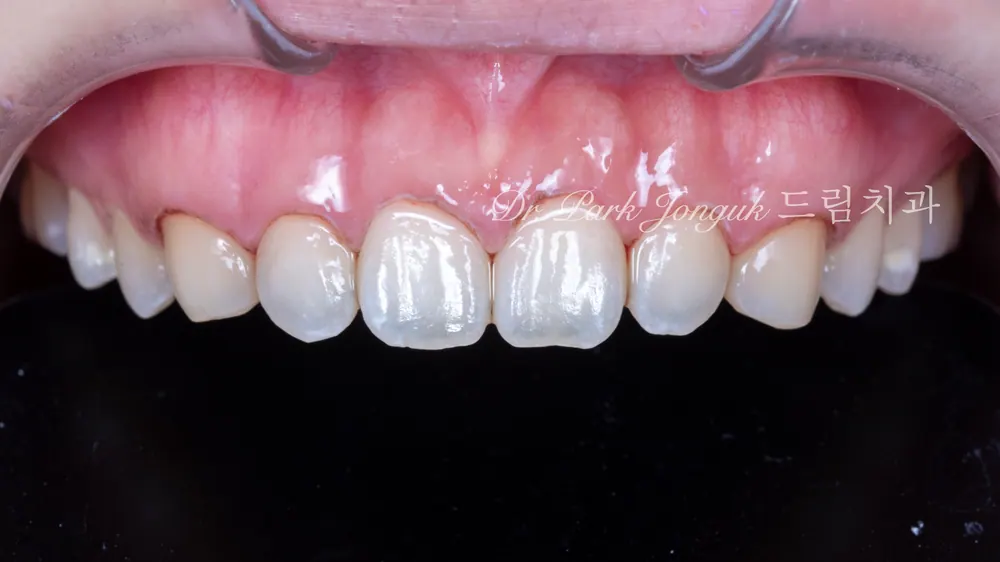
This patient's teeth were too short. So we performed gum contouring.
When gum contouring is needed:
When the tooth is short and mostly covered by the gum
When the patient wants a somewhat longer tooth
When the patient wants to improve the smile line
After gum contouring lengthens the teeth, a much more open smile can be created.
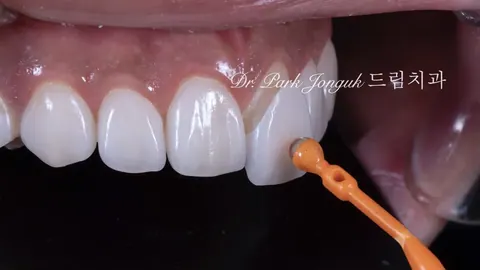
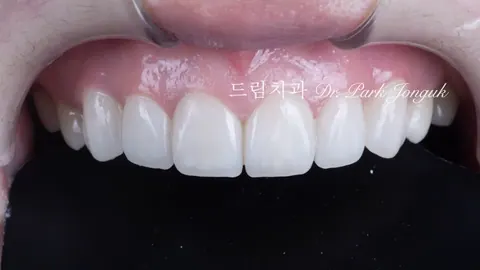
The finished veneers (Photos 8, 9, 10)
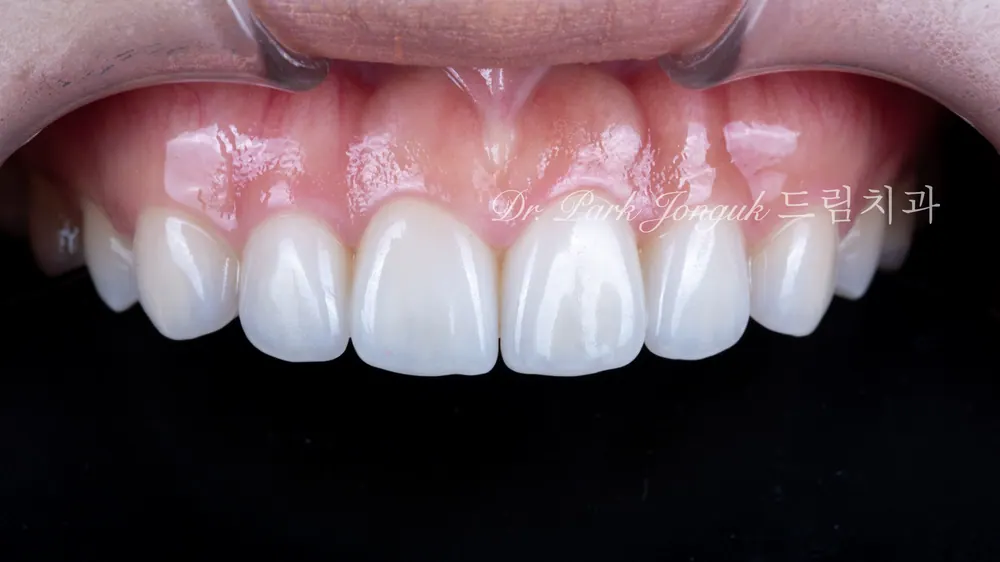
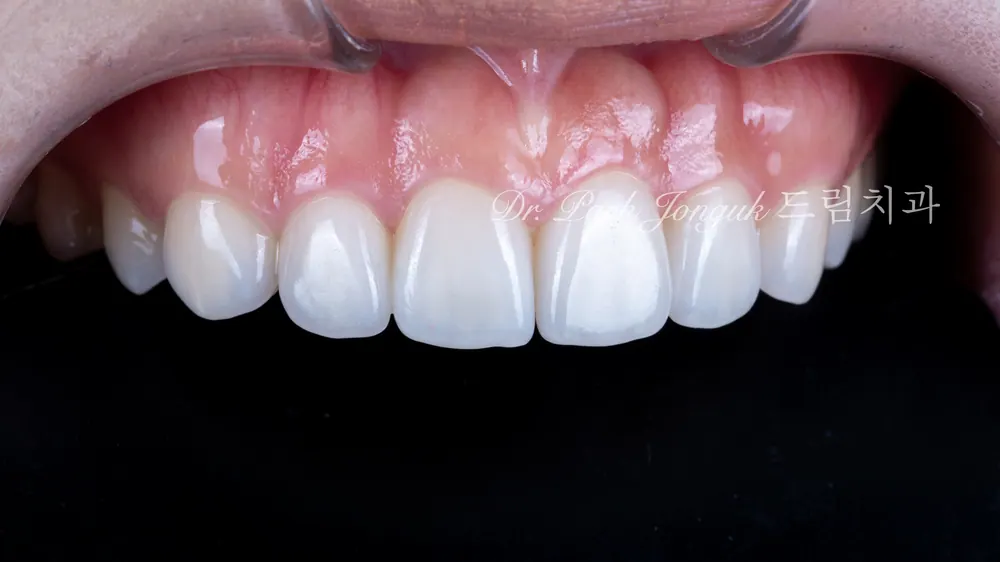
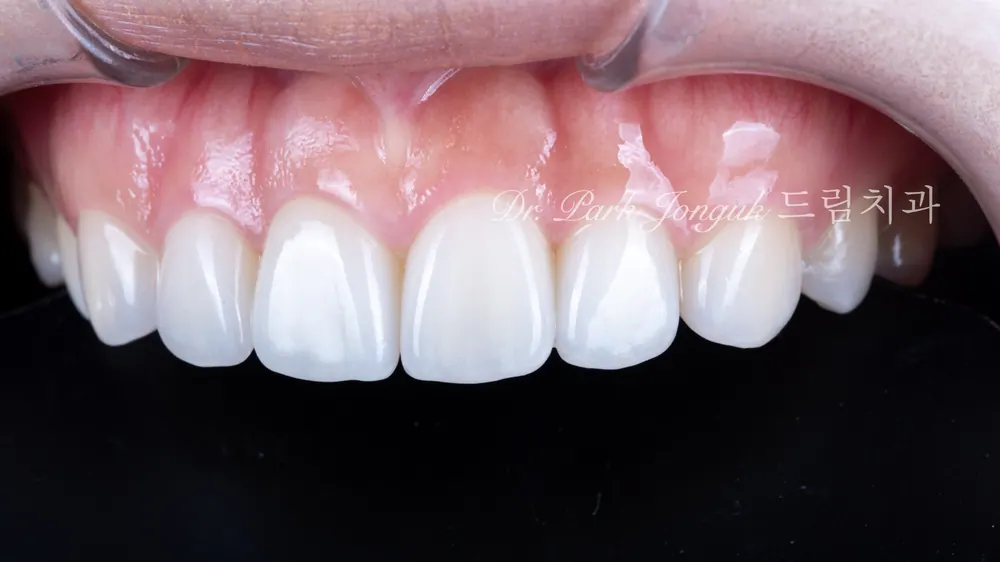
This is the appearance with the final veneers completed.
The remarkable change:
The teeth look natural when speaking
An open smile when smiling
The lip line also looks natural
Nothing about it looks artificial
Our clinic's special approach: handmade build-up
A veneer on a different level
At our clinic, we perform handmade veneer treatment using the build-up method.
What is the build-up method?
It's a method where a ceramic technician hand-stacks multiple layers of ceramic, one layer at a time, to create natural color and translucency.
The difference from other methods:
One-day method: milled by machine, single-shade ceramic
Single-ceramic method: uses only one type of ceramic
Build-up method: stacks multiple layers to maximize naturalness
Why is build-up special?
Real teeth aren't a single color.
The inner part is opaque, and it becomes more translucent toward the edge.
The color also varies slightly from area to area.
The advantages of build-up:
Multiple shades of ceramic are stacked layer by layer
It reproduces the translucency at the edge of the tooth
It responds to incoming light just like a real tooth
It harmonizes naturally with the adjacent teeth
One-day or single-ceramic methods can be fast and inexpensive, but they're on a completely different level when it comes to naturalness.
28 years of know-how
For handmade build-up, the technician's skill matters enormously.
Our in-house lab keeps pushing the limits of what's aesthetically possible.
What we strive for:
A naturalness that never looks artificial
A translucency just like a real tooth
Custom fabrication that reflects each patient's individual character
A result that still looks natural even 10 or 20 years later
The advantages of no-prep veneers
1. They don't damage the tooth at all
This is the biggest advantage. Since a healthy tooth isn't reduced:
100% of the tooth structure is preserved
No risk of sensitivity
If desired, it can be removed and the tooth restored to its original state
No effect on the tooth's lifespan
2. They're ideal for over-retracted teeth after braces
The teeth can be brought back outward
Building up the size makes them show properly when smiling
Improves the smile line
A younger-looking impression
3. Fast and simple
It doesn't take years like orthodontics does
Completed in about 3-4 weeks
Minimal pain or discomfort
No disruption to daily life
Conclusion: solve your post-braces concern now
Did your braces succeed, but your teeth barely show? Does an over-retracted bite keep your smile from feeling open?
No-prep veneers are the answer:
No reduction of the tooth at all
Naturally improves size and position
Completes an open, bright smile
A younger, brighter impression
Especially if, after braces, your teeth are small, your alignment is good, and you have over-retracted teeth, that's the perfect condition for no-prep veneers.
What matters:
Precise diagnosis (a wax-up is essential)
The temporary stage must be included
Using the handmade build-up method
Choosing an experienced specialist
Over 28 years of handling countless cases, I've seen patients who were troubled by over-retraction after braces find a completely transformed smile after no-prep veneers.
You too deserve to smile with confidence.
Q&A - Questions about no-prep veneers
Q1. Can anyone get no-prep veneers?
A. No, the conditions have to be right. Three conditions are needed.
First, the teeth should be on the smaller side. If the teeth are already large, doing no-prep will make them even bigger and look unnatural.
Second, the alignment needs to be even. If the teeth are crooked, no-prep has its limits.
Third, the teeth need to be over-retracted. Only when the teeth are positioned inward is there room to bring them back out.
Teeth that became over-retracted after braces perfectly meet all three of these conditions, making them best suited to no-prep veneers.
Q2. Will the veneer stay attached without any tooth reduction? Won't it fall off?
A. With the latest bonding technology, it attaches very securely.
By specially treating the tooth surface and using a strong adhesive, you can achieve the same bond strength as a regular veneer.
In fact, many patients use no-prep veneers for over 10 years without any issues.
That said, precise technique matters, so you should choose an experienced dental clinic.
You just need to be careful about biting on very hard things with your front teeth or having severe teeth grinding.
Q3. Even with no-prep, do I really need to try temporary teeth first?
A. Yes, it's absolutely necessary. Many people ask, "Since it's no-prep, can't we just go straight to the final?"
You should never do that. Wearing the temporary teeth first lets you check whether the size is appropriate,
whether the lips end up looking like they protrude, and whether there's any issue with pronunciation or a foreign-object feeling.
Especially with no-prep, since the teeth are being made larger, it's essential for the patient to experience it firsthand and make adjustments.
Skipping this step raises the likelihood of being dissatisfied with the final result.
Q4. What's the difference between one-day veneers and the build-up method?
A. They're completely different. The one-day method mills a single block of ceramic by machine,
and while it's finished the same day, the color can be monotone and can look artificial.
The build-up method, on the other hand, is made by a technician hand-stacking multiple layers of ceramic.
It reproduces the tooth with an opaque inner layer, a translucent edge, and color that varies by area.
It takes more time, but it looks as natural as a real tooth.
The way it responds to light, its translucency, and the depth of its color are all completely different.
I've stuck with the build-up method exclusively for 28 years, and my patients' satisfaction is far higher for it.
Q5. If I don't like it later, can I go back to how things were?
A. Yes, that's the biggest advantage of no-prep veneers.
Since the tooth was never reduced at all, removing the veneer lets you return to your original, healthy tooth.
With regular veneers, since the tooth has already been reduced, you have to live with something covering it for life — but with no-prep, there's no such burden.
That said, when the procedure is done properly, most patients are satisfied and use them for a long time, so cases where someone wants them removed are very rare.
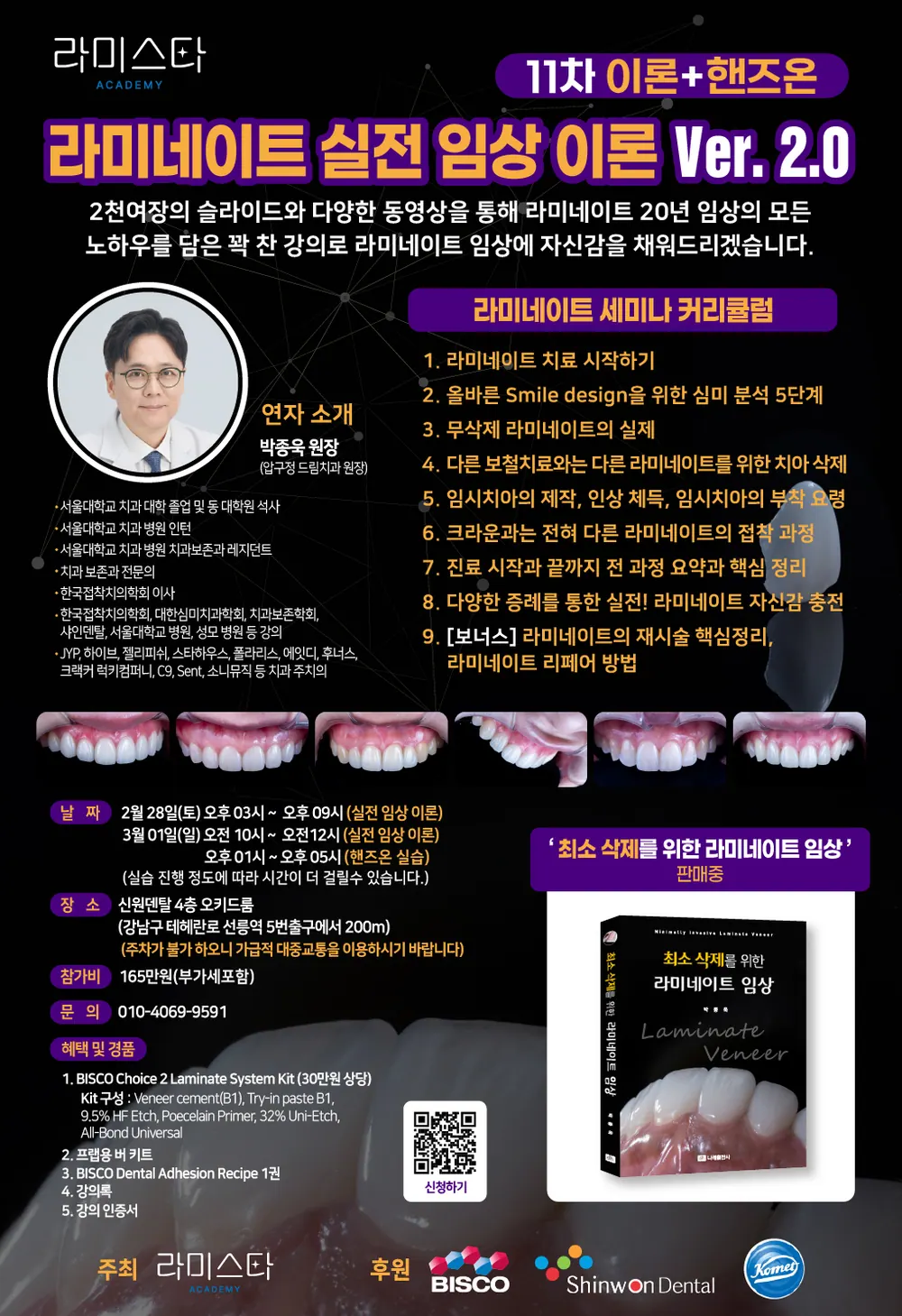
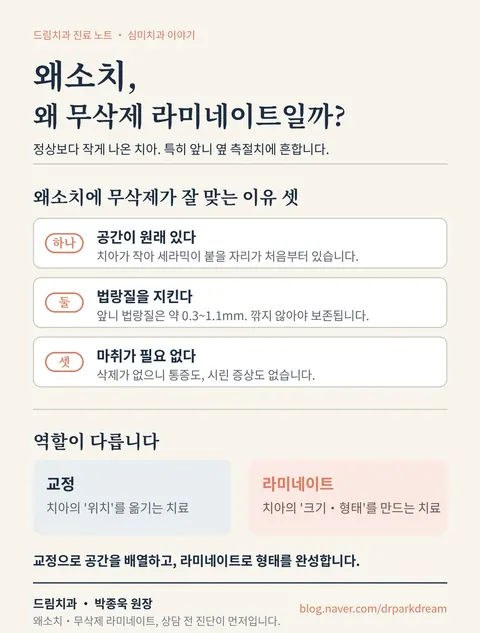
This article is a clinical note written by Dr. Park Jonguk of Dream Dental Clinic, Gangnam; the original was published on his blog. The photographs shown are real cases he treated. Results vary with each patient’s condition, and every procedure carries the possibility of individual variation and side effects.
Quick Consult
Request a Callback
Leave your number and we will call you back during clinic hours.
Request Received
We will contact you during clinic hours. For urgent matters, please call +82-2-3448-0028.