
Everything About How Veneers Are Made: Why Do Some Veneers Look Like "Donkey Teeth"?
The same veneers — so why do some look artificial and others look natural?
A director with 28 years of experience specializing in veneers in Apgujeong
compares and analyzes the difference in fabrication process between one-day veneers and handmade veneers, using real photos.
Introduction: Not All Veneers Are the Same
Hello. I'm a dentist who has specialized in veneer treatment in Apgujeong for 20 years.
These days, a great many people are considering veneers. But during consultations, I often get asked questions like these.
"Why is there such a big difference in veneer prices?"
"What's different about one-day veneers?"
"Isn't it the same no matter where you get it done?"
Let me give you the conclusion first: it's completely different.
The result of a veneer varies completely depending on how it's made.
There are cheap, fast methods, and there are methods that take time and care to create a natural result.
Today, drawing on 28 years of experience making thousands of veneers,
I'll honestly share everything about how veneers are made.
Looking at the actual photos, you'll be able to feel the difference clearly.
One-Day Veneers: Fast, but with Clear Limitations
The One-Day Veneer Fabrication Process
Step 1: Computer Design (Photo 1)
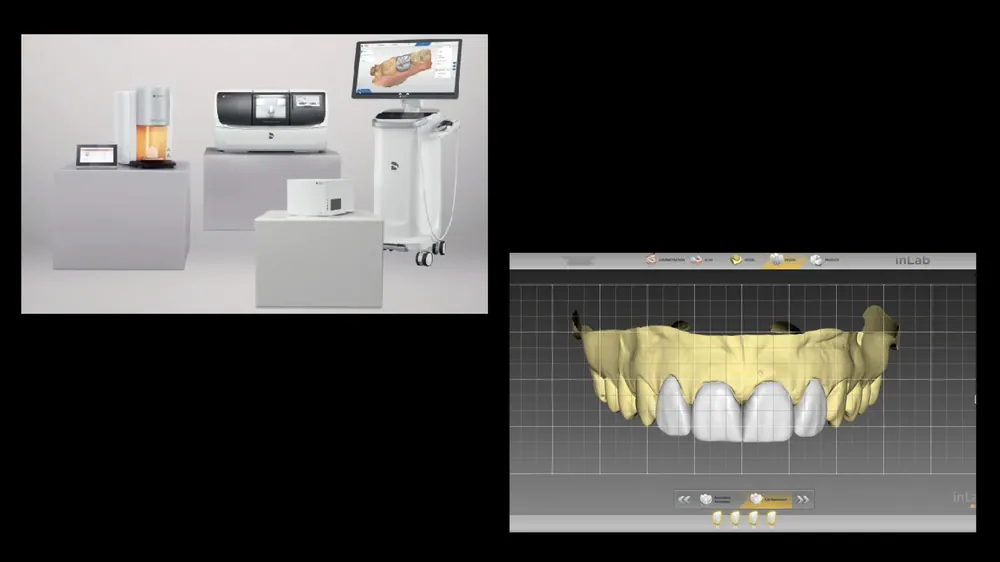
One-day veneers are made using the CAD/CAM method. The shape of the veneer is designed with computer software.
Advantages:
Fast design
Can be digitized as data
Standardized shape
Limitations:
Difficult for a computer to create natural curves
Limited ability to reflect each patient's subtle individual features
Uniform, cookie-cutter shape
Step 2: Carving with a Milling Machine (Photo 2)
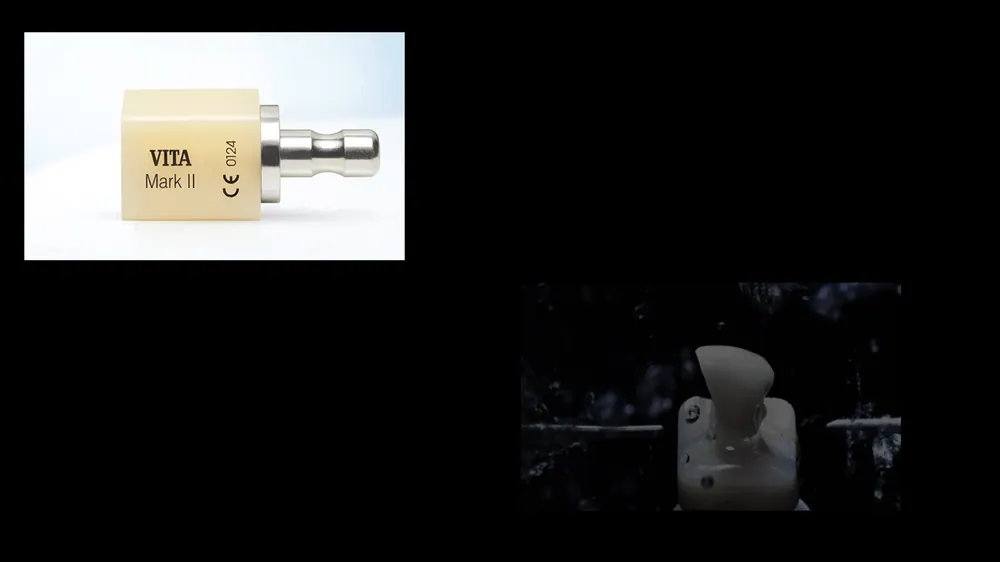
A machine called a milling machine automatically carves the ceramic block. It's a method that carves the ceramic much like carving wood with a chisel.
What you see in Photo 2:
A single-shade ceramic block
Carved automatically by machine
Almost no human hands involved
Step 3: Right After Milling (Photo 3)
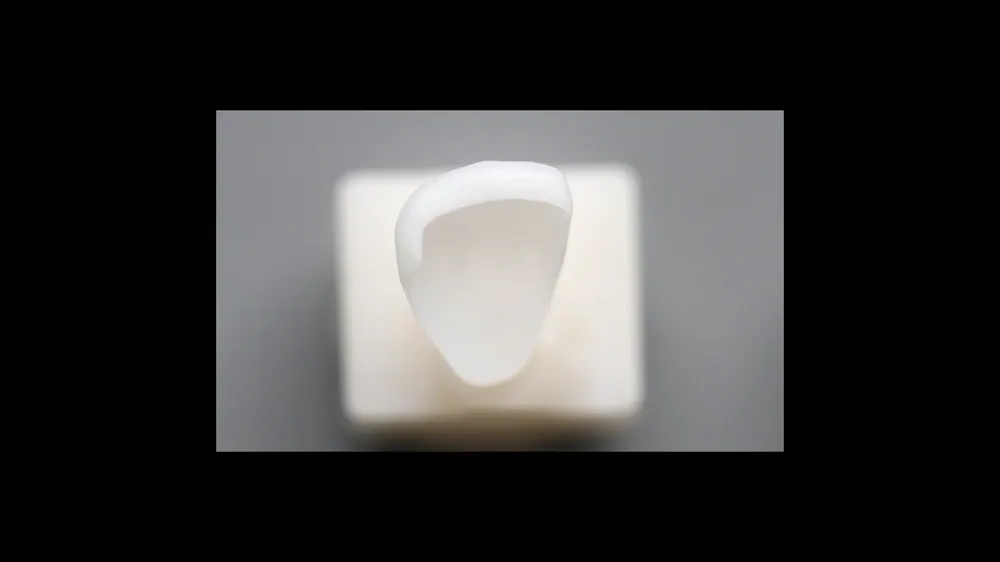
This is the veneer immediately after being machine-milled.
Characteristics:
Surface is rough and angular
Single shade
No sense of translucency
Real Results from the One-Day Method
From here on, these are cases of patients who had one-day veneers done at other clinics
and then came to our clinic to have them redone.
Once you see the photos, you'll immediately understand why they needed to be redone.
Case 1: Color Mismatch (Photo 4)
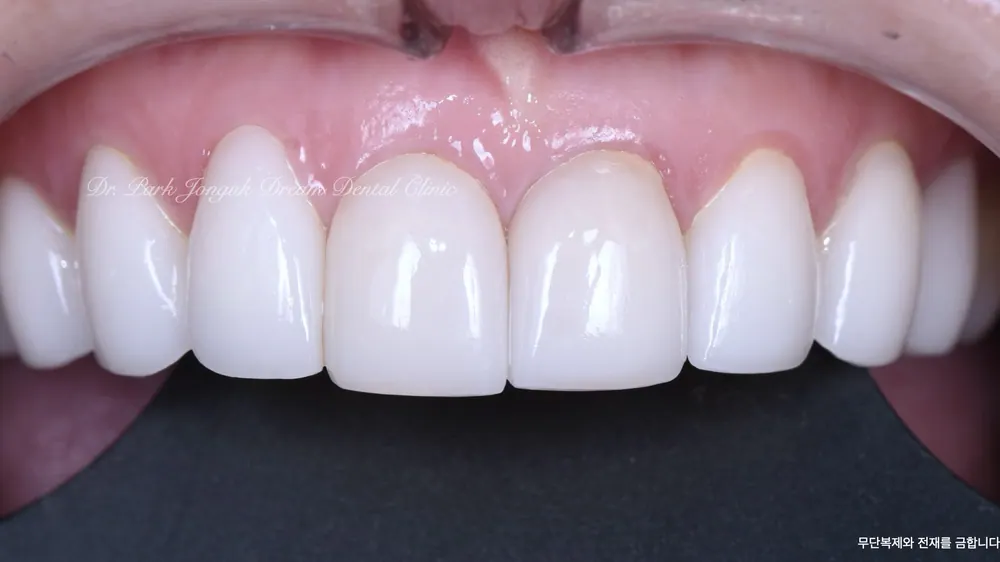
Only the two front teeth are a completely different color. It looks extremely awkward.
Problems:
Failed to match the color of the adjacent teeth
An overly stark white
Looks artificial
Stressful every time the patient smiles
Case 2: Excessively White and Opaque (Photo 5)
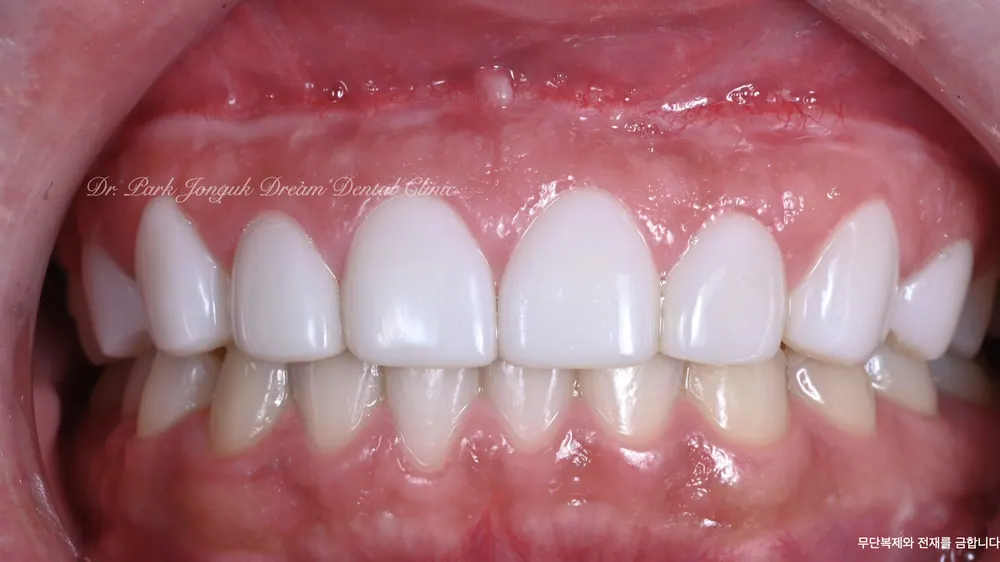
It's so white and opaque that it looks really strange, almost like white plastic has been glued on.
Problems:
Natural teeth are never this white
No translucency whatsoever
Only reflects light instead of letting it pass through
Obviously artificial-looking to anyone
Case 3: Grayish Veneers (Photo 6)
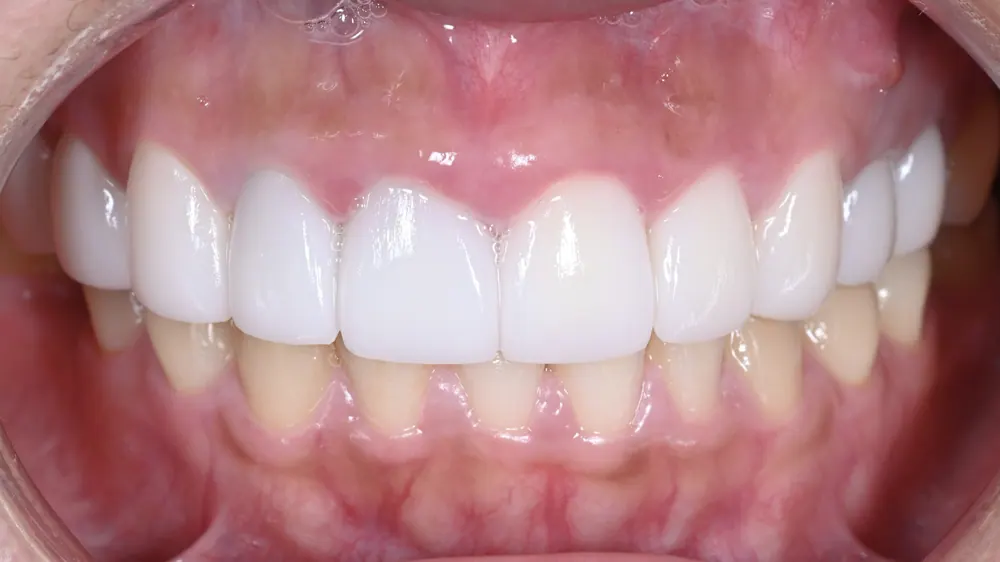
The color of the tooth underneath shows through, giving a grayish look.
Problems:
The ceramic is too thin or too translucent
The discolored tooth underneath shows through
Looks dull overall
Can end up looking worse than before treatment
Case 4: A Result Worse Than a Temporary Tooth (Photo 7)
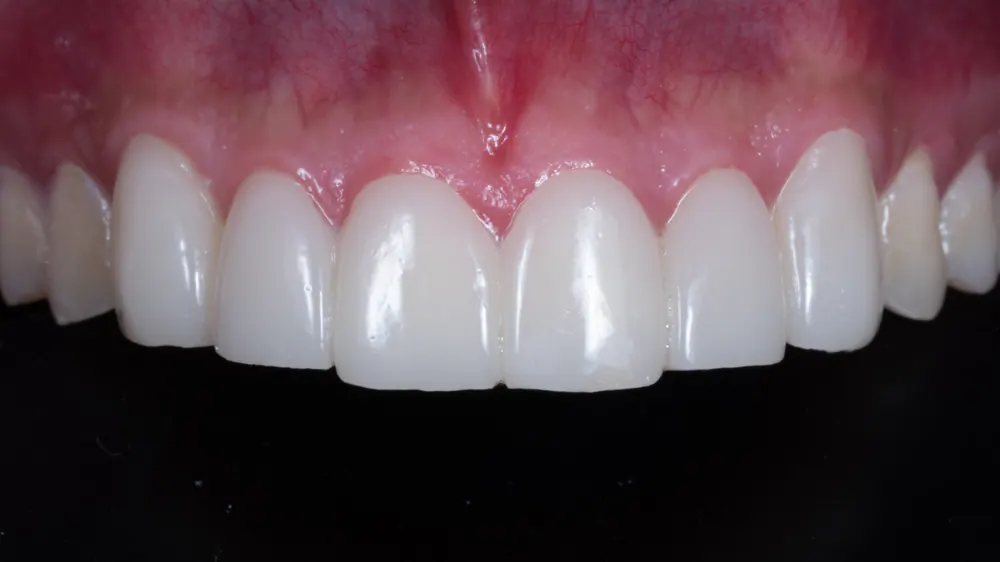
This is even worse than a temporary tooth. It's hard to believe this was meant to be the final veneer.
Problems:
Unnatural shape
No color harmony at all
Crude finishing
I can only imagine how disappointed the patient must have been...
Case 5: "Donkey Teeth" (Photo 8)
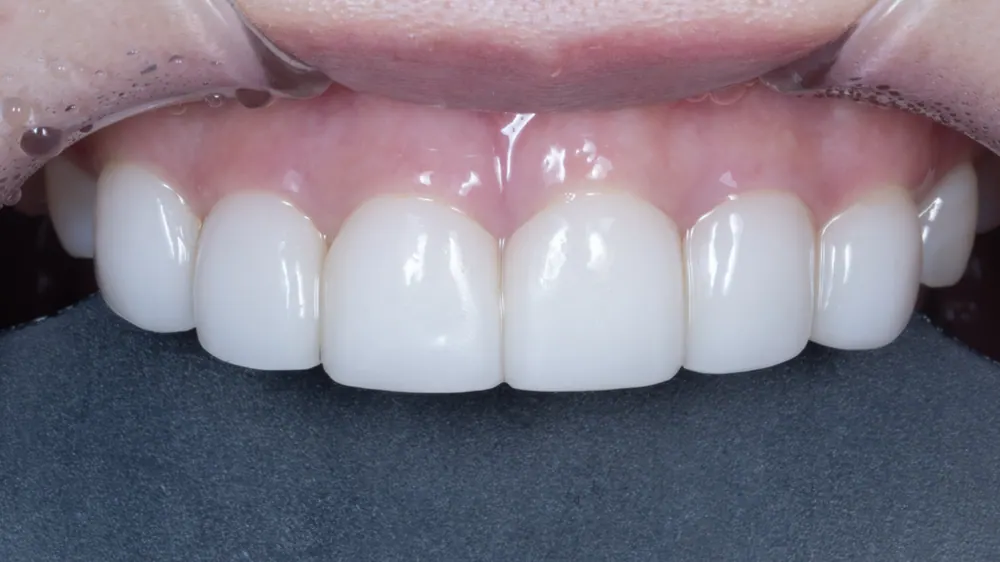
This is exactly the "donkey teeth" look that so many people worry about.
Problems:
Teeth are too large and too long
Proportions look off
Looks thick and protruding
Even looks uncomfortable to close the mouth around
Why do these problems happen?
Is it a problem with the fabrication technique itself? No.
A lot of people think "it's because it's the one-day method," but that's actually not the real reason.
The real problem is:
A system built around making veneers fast and in large volume
Not putting care into each individual case
Ignoring each patient's individual features
Pursuing efficiency alone
The Limits of Large, Factory-Style Clinics
These days there are many large dental chains. Some do veneers for dozens of patients a day.
Their approach:
Standardized design
Fast turnover
Minimal time investment
Mass-production system
Our clinic's approach:
Care given to each individual patient
Thorough consultation and analysis
Taking the time to work with fine detail
Craftsman's spirit
If efficiency is all that matters, an esthetic result can never follow.
Dream Dental Clinic's Handmade Build-up Method
From here on, this is what real veneers look like. Let me show you how we make natural-looking veneers at our clinic.
The handmade build-up method broadly divides into two types.
Method 1: Platinum Foil Veneers
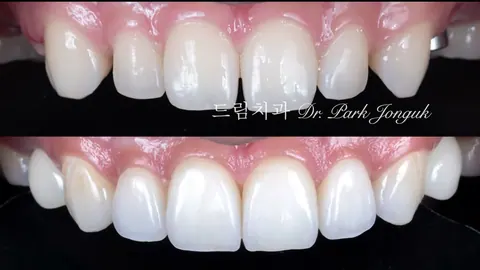
Case Introduction (Photo 9)
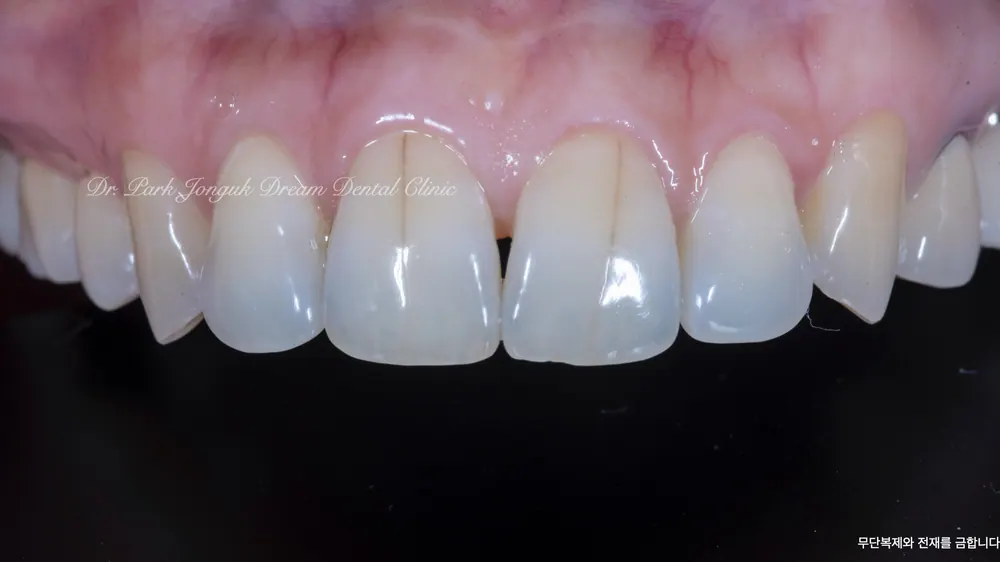
This patient needed veneers on only two front teeth.
Reason for the visit:
Crack line on a front tooth
Black triangle (dark gap between teeth)
Why Most Clinics Recommend 4 to 6 Veneers
When consulting on a case like this, most clinics recommend 4 to 6 veneers.
Why is that?
Revenue: naturally, more teeth means more revenue
Technical limitation: with a single-shade ceramic method, doing just 2 teeth can't be made to blend naturally with the adjacent teeth
But for a patient who doesn't want healthy teeth to be cut down, we can't simply recommend 6 veneers regardless.
The Secret of Platinum Foil Veneers
The special technique used in cases like this is the platinum foil veneer.
Step 1: Applying the Platinum Foil (Photo 10)
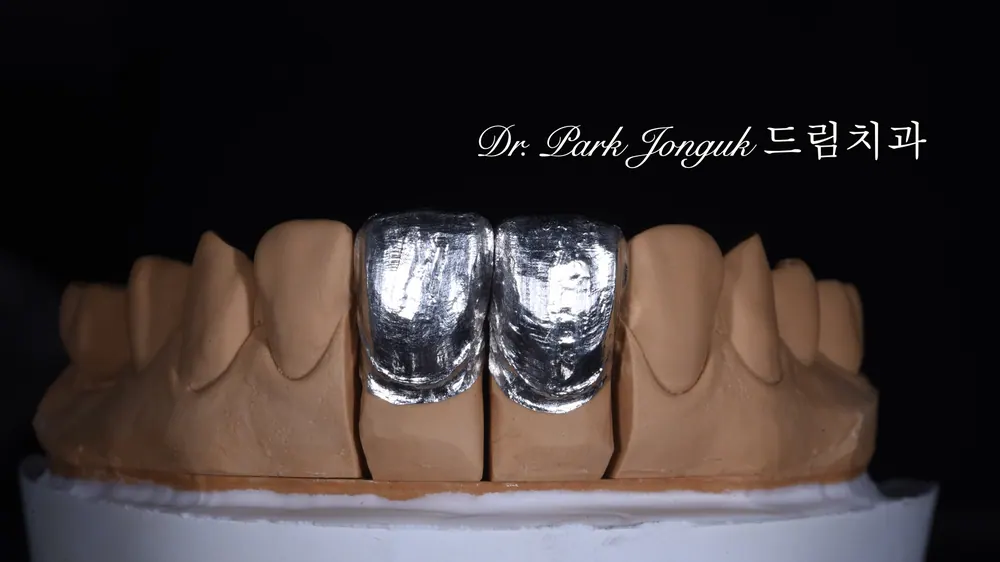
A thin sheet of platinum foil is placed over the tooth model.
The role of the platinum foil:
Prevents the ceramic from shrinking
Allows precise control of thickness
Enables thinner, more precise fabrication
A natural finish
Step 2: The Build-up Process (Photos 11-16)
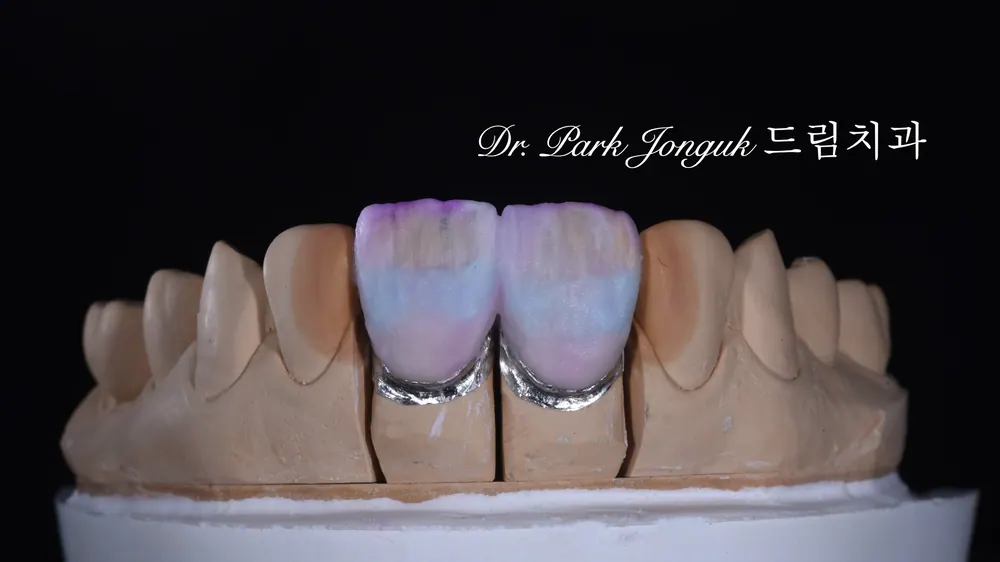
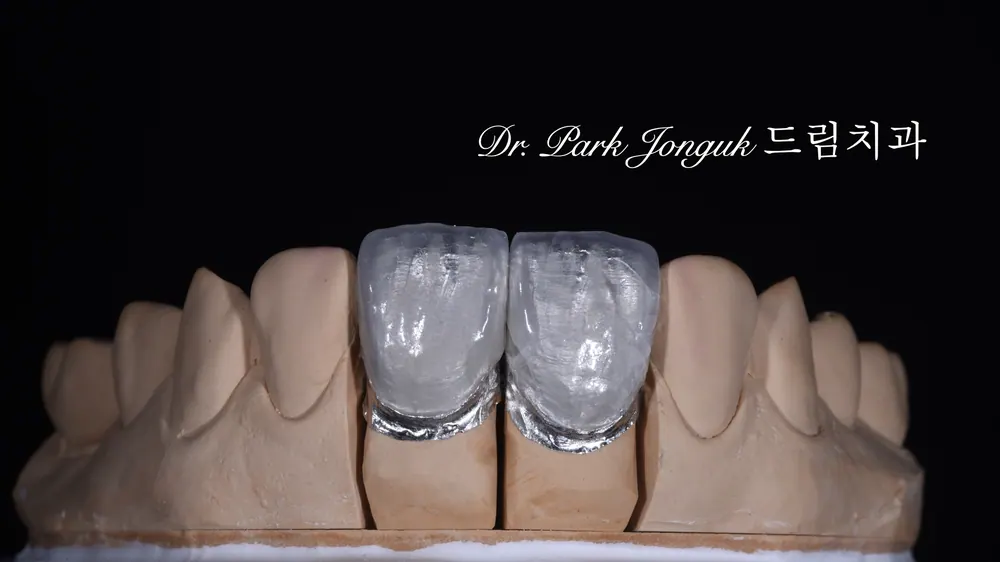
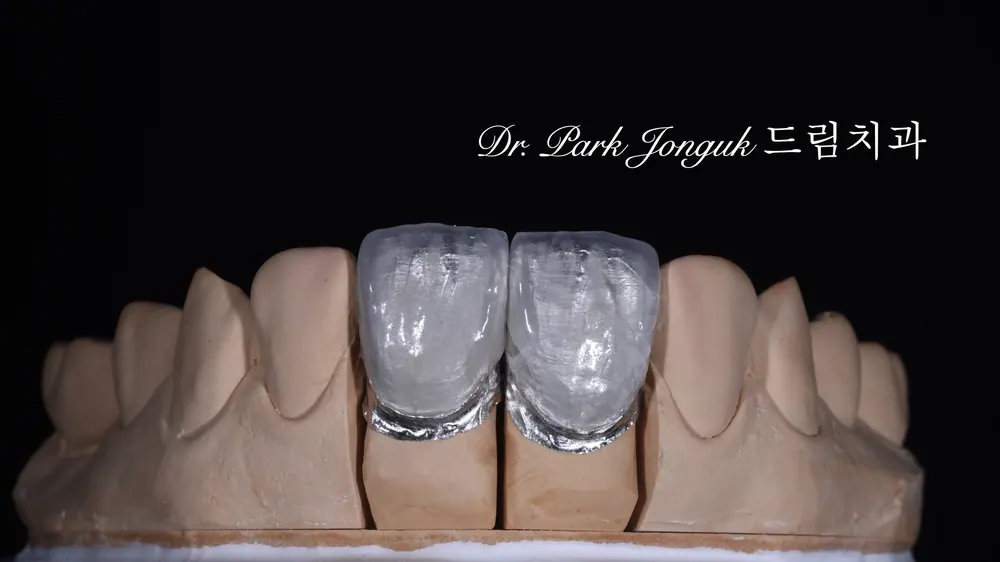
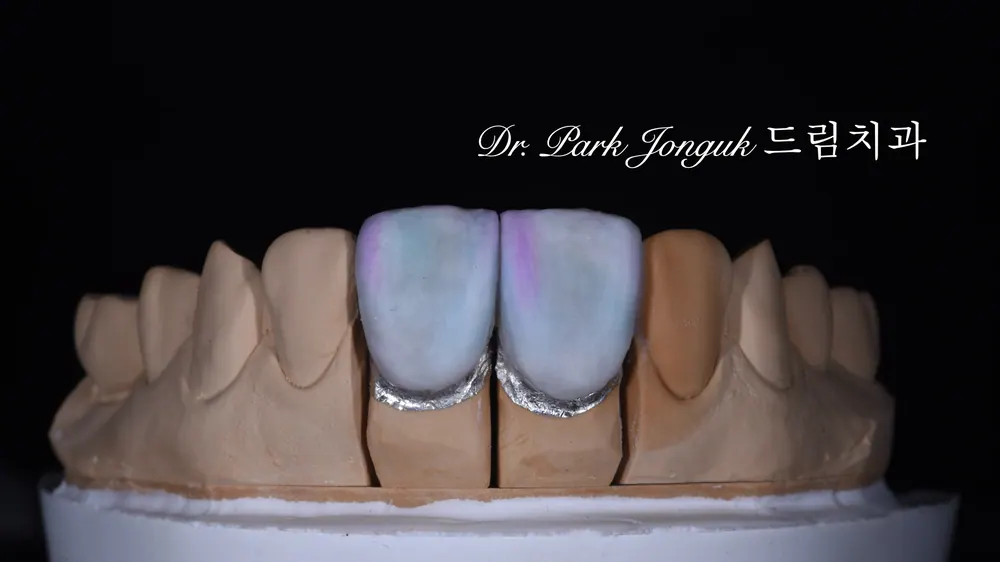
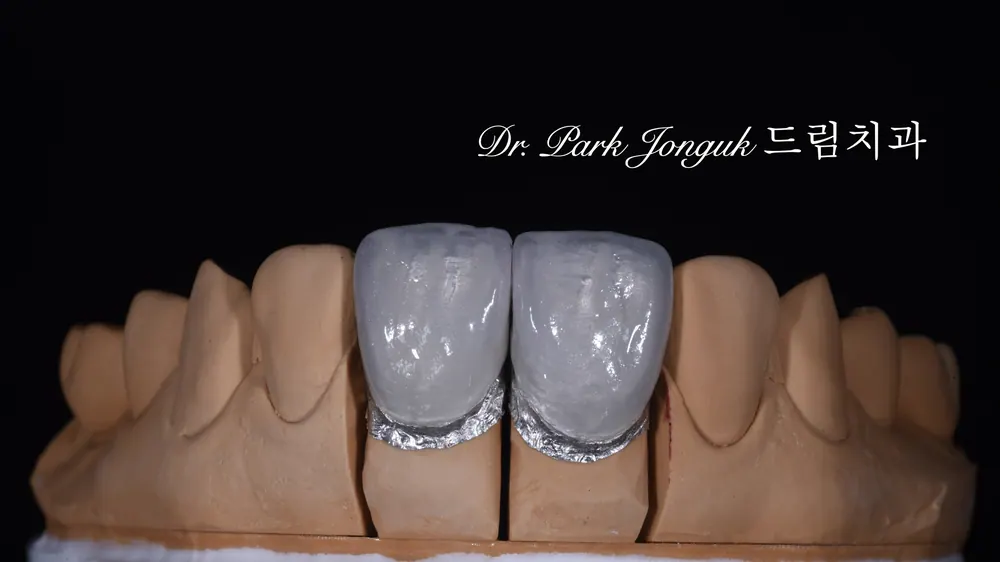
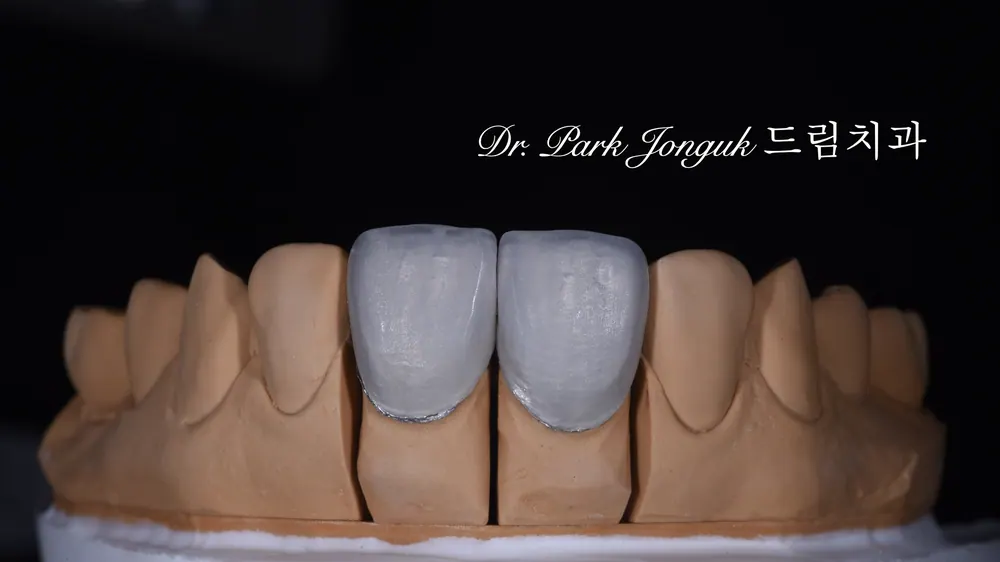
Now the real magic begins. Different ceramics are layered one by one, area by area.
The essence of build-up:
Different shades for different areas
Different translucency for different areas
Reproducing the actual structure of a real tooth
The technician's hand skill and artistry
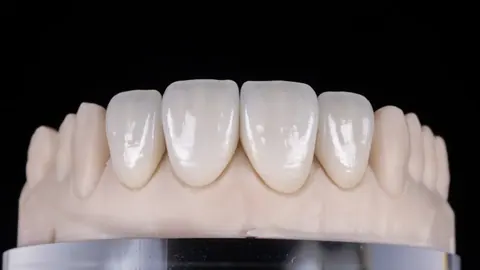
Step 3: The Finished Veneer (Photos 17-20)
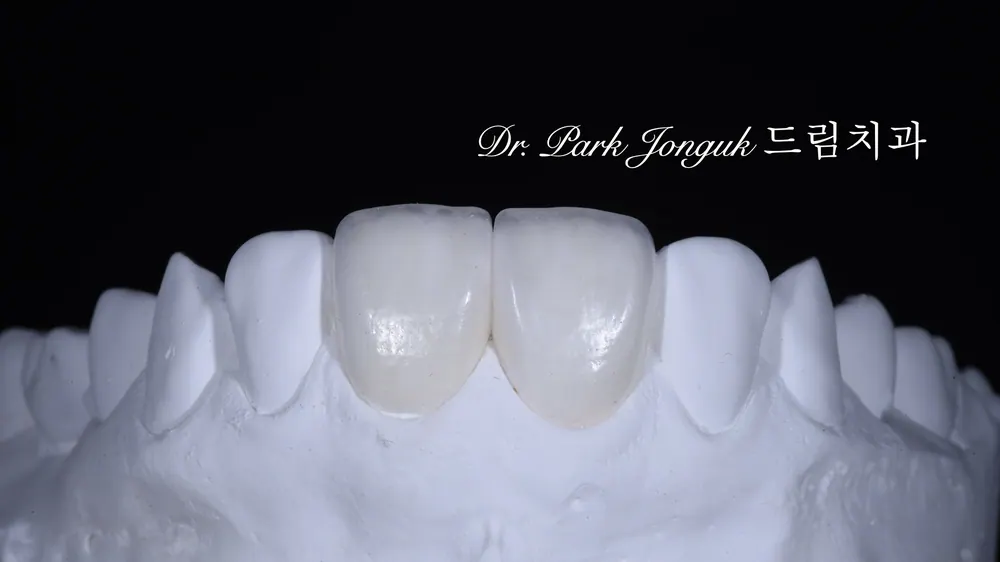
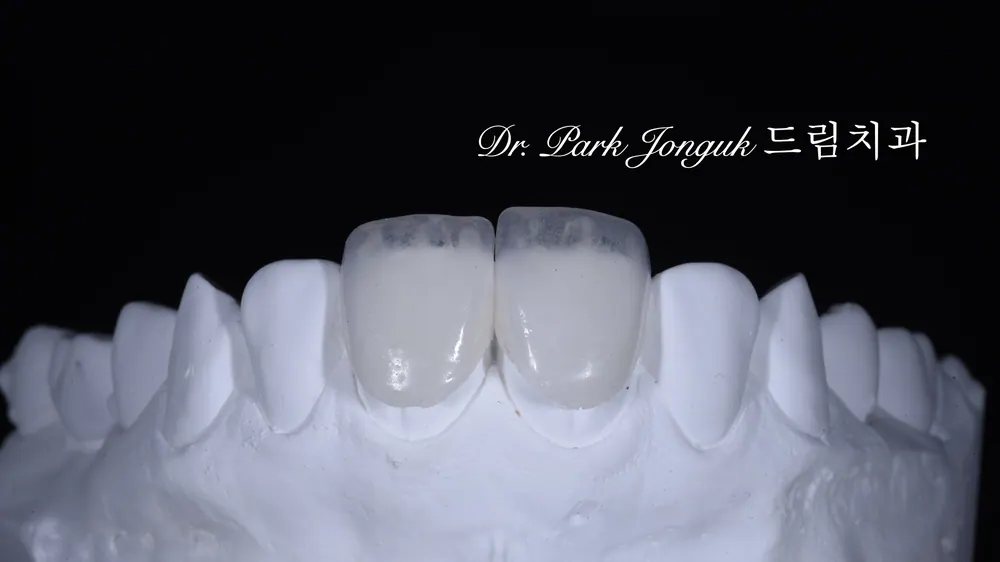
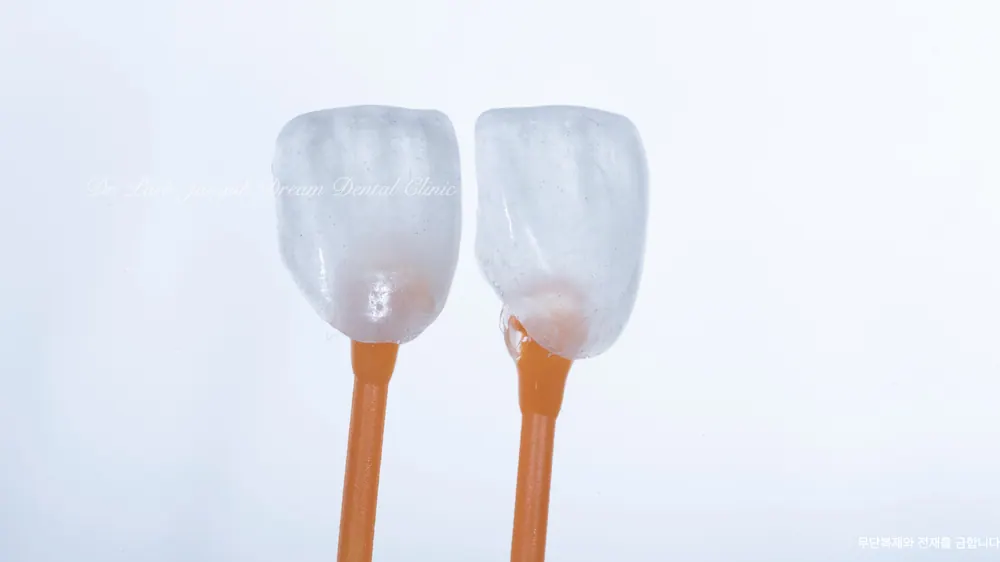
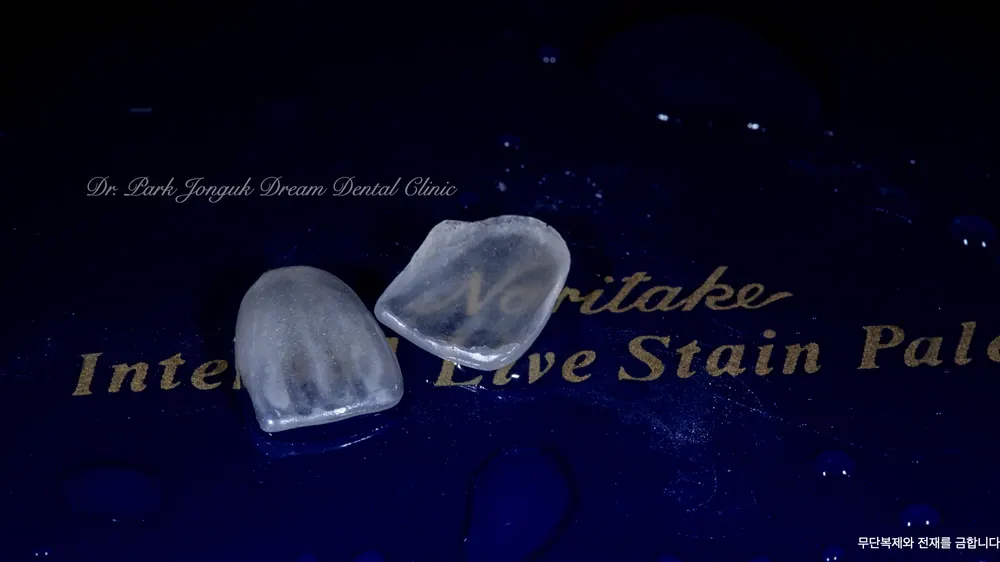
This is the veneer after the build-up is complete and it has been fired (sintered).
Remarkable naturalness:
Multiple layers of color create a sense of depth
Lets light pass through just like a real tooth
A different feel in each area
Not artificial-looking
It's truly natural. This is what real veneers look like.
Final Result (Photos 21, 22, 23)
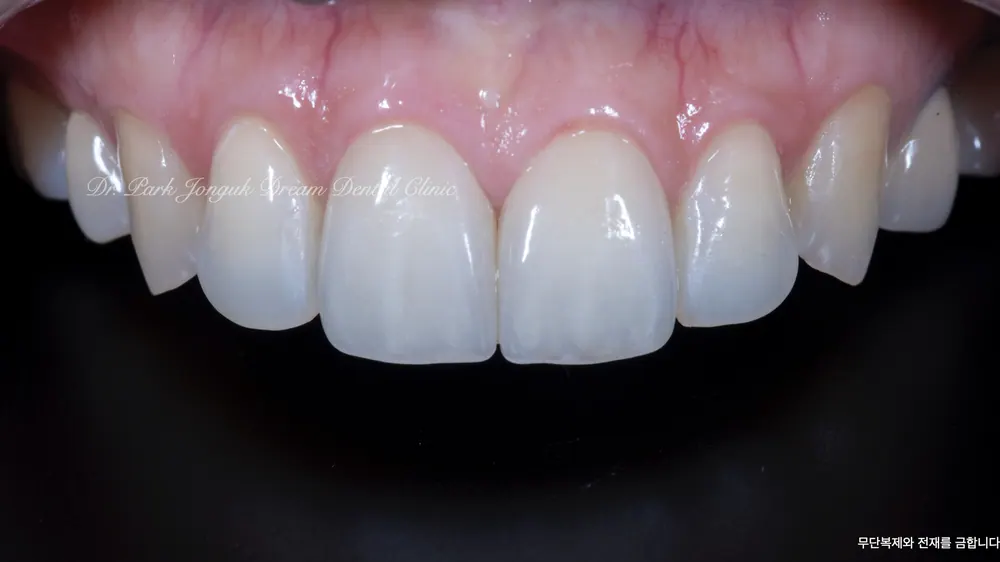
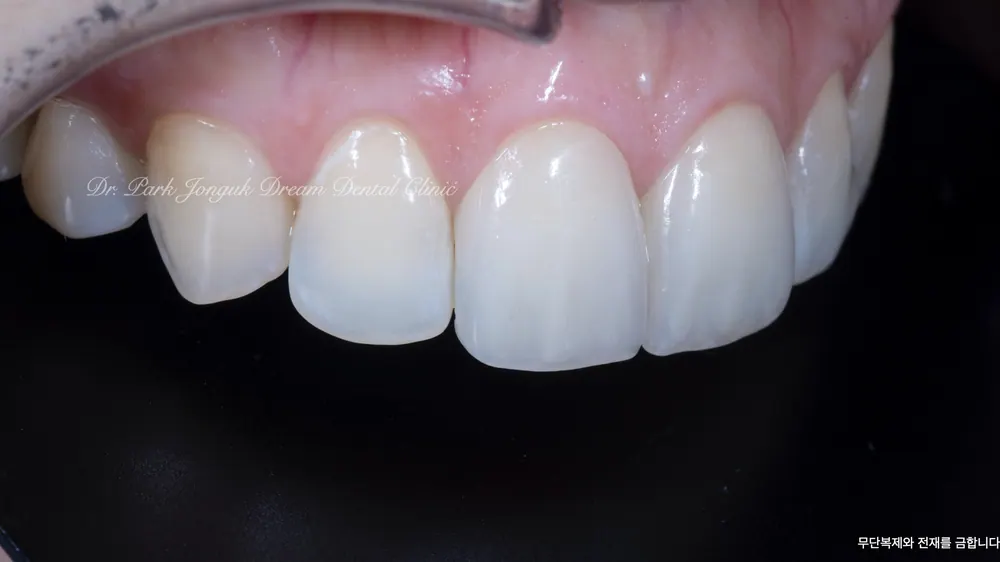
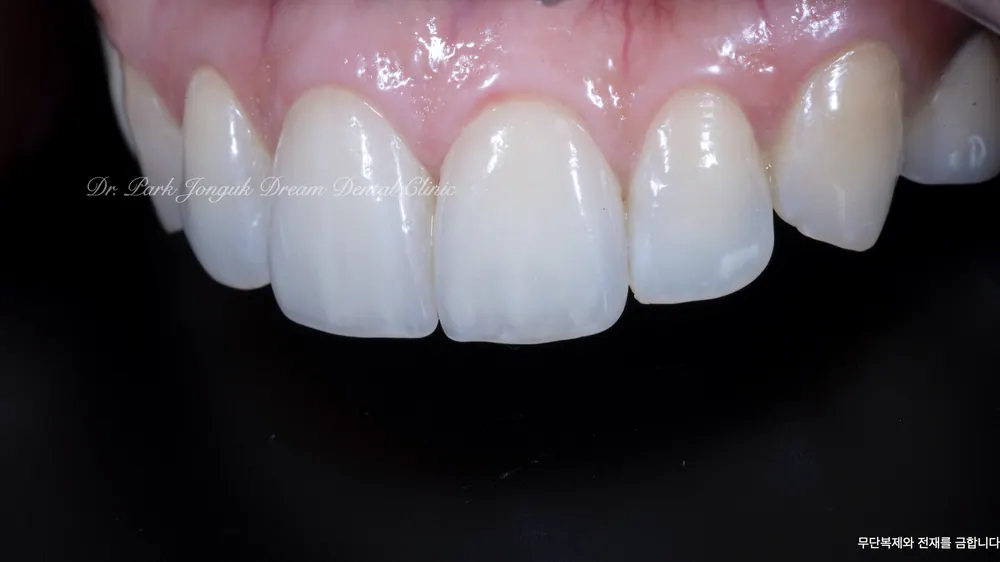
This is how it looks after the veneers were set in the patient's mouth.
Quiz: Which Tooth Is the Veneer?
Looking at the photo, you won't be able to tell. That's the whole point — it blends perfectly with the natural teeth next to it.
The patient's reaction:
"It really looks like my own teeth."
"I didn't know just 2 veneers could look this natural."
"Another clinic told me I needed 6, so I was worried..."
Method 2: Lithium Disilicate Build-up
Step 1: Fabricating the Lithium Disilicate Base (Photos 24, 25, 26)
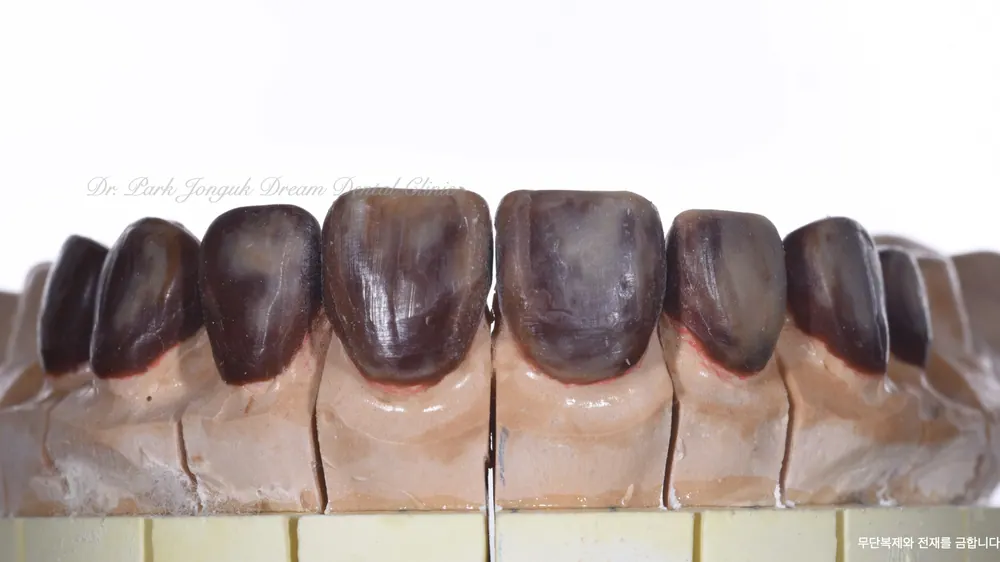
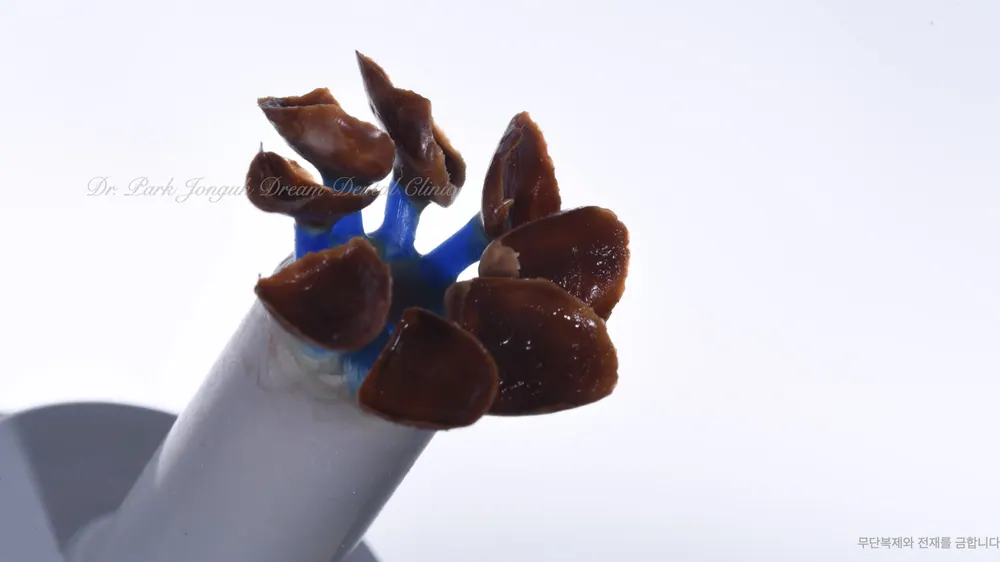
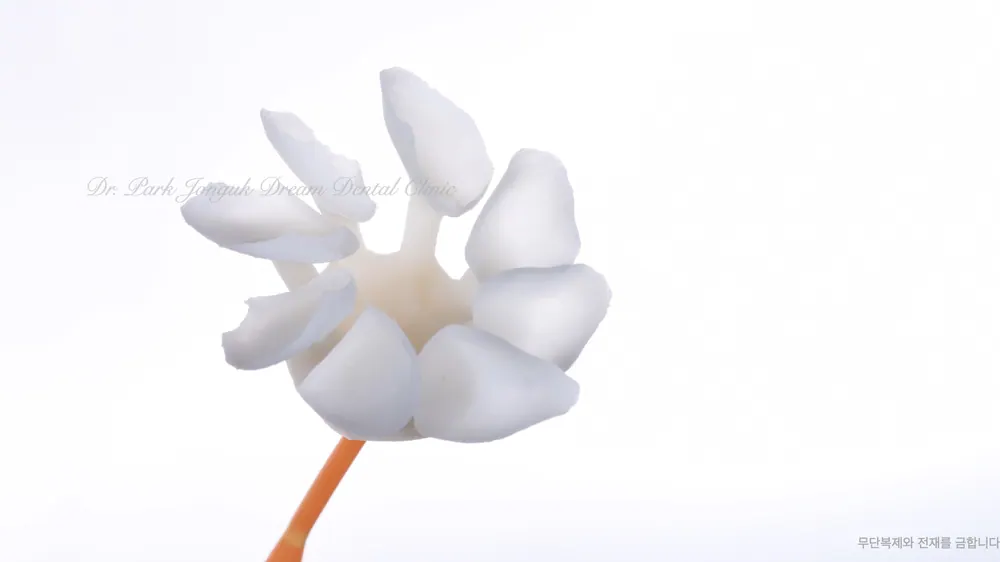
First, a base is made using a high-strength ceramic called lithium disilicate.
What is lithium disilicate?
A very strong ceramic material
Used as the base structure
Combines strength with esthetics
A Common Misconception at Many Clinics: "Is This as Far as Handmade Goes?"
This is where the problem starts.
Many clinics make only the lithium disilicate base and call it the "handmade method." But this alone isn't enough.
Here's why:
A single shade isn't much different from the one-day method
If the goal is still "fast and high-volume," the result ends up the same
The base alone cannot achieve a natural sense of translucency and depth
True handmade work means building up further layers on top of this base.
Step 2: Where the Real Build-up Begins (Photos 27-32)
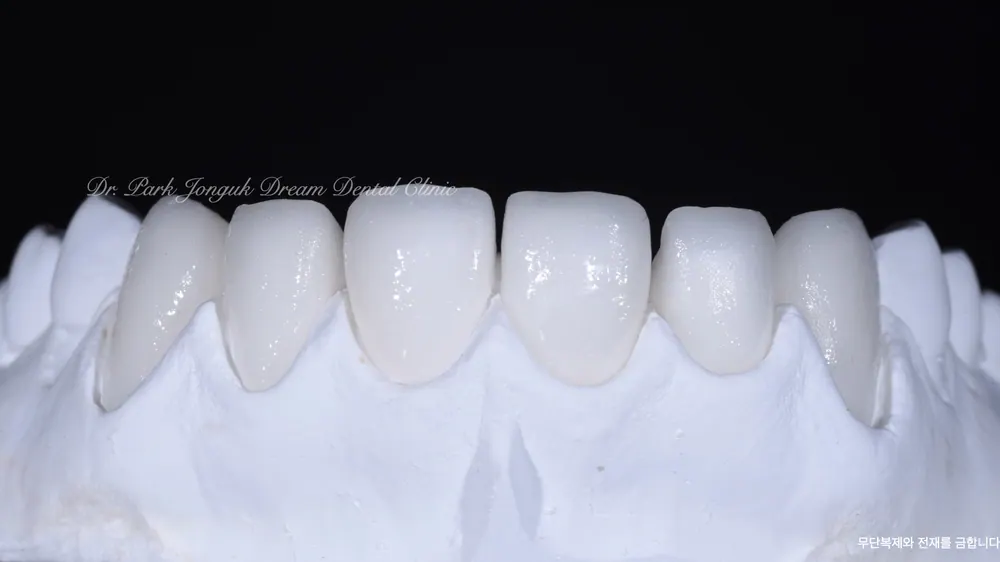
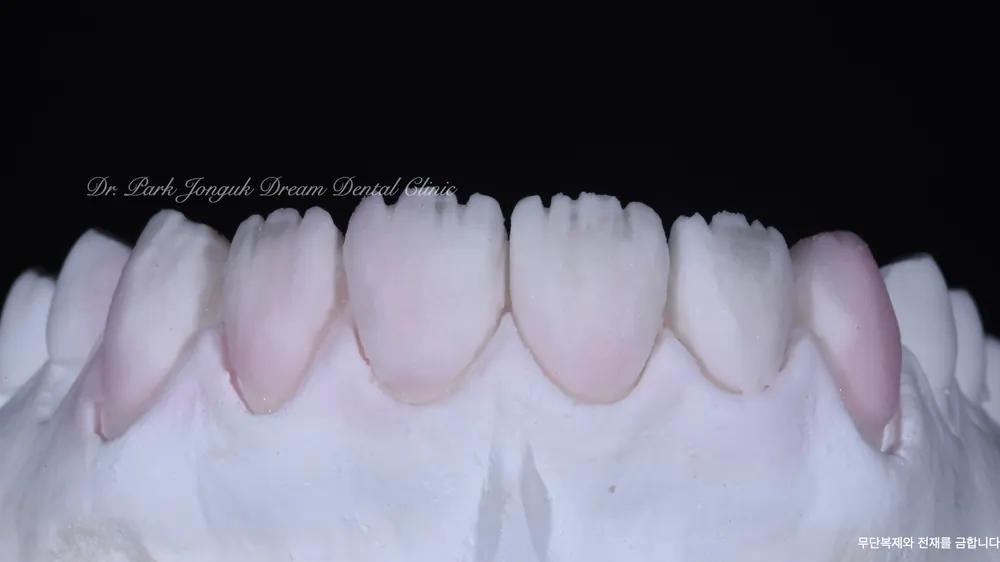
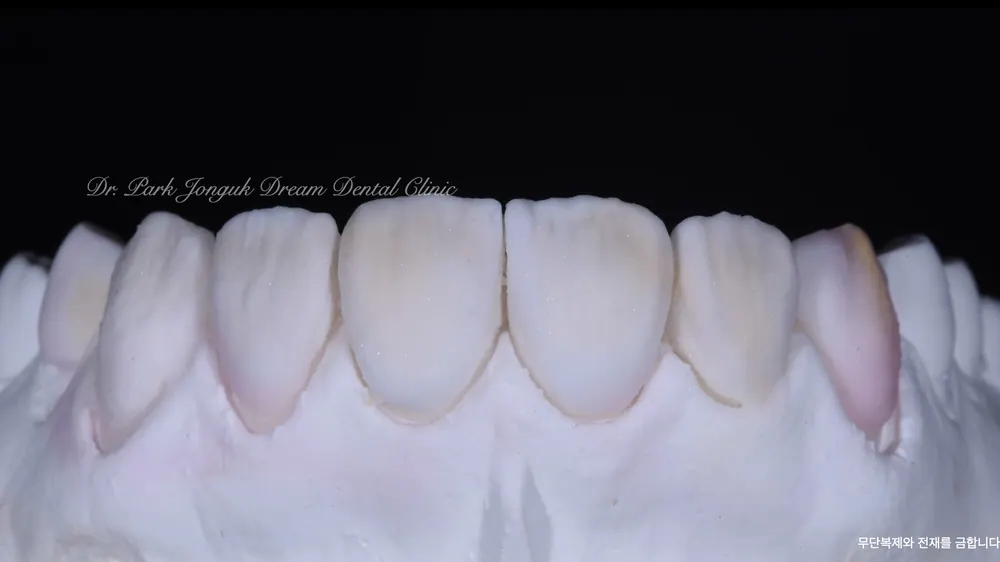
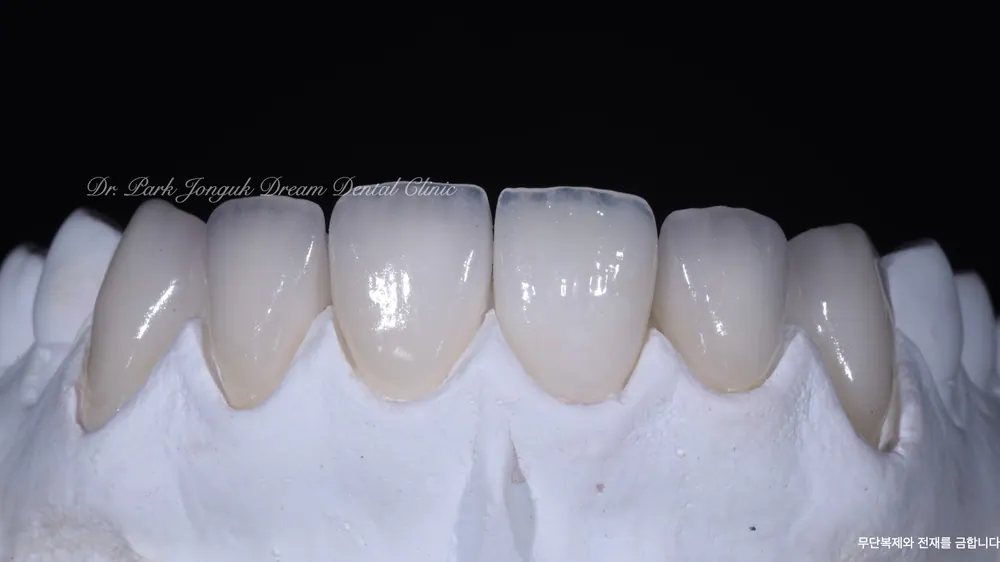
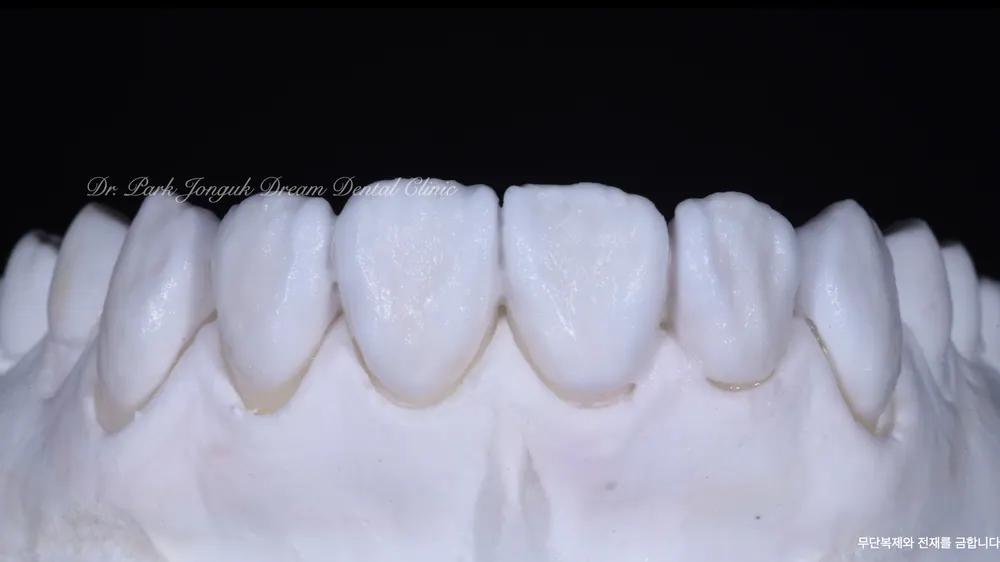
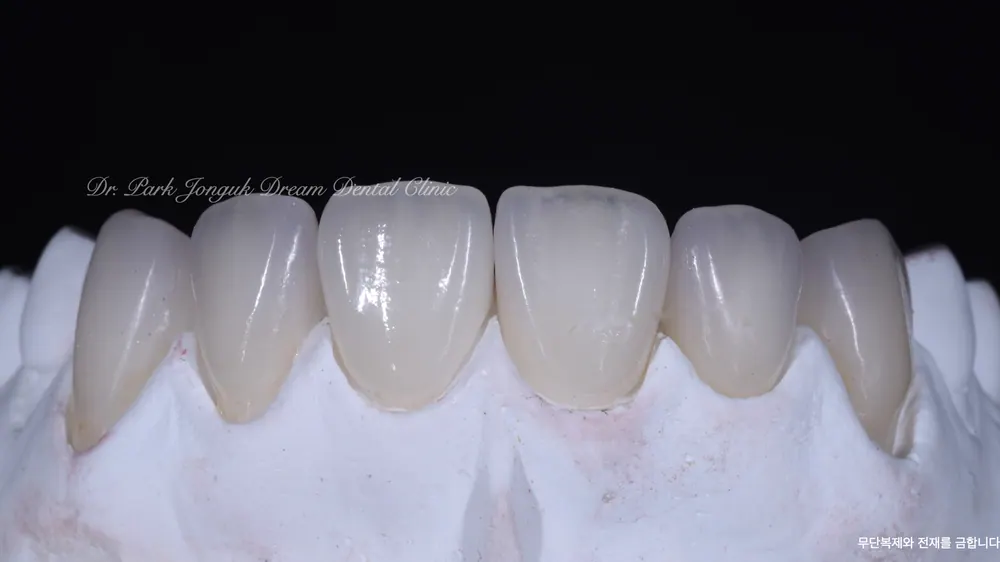
Multiple additional layers of ceramic are built up on top of the lithium disilicate base.
What this process means:
Transforms a plain base into a living-looking tooth
Calls on every bit of the technician's artistic sense
Adjusted step by step while referring to the patient's photos
The crystallization of time and care
Step 3: The Final Result (Photos 33, 34, 35)
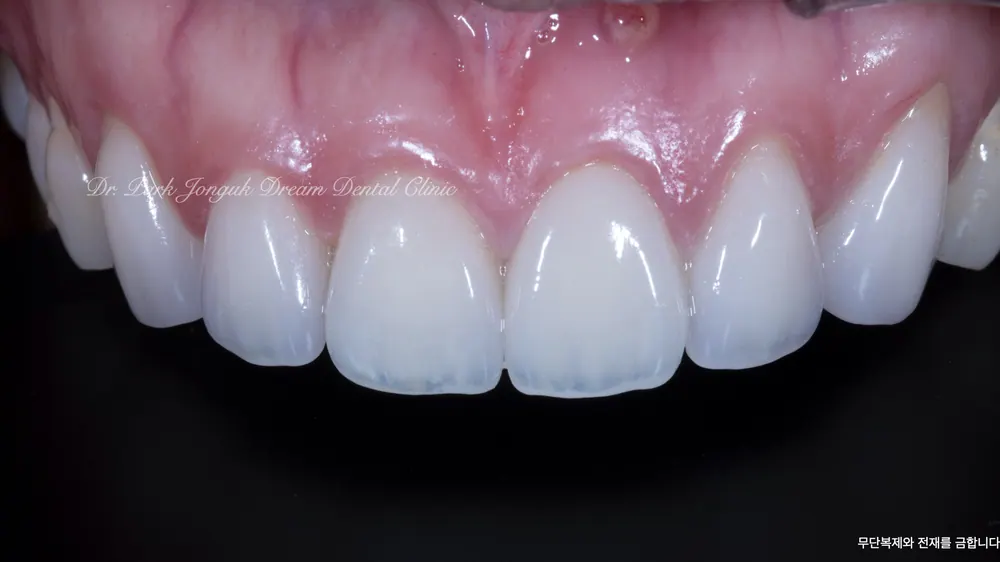
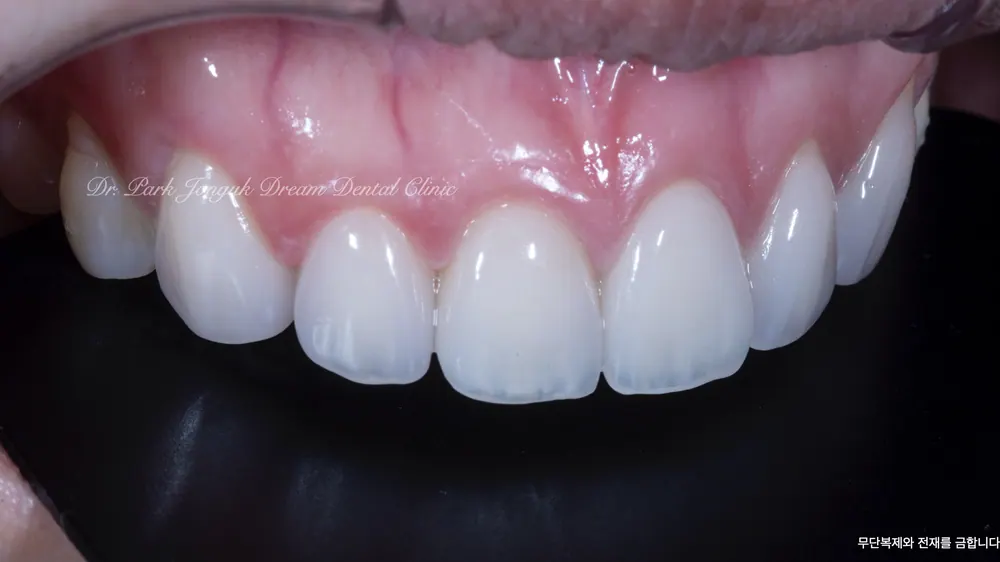
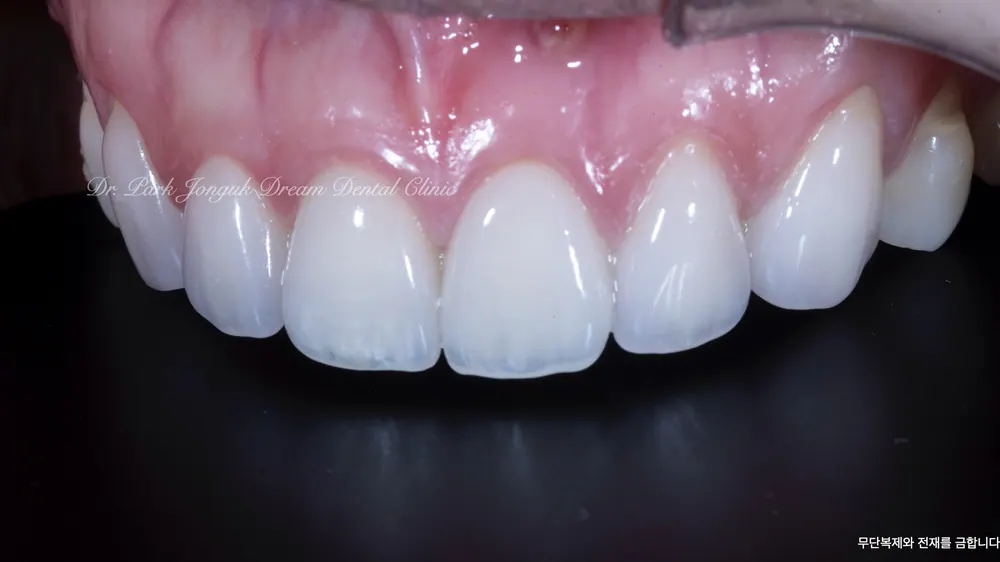
This is how it looks after setting.
It's remarkably natural.
Compare this to the "donkey teeth" from the one-day method shown earlier. Isn't it on a completely different level?
Characteristics of this result:
Indistinguishable from real teeth
Lets light pass through naturally
Subtle color variation across different areas
Three-dimensional sense of depth
Keeps its natural look even 10 years later
Real Examples of Build-up Handmade Veneers
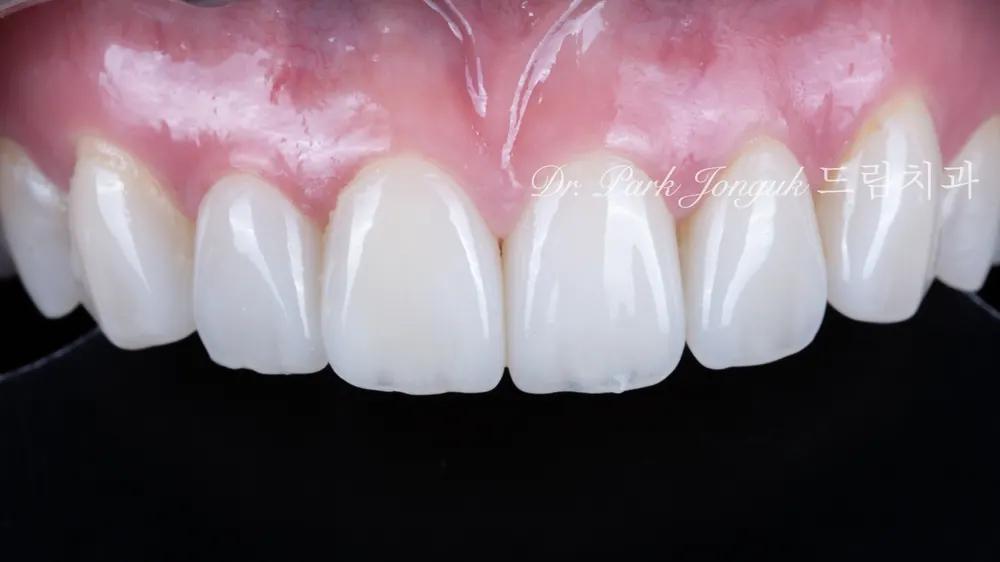
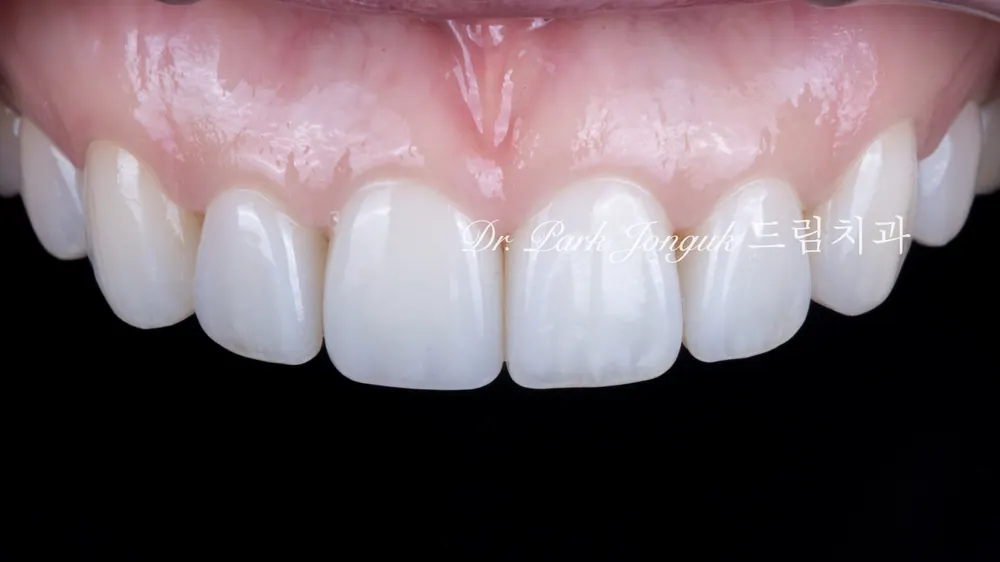
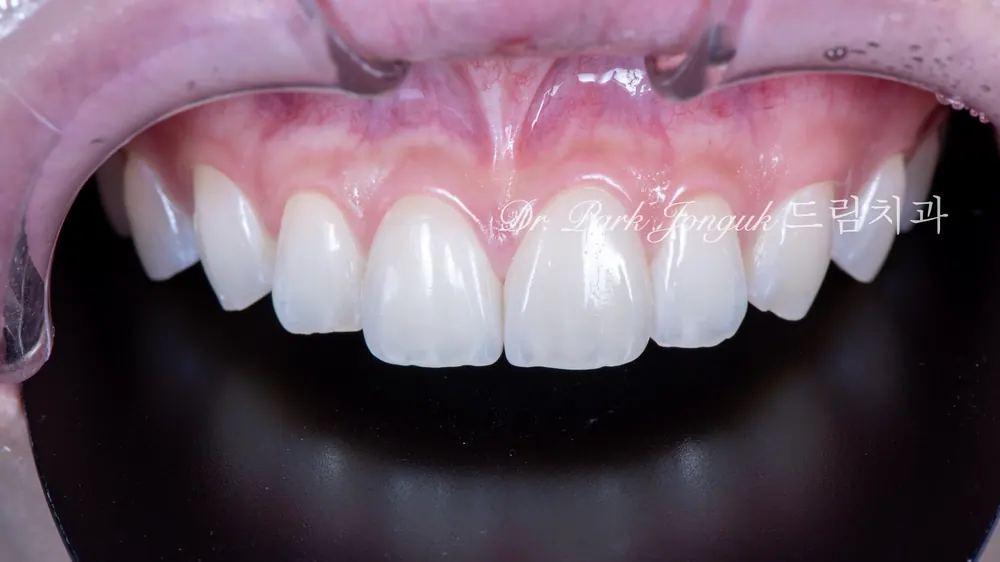
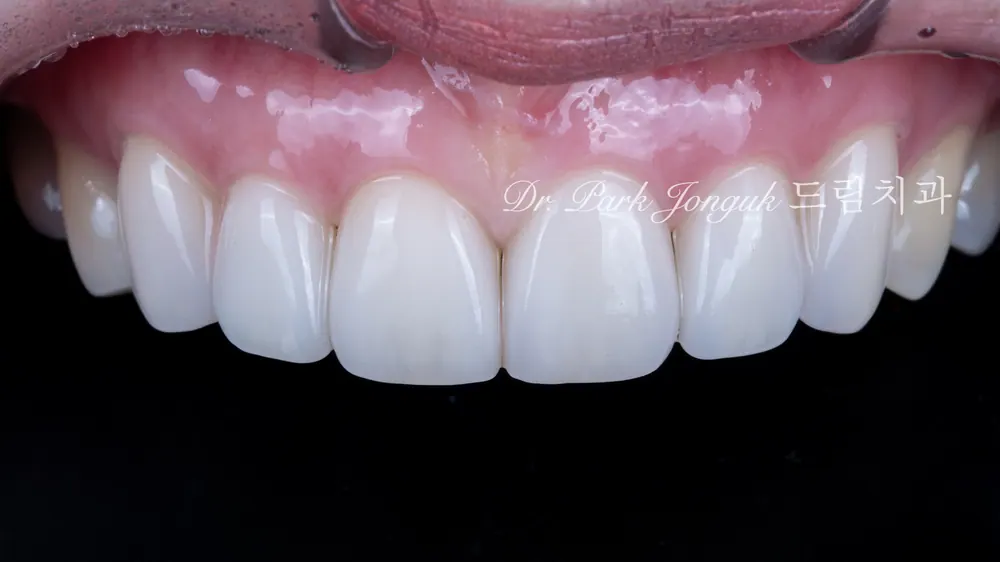
What Makes Dream Dental Clinic Different: An In-House Dental Lab
Why an In-House Dental Lab Matters
Our clinic has its own in-house dental lab. Rather than outsourcing to an external lab, the veneers are made directly within the same building.
How a typical clinic works:
Outsourced to an external lab
Just shipping back and forth takes several days
Difficult communication between dentist and technician
Only communicate by phone or text
Adjustments are difficult
How Dream Dental Clinic works:
In-house dental lab
The dentist goes in person to check
Real-time communication and adjustment
Immediate revisions are possible
The Actual Work Process
While veneers are being made, I go to the lab often.
Here's what becomes possible:
Bringing the patient's photos in and adjusting the shade together
Giving direct instructions like, "Please make this area a bit more translucent"
Reflecting subtle shape changes immediately
Discussing the best possible result together with the technician
A Team That Has Worked Together for 20 Years:
Collaborating every day in the same space
A complete mutual understanding of each other's standards and philosophy
Moving as a single team
Our own team, not an outsourced one
This is why our veneers are different.
The Difference Time and Care Make
One-Day Method:
⏱️ Fabrication time: 2-3 hours 💰 Cost: Low 👤 Workforce: Machine-driven 🎨 Customization: Limited
Dream Dental Clinic's Handmade Method:
⏰ Fabrication time: 2-3 weeks 💎 Cost: High 👨🔬 Workforce: A skilled technician's hand craftsmanship 🎨 Customization: Fully tailored to the individual
Which would you choose?
Conclusion: Don't Compromise on Your Smile
Over 28 years of making thousands of veneers, I've come to be certain of one thing.
Veneers are an area where you absolutely cannot compromise.
Making veneers fast, cheap, and in bulk is completely different from making them with care, naturally, and to perfection.
The path we've chosen:
Quality over efficiency
Completeness over speed
Satisfaction over volume
A craftsman's spirit, not a factory model
When you're choosing where to go:
Don't look at price alone
Ask about the fabrication method
Look at actual result photos
Check whether they have an in-house dental lab
See how much time and care they put in
Your smile lasts a lifetime. If you want a natural, beautiful smile instead of "donkey teeth," choose a clinic that does it right.
Q&A — A Complete Rundown of Veneer Fabrication Methods
Q1. Are one-day veneers always bad?
A. No, not always. The issue isn't really the one-day method itself, but rather a system built around making veneers fast and in high volume. Even one-day veneers can produce a reasonable result if enough time and care are put in. But in practice, the reason people choose one-day veneers is "speed" and "low cost," so most cases don't get enough time invested. And no matter how well they're made, the limits of a single-shade ceramic make it hard to match the naturalness of the handmade build-up method. If you need something urgently or for temporary use, it can be fine, but I wouldn't recommend it for veneers meant to last a lifetime.
Q2. Why is the handmade build-up method expensive?
A. It comes down to differences in time, skill, and materials. A one-day veneer is made by a machine in 2-3 hours, while a handmade veneer is built up layer by layer over several days by a skilled technician. Multiple types of premium ceramic powder are used, with continuous adjustments made to bring out each patient's individual features. On top of that, when there's an in-house lab like ours, additional time goes into the dentist checking and refining the work in person. It's really like creating a single work of art. The cost is naturally higher, but the difference in the result is just as clear.
Q3. Which is better — platinum foil veneers or lithium disilicate build-up?
A. Both are excellent methods, and the choice depends on the case. The platinum foil method is advantageous when treating only a small number of teeth, especially when they need to match the adjacent natural teeth perfectly. It can be made very thin and precise, giving excellent harmony with natural teeth. Lithium disilicate build-up is well suited to treating several teeth together, or to cases that need more strength. The base is sturdy, and building up further layers on top still achieves excellent esthetics. After an accurate diagnosis, I recommend the method that fits each patient's situation.
Q4. Is an in-house dental lab really that important?
A. It's tremendously important. When using an outside lab, the dentist and the technician have almost no chance to communicate directly. All they exchange over phone or text are vague phrases like "a bit brighter" or "more natural." But with an in-house lab, I can bring the patient's photos straight to the lab myself and give specific instructions like, "make the shade here like this" or "adjust the translucency here like that." I can also check on the work along the way and make immediate revisions. After working with the same technician every day for 20 years, a lot gets communicated without even needing to be said. This kind of collaboration is what produces the best results.
Q5. I'm unhappy with veneers done at another clinic — can they be redone?
A. Yes, it's possible. In fact, all of the cases in Photos 4-8 shown in today's article are patients who were unhappy with veneers done elsewhere and came to our clinic. The existing veneers need to be removed and new ones fabricated. However, since the teeth have already been reduced, they can't be fully restored to their original state, so they need to be covered with new veneers. The removal process is carried out very carefully to avoid causing further damage to the teeth. Retreatment involves additional cost and time, so it's always best to choose the right clinic from the start.
Q6. How long do handmade veneers last?
A. With good care, they can last 15-20 years or more. Many of the patients I treated 20 years ago are still using their veneers today with no issues at all. The handmade build-up method is made up of multiple layers, so it has excellent strength and the color doesn't change. If you get regular checkups every six months, avoid biting down on very hard foods with your front teeth, and wear a night guard if you grind your teeth, they can potentially last a lifetime.
This article is a clinical note written by Dr. Park Jonguk of Dream Dental Clinic, Gangnam; the original was published on his blog. The photographs shown are real cases he treated. Results vary with each patient’s condition, and every procedure carries the possibility of individual variation and side effects.
Quick Consult
Request a Callback
Leave your number and we will call you back during clinic hours.
Request Received
We will contact you during clinic hours. For urgent matters, please call +82-2-3448-0028.