
No-Prep Veneers for Inward-Tilted Teeth After Orthodontics
Hello. This is Park Jonguk, director of Dream Dental Clinic, located at Apgujeong Station.
Orthodontic treatment generally improves tooth alignment.
But sometimes the teeth end up tilted too far inward.
This is usually called over-retracted, or "inward," teeth.
When teeth end up too far inward after orthodontics,
they may not show much when smiling.
The orthodontic treatment was meant to create a beautiful smile,
but the result can end up unsatisfying.
Of course, there are also plenty of people
who have inward-tilted teeth without ever having had orthodontics.
In such cases, veneer treatment is used.
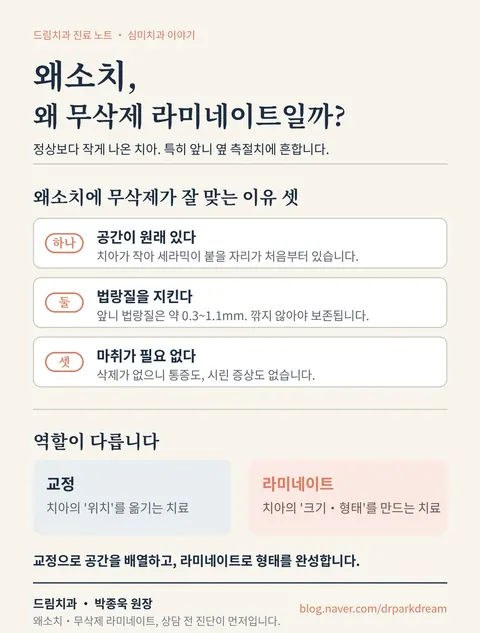
For veneer treatment to be possible without any reduction,
the alignment needs to be good,
the teeth need to be small,
and the teeth need to be tilted inward —
these three conditions need to be met.
Whether or not orthodontics was done, if the teeth are tilted inward, small, and well-aligned,
it's exactly the kind of case suited to no-prep veneers for inward teeth.
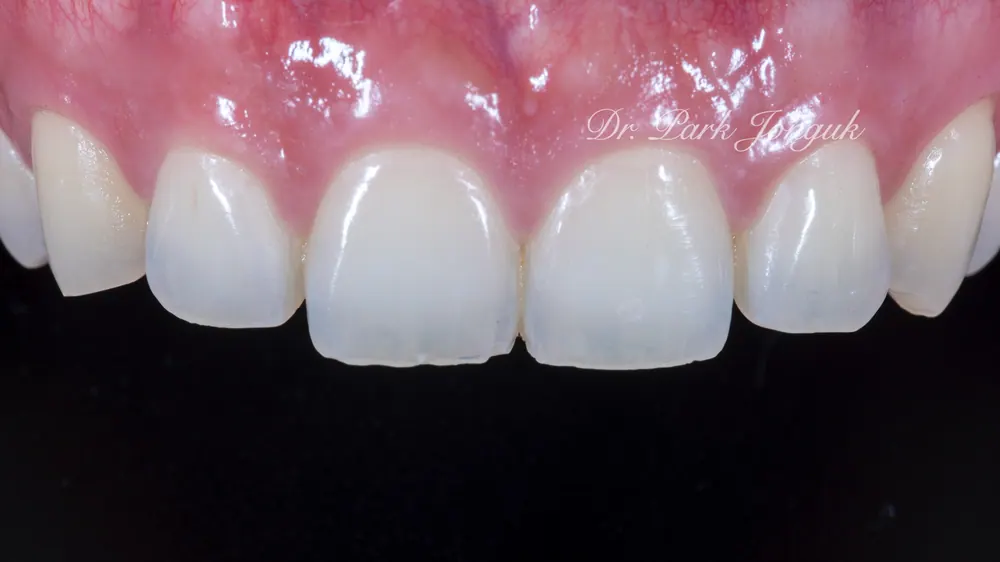
Viewed from the front, there doesn't seem to be a major problem.
The alignment is good, and while the tooth shape has some minor chips,
it's not enough to really stand out.
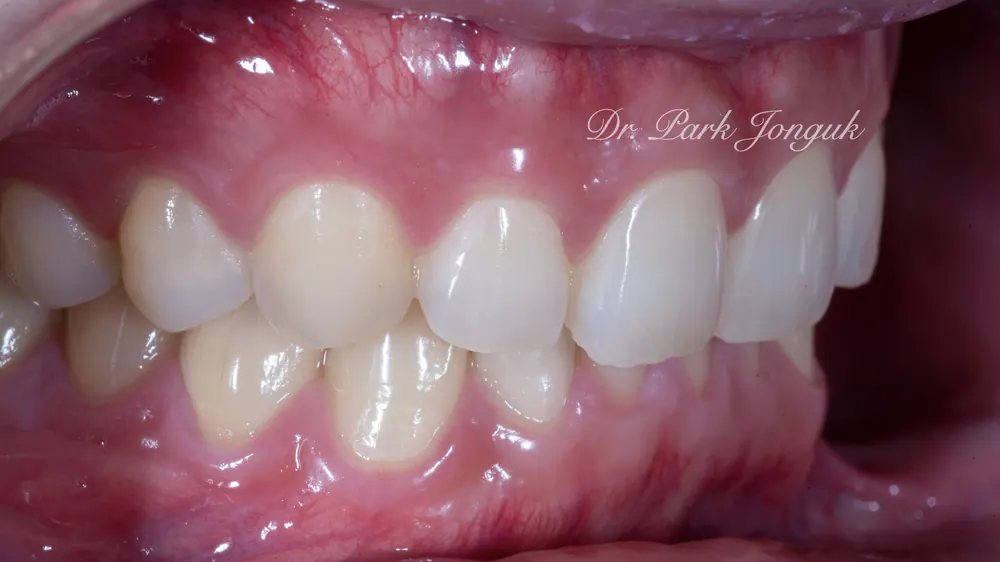
Let's take a photo from a 45-degree angle.
You start to sense that the teeth might be positioned a bit inward.
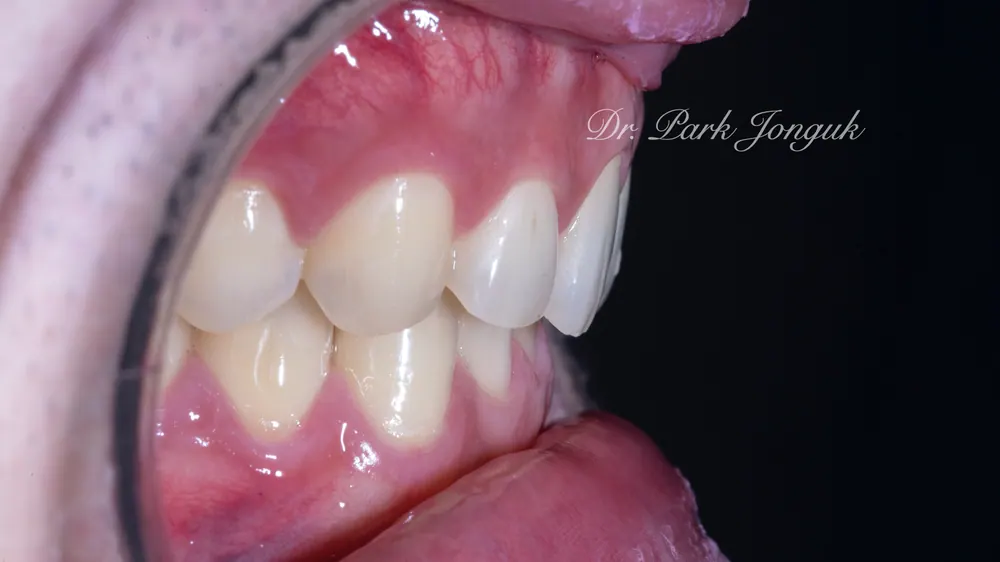
Photographed from the side, it becomes clear that the teeth are noticeably tilted inward —
confirming they are indeed over-retracted.
Because the teeth ended up too far inward from the orthodontic treatment,
re-doing the orthodontics was considered,
but this was a case where redoing the orthodontics was unlikely to improve things.
If tooth reduction were absolutely necessary in a case like this,
we would consider orthodontics more seriously,
but since this case allowed for no-prep veneers for the inward teeth,
there would be no damage to the tooth,
making veneers a more suitable option than orthodontics.
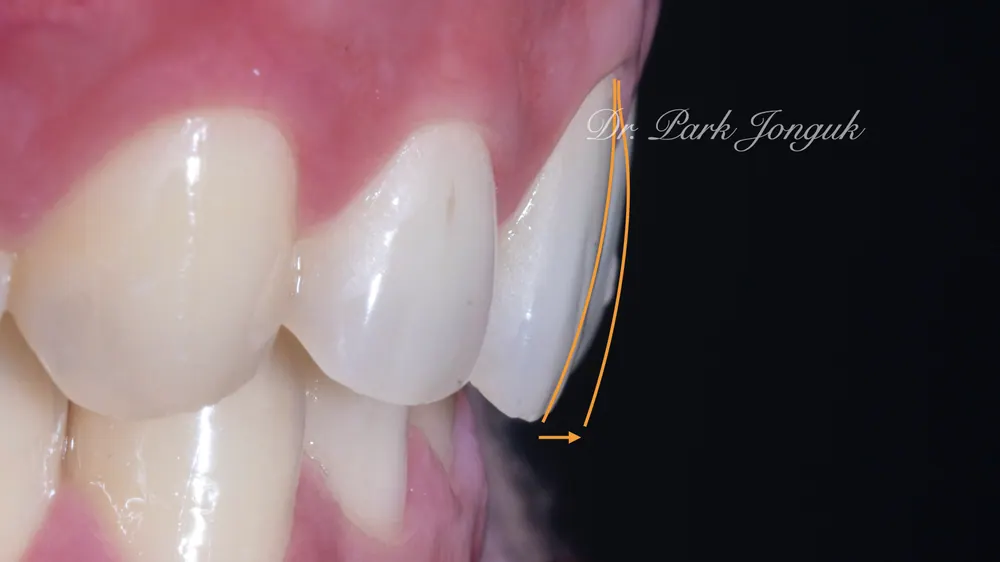
A veneer that brings inward-tilted teeth back out
can make the most of the veneer's advantages.
Even in a no-prep case like this, what always matters is
that the health of the tooth and gum must be preserved,
and that the final result must look both natural and beautiful.
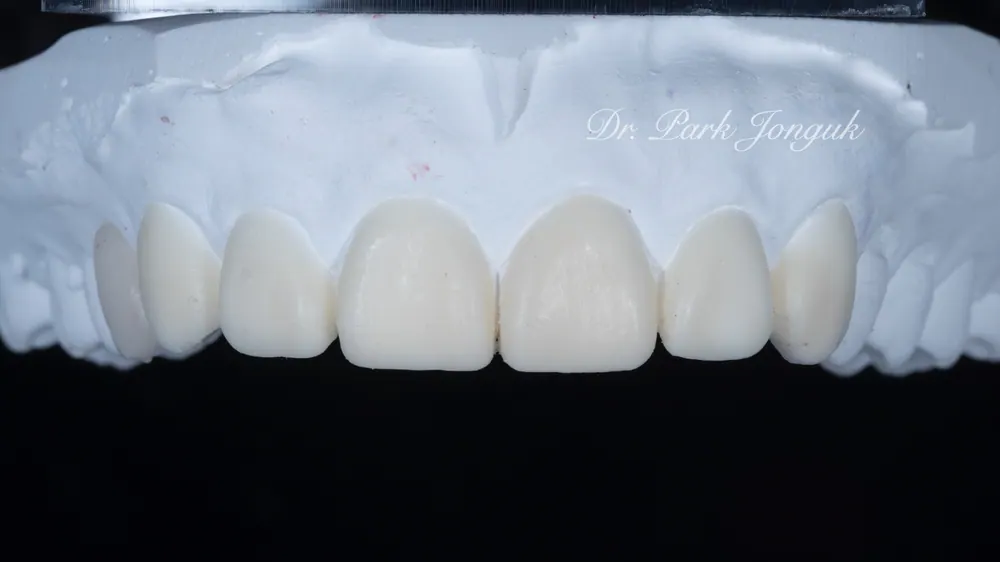
We use wax to simulate in advance how it will be made.
Without reducing the tooth, we test how the shape can be made to look natural using wax,
trying out various shapes and sizes.
The completed wax-up like this
is used to make the temporary tooth in the mouth.
For no-prep veneers on inward teeth, the purpose of the temporary tooth
isn't to protect a reduced tooth,
but to preview the shape of the ceramic veneer that will eventually be made.
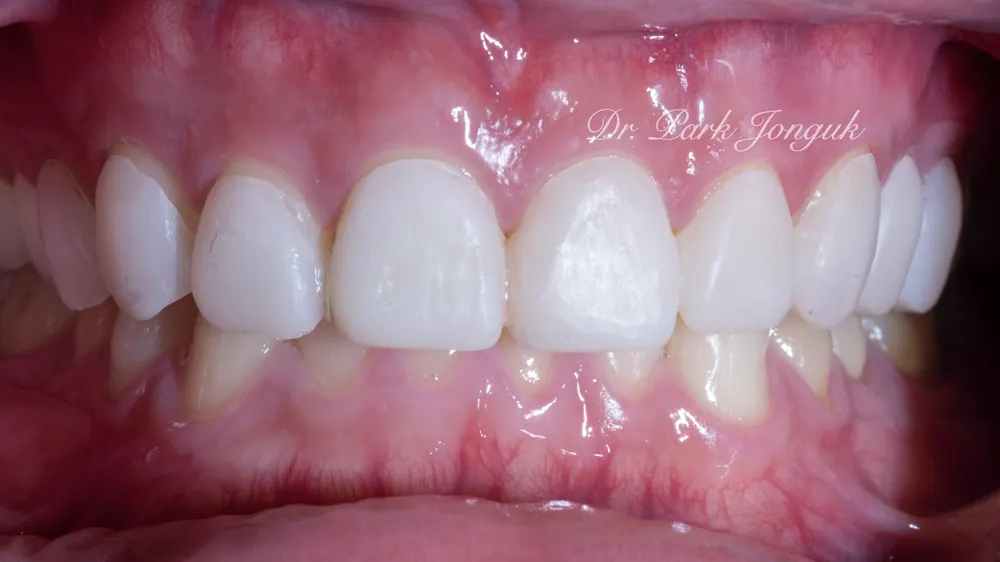
Occasionally, in veneer treatment as well as
front-tooth cosmetic procedures in general,
you see cases where a temporary tooth isn't made at all.
I say this every time I lecture to fellow dentists as well:
the temporary tooth is a very important step.
It's the step that lets you know in advance how the tooth will change,
so skipping it simply shouldn't happen.
What matters is that the temporary tooth
must reflect the actual shape of the ceramic veneer that will be made.
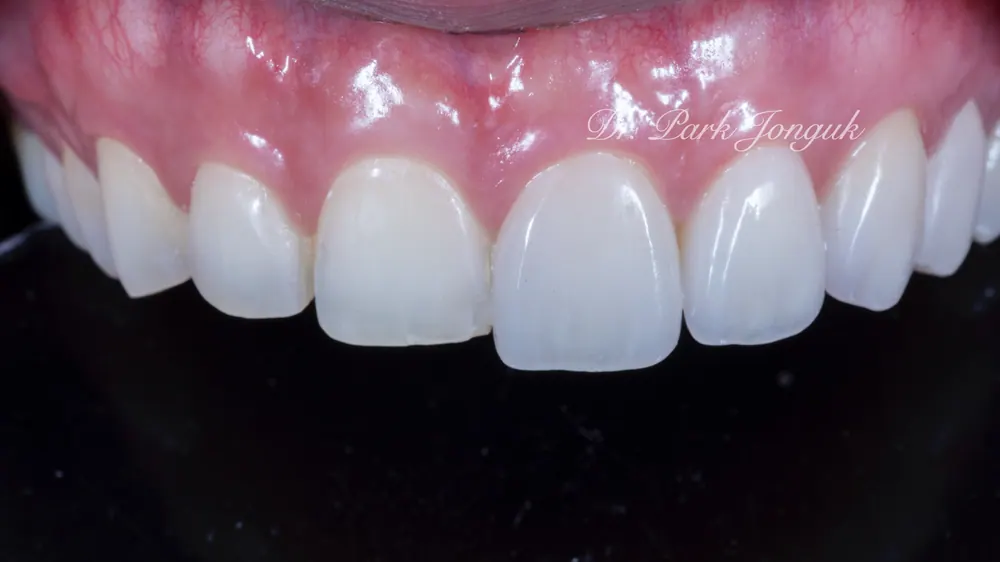
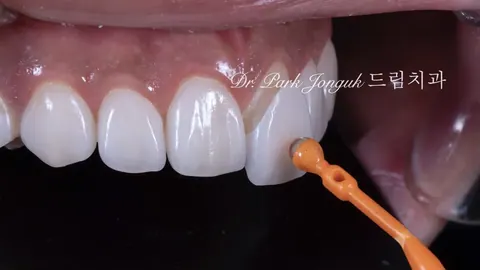
We place the veneer on temporarily like this.
With only half placed, we check the change compared to the natural tooth.
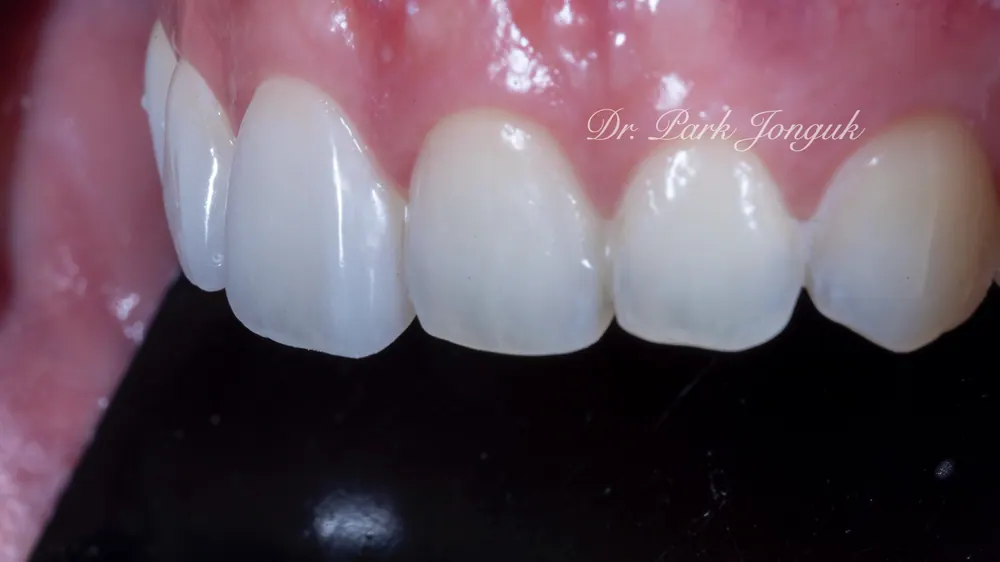
To resolve the inward tilt, the tooth is brought out a bit.
The tooth color is also made a bit brighter,
completing a beautiful smile.
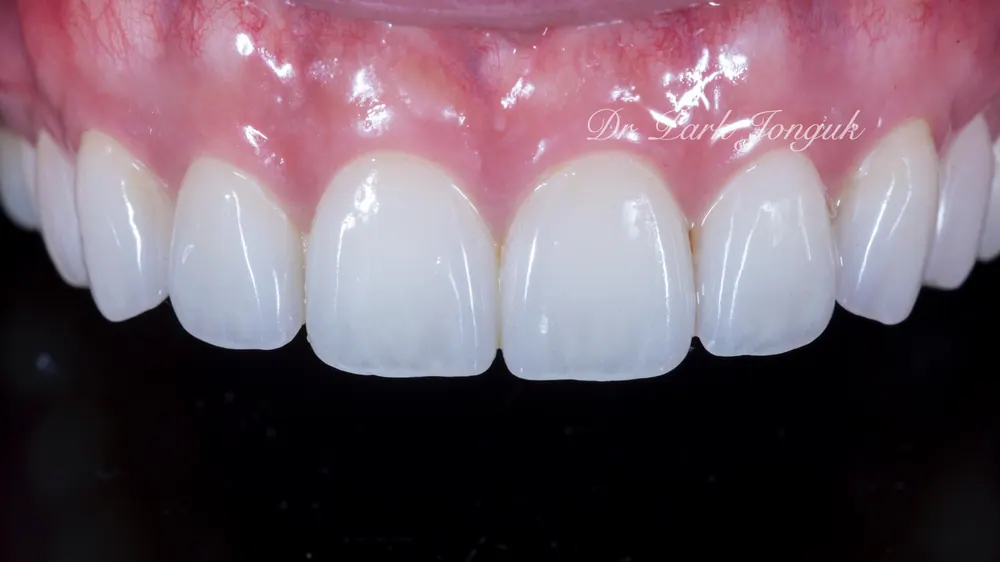
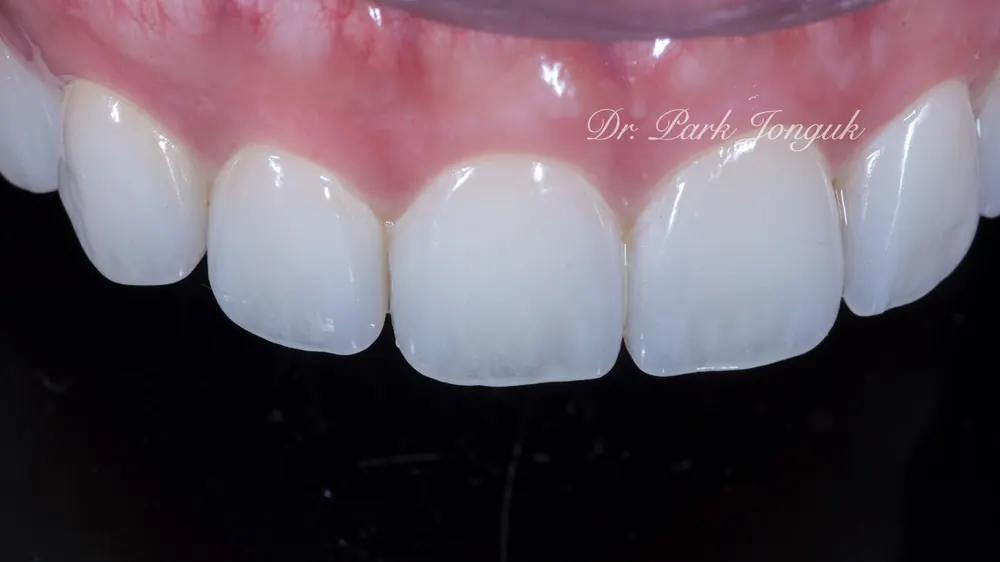
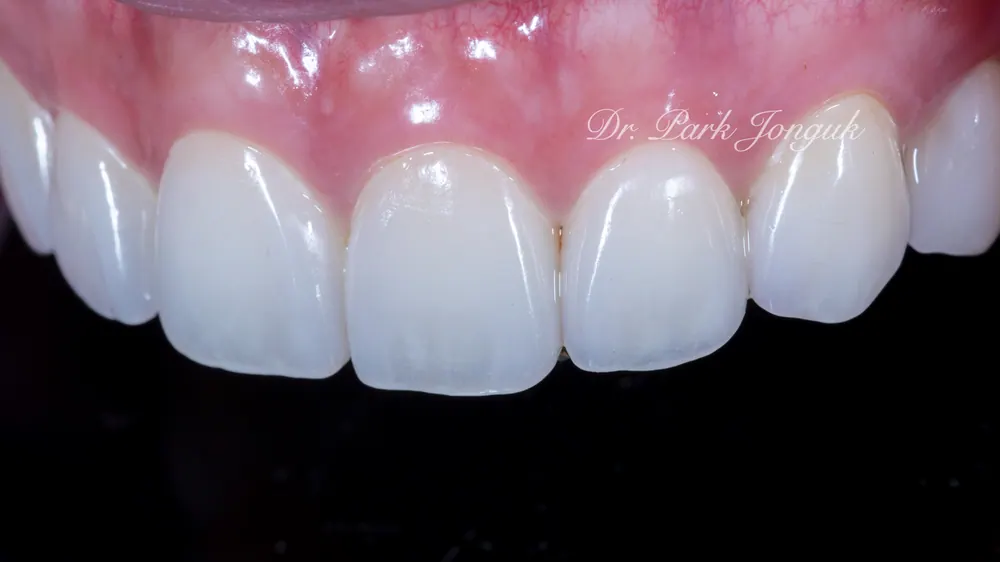
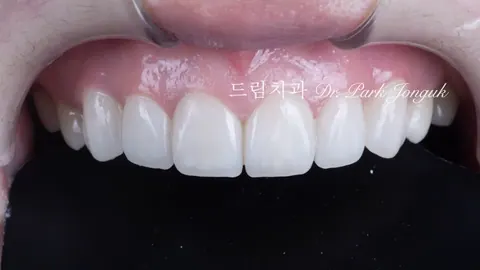
This is how the no-prep veneers for inward teeth were completed.
With ceramic this thin,
every characteristic of the natural tooth was captured.
The translucency and natural coloring of the tooth,
the three-dimensional depth and shape of a natural tooth —
a veneer that incorporates all of these elements
is something the one-day method simply cannot match.
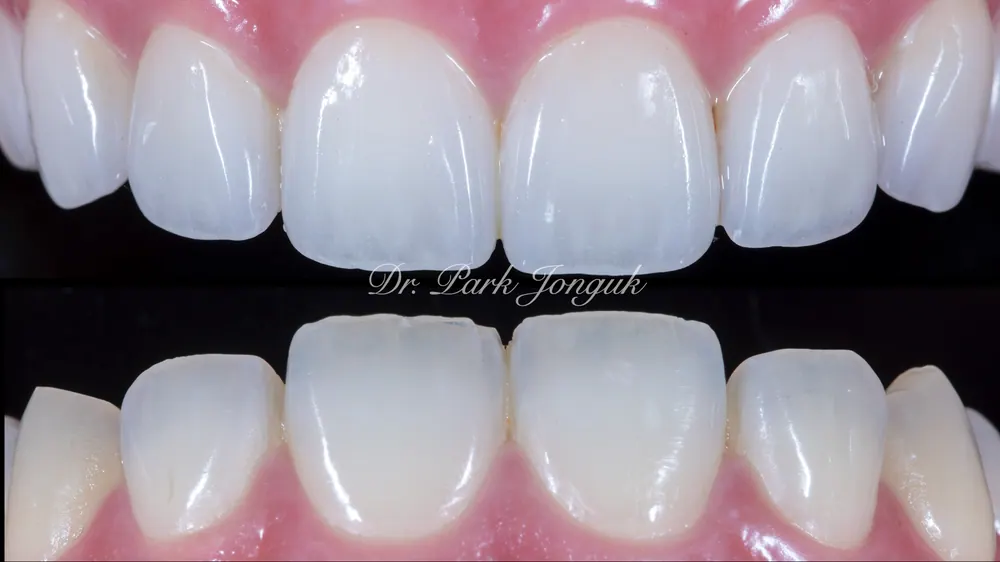
Since 2006, Dream Dental Clinic
This article is a clinical note written by Dr. Park Jonguk of Dream Dental Clinic, Gangnam; the original was published on his blog. The photographs shown are real cases he treated. Results vary with each patient’s condition, and every procedure carries the possibility of individual variation and side effects.
Quick Consult
Request a Callback
Leave your number and we will call you back during clinic hours.
Request Received
We will contact you during clinic hours. For urgent matters, please call +82-2-3448-0028.