
No-Prep and Micro-Prep Veneer Cases for Chipped Teeth
Hello. This is Park Jonguk, director of Dream Dental Clinic.
When a front tooth chips from a fall or a knock,
treatment is usually done with resin, veneers, or a crown.
It's already unfortunate that the tooth is chipped — if more reduction is needed on top of that,
the tooth would be such a waste.
For treating just the chipped area, resin is generally the best option.
That said, depending on the shape of the chip, it can come off fairly easily.
On top of that, resin discolors over time.
For people who love coffee or drink a lot of wine, the discoloration happens especially fast.
In a situation where the tooth is so badly chipped that root canal treatment is also needed,
an all-ceramic crown has to be used.
If the chipped tooth is a case where no-prep or micro-prep veneers are possible,
veneers can improve both the shape and color of the tooth,
so that will give the best result.
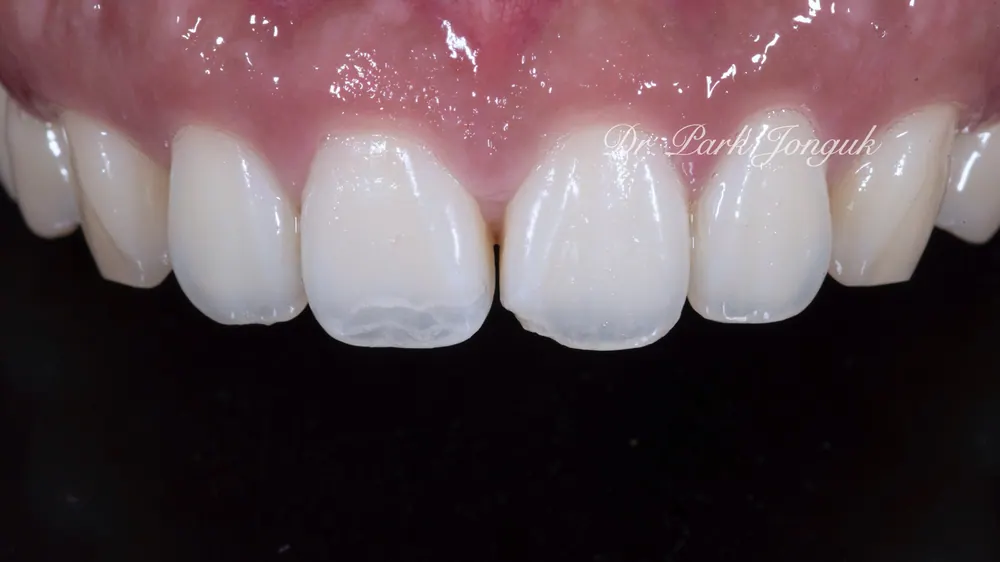
One front tooth was chipped and the other had a significant crack.
If another impact occurred, it could chip even more.
The gap between the front teeth was originally a bit wide to begin with.
In this situation, with the teeth positioned slightly inward
and on the smaller side,
either no-prep or a partial, minimal reduction depending on the tooth
made no-prep/micro-prep veneers possible.
For a case requiring a lot of tooth reduction,
treating with resin might actually have been the better option.
That said, the tooth with the significant crack did look a bit precarious.
Since the veneer's strong bonding would help hold the cracked tooth together,
micro-prep veneers were a great help in this situation.
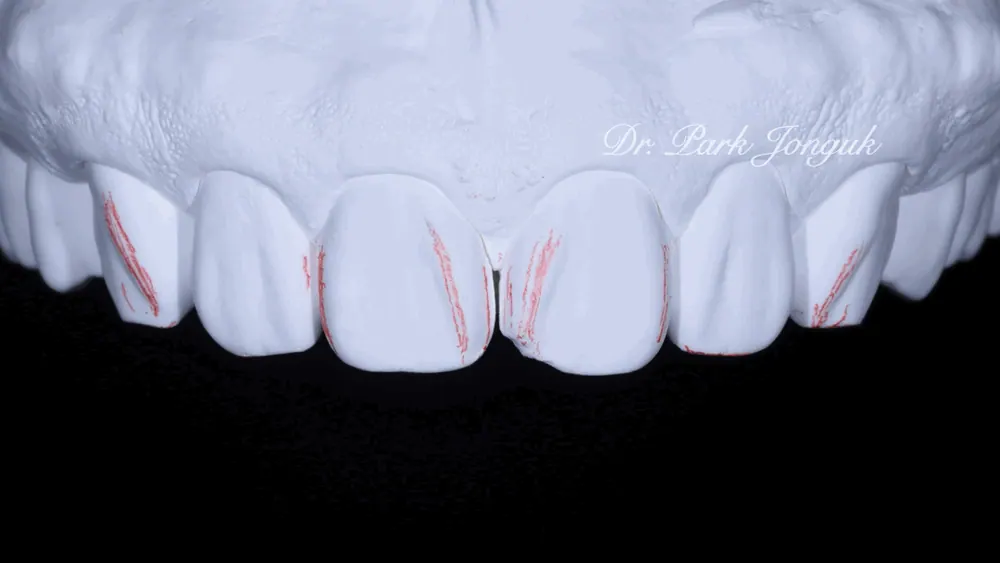
We simulate in advance where and how much of the tooth to reduce.
The initial plan was to only minimally reduce the protruding parts of the front teeth and canines,
and to smooth out the uneven area between the front teeth.
Of course, exactly where and how much to reduce is discussed in detail with the patient.
In most cases, though, we end up reducing less than planned.
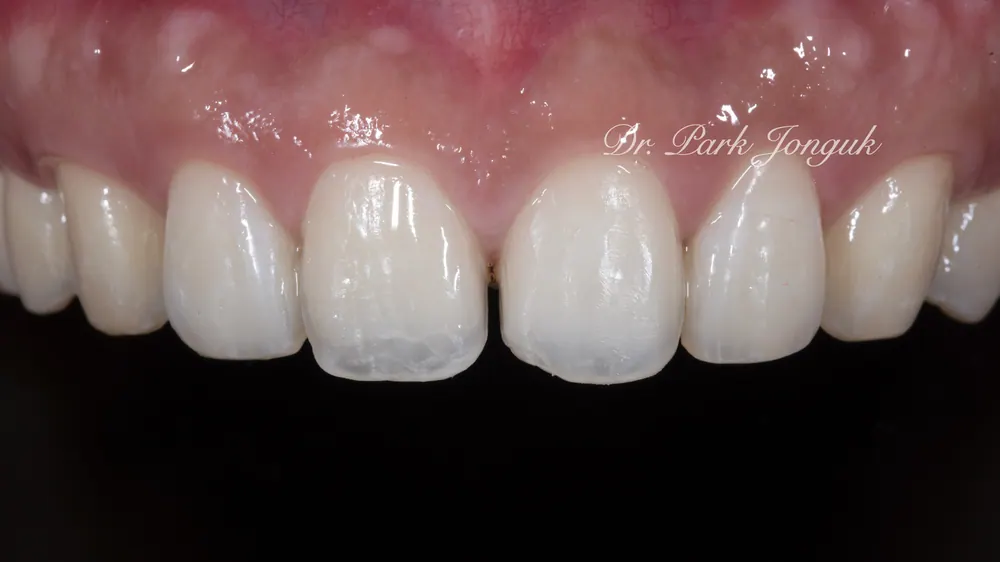
this is the state after reduction.
If this photo had been used as the very first photo,
you probably wouldn't even notice any reduction had been done.
The amount of reduction was so minimal that a temporary tooth wasn't even needed.
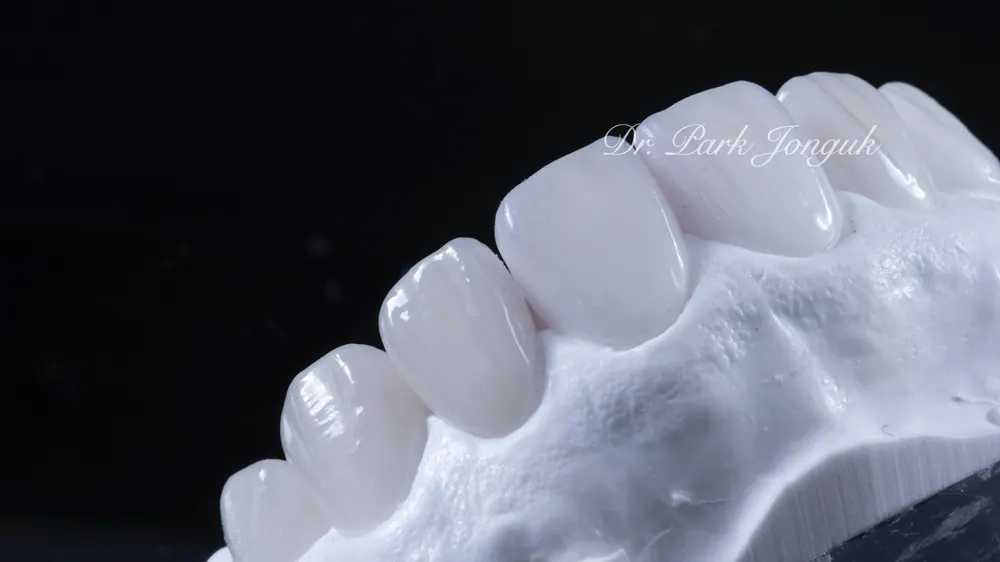
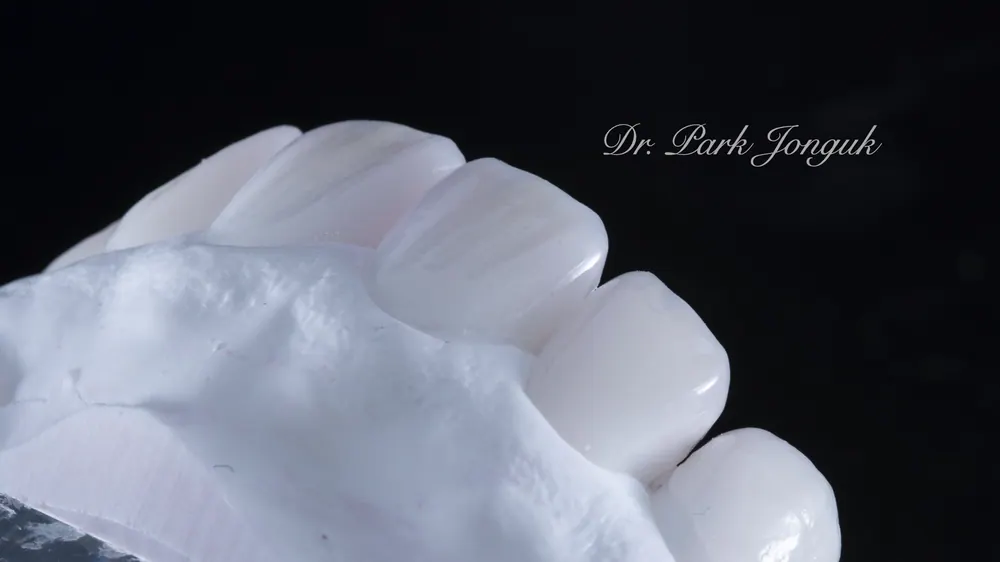
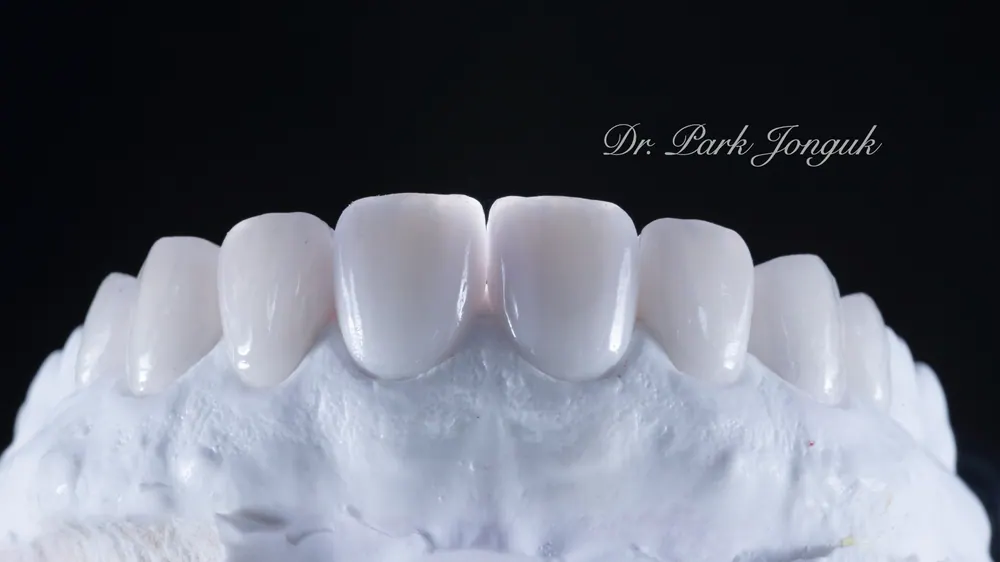
Fabrication with ceramic begins.
There are two ways to fabricate veneers.
One is the one-day method, made by computer.
The other is the handcrafted method.
Many dental clinics have recently been adopting the one-day method, or CAD/CAM, quite a lot.
Because computers and the machining process they enable have become very precise,
this method is used widely.
The problem is that the aesthetic side is still lacking in many cases.
The results can end up looking rather artificial and stiff, one might say.
The handcrafted method takes a long time,
but it produces far superior aesthetic results.
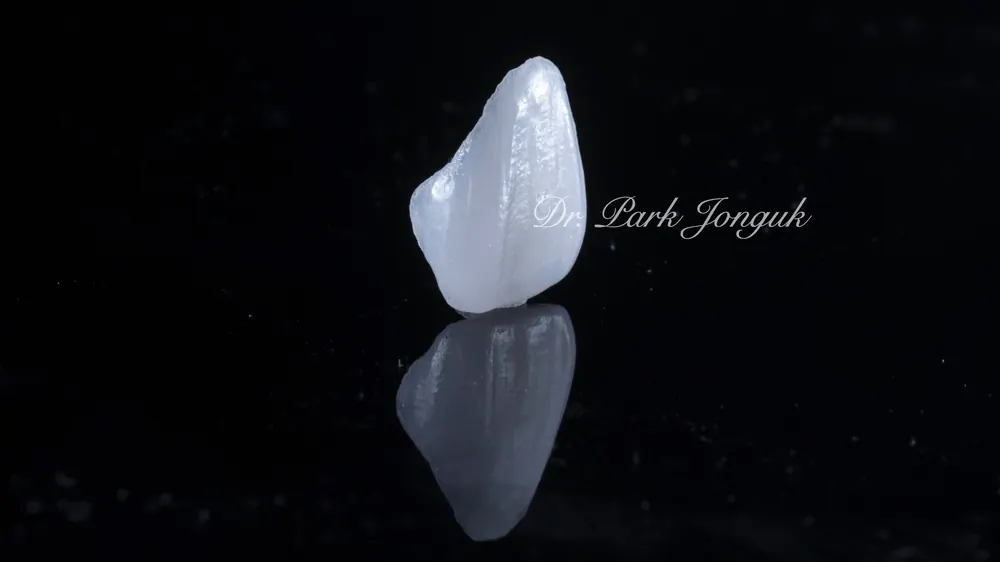
In particular, in terms of thickness,
it can be made much thinner than machining by computer,
so for no-prep or micro-prep veneers like this,
handcrafting can be considered essential.
Please refer to the link below for the detailed differences between the two methods.
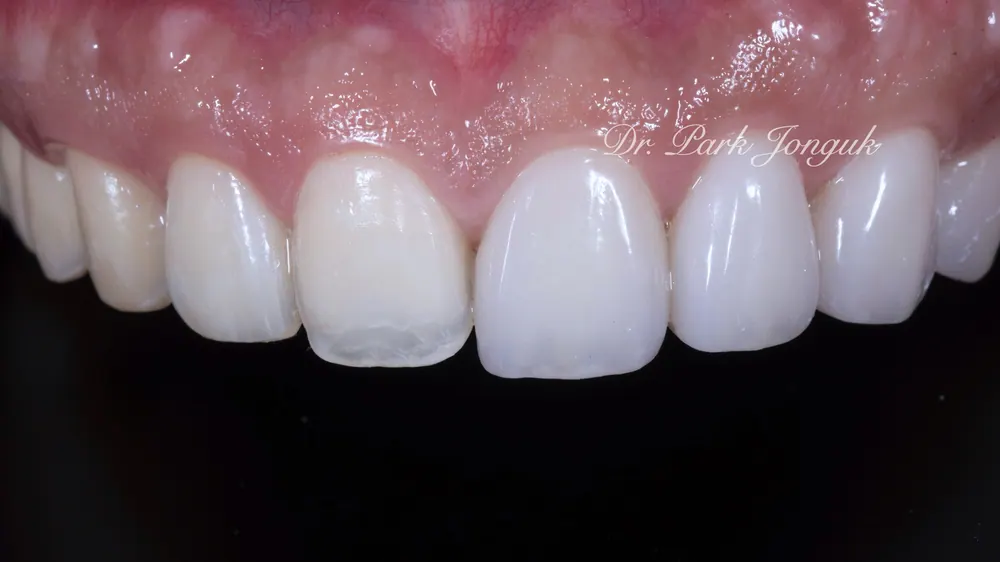
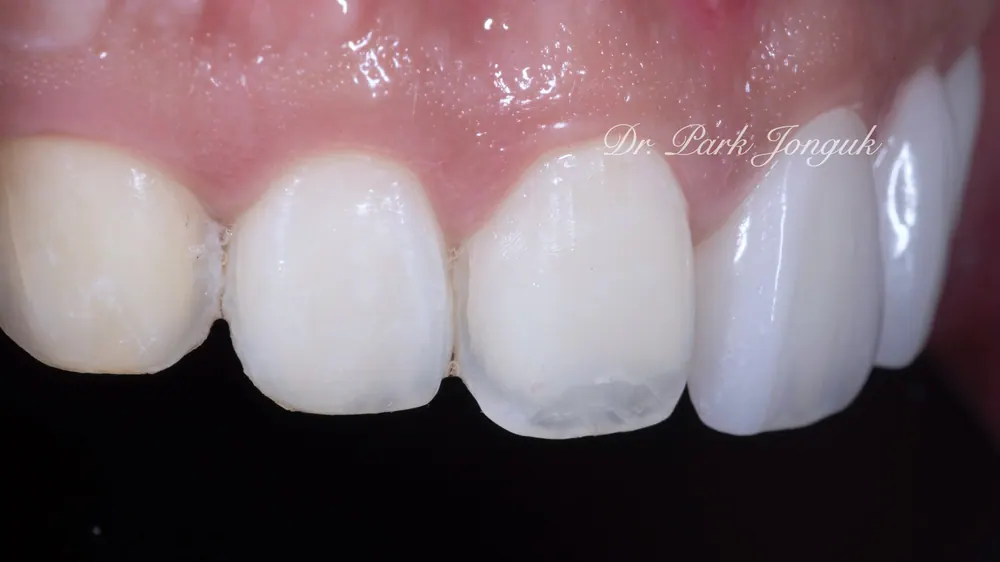
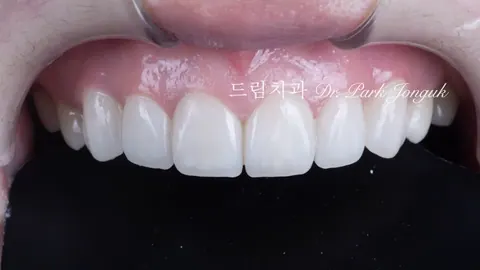
The result was made brighter and more beautiful than the original teeth.
What matters especially is that even the sides of the tooth need to be well covered.
As in the ceramic photo above, you can see the extremely thin ceramic
wrapping around the tooth well.
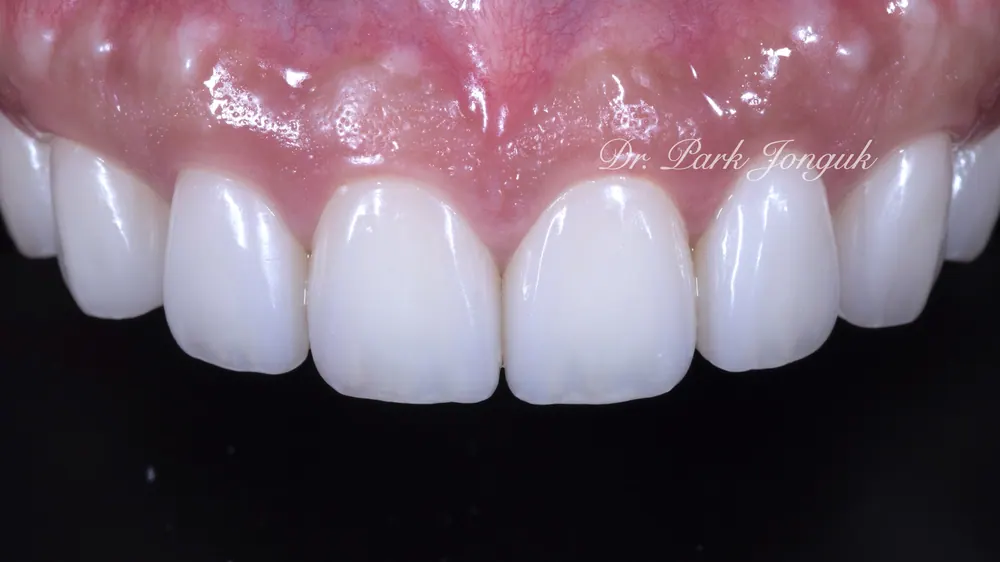
The veneer looks like a natural tooth even to a dentist's eye,
yet it was made bright and beautiful.
Barely any reduction, yet a natural and beautiful veneer — that is precisely the defining trait of Dream Dental Clinic.
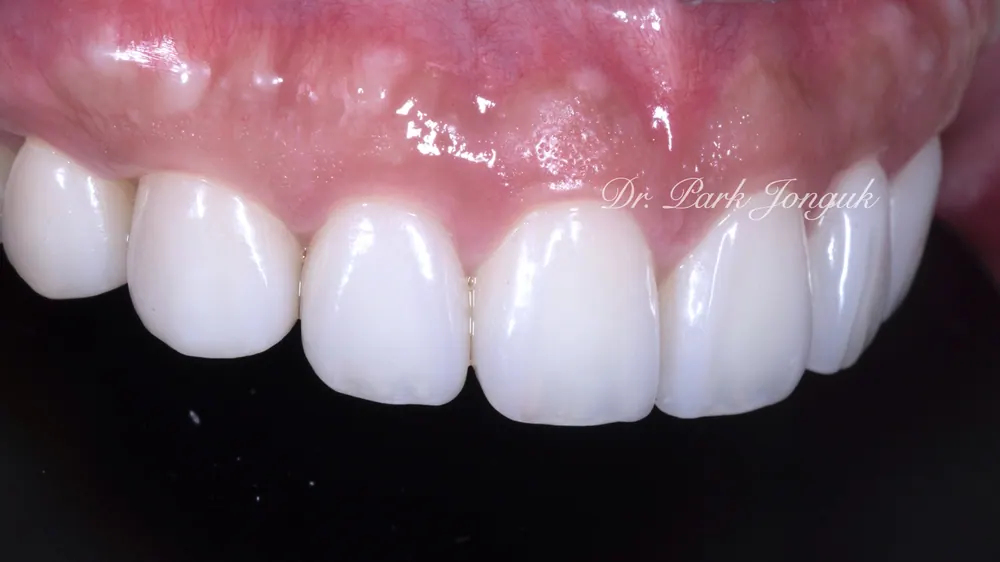
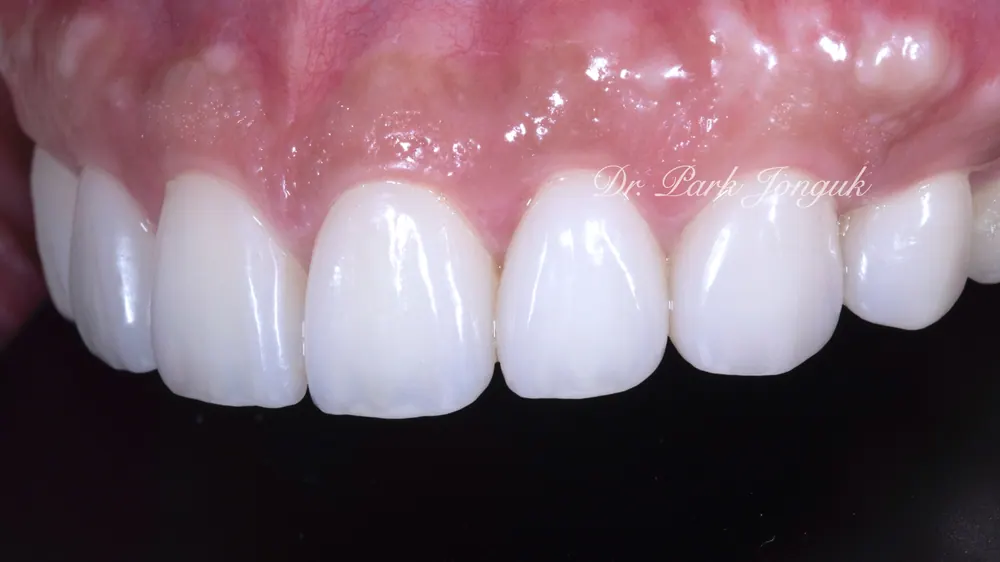
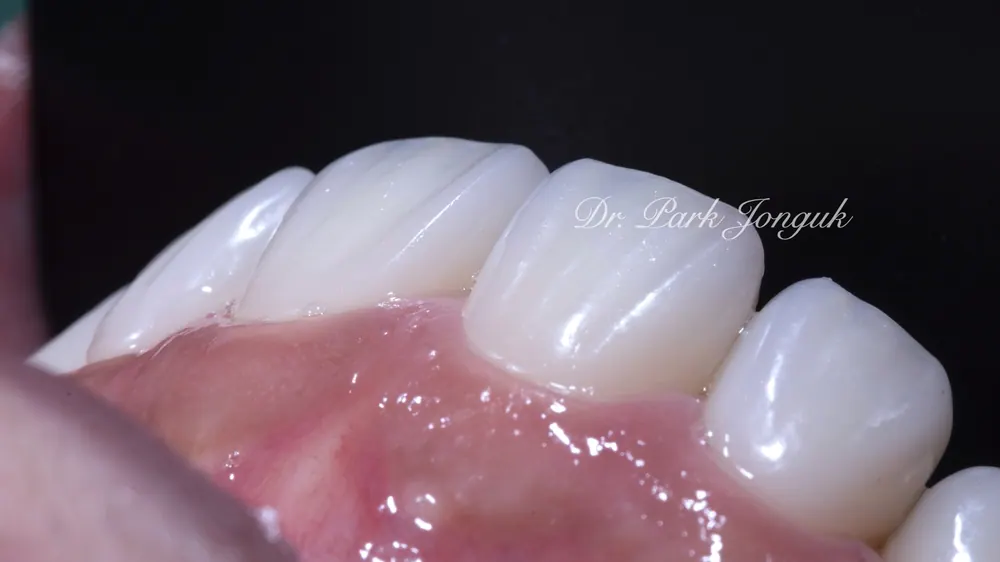
In particular, the varied texture expressed on the tooth surface
is crafted with such precision
that a computer still cannot reproduce or imitate it.
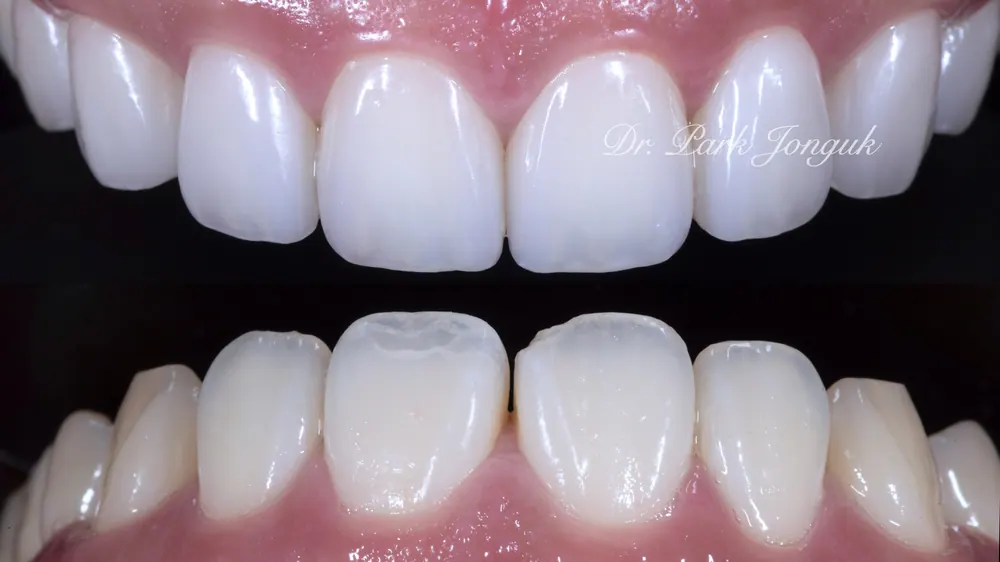
With no-prep or micro-prep veneers,
achieving a veneer that is both natural and beautiful
reflects Dream Dental Clinic's long experience and know-how — something that's hard to fully convey through photos alone.
Since 2006, Dream Dental Clinic
This article is a clinical note written by Dr. Park Jonguk of Dream Dental Clinic, Gangnam; the original was published on his blog. The photographs shown are real cases he treated. Results vary with each patient’s condition, and every procedure carries the possibility of individual variation and side effects.
Quick Consult
Request a Callback
Leave your number and we will call you back during clinic hours.
Request Received
We will contact you during clinic hours. For urgent matters, please call +82-2-3448-0028.