
A Case of Anterior Laminate Veneer Retreatment
Hello. I am Park Jonguk, DDS, MS, director of Dream Dental Clinic.
Laminate veneers are clearly a treatment intended to make teeth look more attractive.
Chewing function is, of course, important,
but more importantly, the treatment should provide substantial esthetic improvement.
At the same time, it should not compromise the health of the teeth or gums.
Compared with other dental treatments, these aspects require particular attention.
For this reason, a diagnostic process, which is less common in other dental treatments, is essential.
This is the process of planning in advance how treatment will be performed.
At this stage, we determine which parts of each tooth will be reduced and by how much,
what the result will look like, how the provisional teeth will be made, and what role they will serve.
All of these decisions are made before treatment begins.
Please refer to the link below for details of the process.
The problem is that less experienced dental clinics
or clinics that produce laminate veneers like a factory
do not carry out this process in such detail.
As a result, treatment proceeds without predicting the outcome,
and problems sometimes arise when the final result is revealed.
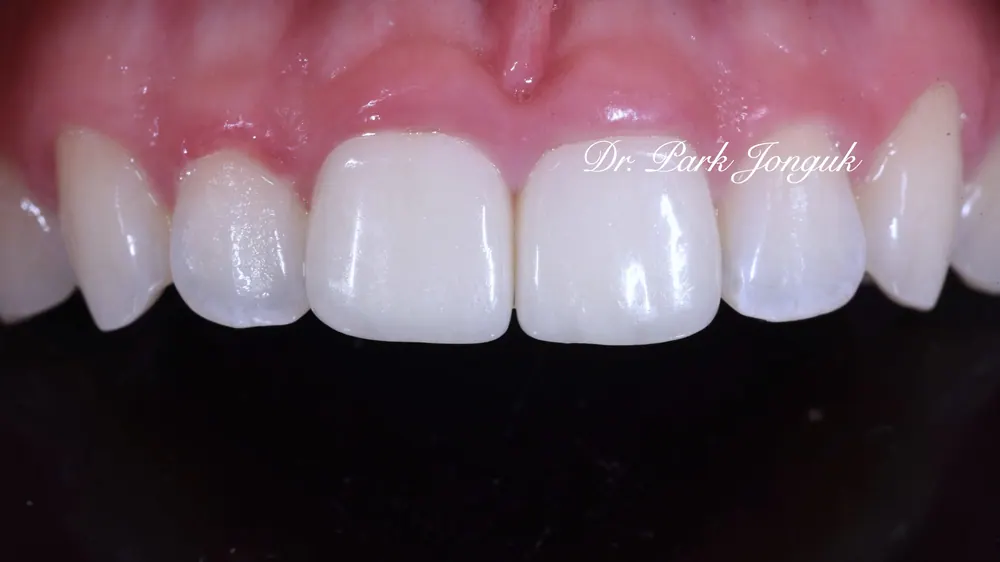
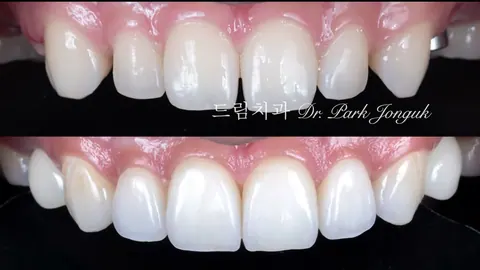
The patient had received 2 laminate veneers using a one-day technique.
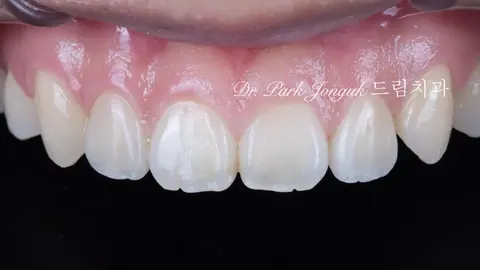
At a glance, the two front teeth clearly look very unnatural.
The teeth have an extremely square shape.
Teeth have average width-to-height proportions
and a normal gingival form,
but neither had been considered at all.
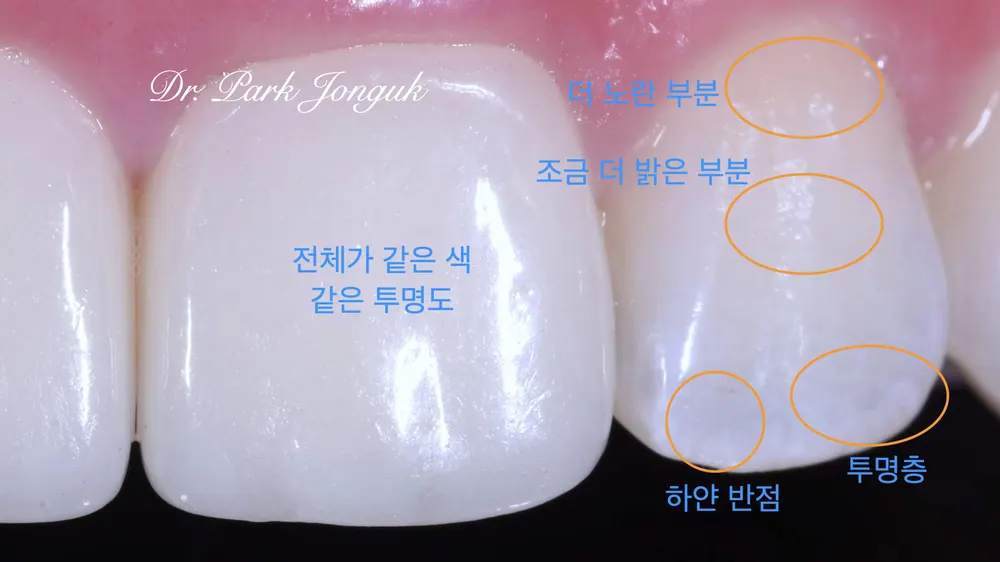
Laminate veneers made with a one-day technique
have shapes, colors, and translucency that differ greatly from natural teeth.
Natural teeth are not the same color throughout.
They have areas that are more yellow and areas that are brighter,
and the incisal edges also have translucent areas that can be considered a hallmark of young teeth.
White spots may also appear, as they do on the teeth above.
If laminate veneers are made while ignoring all of these characteristics of natural teeth,
the result, as shown in the photograph above,
can look very different from natural teeth.
We developed a laminate veneer retreatment plan to improve all of these aspects.
The gingival form needed to look more natural,
and the teeth needed the three-dimensional appearance of natural teeth.
We decided to readjust the width-to-height proportions of the teeth so they would be closer to the average.
In addition, because only the 2 treated teeth appeared somewhat protrusive and the tooth alignment was poor,
we planned to improve those issues as well.
The existing laminate veneers first needed to be removed for retreatment.
Teeth are damaged quite often during laminate veneer retreatment.
We therefore remove the veneers with a method that minimizes damage to the teeth,
namely laser-assisted laminate veneer removal.
Please refer to the link below for details.
The laminate veneers were removed through this process.
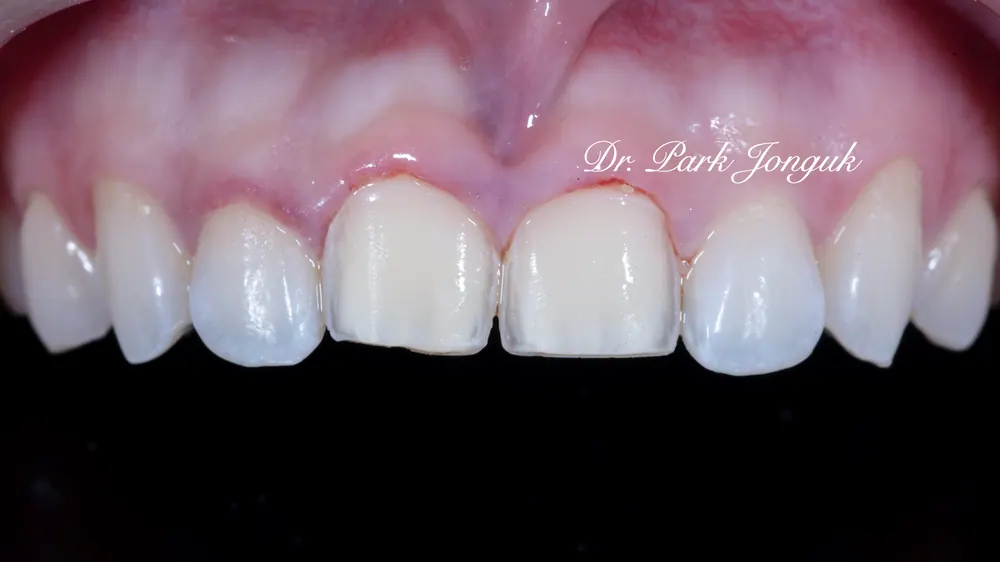
At first glance, the amount of reduction may look somewhat extensive.
However, this is considered a textbook amount of tooth reduction for laminate veneer retreatment.
I use much less tooth reduction than this for the laminate veneers I provide,
but I do not think the amount shown in the photograph above can reasonably be considered extensive.
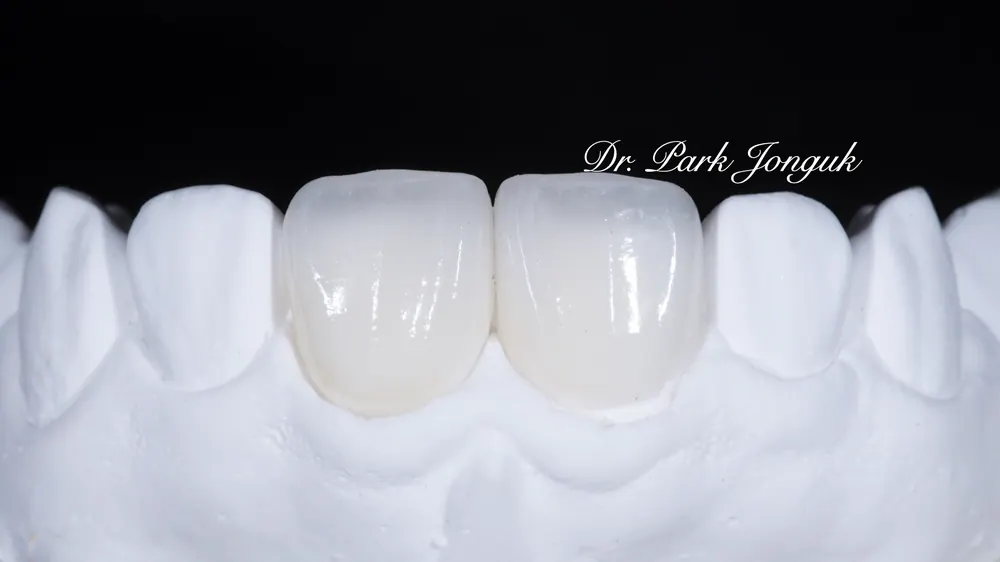
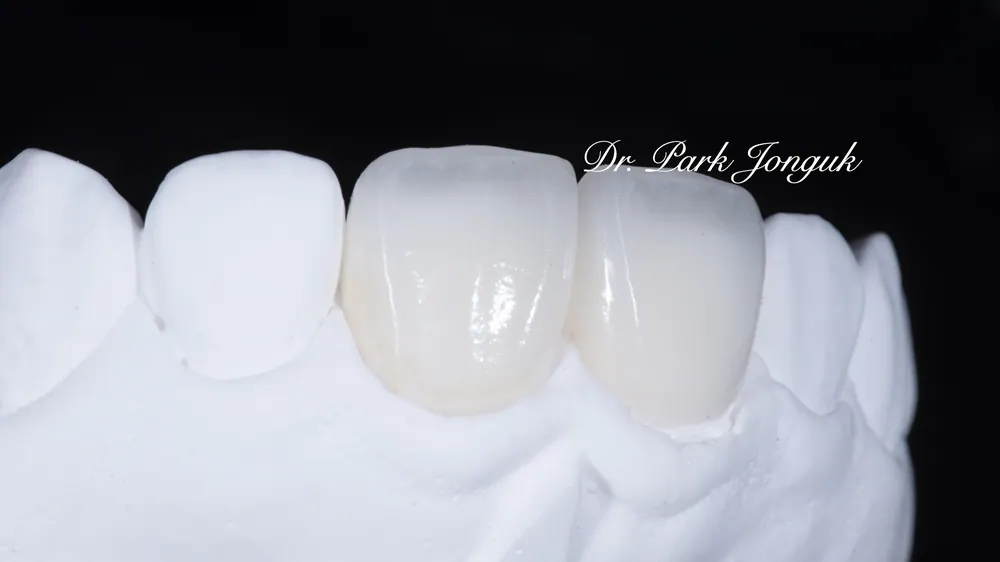
We then begin fabricating the laminate veneers.
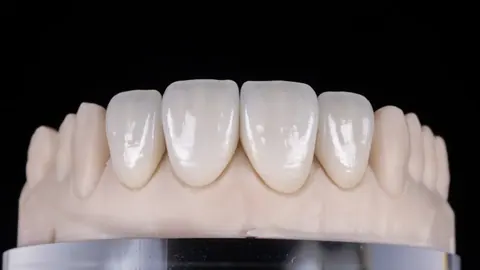
This case uses feldspathic laminate veneers.
This is the method that can produce a result most similar to natural teeth,
but the fabrication process is so demanding that not many clinics perform laminate veneer retreatment this way.
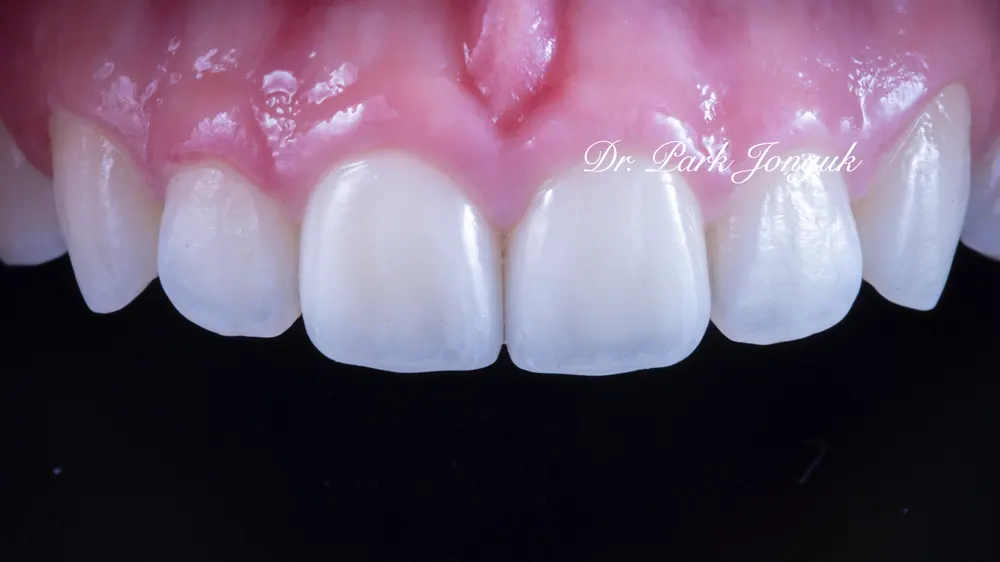
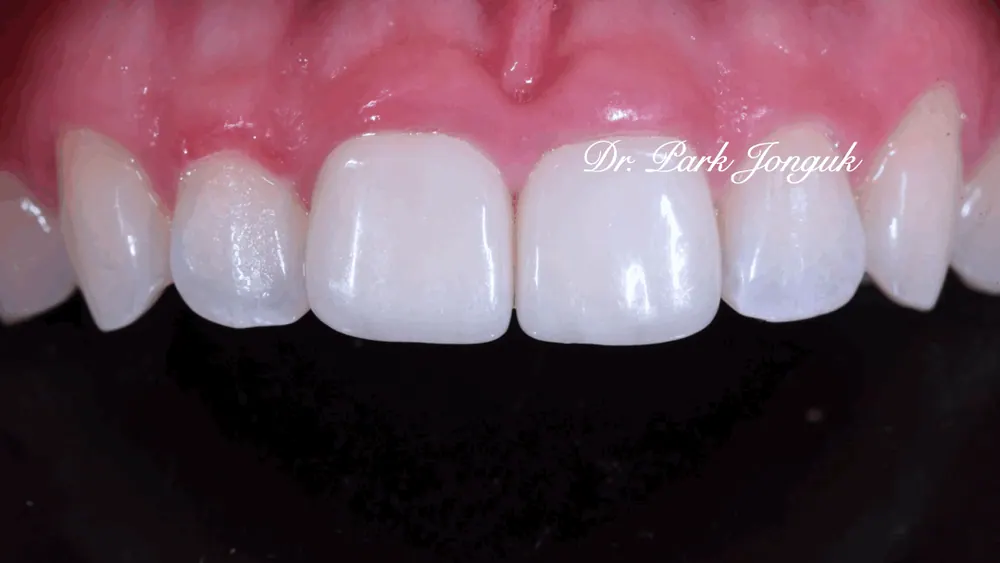
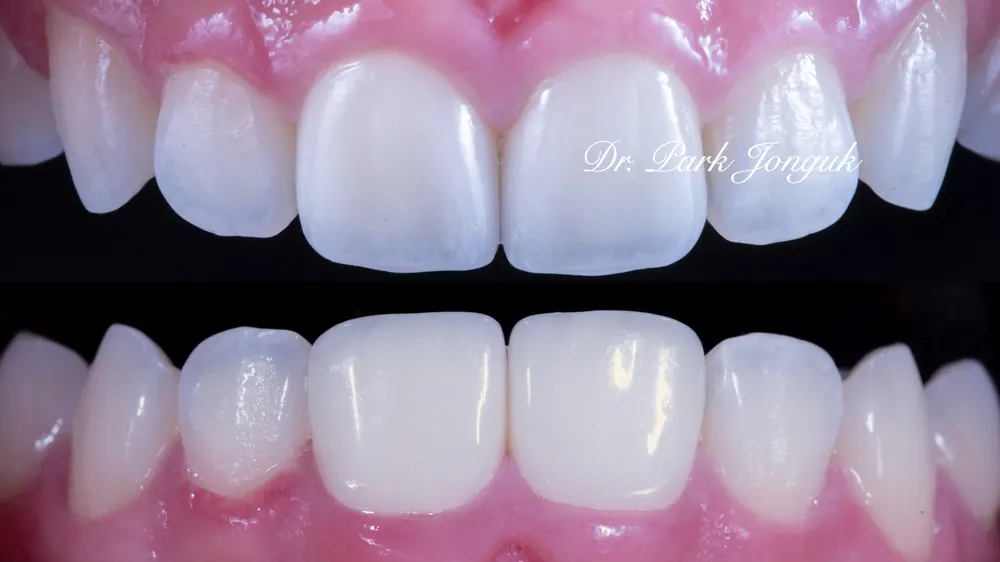
The two front teeth are laminate veneers, and the adjacent teeth are natural.
When compared with the pretreatment condition,
it is clear that distinguishing the natural teeth from the laminate veneers is difficult.
Even a dentist would have difficulty telling
whether these teeth are laminate veneers or natural teeth without using a dental mirror to view the inner surfaces.
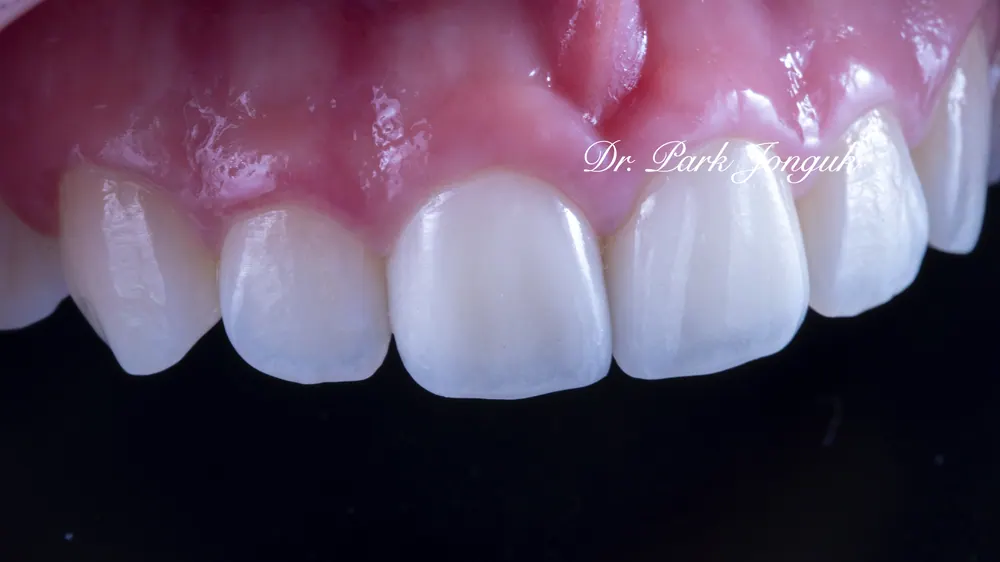
The gingival line was also improved to look natural,
and the restorations blend well with the gums, with no problems affecting gum health.
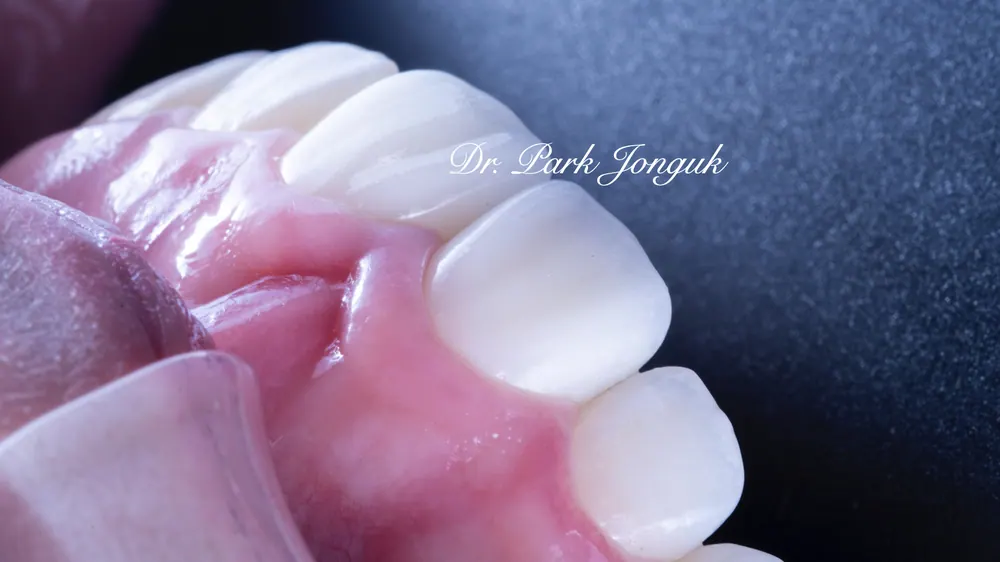
The surface texture of the teeth likewise
reproduces the appearance of natural teeth.
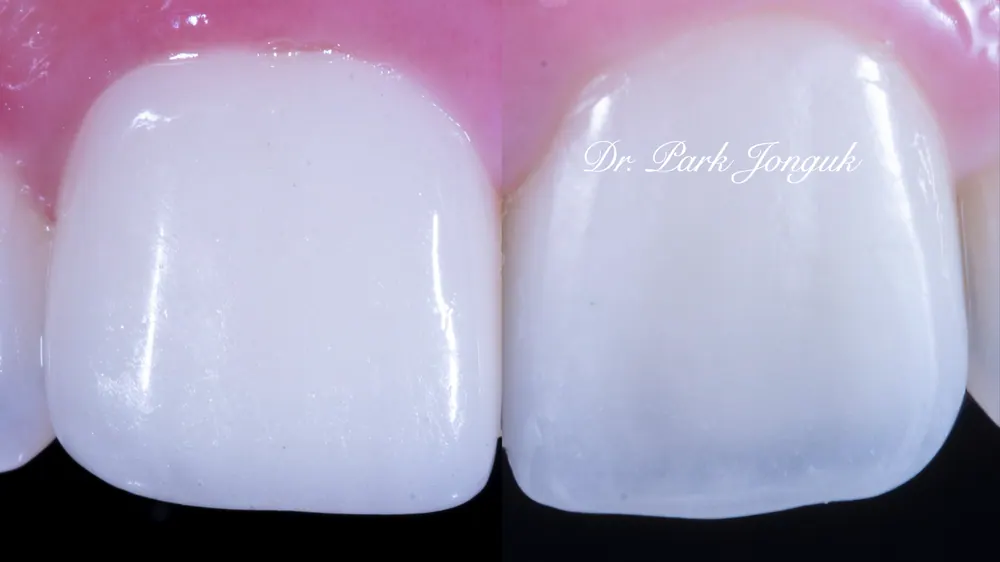
If you compare the existing laminate veneer on the left
with the new laminate veneer on the right,
the difference in expressive detail shows why laminate veneers from Dream Dental Clinic are at a different level.
Since 2006, Dream Dental Clinic
This article is a clinical note written by Dr. Park Jonguk of Dream Dental Clinic, Gangnam; the original was published on his blog. The photographs shown are real cases he treated. Results vary with each patient’s condition, and every procedure carries the possibility of individual variation and side effects.
Quick Consult
Request a Callback
Leave your number and we will call you back during clinic hours.
Request Received
We will contact you during clinic hours. For urgent matters, please call +82-2-3448-0028.