
No-Prep Veneer Treatment for Black Triangles
Hello, this is Park Jonguk, director of Dream Dental Clinic.
In my posts I talk a lot about no-prep veneers.
It would be wonderful if every case could be done as a no-prep veneer,
but most cases do require some reduction,
and cases where no-prep is possible are actually quite limited.
Three conditions matter a great deal:
the teeth need to be small, the alignment needs to be good, and the teeth must not be protruding.
Black triangles are
a phenomenon where, for various reasons, the gum between the front teeth recedes,
so that area appears dark and triangle-shaped.
This is often seen in people who have had orthodontic treatment,
people with unhealthy gums,
or it can appear due to a congenital issue with tooth shape.
Treating black triangles
is quite tricky in most cases,
and the results tend not to last very long.
The simplest approach is to treat it with resin,
but this discolors after about 2-3 years,
so it has the drawback of needing repeated treatment.
To treat it with veneers,
in most cases a fairly large amount of tooth needs to be reduced,
though occasionally no-prep is possible.
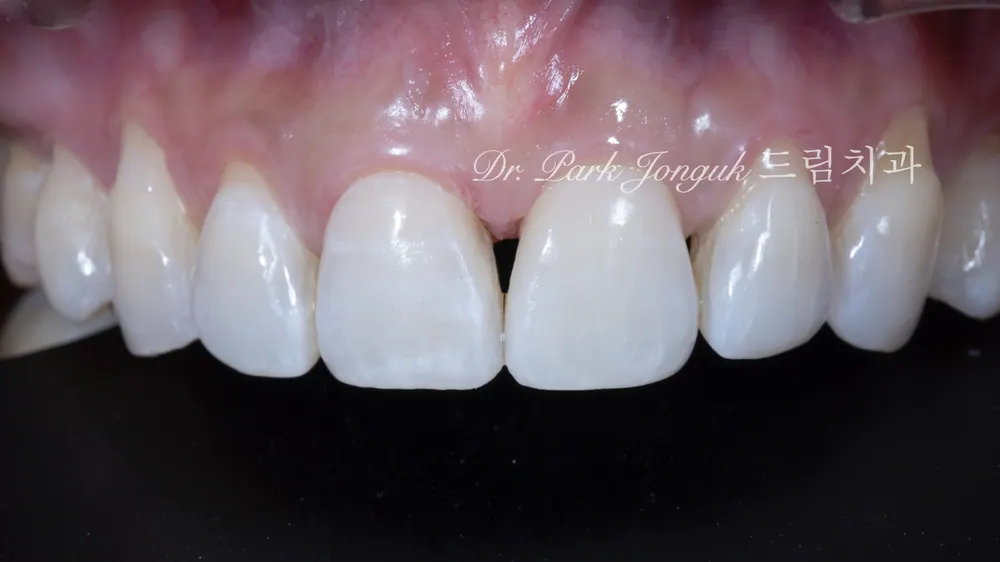
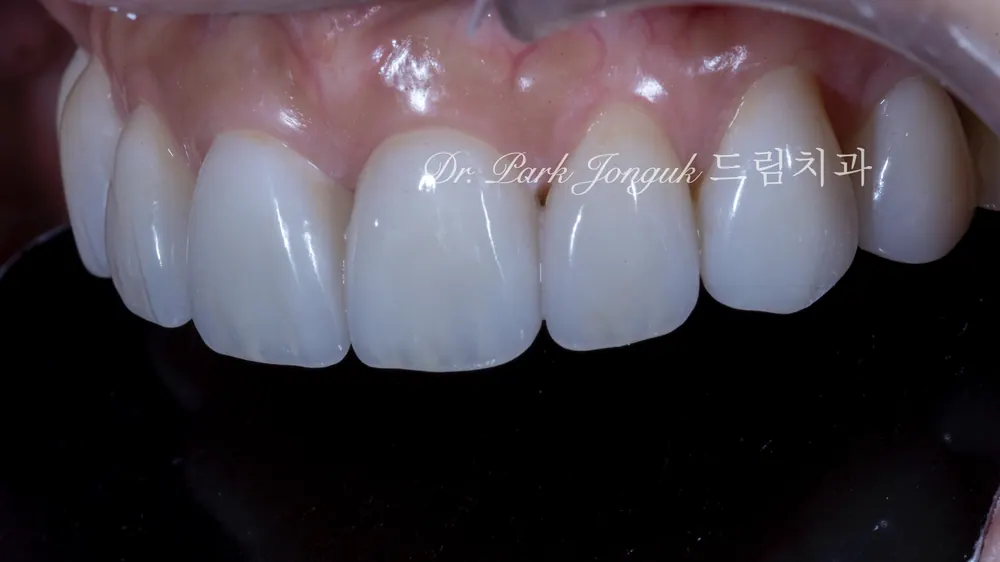
This is the state with black triangles present.
Given the three conditions for no-prep veneers I mentioned earlier —
namely, small teeth, good alignment, and no protrusion —
we decided to proceed with no-prep veneers.
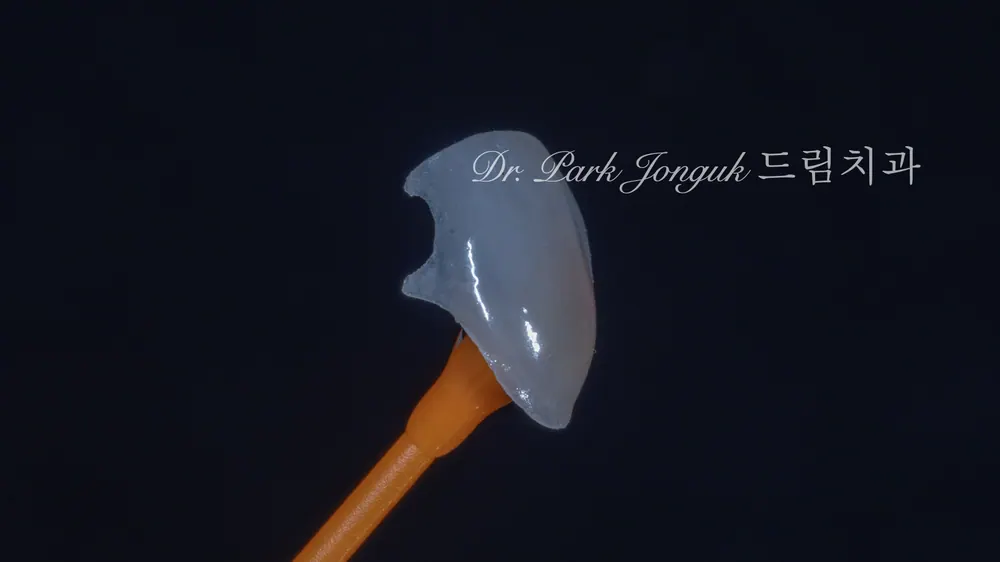
For a case like this to be possible without any reduction,
highly advanced veneer fabrication skill is required.
As in the photo above, an extremely thin piece of ceramic
has to be fitted into the black triangle area,
and since the thickness is around 0.1mm,
this becomes a very delicate veneer treatment that can only be done by hand.
The one-day method, meaning the process designed and fabricated by computer,
cannot replicate a veneer of this level.
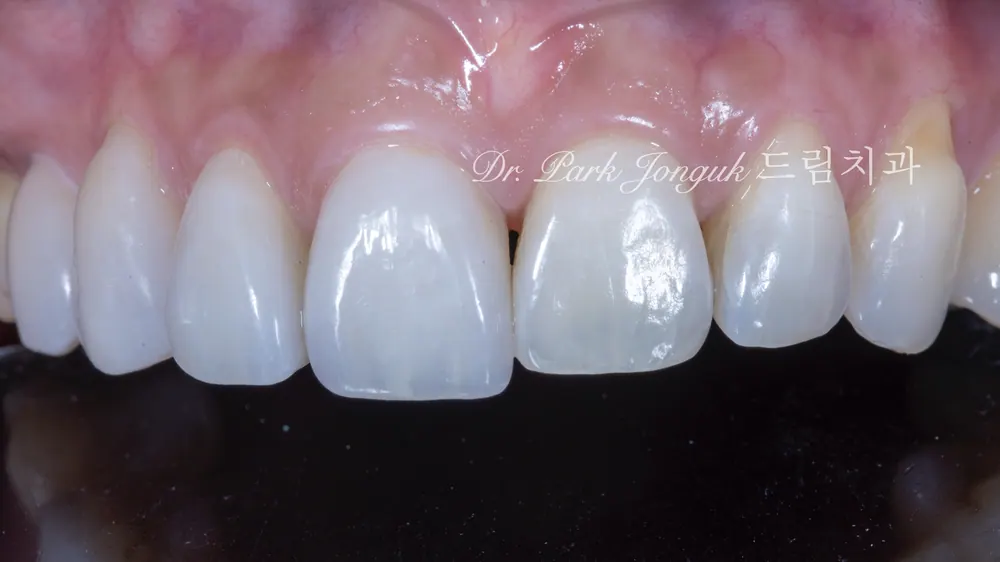
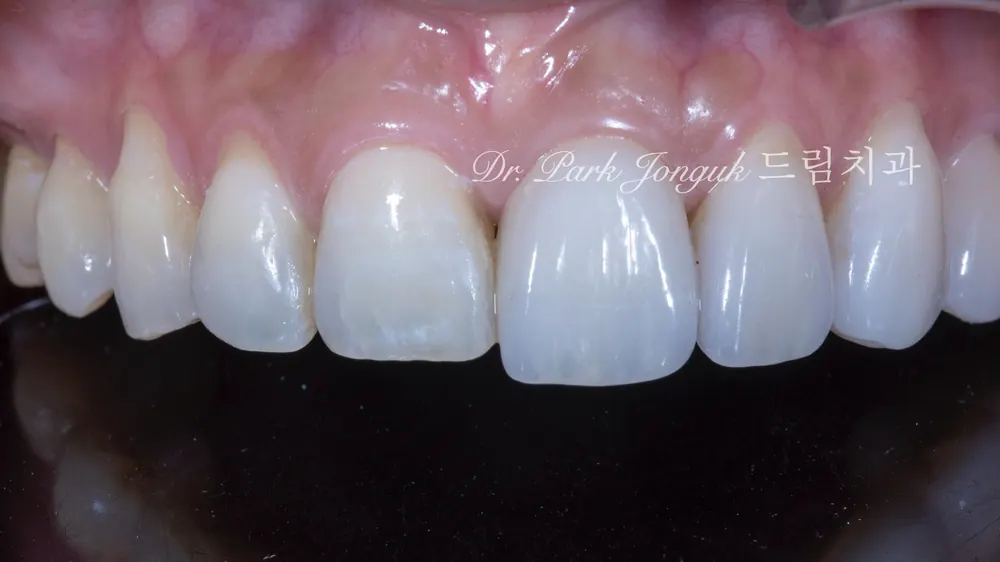
Only when ceramic this extremely thin
fits snugly
into the black triangle area
can the treatment be truly effective.
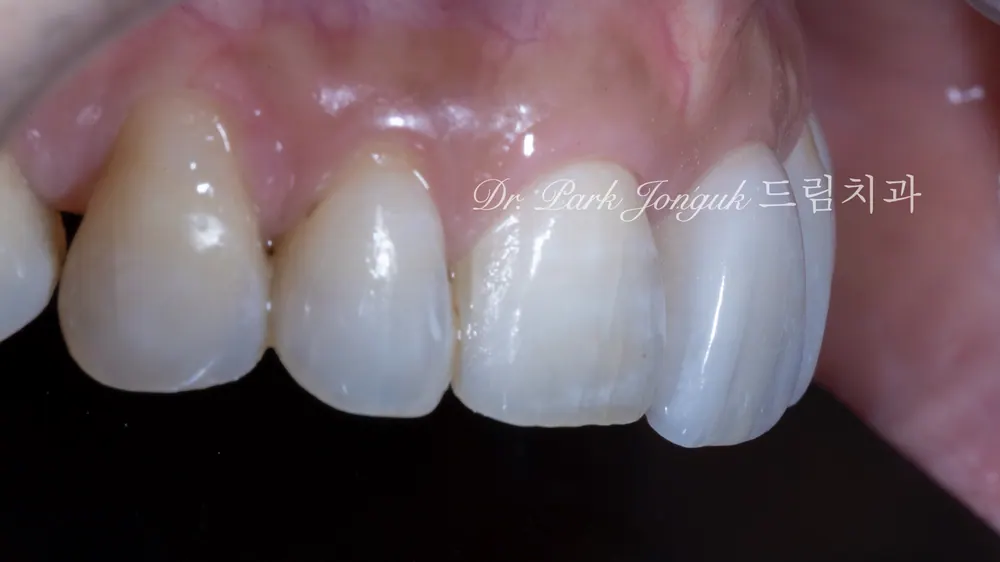
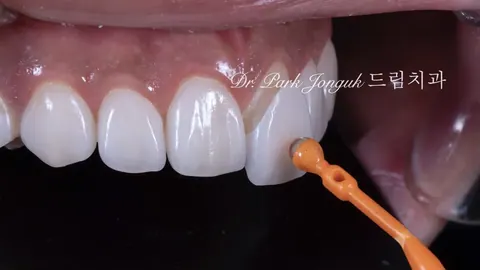
Even viewed from the side like this,
it needs to wrap around the tooth well.
Because both the color and shape of the tooth can be improved at the same time,
the result comes out quite well.
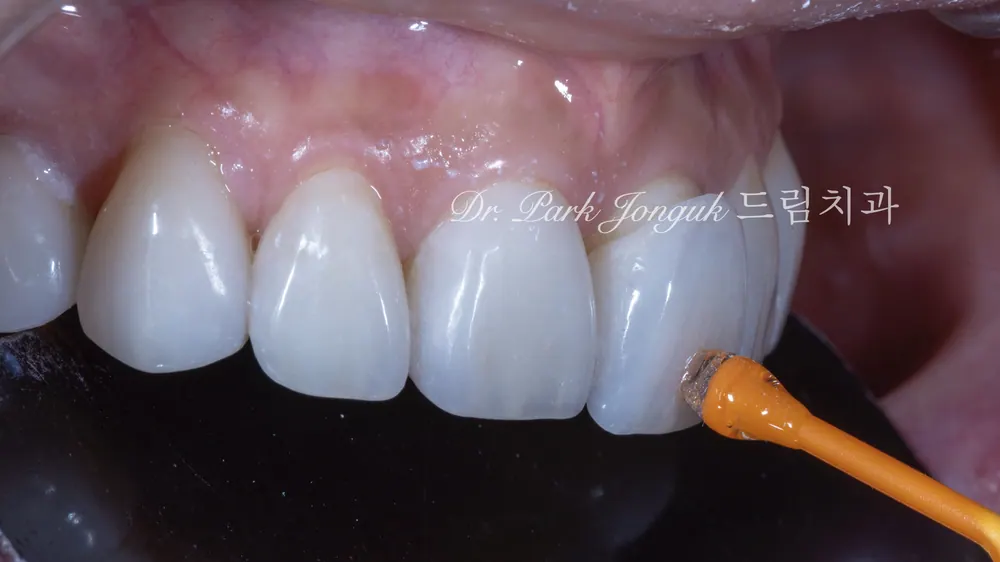
Before bonding the veneer in place,
we check once more.
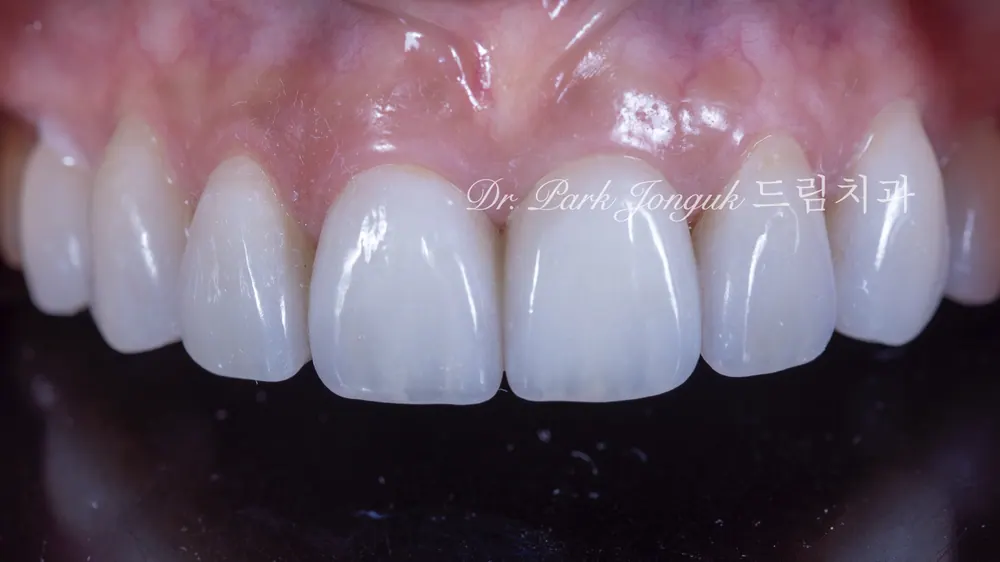
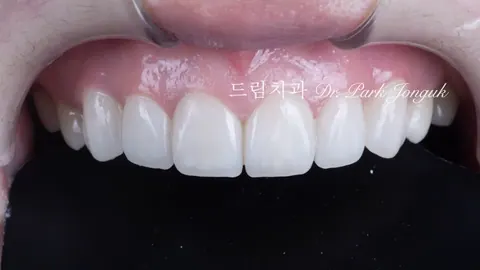
The treatment has been completed.
No-prep veneers are, in most cases,
made with extremely thin ceramic.
But even with that thin ceramic,
it is very important to express as much of the natural tooth's variety as possible.
The translucency at the edge of the tooth,
the three-dimensional shape of the tooth, and its range of colors — all of it was expressed.
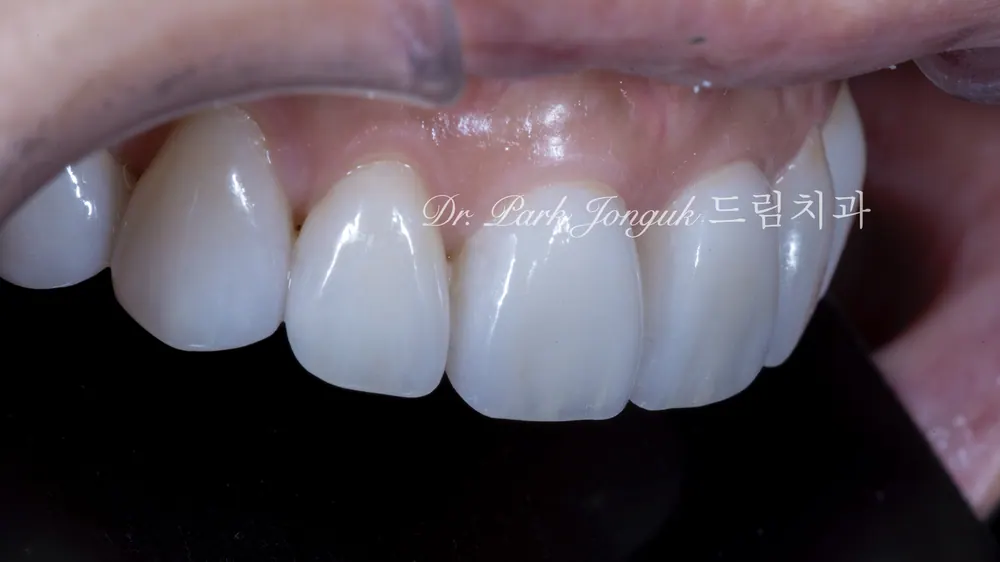
Natural beauty.
Since 2006, Dream Dental Clinic
This article is a clinical note written by Dr. Park Jonguk of Dream Dental Clinic, Gangnam; the original was published on his blog. The photographs shown are real cases he treated. Results vary with each patient’s condition, and every procedure carries the possibility of individual variation and side effects.
Quick Consult
Request a Callback
Leave your number and we will call you back during clinic hours.
Request Received
We will contact you during clinic hours. For urgent matters, please call +82-2-3448-0028.