
No-Prep Veneers Aimed at the Best Possible Esthetic Result
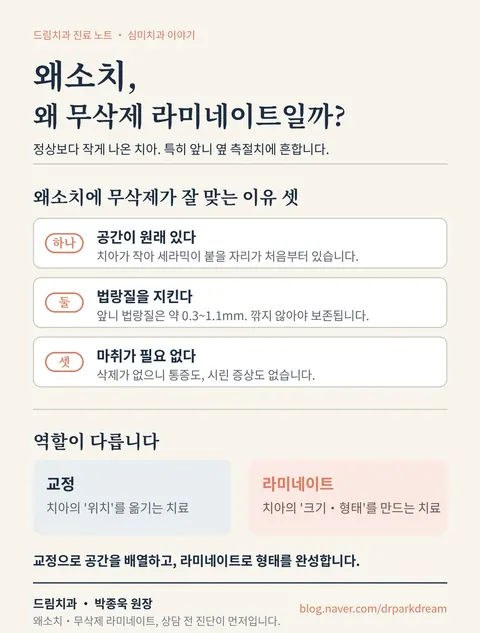
Most of the side effects that appear after veneer treatment start with the reduction of the tooth.
The less the tooth is reduced, the fewer the side effects.
That's why so many people considering veneer treatment dream of no-prep veneers.
But not every case can be done as a no-prep veneer.
A few conditions need to be met to treat a tooth without touching it at all.
1. The teeth must be small.
2. The alignment must be good.
3. The teeth must not protrude.
As an additional condition on top of these,
4. Spacing between the teeth
there are three essential conditions and one supplementary condition.
If you're considering veneers because your teeth are too large, or to improve alignment, or to correct protrusion,
cases like that simply aren't possible without any reduction.
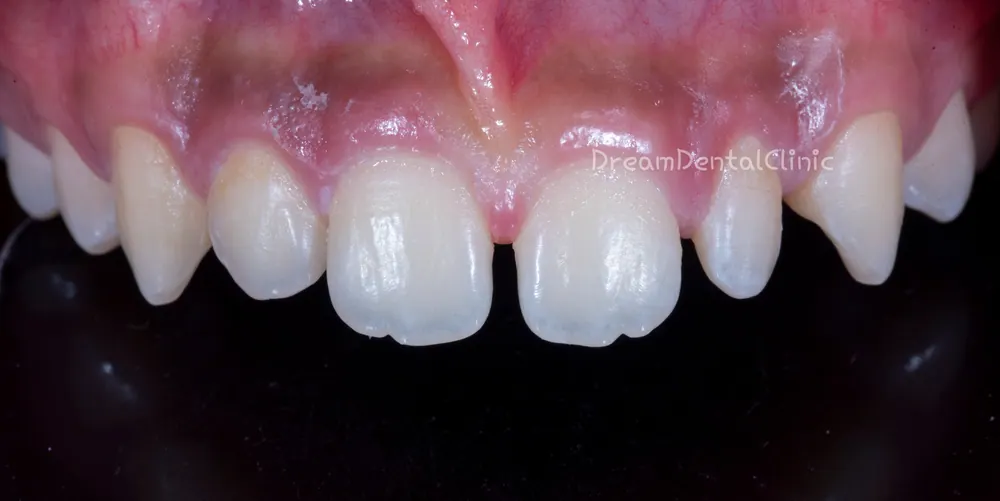
This case has small teeth with a lot of spacing between them.
It's a case that can't be resolved through orthodontics alone. Even if the teeth were moved, they're so small that a beautiful finish simply wouldn't be possible.
You could say a case like this represents the best possible conditions for no-prep veneers.
Small teeth + good alignment + no protrusion + spacing between teeth
All the conditions are met here.
In a case proceeding this way with no reduction, the most important step is diagnosis.
We need to check the current positional relationship between the face and the teeth, how the teeth appear while smiling or speaking, and the precise position of the teeth relative to each other.
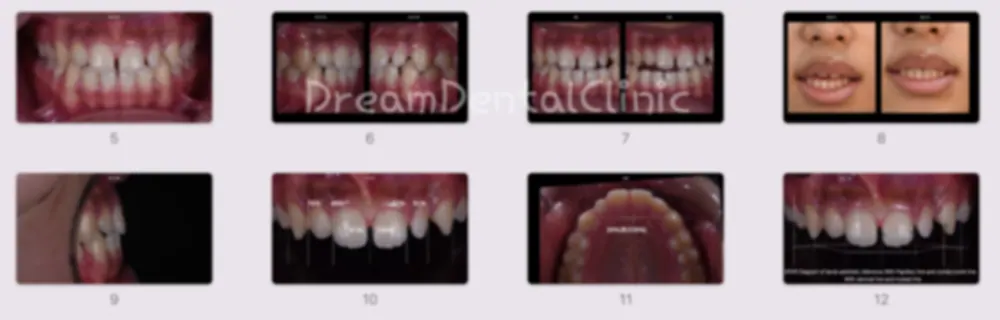
Through various methods of analysis, we simulate in advance whether the best possible result can be achieved.
This analysis process draws together all the know-how I've accumulated over nearly 20 years of esthetic treatment,
and for several years now, through veneer seminars, I've been working to help more clinics carry out this kind of analysis.
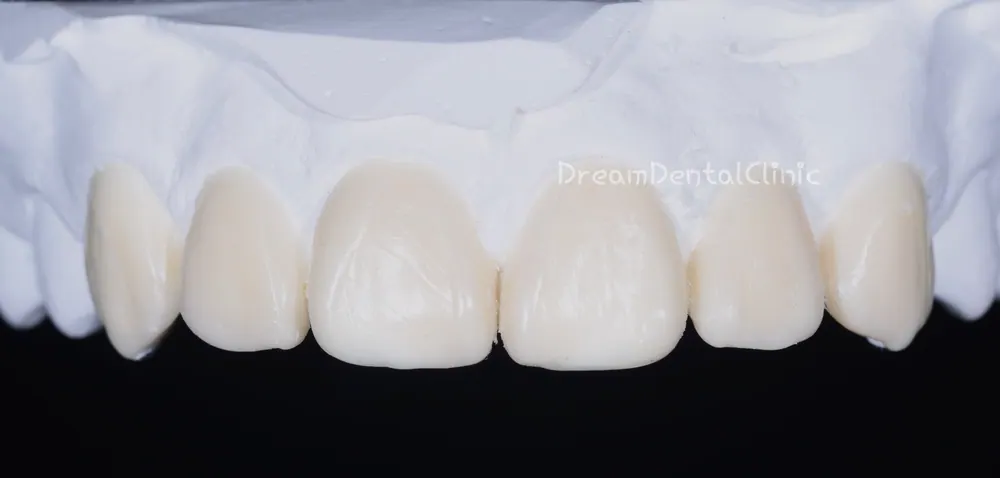
Through this analysis process, we carry out a wax-up to shape the teeth so they suit the face well.
A wax-up is the process of shaping the teeth in wax beforehand.
Finding a tooth shape that fits the face well requires analyzing facial proportions, speech, and smile, among other factors.
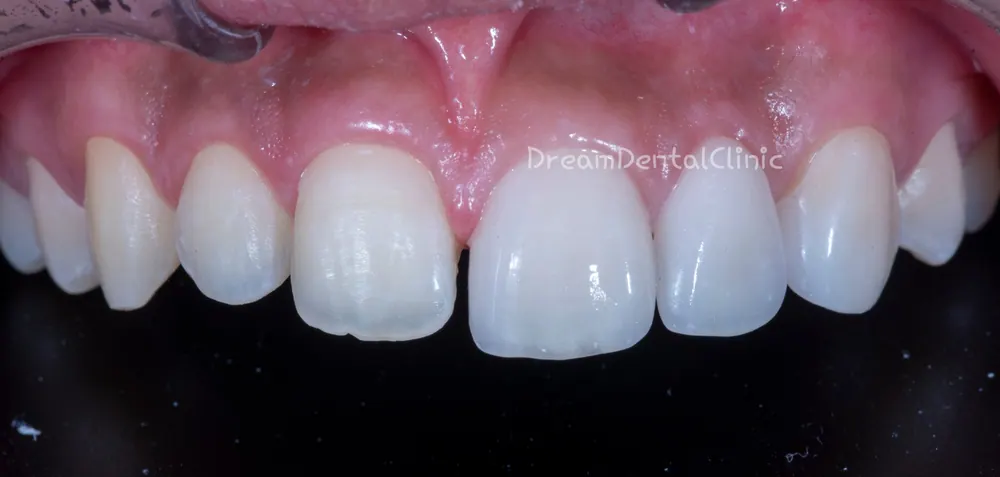
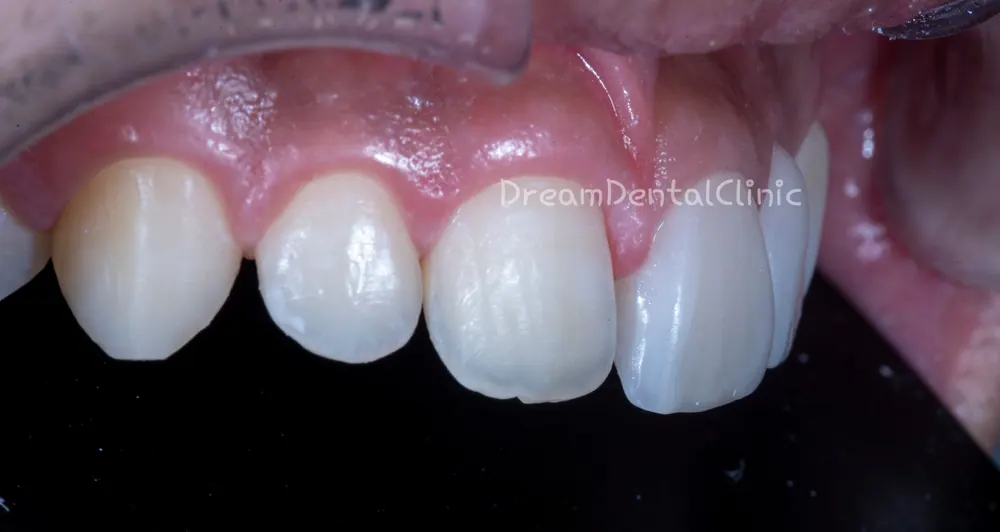
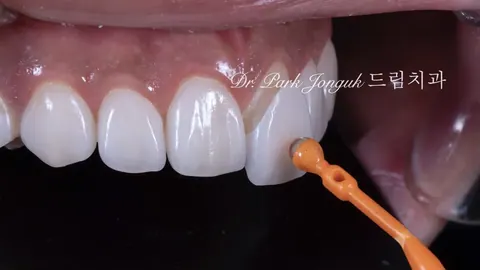
We tried placing the finished veneer on just half, like this.
It was made to wrap well around the sides of the tooth too.
What matters here is that it must not irritate the gums excessively.
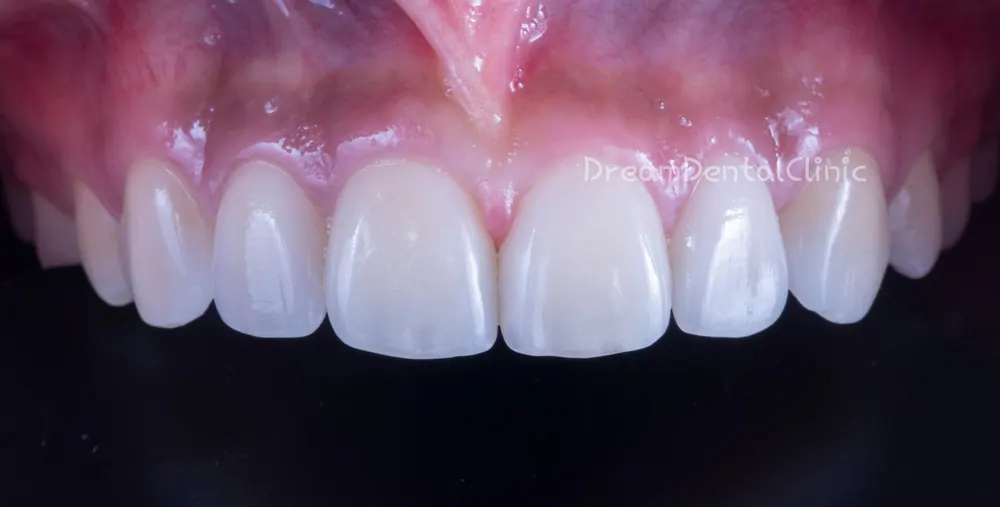
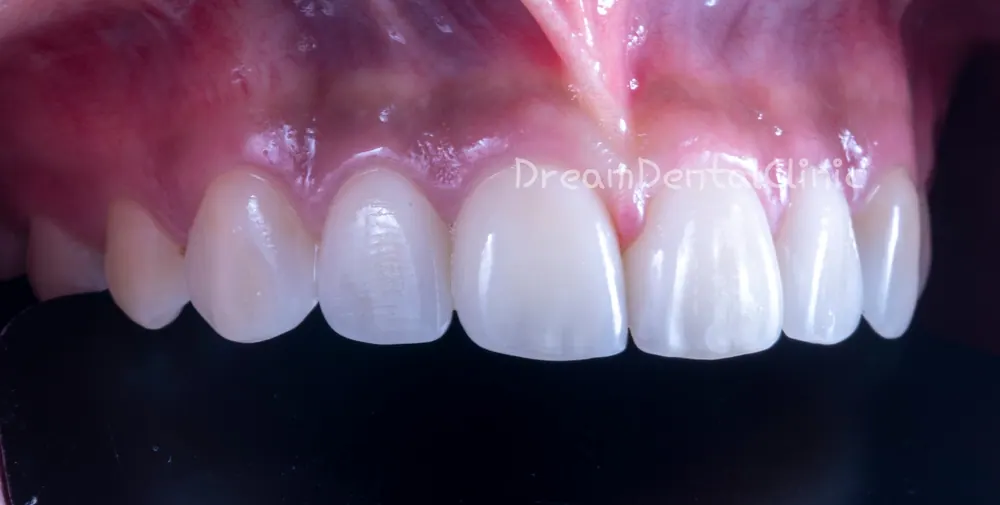
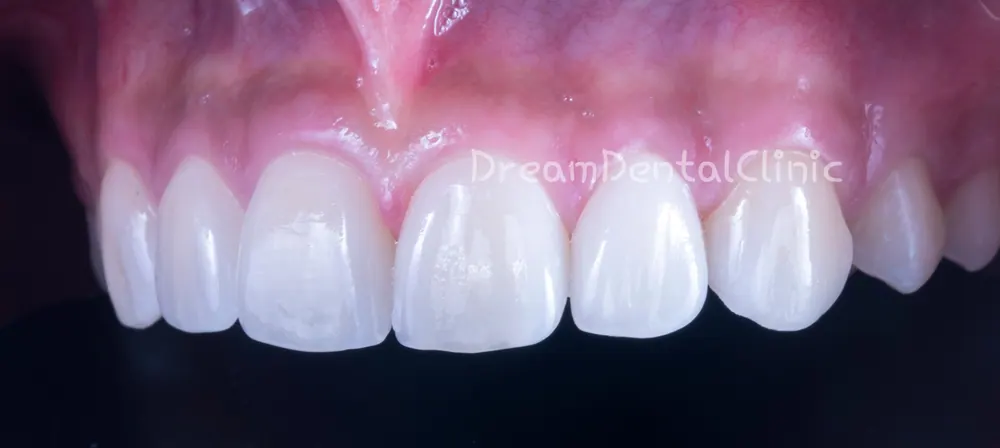
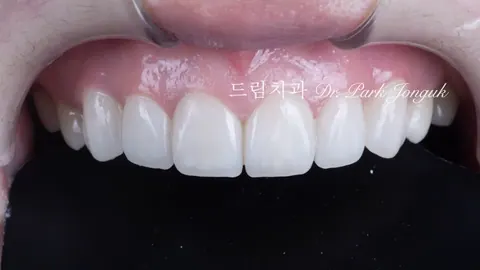
This was completed beautifully and attractively, without reducing the tooth at all.
The points we need to pay close attention to when evaluating a no-prep veneer result are:
1. Does it have a natural color, shape, and translucency?
- This is an area a same-day method can never match. In most cases, a veneer made same-day with CAD/CAM is very difficult to do without any reduction. Since a same-day method mills the ceramic by machine, the resulting ceramic can't be thinned below a certain limit, which makes no-prep essentially impossible. And even if it were possible, it could never achieve the natural-tooth feel seen in the photo above. Because it's made in a single color, it tends to look quite artificial.
2. Does it harmonize well with the gums?
- Only when it blends well with the gums can it be used long-term without causing gum inflammation. Here too, the ceramic has to be made as thin as possible to minimize gum irritation, which requires a considerable amount of know-how.
3. Is there no problem with the bite?
- We also need to carefully check whether the chewing relationship with the lower teeth remains normal. Since the ceramic fills into empty space, unexpected bite problems can arise.
No-prep veneers made using a handmade method, as in the case above, have a clear advantage both esthetically and for long-term gum health.
This article is a clinical note written by Dr. Park Jonguk of Dream Dental Clinic, Gangnam; the original was published on his blog. The photographs shown are real cases he treated. Results vary with each patient’s condition, and every procedure carries the possibility of individual variation and side effects.
Quick Consult
Request a Callback
Leave your number and we will call you back during clinic hours.
Request Received
We will contact you during clinic hours. For urgent matters, please call +82-2-3448-0028.