
Retreatment of Anterior Veneers and Crowns for Proper Proportions
Teeth can look too large or too small because of their actual size, but in most cases, relative factors play a greater role.
When we look at teeth, we do not perceive absolute measurements. What matters more is their relative size: whether they look large or small compared with the face or adjacent teeth, and whether they are too wide for their length.
When anterior tooth reshaping or laminate veneers are considered because teeth look too large or too small, the face, adjacent teeth, and proportions must be the primary considerations.
The proportions among the teeth are particularly important in the anterior region.
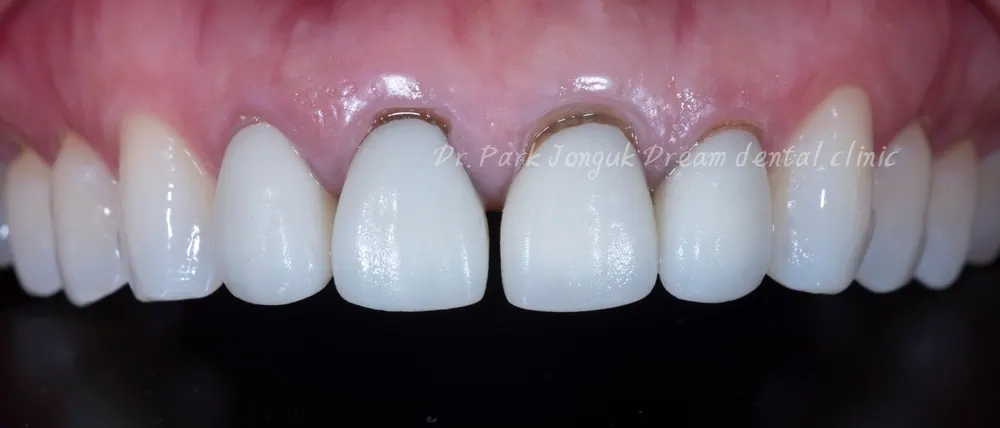
The anterior teeth received crowns a long time ago. In cases like this, many patients believe they had laminate veneers. A crown covers the entire tooth, whereas a laminate veneer bonds a thin ceramic layer only to the front. The restorations in this case were crowns.
What matters in a case like this is an accurate diagnosis of the current condition and a treatment plan that can establish appropriate proportions.
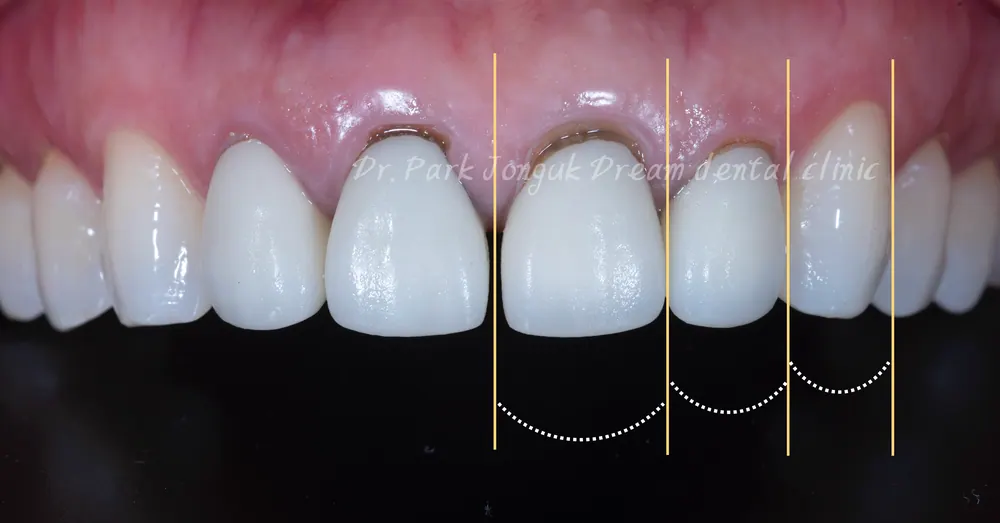
First, the proportions among the teeth must be determined.
This involves setting the proportions among the central incisors, lateral incisors, and canines. In the past, an insistence on following the golden ratio led to descriptions of a proportion of about 1.6:1:0.6 as desirable. However, many studies and statistics on tooth proportions show that a face must be quite long for the golden ratio to suit it. It does not fit most faces of average shape. Some textbooks still discuss the golden ratio, but papers and related international books published after 2010 no longer state that the golden ratio must be followed.
These proportions differ slightly between East Asian and Western patients because their dental arches differ in shape.
The average proportion is about 1.4:1:0.75. It should, of course, vary with the shape and form of the dental arch, and facial proportions are also very important.
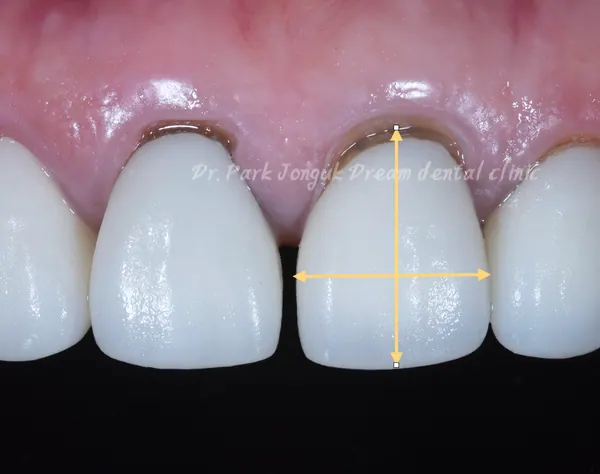
The width-to-height ratio of each individual tooth must also be established correctly.
This ratio is also strongly influenced by facial shape. For East Asian patients, the width-to-height ratio is generally about 0.75:1 ~ 0.85:1.
In this case, the two central teeth were spaced apart, so even greater attention had to be paid to this ratio.
In addition, the gum shape had changed, which meant the teeth inevitably had to become longer than they appeared in the existing condition. This case therefore required considerable thought about how best to establish the proportions.
When a space must be filled in this way, the teeth inevitably become larger. Patients are often dissatisfied when the result is larger than the tooth size to which they were accustomed.
The key to detailed anterior veneer design is to make the teeth larger without making them look larger.
A tooth has a line called a line angle, which connects its front and side surfaces. Put simply, this is the corner of the tooth. The way this corner is designed can change the tooth's overall appearance substantially.
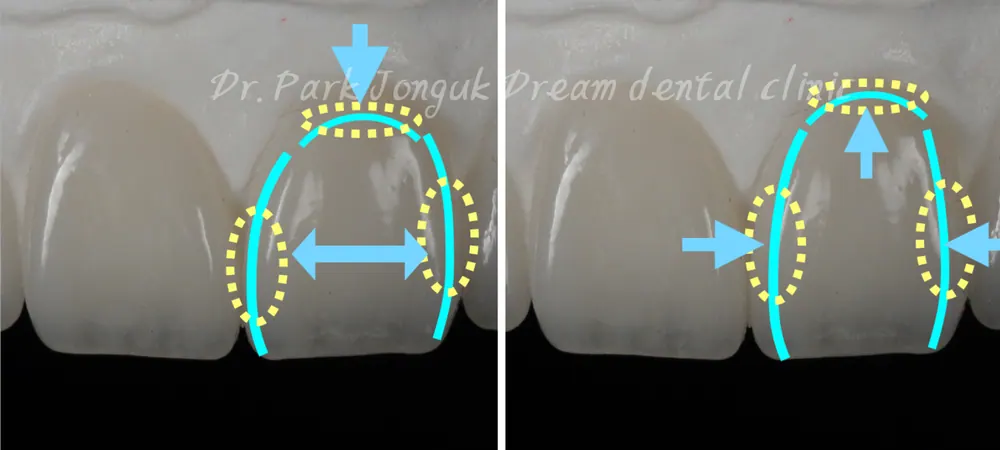
Even teeth occupying the same amount of space can look either wide or narrow and long.
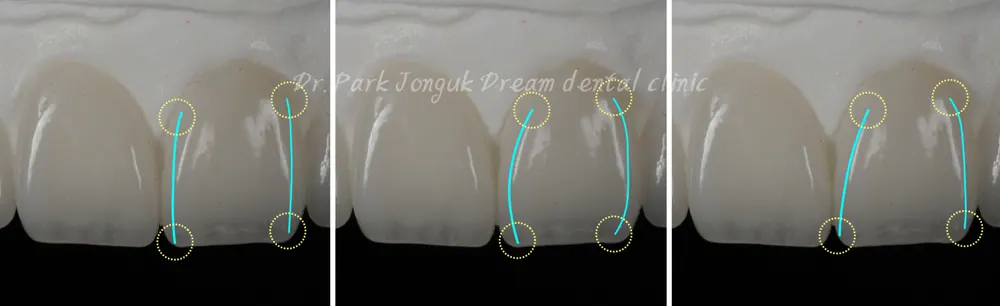
Likewise, a tooth occupying the same space can look strong and linear, soft, or lively.
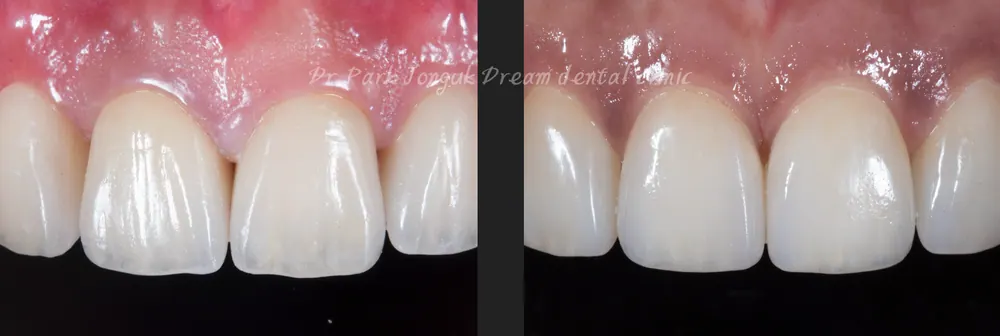
Under similar conditions, a tooth can look quite strong and masculine or soft and feminine.
The restorations in this case were remade with these design elements in mind.
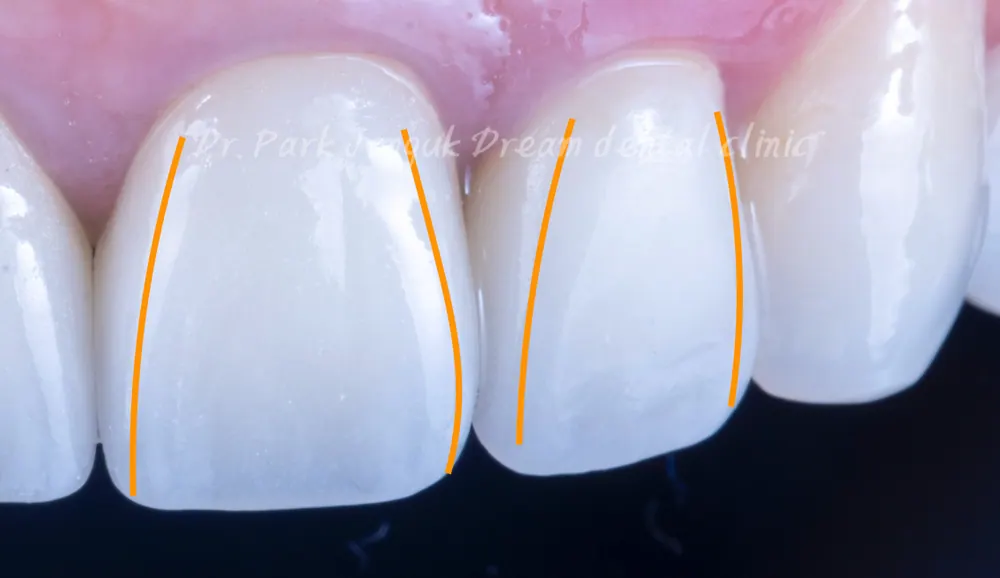
First, we defined line angles that had not been expressed in the original teeth, giving them the shape of natural teeth as much as possible.
The lines were shaped to look feminine while also making the teeth appear smaller.
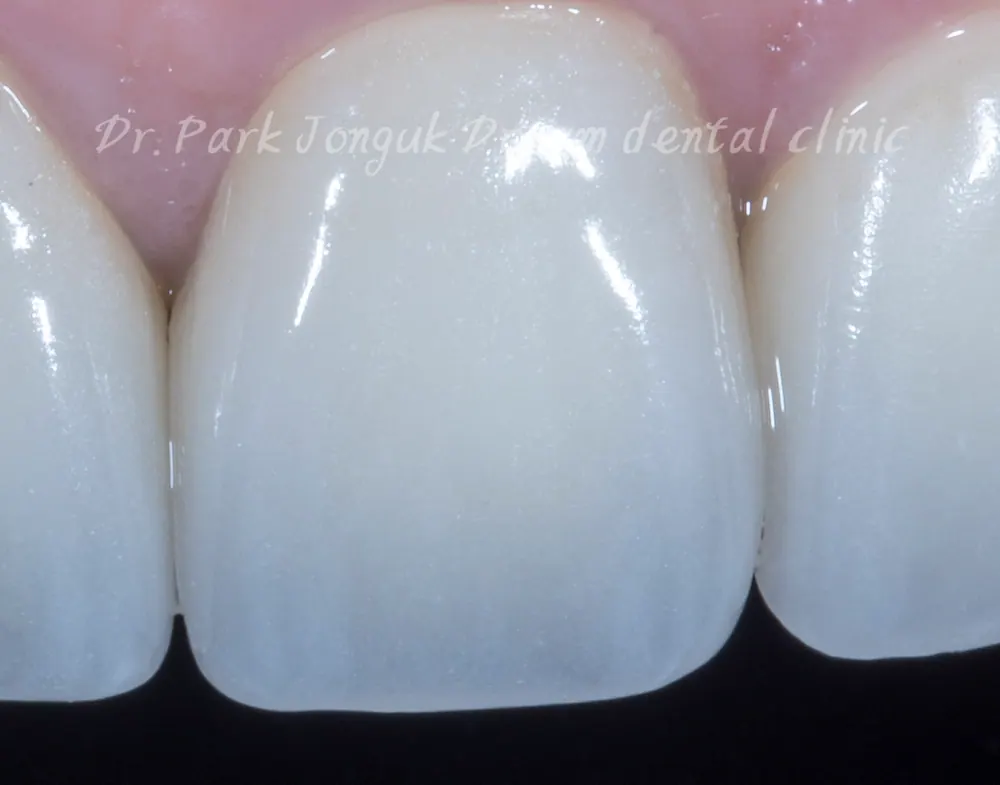
When the teeth are viewed up close, natural translucency can also be seen at the edges. This makes the teeth look more like natural teeth and keeps them from appearing overly expanded, which also makes them look smaller.
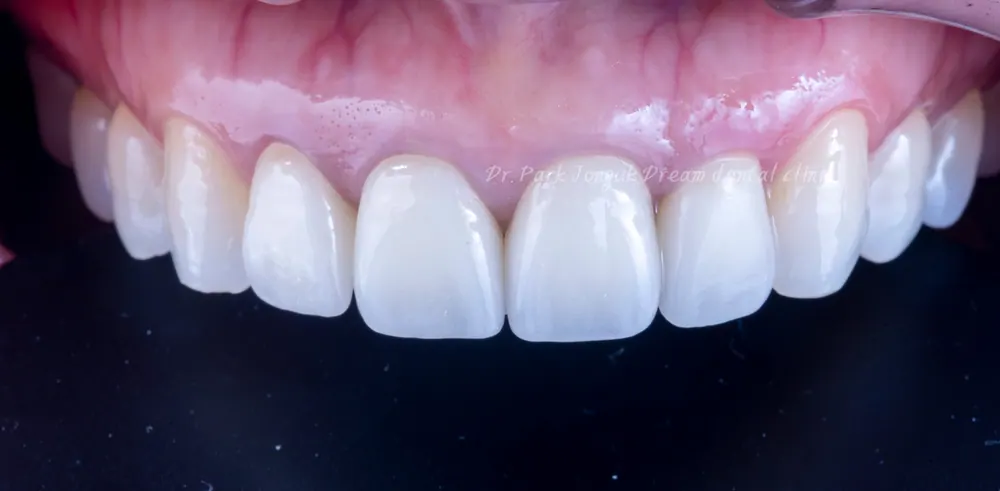
The completed restorations blended very well with the natural teeth and gave the teeth better overall proportions.
This article is a clinical note written by Dr. Park Jonguk of Dream Dental Clinic, Gangnam; the original was published on his blog. The photographs shown are real cases he treated. Results vary with each patient’s condition, and every procedure carries the possibility of individual variation and side effects.
Quick Consult
Request a Callback
Leave your number and we will call you back during clinic hours.
Request Received
We will contact you during clinic hours. For urgent matters, please call +82-2-3448-0028.