
No-Prep Veneers for Erosion From Acid Reflux or Acidic Foods
Hello, I'm Dr. Park Jonguk, director of Dream Dental Clinic.
There are various causes when teeth wear down or become worn.
The most common is wear from brushing.
The area where the tooth meets the gum, called the cervical area,
wears down from the toothbrush and toothpaste.
Since the affected area is usually small, it's treated with resin.
Next is attrition — this is where
the teeth wear down from friction against each other.
In this case, the treatment method differs depending on whether there's a bite problem or teeth grinding.
If the shape of the tooth has been significantly damaged,
veneer treatment may be needed.
Next is erosion caused by acid.
This can be caused by acid reflux, pregnancy, and similar conditions,
and it can also happen from excessive consumption of acidic foods.
There are quite a few acidic foods, including red wine, yogurt, and carbonated drinks.
Since the erosion affects the tooth broadly,
it has often been treated with all-ceramic crowns,
but reducing a tooth that's already eroded even further
causes the problem of far too much damage to the tooth.
That's why no-prep veneer treatment ends up being the best approach.
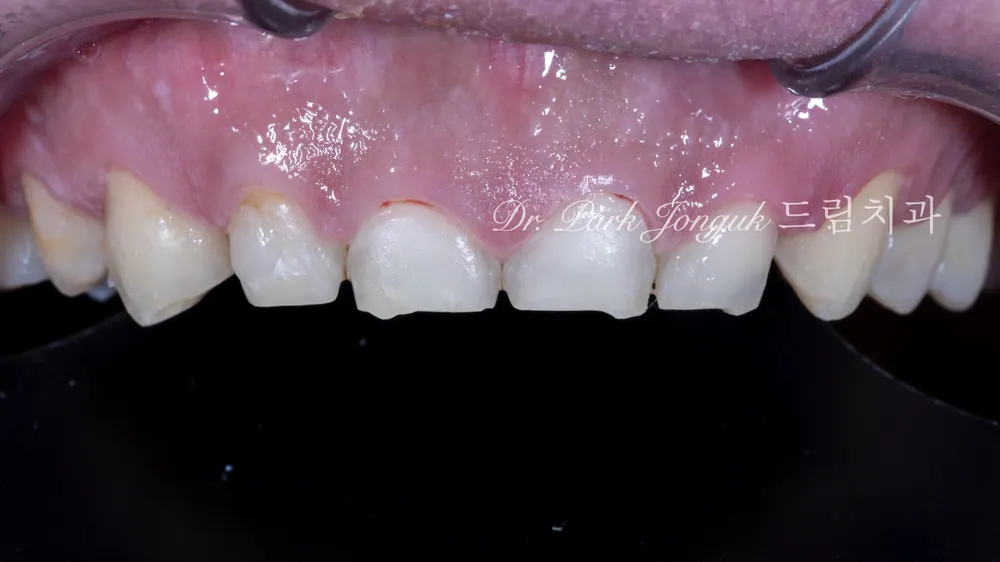
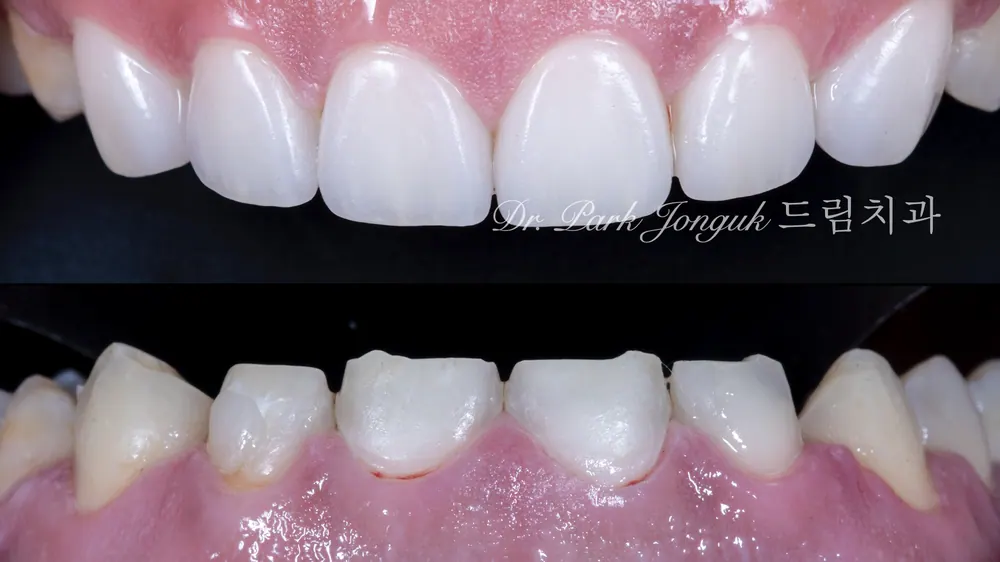
This is the state of teeth eroded by acid reflux.
You can see that a considerable portion of the tooth has been damaged.
Treating the acid reflux itself needs to come first.
As that treatment begins, veneer treatment proceeds alongside it.
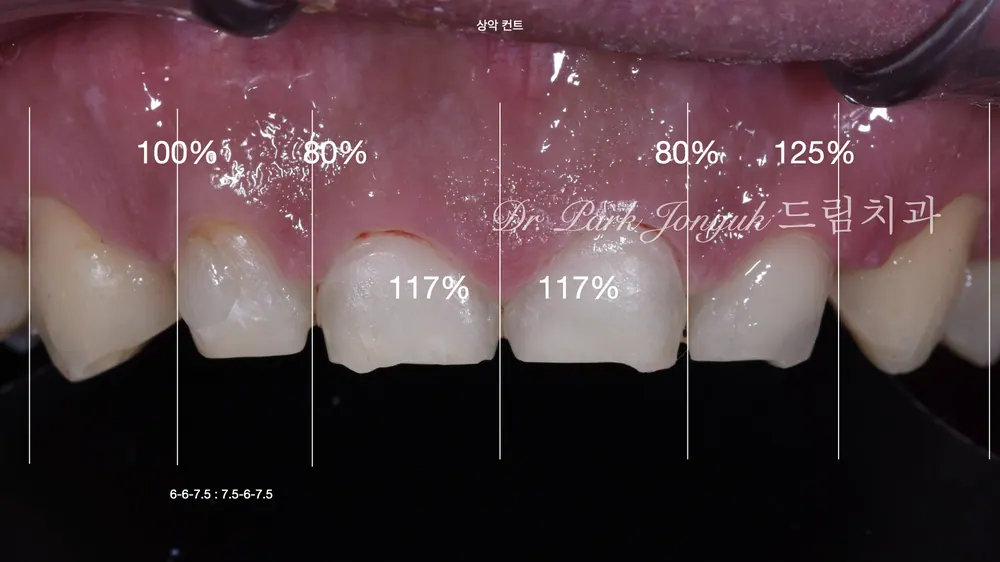
When we measured the proportions of the teeth,
there were far too many issues.
The ratio of tooth length to width should be around 80%, but it measured 117%.
This means the teeth had become excessively short.
The four front teeth, excluding the canines,
had eroded so severely that they'd become small.
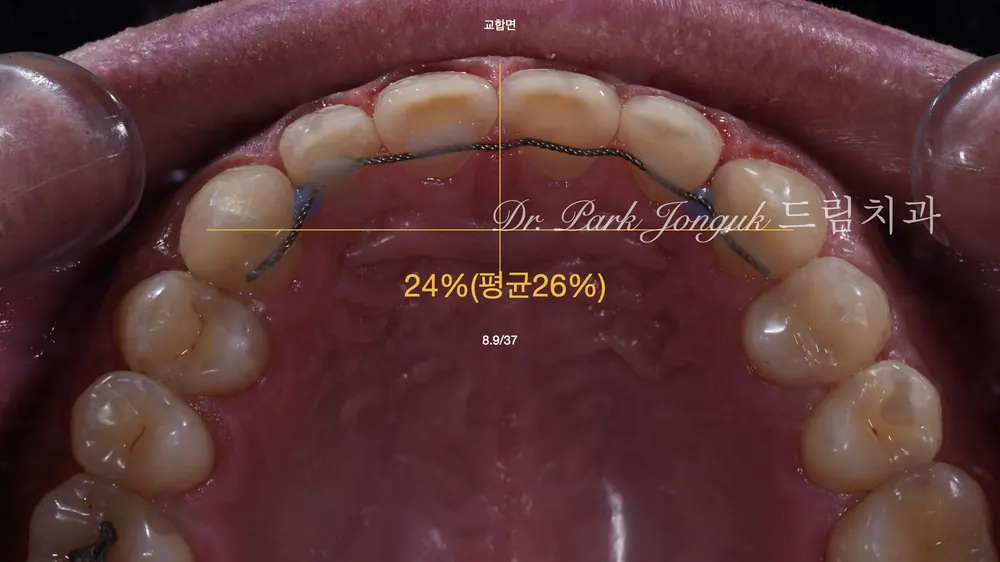
Another problem with acid reflux
is that erosion occurs on the inner surface of the tooth as well.
In the case above, we used the retainer from the patient's orthodontic treatment
to cover the eroded areas and resolve the issue.
Usually, this calls for a Sandwich Technique veneer, covering both front and back.
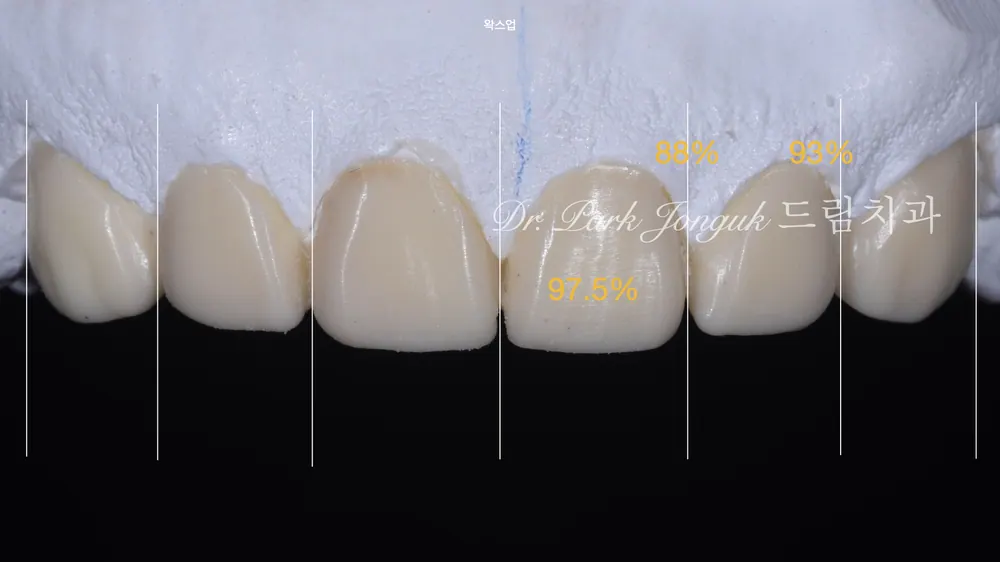
Reaching a fully average proportion is difficult,
but we carry out treatment aimed at improving things as much as possible.
Once the teeth have a more normal proportion,
the esthetics improve dramatically.
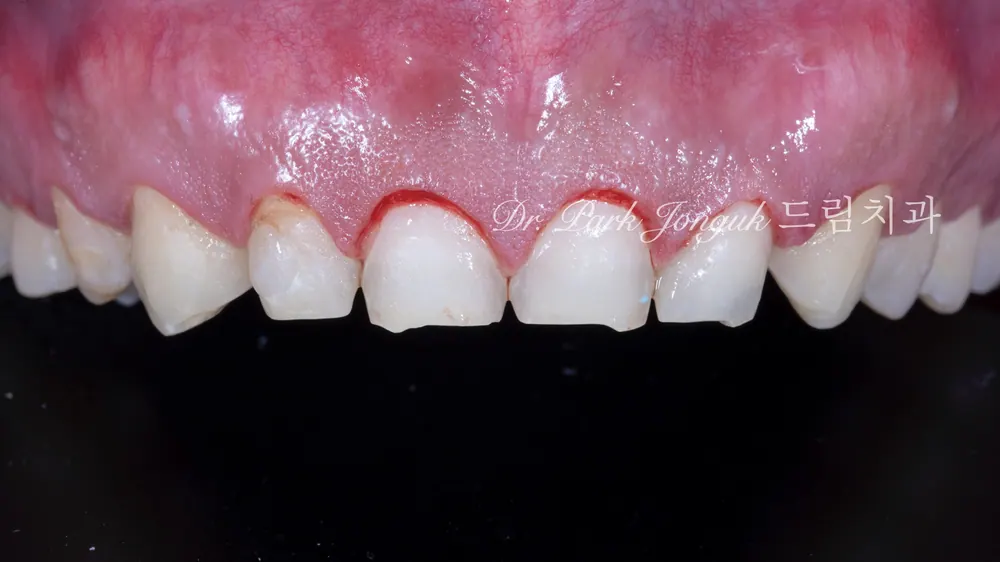
Since the teeth were too short,
we first carried out gum contouring.
But since there's a limit to how much gum tissue can be removed,
we only contour to the extent that doesn't affect gum health.
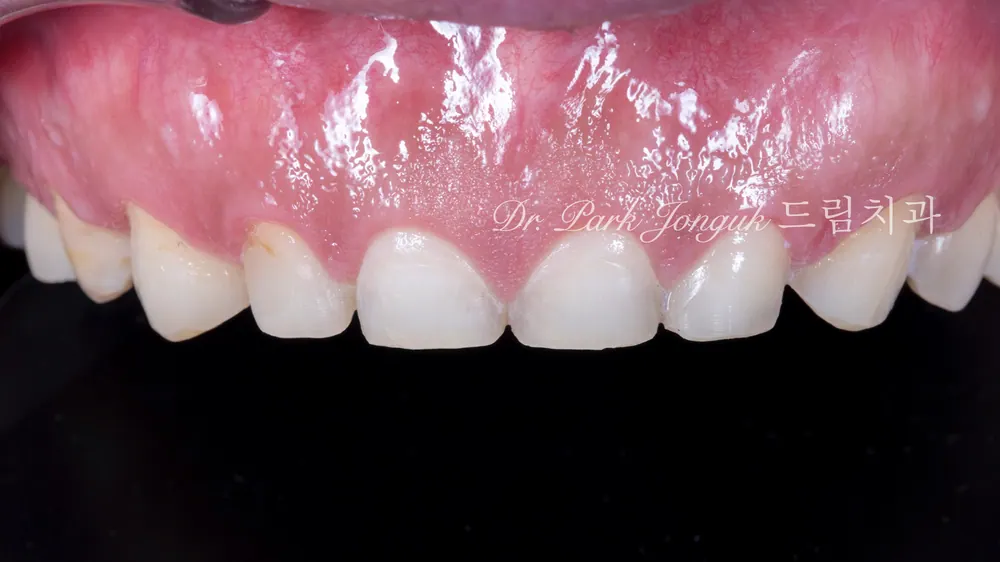
One week has passed since the gum contouring.
We refine and smooth the rough areas of the tooth.
In this state, we take an impression of the teeth and move on to fabricating the veneers.
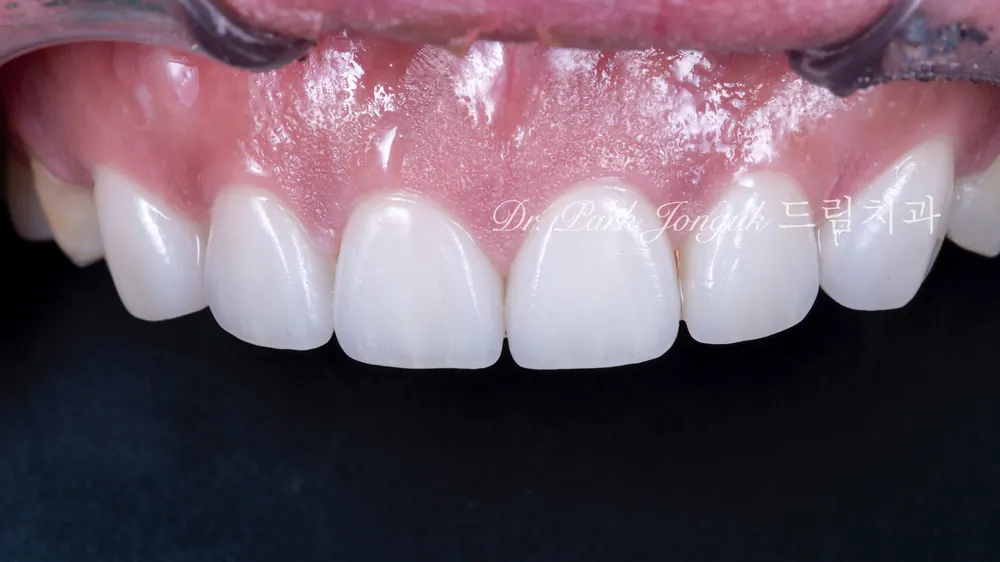
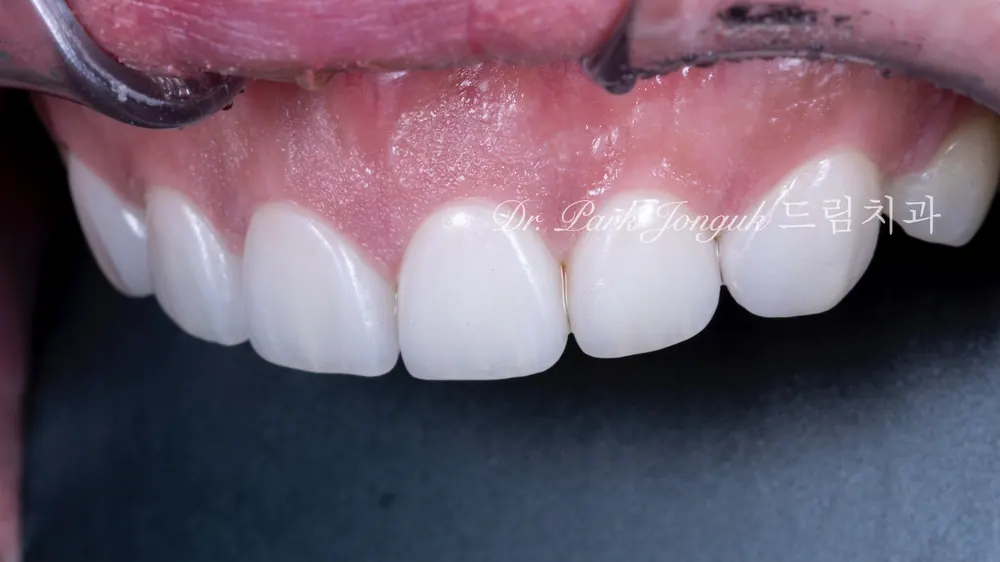
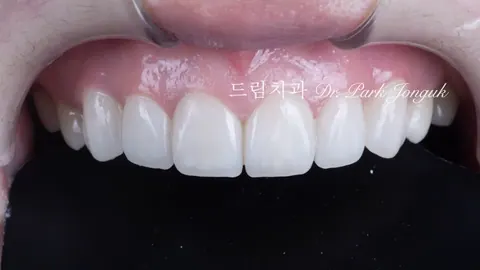
The veneer treatment has been completed.
You can see that the proportion of the teeth has improved dramatically.
We only refined the rough areas of the tooth and carried out no-prep veneer treatment,
and the teeth clearly retain the feel of natural teeth
while looking beautifully treated.
Capturing the expression of a natural tooth in ceramic this thin is no easy task.
Recently, most veneer treatment
either reduces a lot of the tooth,
or ends up looking artificial and awkward to anyone who sees it, in many cases.
Each case needs to be treated with careful attention,
but with treatment done in a day or two like factory mass production,
it's often difficult to get a good result.
The reason Dream Dental Clinic insists on the handmade method
is that, rather than making an off-the-shelf product like a factory,
we fabricate each veneer the way a fine piece of craftsmanship is made.
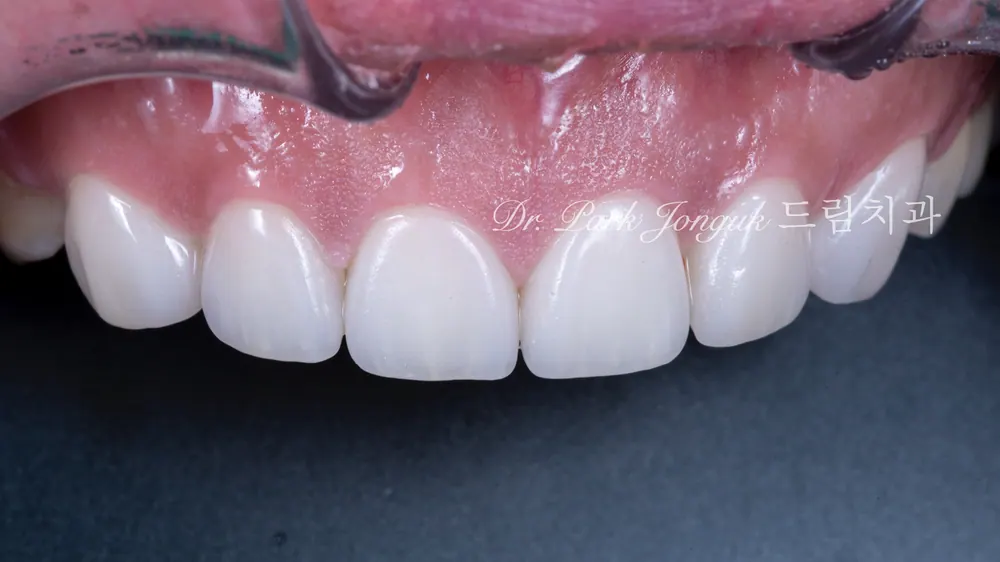
Natural beauty
Since 2006, Dream Dental Clinic
This article is a clinical note written by Dr. Park Jonguk of Dream Dental Clinic, Gangnam; the original was published on his blog. The photographs shown are real cases he treated. Results vary with each patient’s condition, and every procedure carries the possibility of individual variation and side effects.
Quick Consult
Request a Callback
Leave your number and we will call you back during clinic hours.
Request Received
We will contact you during clinic hours. For urgent matters, please call +82-2-3448-0028.