
A Veneer Redo Case Completed With No-Prep Veneers
Hello, I'm Dr. Park Jonguk, director of Dream Dental Clinic.
Veneers do not last forever.
In the past, the average lifespan was thought to be around 7 years,
but these days it's more often considered to be around 10 years on average.
Since an average of 10 years can mean someone who used theirs for 5 years and someone who used theirs for 15,
the actual lifespan varies enormously from person to person.
It also changes a great deal depending on habits,
and it varies a lot depending on how well the veneers are cared for.
There are many reasons for redoing veneers.
Sometimes it's because a veneer has come off or chipped,
but more often, it's for aesthetic reasons.
Looking at patients who have recently come in for veneer redo treatment,
more of them are coming in because, over a long stretch of time, the alignment of their teeth or the shape of their gums has changed,
prompting a redo.
Another reason is
that they weren't happy with their veneers from the very start,
and by the time enough time had passed for a redo to make sense,
they decide to redo the veneers for a more aesthetic result.
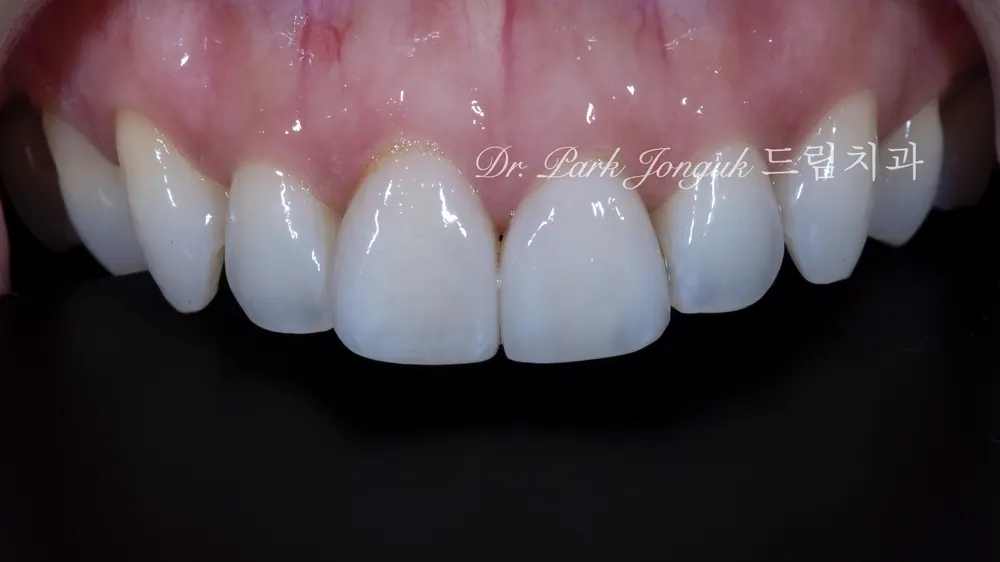
This is a case where the two front teeth already have veneers.
The two teeth were too large and protruding, so the patient was unhappy with them from the moment they were treated about ten years ago,
and now that enough time has passed for a redo, they came in to have the veneers redone in a more even shape and better proportion.
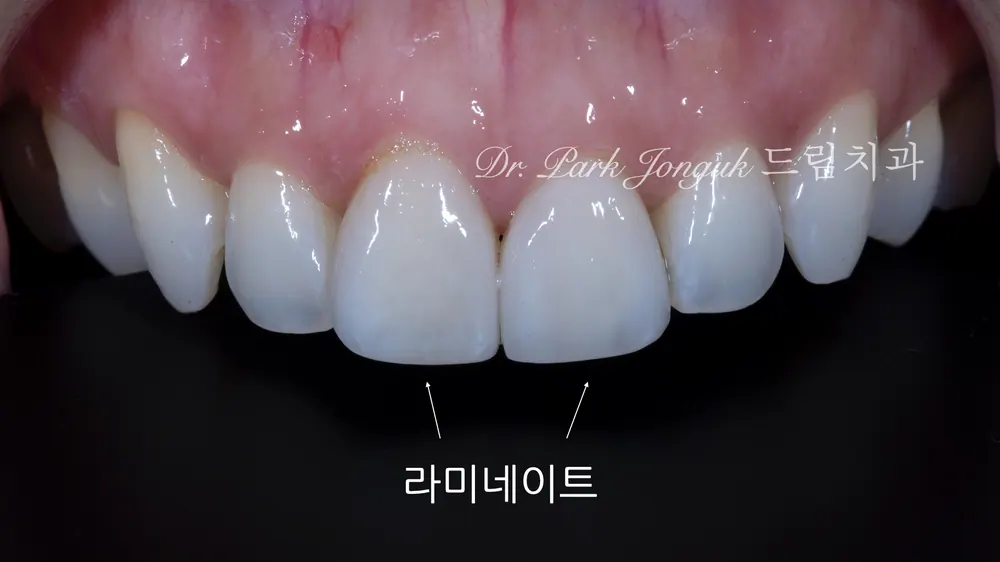
Looking at the veneers alone, the shading and design are quite good,
but there's a problem with the proportion relative to the other teeth.
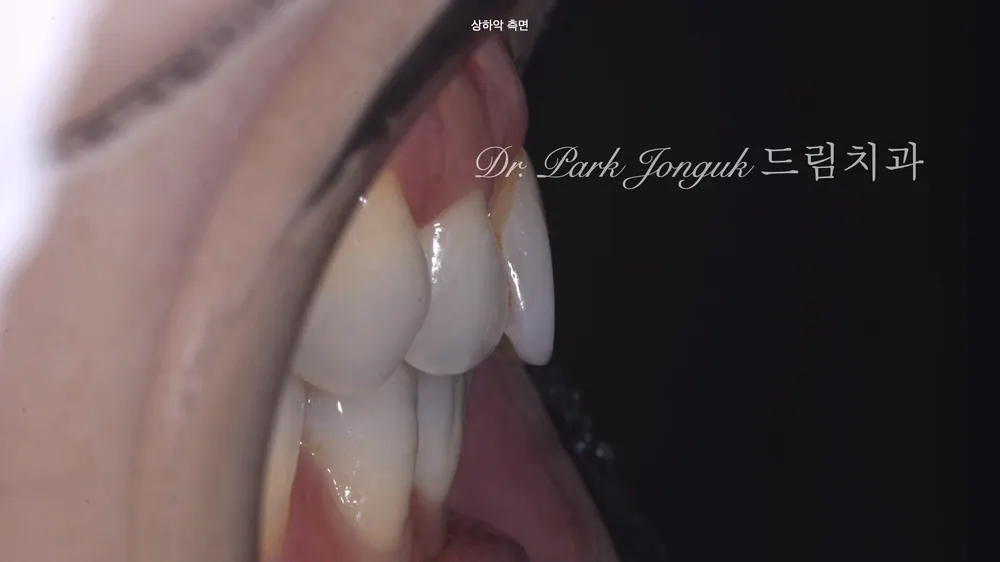
Only these two teeth protrude significantly,
so we begin the veneer redo to correct that protrusion and make the teeth even and beautiful.
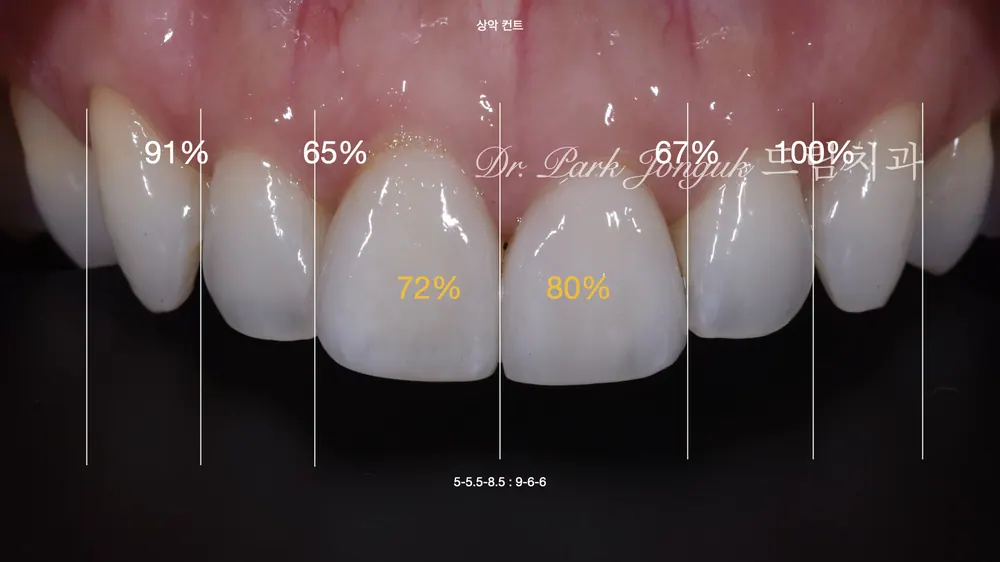
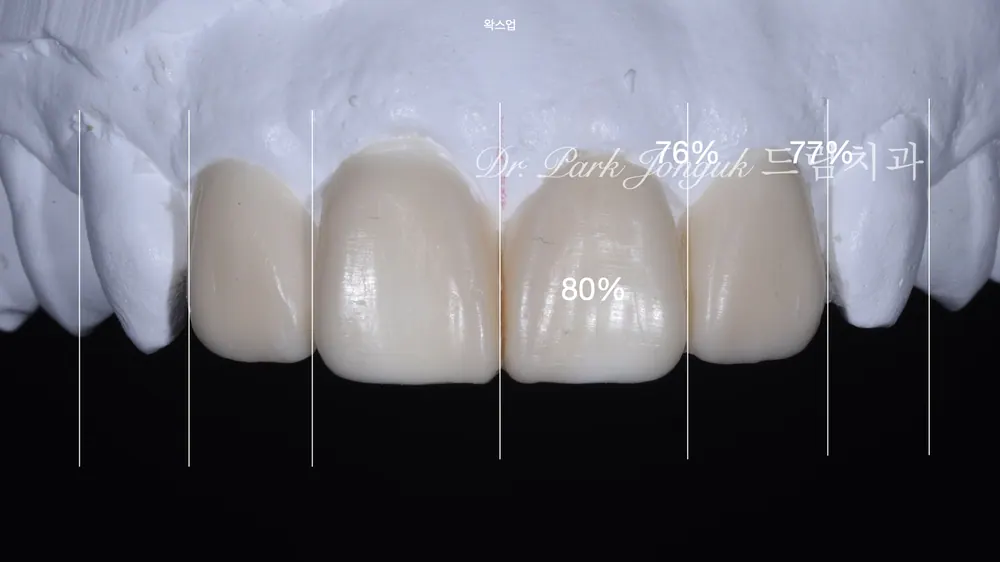
Redoing just those two teeth alone couldn't fully solve the problem,
so we decided to also treat the lateral incisors next to the two front teeth.
The treatment is done while adjusting the proportion between the teeth for the better.
This brings the proportion between the front teeth and the lateral incisors into better balance.
In this case, for the lateral incisors,
no-prep veneers are possible.
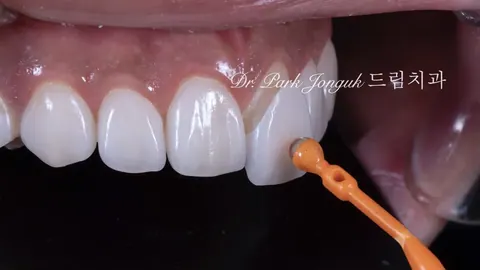
For the two front teeth, we use laser veneer removal to preserve as much tooth structure as possible,
and for the lateral incisors, we proceed with no-prep veneers.
Please see the link below for more on laser veneer removal.
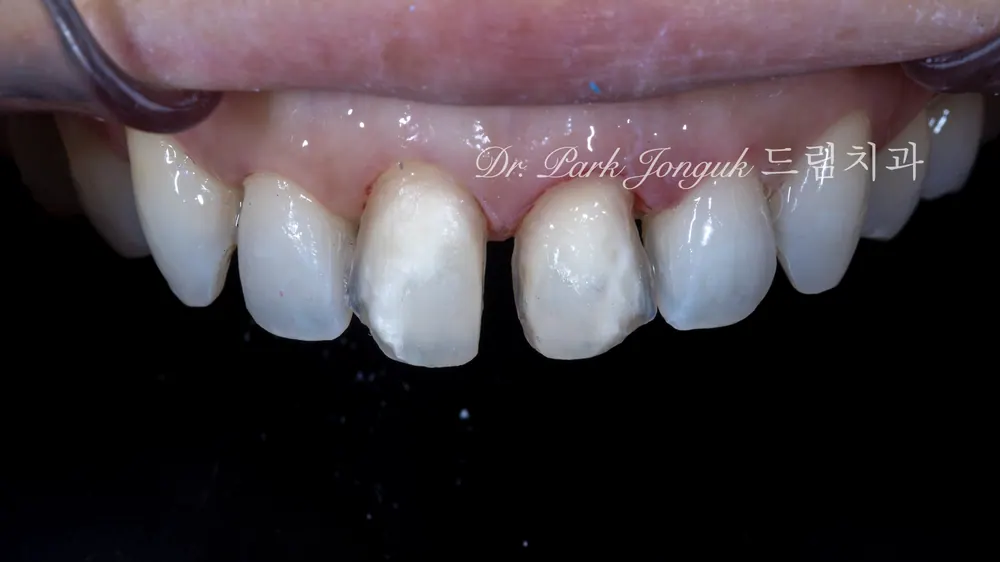
After removing the veneers on the front teeth,
we could see that far too much of the original tooth had been removed.
When it comes to doing veneer treatment with this much tooth reduction,
I take a fairly negative view.
A great many patients come in saying they had minimal-prep or no-prep veneers done,
but once we remove the veneers, we often find a substantial amount of tooth was actually cut away,
so when removing veneers,
using a laser to minimize damage to the tooth
is extremely important.
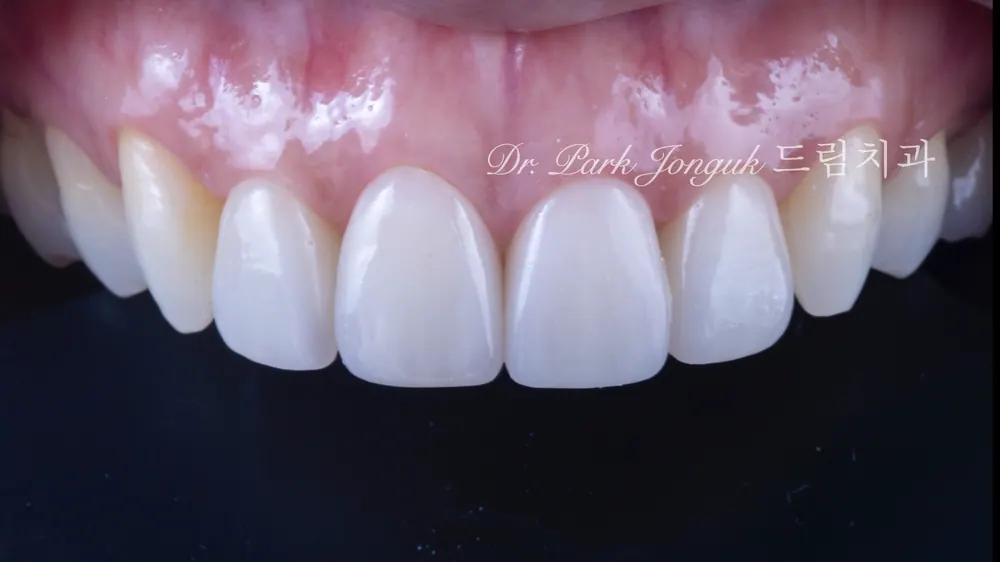
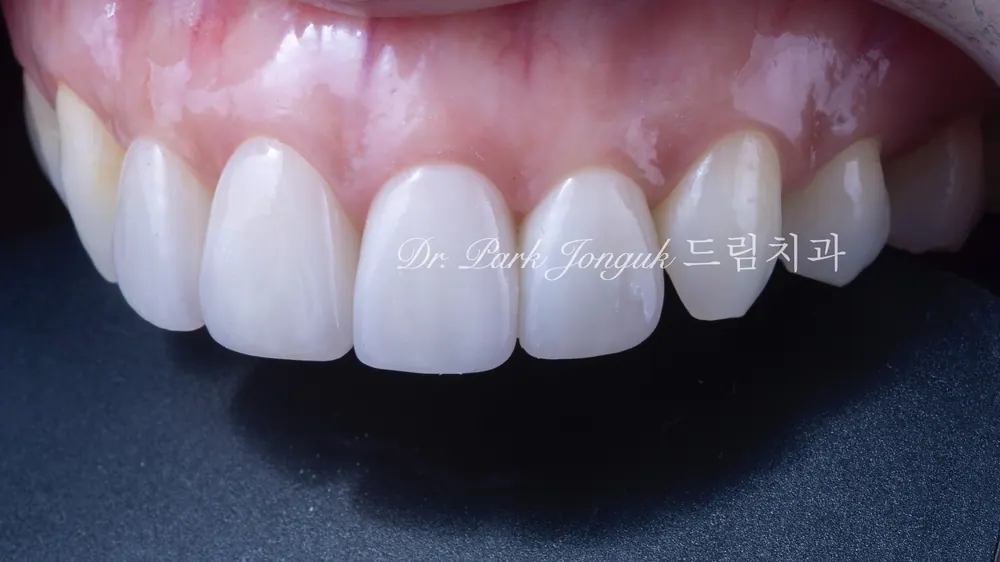
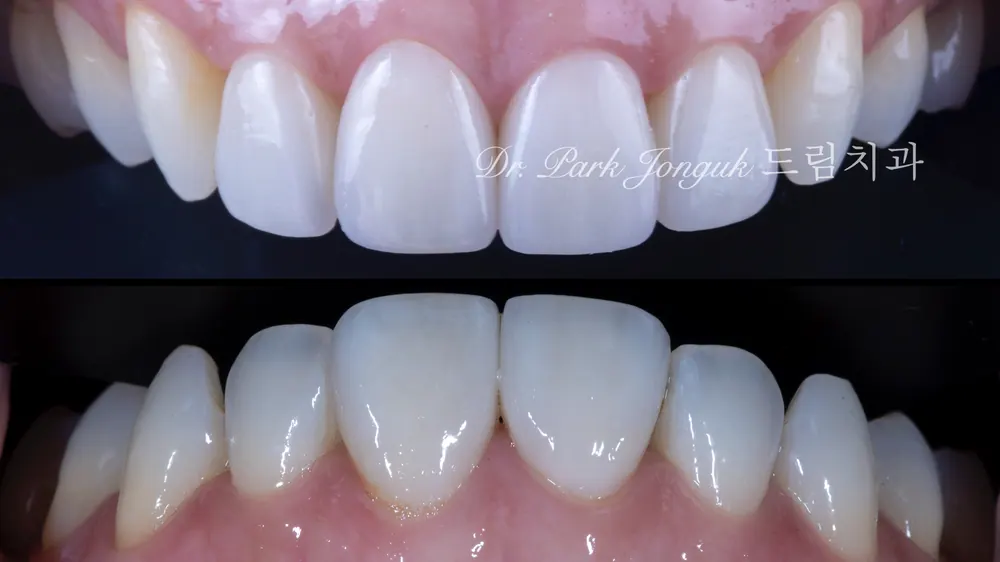
The veneer redo
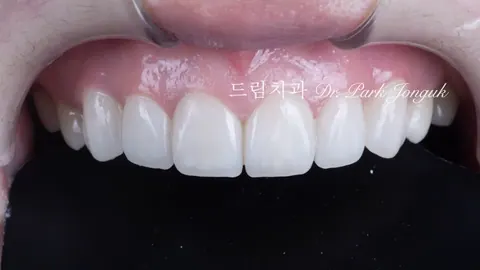
and no-prep veneer treatment have now been completed.
You can see that the proportion of the teeth has improved dramatically.
The teeth are bright, yet still clear, with a real sense of translucency.
They also harmonize well with the gums.
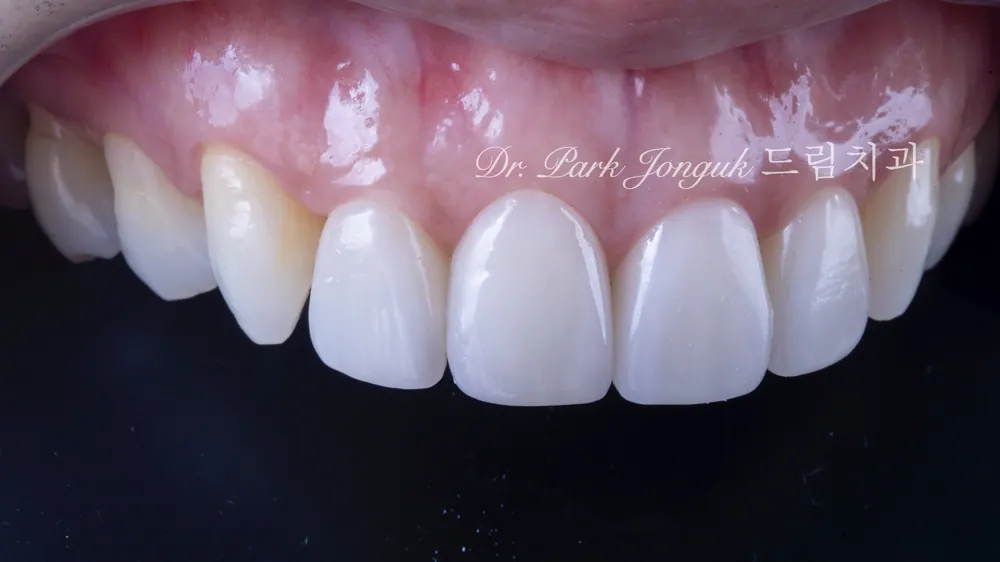
When no-prep veneers are done alongside veneers on teeth that were heavily reduced like this,
there's a difference in ceramic thickness and in the underlying tooth color from one tooth to the next,
which makes it difficult to match the shade.
Throughout this entire process, the clinician's experience matters enormously.
Natural beauty
Since 2006, Dream Dental Clinic
This article is a clinical note written by Dr. Park Jonguk of Dream Dental Clinic, Gangnam; the original was published on his blog. The photographs shown are real cases he treated. Results vary with each patient’s condition, and every procedure carries the possibility of individual variation and side effects.
Quick Consult
Request a Callback
Leave your number and we will call you back during clinic hours.
Request Received
We will contact you during clinic hours. For urgent matters, please call +82-2-3448-0028.