
No-Prep Veneers and Veneer Redo
Hello, I'm Dr. Park Jonguk, director of Dream Dental Clinic.
Redoing veneers is a fairly demanding process.
The treatment plan has to be built around the reason for the redo.
If it's because a veneer came off or chipped,
figuring out why is the most important thing.
If it's a bite-related problem, we also need to check whether that problem can be resolved.
If it happened because of a habit,
we need to see whether the habit can be corrected — in the case of teeth grinding especially,
an appliance may need to be used.
If it's for esthetic reasons,
we need to look at exactly what the problem is
and whether a redo can actually fix it,
since wanting to bring a protruding tooth inward,
or wanting to move a tooth a great deal,
is sometimes simply not possible.
Let's take a look at a veneer redo case
aimed at resolving an esthetic problem.
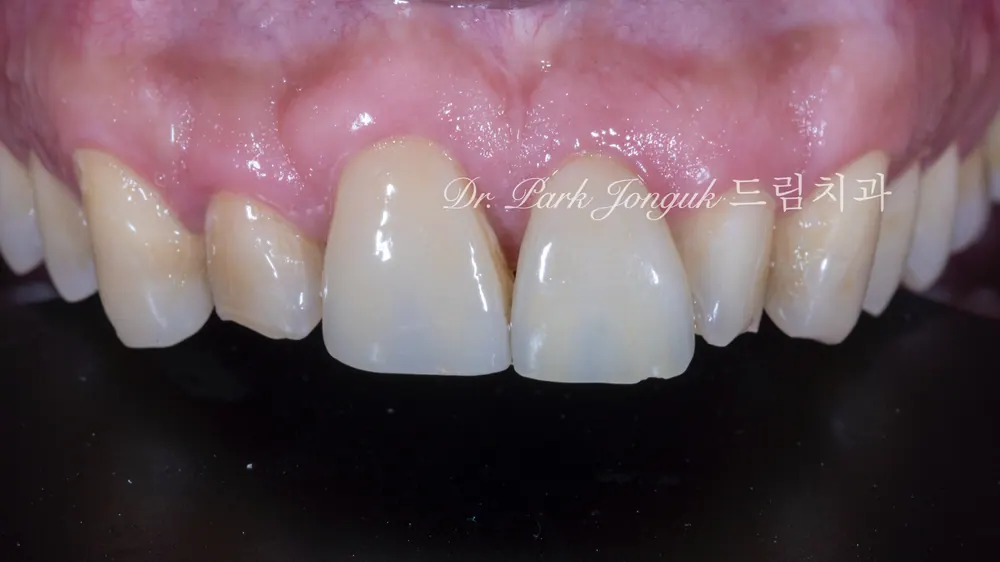
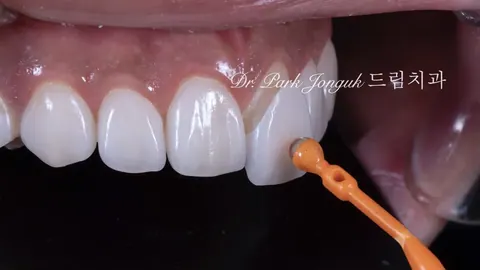
The size and shape of the front teeth
were esthetically problematic.
When I first saw the two front teeth, I honestly took them for
natural teeth with an esthetic problem.
No matter how naturally a veneer is made,
I didn't think anyone would deliberately make it look unattractive.
But... those two turned out to be veneers.
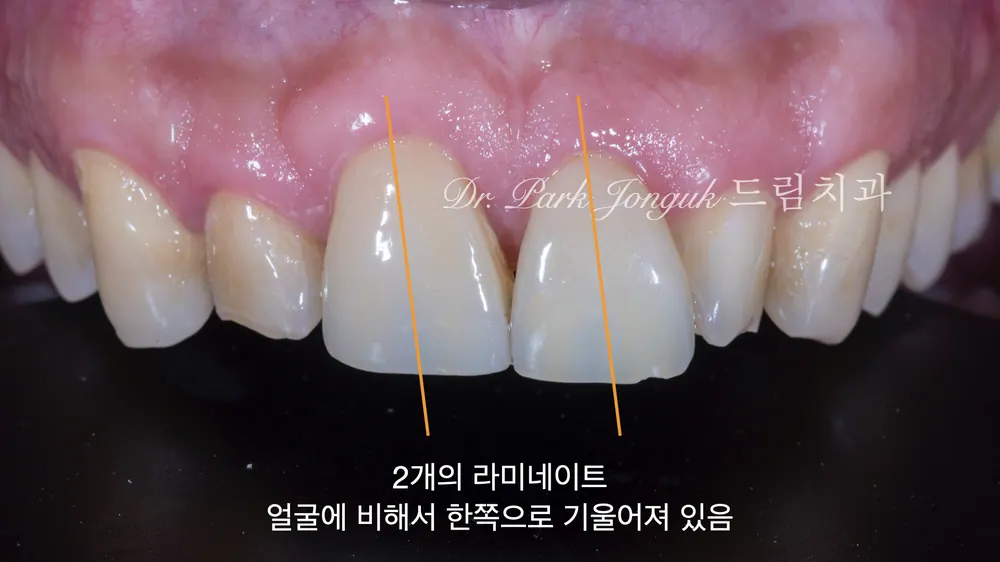
Relative to the whole face, they leaned heavily to one side.
The size differed, and the shape
— whether it was done on purpose or not —
was severely triangular.
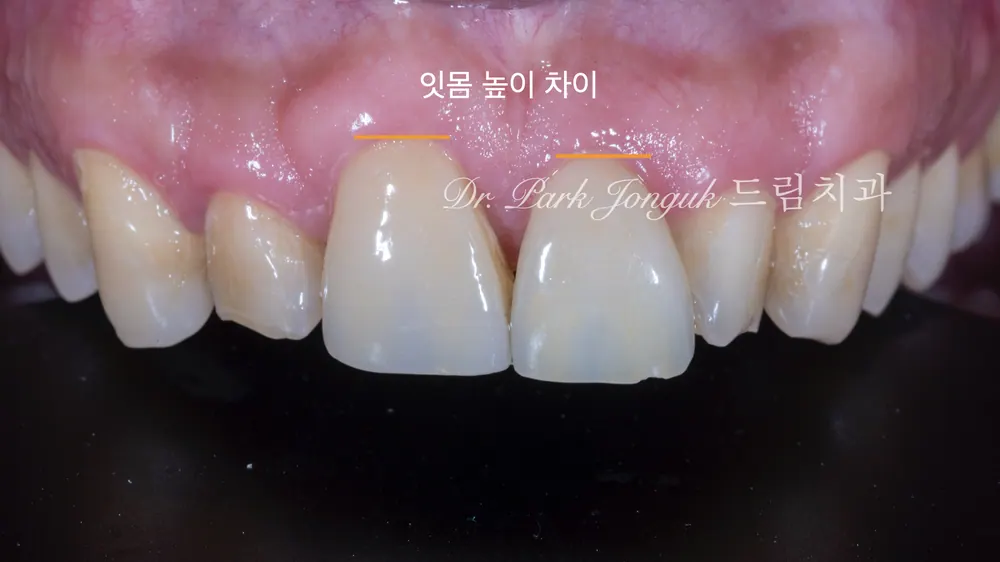
There was also a severe difference in gum height,
and although the patient said this part didn't bother her,
because the teeth are currently tilted,
the difference doesn't show much right now,
but once the teeth are brought to a normal angle, the gum height difference will stand out even more.
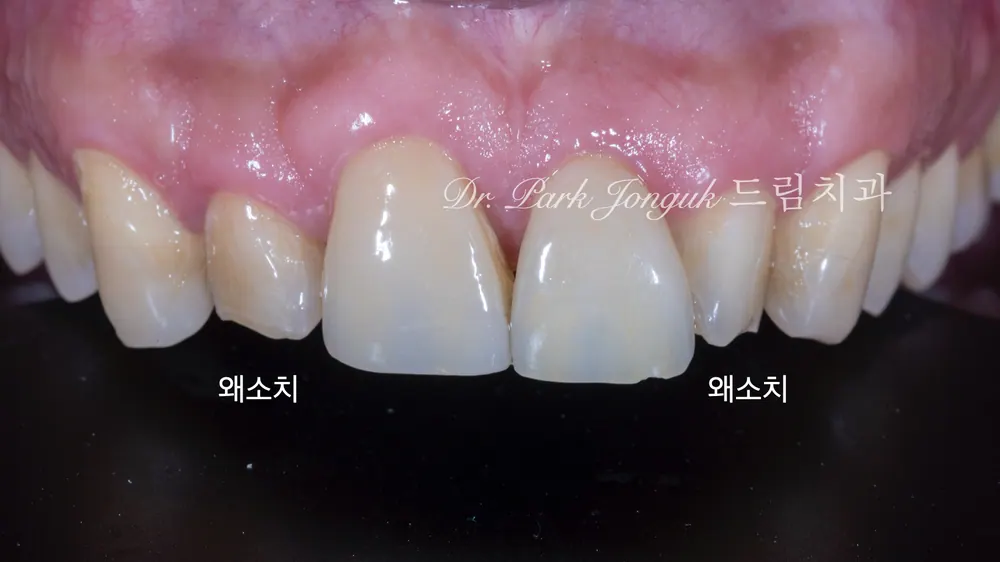
The tooth next to the front teeth is undersized.
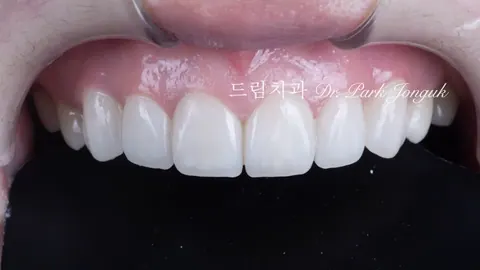
We redid the veneers on these two tilted front teeth,
and also carried out no-prep veneers for the undersized tooth and veneer treatment for the canine.
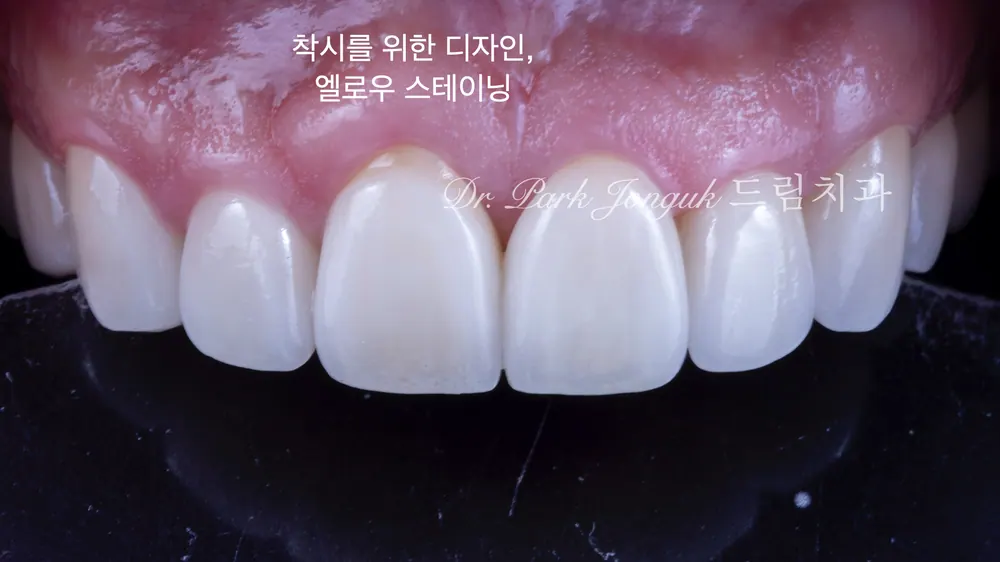
Once the angle of the teeth is corrected,
the difference in gum height becomes more pronounced,
so after making the shape of the teeth symmetrical,
we apply yellow staining to the part of the veneer
where the gum sits higher.
In a natural tooth, that area would correspond to the root,
and since the root portion of a tooth is naturally a bit more yellow,
this is partly to make it look natural,
but it also has the effect of making the tooth appear shorter.
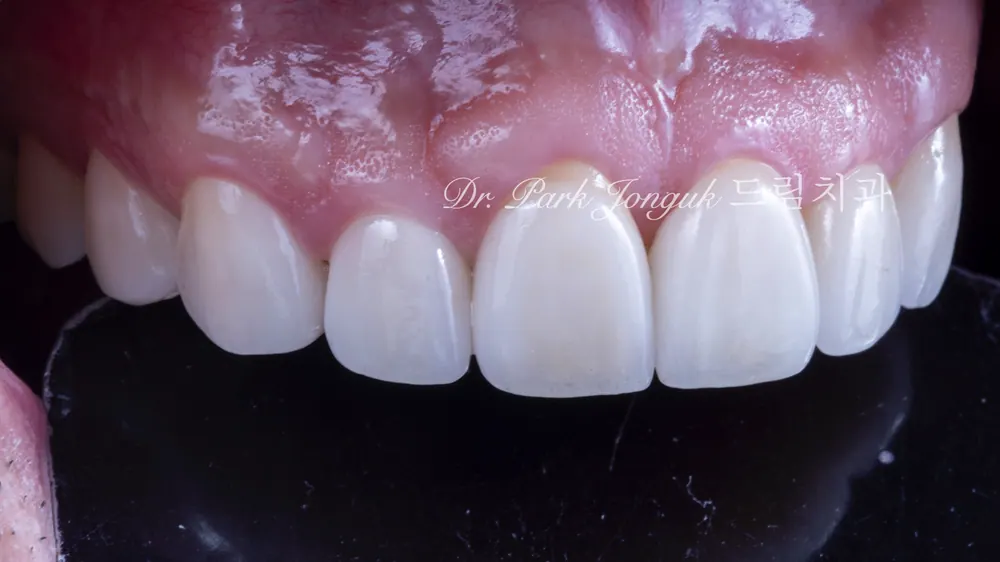
Each tooth was rendered naturally, one by one.
Rather than being a single flat color throughout,
a range of shading and translucency is built into the veneer during fabrication.
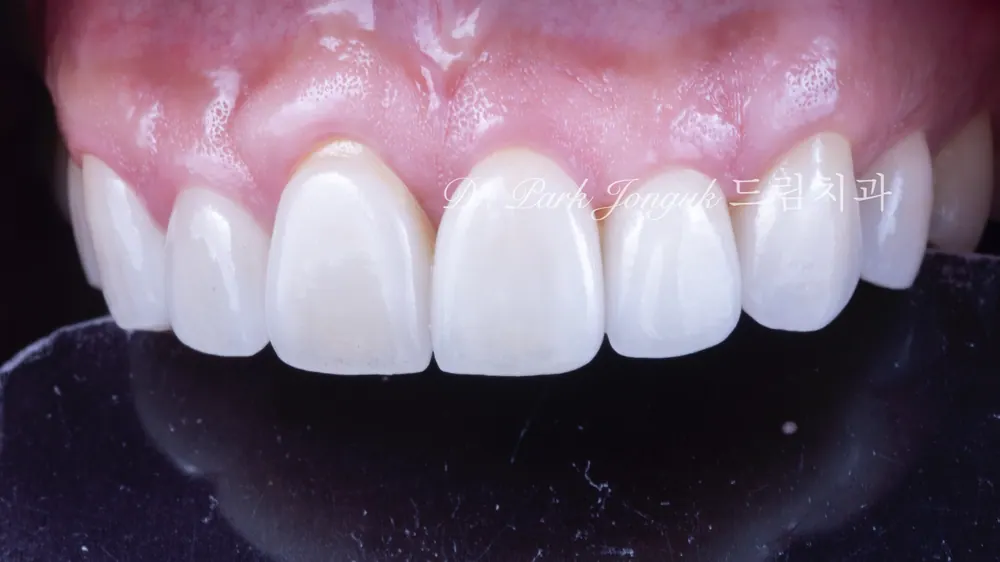
By richly incorporating the varied characteristics of a natural tooth,
we bring that natural feel to life.
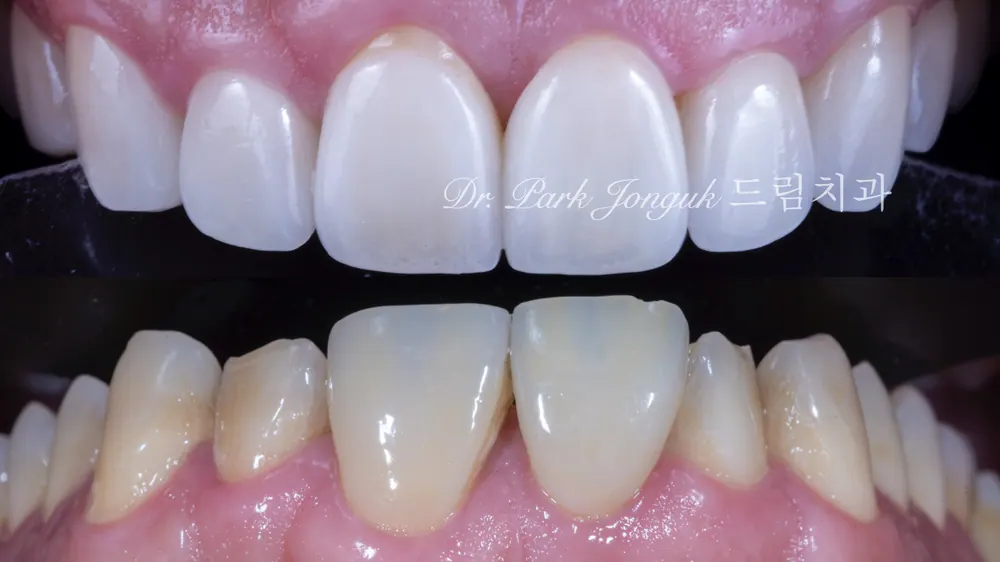
Natural beauty
Since 2006, Dream Dental Clinic
This article is a clinical note written by Dr. Park Jonguk of Dream Dental Clinic, Gangnam; the original was published on his blog. The photographs shown are real cases he treated. Results vary with each patient’s condition, and every procedure carries the possibility of individual variation and side effects.
Quick Consult
Request a Callback
Leave your number and we will call you back during clinic hours.
Request Received
We will contact you during clinic hours. For urgent matters, please call +82-2-3448-0028.