
Veneers in Your 50s: Rejuvenating Aging Teeth Without Anesthesia, With No-Prep Technique
Hello, this is Dream Dental Clinic in Apgujeong.
"My teeth have turned yellow as I've gotten older."
"When I
smile, that's the only time I lose my confidence."
Veneers for people in their 50s aren't simply about making teeth white.
The key is making aged teeth look natural, yet younger.
Today I'd like to share a case of aging-teeth veneers for a male patient in his 50s with model-like looks.
It's a special case done with minimal reduction, close to no-prep veneers, and without any anesthesia at all.
I'll also show you how it still looks perfectly maintained five years later.
Before Treatment: A Typical Case of Aging Teeth
[Photo 1 - Before treatment]
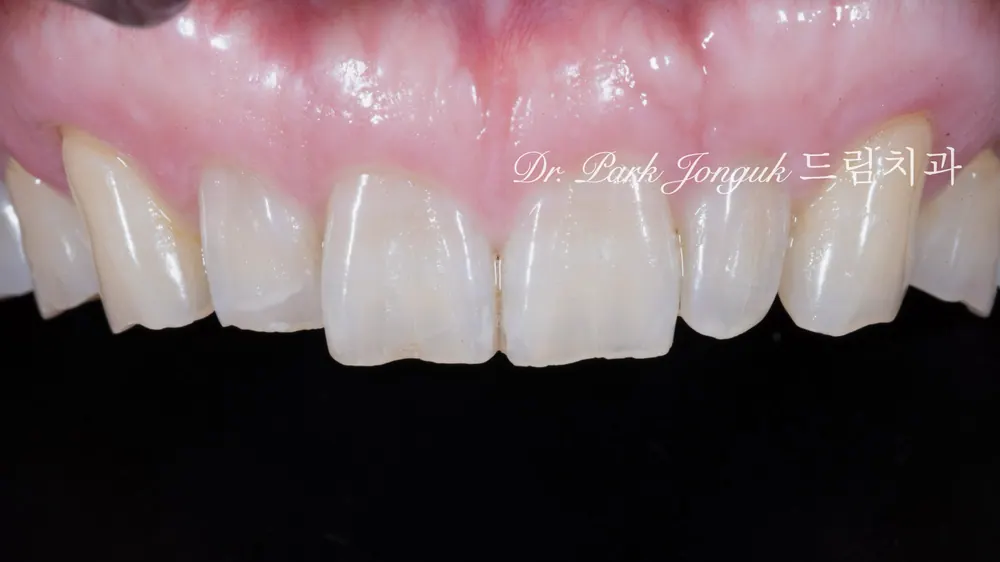
A male patient in his 50s came in.
He was genuinely handsome, with a model-like look, but he said the only time he lost his confidence was when he smiled.
Main issues:
❌ The teeth were yellowed overall (a typical sign of aging)
❌ The tooth edges (incisal edges) were slightly chipped
❌ The lateral incisors were somewhat small, close to undersized (peg-shaped)
❌ An overall aged impression
In fact, there was no functional problem at all.
But aging teeth make you look older when you smile, no matter how good your looks otherwise are.
The patient himself was troubled, saying, "My face looks young, but only my teeth look old."
Treatment Plan: Full No-Prep vs. Minimal Reduction
After consultation, there were two options.
Option 1: Full no-prep
A method that bonds the veneer directly on without cutting the tooth at all.
It's possible, but the teeth may end up a bit larger.
Option 2: Minimal reduction (chosen)
A method that keeps the tooth size almost exactly the same as now, with only a very slight amount of reduction. It's possible without anesthesia,
and even if the veneers were removed later, there would be no problem living with the natural teeth as they are.
After discussion with the patient, we chose Option 2.
Since his current tooth size was already appropriate, we judged that keeping it as is would look more natural than making the teeth larger.
Tooth Reduction: Done Without Anesthesia
[Photo 2 - After tooth reduction]
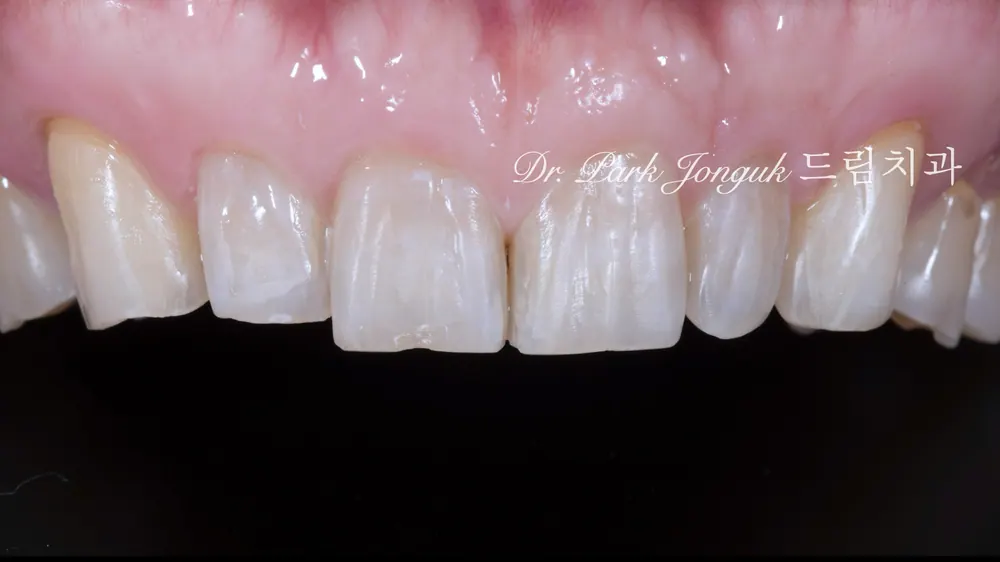
This is a remarkable photo. Even after tooth reduction, there's almost no visible difference.
The reduction was so minimal that this photo could easily be mistaken for the before picture.
What Minimal Reduction Means:
✓ Can be done without anesthesia
✓ No pain or sensitivity whatsoever
✓ Only the outer enamel layer is lightly refined
✓ Even if the veneers are removed later, life with the natural teeth is unaffected
✓ Truly conservative treatment in the real sense
This is the power of precision diagnosis. Through a wax-up, the final size is decided in advance, and only the exact minimum is reduced to match it.
Unnecessary reduction is never done.
This conservative approach is especially important for veneers in your 50s.
That's because preserving tooth structure matters even more as you get older.
Fabricating the Veneers: The Secret of Handmade Build-Up
[Photo 3 - Fabrication process]
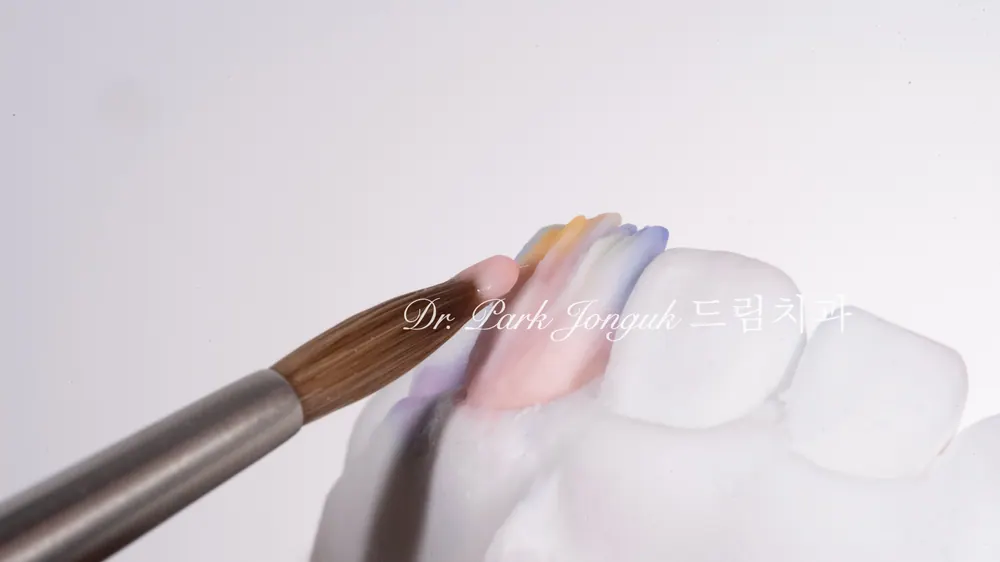
This is where Dream Dental Clinic differs the most. What we do is handmade build-up veneers.
What Is Build-Up?
It's a hand-crafted method of mixing several types of ceramic and layering them up, one on top of another.
Just as a painter builds up a picture with layer after layer of paint, we stack the ceramic layer by layer to recreate the look of a natural tooth.
The Build-Up Process:
Layer 1: Inner dentin layer — a warm yellow tone. Layer 2: Transition layer — a natural shift in color. Layer 3: Enamel layer — expressing translucency. Layer 4: Incisal edge layer — translucency at the tip of the tooth. Layer 5: Surface texture — recreating fine detail.
We build up these five layers, firing, refining, and firing again at each stage. It's a painstaking process that takes a total of 2-3 weeks.
Why Don't Most Clinics Do This?
These days, most clinics make veneers out of just a single type of ceramic.
Reasons:
It can be made quickly (same day to 3 days)
It can be made in large quantities (mass production)
Fabrication cost is low
It requires less skill
But doing it that way means giving up on esthetics.
The Problem With Single-Ceramic Veneers:
❌ Looks opaque and just plain white
❌ Monochrome, with no sense of depth
❌ It's obvious that dental work was done
❌ Looks artificial
❌ Too bright for the patient's age
Why Do We Insist on Build-Up?
Build-up is essential for a natural, beautiful veneer.
Advantages of Build-Up:
✅ Translucency just like a natural tooth
✅ Depth from multiple blended colors
✅ A natural tone appropriate to the patient's age
✅ No sign of having had dental work done
✅ Genuinely natural
In particular, veneers for aging teeth should never simply be made white.
A tone that suits a man in his 50s — natural, yet bright. A subtle shade like this is only possible with build-up.
It takes a long time and costs more, but we never compromise on naturalness.
The Finished Veneers: Translucency Is Everything
[Photos 4, 5 - The fabricated veneers]
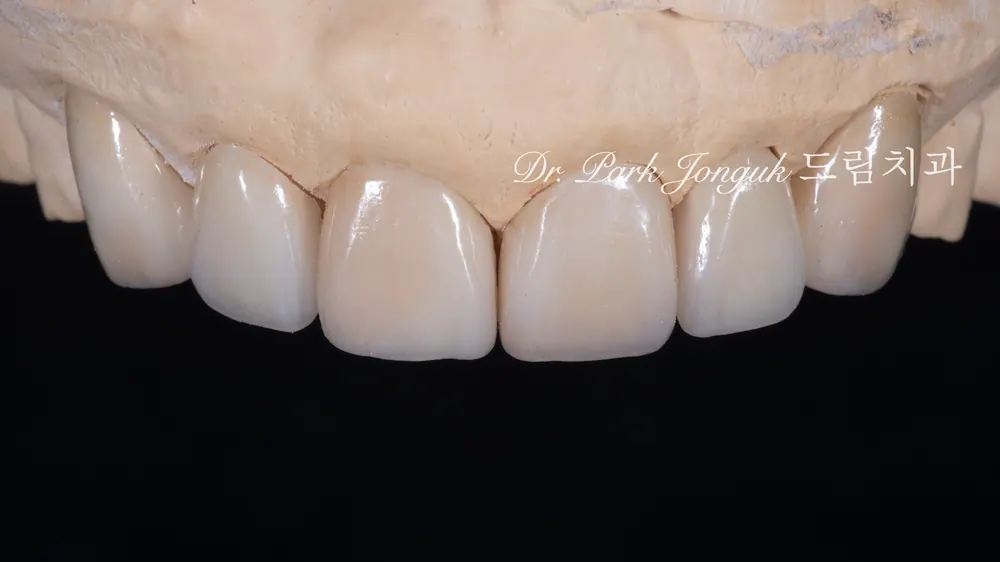
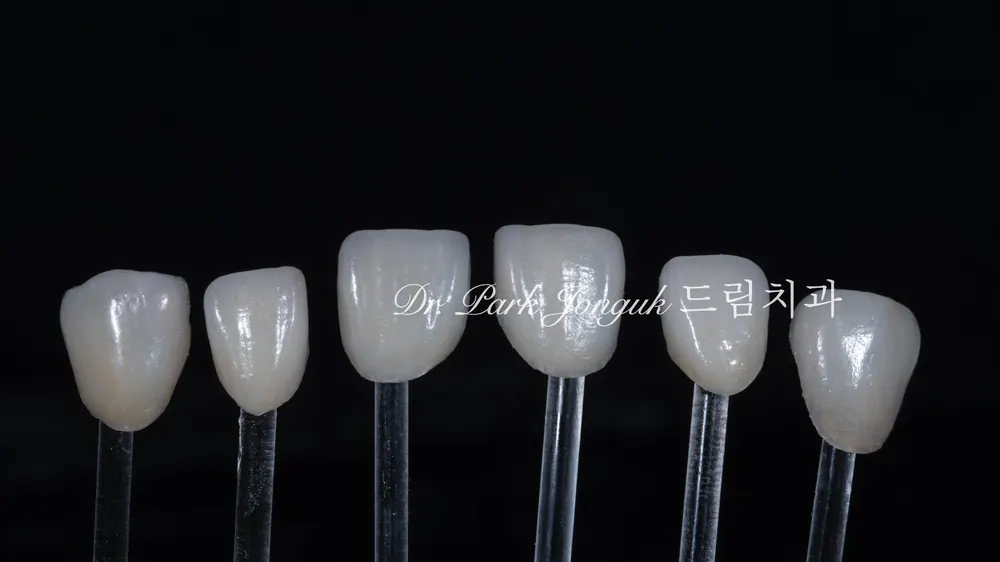
Here, finally, are the completed veneers. What's remarkable when you look at them is the translucency.
Since this is close to a fully no-prep veneer, the veneer itself is extremely thin.
Being this thin greatly improves translucency. You can see light passing through it just like it would through a natural tooth.
It's completely different from one made with a single ceramic.
Because multiple layers were built up, you get a sense of depth, as if the color were coming from within.
[Photo 6 - A design that wraps around to the sides]
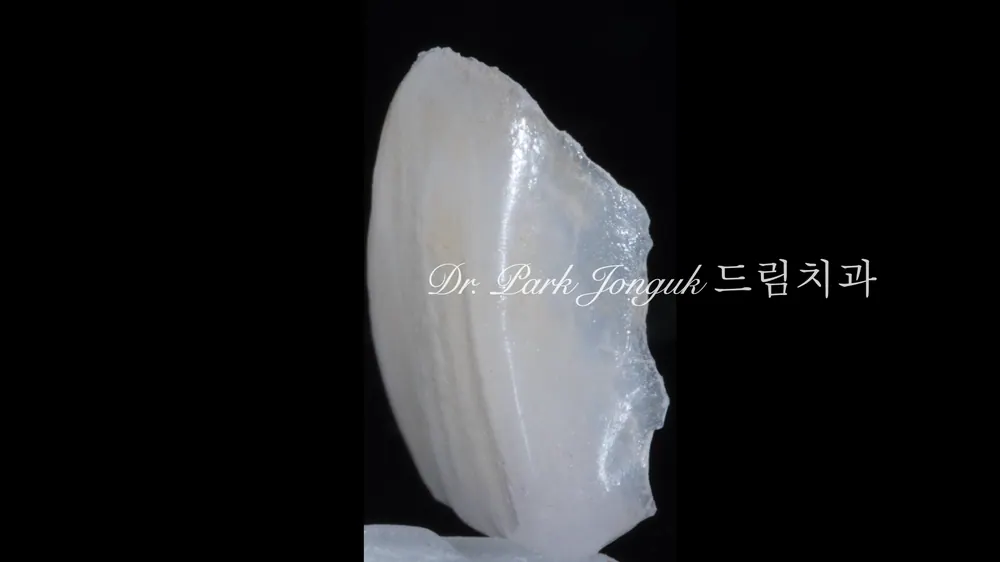
The finished veneer was made to wrap well around the sides of the tooth.
This is an important detail too. If only the front is covered, the edge can show when viewed from the side.
But when it wraps naturally around the sides as well, it looks perfect from every angle.
The Fitting Process: A Dramatic Change
[Photos 7, 8 - Only the left side fitted]
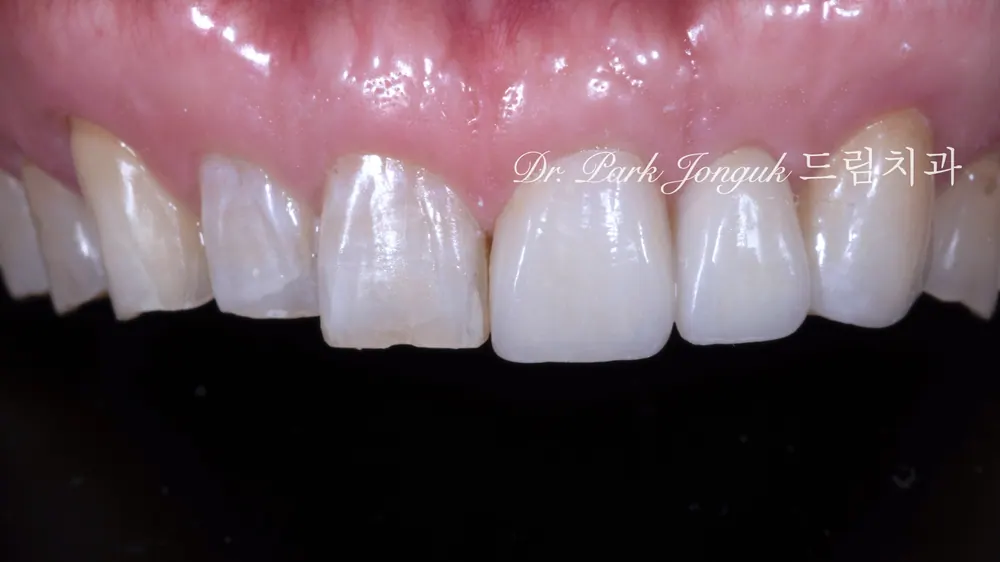
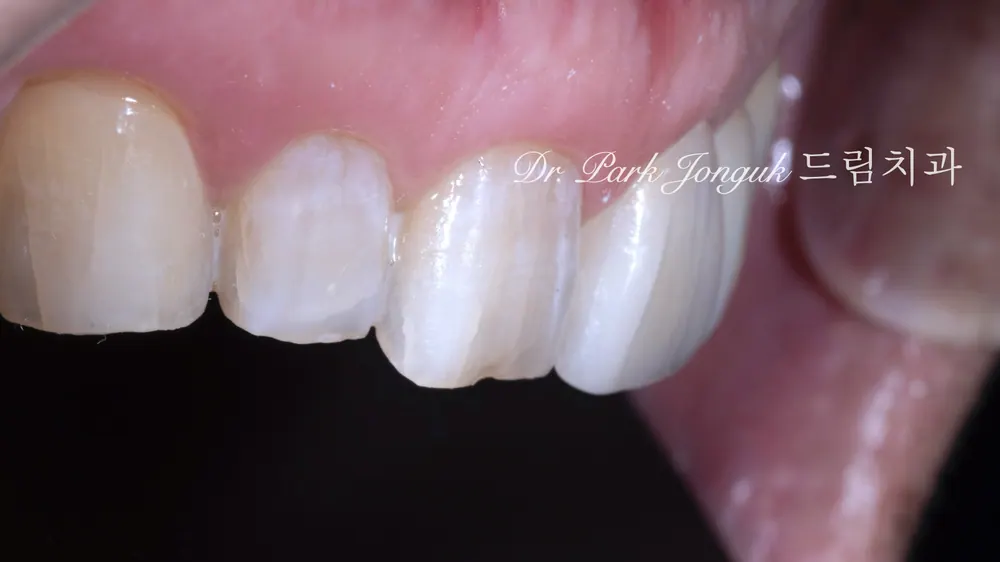
First, we placed only the left veneer. You can clearly see the difference, can't you?
The left side looks bright and young, while the right side still looks yellowed and aged. Placing it on just one side like this makes the change look even more dramatic.
[Photos 9, 10 - Only the right side fitted]
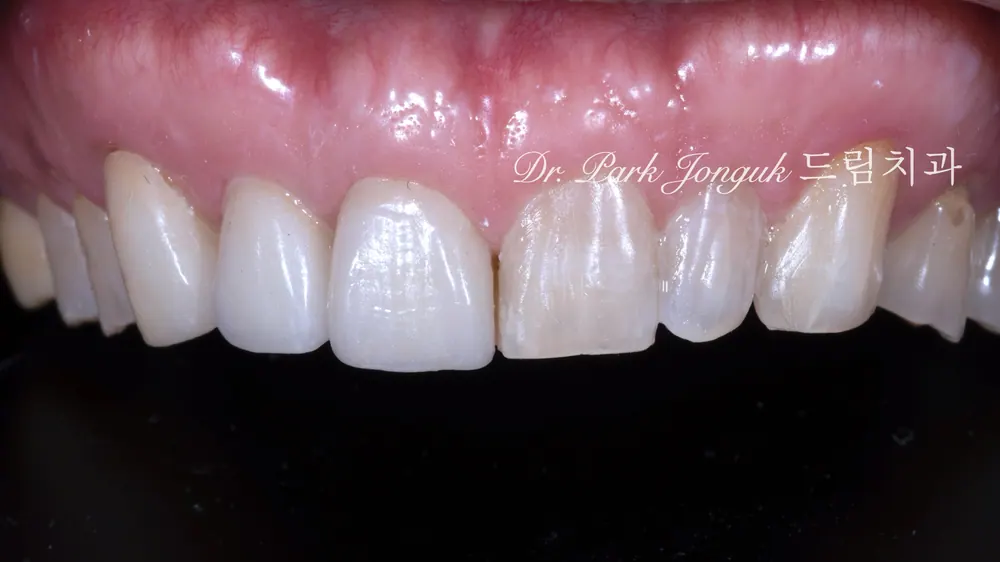
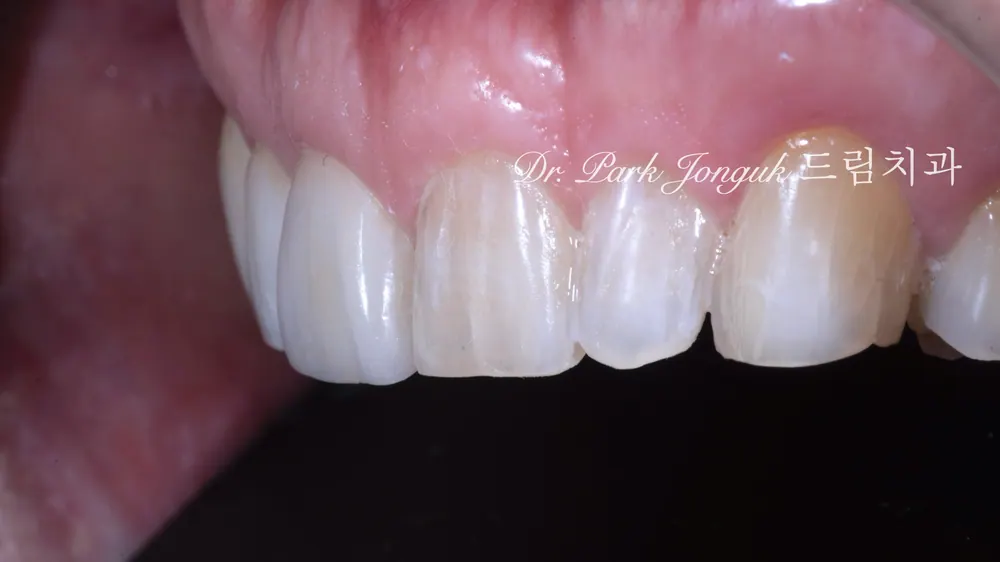
This time we placed only the right side. Again, you can see a remarkable difference.
In particular, the lateral incisor that had been small changed to a natural size. With the once undersized lateral incisor now a normal size, the entire arch looks far more harmonious.
[Photos 11, 12 - Final result]
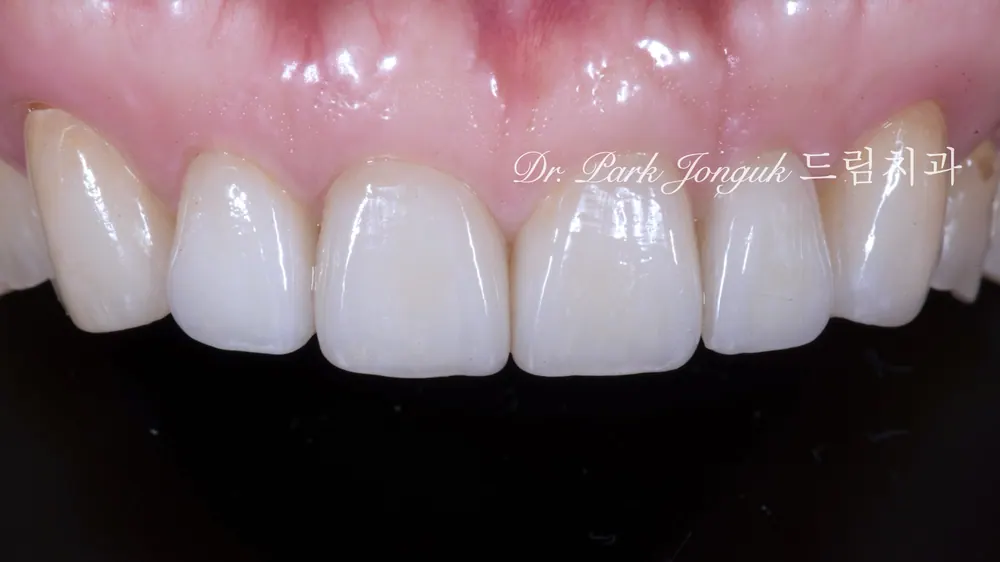
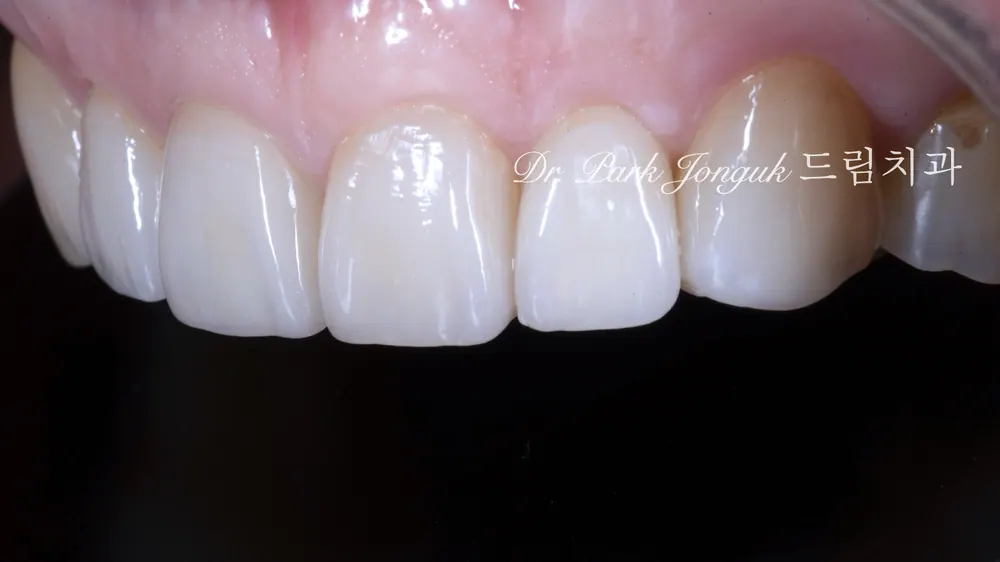
At last, the veneers are seated on both sides! It looks truly natural.
What Changed:
✅ Brighter color — the yellowed, aged teeth turned into a natural, bright shade
✅ Looking younger — an overall impression of looking about 10 years younger
✅ Chips resolved — the tooth edges are now neatly finished
✅ Lateral incisor size improved — the once-small lateral incisors are now a natural size
✅ Translucency — translucent and lively, just like natural teeth
✅ Naturalness — there's no sign at all that veneers were done
The most important thing is a natural brightness that suits a man in his 50s. Not too white like a twenty-something's teeth, but a tone that fits his age while still looking youthful. This is where build-up truly proves its worth.
Five Years Later: Quality Proven by Time
[Photo 13 - Five years later]
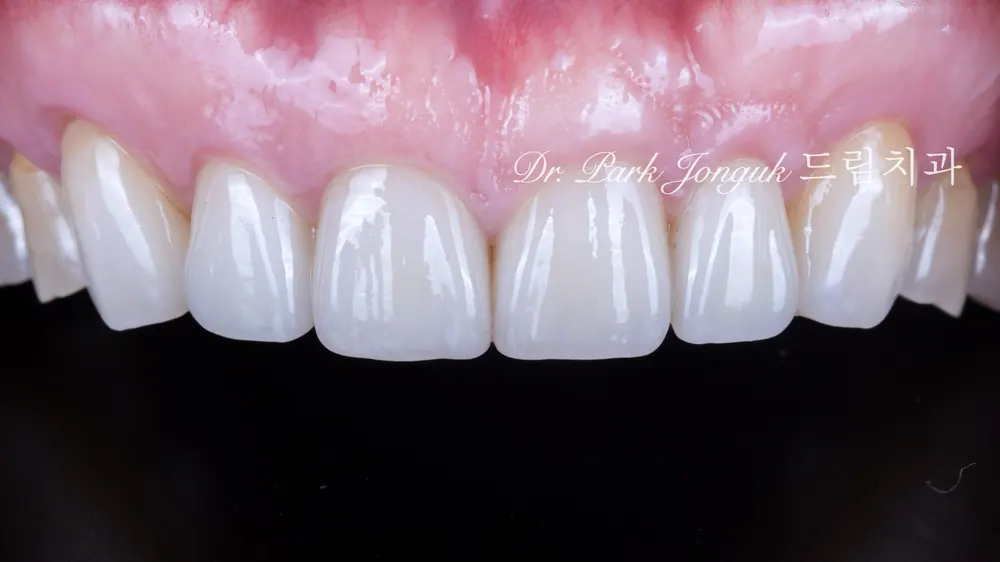
And this is the most important part. Even now, five years later, he's using them without any problems at all.
Condition After Five Years:
✅ No fractures or cracks whatsoever ✅ Color unchanged, exactly as it was ✅ Still perfectly bonded, with nothing coming loose ✅ Gum health in good condition ✅ Patient satisfaction still at its highest
He tells us, "I've gained confidence when I smile," and he's satisfied at every regular checkup.
A properly made veneer for someone in their 50s can be used like this for 15 to 20 years or more.
Five years have already passed, and he can still expect at least another 10 years of use.
This is the power of precision diagnosis, minimal reduction, and handmade build-up.
Conclusion: The Standard for Veneers in Your 50s
Your 50s call for a different approach than your 20s
The Three Most Important Things for Veneers in Your 50s:
1. A Conservative Approach — Preserving tooth structure matters more and more as you age.
An approach like this patient's — minimal reduction possible without anesthesia, close to fully no-prep veneers — is ideal.
2. A Color That Fits Your Age — Making the teeth as white as a twenty-something's looks unnatural.
A man in his 50s needs a natural brightness, a touch of warmth, and appropriate translucency. This is only achievable with build-up.
3. Naturalness — It should never be obvious that dental work was done.
The best outcome is when the people around you simply say, "Your teeth look great," without ever knowing veneers were done.
What Sets Dream Dental Clinic Apart
Precision diagnosis: the final size is decided in advance with a wax-up, and minimal reduction is planned accordingly
Handmade build-up: multiple ceramics are layered to achieve a natural translucency and color
Long-term follow-up: quality that stays perfectly maintained even 5 or 10 years later
This is exactly why I've specialized only in veneers for 20 years, why I wrote the textbook "최소 삭제를 위한 라미네이트 임상," and why I teach dentists from across the country every month at Lamista Academy.
"Making aging teeth in your 50s look naturally younger — that is what true esthetic dentistry is."
Q&A: Common Questions About Veneers in Your 50s
Q1. Can people in their 50s get veneers? A. Of course. In fact, your 50s may be exactly the age range where veneers are most effective. They can address discoloration, wear, and chipping caused by aging all at once. What matters is choosing a natural color and shape that fits your age.
Q2. What's the difference between no-prep veneers and minimal reduction? A. Full no-prep means the tooth isn't cut at all, while minimal reduction means only lightly refining the enamel surface, without anesthesia. If you want to keep your current tooth size, as this patient did, minimal reduction is more suitable, since full no-prep can leave the teeth slightly larger. Both are very conservative treatments.
Q3. Does making the teeth too white look strange on a man in his 50s? A. Yes, it looks unnatural. Making them extremely bright with shades like A1 or B1, as you might for someone in their 20s, ends up looking fake instead. For someone in their 50s, a natural brightness around A2-A3 with added translucency is ideal. The key is "looking younger, but naturally." The build-up method is better suited to this kind of subtle tone control.
Q4. Is it possible to get veneers without anesthesia? A. Yes, in the case of minimal reduction. Lightly refining only the enamel surface causes almost no pain. This patient, too, was treated comfortably without anesthesia. If more reduction is needed or the patient is sensitive, anesthesia can be used, but minimal reduction guided by precision diagnosis is usually enough without it.
Q5. What's the difference between handmade build-up and CAD/CAM? A. The biggest difference is naturalness.
Q6. How long do veneers last for someone in their 50s? A. If made properly, they can last 15 to 20 years or more. This patient's veneers are already five years in and still in perfect condition. Handmade build-up has no internal stress and excellent strength, so fractures are rare. With regular checkups and proper care, they can even last a lifetime.
Q7. Are there other options for aging teeth besides veneers? A. There's whitening, resin, and crowns, but each has its limits. Whitening only improves discoloration and can't fix chips. Resin discolors every 2-3 years and needs to be replaced. Crowns require cutting away a lot of tooth structure. To solve the combined problems of aging teeth — discoloration, wear, chipping, and size — all at once, veneers are the best option.
Q8. Where's a good place in Gangnam for veneers for people in their 50s? A. Check for the following: ✓ Experience with cases in their 50s (a different approach by age group) ✓ A handmade build-up method (for naturalness) ✓ Minimal reduction available (conservative treatment) ✓ Long-term follow-up photos (5 years or more) ✓ Verified expertise, such as writing textbooks and academic activity
I am the author of "최소 삭제를 위한 라미네이트 임상," and every month at Lamista Academy I teach age-specific cases like veneers for people in their 50s. With 20 years of specialized experience, I create natural results suited to each patient's age.
This article is a clinical note written by Dr. Park Jonguk of Dream Dental Clinic, Gangnam; the original was published on his blog. The photographs shown are real cases he treated. Results vary with each patient’s condition, and every procedure carries the possibility of individual variation and side effects.
Quick Consult
Request a Callback
Leave your number and we will call you back during clinic hours.
Request Received
We will contact you during clinic hours. For urgent matters, please call +82-2-3448-0028.