
Retreating an All-Ceramic Crown After the Gum Turned Dark
Hello, I'm Park Jonguk, director of Dream Dental Clinic.
When decay is severe or a tooth breaks,
root canal treatment becomes necessary.
Root canal treatment doesn't actually treat the nerve, despite the name.
It's a bit of a misleading term —
dentists call it endodontic treatment.
It means treating the canal inside the root of the tooth,
and instead of treating the nerve, it removes the nerve,
clearing out the inflammation so the tooth can be used a while longer.
When a tooth undergoes root canal treatment like this,
though it varies a lot case by case,
its color can change.
Depending on the type of material used, the tooth can turn quite dark.
If the discoloration progresses down to the root of the tooth,
it can show through the gum,
turning the gum color dark as well.
This wouldn't matter much for a molar,
but for a front tooth, it becomes a significant esthetic problem.
In such cases, whitening can improve things to some degree,
but a full recovery is usually not possible.
So if root canal treatment is unavoidable when treating a front tooth,
it needs to be done in a way that minimizes discoloration.
Today, we'll look at how the gum color can be improved for a tooth with severe discoloration like this,
through retreatment with an all-ceramic crown.
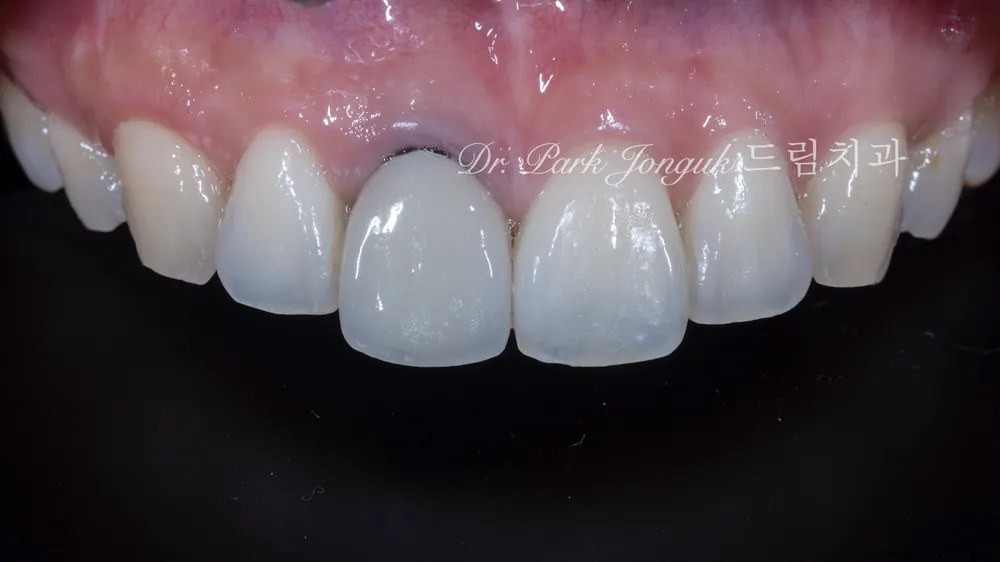
Long ago, after root canal treatment for a fractured tooth,
a metal post had been placed inside the tooth,
and an all-ceramic crown had been placed on top.
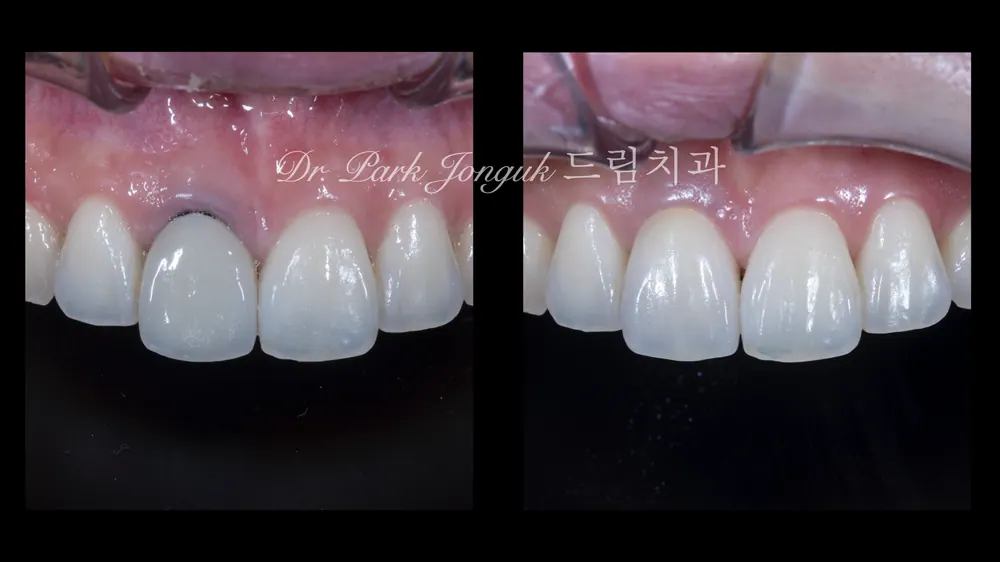
Because of discoloration in both the tooth and the gum,
the patient came in for retreatment.
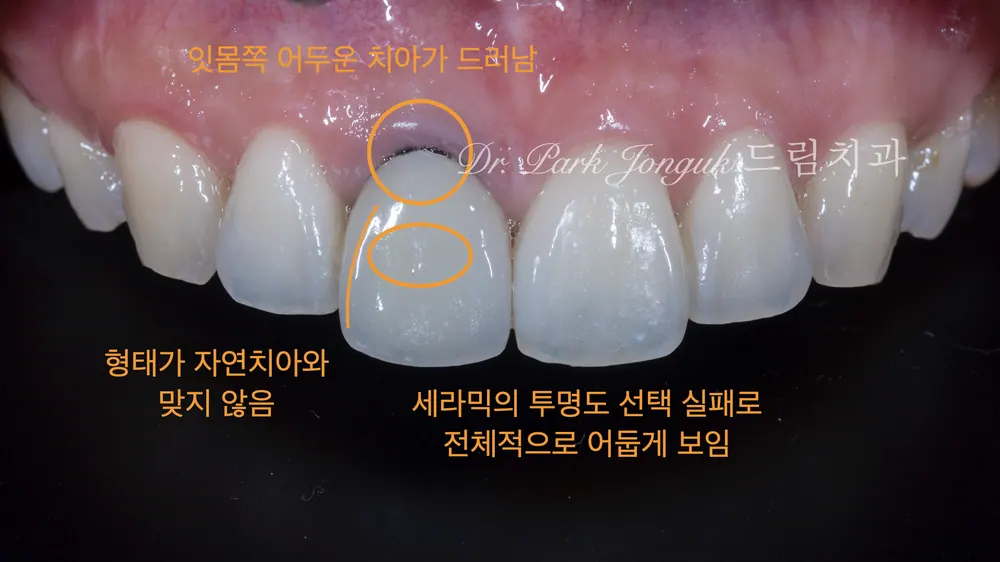
The discoloration was probably even worse than at the time of the original treatment.
As time passes after root canal treatment, discoloration can gradually deepen, sometimes to almost black.
We needed to choose an opaque ceramic that could better cover the discoloration.
The shape of the tooth also had to be improved to better match the symmetrical natural tooth.
The blackened part of the tooth was visible near the gum, and this also needed to be covered.
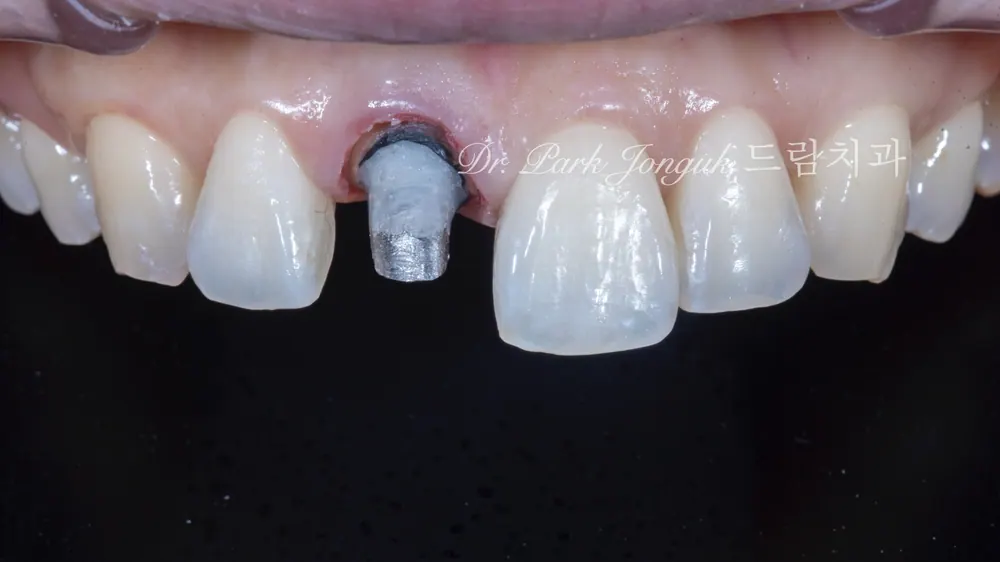
When we removed the crown for retreatment,
the discoloration was severe, but because a metal post was inside,
whitening the tooth was not possible.
In this state, we decided to adjust the shape of the gum
and treat it in a way that covers the discoloration as much as possible.
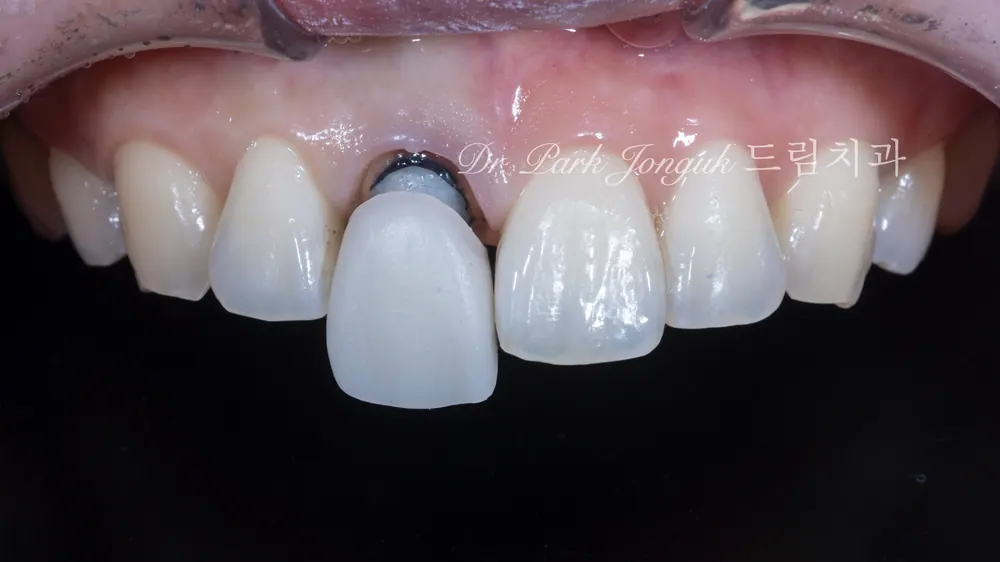
The most important part of this process is the use of temporary teeth.
Changes to the gum shape have to be carried out through temporary teeth.
By making precise temporary teeth to reshape the gum,
we tried to make the gum around the discolored area as thick as possible.
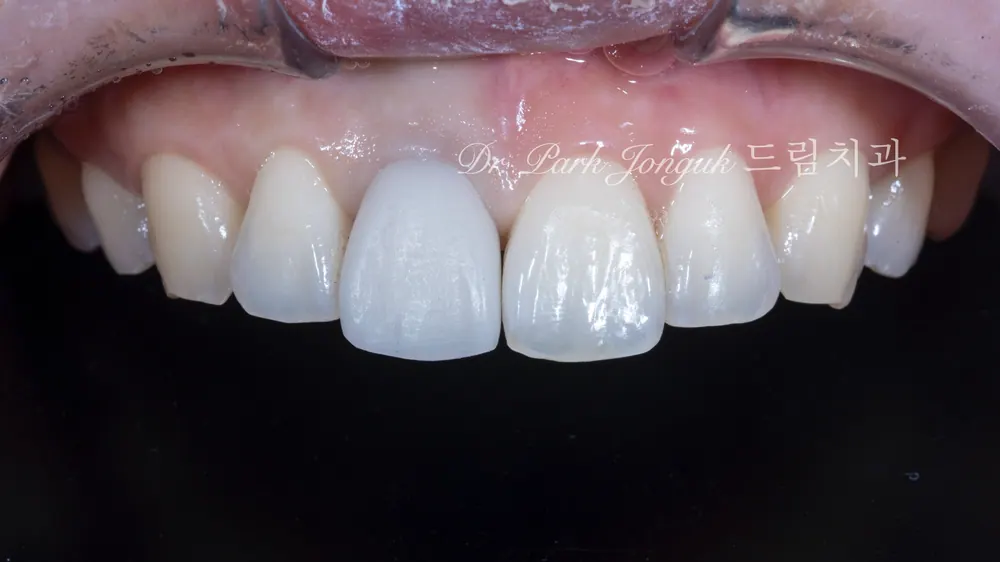
Temporary teeth are worn for as little as 2 weeks or as long as 2-3 months.
In this case, the gum adapted well, so treatment could be completed in a short time.
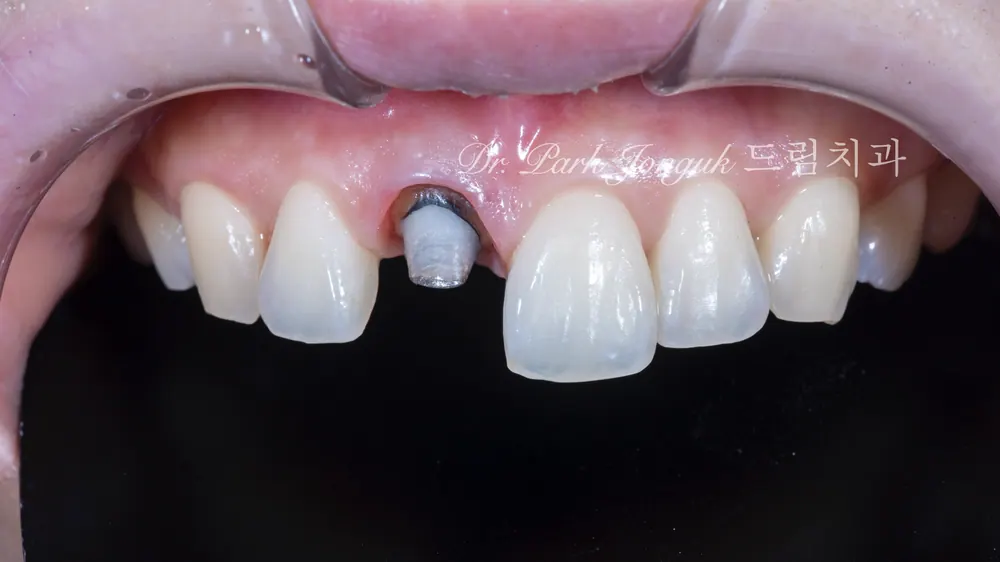
Once the gum had adapted well,
we took an impression and began fabricating the all-ceramic crown.
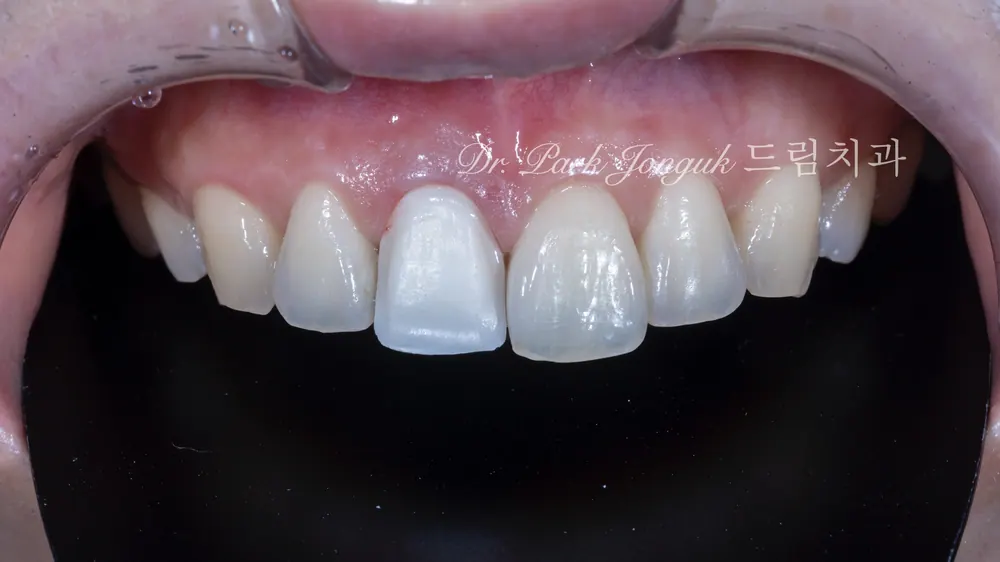
To cover the discoloration,
we fabricated a zirconia core
and tested whether it fit the gum well and whether it effectively covered the discoloration.
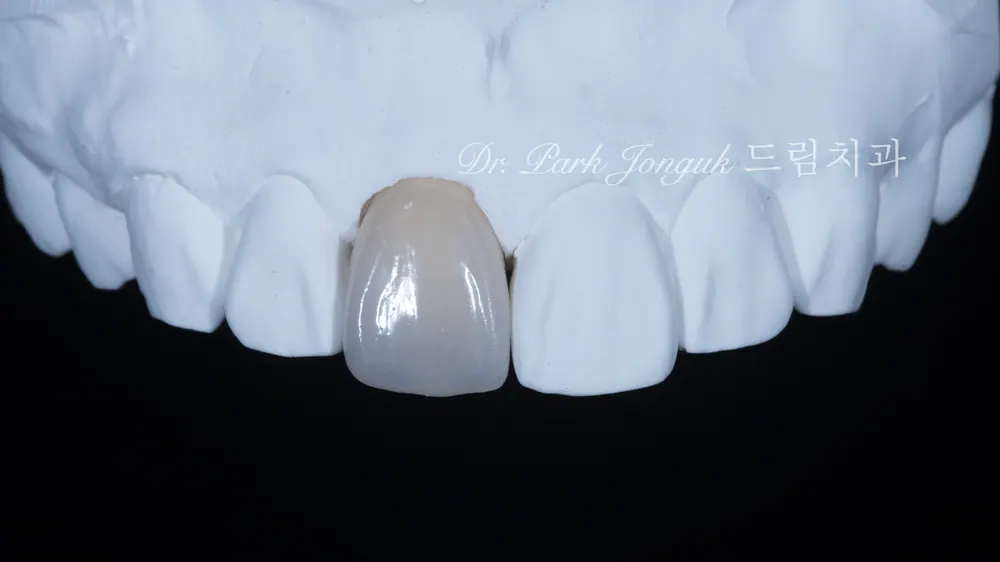
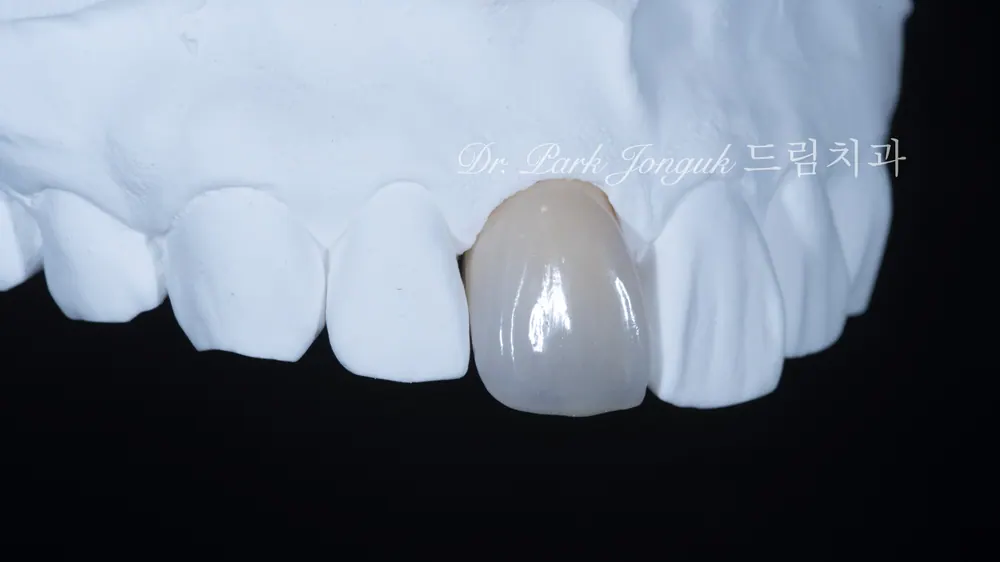
The tooth shape is then built up on top of the fabricated zirconia core.
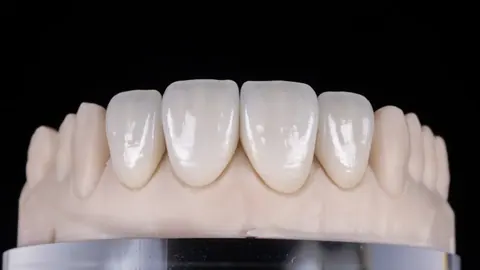
Using feldspathic ceramic,
we bring out the feel of a natural tooth.
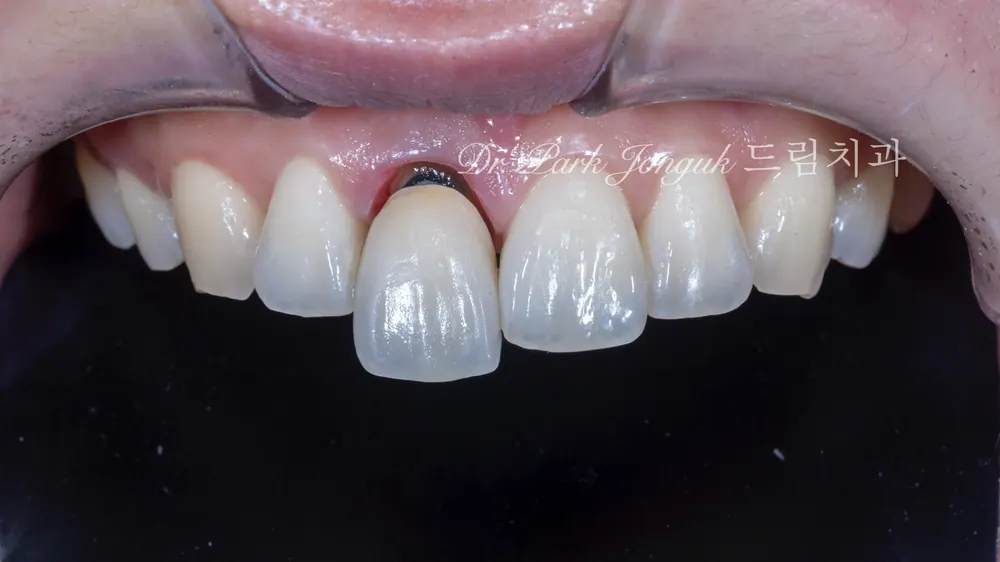
We try in the completed all-ceramic crown.
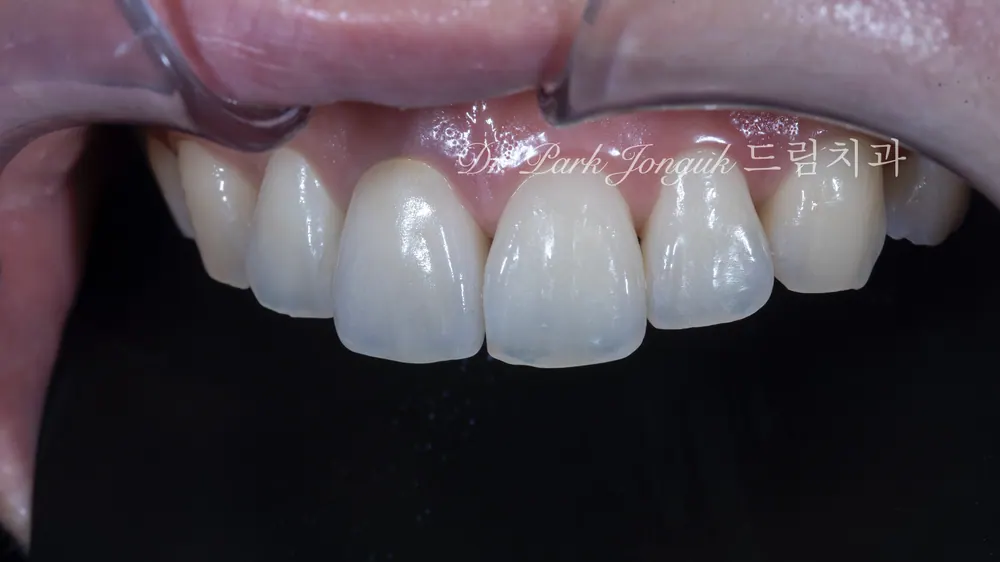
You can see that the gum formed into a very healthy state thanks to the temporary teeth.
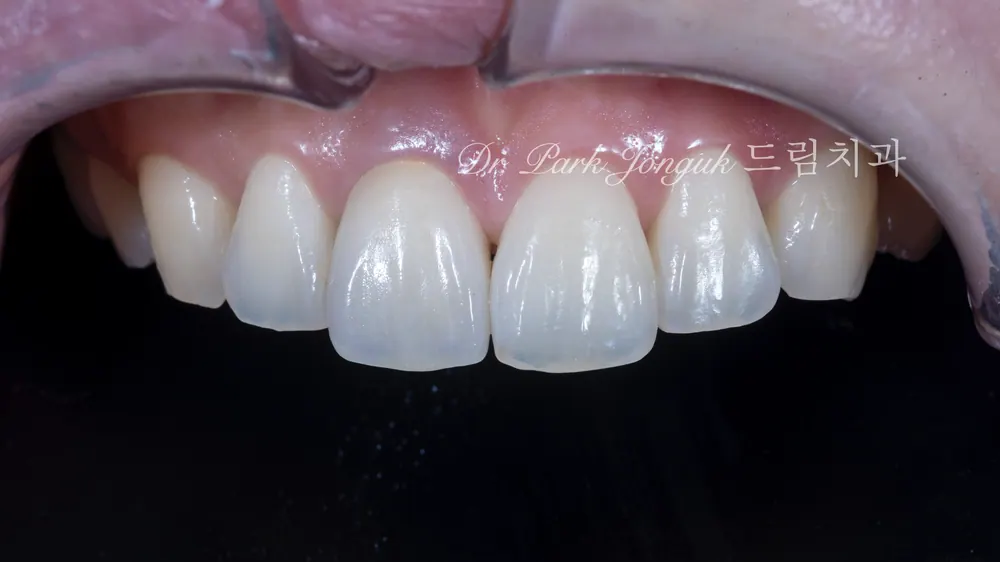
You can see that the gum has become thicker through the retreatment process.
The discoloration at the root of the tooth showing through the gum can't be completely eliminated,
but you can see that it's improved considerably.
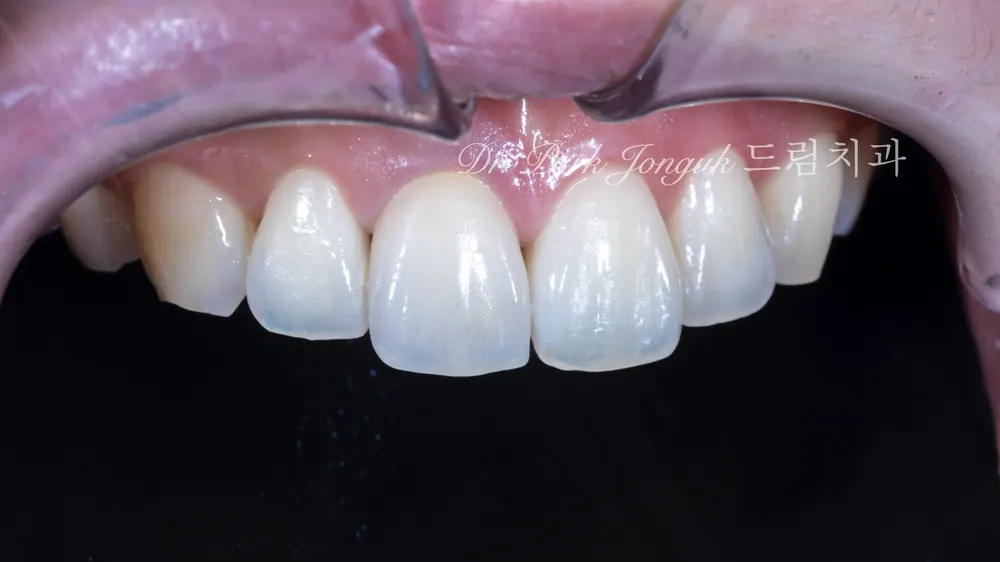
The shape, color, and translucency of the tooth
blend so well with the symmetrical natural tooth
that it's hard to tell them apart.
Natural beauty.
Since 2006, Dream Dental Clinic
This article is a clinical note written by Dr. Park Jonguk of Dream Dental Clinic, Gangnam; the original was published on his blog. The photographs shown are real cases he treated. Results vary with each patient’s condition, and every procedure carries the possibility of individual variation and side effects.
Quick Consult
Request a Callback
Leave your number and we will call you back during clinic hours.
Request Received
We will contact you during clinic hours. For urgent matters, please call +82-2-3448-0028.