
The Truth About No-Prep Veneers -- The Gap Between Advertising and Clinical Reality
In recent years, "no-prep veneers"
have become one of the most searched terms in the field of veneers.
As the phrase "just bond them on without cutting the teeth at all" appears often in advertising,
many patients come to the clinic asking, "How is this different from regular veneers?" and "Is it really possible not to cut the teeth at all?"
To give the conclusion first,
cases where truly no-prep veneers are possible do clearly exist.
But the "no-prep" spoken of in advertising and the "no-prep" spoken of in clinical practice are the same word with a different meaning.
Over 20 years of practicing veneer treatment,
I'd like to lay out the truth that's hidden behind that single word, "no-prep."
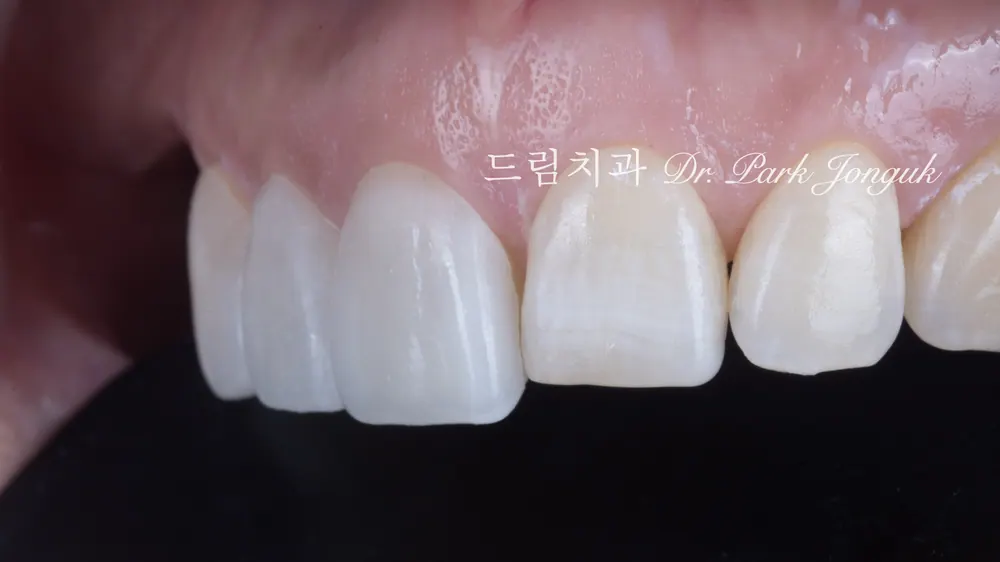
1. What Exactly Are No-Prep Veneers?
No-prep veneers are called "no-prep veneers" or "prep-less veneers" in English.
As the name suggests, with almost no process of shaping the tooth surface,
a very thin piece of porcelain (ceramic) is bonded directly onto the tooth.
Where a standard veneer uses porcelain about 0.5mm thick, requiring the tooth surface to be shaped by that much,
no-prep veneers use thinner porcelain, around 0.2-0.3mm, placed directly on the tooth as is.
Of course, depending on the case, a thicker veneer may sometimes be needed.
In theory, the biggest advantage is that there is almost no loss of tooth structure.
2. The "No-Prep" in Advertising and the "No-Prep" in Clinical Practice Are Different
This is the part that's most often misunderstood.
Advertising commonly uses the phrase "the tooth is not touched at all."
But in actual clinical practice, the surface is often very slightly refined to ensure bonding strength,
or a rough surface is smoothed out, in most cases.
In other words, clinical "no-prep" is closer to "reducing far less than in a standard procedure" than to "cutting nothing at all."
Starting treatment knowing this difference versus not knowing it
results in a large gap in satisfaction afterward.
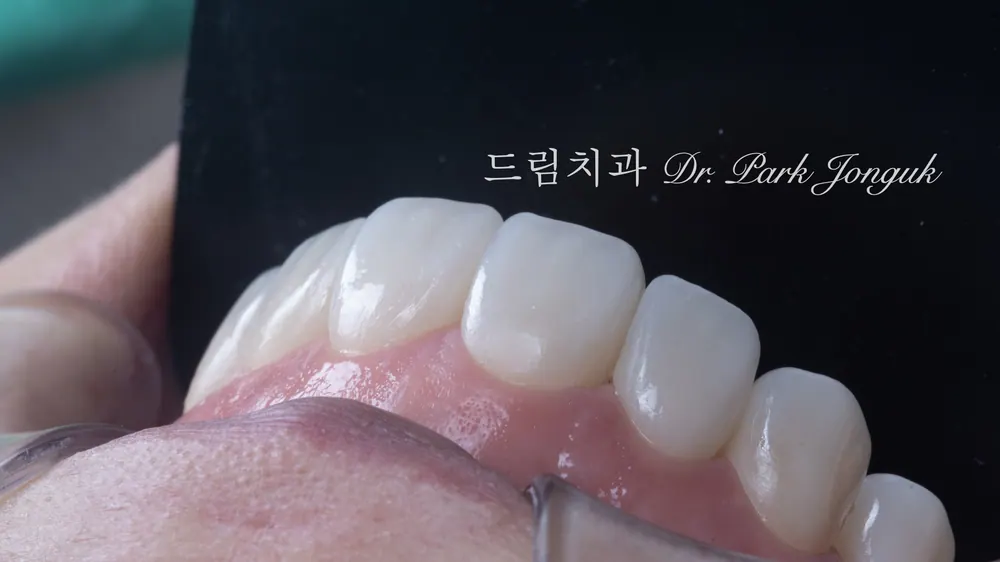
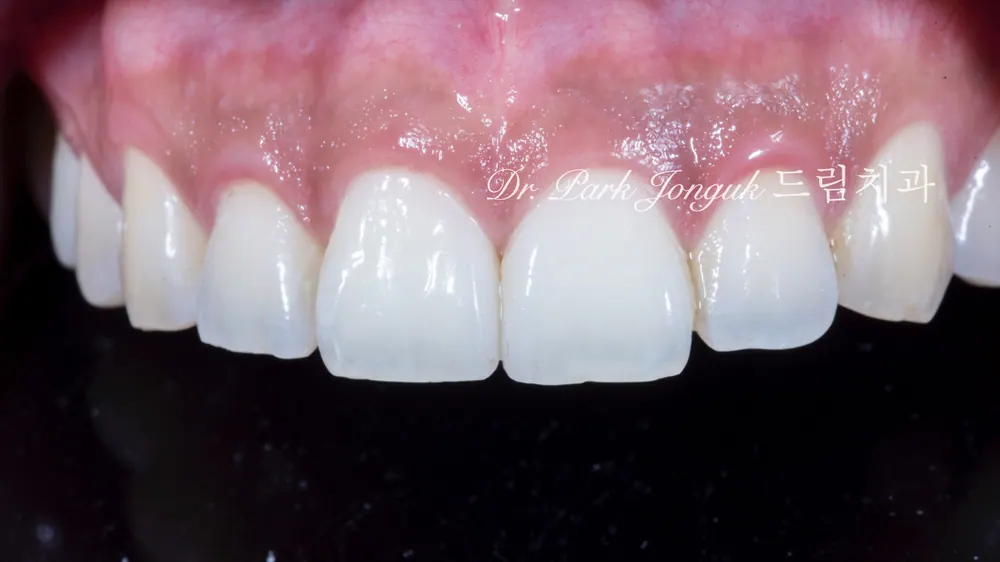
3. When No-Prep Veneers Are a Good Fit
No-prep isn't possible for every tooth.
In the clinic, the no-prep approach fits naturally in the following situations.
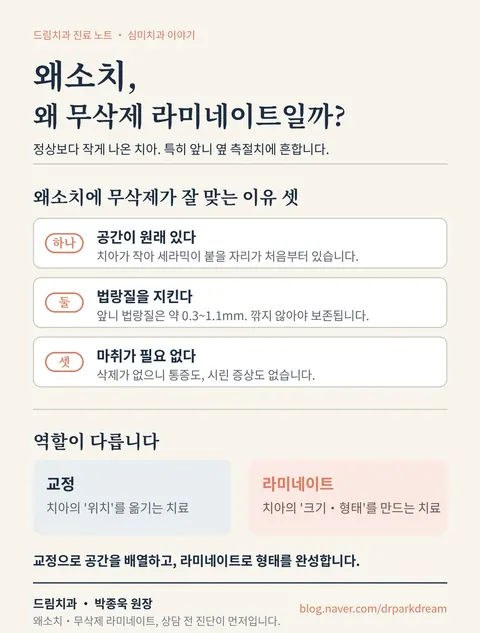
First, when the teeth are naturally small
This is when the teeth are congenitally small, or look narrow compared to the neighboring teeth.
For teeth like this, "adding" looks more natural than "taking away," so the no-prep approach fits well.
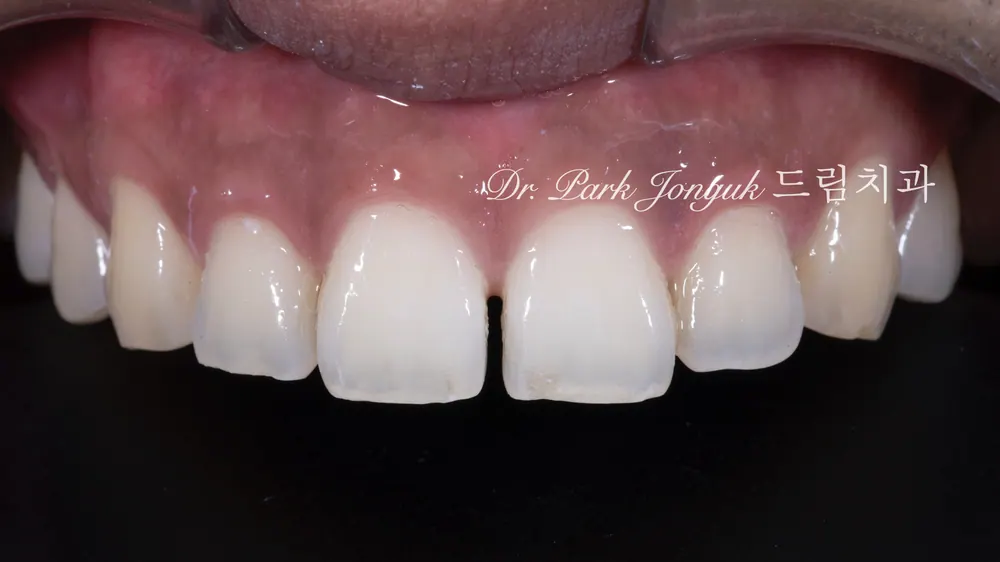
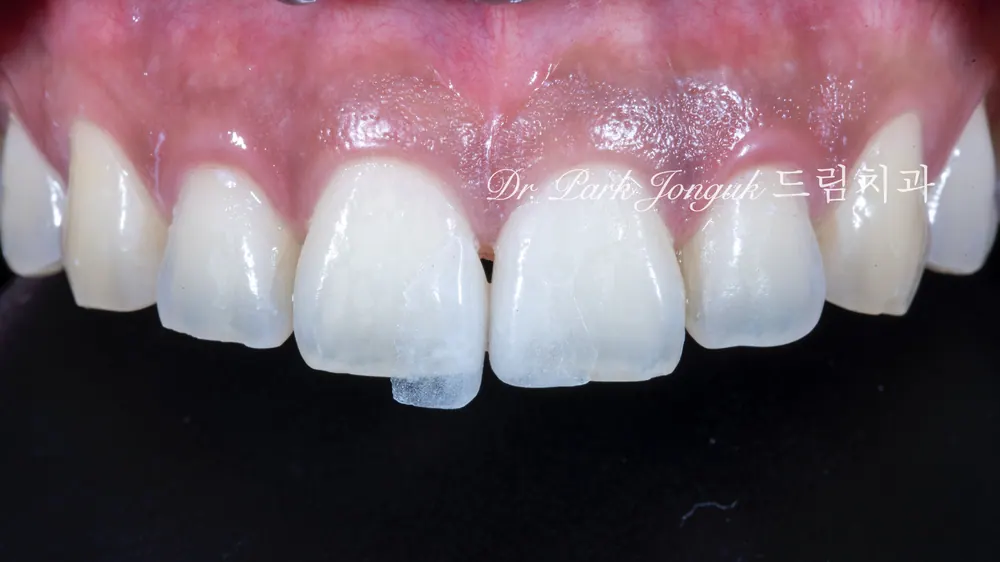
Second, when there's spacing between the teeth
For patients with gaps between their front teeth, veneers are used to fill in that space.
Here too, the extra thickness is used to close the gap, so treatment without any reduction is sometimes possible.
Third, when the teeth have shortened from wear
Some patients have worn-down, shortened tooth edges from grinding, nighttime clenching, or acidic foods.
Since this is a case of restoring lost length,
adding length with a no-prep or minimal-prep approach fits naturally.
Fourth, when orthodontics has left the teeth retroclined
When orthodontic treatment leaves the teeth retroclined, they barely show when speaking or smiling.
In cases like this, no-prep veneers can restore a natural smile.
4. When No-Prep Veneers Are Difficult or Not Recommended
Conversely, there are certainly cases where no-prep is clinically an unreasonable choice.
First, when the teeth already protrude forward
Adding thickness to a tooth that's already protruding will make it stand out even more.
In this case, no-prep ends up making the mouth look even more protruding as a result.
Second, when discoloration is severe
Thin porcelain can't hide deep discoloration.
In this case, only minimal reduction followed by porcelain of sufficient thickness to mask the color will produce a natural shade.
Third, when the teeth are large
Adding thickness for someone whose teeth are already larger than average makes the teeth look even bigger and unnatural.
This is a diagnostic area where facial proportions and lip line must be considered together.
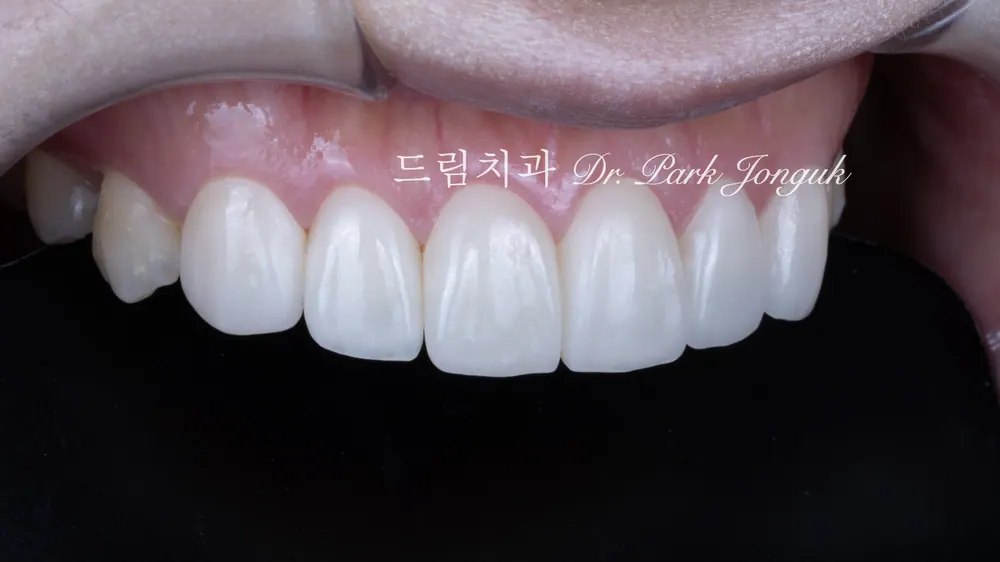
5. The Biggest Trap of No-Prep Veneers — They End Up Thicker
The advantage of "not cutting" comes together with the result of "adding on."
Most of the patients in our clinic who report dissatisfaction after no-prep treatment
aren't complaining of sensitivity or pain, but that "the teeth look thick."
Sometimes the lips don't close comfortably, or the feeling of the upper front teeth touching the lower lip feels off,
leading to teeth that look overly prominent when viewed from the front.
It's quite difficult to make no-prep look natural.
But making it look natural is exactly what veneer treatment is supposed to do.
That is precisely what sets apart Dream Dental Clinic, with our long history of veneer treatment.
6. So What Standard Should Guide the Choice?
No-prep veneers are a "method," not "the answer."
Depending on the patient's tooth size, degree of protrusion, color, gum line, and bite, no-prep may be the best choice,
or minimal-prep may be the more natural choice.
If treatment is decided based on the word "no-prep" alone, without sufficient diagnosis,
only the "result of looking thick" is left, instead of the original advantage.
A truly natural-looking veneer is determined not by the amount of reduction, but by the precision of the diagnosis.
Frequently Asked Questions (FAQ)
Q1. Is there absolutely no pain with no-prep veneers?
Since less surface is refined, the likelihood of sensitivity is generally lower than with standard veneers.
That said, it's not entirely absent — temporary irritation can occur depending on the bonding process and alignment.
Q2. Do no-prep veneers last longer?
What determines lifespan isn't "whether reduction was done," but whether the margin is precise, the bonding is accurate, and the veneer is properly cared for.
It's also true that thin porcelain is inherently weaker than thick porcelain, so whether it's recommended varies by case.
Q3. Can they be removed and redone later?
If the tooth itself wasn't cut, there's a good chance the original tooth remains intact after removal.
This is one of the biggest advantages of no-prep.
Q4. Is the price different from standard veneers?
There can be differences depending on material cost, precision fabrication, and the diagnostic process.
The advertising phrase "no-prep = cheaper" often doesn't match clinical reality.
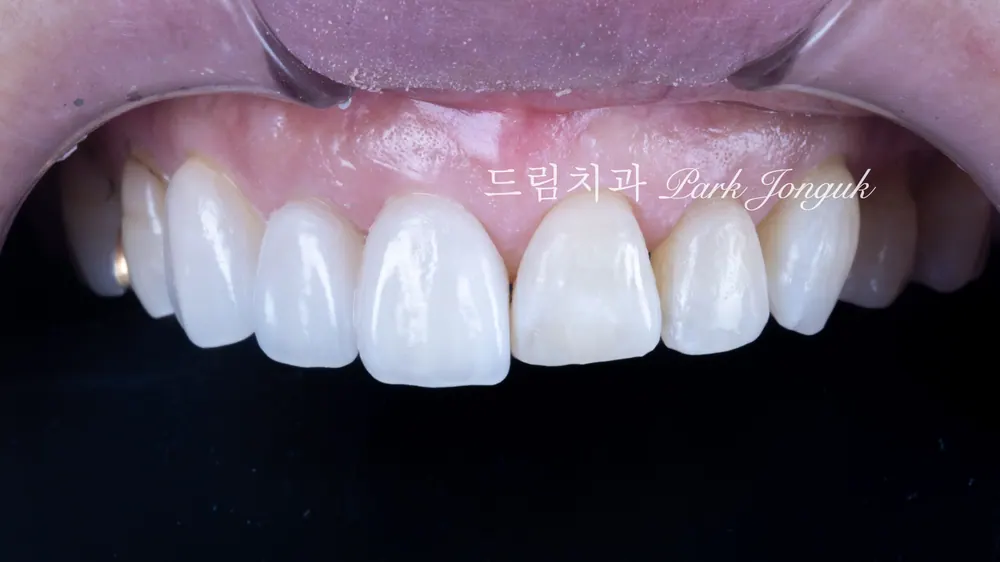
Q5. Who would you recommend no-prep veneers for?
Someone with small teeth, a good shade, no protrusion, and slight spacing between the teeth.
For a patient like this, no-prep is the most natural and conservative choice.
In Closing
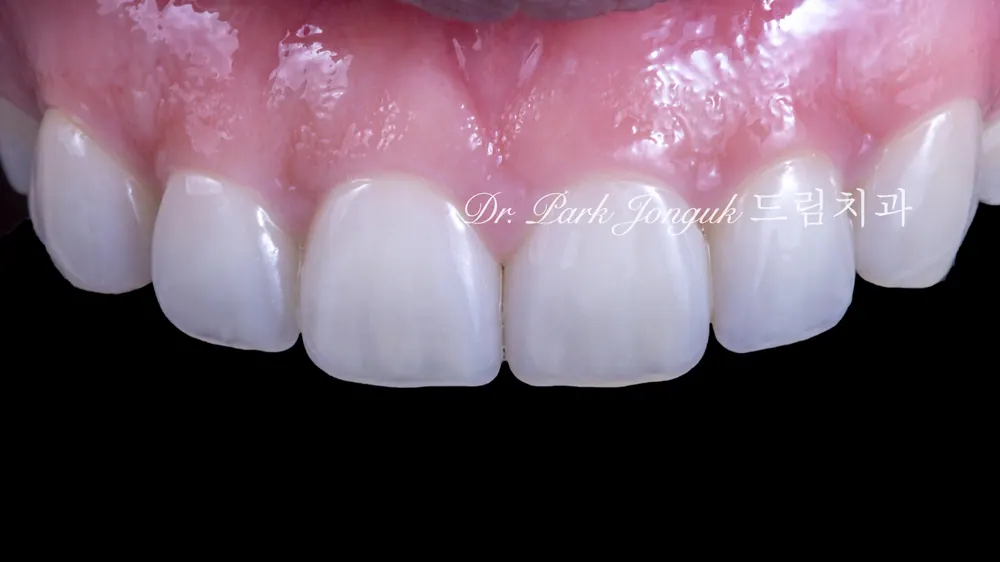
No-prep veneers are certainly a meaningful option.
But the word "no cutting" doesn't mean "a good result" for every patient.
The same word can be the right answer for one person and come back as an unnatural result for another.
The standard for natural-looking front teeth isn't the amount of reduction, but a diagnosis that considers the person's teeth, lips, and smile as a whole.
Whether no-prep or minimal-prep, the standard for the decision should be the patient's own tooth condition — not advertising.
─────────────────────────────
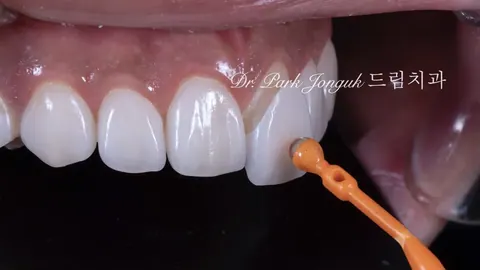
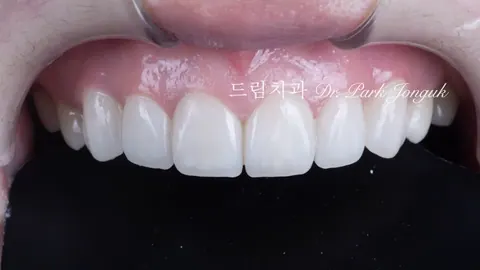
This article is a clinical note written by Dr. Park Jonguk of Dream Dental Clinic, Gangnam; the original was published on his blog. The photographs shown are real cases he treated. Results vary with each patient’s condition, and every procedure carries the possibility of individual variation and side effects.
Quick Consult
Request a Callback
Leave your number and we will call you back during clinic hours.
Request Received
We will contact you during clinic hours. For urgent matters, please call +82-2-3448-0028.