
A No-Prep Veneer Case: Can It Really Look This Natural Without Any Tooth Reduction?
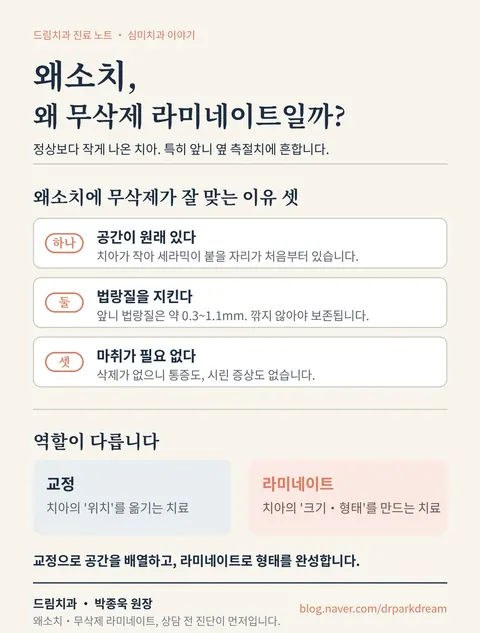
A no-prep veneer is a treatment that can complete a natural smile without cutting the tooth at all.
Today we introduce a case with small teeth in a retruded arrangement, ideally suited to no-prep veneers.
From precision diagnosis to temporary teeth to the final setting, see the naturalness that detail creates.
For a veneer, "how much of the tooth is cut" matters less
than "how much of the tooth can be preserved."
You've probably heard the term "no-prep veneer" a lot lately.
But in reality, cases where no-prep is truly possible are limited,
and without precise diagnosis and planning, the result can actually end up thick and artificial.
A case where a no-prep veneer is possible
means: 1) the teeth are small,
2) the alignment is good,
and 3) the teeth are retruded, arranged toward the inside.
When these three conditions are met,
a veneer can be bonded on naturally without cutting the tooth at all.
The patient introduced today was exactly this kind of case.
The teeth were small and even, but slightly retruded, arranged toward the inside,
and while the teeth were even, there were spaces between them, making this ideal for a no-prep veneer.
The patient said, "I'm scared of having my teeth cut,"
so through precision diagnosis, we explained that a beautiful improvement was fully possible without any reduction at all.
In this article,
we'll show, through a real case,
under what conditions a no-prep veneer is possible, and what process is involved
in making it look truly natural.
Photo 1. Before treatment
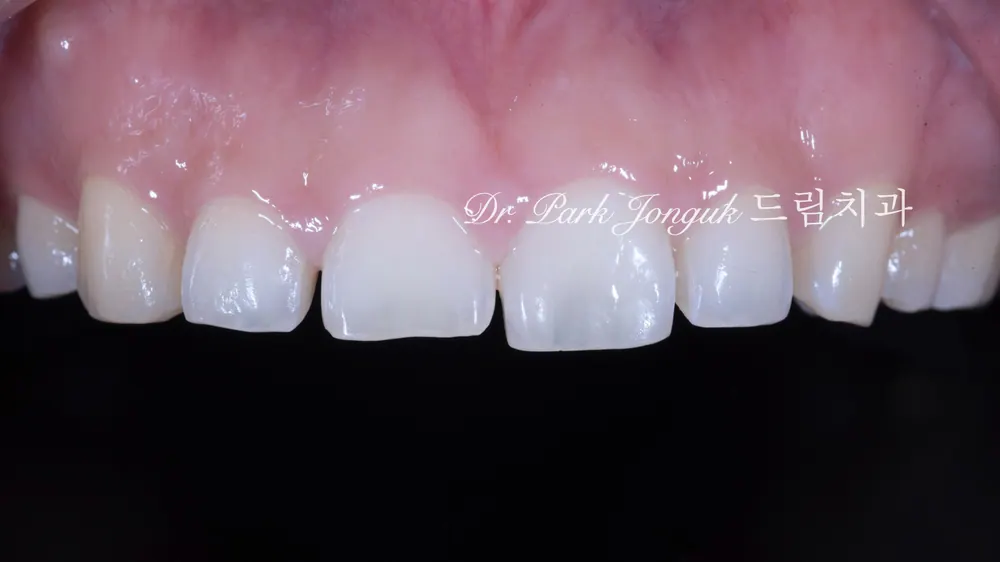
The teeth were small and gapped,
and the gum symmetry wasn't even.
But because the teeth were retruded, arranged slightly toward the inside,
the state was very favorable for a no-prep veneer.
Photo 2. Wax-up precision diagnosis
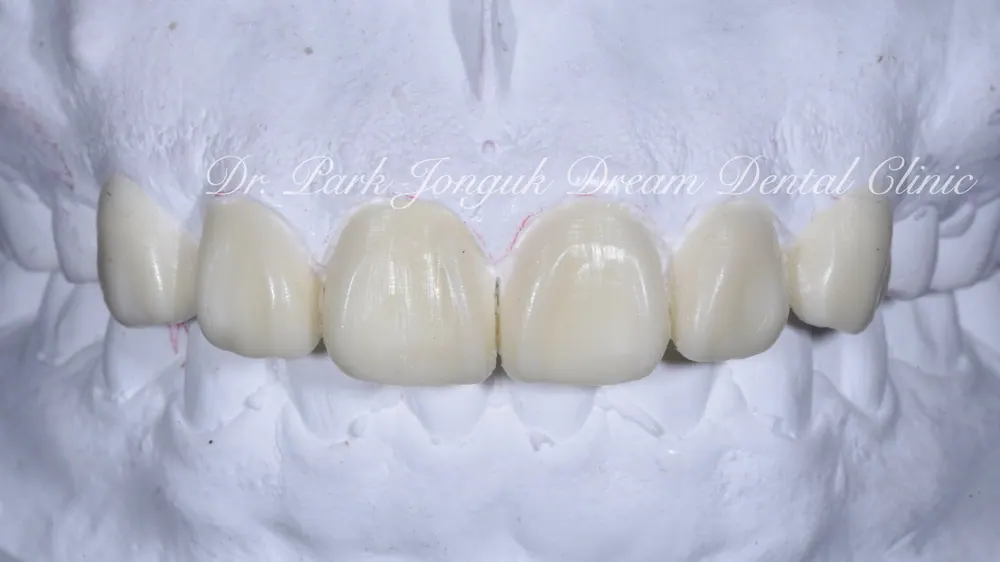
Even for a no-prep veneer,
a precise wax-up diagnosis is essential.
By predicting the tooth's size, length, and volume in advance,
we can preview the post-treatment shape virtually.
Through this process, we determine whether true no-prep treatment is actually possible.
Photo 3. Fabricating the temporary teeth
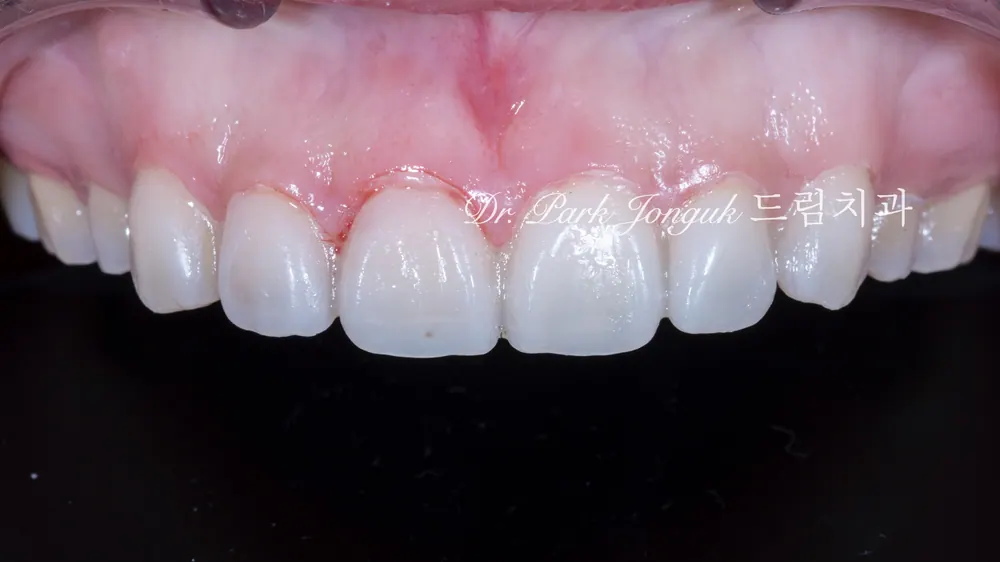
Even for a no-prep veneer, temporary teeth absolutely have to be made.
Through the temporary teeth, the patient can
directly feel the volume, length, and shape of the final form,
and the dentist, too, can predict the treatment result and make fine adjustments.
If this step is skipped,
the length or proportion in the final result can end up looking awkward.
Photo 4. The fabricated veneer
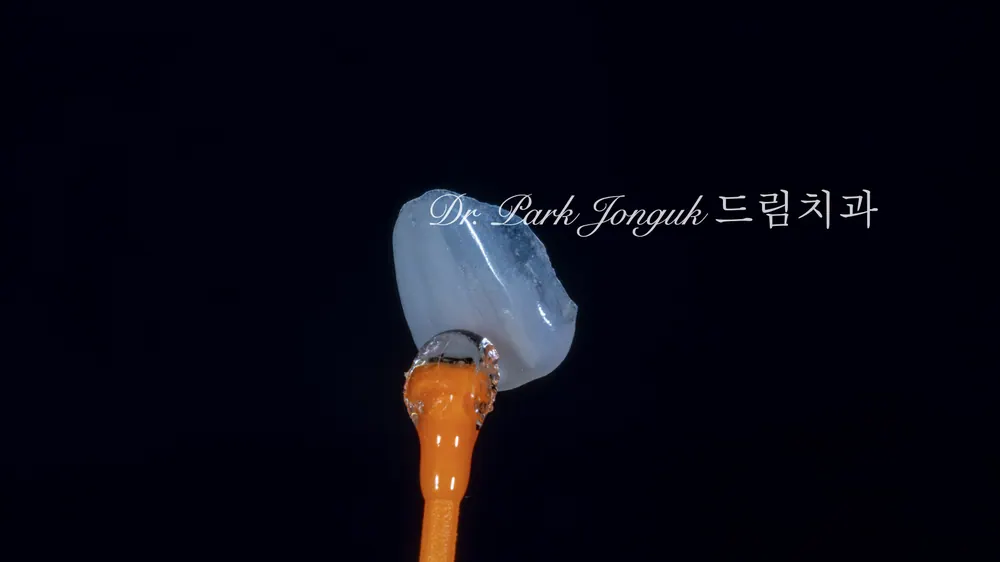
This veneer was fabricated to a very thin thickness,
yet the natural tooth's color, translucency, and surface texture were all expressed perfectly.
We stacked multiple layers of ceramic by hand
so that it reflects light naturally.
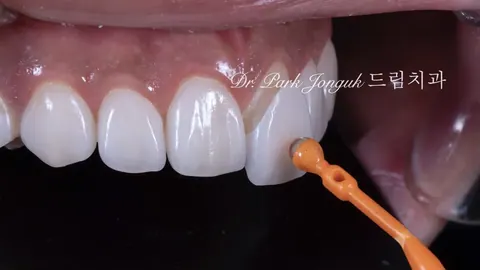
Photos 5 to 6. Veneer setting (one side fitted only)
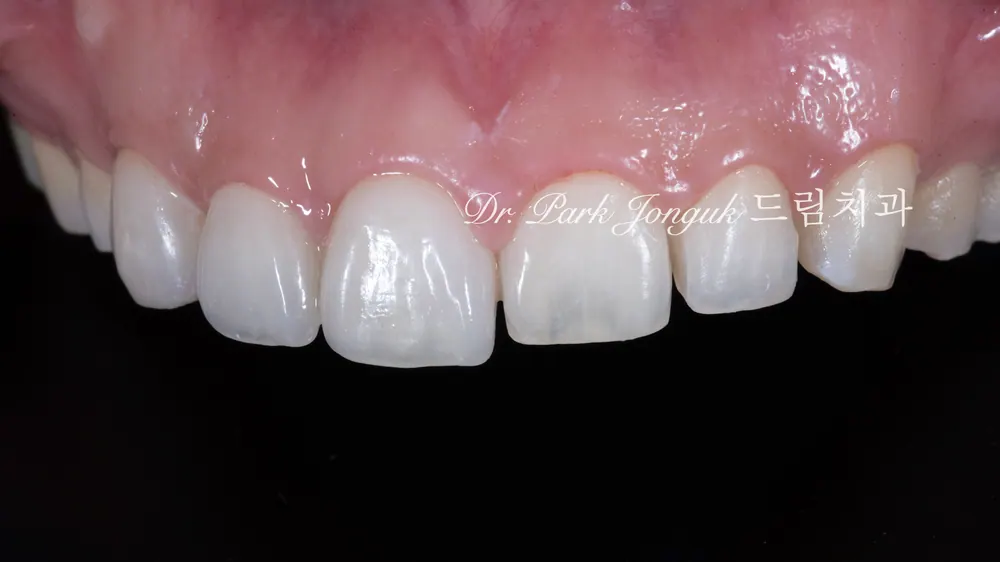
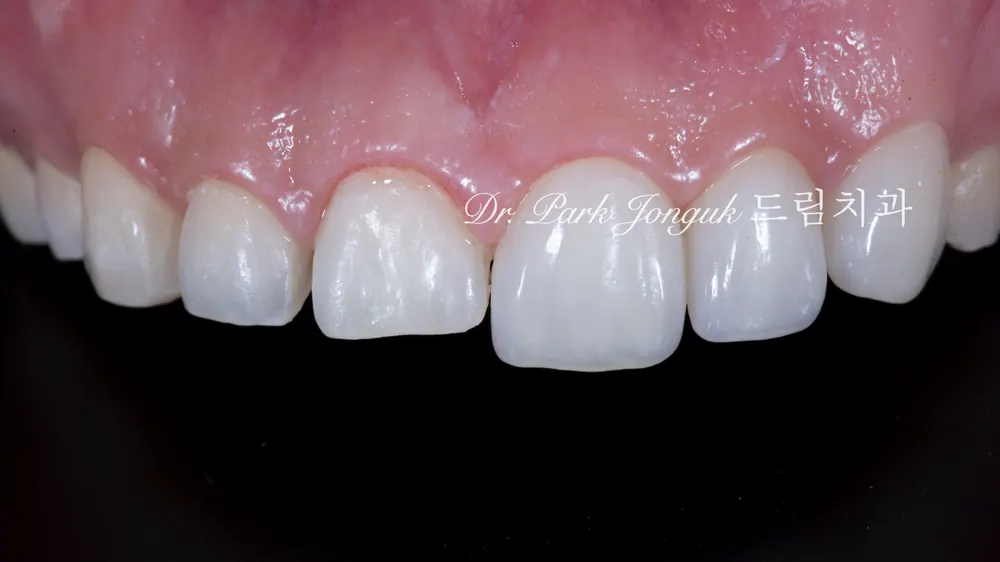
In this photo with the veneer placed on only one side,
the before-and-after difference is clearly visible.
The tooth's size, proportion, and outline were naturally adjusted,
improving the previously retruded arrangement
and finishing with a three-dimensional line.
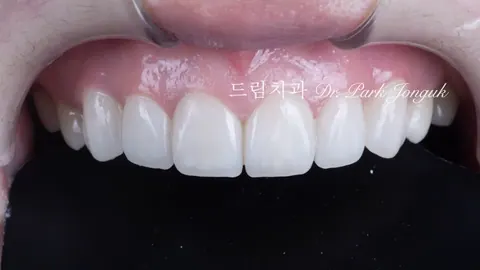
Photos 7 to 10. After final treatment
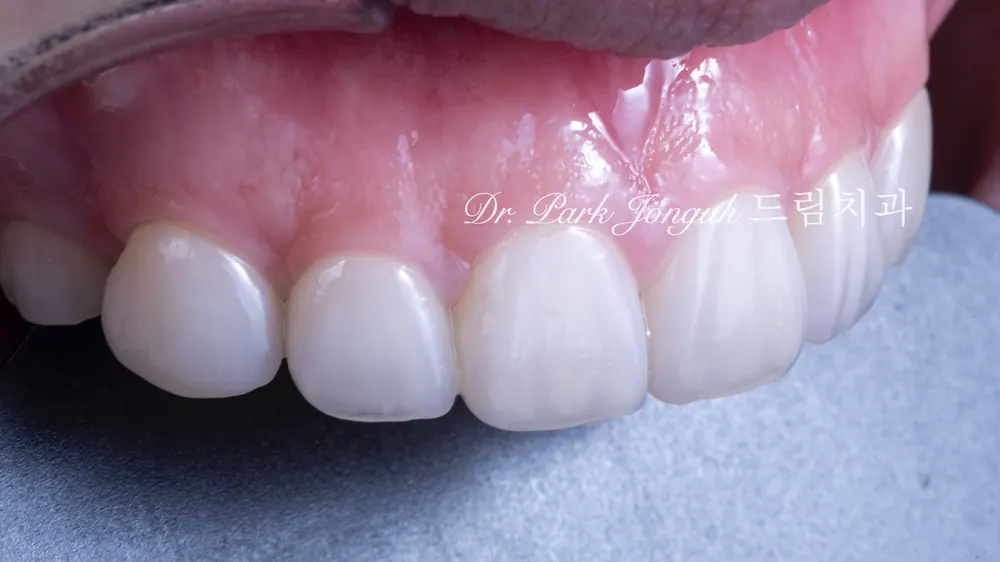
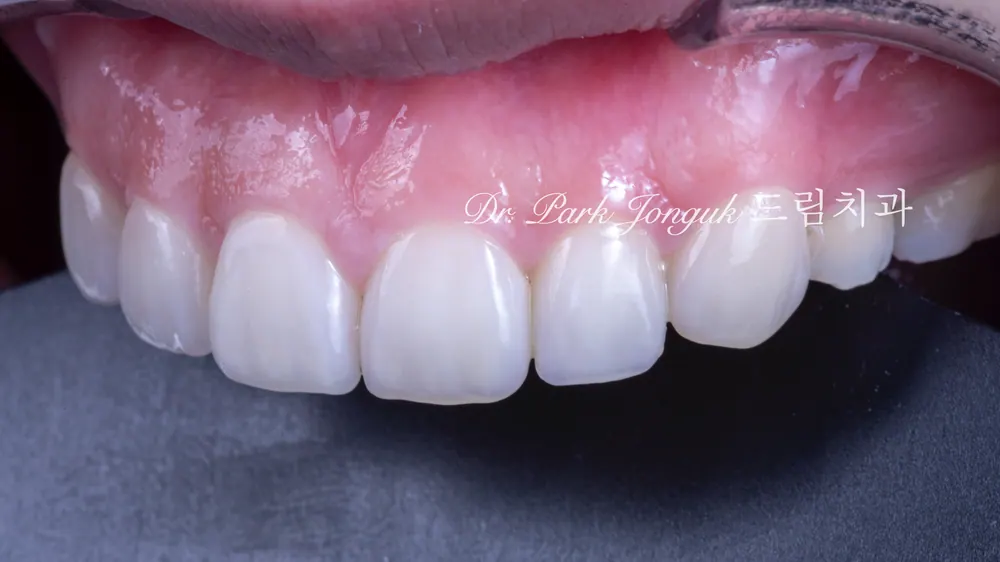
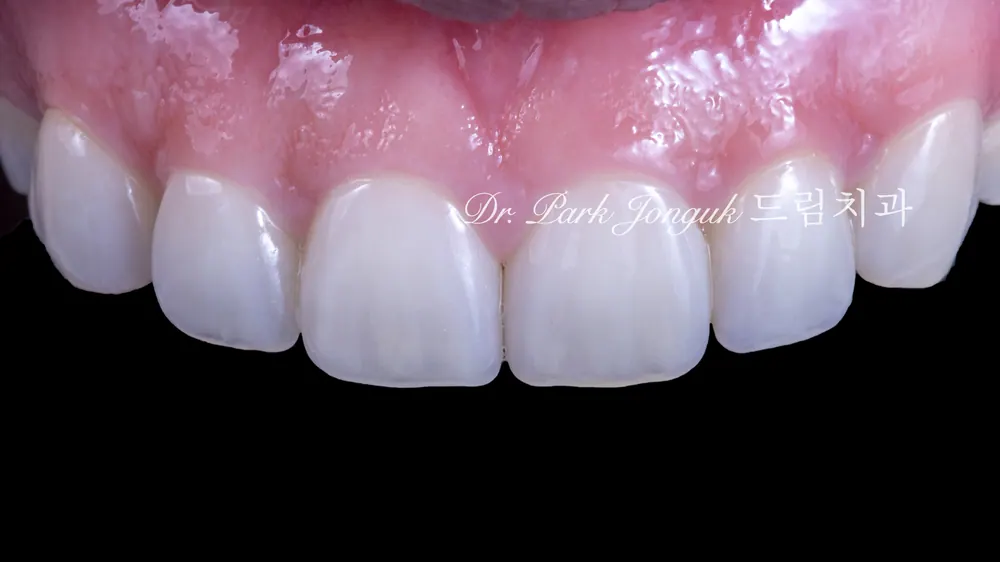
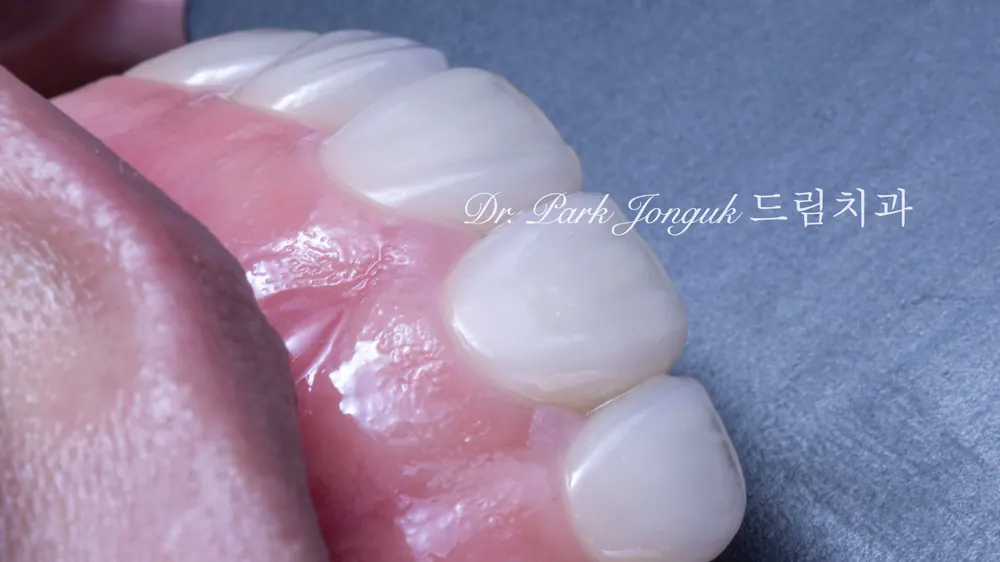
Even though this was no-prep,
a translucent, natural-looking veneer was completed.
The volume and color of the teeth harmonize well,
and even the line of the gums and teeth when smiling was beautifully aligned.
This shows that even with no-prep,
only when detailed diagnosis, design, and hand fabrication all come together
can a truly natural result be achieved.
Conclusion
A no-prep veneer isn't a "treatment that skips cutting";
it's a "treatment diagnosed precisely enough that cutting isn't needed."
If it's forced through when the conditions aren't right,
it can lead to a thick, awkward result.
With precise diagnosis and simulation,
and thorough consultation with the patient,
a natural, translucent smile can be achieved while still preserving the tooth.
💬 Q&A
Q1. Is a no-prep veneer possible for everyone?
A. No. It's possible when the teeth are small, the alignment is good, and the teeth are retruded.
Q2. Are temporary teeth needed even for no-prep?
A. Yes, they're absolutely necessary. Temporary teeth let us simulate the final result and make fine adjustments.
Q3. Is there a risk of a no-prep veneer coming off?
A. No. With accurate diagnosis and a proper bonding process, it has the same stability as a regular veneer.
Q4. How long does a no-prep veneer last?
A. On average, 10 to 20 years or more, and regular checkups and care are important.
Q5. Is no-prep always the better choice?
A. No. What matters most is the diagnosis.
Depending on the shape of the tooth, minimal reduction can sometimes give a more natural result.
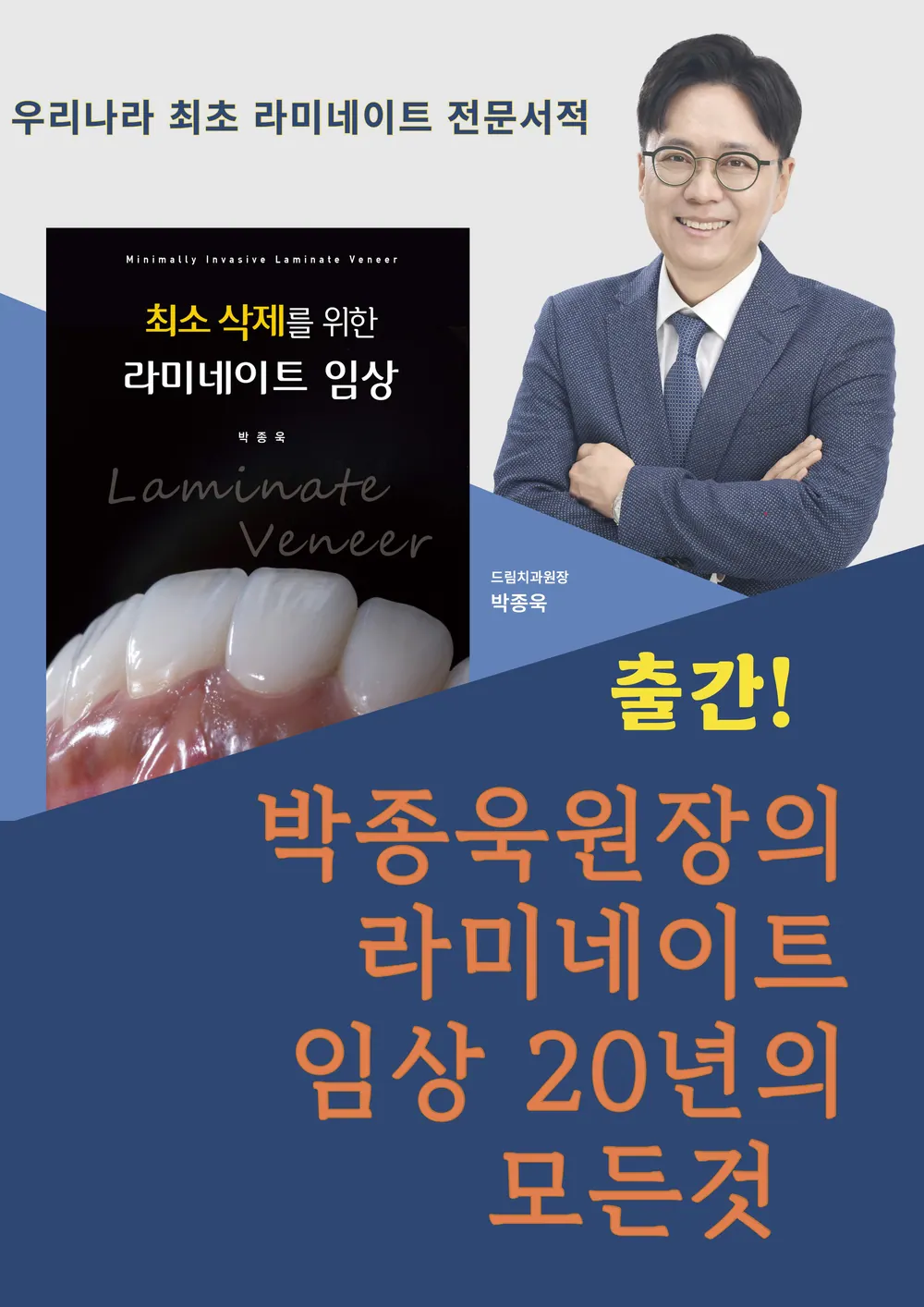
This article is a clinical note written by Dr. Park Jonguk of Dream Dental Clinic, Gangnam; the original was published on his blog. The photographs shown are real cases he treated. Results vary with each patient’s condition, and every procedure carries the possibility of individual variation and side effects.
Quick Consult
Request a Callback
Leave your number and we will call you back during clinic hours.
Request Received
We will contact you during clinic hours. For urgent matters, please call +82-2-3448-0028.