
Awkward Front Teeth, Finished with Natural Translucency: A Veneer Case
The patient's teeth weren't badly gapped, but the tips looked slightly open, and the color was yellowed with a lot of spotting.
Through veneer treatment, the patient regained a natural, translucent smile.
We show how ‘naturalness’ is achieved through the difference between precision diagnosis and hand-made fabrication.
Even a slight awkwardness in a tooth's color, texture, or alignment,
that subtle difference can change the whole impression dramatically.
This patient's teeth weren't actually gapped,
but the tips felt slightly open, so smiling always felt awkward.
On top of that, the tooth color was yellowed, mixed here and there with white spots,
so the surface looked uneven whenever light hit it.
A case like this may look simple on the surface,
but aesthetically it's a very demanding case.
That's because, without cutting down the teeth much,
color, texture, alignment, and translucency all have to be brought into harmony.
The key to this treatment was precision diagnosis.
Taking into account the shape of the teeth, the bite, the smile line, and even facial proportions,
we carefully planned exactly where, how much, and in what direction to adjust.
These days, Naver's algorithm increasingly evaluates
the expertise and credibility behind the process, not just a pretty result photo.
So in this article, rather than simple 'before and after' photos,
we share the entire process, from pre-treatment diagnosis through to bonding.
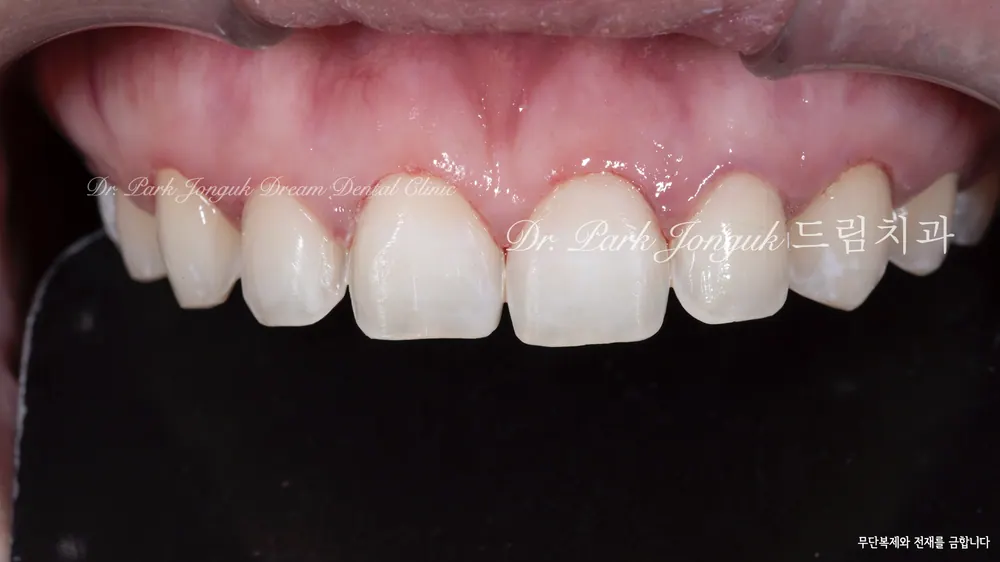
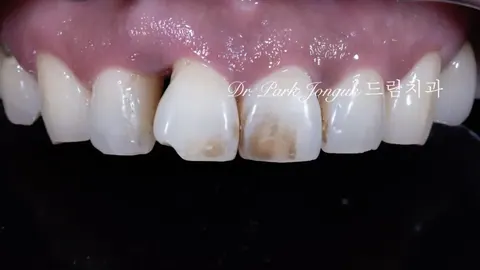
Photo 1. Before treatment
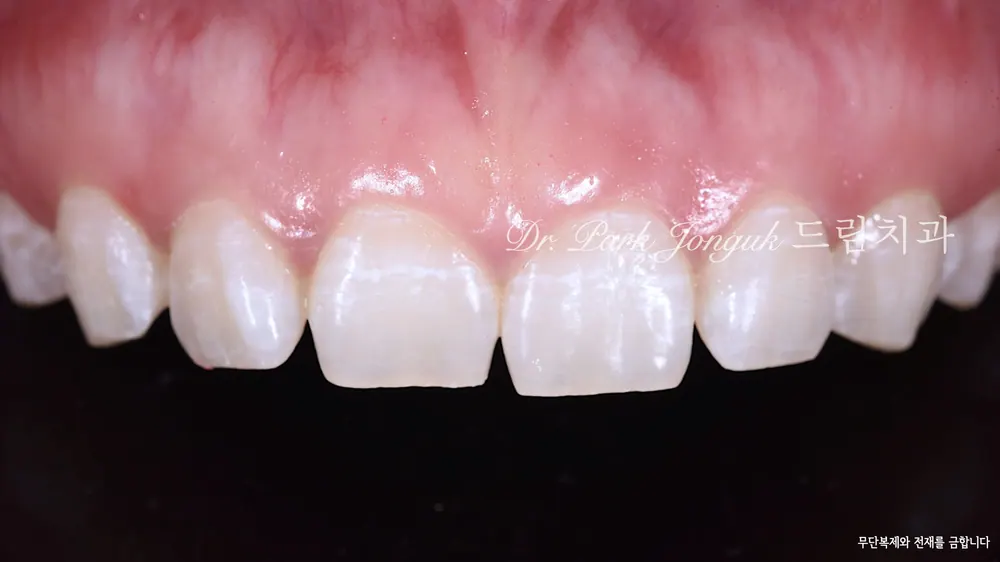
The tooth tips look slightly open,
and overall the teeth are yellowed with spots, so the surface isn't smooth.
The gloss is uneven, so the teeth look like they lack three-dimensionality.
Photos 2, 3, 4. Wax-up precision diagnosis process
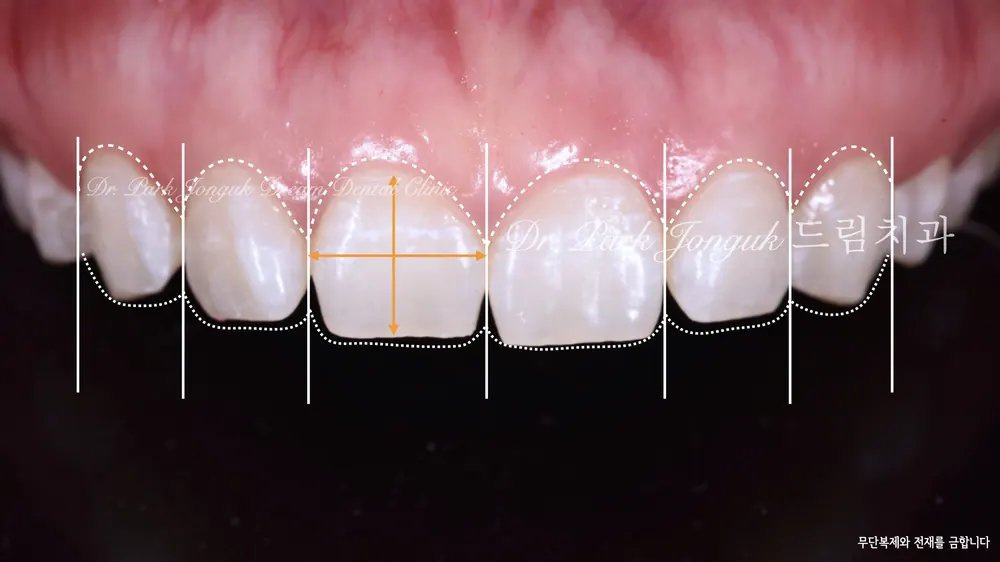
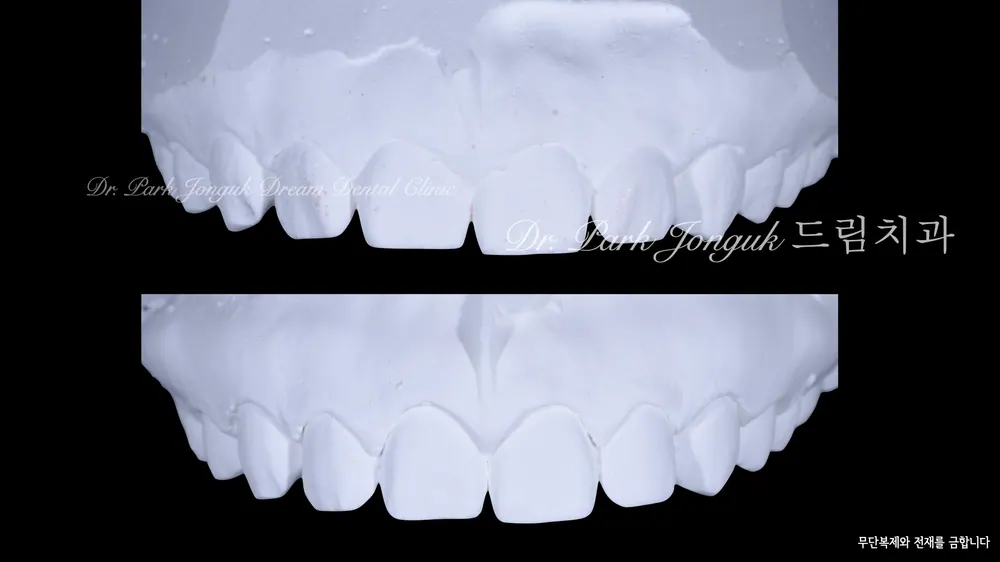
A wax-up isn't simply about predicting the shape;
it's a process that accurately simulates the amount of reduction and the final form.
Through this process, the patient can preview how their own teeth will change.
Photos 5, 6. Reduction guide and microscope-guided reduction
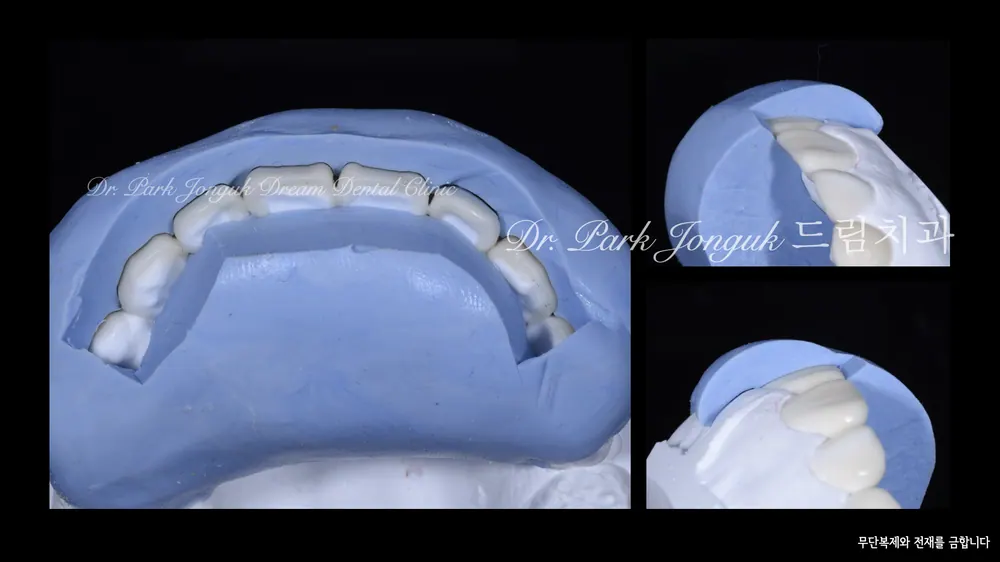
Tooth reduction isn't simply a matter of ‘cutting.’
It has to be precisely adjusted in 0.1 mm increments under a microscope, following a set guide.
Matching the thickness, tilt, and margin of the tooth without the slightest error
is what determines how natural the result will look.
Photo 7. Temporary tooth fabrication and consultation
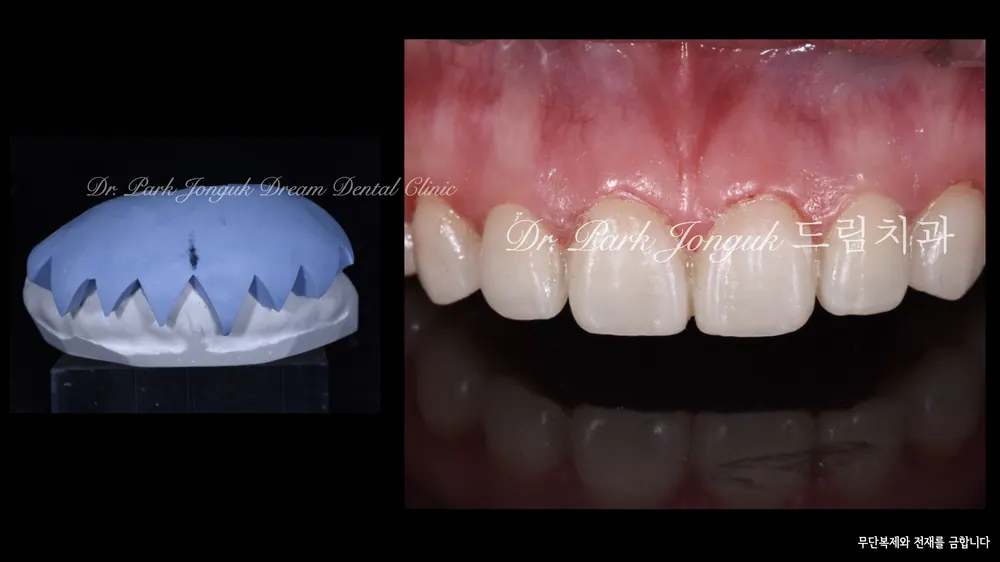
By trying on the temporary teeth,
we check the length, volume, proportion, and harmony with the lip line together with the patient.
When this process is done thoroughly,
the final veneer design comes out far more refined.
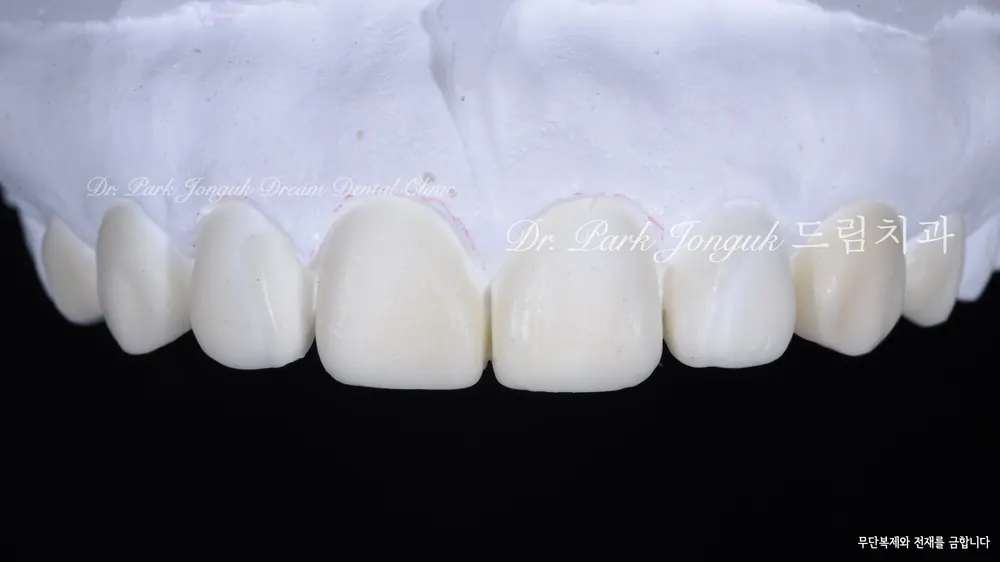
Photos 8, 9, 10. The fabricated veneers
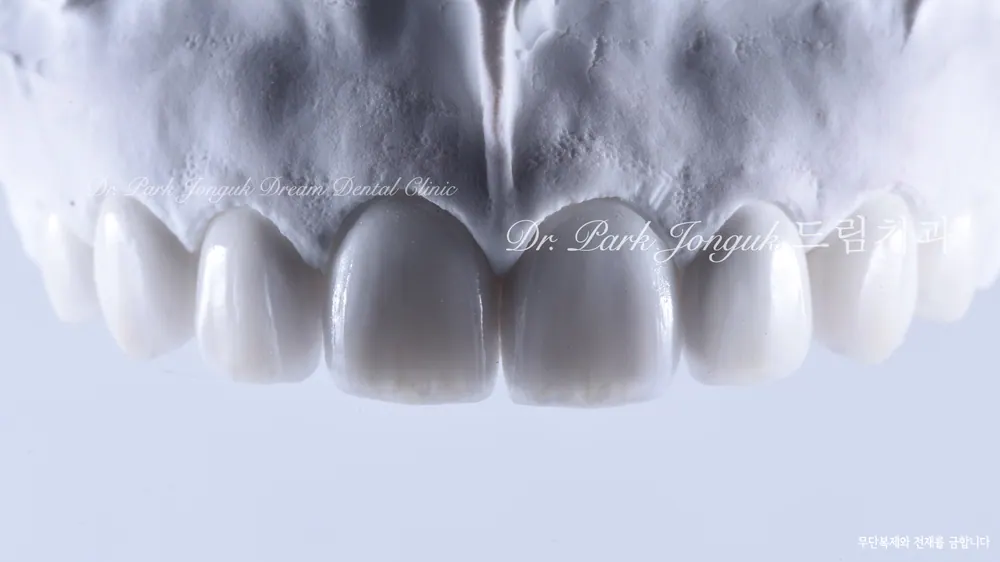
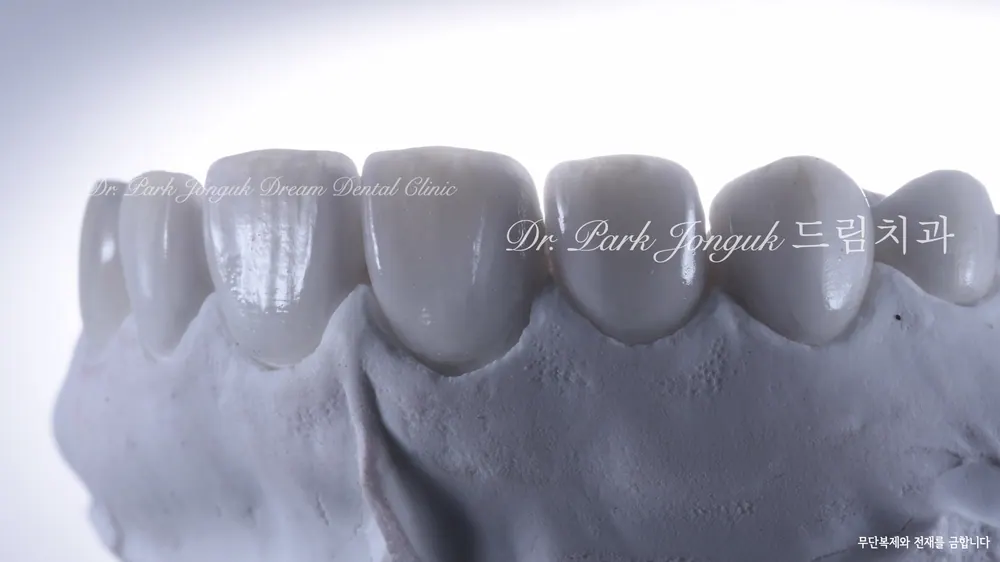
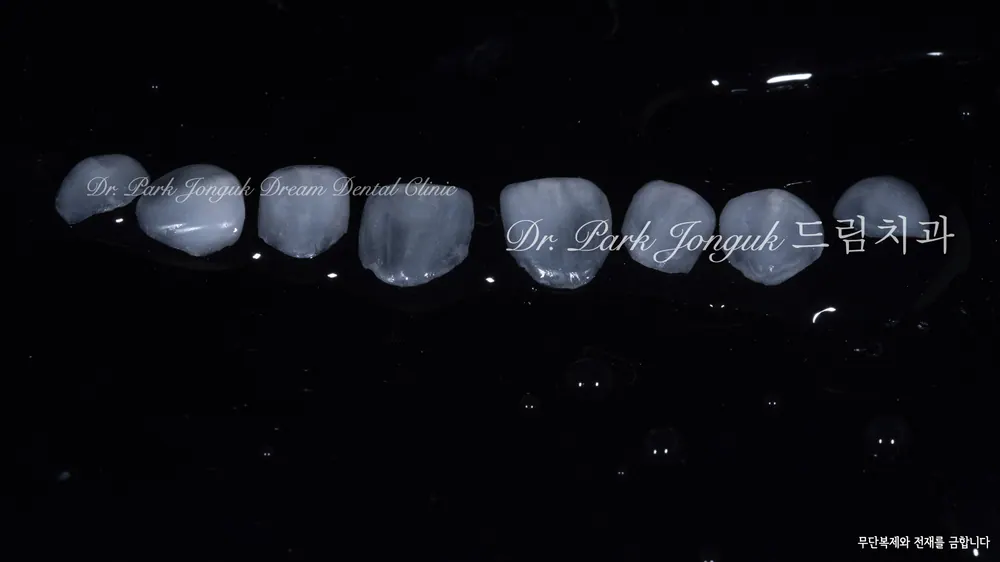
These were fabricated using the build-up method, stacking multiple layers of ceramic.
They're thin, but translucency, three-dimensionality, and light reflection are all alive within them.
To express the depth unique to a natural tooth,
we adjusted the color and translucency differently for each layer.
Photos 11, 12. Comparison with the one-day method
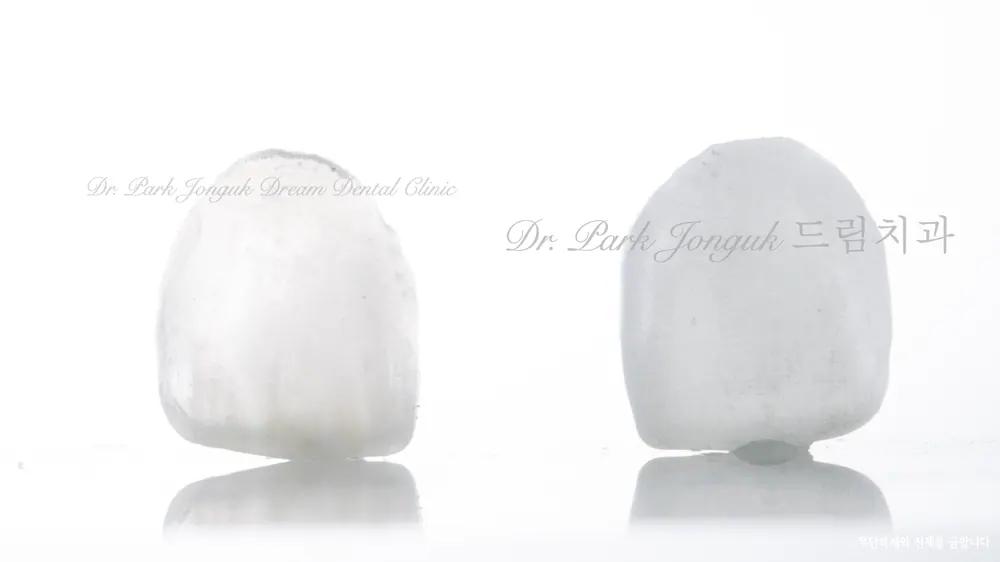
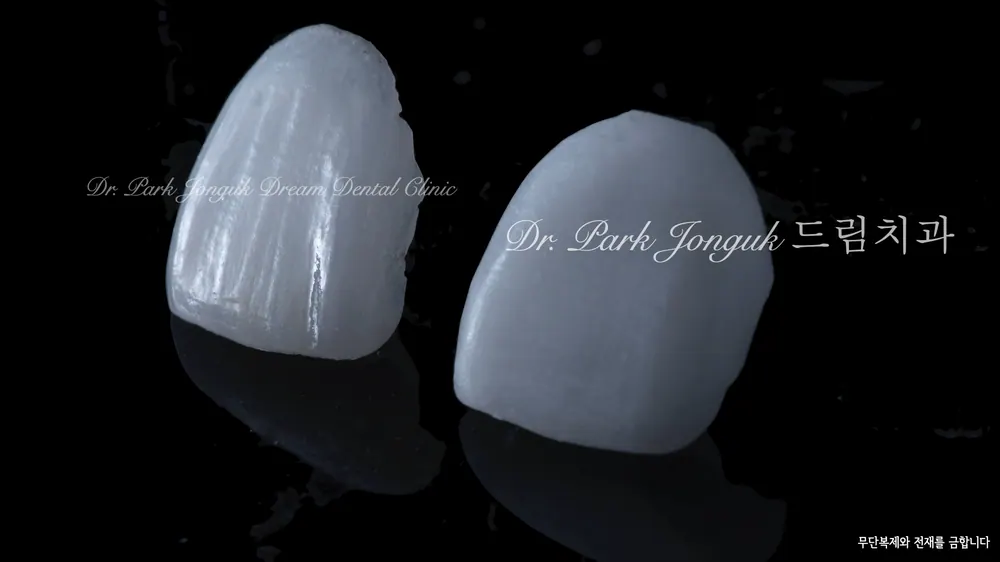
We also fabricated a version using the one-day method, in the same color and shape.
In each photo, the left is the hand-made build-up method, and the right is the one-day method.
The one-day version is thicker, and its fine surface texture is flatter and less varied.
Translucency and natural light reflection weren't achieved.
That's due to the limits of mechanical milling.
Photo 13. Preparing for setting
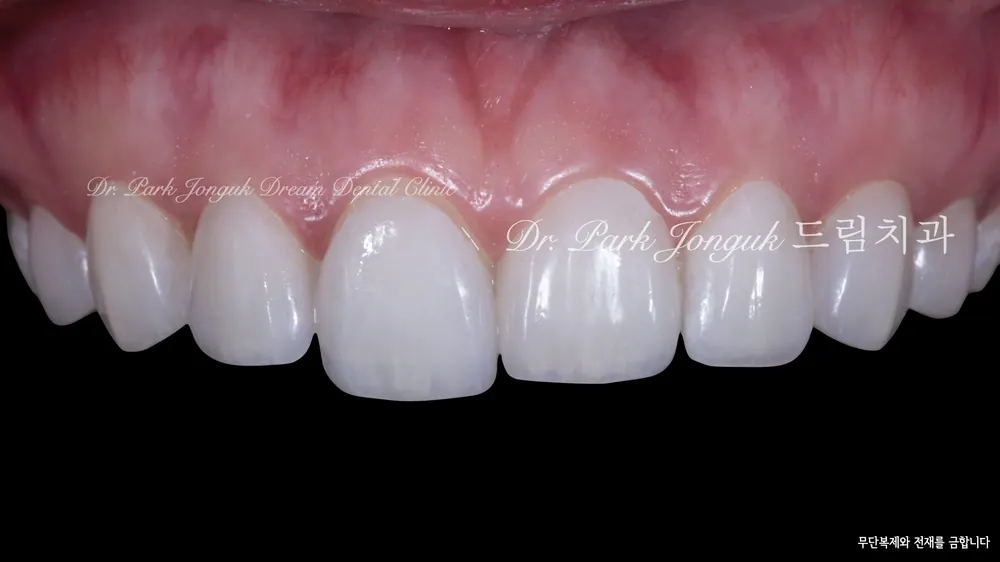
Before bonding, both the inner surface of the veneer and the tooth surface
are prepared with a special pre-treatment agent.
Adjusting the color and translucency of the bonding layer is the ‘final touch’ on the result.
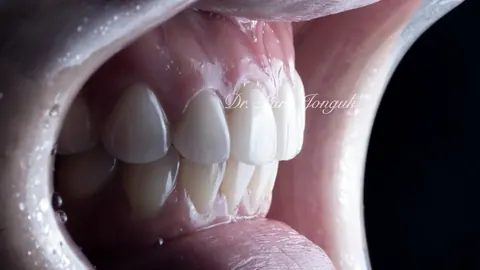
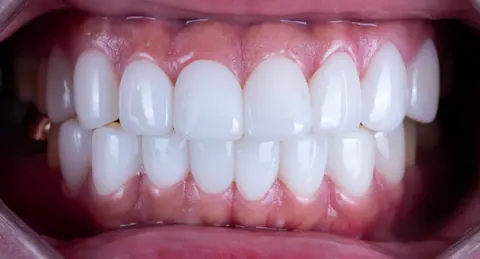
Photos 14, 15, 16, 17. Final appearance after treatment
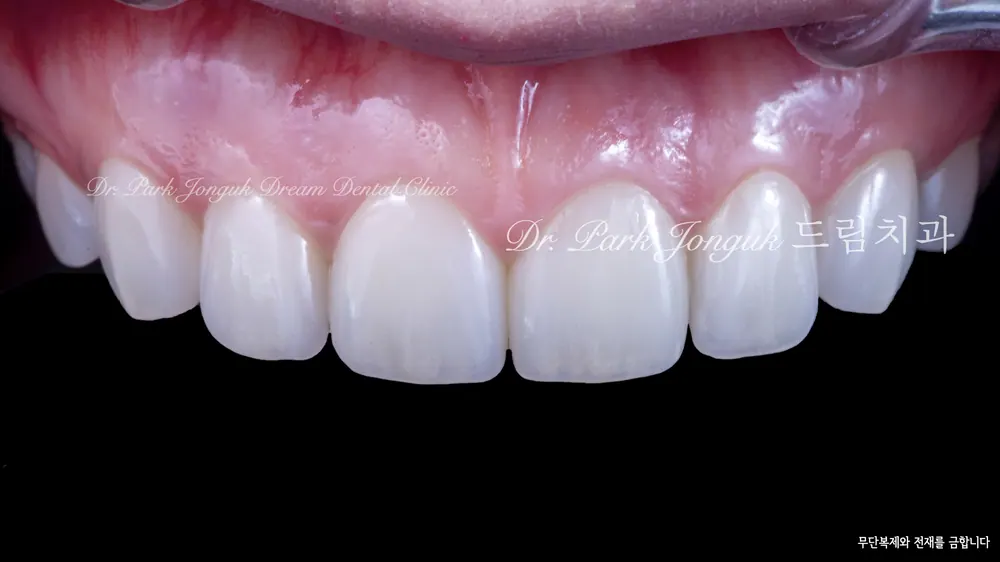
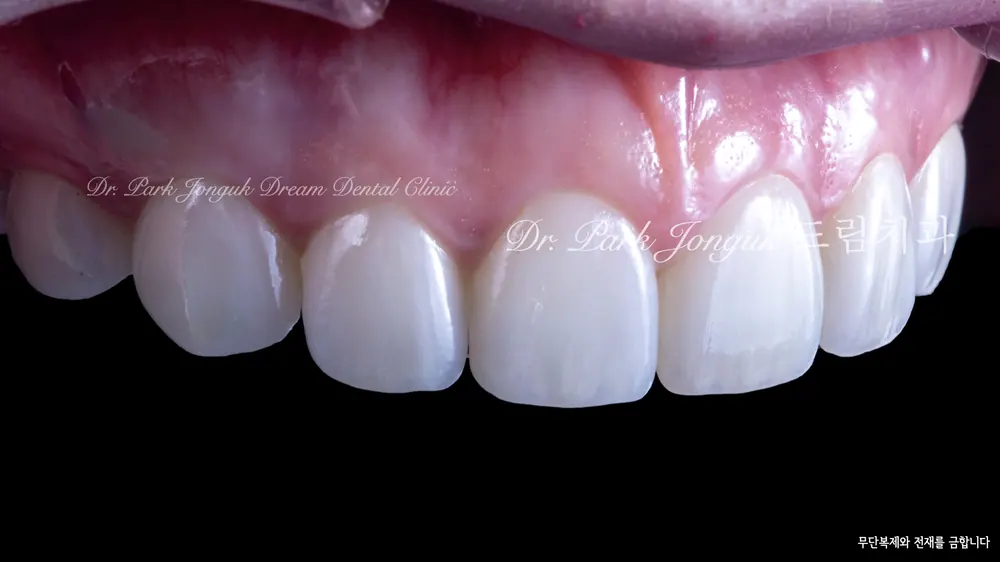
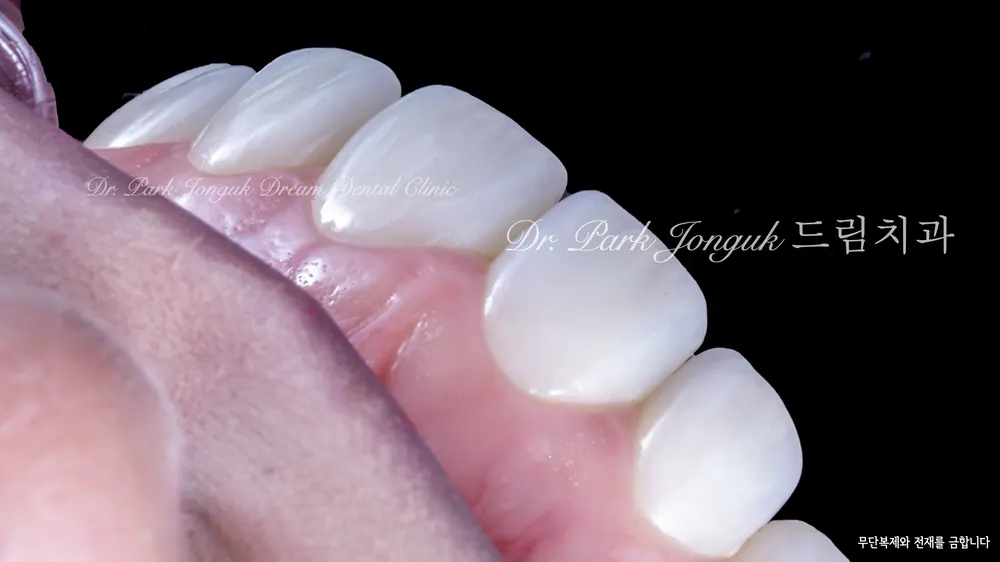
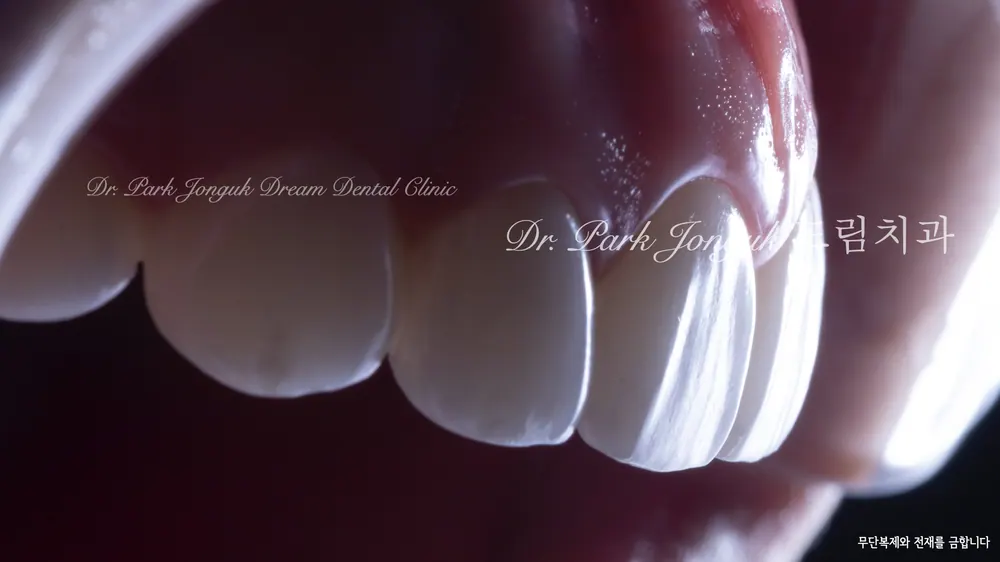
The appearance after treatment is nearly indistinguishable from a natural tooth.
Even the fine translucency at the tooth tips, the surface texture, and the reflected light have all come alive.
Looking in the mirror, the patient was very pleased, saying, "It really does look natural and beautiful."
💡 Conclusion
A veneer isn't simply a procedure that makes teeth white.
It's a treatment that restores a tooth's own translucency, three-dimensionality, and expression of light.
Methods that look simple, like no-prep or one-day veneers, are trending,
but true naturalness can only come from precision diagnosis
combined with skilled, hand-made fabrication.
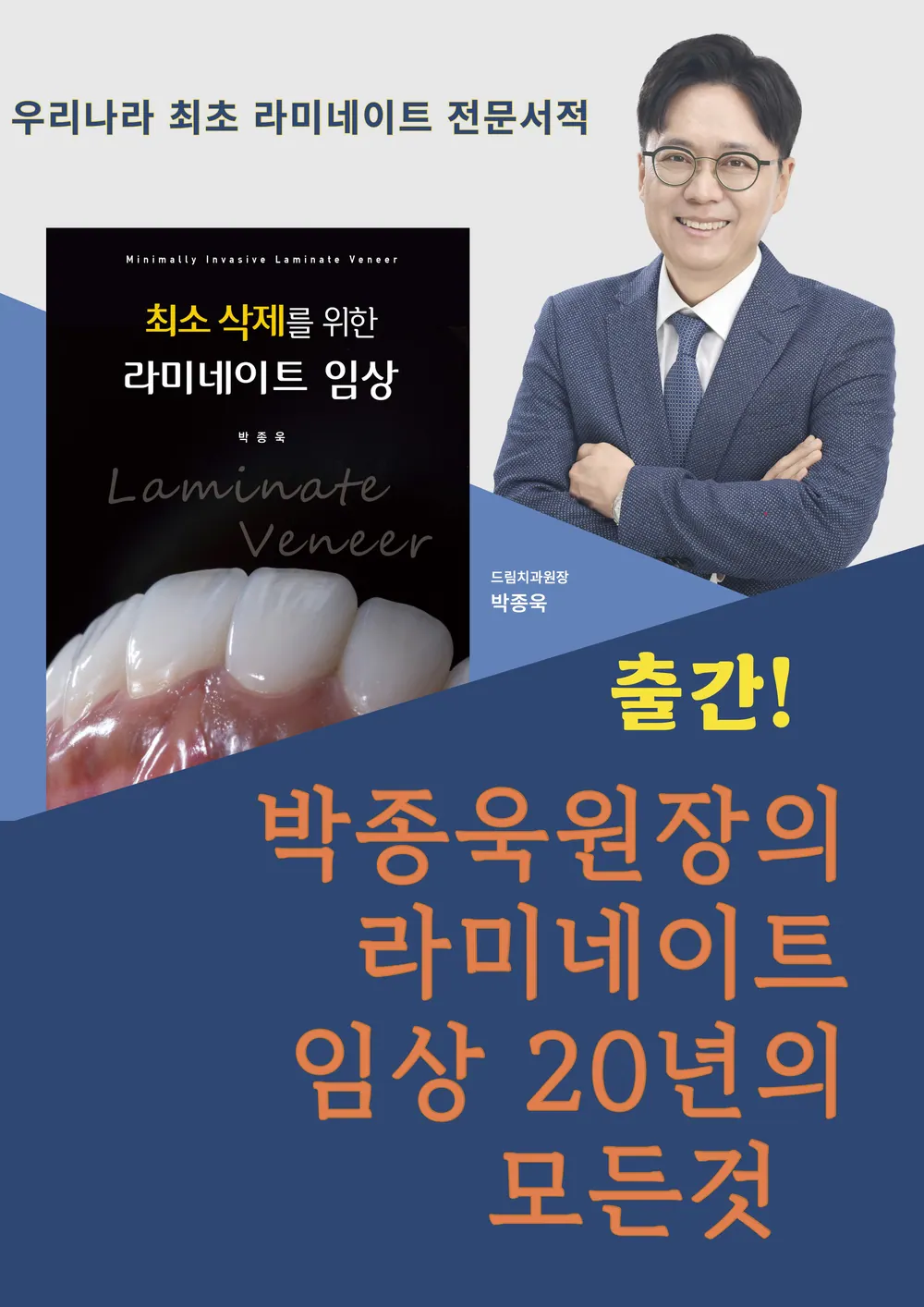
Over the past 20 years, I have researched veneers,
and through the book 『최소 삭제를 위한 라미네이트 임상』 (Minimal-Reduction Veneer Clinical Practice),
established a systematic approach to diagnosis and design.
In the end, a beautiful result isn't decided by ‘how much is cut down,’
but by ‘how precisely it was planned.’
❓ Q&A
Q1. Do the teeth need to be cut down a lot?
No. Based on the diagnosis, only the minimum necessary is reduced.
Whenever possible, we proceed with no-prep or minimal-reduction treatment.
Q2. Is a one-day veneer possible as well?
It's possible, but it has limits in terms of translucency and naturalness.
The hand-made method produces a far more natural result.
Q3. How long do veneers last?
Depending on how well they're cared for, they can last 10 to 20 years or more.
Regular scaling and proper brushing are important.
Q4. Is treatment possible even for teeth with spotting?
Yes, even when the discoloration and spotting are severe,
translucent ceramic layering can cover it naturally.
This article is a clinical note written by Dr. Park Jonguk of Dream Dental Clinic, Gangnam; the original was published on his blog. The photographs shown are real cases he treated. Results vary with each patient’s condition, and every procedure carries the possibility of individual variation and side effects.
Quick Consult
Request a Callback
Leave your number and we will call you back during clinic hours.
Request Received
We will contact you during clinic hours. For urgent matters, please call +82-2-3448-0028.