
Seoul Veneers: Front Teeth Treated to a Natural Tooth Shape
Hello. I'm Park Jonguk, director of Dream Dental Clinic.
I started my clinic in Apgujeong-dong in 2006.
It's been
more than 17 years since I began treating veneers in Apgujeong-dong.
Through a long process of change and refinement,
Dream Dental Clinic has become what it is today.
What makes Dream Dental Clinic's Seoul veneers
distinctive, and how they're different, is what I'd like to talk about.
Veneer treatment
is a treatment that bonds a thin ceramic plate onto only the front surface of the tooth
to reshape the tooth's form and color.
Even though it's the same treatment, every clinic and every dentist
approaches it with a different concept and direction,
so let me explain what sets our clinic apart.
1. Natural Beauty
The single biggest characteristic of the veneers I do is naturalness.
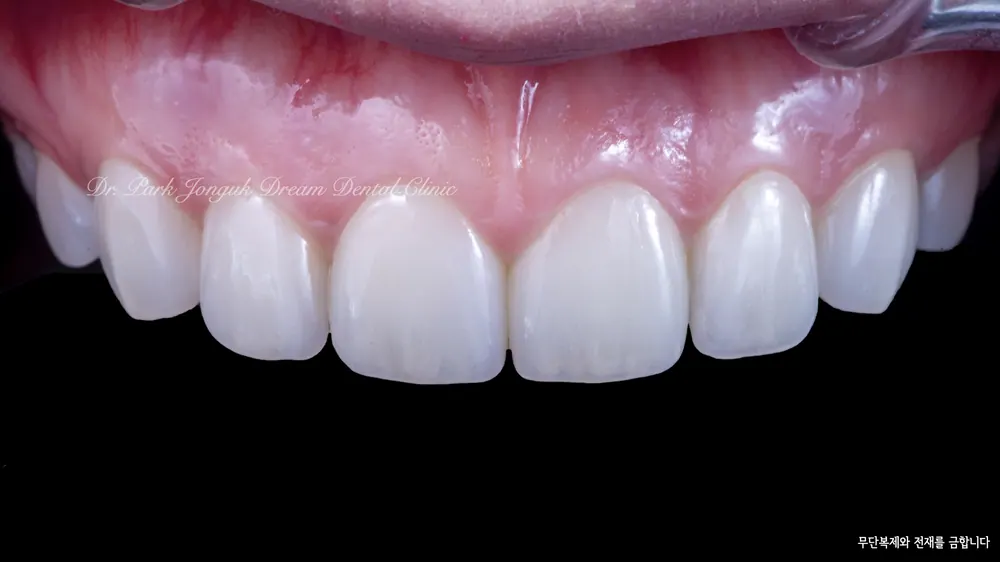
What does a natural-looking tooth actually look like?
First, the defining structural feature of a natural tooth is its sense of dimension.
When the front surface of the tooth is flat, with no dimension,
and a single uniform color, anyone can tell it looks awkward.
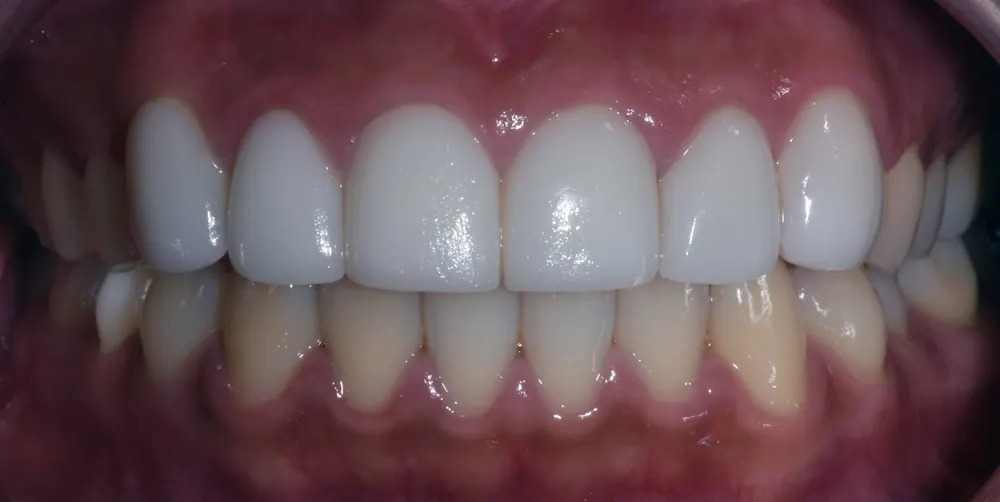
This is exactly the kind of look I mean.
The awkwardness of a piece of xylitol gum stuck on the tooth...
These days, most clinics make their Seoul veneers exactly like this.
The sense of dimension in a tooth matters a great deal.
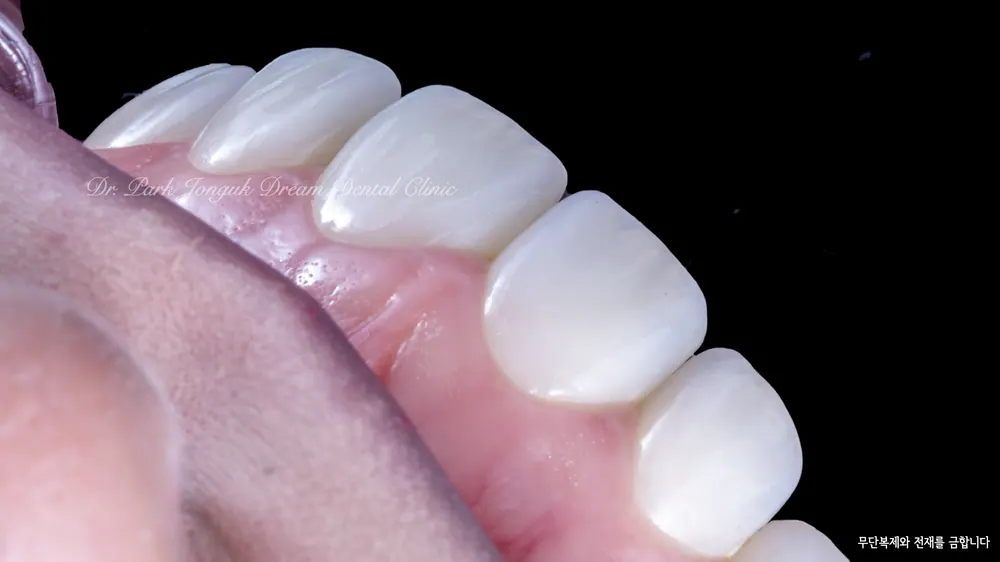
The edges of the tooth, known as line angles,
need to be well defined to express that dimension.
Second, a natural color is important.
Another feature of the awkward-looking tooth shown earlier
is that the entire tooth is a single, uniform color.
A natural tooth has a different color in every part of it.
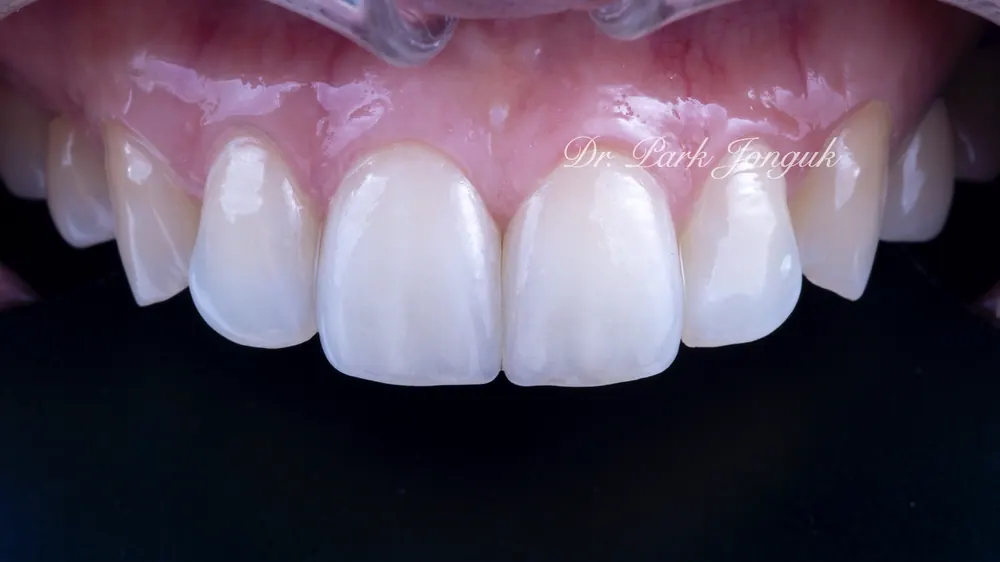
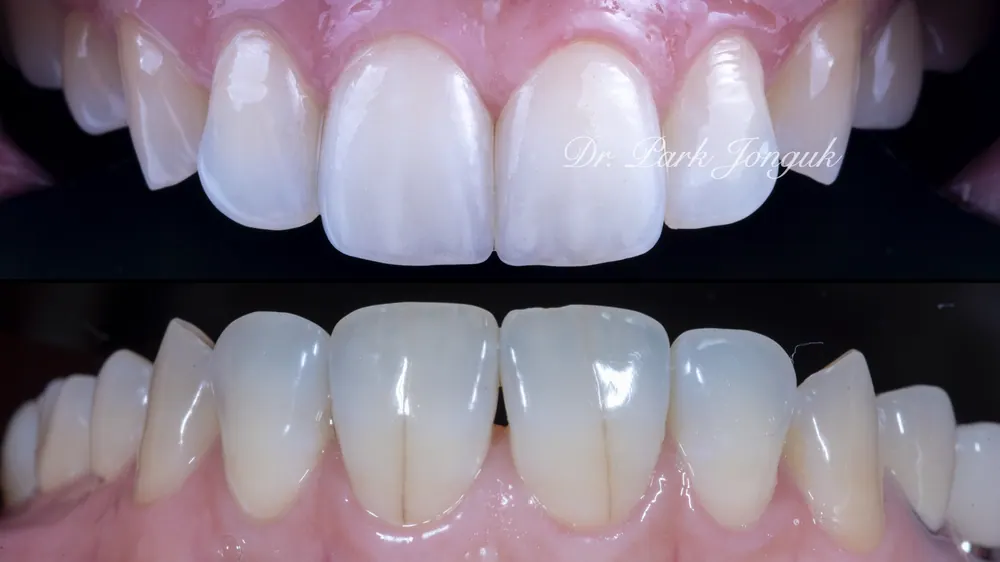
Looking at this photo, it would be hard to tell which tooth is the veneer.
Let's look at the before photo.
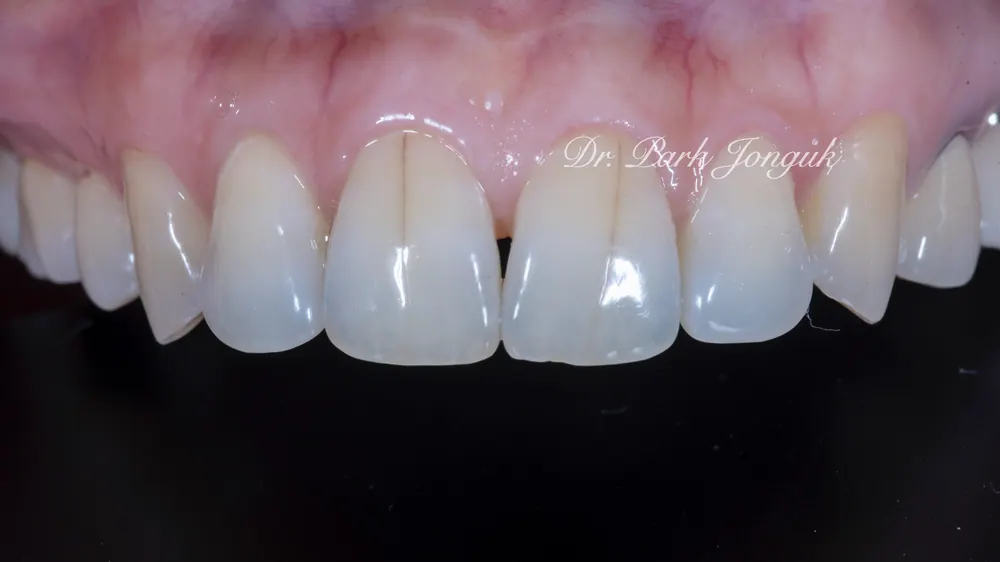
Seoul veneers were placed on the two front teeth to eliminate a crack line.
This captures something the one-day method could never match:
the full diversity of natural teeth, brought out properly.
For the patient being treated, whether it's a simple, awkward-looking veneer or a natural one like this,
the process of receiving treatment is the same,
but from the clinic's side, the process of making a veneer like this is considerably longer and harder.
It's fabricated through a process like this.

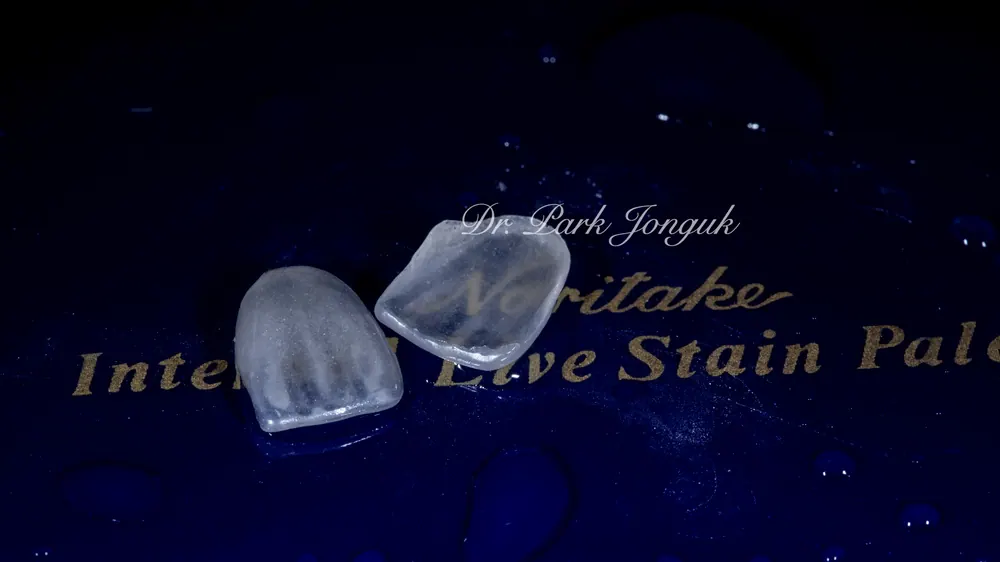
It's really thin.
Because the fabrication process is so demanding, these days in most cases
veneers are made simply by computer instead, and awkward-looking results have become more common.
Third, translucency.
You've probably noticed the excellent translucency in every veneer shown so far.
There's a stark difference between an awkward, opaque veneer and a translucent, natural one.
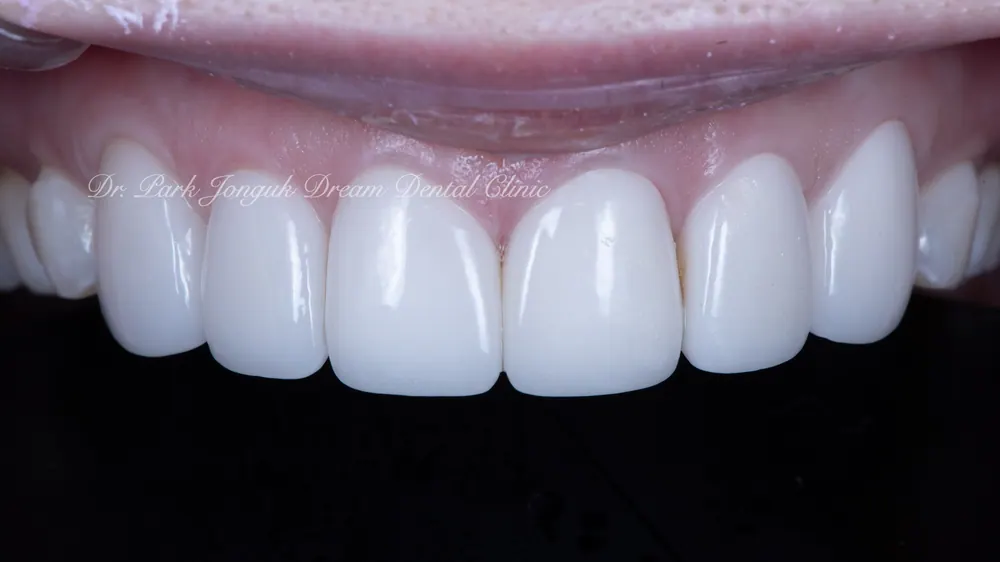
This shows the result of an awkward, one-day-method Seoul veneer treatment.
Because the teeth were far too white and opaque,
the patient wanted retreatment.
What mattered most to them was staying bright while still keeping a natural, translucent feel.
That's a fairly demanding request.
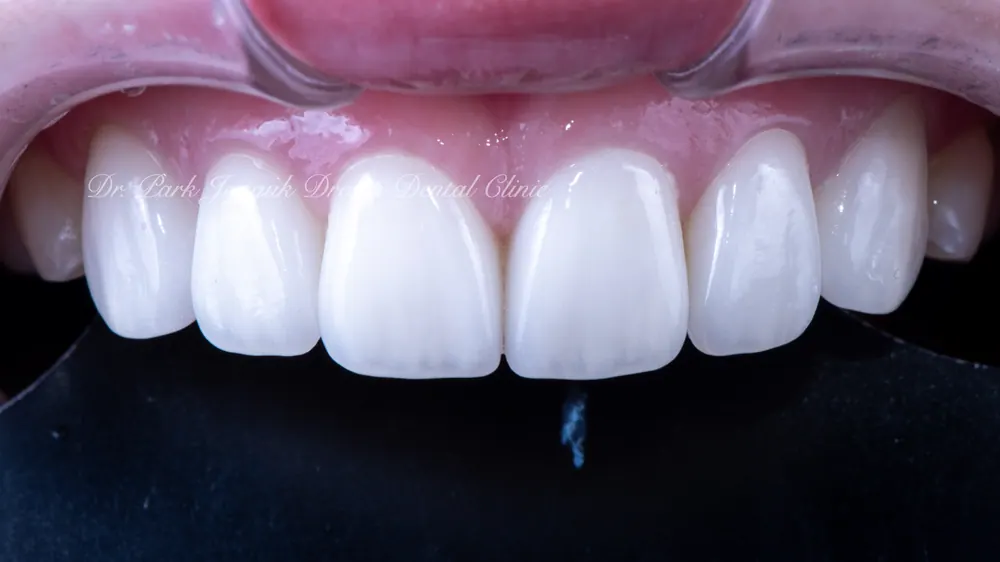
By giving the teeth both dimension and translucency,
a natural look was achieved.
A natural-looking veneer like this
depends on dimension, varied color, and translucency.
2. Thorough Advance Planning - Precision Wax-Up Diagnosis to Predict the Amount of Reduction
Good veneer treatment
starts with a proper diagnosis.
Based on why the treatment is being done and what result is wanted,
an analysis of the current teeth,
an accurate assessment of how much tooth needs to be reduced,
and a prediction of the final result —
all of this needs to be carried out precisely.
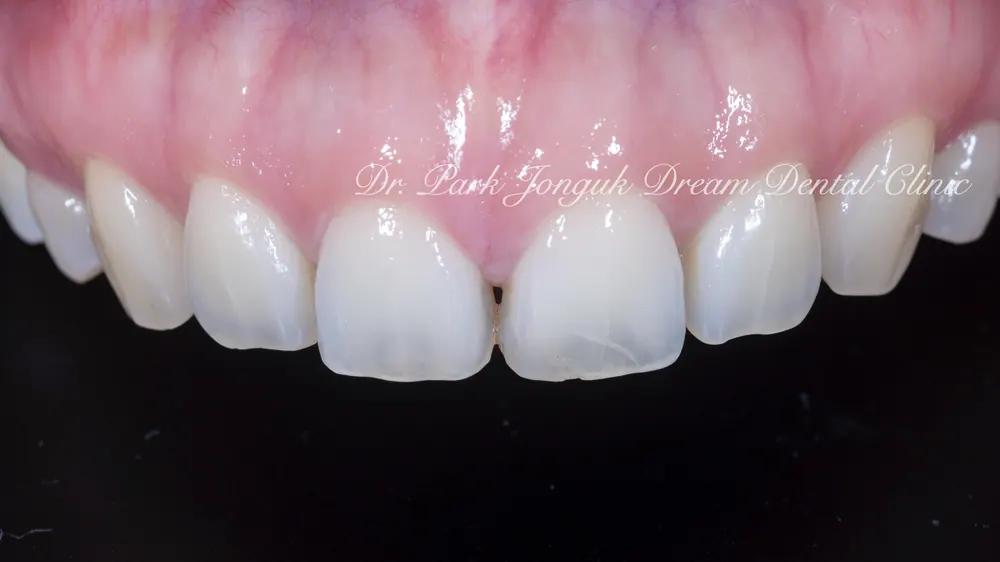
Before Seoul veneer treatment,
a great deal of conversation with the patient is needed.
Why the patient wants veneers, what result they're hoping for,
and how they feel about tooth reduction all need to be heard.
The diagnosis begins with these opinions in hand.
Through various analyses of the face, the smile, speech, and more,
the harmony between the whole face and the teeth is considered first,
and only then does the analysis move to the teeth themselves.
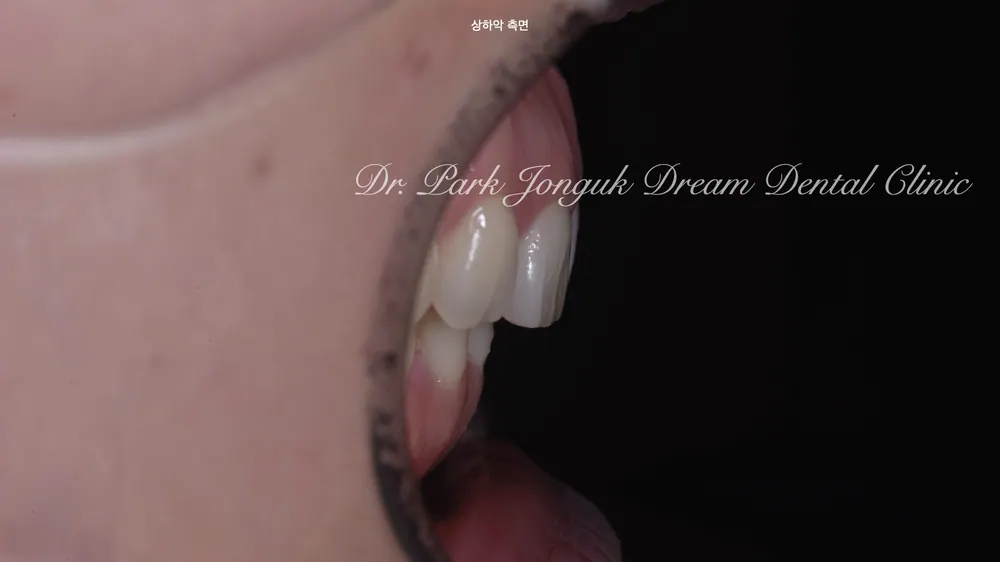
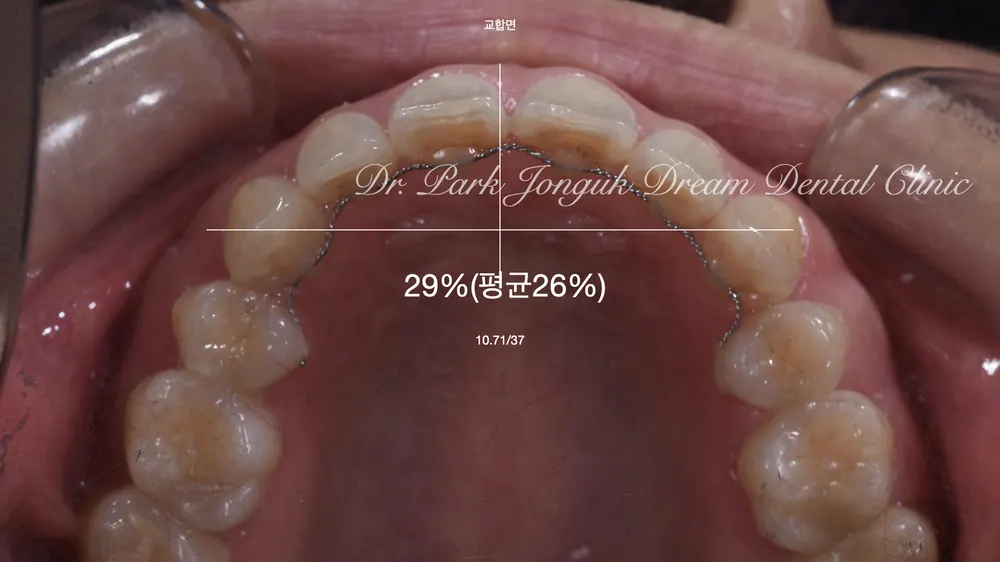
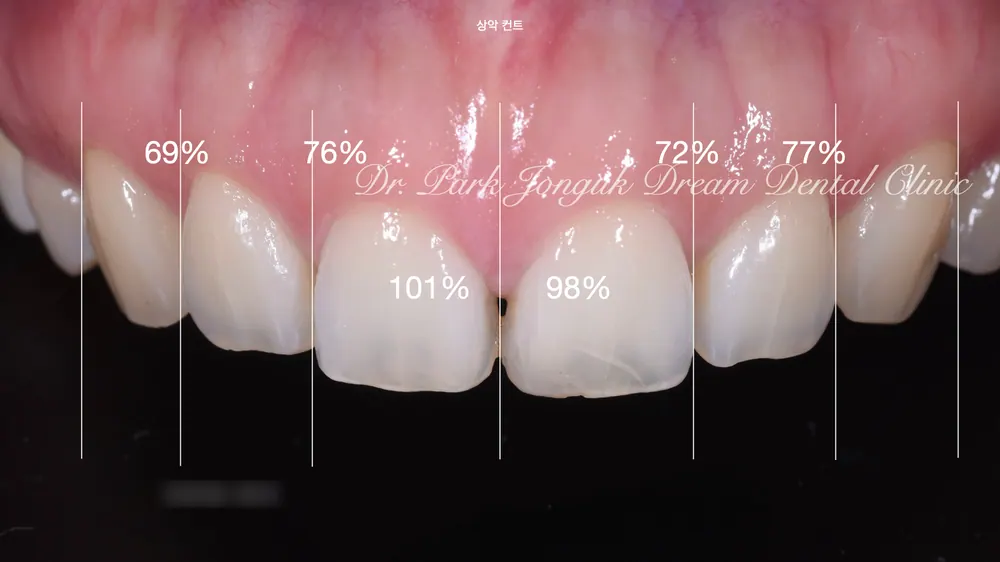
Analysis of the facial profile and dental arch,
along with various analyses of the proportion and size between teeth, are all carried out.
The current issues with the teeth and how to improve them
need to be analyzed precisely.
Just as you can't know the future without understanding the present,
analyzing the current state is extremely important.
This process is one I established over nearly 20 years of treating veneers,
and it's what I lecture on to countless dentists every year.
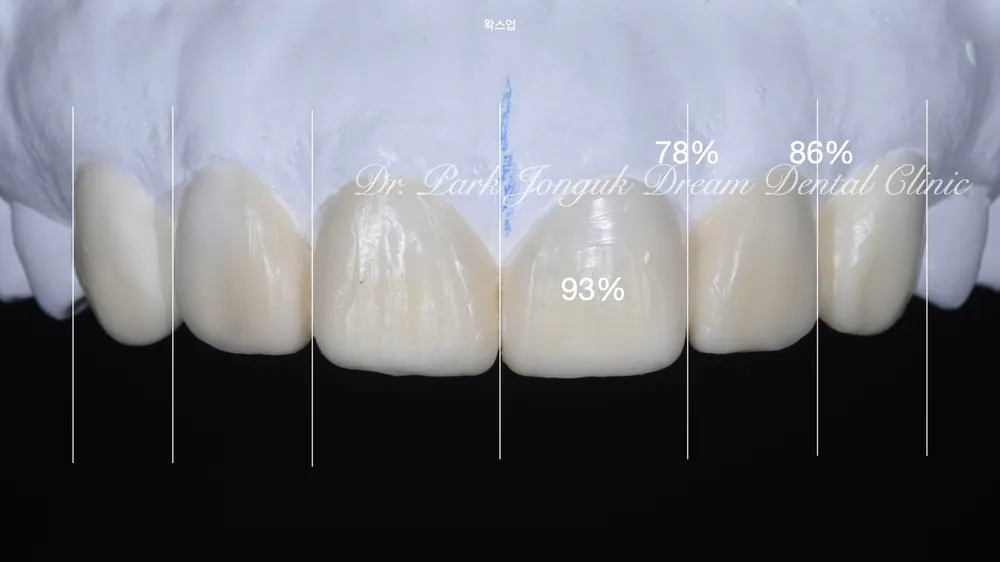
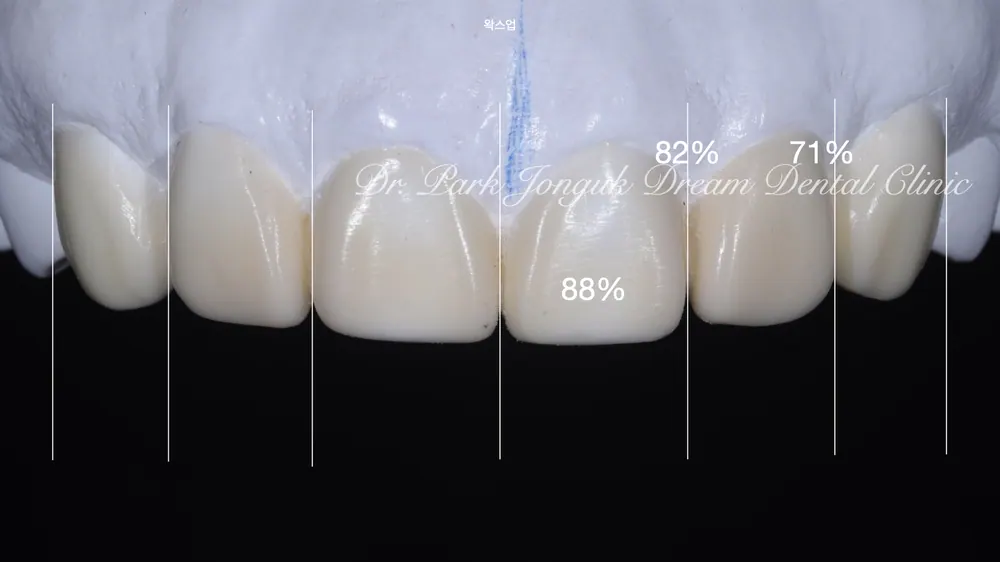
For this case, we ran the diagnosis two ways.
One was no-prep veneers,
and the other was minimal-reduction veneers.
No-prep, as the name suggests, means placing the veneer without reducing the tooth at all.
The drawback is that the teeth end up larger than they currently are.
Minimal reduction limits how much larger the teeth get,
and this shows the predicted shape when only an extremely small amount is removed to achieve better proportions.
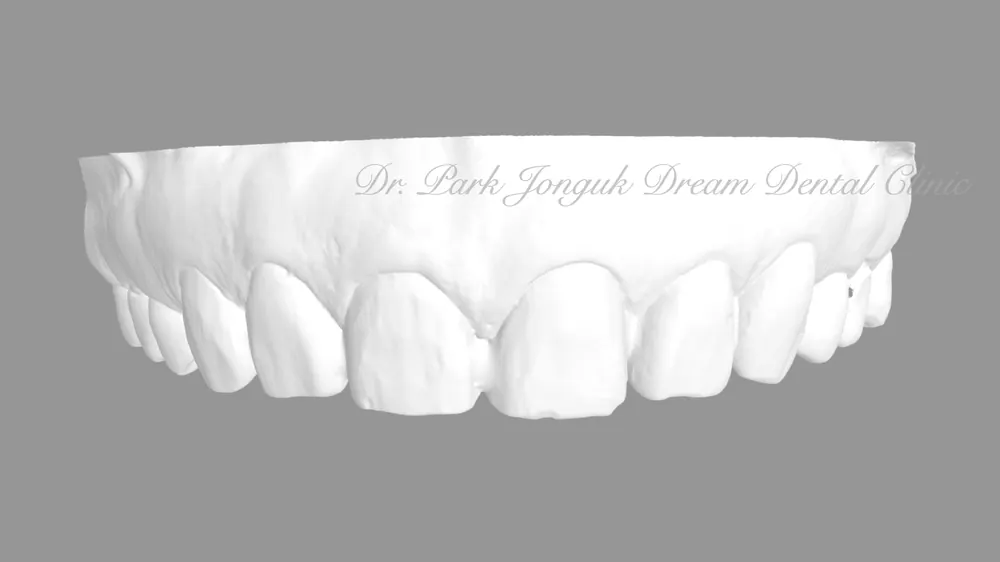
This is the predicted shape for the amount of minimal reduction.
Practically speaking, almost nothing is removed,
but since it was confirmed that this small amount of reduction would improve the shape of the teeth,
we decided to proceed with minimal-reduction veneers.
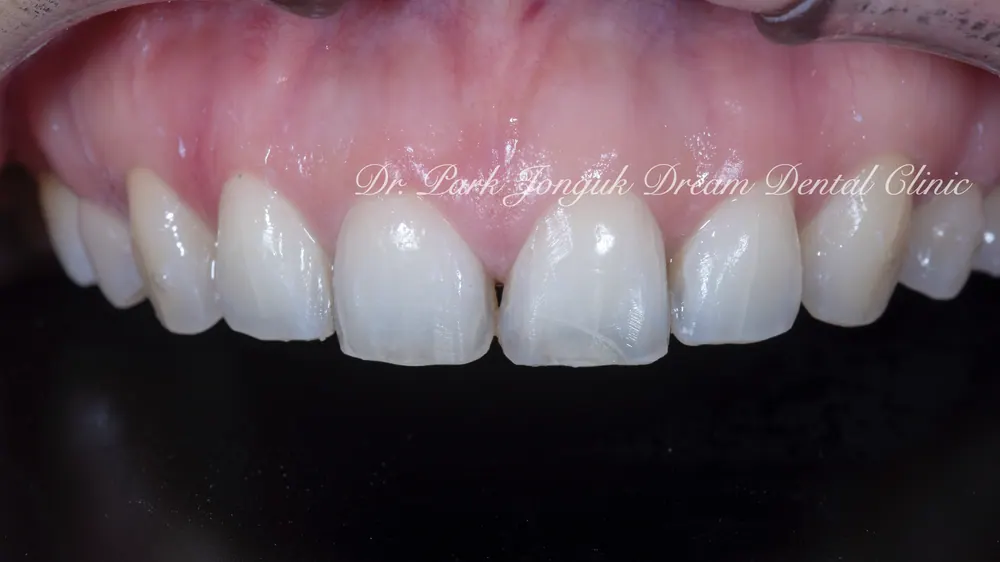
This is a photo after the reduction.
If this had been shown as the very first photo,
you probably wouldn't even have realized any reduction had been done.
That's how precisely only the necessary areas are reduced.
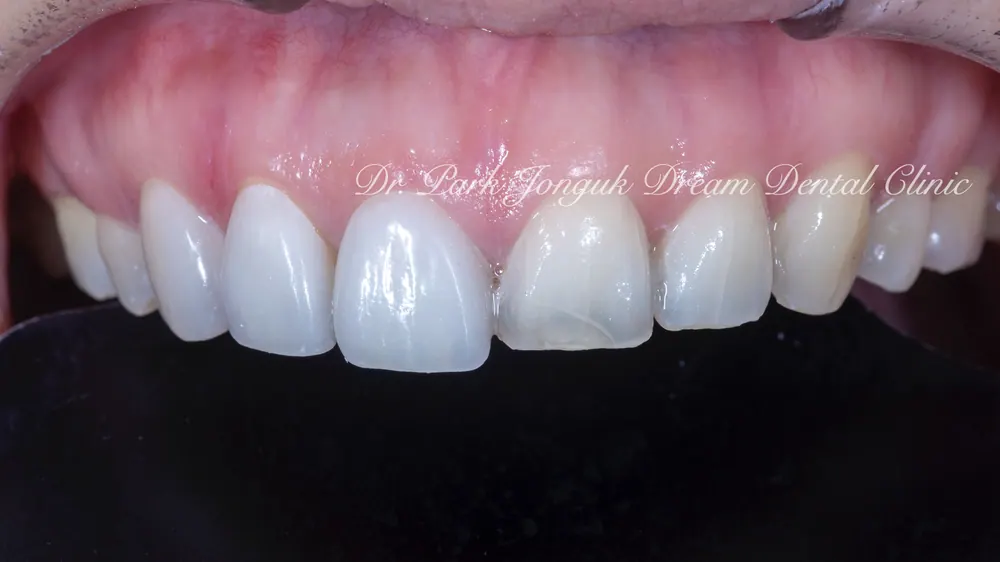
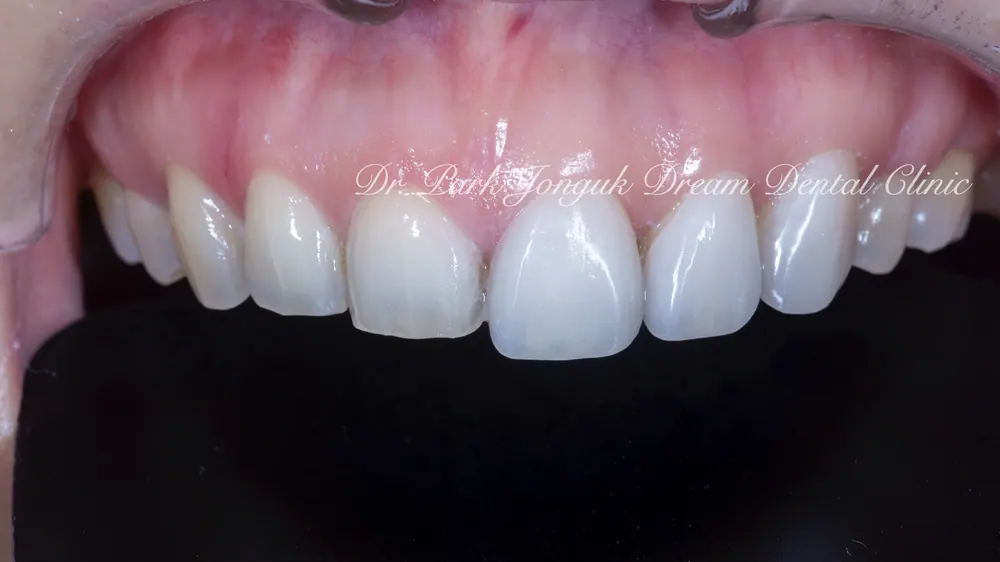
The veneers were fabricated like this.
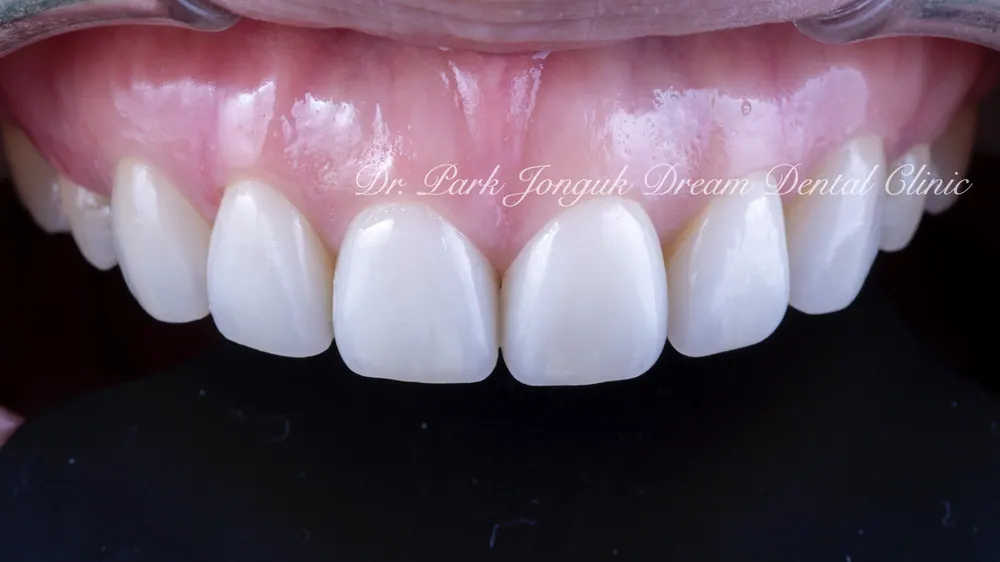
And, as always, the result was finished naturally and beautifully.
Through this precision wax-up diagnostic process,
the amount of reduction and the expected result are checked and decided in advance, before treatment proceeds.
3. Precise Tooth Reduction Under a Microscope
Once the diagnosis has been made, the tooth needs to be reduced
precisely, in line with that diagnosis.
A microscope is essential for this process.
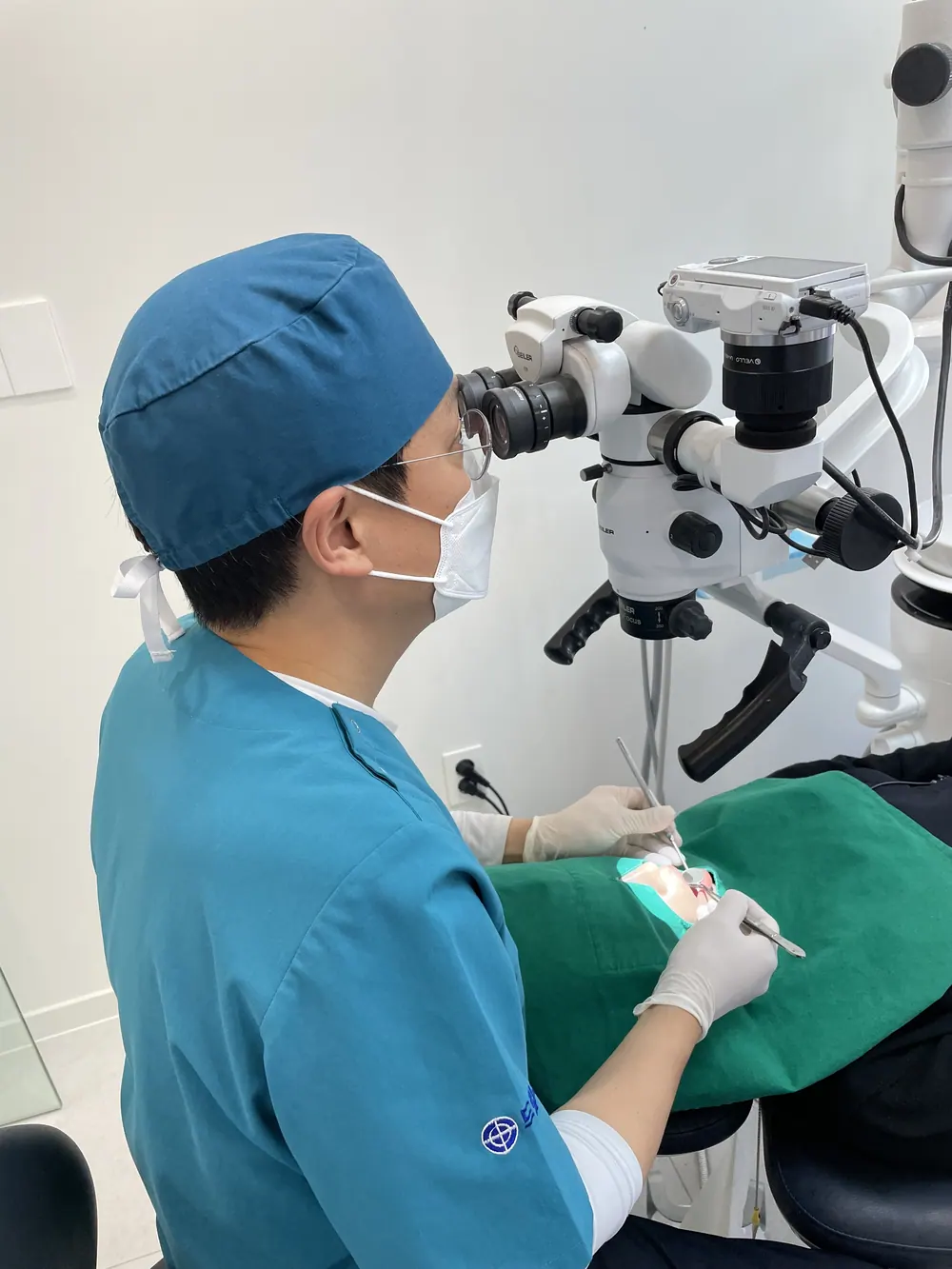
In veneer treatment,
you often see advertisements claiming tooth reduction of 0.3mm or 0.5mm.
In truth, that's not an amount the naked eye can even distinguish.
Reducing a tooth for a veneer without a microscope doesn't really make sense.
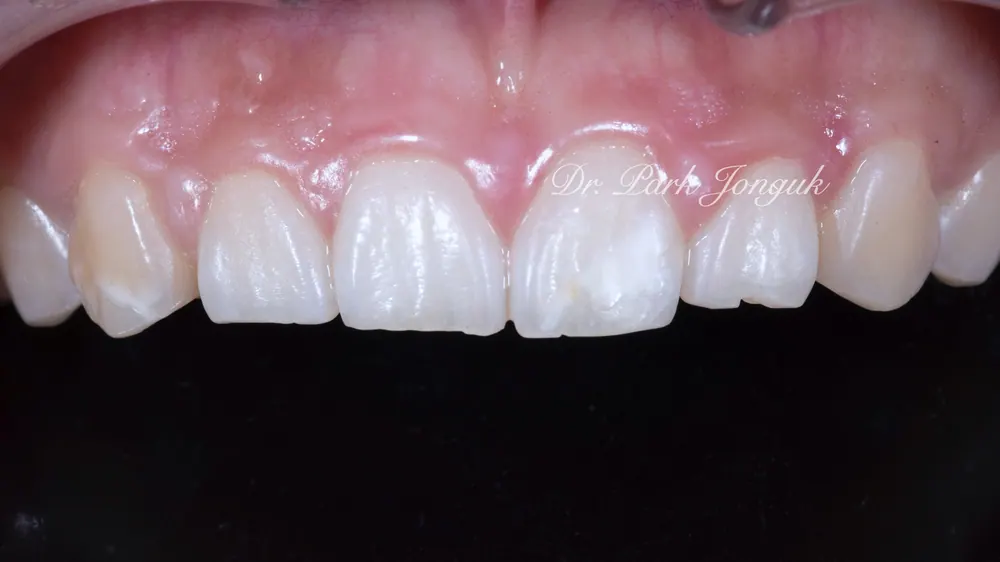
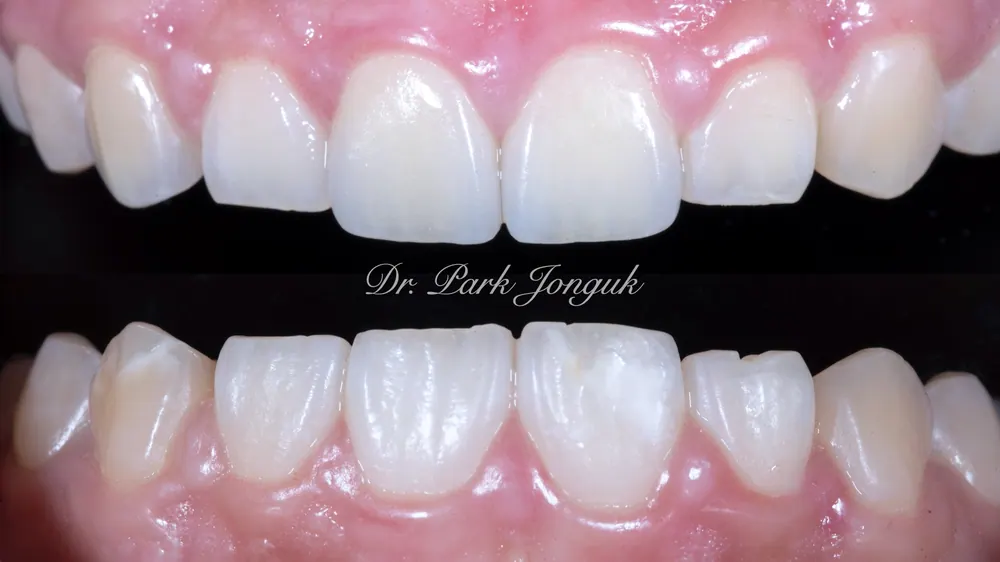
Veneers were chosen because of white spots on the tooth surface.
Since not every tooth had spots,
veneers were done only on the two front teeth and the canine.
Doing veneers on just one or two teeth scattered in between others like this
is actually quite a difficult task.
Still, we decided to proceed with only the minimum amount of reduction for the veneers.
Here, precise tooth reduction matters a great deal.
A microscope is used to carry out the minimal reduction.
The reasons we don't do one-day veneers — the currently trendy same-day method —
are varied.
The biggest reason is that we make our ceramic veneers by hand,
and another is that, because tooth reduction is done this precisely,
rushing to finish everything in a single day
makes it hard to deliver proper treatment.
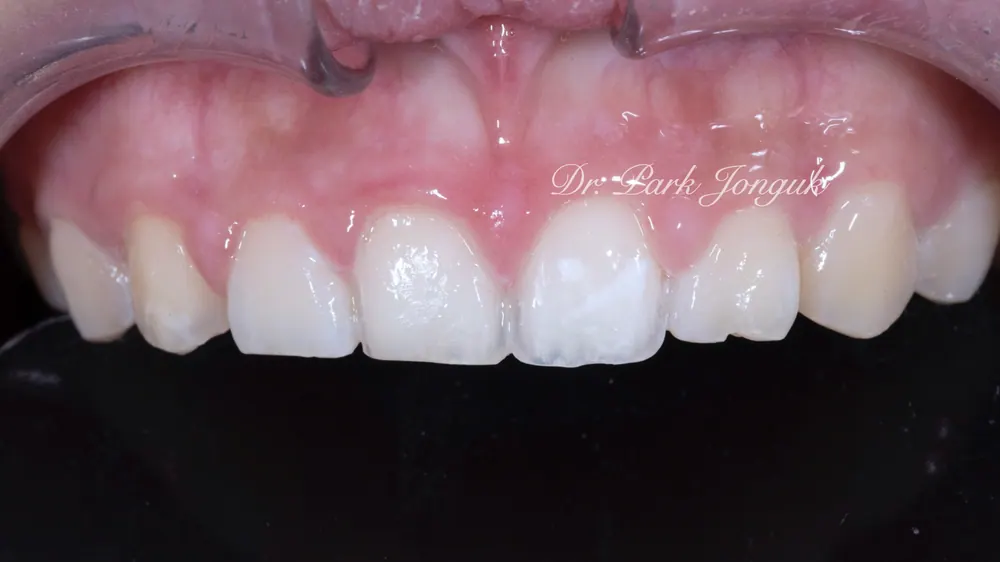
This is how the precise reduction was completed,
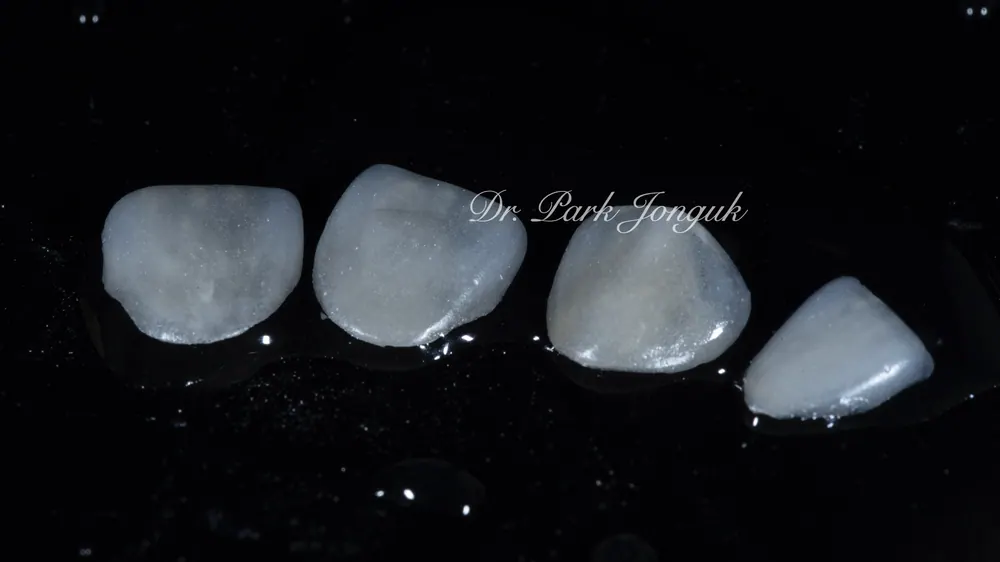
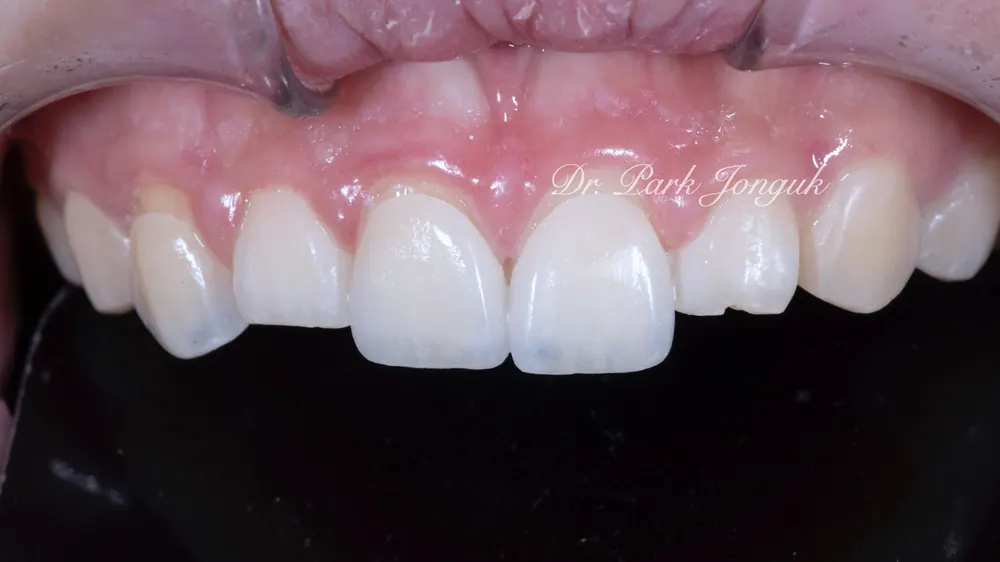
and once again, an extremely thin ceramic veneer that captures all the character of a natural tooth was completed.
4. A Precise Treatment Process
The veneer treatment process is as follows.
1) Precision wax-up diagnosis - takes about 2 to 3 days.
2) Clinical procedure - tooth reduction
Taking the impression
3) Fabricating temporary teeth
4) Consultation using the temporary teeth
5) Fabrication of the veneers - takes about 1 to 2 weeks.
6) Bonding the veneers
7) Regular follow-up care
I've already explained the precision diagnosis, the clinical procedure, and the veneer fabrication process earlier.
Every one of the remaining steps matters just as much.
One thing we place particular emphasis on here is consulting on the expected result using the temporary teeth.
I've occasionally heard from patients who say temporary teeth weren't made for their veneer treatment elsewhere.
For aesthetics, making the temporary teeth and consulting with them is a very important step,
but the one-day method, made entirely by computer in a single day,
skips this consultation process altogether.
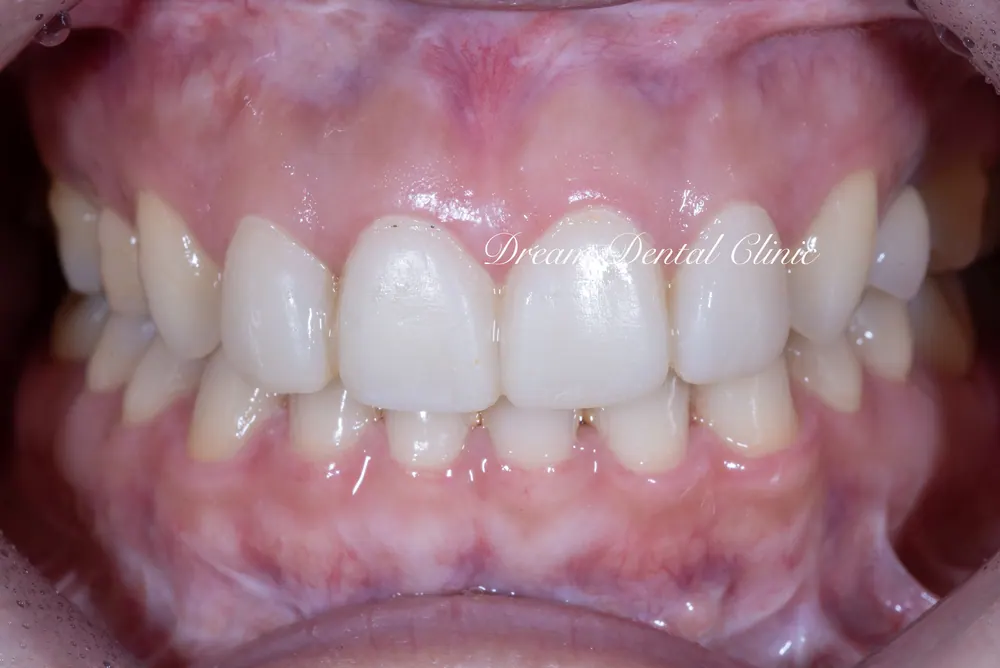
Using a resin temporary tooth,
we explain in careful detail what shape the treatment will take.
Since it's not ceramic, color and translucency can't be checked,
but the overall shape, volume, and proportion between teeth can be seen.
Once the desired size and other details have been confirmed using the temporary teeth,
fabrication of the ceramic veneers begins accordingly.
Bonding the veneers is also a very important step.
There was a time when even among dentists,
there was skepticism about how long something bonded to just the front surface could really last.
If the treatment process is followed properly,
there's no need to worry about that at all,
but veneer treatment is still an unfamiliar procedure to most dentists.
In my case, several times a year I lecture
to other dentists on the veneer treatment process.
Bonding is one of the parts I treat with particular importance.
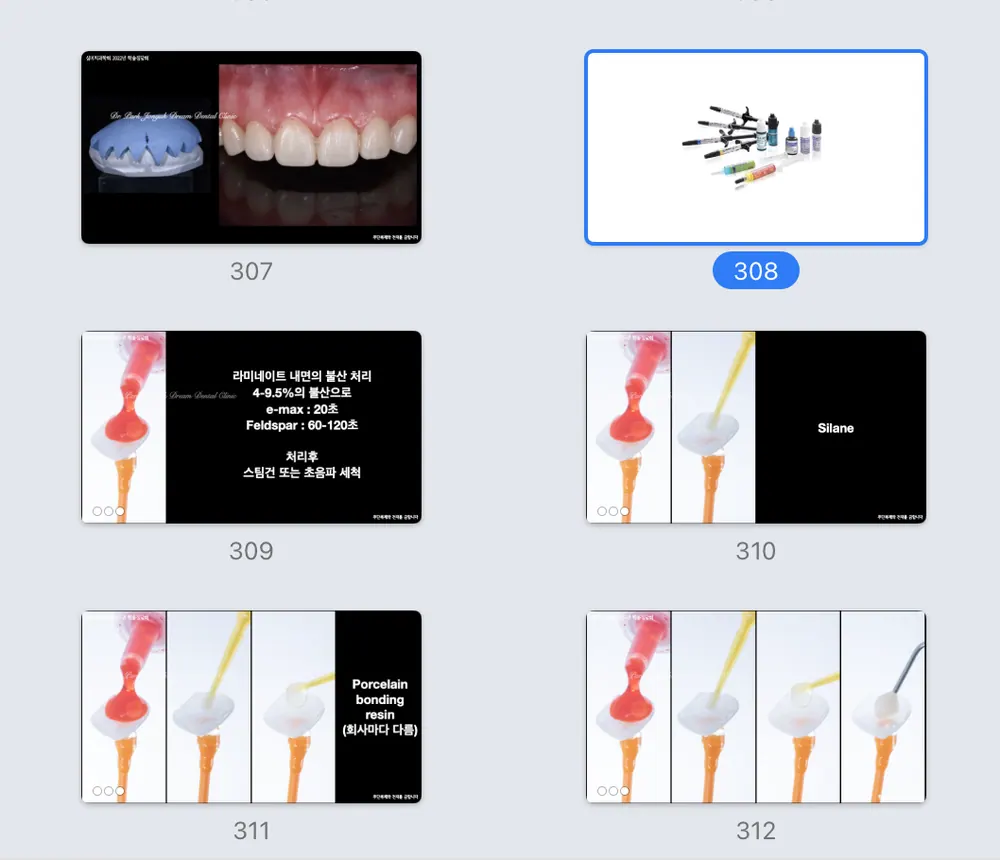
This is part of the slide deck I use in my lectures.
It explains veneer bonding in detail.
If treatment follows the principles precisely,
there's no need to worry much about the veneer coming off.
5. Veneer Retreatment - Laser Veneer Removal to Minimize Tooth Damage
A great many patients come in for veneer retreatment.
Most of them started their first treatment without ever being told what a veneer procedure actually involves,
and quite a few didn't even know it involved reducing the tooth.
As a result, they realize they need retreatment,
and then worry sets in — what if this process damages the tooth?
There's no way to remove a veneer with absolutely zero damage to the tooth.
That said, most clinics simply grind the veneer off,
whereas using laser veneer removal instead
can minimize damage to the tooth.
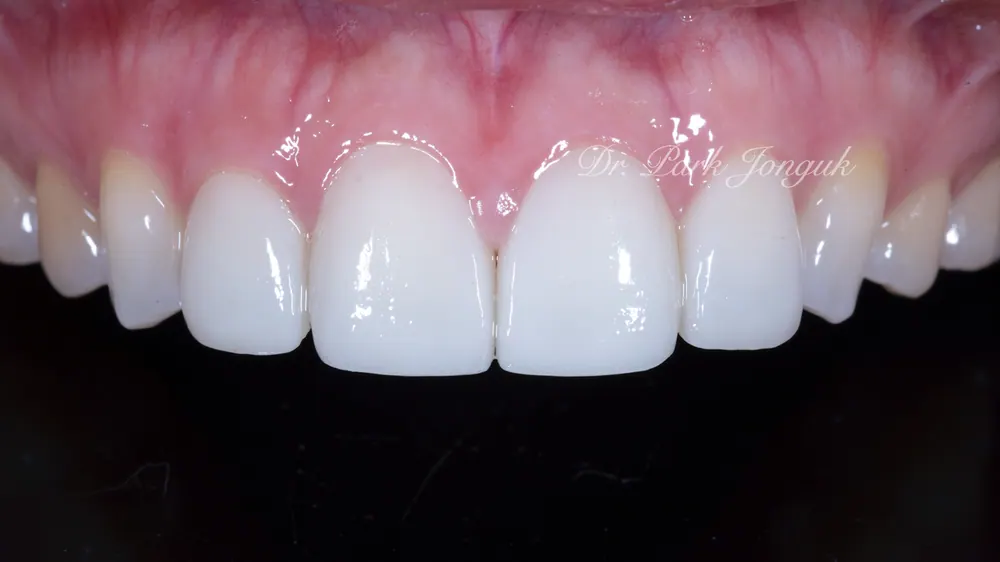
After removing an unnatural-looking veneer like this,
we decided to retreat it naturally and beautifully.
A laser is used to remove the veneer.
This isn't the same patient's photo,
but when removal is done this way,
the cement between the ceramic and the tooth melts,
making the veneer easier to remove,
and using the laser isn't the end of the process —
afterward, any remaining cement has to be carefully removed under a microscope.
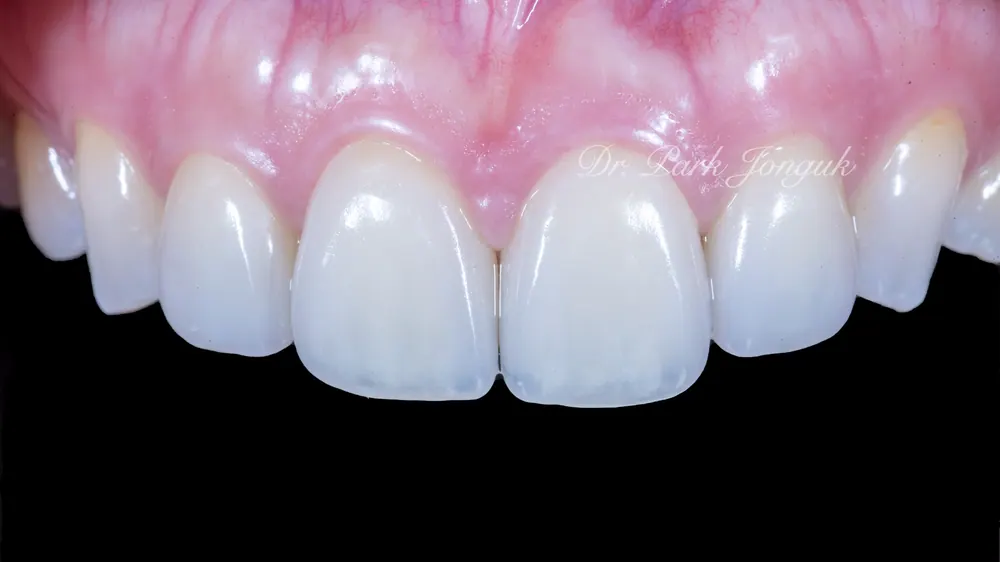
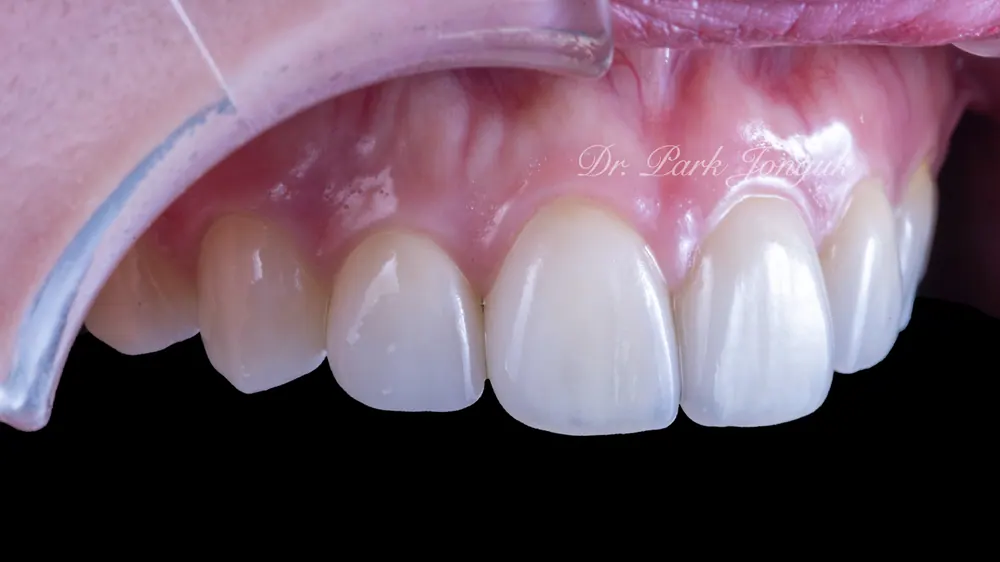
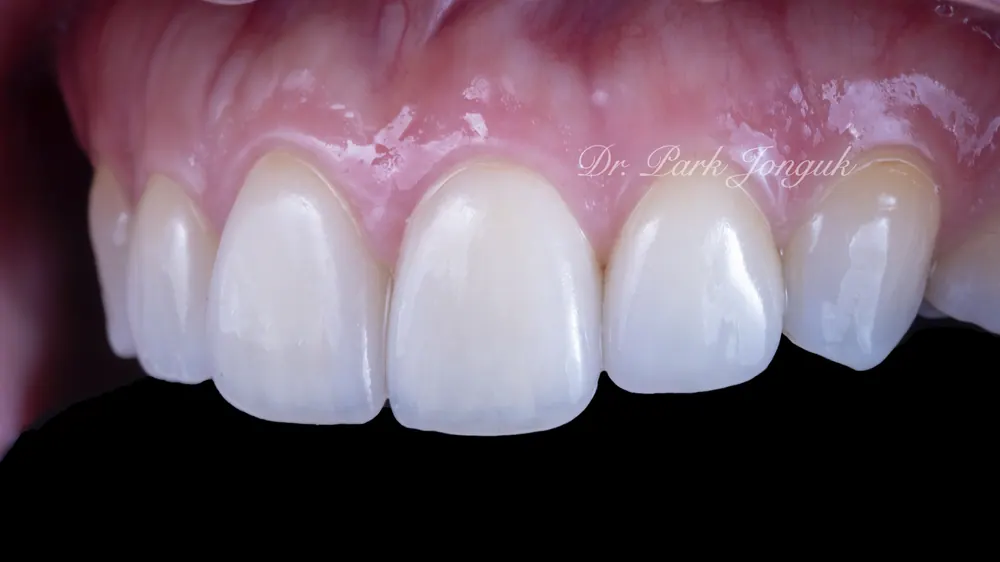
This is how, naturally and beautifully,
the veneer retreatment was completed.
That covers what makes Dream Dental Clinic's veneers distinctive.
1. Natural beauty
2. Thorough advance planning - precision wax-up diagnosis to predict the amount of reduction
3. Precise tooth reduction under a microscope
4. A precise treatment process
5. Veneer retreatment - laser veneer removal to minimize tooth damage
This kind of careful, detailed differentiation
is the result of relentless effort to create something of the highest quality.
Since 2006, Dream Dental Clinic
This article is a clinical note written by Dr. Park Jonguk of Dream Dental Clinic, Gangnam; the original was published on his blog. The photographs shown are real cases he treated. Results vary with each patient’s condition, and every procedure carries the possibility of individual variation and side effects.
Quick Consult
Request a Callback
Leave your number and we will call you back during clinic hours.
Request Received
We will contact you during clinic hours. For urgent matters, please call +82-2-3448-0028.