
No-Prep and Minimal-Reduction Veneers That Minimize Side Effects
Hello. I'm Park Jonguk, director of Dream Dental Clinic.
Veneer treatment that makes
the front teeth beautiful
is a treatment with quite few side effects, as long as the principles are followed properly.
Many people worry about
side effects after veneer treatment,
and while there are indeed various side effects that come from excessive reduction,
excessive reduction, in most cases,
means the case wasn't really suited to veneers
to begin with, but was treated with them anyway.
If the indication for veneers is properly confirmed
before treatment,
the outcome can be much better.
The less tooth reduction there is, the fewer side effects there are.
No-prep veneers would be best of all.
The problem is that reducing the tooth less
means the veneer itself has to be that much thinner,
which makes fabrication harder,
and also makes it harder to achieve a range of natural expression.
In other words, it's technically demanding.
Even in ceramic this thin,
expressing the many different looks of natural teeth
is a hallmark of Dream Dental Clinic's veneers.
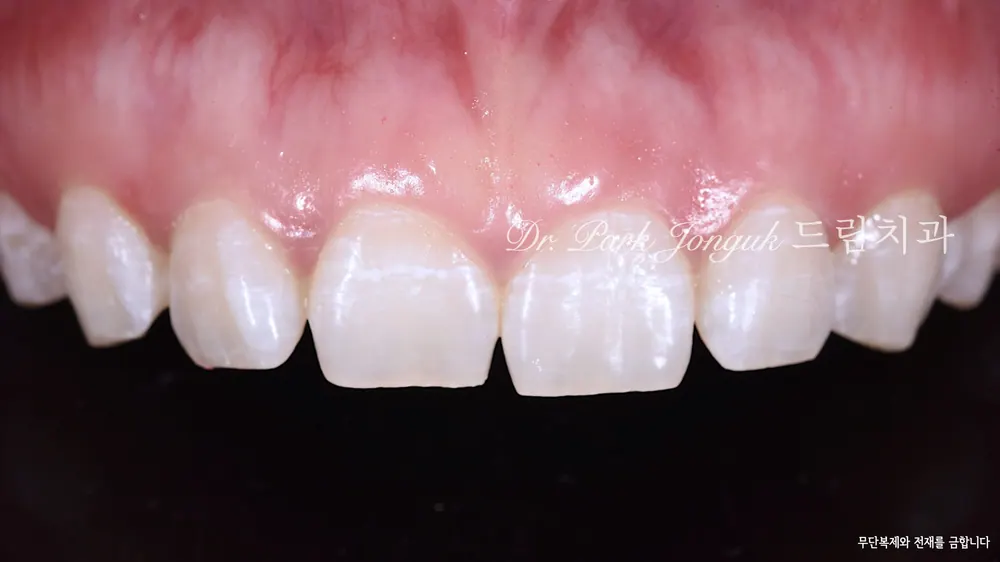
The shape and color of the teeth, along with the staining —
issues that can't be improved with orthodontics or other treatments —
made this a case perfectly suited to veneers.
The shape of the teeth was awkward, jar-shaped,
the color was on the yellow side,
and there was staining on the teeth.
The alignment was relatively good,
though a few teeth were slightly rotated.
It was a case that needed several kinds of improvement,
but one where veneers would carry almost no side effects and a good prognosis.
No-prep treatment was possible,
but since the teeth would end up too wide, minimal reduction was needed instead.
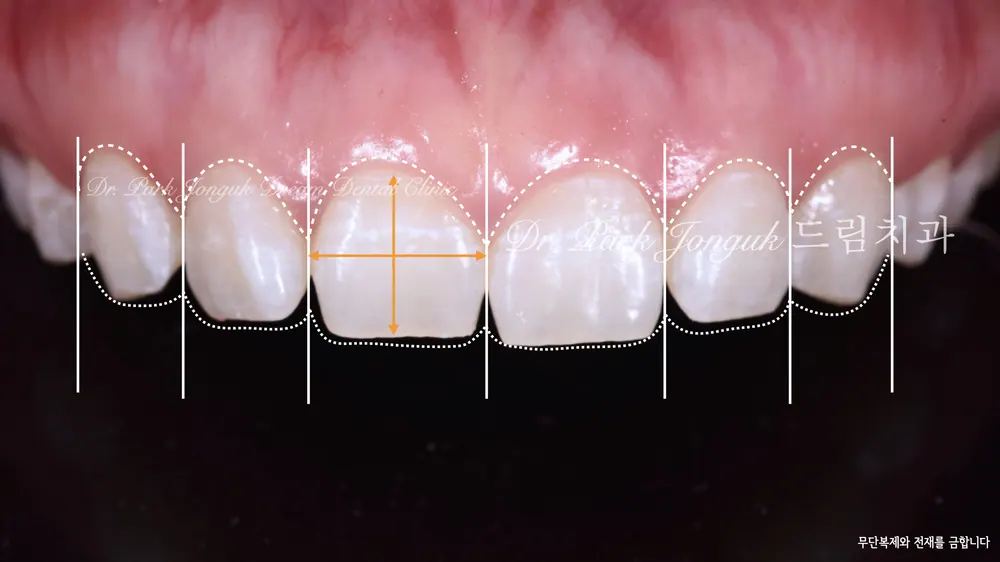
A treatment plan is drawn up.
It needs to improve the proportion between teeth
and adjust the width-to-height ratio of the teeth as well.
Since the teeth were short and wide,
gum contouring was needed,
and the design had to make the teeth look longer.
Since the patient was young,
the incisal edge line needed to have a dynamic shape,
and the veneers needed to have a translucent feel.
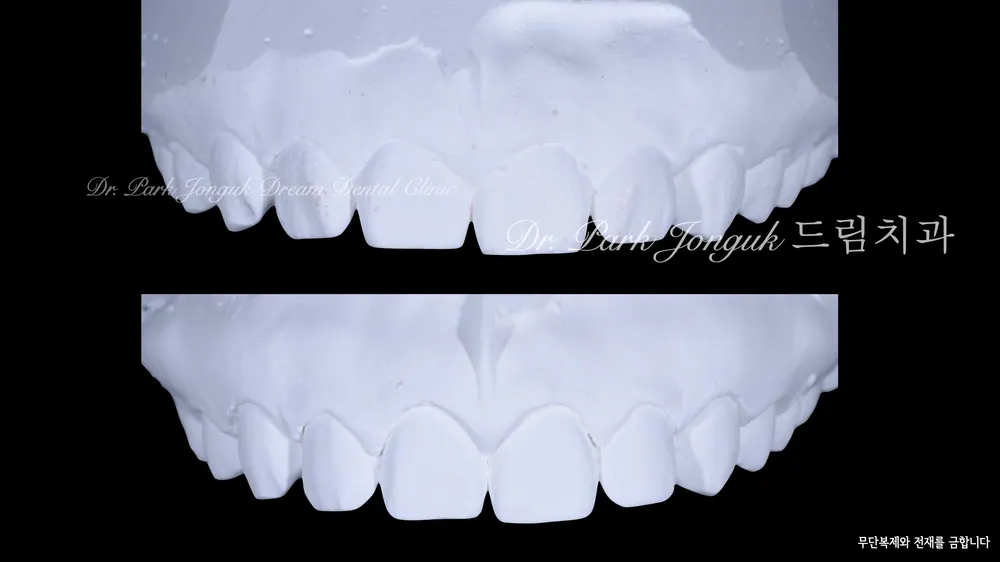
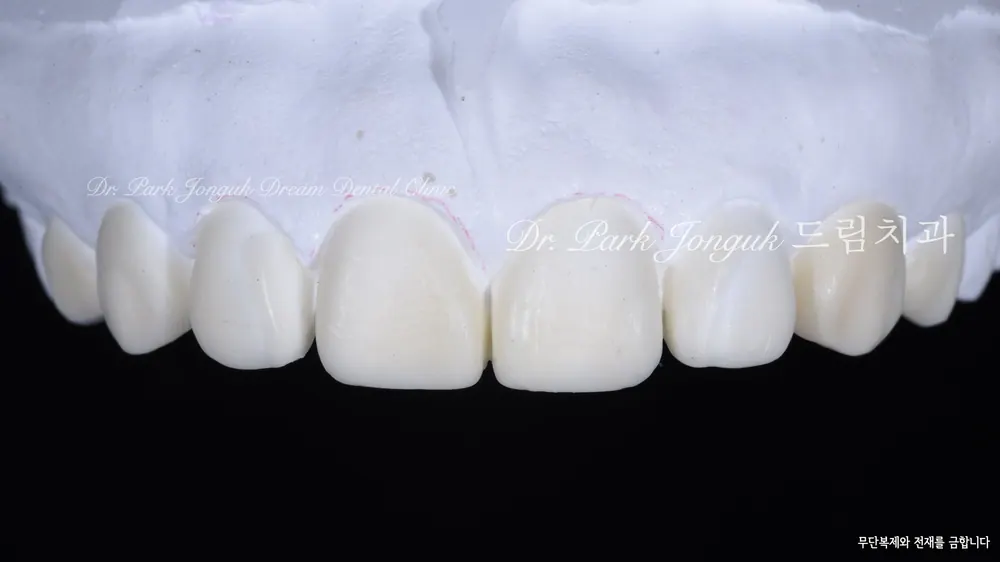
Before veneer treatment, the tooth reduction is simulated.
Wax is layered over the reduced shape
to build a preview of the tooth.
This process is called precision wax-up diagnosis.
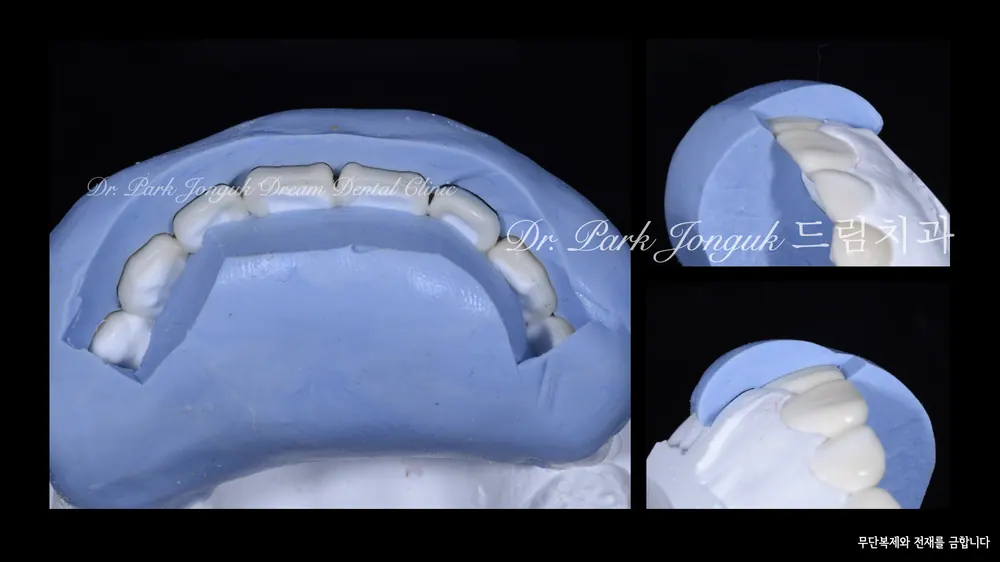
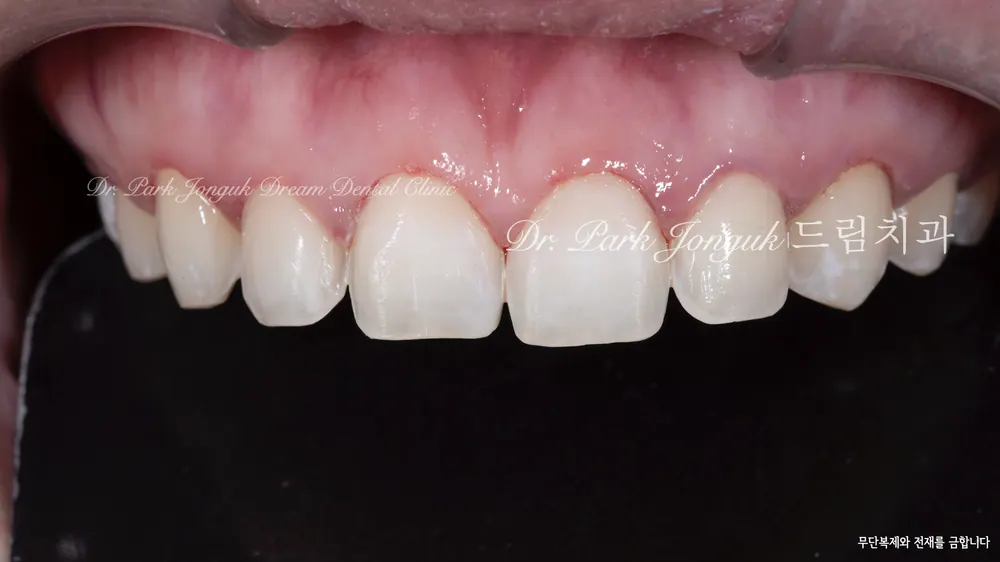
Using this finished wax-up,
a guide is made for reducing the tooth,
and that guide is used to carry out precise reduction for the veneers.
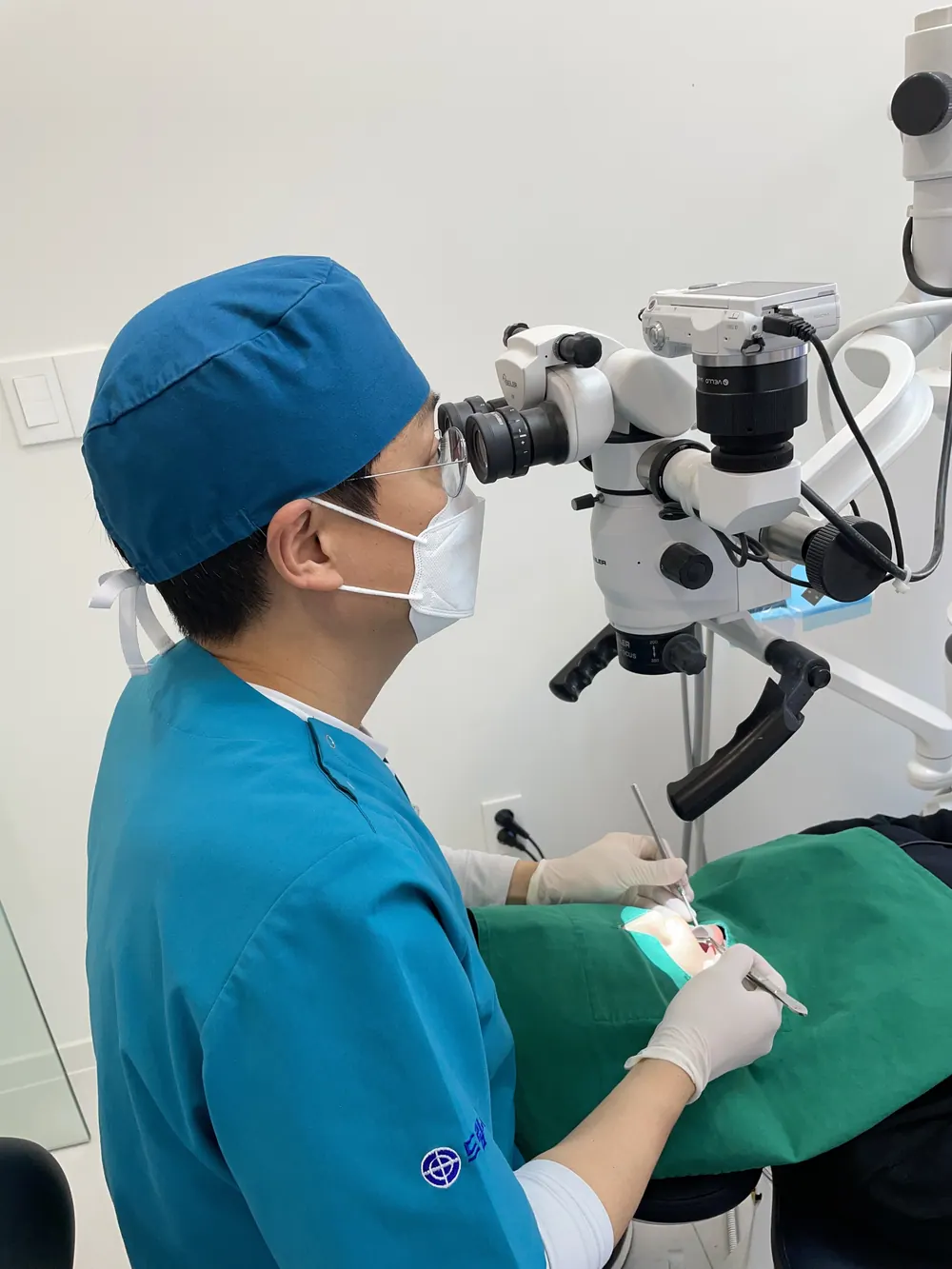
Reduction performed under a microscope is essential.
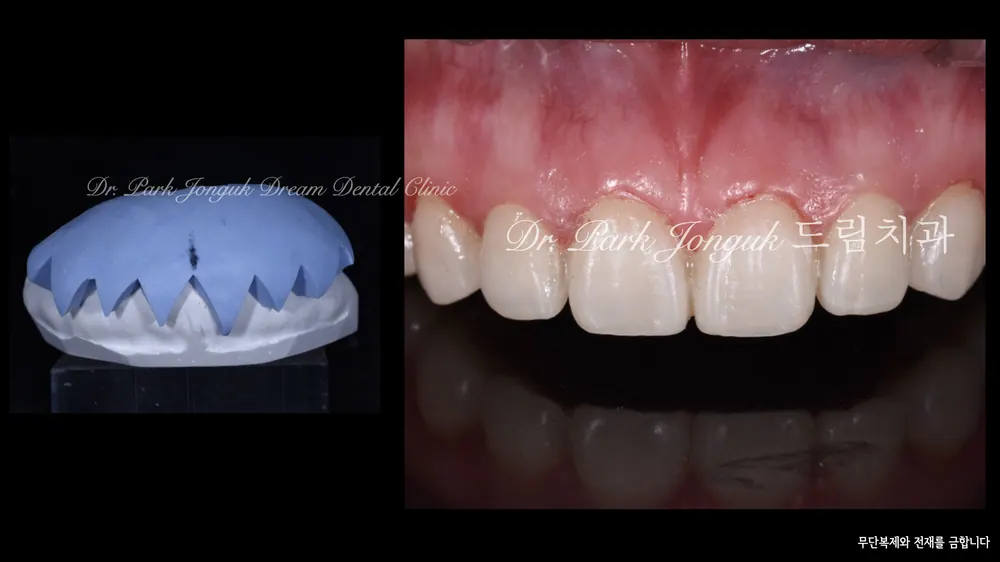
Using the wax-up again,
temporary teeth are made.
The temporary teeth are used for extensive consultation with the patient.
Since there's a considerable change in the proportion and size of the teeth,
time is needed to get used to the change.
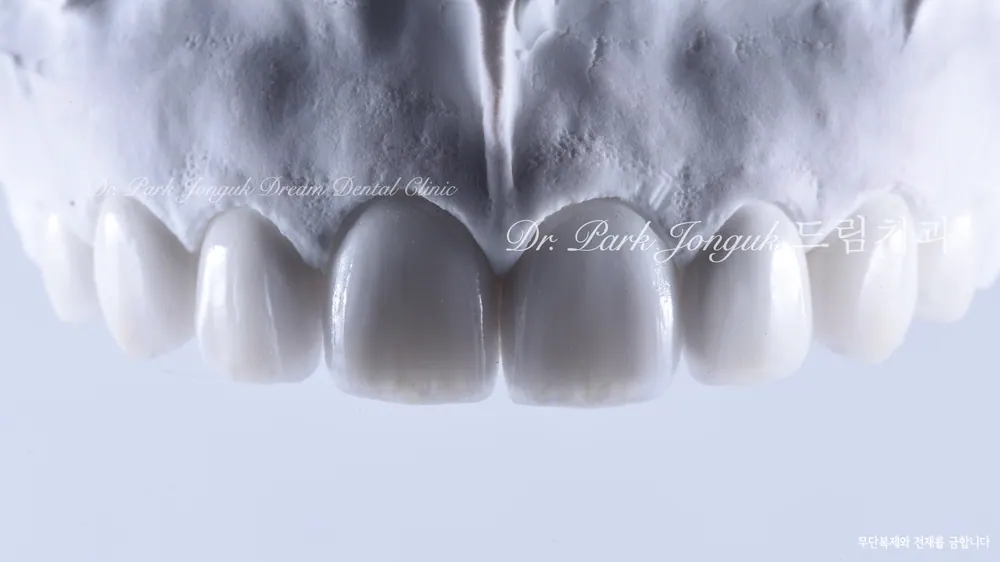
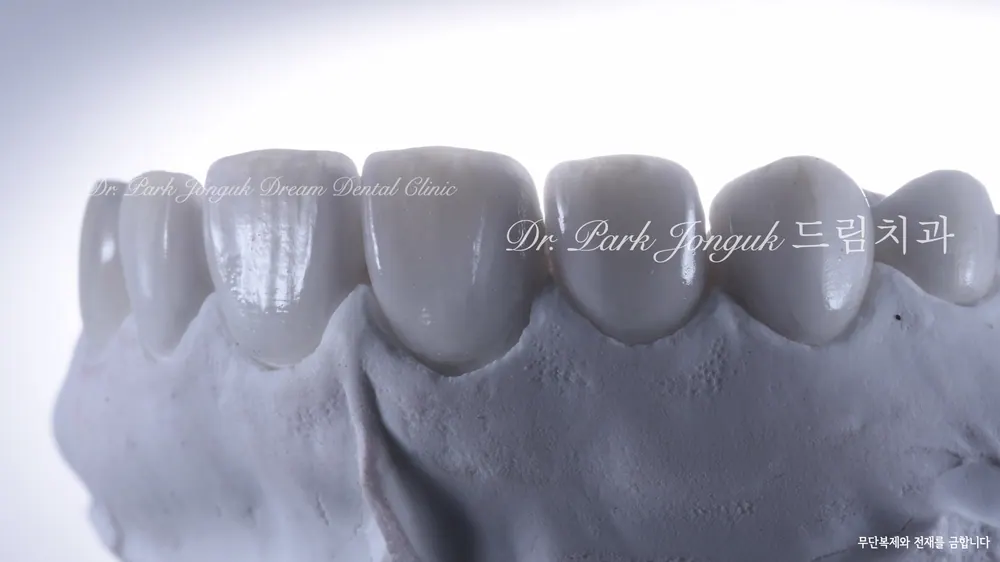
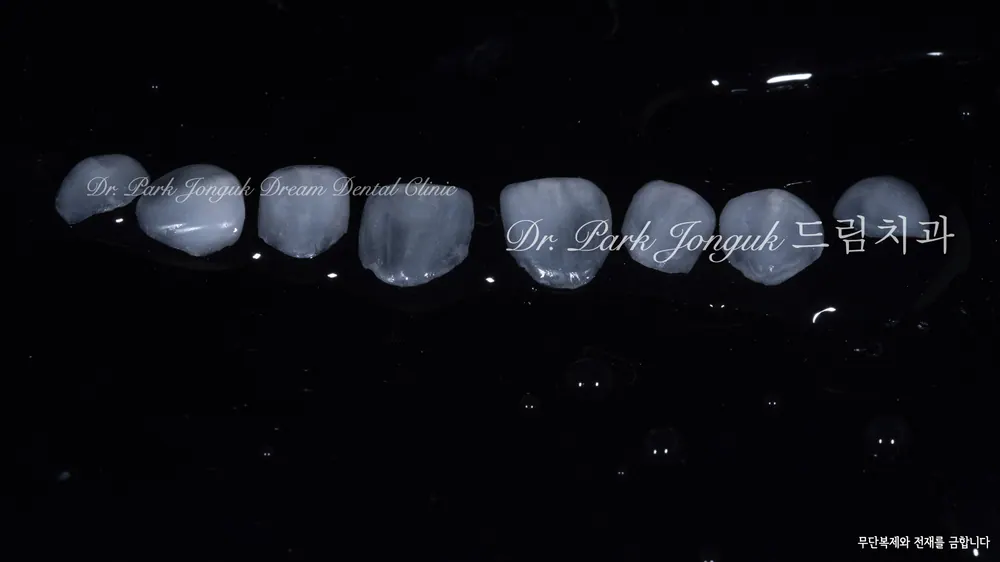
The veneers were fabricated in ceramic.
You can tell from the photo alone just how thin they are.
A range of expression has to be packed into ceramic this thin.
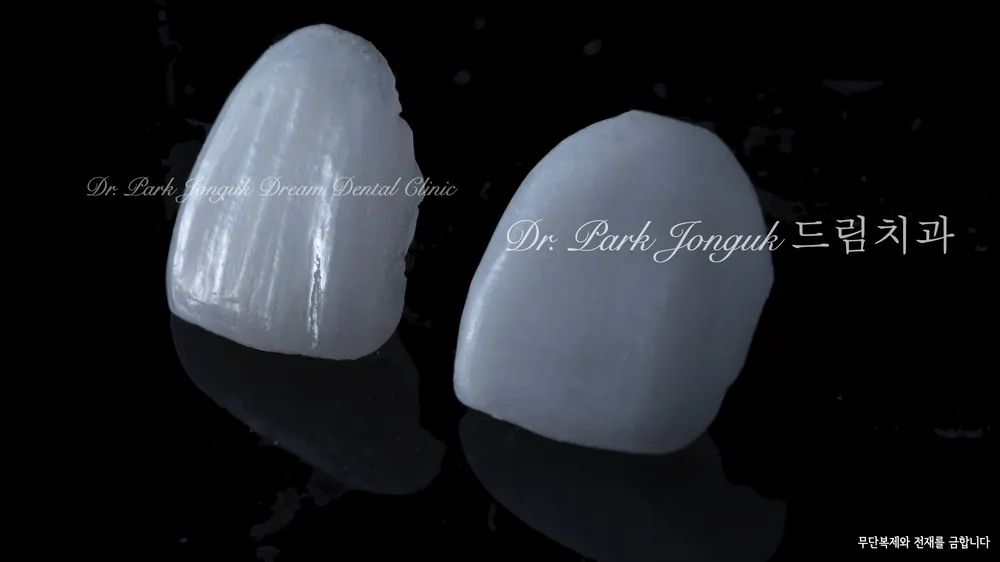
When the same veneer
was made instead using CAD/CAM with the one-day method,
you can see that neither the shape nor the surface texture could be properly expressed.
The tooth looks flat and unnatural.
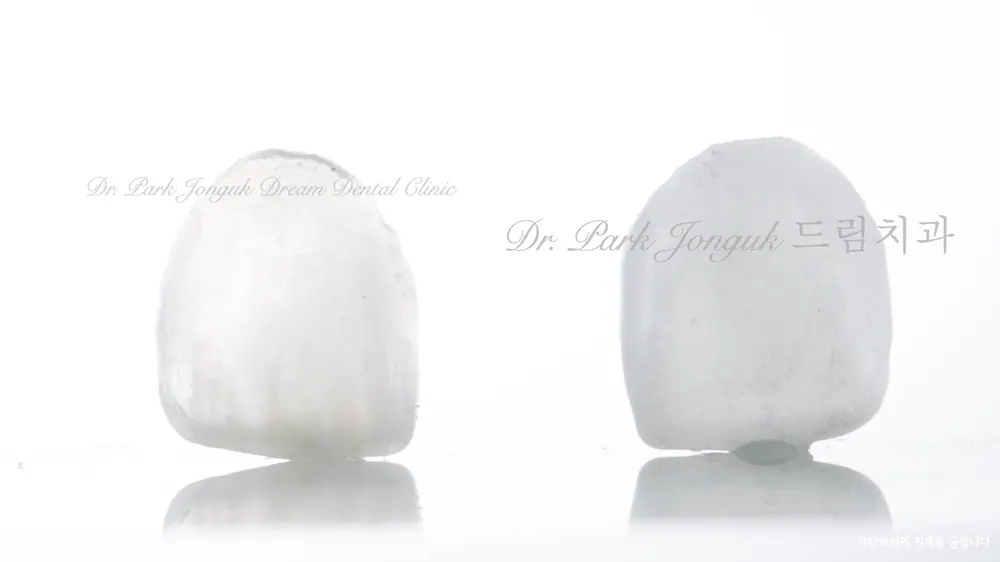
There's a particularly large difference in thickness.
The one-day method
can't be made anywhere near as thin as Dream Dental's handmade method.
In the end, more tooth structure has to be removed
before veneers can even be fitted.
The computer-made one-day method has a lot of limitations.
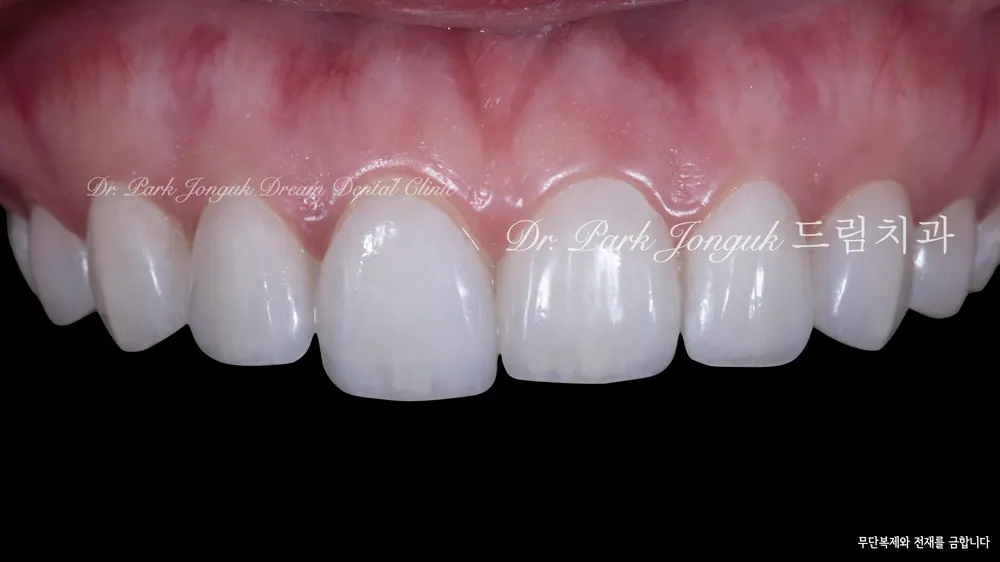
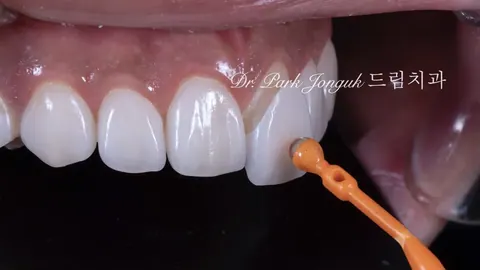
The veneers are then bonded onto the teeth.
They're shaped to blend well with the gums.
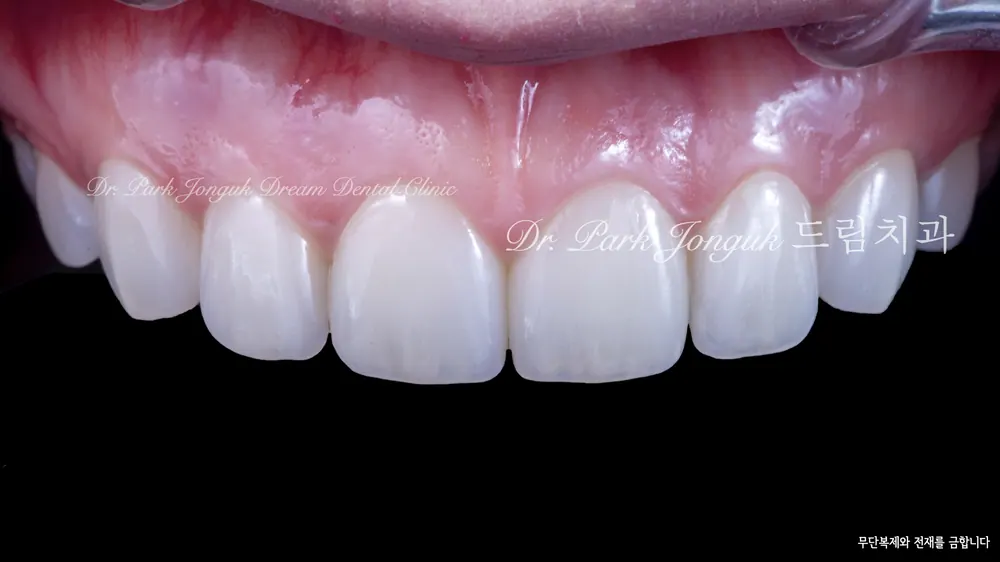
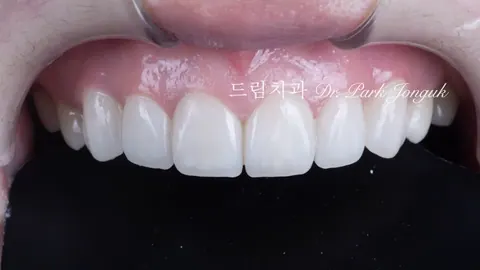
The veneer treatment has been completed.
You can see a range of expression built into the teeth.
The translucency at the tooth edges blends with the varied color expression
to convey young, beautiful teeth.
The incisal edge line also brings out the dynamic look typical of a younger person.
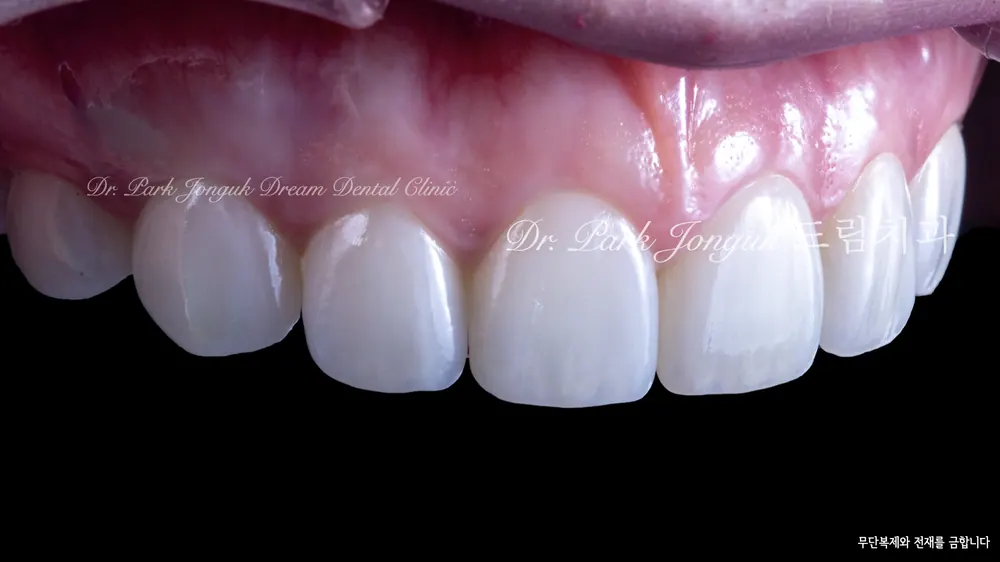
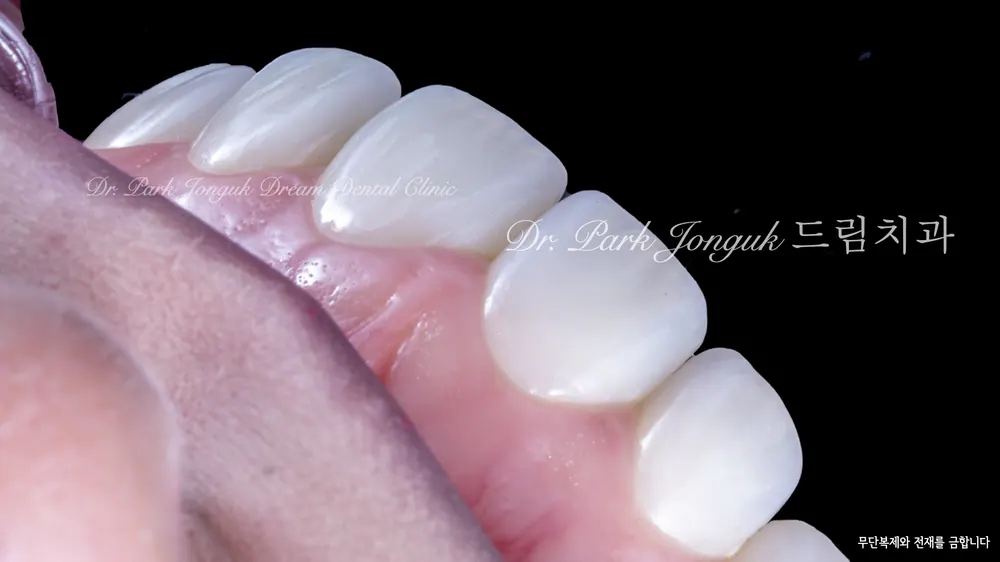
The surface texture of the teeth
also has to be expressed just like a natural tooth.
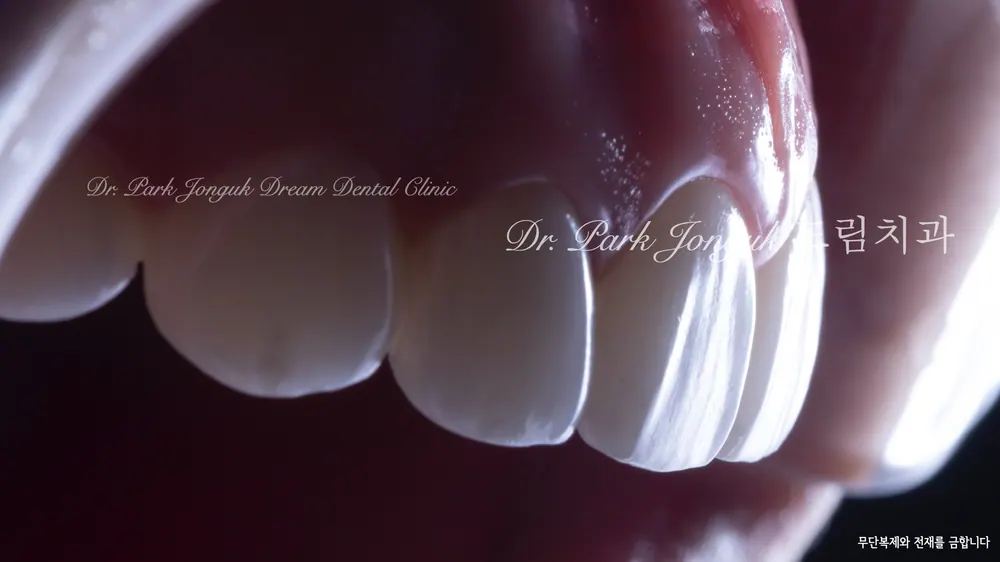
You can clearly see the sense of dimension in the veneer,
capturing the dimension of a natural tooth well.
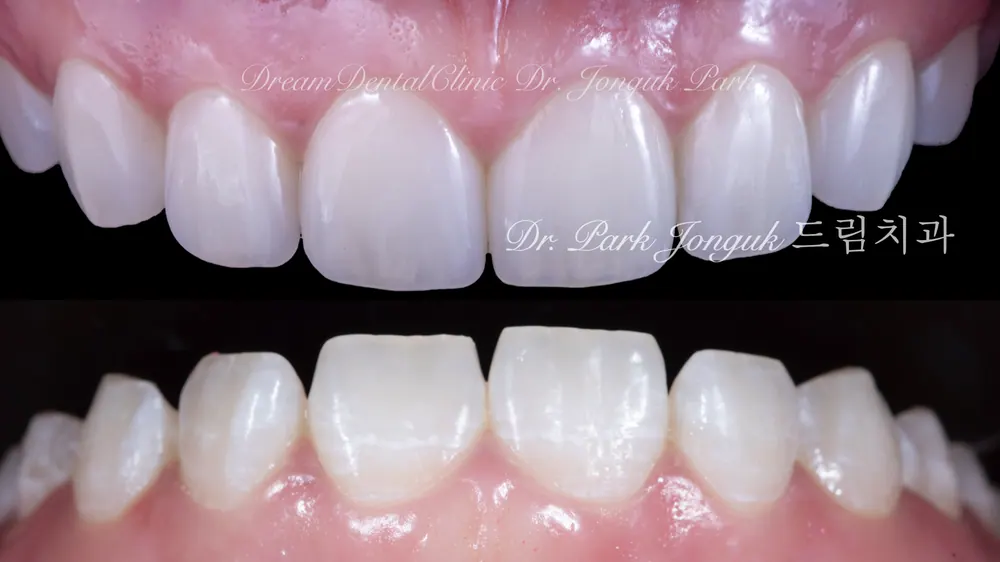
Natural beauty
Since 2006, Dream Dental Clinic
This article is a clinical note written by Dr. Park Jonguk of Dream Dental Clinic, Gangnam; the original was published on his blog. The photographs shown are real cases he treated. Results vary with each patient’s condition, and every procedure carries the possibility of individual variation and side effects.
Quick Consult
Request a Callback
Leave your number and we will call you back during clinic hours.
Request Received
We will contact you during clinic hours. For urgent matters, please call +82-2-3448-0028.