
Minimal-Prep Veneers: Keeping Tooth Reduction to a Minimum
Hello, I'm Park Jonguk, DDS, MS, director of Dream Dental Clinic.
Treatment that makes the front teeth beautiful is called tooth reshaping.
Just as people get eyelid or nose surgery,
teeth can be reshaped too.
For this kind of reshaping,
there are veneers and all-ceramic crowns —
two available methods.
A veneer involves reducing the front surface of the tooth
and bonding a thin ceramic shell onto that front surface.
An all-ceramic crown involves reducing the entire tooth
and covering it completely, like putting on a cap.
Since a veneer requires less tooth reduction,
unless there's a specific reason not to,
it's the better option.
If the discoloration of the tooth is too severe,
or if the tooth has broken too much,
or if root canal treatment has been done, an all-ceramic crown can be the better option,
but whenever possible, it's better to treat with a veneer.
As a result, at some clinics,
even when doing an all-ceramic crown,
it's sometimes mistakenly described to patients as a veneer, simply because it's tooth reshaping on a front tooth,
so there are patients who had an all-ceramic crown but mistakenly believe they had a veneer.
On top of that, some clinics have recently started giving veneer treatment a unique brand name,
talking about it as if it were a different treatment entirely.
That's also mistaken.
Changing the name doesn't make it a different treatment.
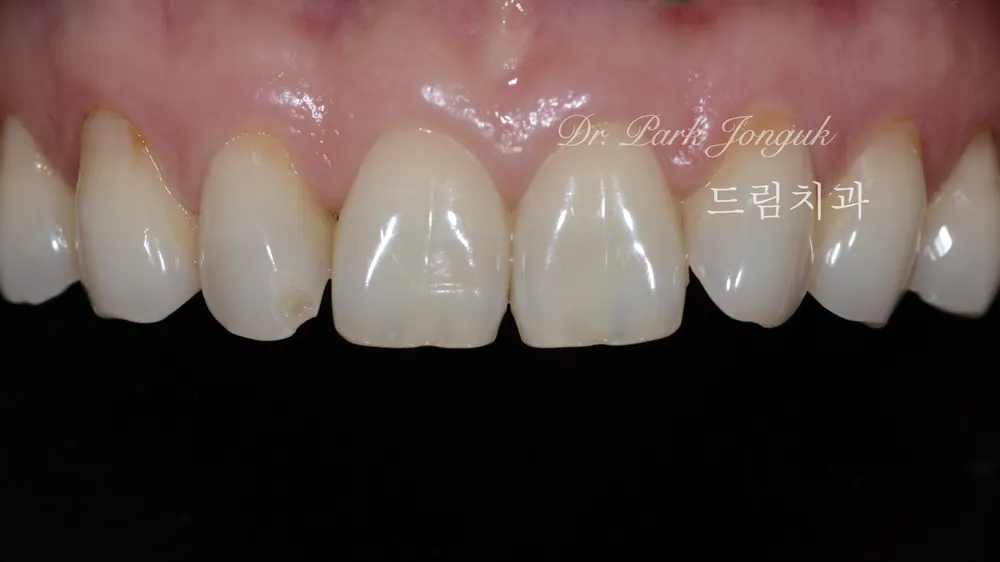
The tooth color was yellow,
some teeth were slightly crooked, and there were chipped areas as well.
In a case like this, whether to do orthodontics or veneers
is something that has to be considered carefully.
Even with orthodontic treatment,
problems with the shape of the teeth,
or problems with tooth color, don't get resolved.
If the esthetic goal is kept in mind and the amount of tooth reduction can be kept low,
a veneer can be the better treatment.
Through a precise diagnosis,
the amount of tooth reduction is clearly determined,
and when treatment proceeds on that basis,
a more accurate consultation becomes possible for deciding which treatment the patient should have,
helping the patient make the right decision.
This process is what's called the wax-up precision diagnosis.
For more on the features of Dream Dental Clinic's veneers, including this process, please refer to the link below.
Through the wax-up precision diagnosis process described above,
we confirmed the amount of tooth reduction before proceeding with treatment.
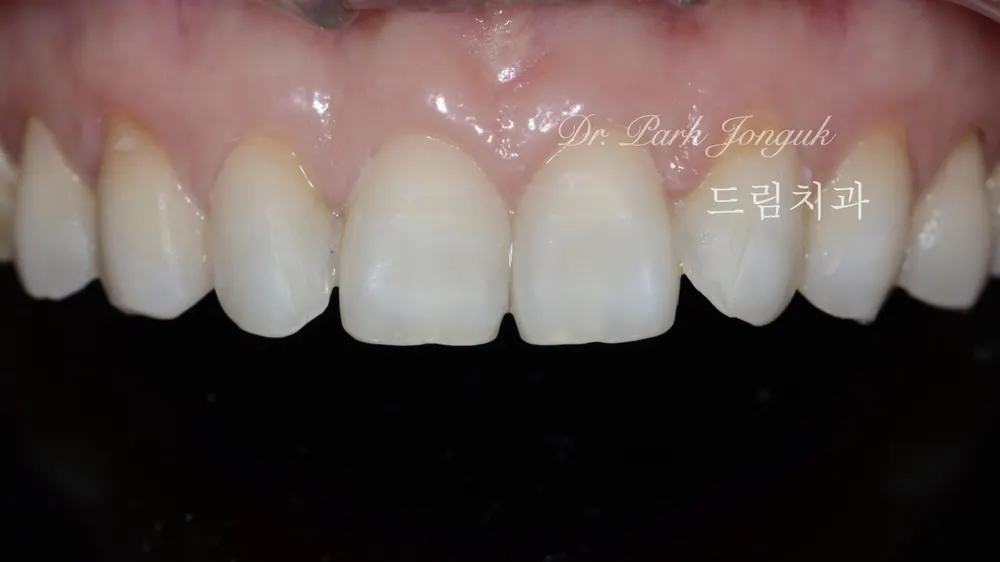
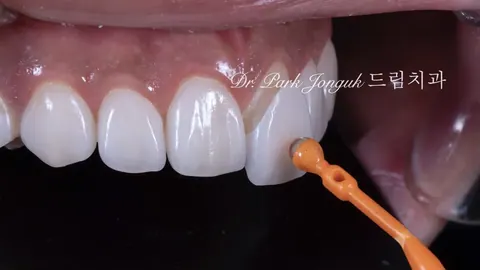
This is how the teeth looked after whitening and reduction for the veneer treatment.
Minimal reduction was carried out on the protruding and chipped areas.
With this little reduction, a temporary tooth isn't even necessary.
Reducing only as much as won't interfere with daily life,
just enough for a minimal reduction,
is what I've termed a minimal-prep veneer.
It's a term I use when lecturing to fellow dentists.
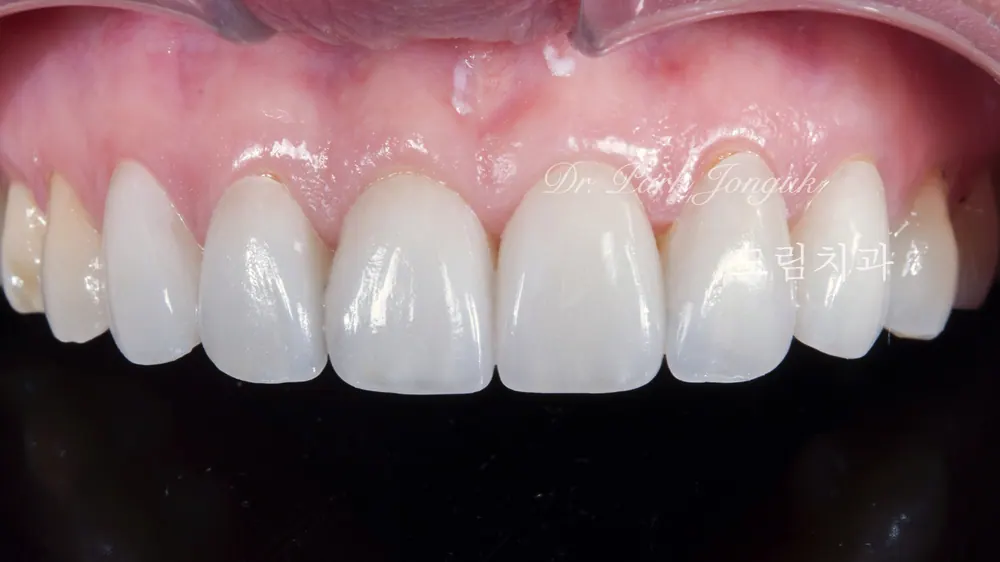
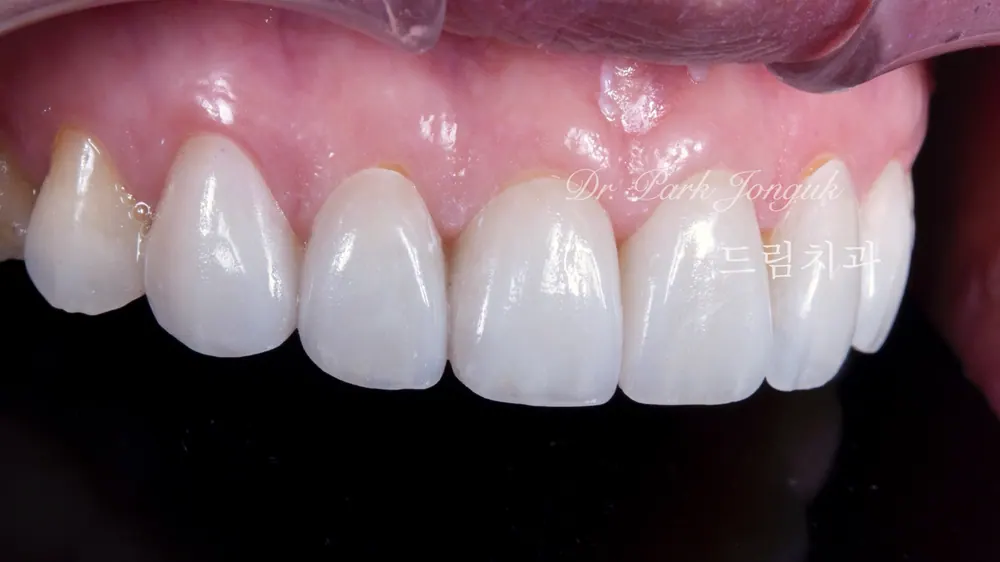
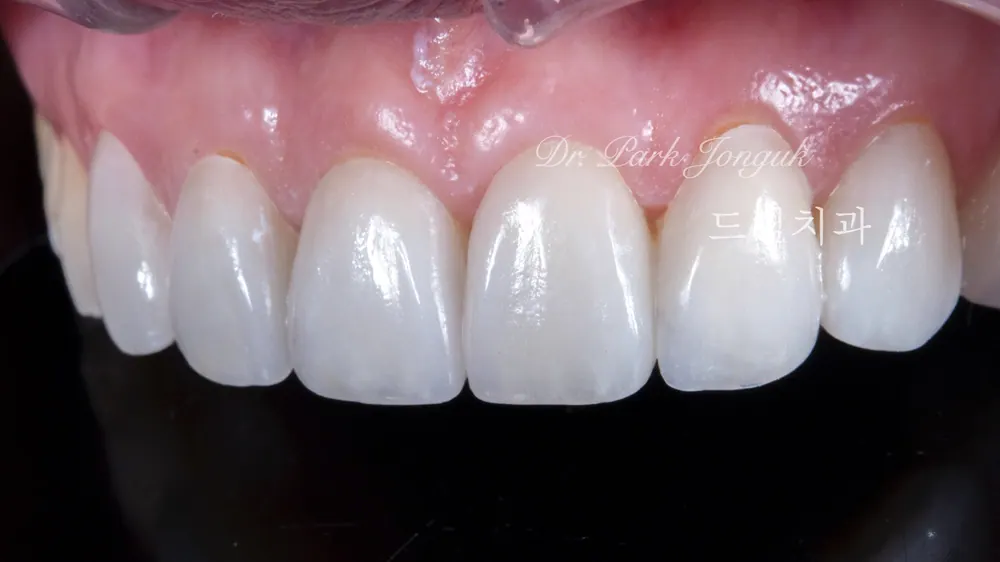
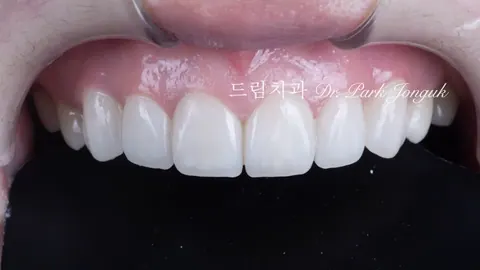
The finished veneer has been placed on the tooth.
You can see the alignment has improved considerably.
You can also see a variety of natural details expressed in the veneer.
The color was varied slightly across different areas of the tooth,
and a natural sense of translucency was given to the edge of the tooth.
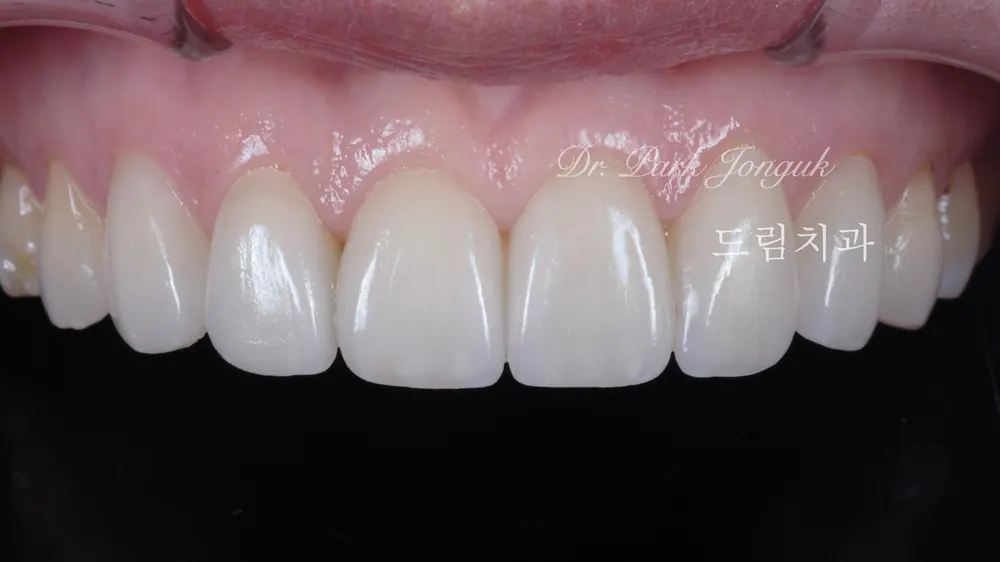
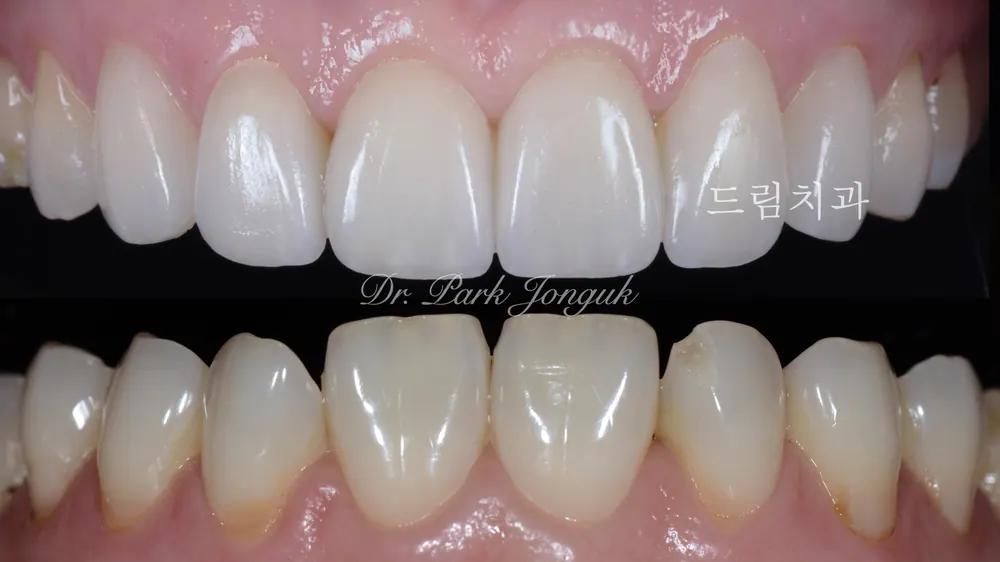
This photo was taken several months after treatment was completed.
With a natural color and translucency,
the veneer treatment was finished looking natural, without any artificial or awkward feel.
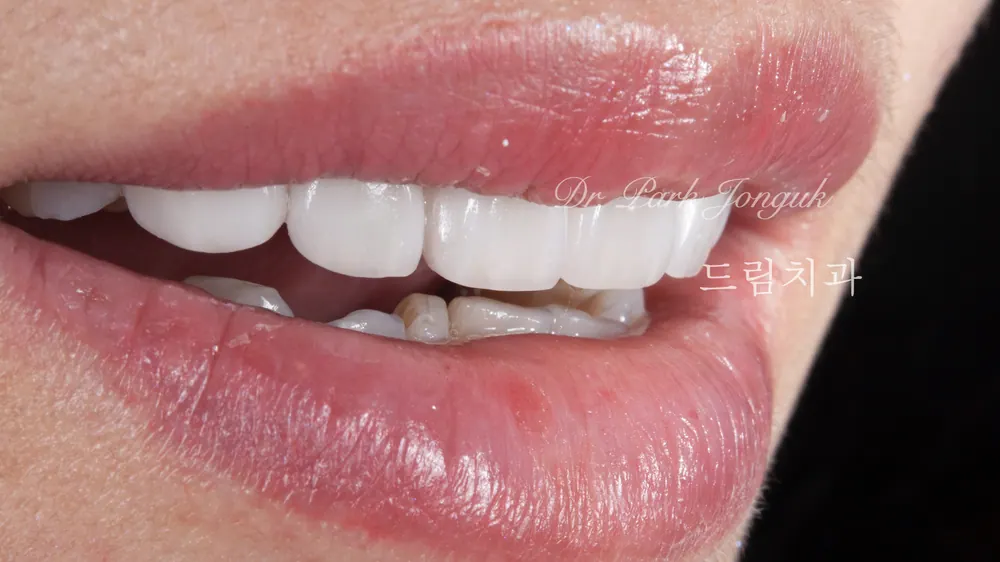
The harmony with the lips is also natural,
and you can see that the smile has improved considerably.
Natural beauty.
Since 2006, Dream Dental Clinic
This article is a clinical note written by Dr. Park Jonguk of Dream Dental Clinic, Gangnam; the original was published on his blog. The photographs shown are real cases he treated. Results vary with each patient’s condition, and every procedure carries the possibility of individual variation and side effects.

Quick Consult
Request a Callback
Leave your number and we will call you back during clinic hours.
Request Received
We will contact you during clinic hours. For urgent matters, please call +82-2-3448-0028.