
How Are Natural-Looking Veneers Made?
Hello, I'm Park Jonguk, director of Lamista Academy and director of Dream Dental Clinic.
If you've been considering veneer treatment, you've probably wondered at some point, "Will they look natural?"
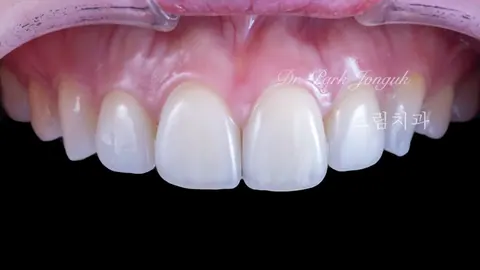
Teeth aren't made up of just one single white color.
Look closely at a front tooth, and you'll find areas where translucency shows through, and areas where a subtly different tone emerges depending on the angle of the light,
and the edges and the center of the tooth can even look subtly different in color.
Only when all of these complex, delicate characteristics come together can you finally achieve the feel of what we commonly call a "natural tooth."
But how naturally a veneer looks varies enormously depending on how it's fabricated.
There are two broad methods for fabricating veneers.
The first is the "handmade method," carried out with a craftsman's touch using a variety of ceramics.
This method mixes several kinds of ceramic and builds them up layer by layer, which makes it possible to express the translucency, depth, and variety of color seen in a natural tooth. Much like a painter blending many colors to complete a single painting, the technician has to handle the ceramic with great care, which makes the fabrication process extremely painstaking and time-consuming. But the finished veneer catches the light differently, and the vitality it shows when the patient smiles comes through in a far more natural way.
The second method, on the other hand, is fabricated from a single type of ceramic only.
This method has the advantage of a simple process and a short fabrication time, letting several pieces be made quickly at a relatively low cost. But because the focus is simply on "making the teeth white," it has limits in reproducing the delicate texture and translucency of a real, natural tooth. In the end, the result is white but opaque, and up close it tends to look somewhat artificial and unnatural.
It's true that, in practice, many clinics choose the single-ceramic method because of time and cost constraints.
From the patient's perspective, too, it can be appealing that it's relatively affordable and finished quickly.
But it's not uncommon for regret to set in over time — "it looked good at first, but it feels off when I smile," or "the teeth look far too artificial in the light."
I believe the essence of a veneer isn't simply making the teeth white — it's how much of that natural look can be restored.
That's why, even if it takes more time and effort, I fabricate veneers using the handmade method, combining a variety of ceramics.
This method isn't simply about changing the color of the tooth —
it can reflect each individual patient's own tooth texture, translucency, and even subtle shading.
In the end, it helps the smile a patient sees in the mirror look more comfortable and natural.
If you're considering veneers, I hope you'll be sure to understand what kind of result the difference in fabrication method brings before you choose.
In this article, I'll share, in a bit more detail, the veneer fabrication process I've experienced firsthand,
and the reasons why I hold to the handmade method for the sake of a natural look.
Let's take a look at the process of handmade fabrication using a variety of ceramics.
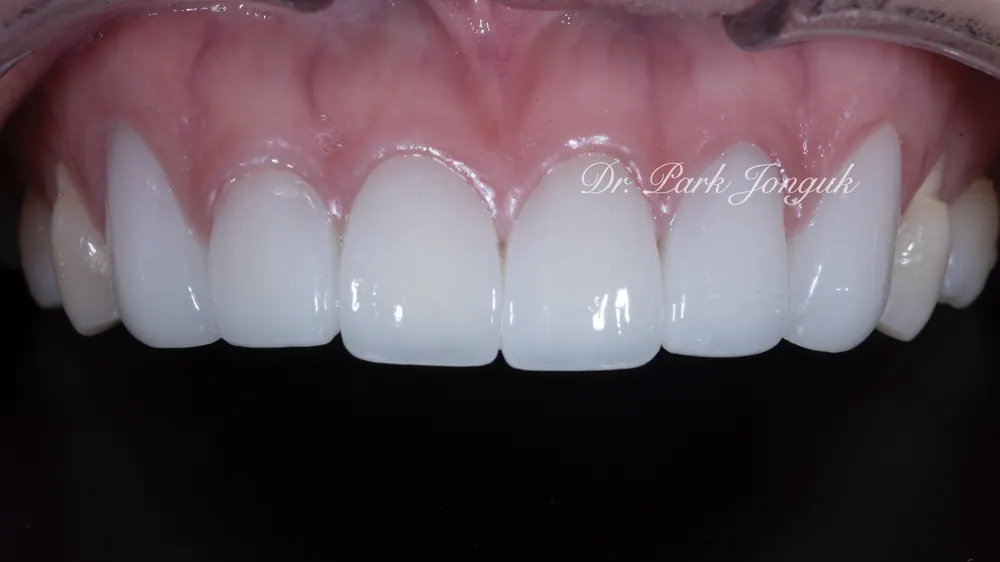
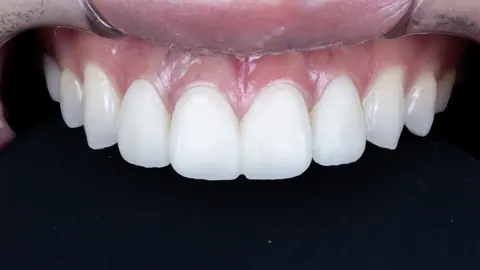
The patient came in for a redo after her earlier veneer treatment.
Because the shape and color of the teeth looked so unnatural,
she came in even though it had only been a short time since the original treatment.
These days, many patients come in for a redo because of veneers that look this unnatural.
Because it was made from a single material only, it failed to express any of the characteristics of a natural tooth.
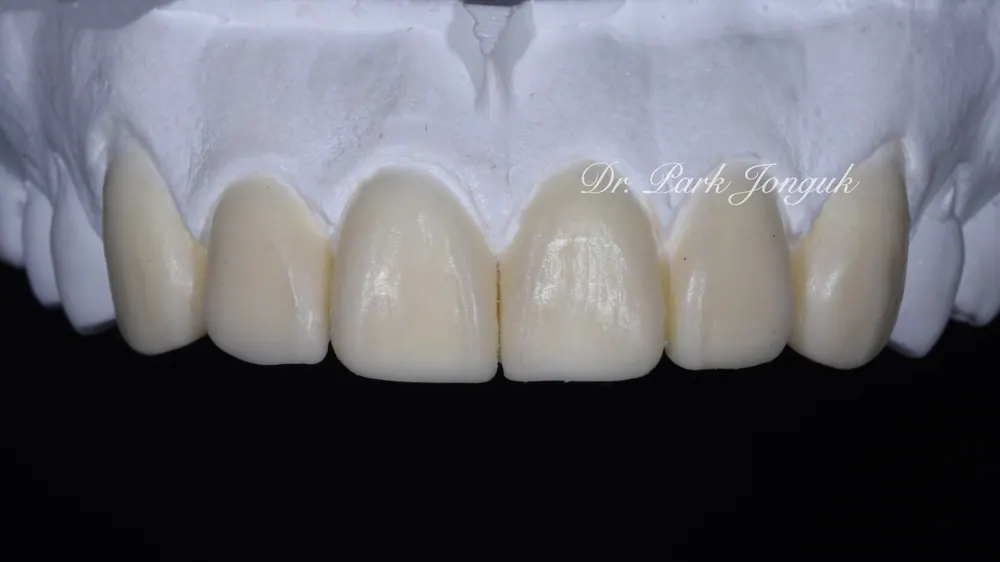
Through the wax-up precision diagnosis process,
we work out a plan for how to proceed with treatment.
This process is essential in every veneer treatment.
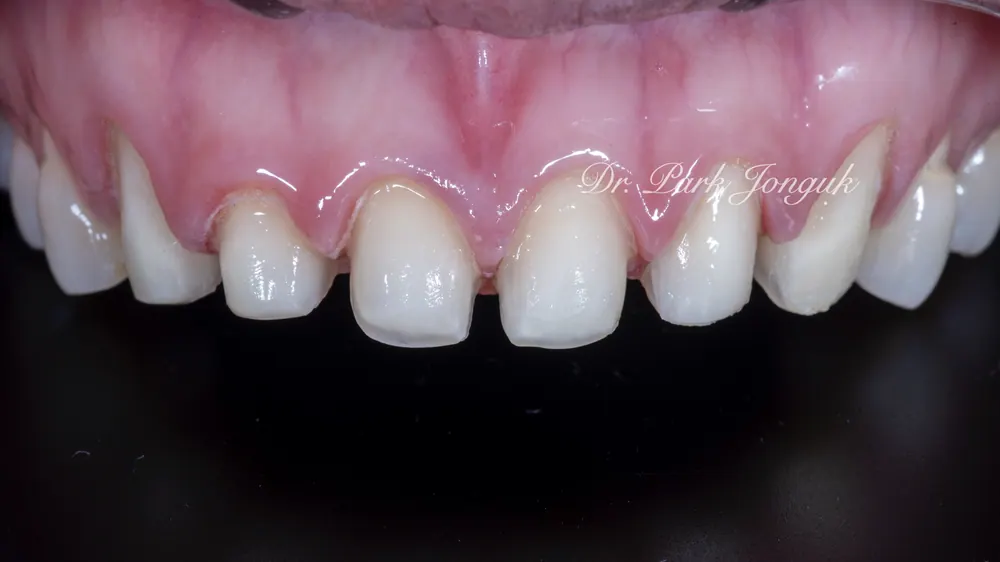
After removing the existing veneers,
we found that far too much of the tooth had already been reduced.
We fabricate the veneer again, this time for a natural look.
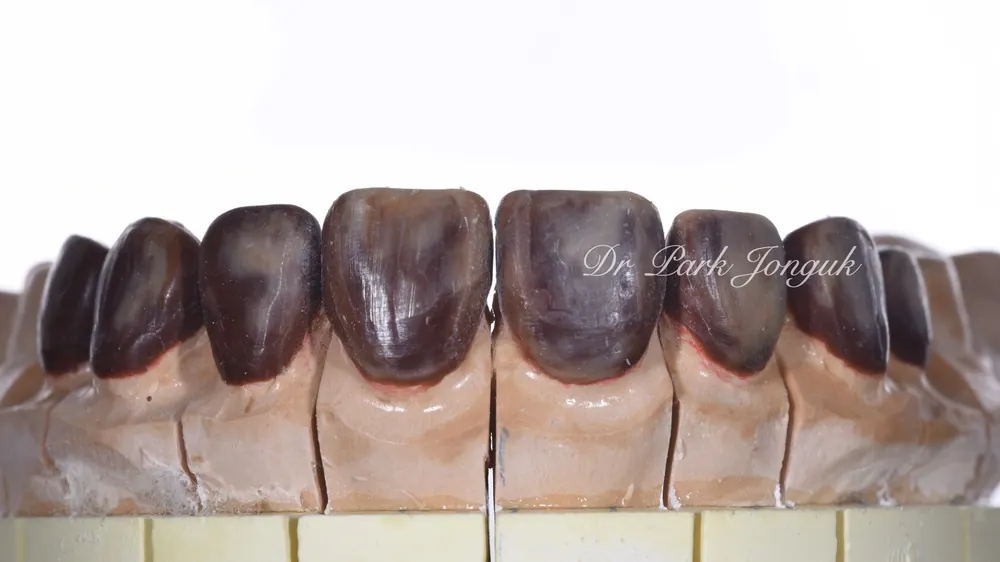
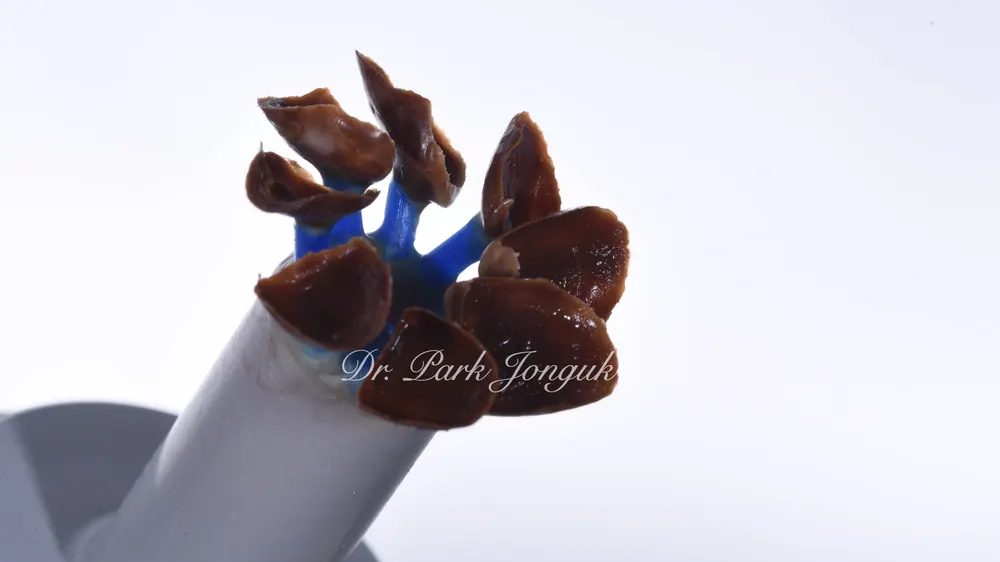
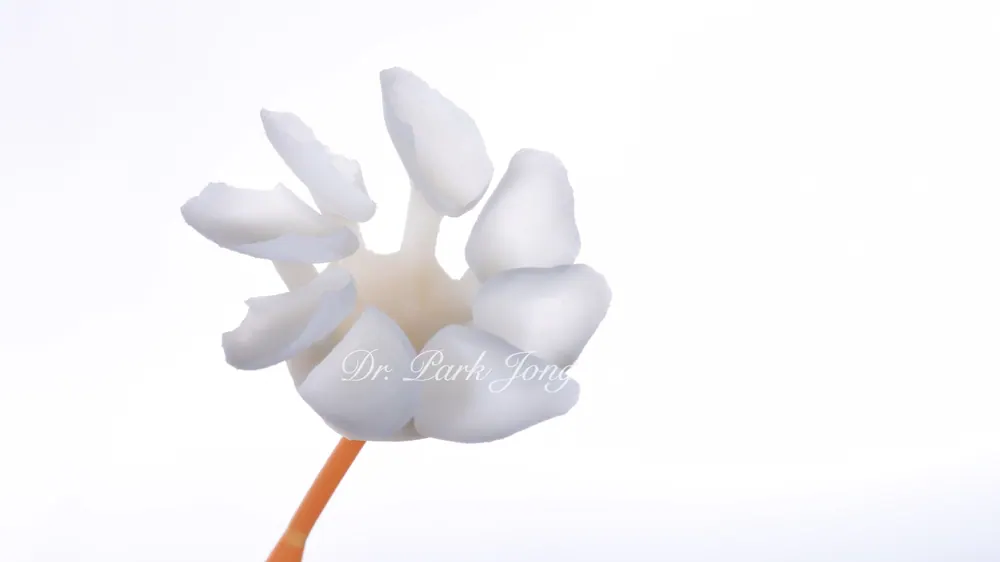
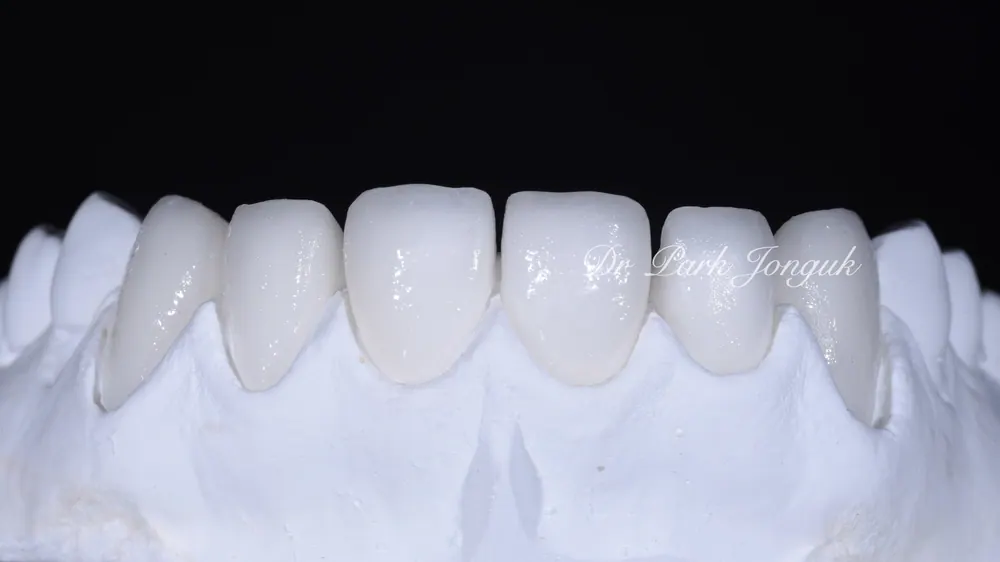
This is the process of fabricating the ceramic base. A sturdier ceramic is used, but it's still made quite thin.
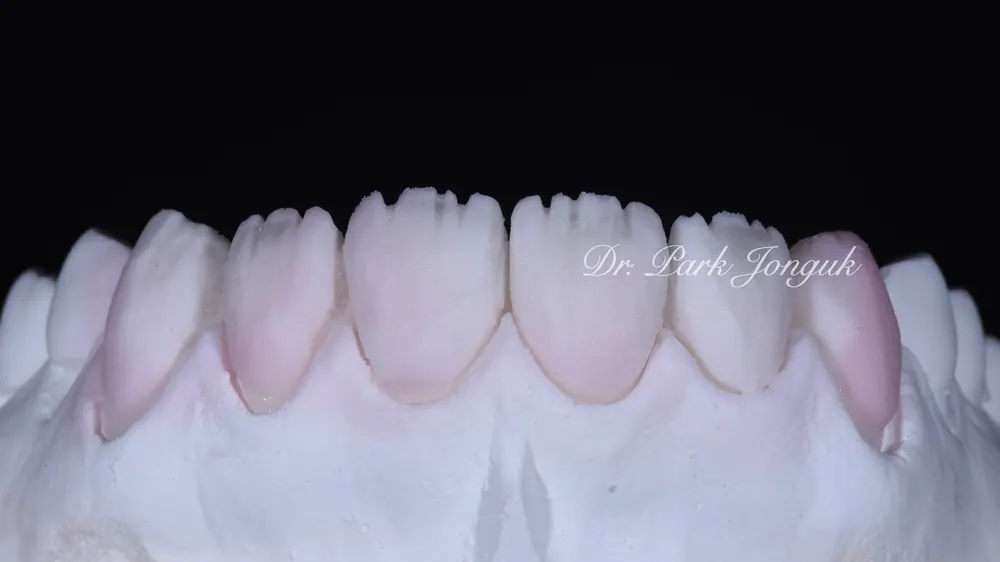
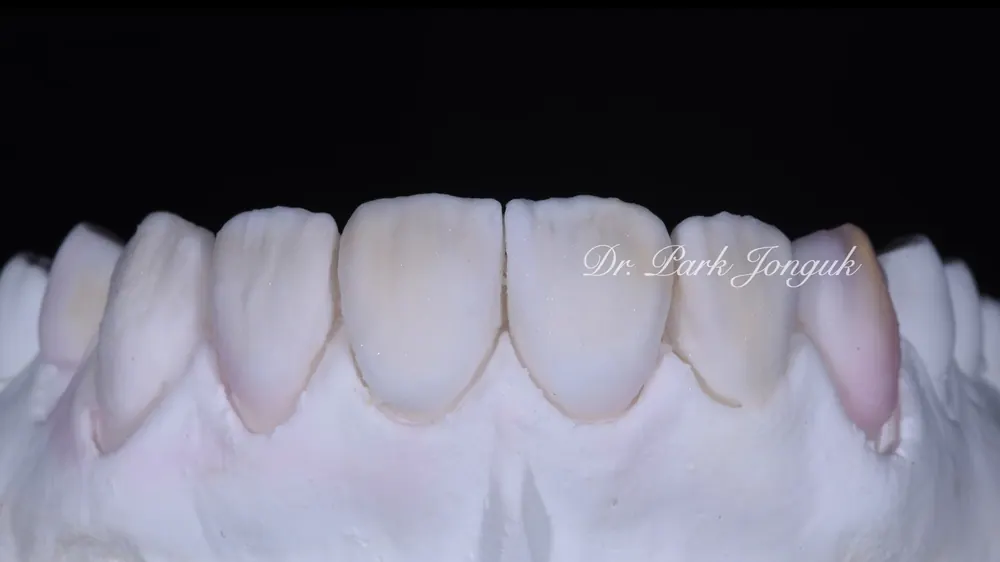
First, we create the dentin layer that forms the tooth's foundation, along with the translucent layer at the tooth's edge.
At this stage, firing it in the furnace, just like firing pottery, turns it into a hard ceramic.
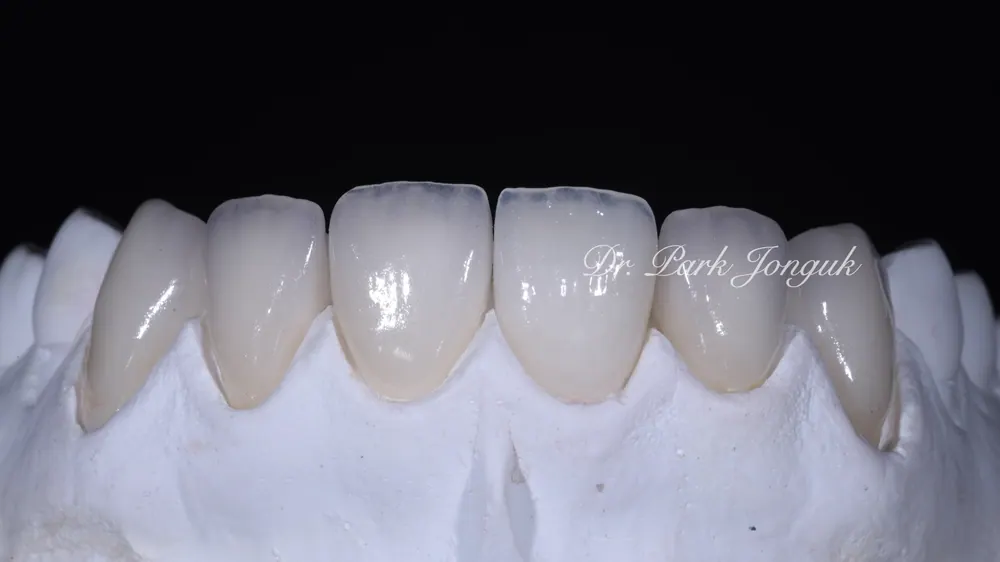
This is how the base of the tooth is created.
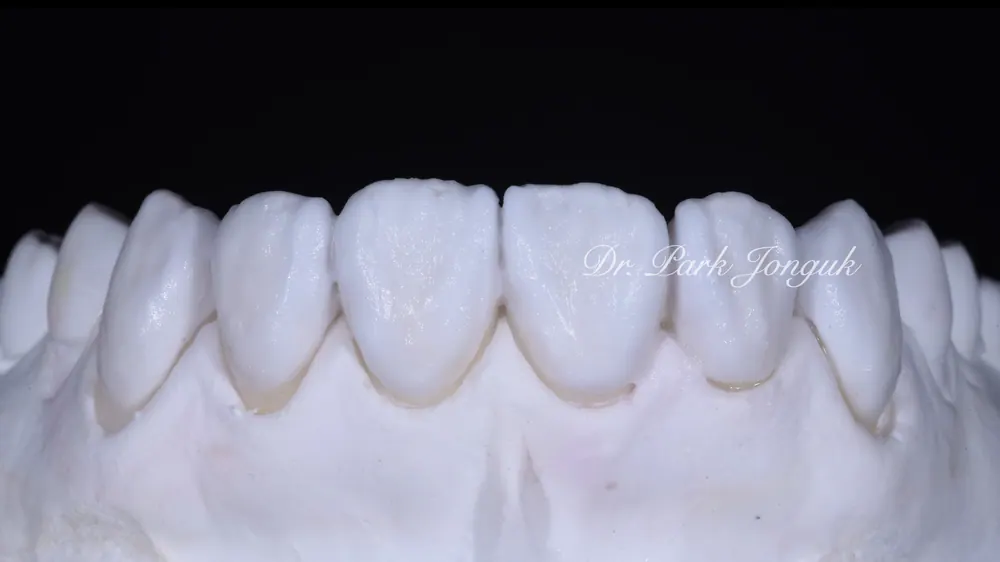
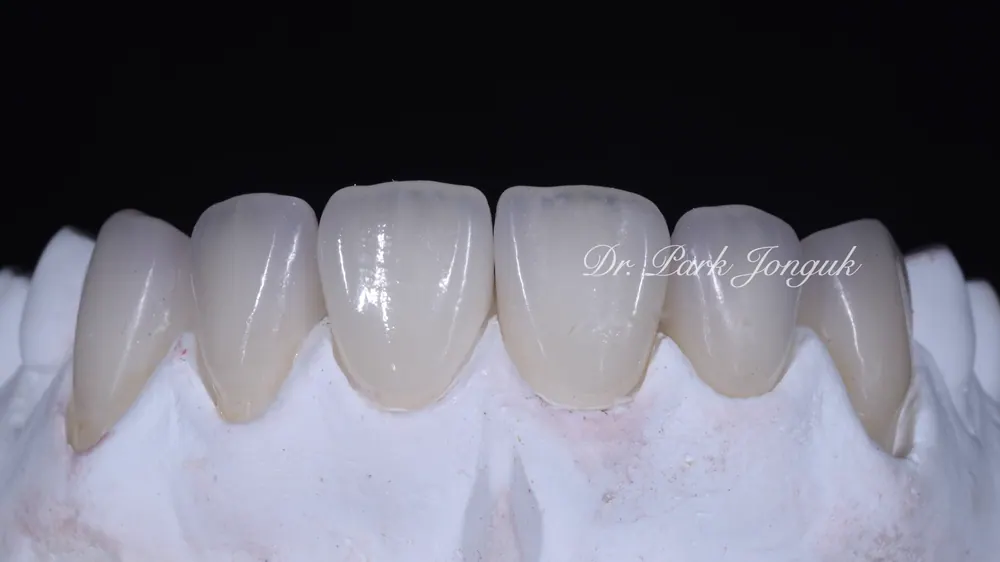
We create the dentin portion of the tooth and shape its form.
This is the process of fabricating the veneer using a variety of ceramics.
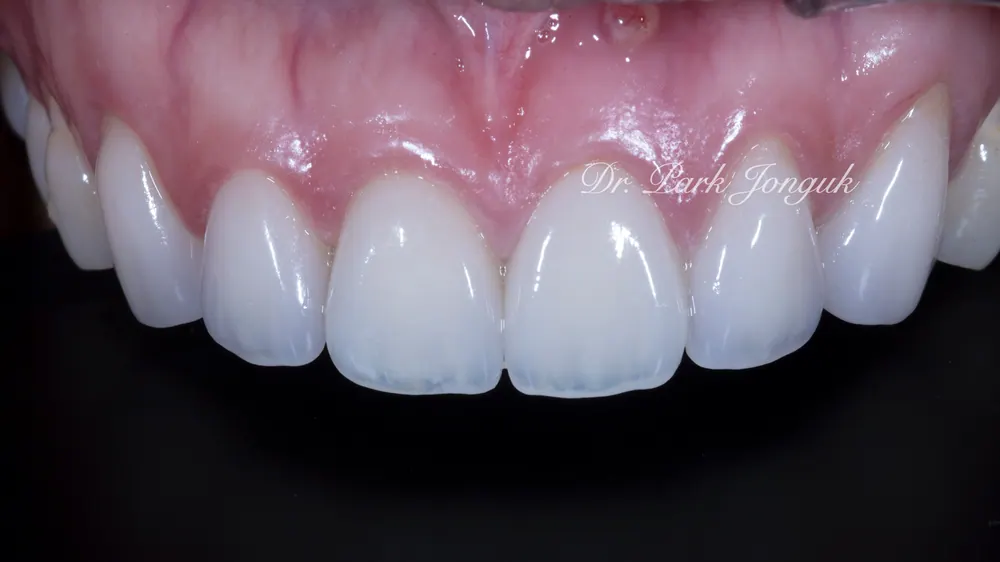
A characteristic of natural teeth is that the shade varies slightly from area to area,
and the translucency at the tooth's edge needs to come through as well.
On top of that, the tooth's sense of dimension needs to come through clearly.
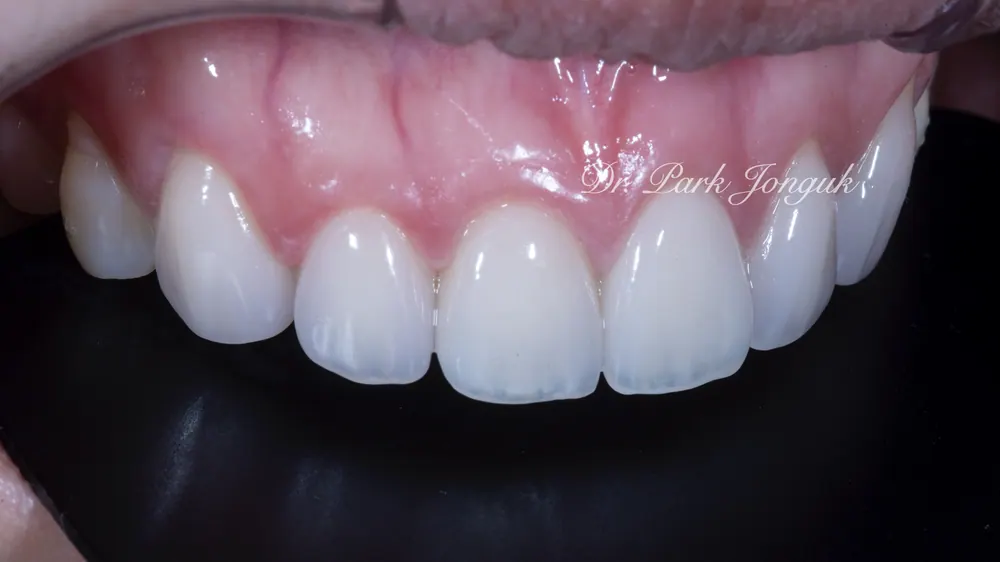
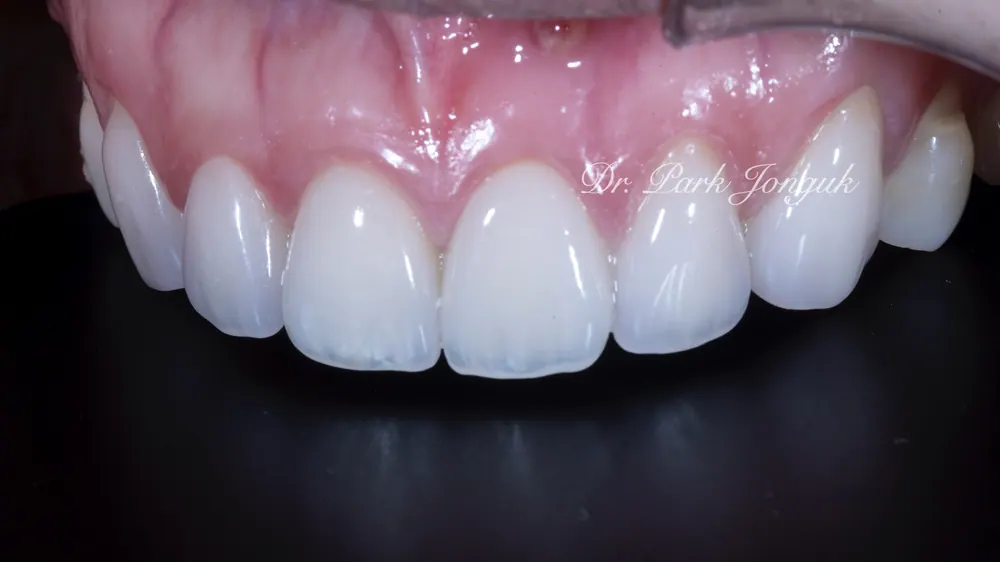
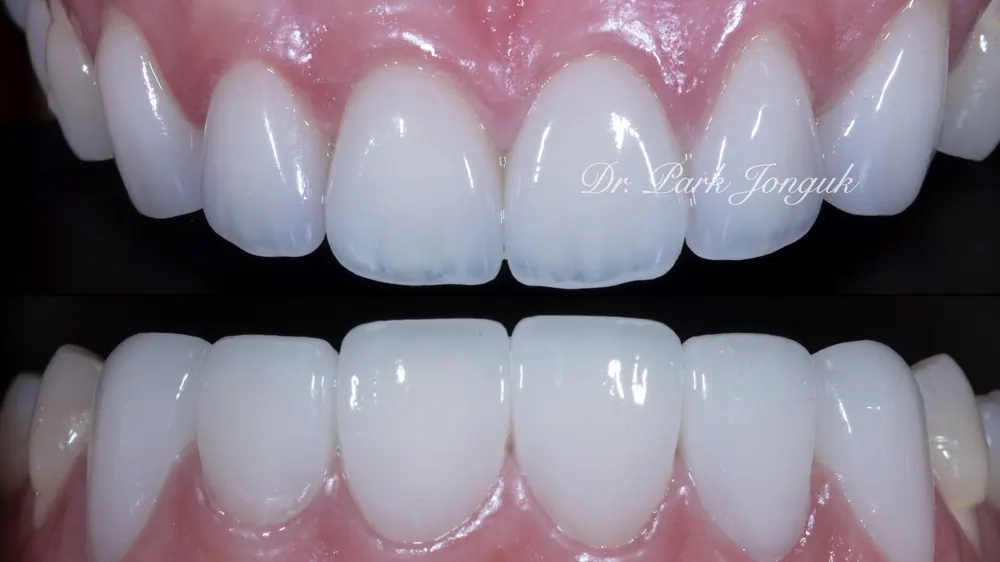
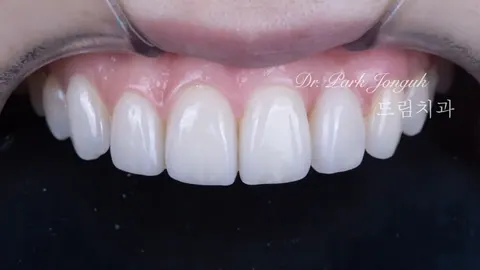
The redo was completed with a natural, translucent veneer, very different from what she had before.
Veneer Fabrication Q&A
Q1. Why do some veneers look plain white instead of translucent like a real tooth?
A1. It's because most veneers are made from just one kind of ceramic. A single material struggles to express light transmission or depth of color, so the result ends up looking opaque and artificial.
Q2. What's different about handmade veneers?
A2. Not everything labeled "handmade" is natural-looking. Some are made from a single ceramic material only, which limits what they can express. A truly handmade veneer has to go through a "build-up" process, mixing several kinds of ceramic and layering them up. Only through this build-up process can the translucency, shade variation, and depth of a natural tooth be properly achieved.
Q3. How long does the handmade method take?
A3. It requires far more time than the single-ceramic method. Combining the ceramics precisely and firing them has to be repeated multiple times, so it can take several days or more. But the naturalness and quality of the finished result are correspondingly outstanding.
Q4. Why do most clinics choose the single-ceramic method?
A4. The single-ceramic method is simple and quick to fabricate, and it can also be priced more affordably. It's chosen often because it's efficient for the clinic, and it means less of a price burden for the patient.
Q5. What should I do if I want natural-looking veneers?
A5. It's important to be sure to check exactly how the fabrication process is carried out. Not everything called "handmade" gives the same result, and the key question is specifically whether it's made using the "build-up method." Checking carefully, during the consultation, what ceramics are used and what fabrication process is followed is what leads to a natural result.
This article is a clinical note written by Dr. Park Jonguk of Dream Dental Clinic, Gangnam; the original was published on his blog. The photographs shown are real cases he treated. Results vary with each patient’s condition, and every procedure carries the possibility of individual variation and side effects.
Quick Consult
Request a Callback
Leave your number and we will call you back during clinic hours.
Request Received
We will contact you during clinic hours. For urgent matters, please call +82-2-3448-0028.