
Veneers for Gapped Teeth: Can They Fix It Naturally Without Braces?
A woman in her 30s with gapped, tilted front teeth — why did she choose veneers over orthodontics?
An Apgujeong veneer specialist with 28 years of experience shares a real case of naturally correcting gapped teeth.
Gapped front teeth — is orthodontics the only answer?
Hello, I'm Park Jonguk, director of Dream Dental Clinic in Apgujeong. I'm a dentist who has practiced veneer treatment for 20 years.
When there are gaps between the front teeth, many people think of orthodontic treatment first.
But orthodontics isn't always the best choice.
Today's case is the story of a patient in her 30s for whom veneers turned out to be the better choice over orthodontics.
The Patient's Concerns and Choice
This patient is a woman in her 30s,
and she had gaps between her front teeth,
with the central incisors also somewhat tilted in their axis. Orthodontics was considered as well, but
there was a decisive problem.
The shape of the central incisors was too angular and didn't suit her face shape at all.
Orthodontics can correct the position of the teeth,
but it cannot change their shape.
So she chose veneer treatment instead.
During the pre-treatment consultation, we clarified the patient's requirements.
She wanted teeth with a slightly rounded feel that suited her face shape,
and she wanted to keep the tooth color close to what it currently was.
She also wanted a natural sense of translucency at the tooth edges, so they would look like real teeth.
She didn't want anything overly white or artificial-looking,
and she wanted teeth that felt natural yet neat, and soft in a way that suited her face shape.
Precision Analysis Before Treatment
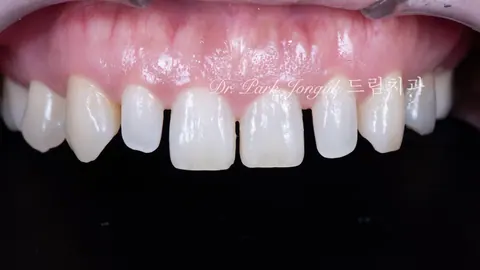
Looking at her pre-treatment appearance, several issues could be observed (Photo 1).
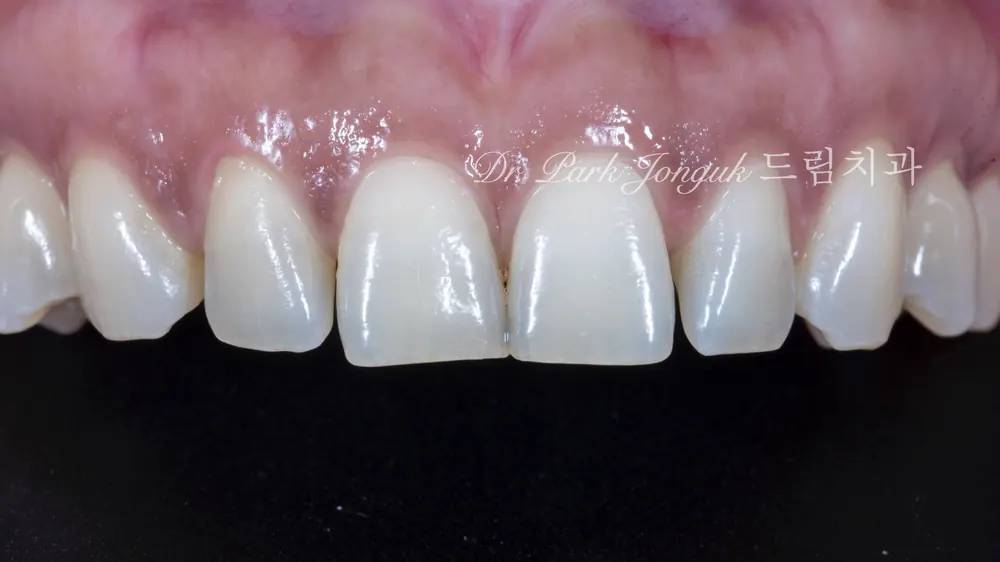
There were gaps between the front teeth, the central incisors had an angular shape with a tilted axis,
and the overall look lacked harmony.
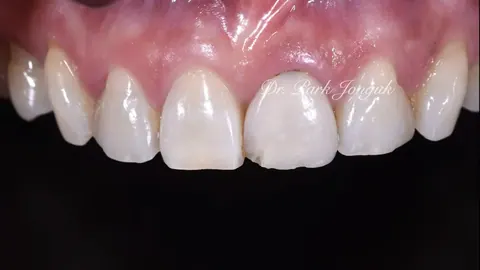
Marking the area where the central incisors were tilted (Photo 2),
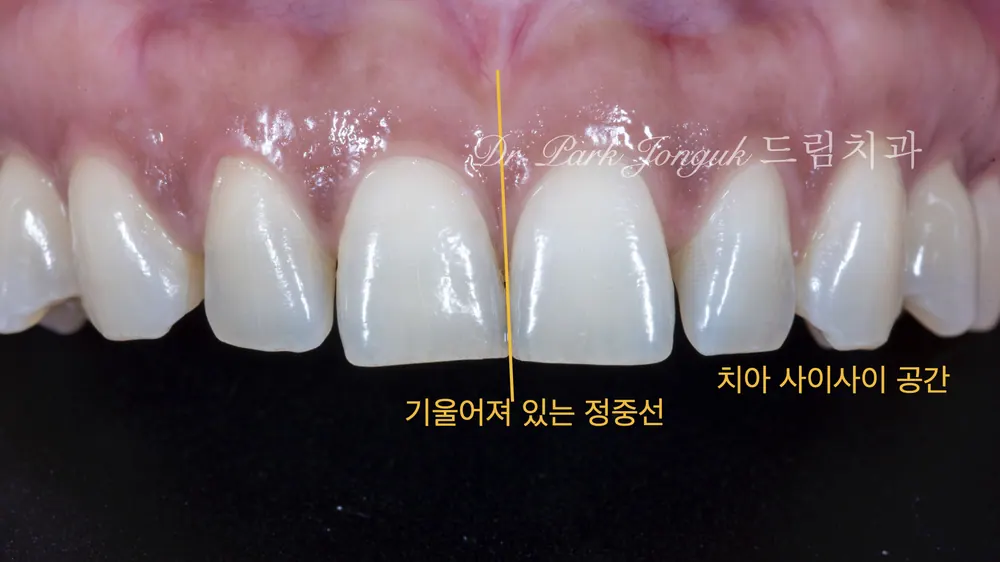
this tilt was making the smile look unnatural and was breaking the overall harmony.
Tilted teeth look visually unstable,
make the spaces between the teeth uneven,
cause the smile to look asymmetrical,
and affect the overall impression of the face.
A treatment plan was mapped out with wax (Photo 3).
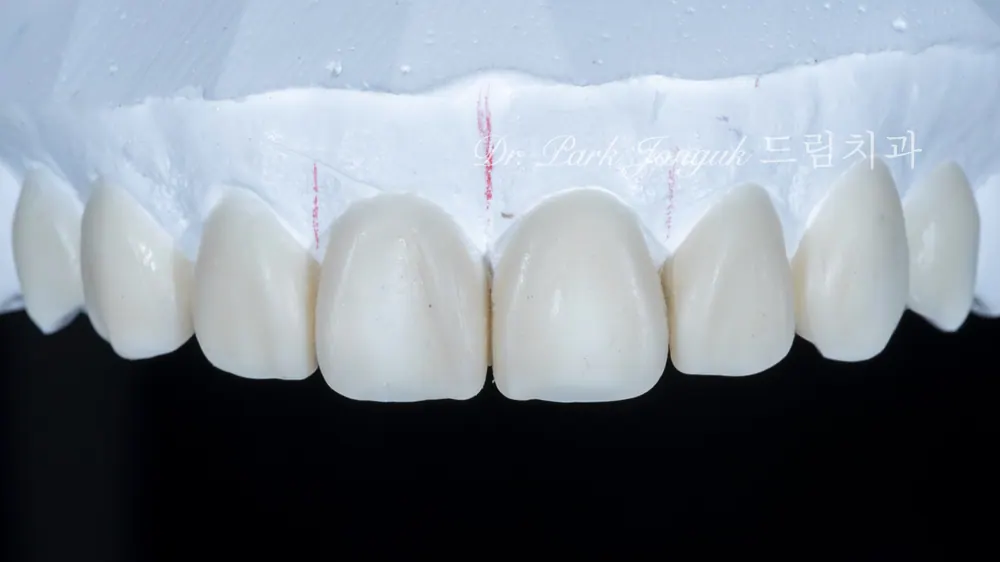
At this stage, both the amount of tooth reduction and the final result are predicted.
We decided the final tooth shape would have a rounded feel,
the tooth size would harmonize with the face shape, the gaps between the teeth would be fully closed,
the color would stay close to the current one, and the translucency would be expressed naturally.
Veneers for gapped teeth in particular require a precise plan.
This is because the spaces need to be filled without making the teeth look too large,
while keeping natural proportions and making them suit the face shape.
The Treatment Process, Carried Out with Minimal Reduction
Because the central incisors were too angular and tilted in shape, some reduction between the teeth was needed (Photo 4).
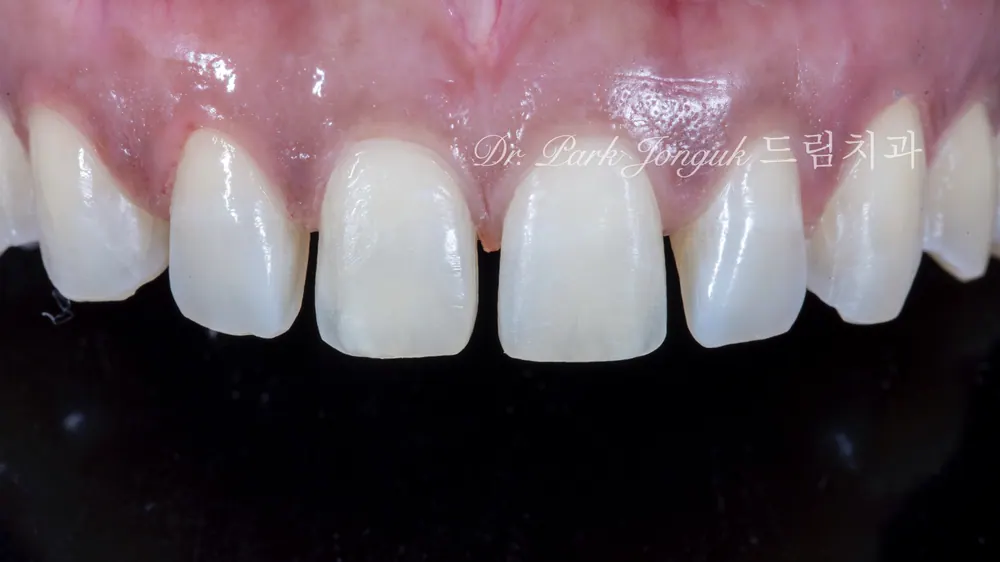
To smooth the angular areas and balance out the tilt, only the area between the central incisors was reduced,
and the rest was left without any reduction.
When teeth are gapped and on the smaller side, no-prep treatment is usually possible.
But in this case, the central incisors were angular and tilted, so shape correction was needed,
so we minimally reduced only the necessary areas while preserving the rest of the tooth.
No-prep veneers have several advantages.
Healthy tooth structure can be fully preserved,
there's no risk of sensitivity at all, the veneer can be removed and the tooth returned to its original state if desired,
and it doesn't affect the tooth's lifespan.
Because gapped teeth already have space between them that a veneer can simply fill,
there's almost no need to cut the tooth, making it a good candidate for no-prep veneers.
A Natural Final Result
The post-treatment result came out looking truly natural (Photos 5, 6, 7, 8).
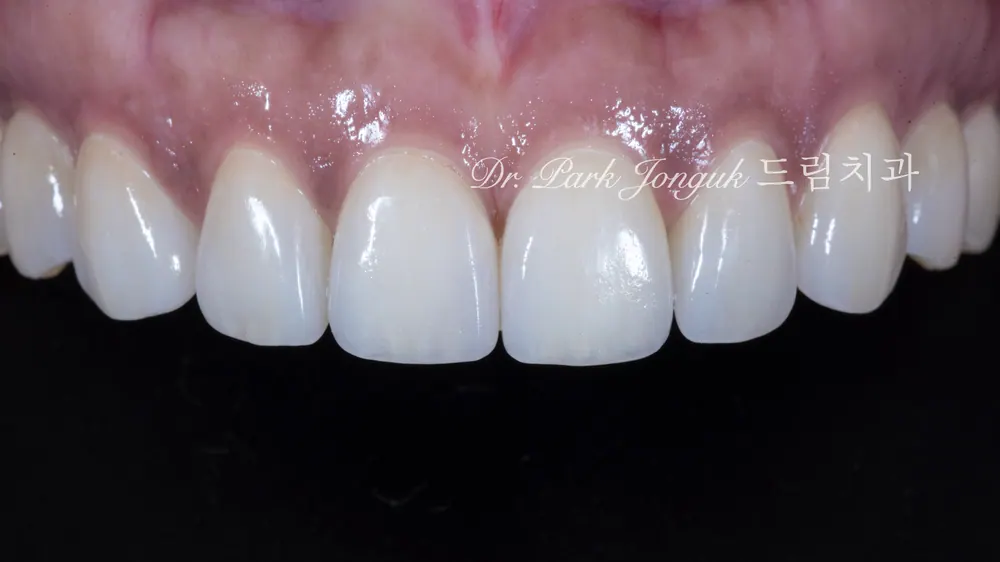
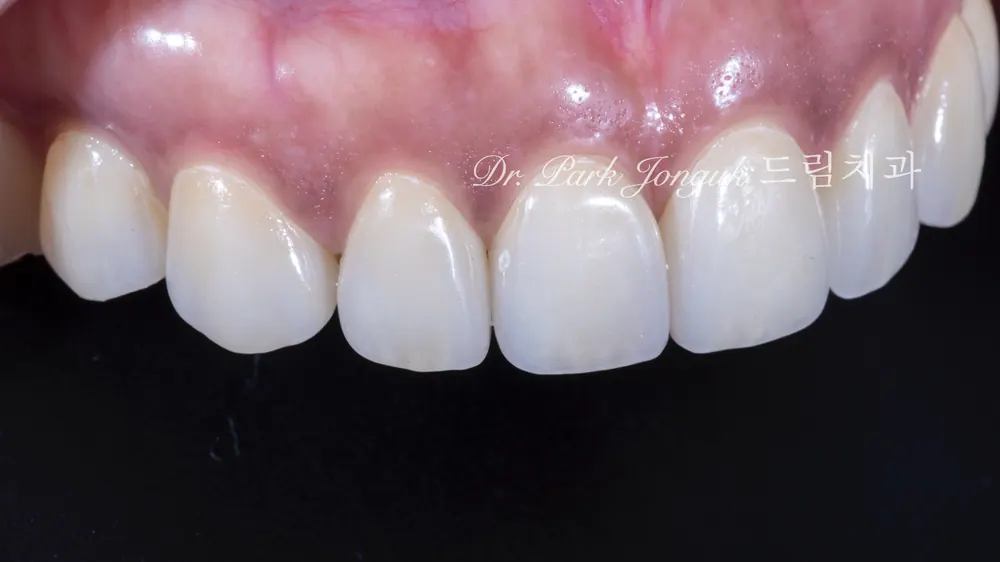
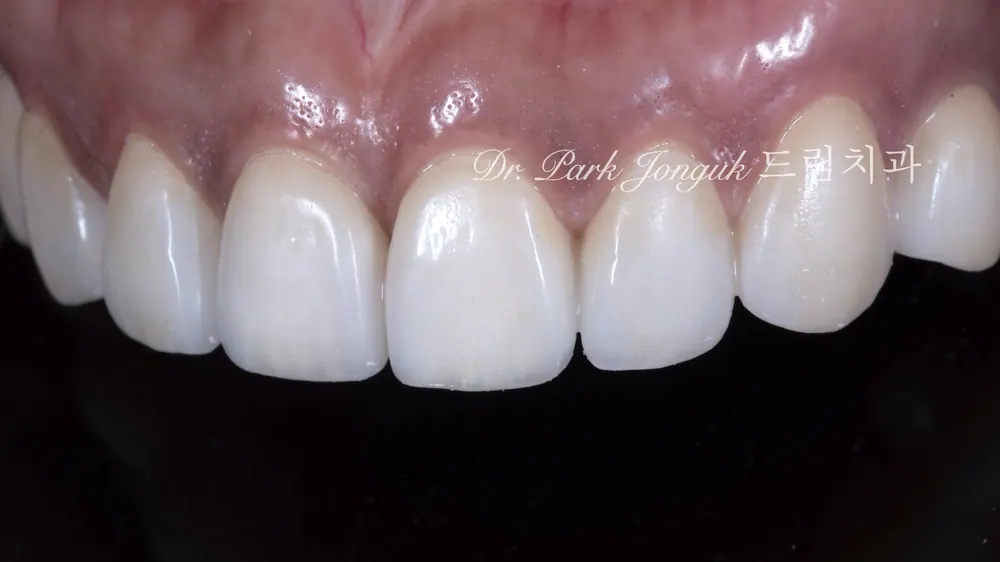
Before treatment, the front teeth were gapped and angular in shape,
with a tilted axis that gave an overall feeling of disharmony,
but after treatment, the spaces between the teeth were completely corrected,
and with a soft, rounded tooth shape and a properly aligned axis, the teeth achieved perfect harmony with her face shape.
There are three secrets behind this natural look.
First, the tooth color wasn't forced to be overly bright.
We kept a tone close to the patient's original tooth color and brightened it only slightly.
Color matters because teeth that are too white look artificial,
staying close to the original color looks natural, harmony with skin tone matters,
and a natural color appropriate to the person's age is needed.
Second, the tooth shape was given a strong rounded feel to match her face shape.
A rounded shape gives a soft, feminine impression, harmonizes naturally with the face shape,
removes the angular feel, and creates a friendly, bright image.
Tooth shape should be matched to face shape:
a slightly angular tooth suits a round face, a rounded tooth suits an angular face,
a wider-feeling tooth suits a long face, and a moderate size suits a small face.
For this patient, rounded teeth suited her face shape well.
Third, a natural sense of translucency was brought out at the tooth edges.
Translucency is a characteristic of real teeth — light passes through it naturally,
it adds dimension and depth, and creates a lively feel.
Using a handmade build-up technique, multiple layers of ceramic were built up,
the color was adjusted area by area, and the translucency at the tooth edges was expressed so it became indistinguishable from a natural tooth.
This kind of delicate expression isn't possible with a same-day method or a single block of ceramic.
Orthodontics and Veneers — Making the Wise Choice
Orthodontics is suitable when only the position of the teeth is the issue,
when the shape and color of the teeth are already satisfactory, when there is plenty of time, and when the patient is younger.
Veneers, on the other hand, are suitable when the patient also wants to improve the shape of the teeth,
when the patient wants to change the tooth color as well, when a fast result is desired,
or when the shape is angular in a way orthodontics can't resolve.
The decisive factors behind choosing veneers in this case were
that the central incisors were too angular and didn't suit her face shape,
that orthodontics couldn't change their shape,
that she wanted teeth with a rounded feel,
and that she wanted results within a short period of time.
What would have taken 1-2 years with orthodontics was resolved in just 3-4 weeks with veneers,
and the shape of the teeth was perfected as well.
When treating gapped teeth with veneers, the most important thing
is striking a balance between filling the space and not making the teeth look too large.
The gaps between the teeth must be fully closed without the teeth becoming excessively large,
natural tooth proportions must be maintained, and they must harmonize with the size of the face.
Conclusion: Natural Is the Answer
Over 28 years of handling countless gapped-teeth cases, I've come to a firm conclusion.
Veneers for gapped teeth are highly effective.
They naturally fill the space, improve the tooth shape at the same time,
express color and translucency perfectly, and produce a result that harmonizes with the face shape.
The key to success is a precise wax-up diagnosis,
minimal or no reduction, a handmade build-up technique,
a design that takes the face shape into account, and a natural color choice.
If you're troubled by gapped front teeth, orthodontics isn't the only answer.
With veneers, you can achieve results faster and more naturally,
and even perfect the shape of the teeth in the process.
Q&A — Common Questions About Veneers for Gapped Teeth
Q1. For gapped teeth, which is better — orthodontics or veneers?
A. It depends on the case. If only the position of the teeth is the problem and the shape and color are already satisfactory, orthodontics is a good choice. But if the tooth shape is angular and doesn't suit the face shape, as in this case, or if you also want to improve the color, veneers are the better choice. Veneers can improve position, shape, and color all at once, in just 3-4 weeks.
Q2. Can veneers for gapped teeth be done without any reduction?
A. Yes, in most cases. Gapped teeth are a good candidate for no-prep veneers. Since there's already space between the teeth, a veneer can simply fill it, with almost no need to cut the tooth. However, when the teeth are angular or tilted, as in this case, some minimal, partial reduction may be needed to correct the shape.
Q3. Won't filling the space make the teeth look too big?
A. Not at all, with proper professional design. The key is a precise wax-up diagnosis. The design fills the space between the teeth while maintaining natural tooth proportions and harmonizing with the size of the face. In this case as well, the space was completely closed, yet the teeth don't look big at all — they look natural.
Q4. Can the tooth color be kept close to the original?
A. Yes, that's possible. This case is a good example. The patient liked her current tooth color, so we kept it similar and brightened it only slightly. The handmade build-up technique uses a variety of ceramics, so any color can be reproduced naturally.
Q5. How long do they last?
A. With good care, they can often last 15-20 years or more. When done with no or minimal reduction, the tooth is preserved in a healthier state, which often means a longer lifespan. Thorough brushing, flossing, and a regular checkup every six months are usually enough.
This article is a clinical note written by Dr. Park Jonguk of Dream Dental Clinic, Gangnam; the original was published on his blog. The photographs shown are real cases he treated. Results vary with each patient’s condition, and every procedure carries the possibility of individual variation and side effects.
Quick Consult
Request a Callback
Leave your number and we will call you back during clinic hours.
Request Received
We will contact you during clinic hours. For urgent matters, please call +82-2-3448-0028.