
Natural Front Teeth Veneers | Treatment Process for Gapped Teeth, Buck Teeth, and Peg Laterals
When the front teeth look large and gapped, or protrude like buck teeth,
or when peg-shaped lateral incisors make the tooth proportions look off, what should you do?
This patient considered orthodontic treatment,
but chose veneers instead to improve both the shape and color of the teeth at once.
Especially when the front teeth are large, controlling the amount of reduction is tricky,
so more than 20 years of clinical experience and precise diagnosis are absolutely essential.
Veneer treatment is the most popular method for esthetically improving the teeth.
Whether the front teeth are large, gapped, protruding like buck teeth,
or the lateral incisors are small enough to throw off the overall proportion,
veneers can be a great option for a natural improvement.
However, cases like this aren't simple.
Especially when the front teeth are large and protruding,
depending on how the amount of reduction is controlled,
the result can turn out completely differently.
Reducing too aggressively can cause sensitivity or damage to the tooth,
while, conversely, reducing too little without proper diagnosis
can result in a shape that looks awkward or proportions that don't match.
So what matters is precise diagnosis and experience.
What I've come to realize after handling countless veneer cases for more than 20 years
is that a detailed diagnosis considering tooth size, alignment, and even face shape
is absolutely necessary.
It's not simply about attaching ceramic to the front surface of the tooth —
only by designing a smile that harmonizes with the face
can a natural, beautiful result be achieved.
The case I'll show you this time
involved front teeth that were large, gapped, and protruding like buck teeth,
with peg-shaped lateral incisors that had thrown off the tooth proportions.
The patient also considered orthodontic treatment,
but chose veneers
in order to improve both the shape and color of the teeth at once.
In cases like this especially, if treated at a clinic with less experience,
unnecessary amounts of tooth structure can end up being removed, placing a major burden on tooth health.
That's why extensive clinical experience combined with a systematic diagnostic process
is what matters most for achieving a safe, esthetic result.
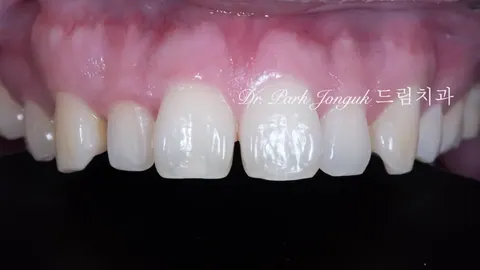
Photo 1. Before treatment
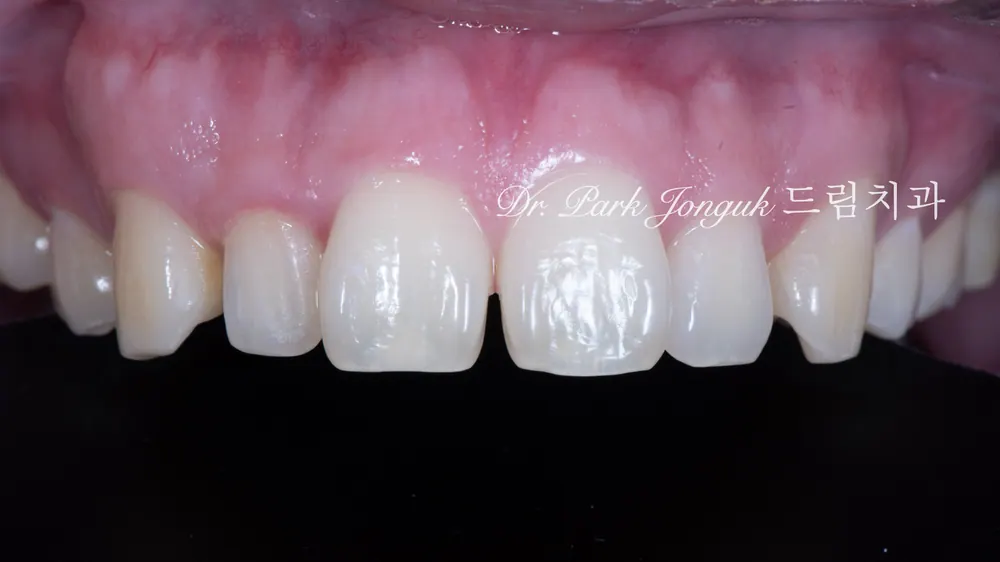
The front teeth were large and protruded forward like buck teeth.
On top of that, there was a gap between the teeth that made her smile look awkward,
and the lateral incisors on either side were undersized peg laterals, throwing off the overall proportion.
The patient also considered orthodontic treatment,
but chose veneers to improve both the shape and color of the teeth at the same time.
In a case like this, because the teeth are large, controlling exactly how much to reduce is extremely tricky.
Photos 2-5. The precision wax-up diagnostic process
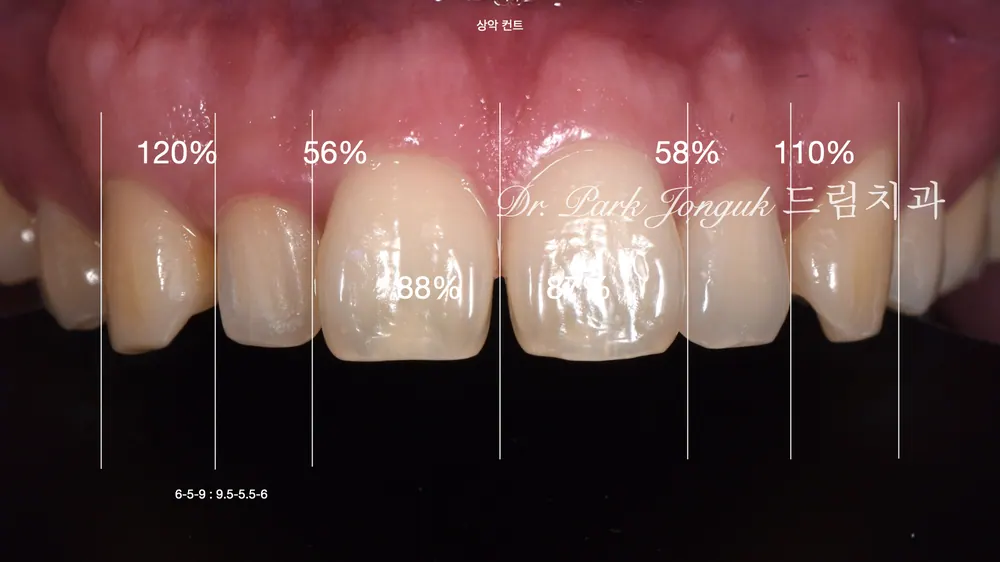
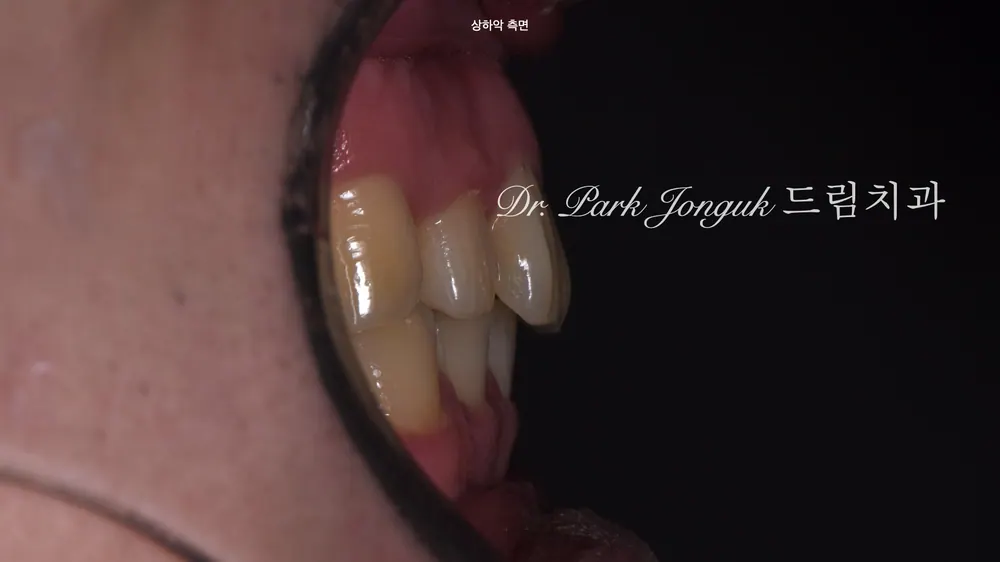
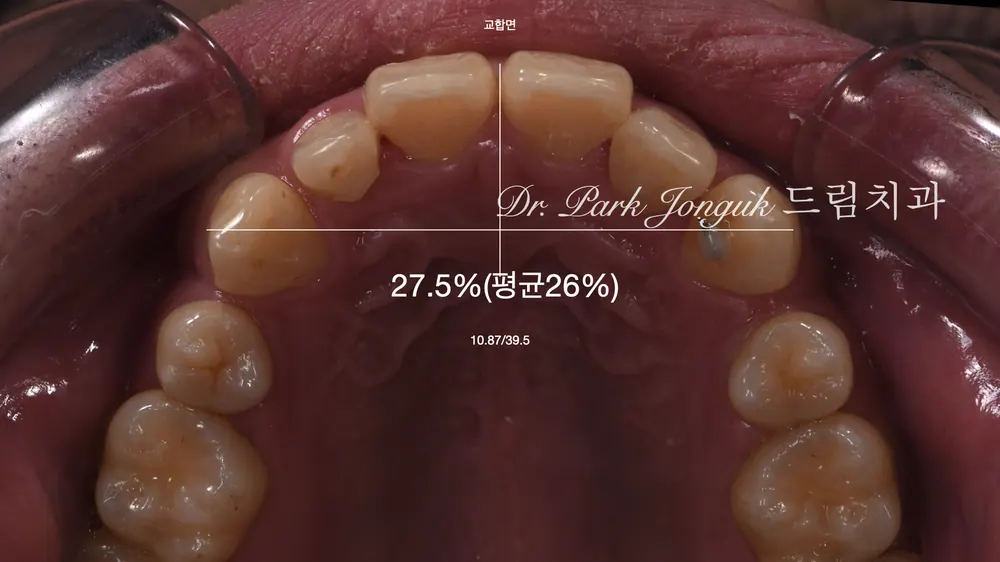
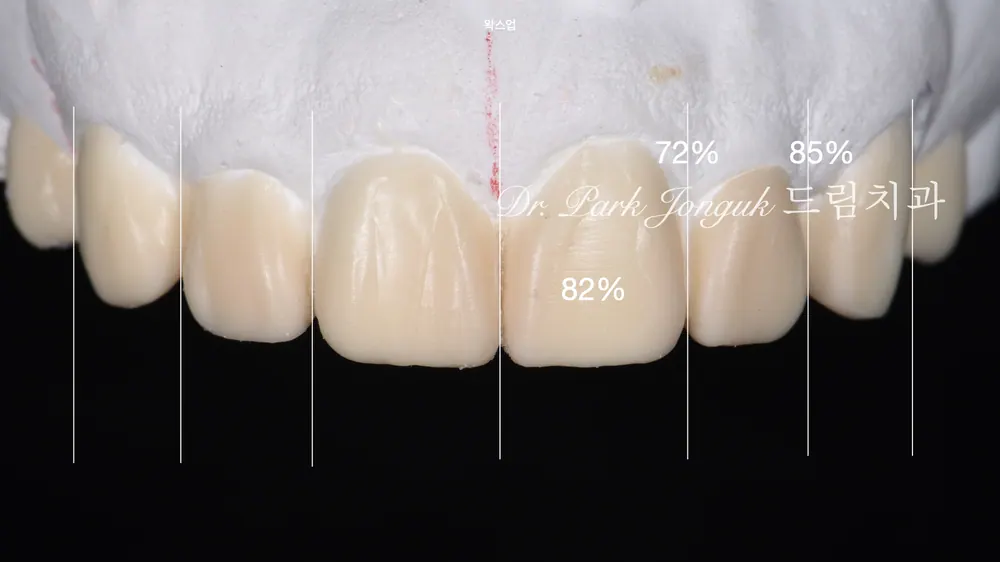
The core of veneer treatment is 'precise diagnosis.'
Rather than looking only at the teeth,
we also consider the shape of the face, the structure of the dental arch, and the proportion between the front teeth and lateral incisors.
Through the wax-up process, we preview the final design in advance
and consult thoroughly with the patient so she can picture what she'll look like after treatment.
The key at this stage is adjusting the proportion between the teeth so it looks naturally balanced.
Photo 6. Explaining the expected amount of reduction
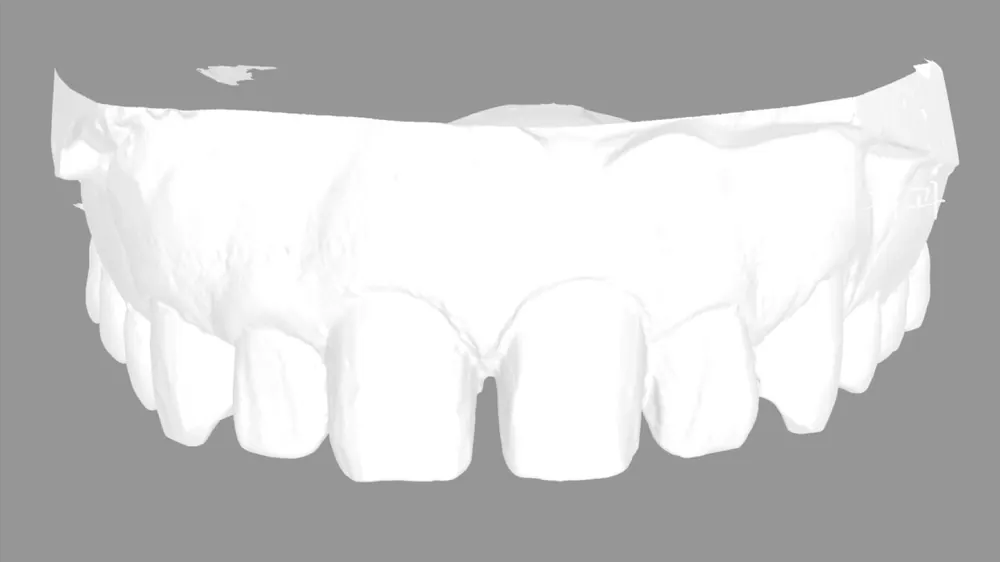
When the front teeth are large and protrude like buck teeth,
proceeding without any reduction can make the veneer look thick and unnatural.
So we clearly present the expected amount of reduction to the patient
and plan the treatment to preserve as much tooth structure as possible while still achieving a natural result.
We always show patients the expected amount of tooth reduction this way.
Photo 7. After reduction
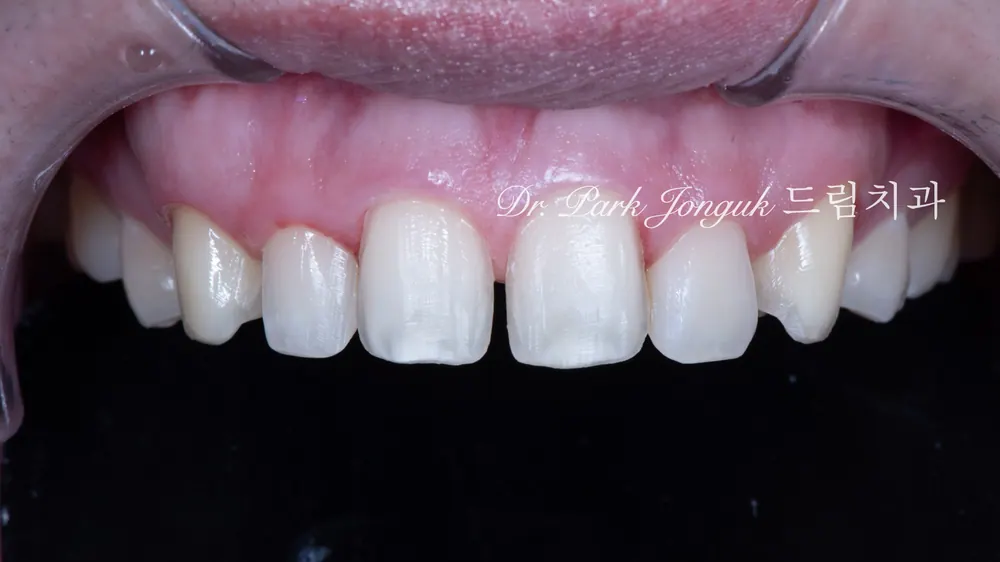
The actual reduction was carried out exactly as planned in the precision diagnosis.
While avoiding unnecessary reduction,
we adjusted the tooth size and angle to prepare for the veneer to settle in naturally.
Photos 8-10. After the veneers were set
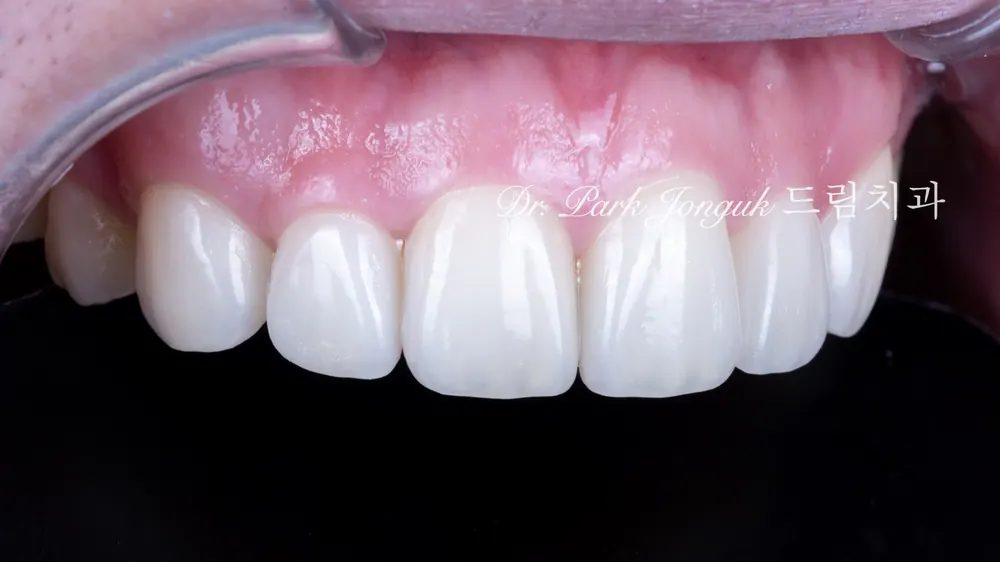
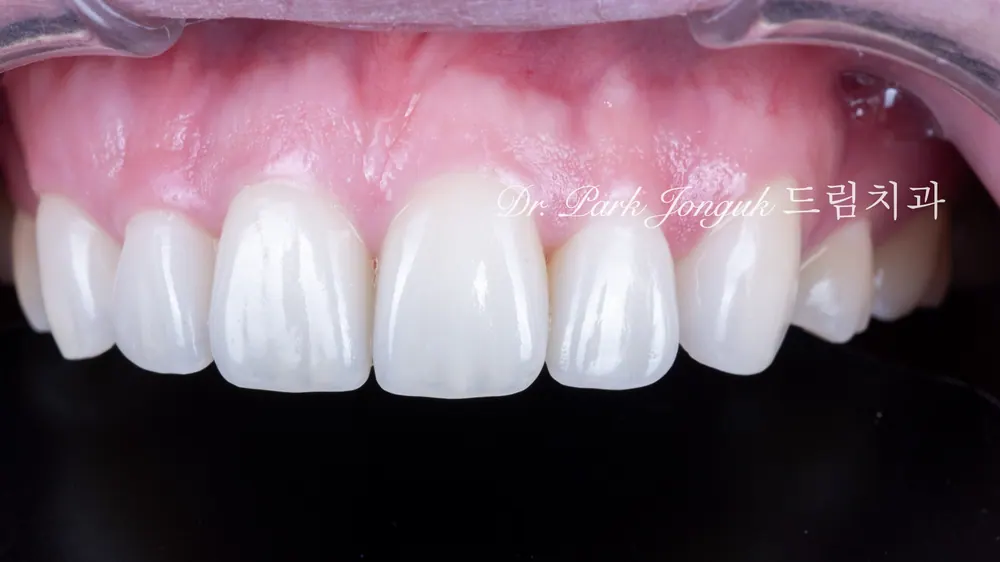
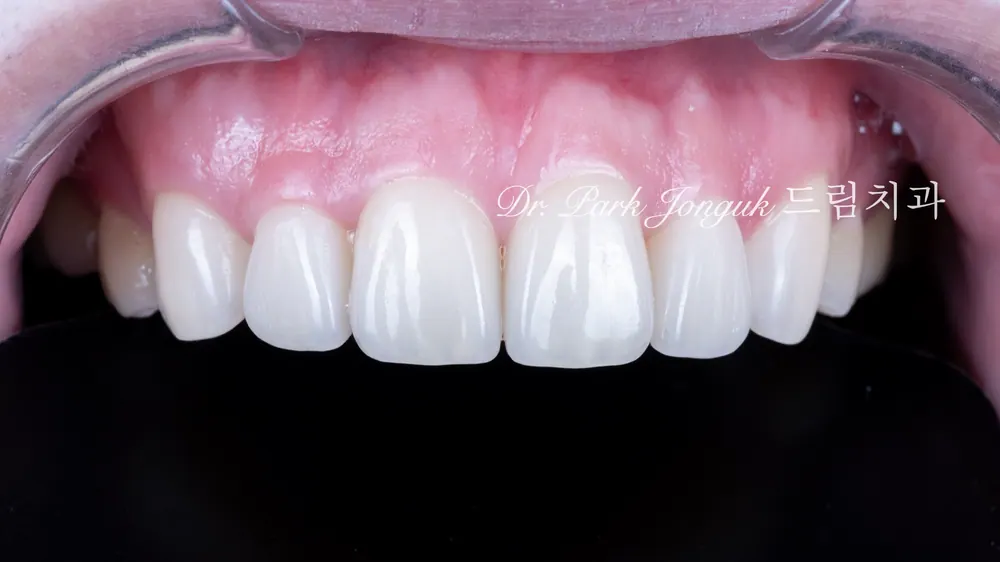
Once the final veneers were set,
the proportion between the front teeth and the lateral incisors was harmoniously balanced.
The impression of protruding buck teeth was gone,
and a natural, well-balanced smile was achieved.
In particular, the translucency and dimensionality at the tooth edges are so lifelike that it's hard to tell them apart from real teeth.
Conclusion
When the front teeth are large and gapped, or protrude like buck teeth,
veneer treatment isn't simply about covering the teeth — it requires precise diagnosis and design.
Especially for patients with large teeth, controlling the amount of reduction is tricky,
so rather than insisting on 'no reduction' at all costs,
the key is a design that preserves tooth health while still achieving natural proportion and harmony.
Just as in this case — from wax-up diagnosis, to planning the amount of reduction, to fabricating the veneers, to the final setting —
if you follow the process systematically,
you can achieve a sufficiently translucent, natural smile even when the teeth are large.
Over the past 20 years, I've handled countless veneer cases,
and as the author of Korea's first veneer textbook, I've continued to emphasize the importance of diagnosis and design.
I'd encourage patients not to focus only on 'white teeth,'
but to choose an experienced clinic that also takes face shape and tooth proportion into account.
Q&A
Q1. Are veneers possible even if the front teeth are large and stick out like buck teeth?
A. Yes. However, if the teeth are large, the amount of reduction has to be controlled precisely. Through precise diagnosis, the proportions can be balanced and a natural result achieved without unnecessary reduction.
Q2. Is no-prep veneer treatment possible in every case?
A. No. It depends on tooth size, alignment, and occlusion. If the teeth are large or protruding, some degree of reduction is needed. What matters is the principle of minimal reduction, guided by diagnosis.
Q3. Why is wax-up diagnosis important?
A. A wax-up is a process for simulating the final result in advance, allowing tooth proportion and alignment to be accurately predicted. Since the amount of reduction and the design are shown to the patient beforehand, it's a key step for increasing satisfaction.
Q4. How long do veneers last?
A. On average, about 10-20 years, depending on the patient's care habits. With proper brushing, regular checkups, and scaling, they can sometimes last more than 20 years.
Q5. If I'm unhappy with my existing veneers, can they be redone?
A. Yes. After safely removing them with a laser and going through precise diagnosis, retreatment can achieve a more natural, healthier result.
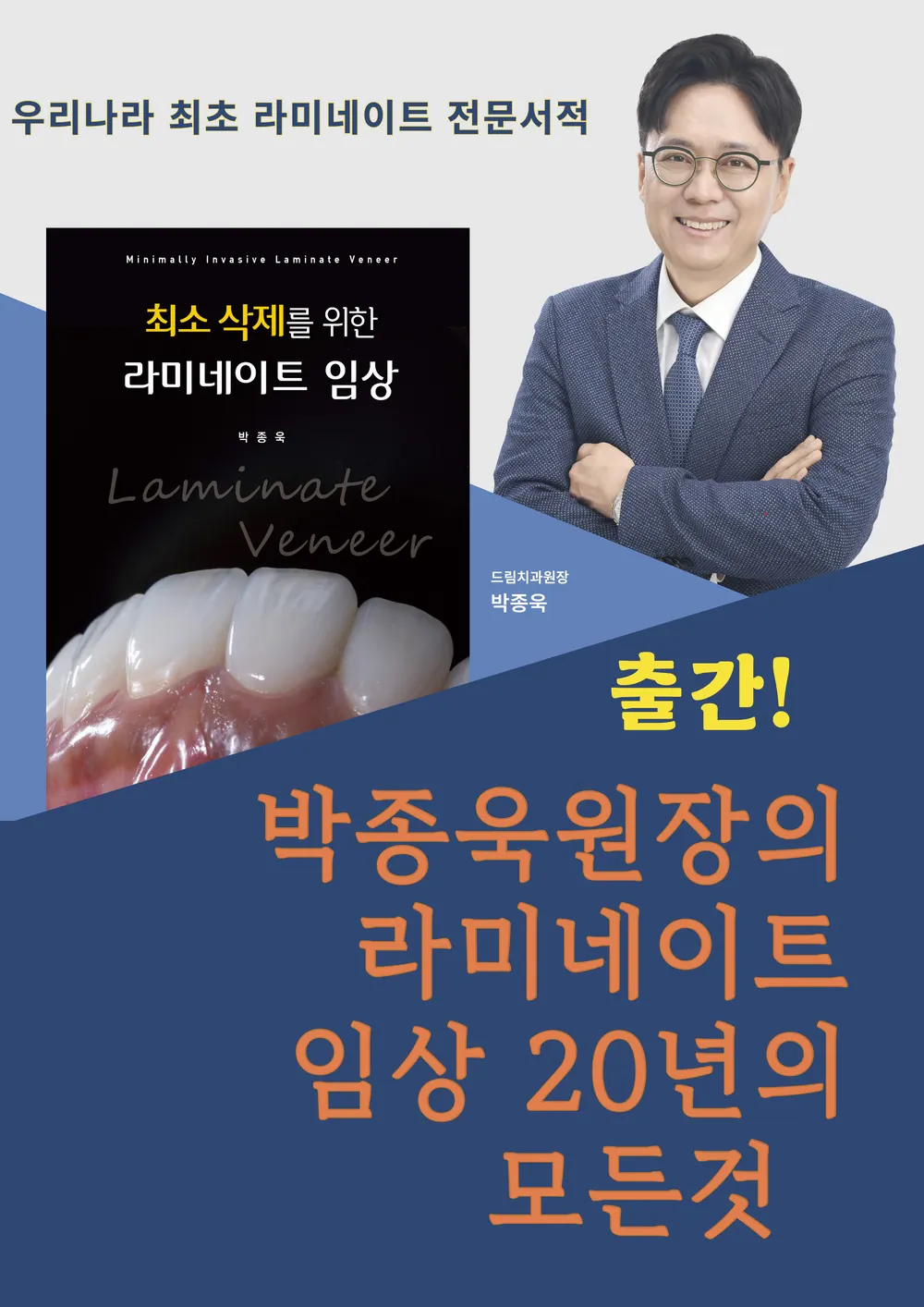
This article is a clinical note written by Dr. Park Jonguk of Dream Dental Clinic, Gangnam; the original was published on his blog. The photographs shown are real cases he treated. Results vary with each patient’s condition, and every procedure carries the possibility of individual variation and side effects.
![[Peg Lateral Veneers] From a Strong-Looking Impression to a Soft, Feminine Smile — The Esthetics of Front-Tooth Veneers](/column-media/224178565168/thumb.webp)
Quick Consult
Request a Callback
Leave your number and we will call you back during clinic hours.
Request Received
We will contact you during clinic hours. For urgent matters, please call +82-2-3448-0028.