
Buck Front Teeth Veneers: A Large, Awkward Smile Transformed into a Natural, Harmonious One
When front teeth are large and protruded like buck teeth, simply covering them with a veneer rarely creates a natural result.
Today's case involves a patient who was about to debut as an idol,
with teeth that were large, dark in color, and awkward in shape.
I'll walk through how precise diagnosis and minimal-reduction veneers achieved a natural, translucent smile.
Veneers aren't simply a treatment for making teeth white.
Facial balance, tooth proportion, and even the lip line all have to be considered
to achieve a truly natural smile.
The patient treated this time
had front teeth that were large and protruded forward, like buck teeth.
On top of that, the tooth color was dull and the shapes were inconsistent,
so every smile drew attention straight to the front teeth.
Orthodontic treatment had been recommended,
but with an idol debut approaching, she couldn't afford the long treatment time.
So she chose veneer treatment, which can achieve a cosmetic improvement in a short time.
But cases with large, protruded teeth like this are extremely challenging.
Reducing too aggressively can leave the teeth sensitive or weakened,
while reducing too little can make them look thick or push the lips out further,
which easily creates an artificial impression.
In situations like this, extensive experience and precise diagnosis are essential.
Taking tooth size, proportion, and three-dimensional form all into account,
we planned the treatment to minimize reduction while still achieving a natural result.
Photo 1. Before Treatment
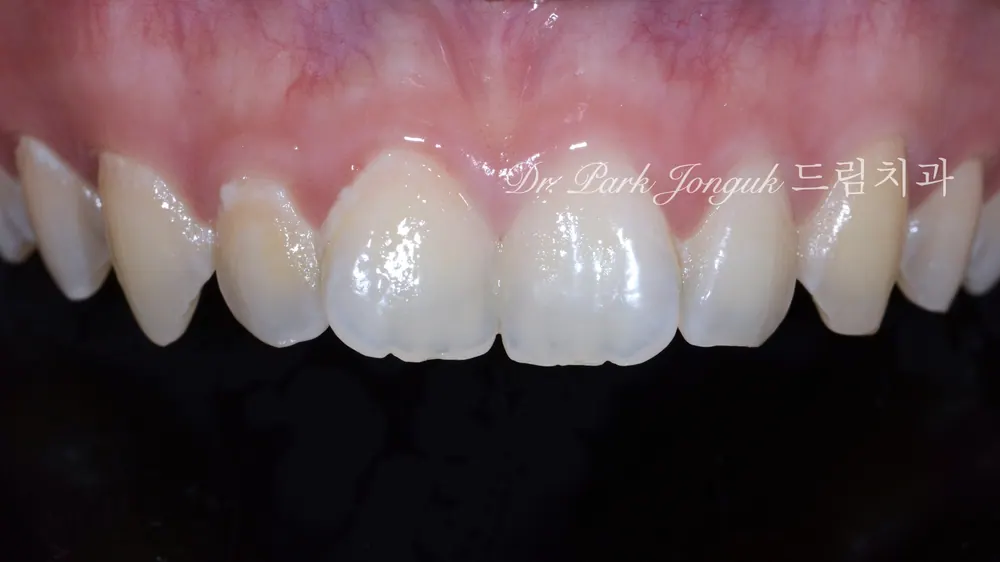
The teeth were overall large and protruded forward.
The alignment was also uneven, and the color leaned yellow and dull,
with inconsistent shapes giving the overall impression a somewhat rough, awkward quality.
In particular, the front teeth were large and protruded, giving a buck-teeth appearance,
and discoloration and wear were also observed from insufficient care.
With her idol debut approaching, a natural, healthy smile was urgently needed.
Photo 2. Diagnosis and Treatment Planning
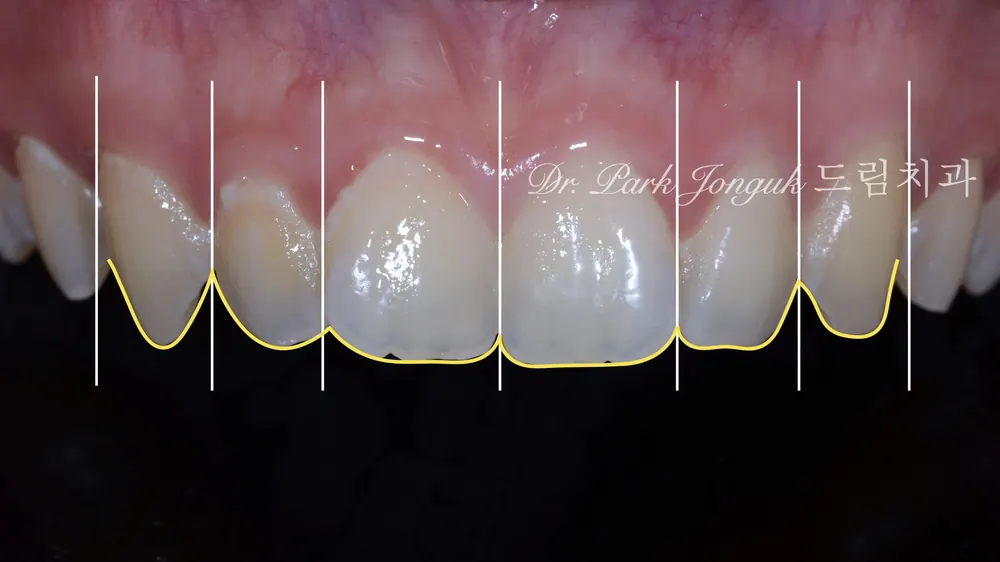
For accurate treatment, we carefully analyzed the size, angle, proportion, and color of the teeth.
Taking into account the face shape, smile line, and harmony with the lips,
we planned how much to reduce the teeth and what shape to design them in.
While minimizing how much the protrusion was adjusted,
we designed the color and translucency to look natural even under stage lighting.
Photo 3. After Veneer Treatment
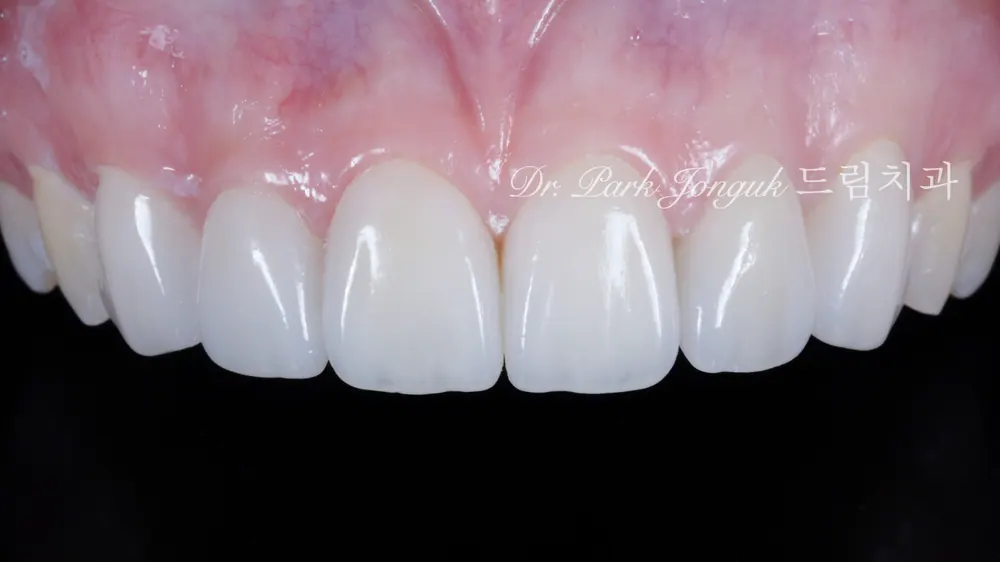
After treatment, a completely new smile was created.
The protrusion of the front teeth was corrected, and the size and proportion became balanced.
The color was also finished in a natural tone that suited the patient's skin tone well.
With a clear, translucent impression and no artificial feel,
the natural veneers were completed.
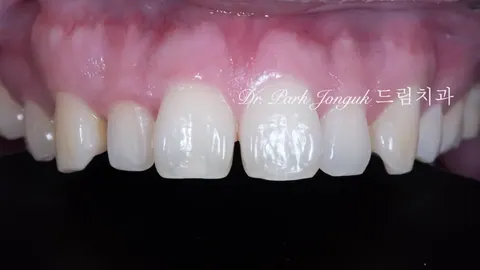
Photo 4. Close-Up of the Front Teeth
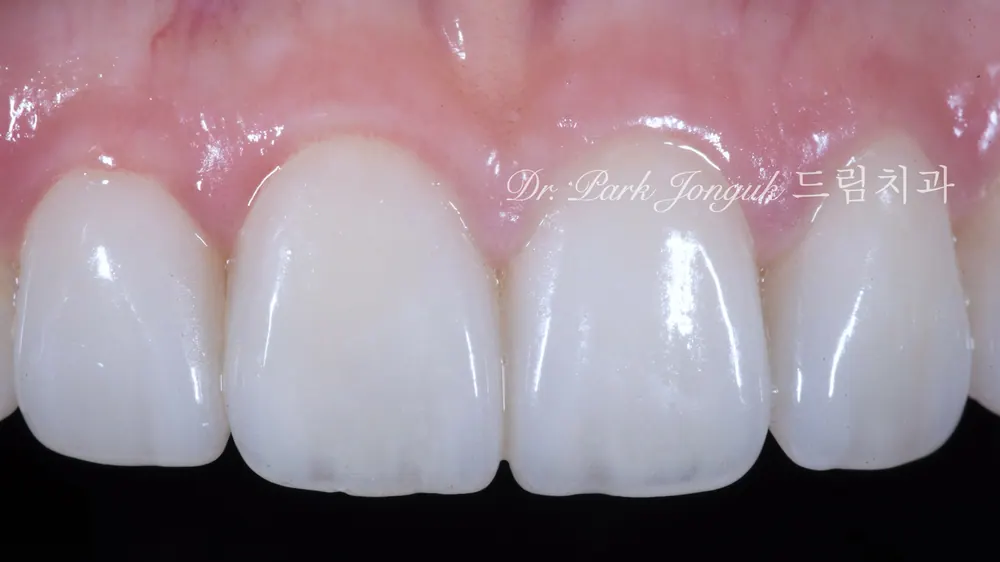
The three-dimensional form, color, and translucency of the veneers are evenly expressed.
A subtle translucency remains toward the tooth edges,
and the sheen is never overdone, making them nearly indistinguishable from real natural teeth.
This kind of naturalness is a result only achievable with the handmade build-up method.
Photos 5–6. Views from Different Angles
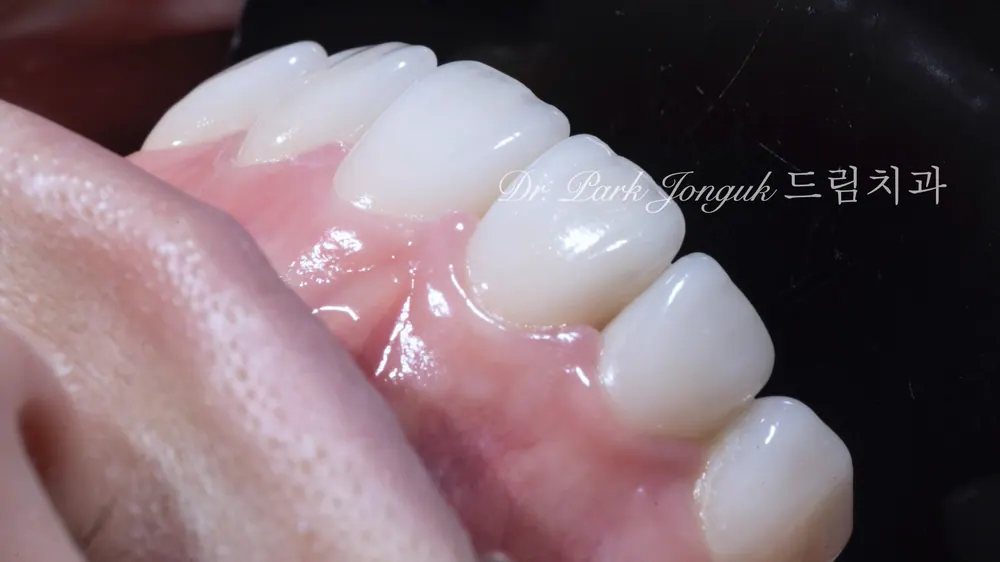
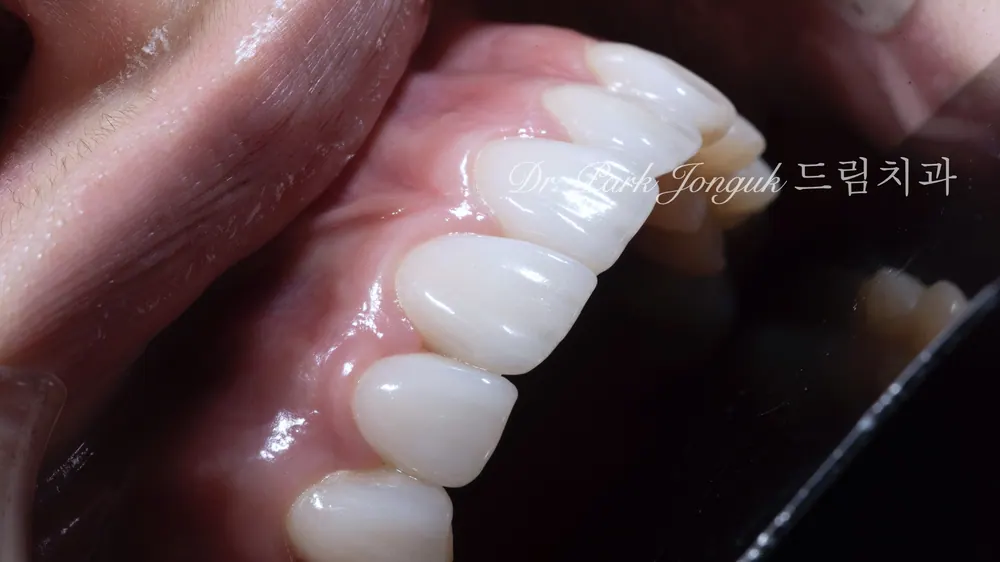
The surface texture of the teeth looks different depending on how light reflects off it,
but from every angle, they look natural without any artificial feel.
The three-dimensional form and proportion are preserved, while the overall smile line stays harmoniously aligned.
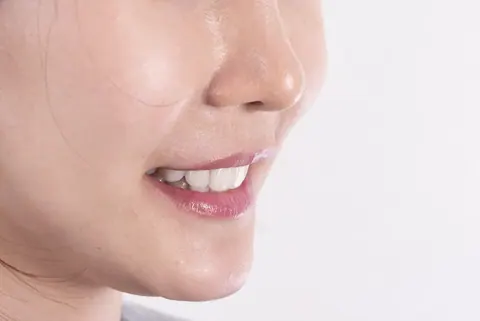
Photo 7. Smile Photo
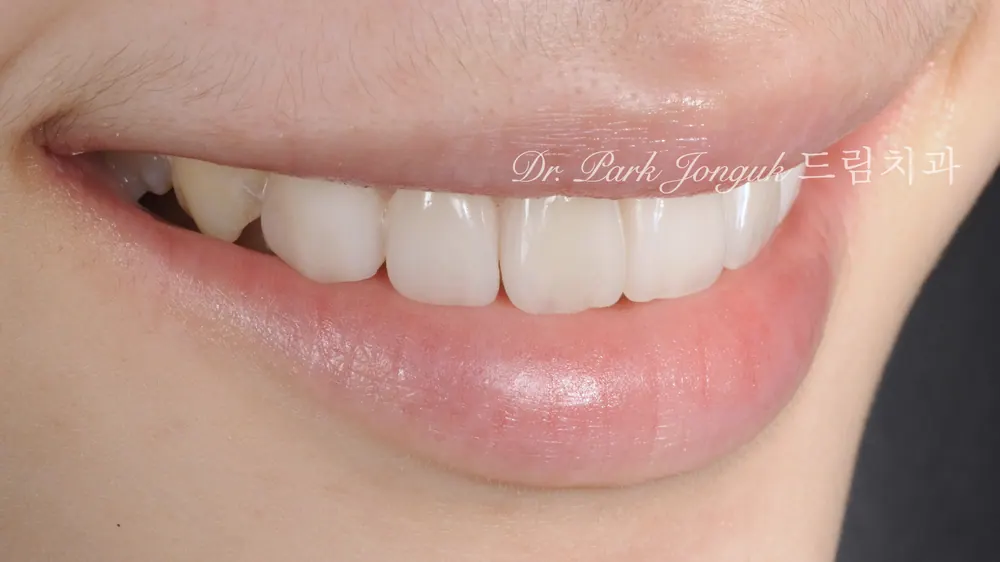
After treatment, the smile became truly beautiful.
It changed into a bright, clean, yet soft impression,
completing a smile that shines naturally even under stage or camera lighting.
Photo 8. Eight Years Later
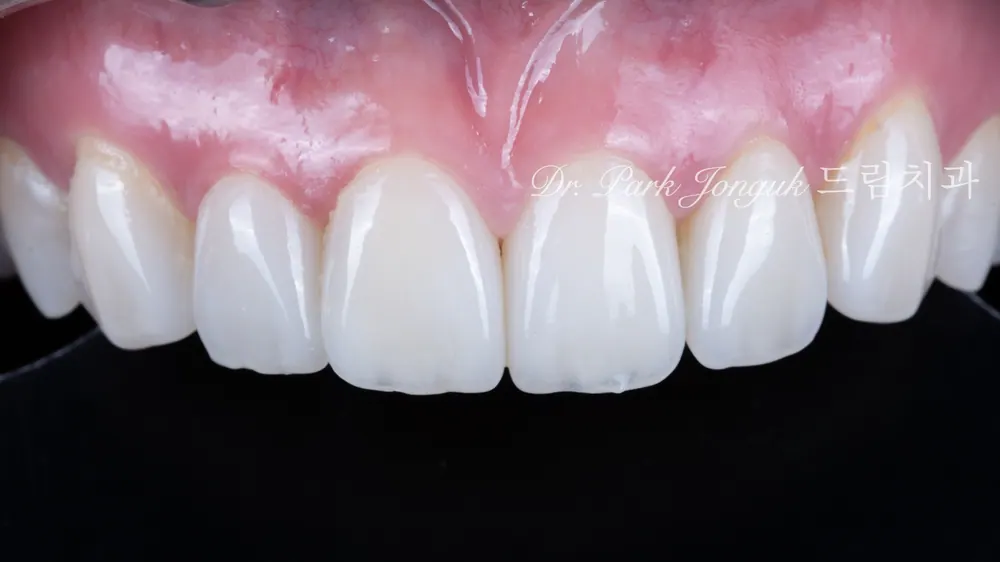
Even eight years later, the veneers remain just as natural as they were on day one.
They've stayed healthy with no discoloration or debonding,
and the gumline has settled stably as well.
The patient, now working as a celebrity,
said, "No one thinks I have veneers,"
and was satisfied enough to say, "People assume I was just born with pretty teeth."
Her words—"I'm so happy I can finally smile with real confidence"—
were the greatest reward of this case.
Conclusion
When front teeth are large and protruded,
simply covering them with white veneers can never achieve a truly natural result.
Even in a case like this, with teeth that are large, dark, and irregularly shaped,
following precise diagnosis and the minimal-reduction principle
makes it fully possible to achieve improvement with natural, translucent veneers.
In particular, handmade build-up veneers,
unlike same-day veneers made from a single block of ceramic,
faithfully reproduce the translucency and dimensional form of natural teeth.
The fact that the naturalness has held up even eight years later
is a clear example of just how important
"accurate diagnosis" and "tooth-preserving design" really are.
Over the past 20 years, I've handled countless veneer cases,
authored Korea's first veneer textbook,
and taught dentists the importance of diagnosis and adhesive technique.
Faster treatment may seem appealing,
but naturalness is only achieved by taking the necessary time.
That difference is ultimately what separates "pretty teeth" from "natural teeth."
Q&A
Q1. Are veneers possible even when the teeth are large and protruded?
A. Yes. However, some minimal reduction may be needed rather than none at all.
By adjusting tooth proportion and angle through precise diagnosis,
a natural result can be achieved.
Q2. Can dark-colored teeth also be made to look natural?
A. Yes. By layering several types of ceramic using the build-up method,
translucency and color can both be adjusted at the same time,
expressed in a bright yet soft, natural tone.
Q3. Can I get veneers that look completely undetectable, like celebrities have?
A. Yes. In fact, broadcasters, actors, idols, and others
often want veneers that look completely natural.
By reproducing the texture and light reflection of teeth through the handmade method,
a result that looks natural to anyone can be achieved.
Q4. How long can veneers be used?
A. They typically last around 10 to 20 years on average, and can last much longer with proper care.
Regular cleanings, checkups, and caution with hard foods are important.
Q5. If I'm not happy with my existing veneers, can I have them redone?
A. Yes. After safely removing them with a laser to minimize damage to the tooth,
a more natural result can be achieved through re-treatment based on precise diagnosis.
This article is a clinical note written by Dr. Park Jonguk of Dream Dental Clinic, Gangnam; the original was published on his blog. The photographs shown are real cases he treated. Results vary with each patient’s condition, and every procedure carries the possibility of individual variation and side effects.
![[Peg Lateral Veneers] From a Strong-Looking Impression to a Soft, Feminine Smile — The Esthetics of Front-Tooth Veneers](/column-media/224178565168/thumb.webp)
Quick Consult
Request a Callback
Leave your number and we will call you back during clinic hours.
Request Received
We will contact you during clinic hours. For urgent matters, please call +82-2-3448-0028.