
Redoing an Unnatural Front Bridge and All-Ceramic Crowns
Hello. I am Park Jonguk, DDS, MS, director of Dream Dental Clinic.
Treatment methods for the front teeth
can be divided into treatment focused primarily on appearance
and treatment intended to replace missing teeth.
These are the 2 main categories.
For treatment intended to improve appearance,
there are 2 options: laminate veneers and all-ceramic crowns.
Both can improve tooth shade and shape.
Of course, both methods can also be used for fractures, discoloration,
and other situations in which the original shape and shade of a tooth need to be restored.
If 1 or 2 front teeth are missing,
what can be done?
In such cases, an implant or a bridge may be used.
An implant replaces the missing tooth
by placing an artificial tooth in that area.
With a bridge, the teeth on either side of the missing tooth
are prepared in the same way as for all-ceramic crowns.
As the crowns are placed, a replacement tooth spans
the area where the tooth is missing, much like a bridge.
That is why this restoration is called a bridge.
Bridge treatment takes less time than implant treatment
and, in some cases, can provide a more esthetic result.
For this reason, bridges are still widely used when an implant is not possible or
when an implant may create an esthetic concern.
However, if a bridge is not fabricated properly,
it can also cause substantial esthetic problems.
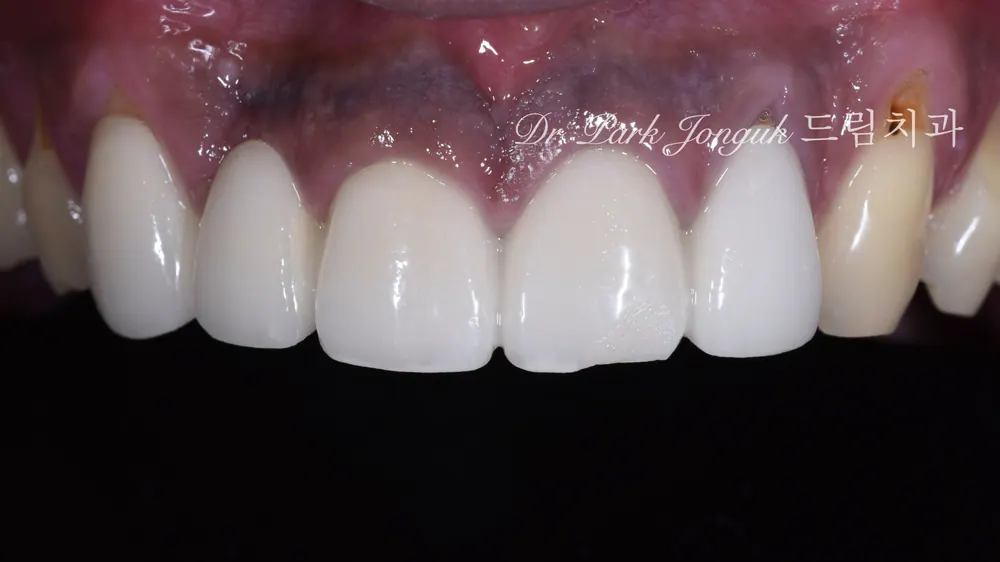
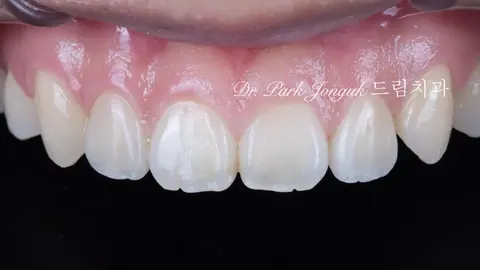
The patient visited us because an old bridge had fractured.
In addition to the fracture,
there were several esthetic concerns.
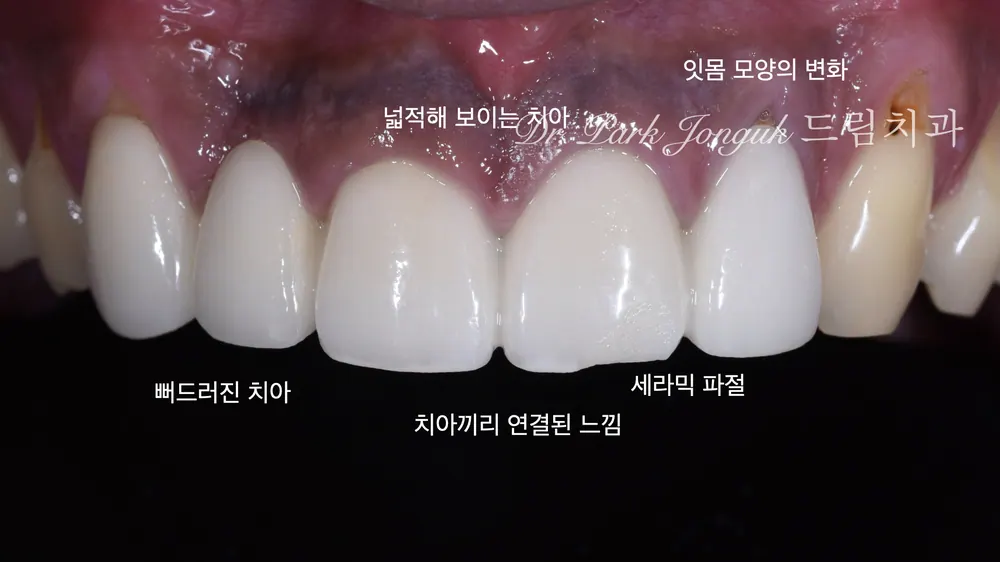
The most significant was the lack of visual separation between the teeth.
Because the teeth appeared joined together,
they could not look natural.
Although the units of a bridge are physically connected,
it is important to use various techniques to keep them from appearing connected.
This recreates a natural appearance.
The front teeth also appeared too wide,
so that issue needed to be addressed as well.
The teeth also appeared to protrude.
To address these various concerns,
we decided to redo the bridge and all-ceramic crowns.
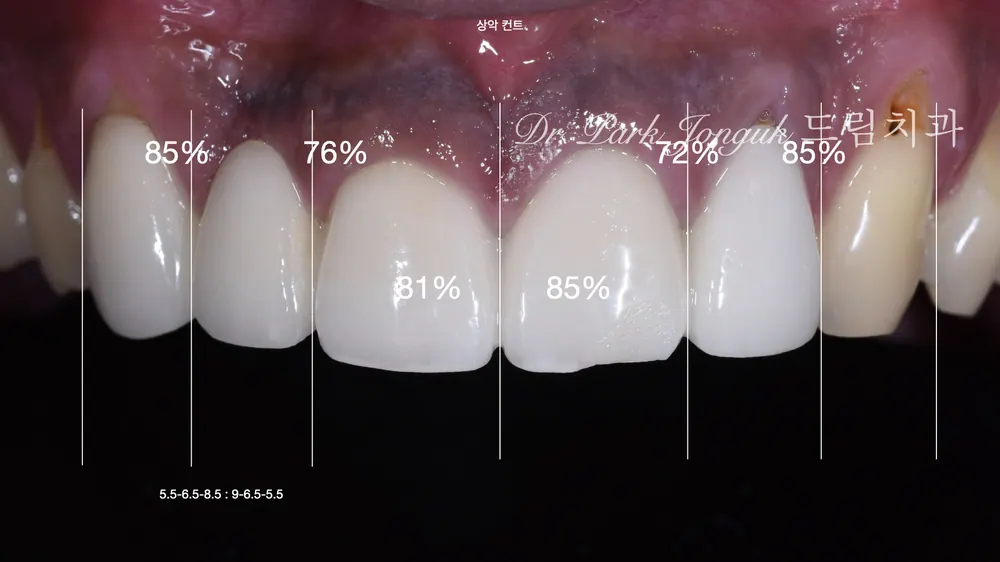
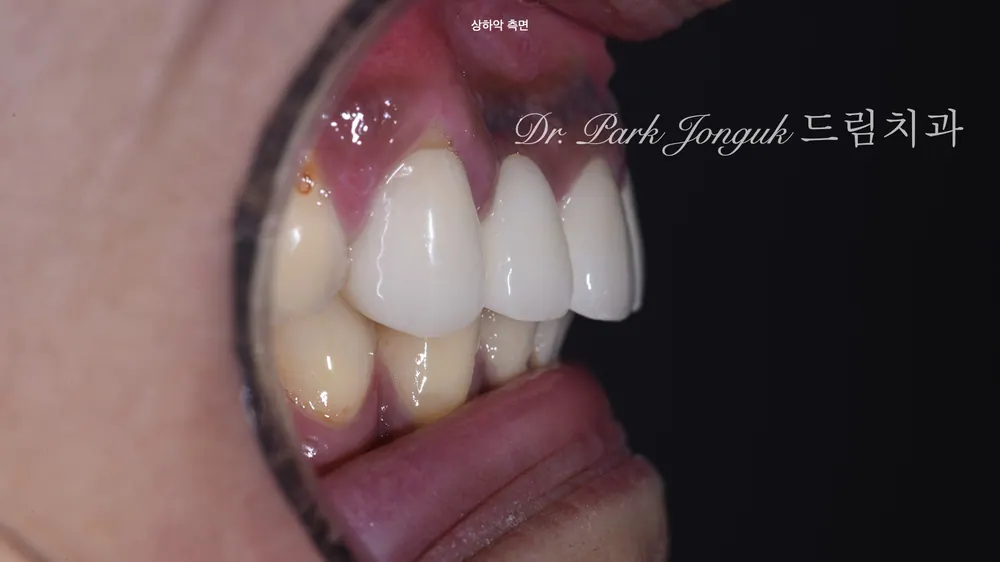
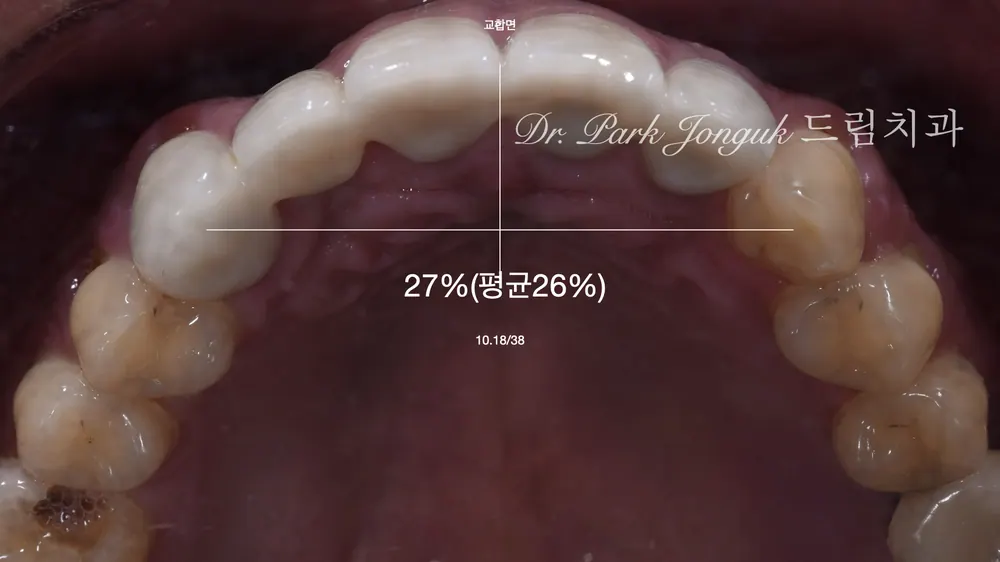
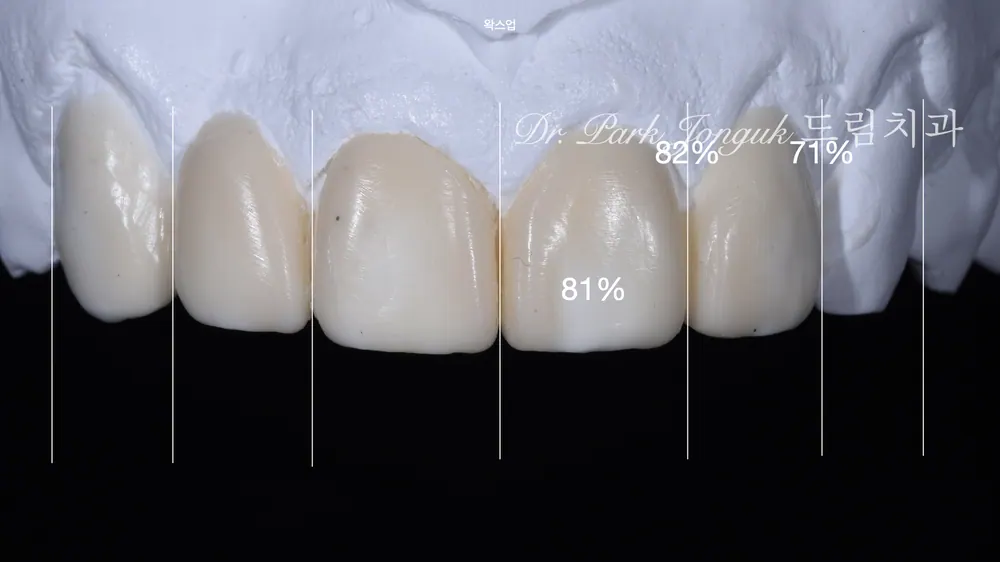
Before treatment, we needed to analyze the existing condition
and develop a treatment plan.
This process is called a detailed diagnostic wax-up.
For information about this process and the features of laminate veneers and all-ceramic crowns at Dream Dental Clinic,
please see the link below.
Based on this analysis,
we began the retreatment.
First, the existing ceramic restorations had to be removed.
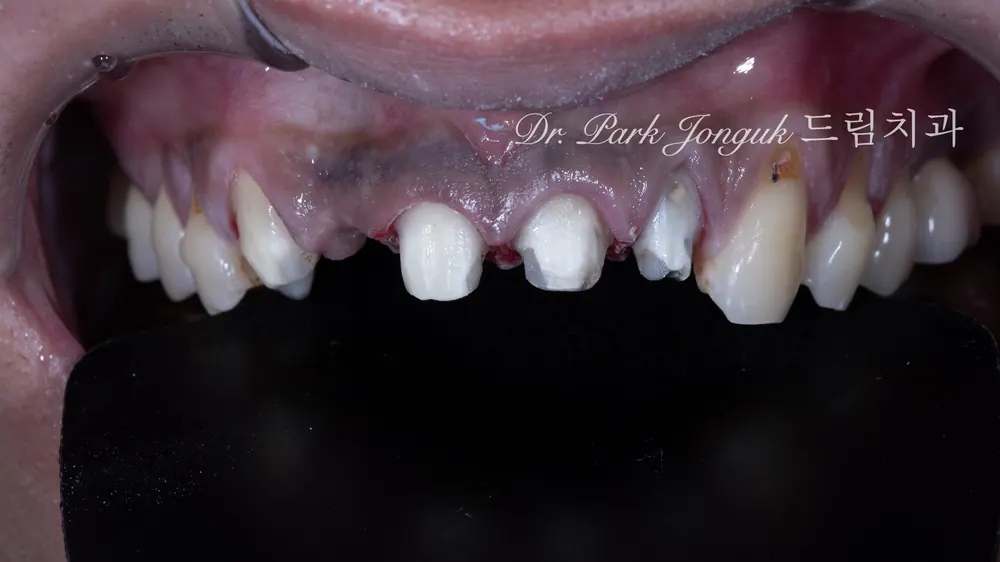
After removal,
we found that far too much tooth structure had already been removed.
We cannot know why the teeth were reduced so extensively.
Only 1 tooth was missing,
yet the patient had been treated with 5 bridge and all-ceramic crown units.
Although all-ceramic crowns and bridges do require substantial tooth reduction,
we occasionally encounter cases with excessive reduction, as in this case.
There may have been a reason at the time of treatment,
but every effort should always be made to limit tooth reduction.
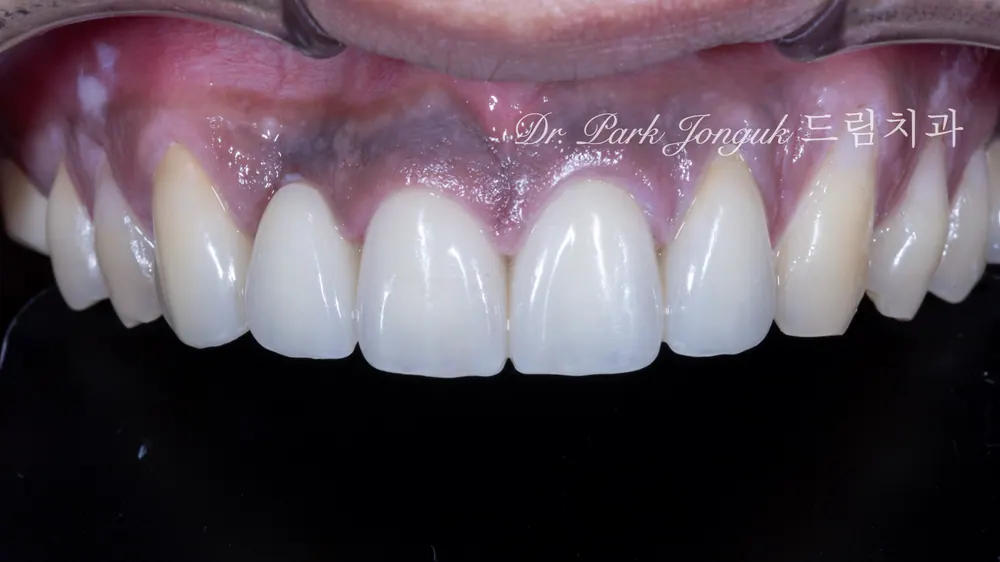
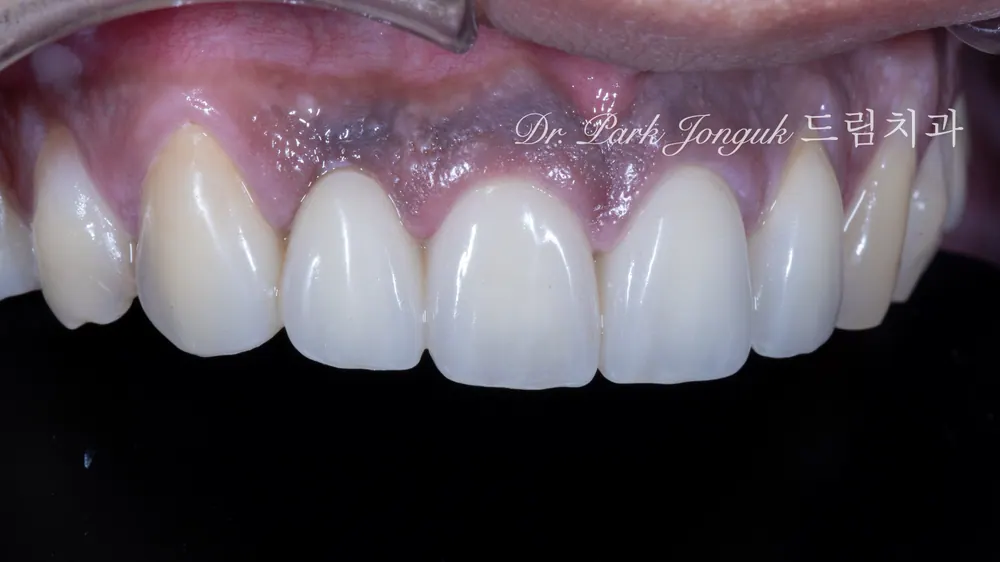
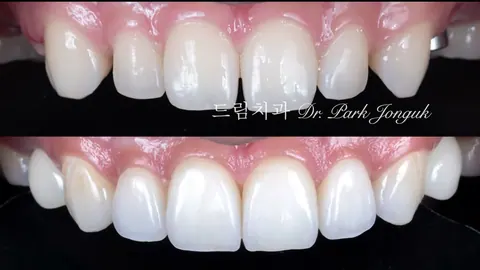
Treatment was completed.
The teeth now appeared somewhat longer and more open,
and clear visual separation between them was created.
Their shade was matched closely to the untreated canines,
and the protruding appearance was clearly eliminated.
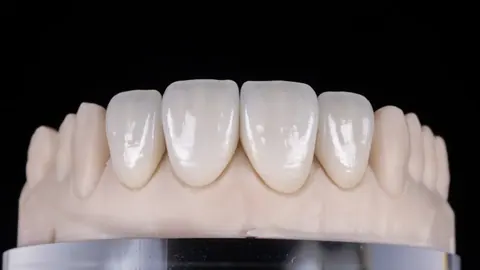
Natural variations and details were incorporated into the teeth.
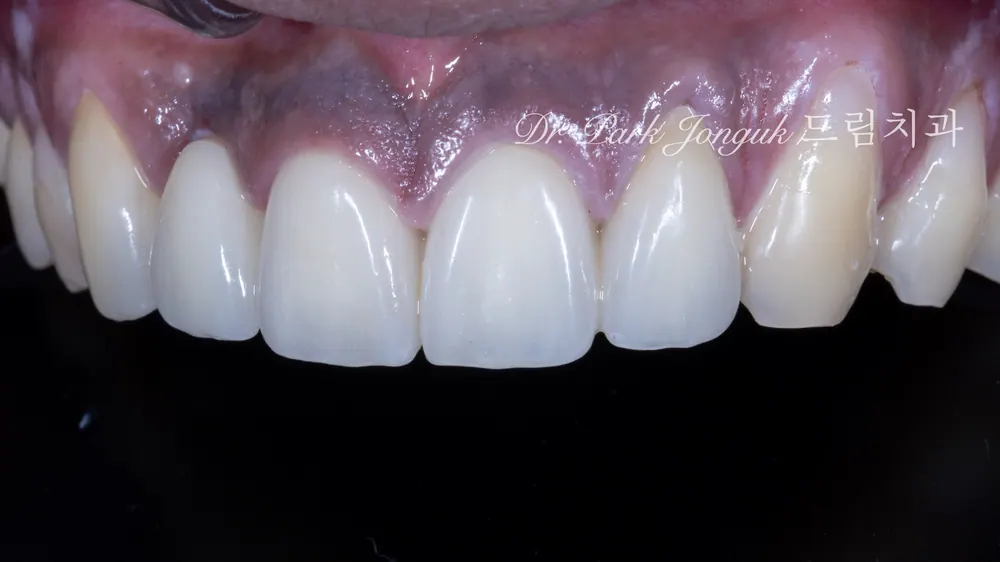
From another angle,
you can clearly see that their harmony with the gums improved.
The varied details incorporated into each individual tooth are also clearly visible.
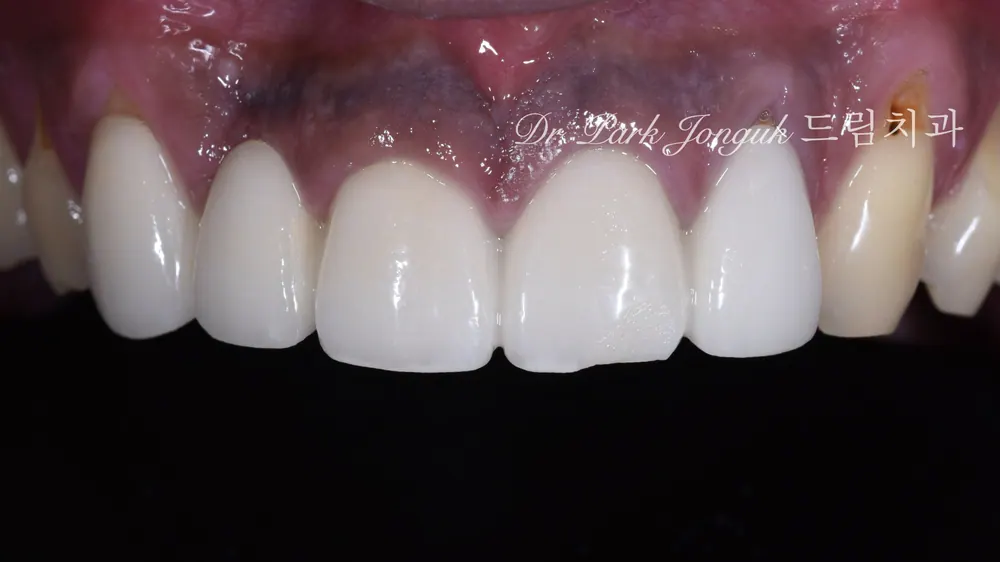
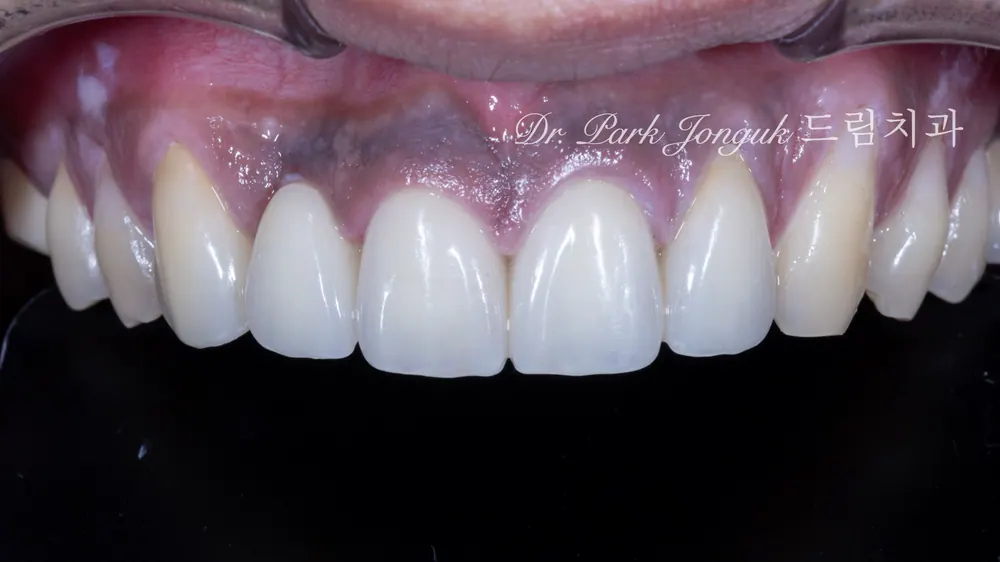
Comparing the initial and final photographs,
you can clearly appreciate the esthetic change.
Natural beauty
Since 2006, Dream Dental Clinic
This article is a clinical note written by Dr. Park Jonguk of Dream Dental Clinic, Gangnam; the original was published on his blog. The photographs shown are real cases he treated. Results vary with each patient’s condition, and every procedure carries the possibility of individual variation and side effects.
Quick Consult
Request a Callback
Leave your number and we will call you back during clinic hours.
Request Received
We will contact you during clinic hours. For urgent matters, please call +82-2-3448-0028.