
Retreating Awkward One-Day Veneers into a Natural Result
Hello. I'm Park Jonguk, director of Dream Dental Clinic.
Most veneers these days are designed by computer
and fabricated through a machined process.
Because a computer does the designing, it can sound like cutting-edge technology and look appealing,
but in the aesthetic domain, human hands are still valued more than computers,
and the same holds true in aesthetic front-tooth veneer treatment.
Computer-designed, machine-fabricated methods
are more often used for simplicity of production, cost savings, and mass production than for aesthetics.
This method is usually called the one-day method.
It got that name because it can be produced so quickly.
Much like the difference between a fast-fashion brand's clothing and a luxury brand's clothing,
being able to make the same design in large quantities, quickly, and cheaply
is what defines the computer-made one-day method.
Luxury goods are made by the hands of a craftsman.
In the same way, natural, beautiful veneers
are made by hand by a skilled dental technician.
The hand-made method first requires highly skilled personnel,
takes a great deal of time,
and personnel plus time ultimately translates into cost.
The computer-made one-day method
has been given all sorts of names for marketing purposes.
You often see it advertised as though it's something entirely different from veneer treatment.
But since the one-day method is nearly identical across clinics in the computer, software, and even material used,
it seems that fancy names are given precisely because there's no real way to differentiate it otherwise.
Let's look at a case where a patient sought retreatment due to aesthetic dissatisfaction after one-day treatment.
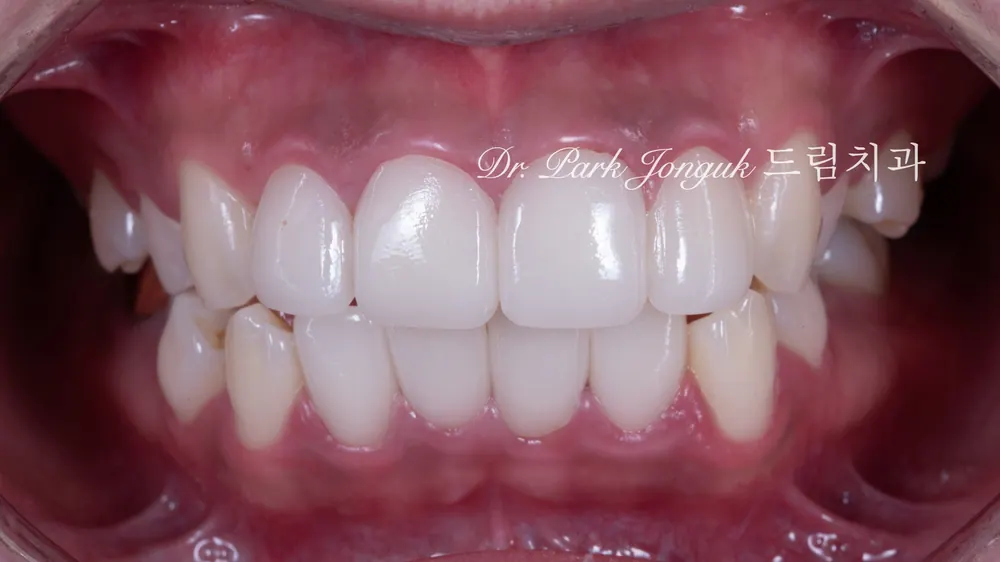
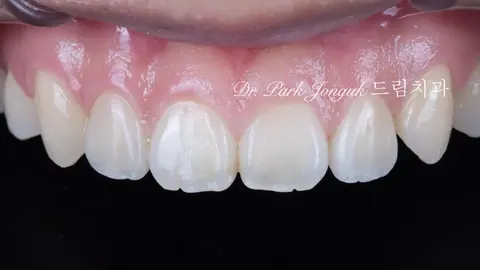
This is a veneer made using the one-day method.
The characteristics of the one-day method are
the whole tooth being a single color,
the shape lacking any dimensionality or natural tooth feel,
and it being mostly opaque and made excessively white.
It also requires the tooth to be reduced beyond a certain amount just to be fabricated, resulting in more tooth reduction than the hand-made method.
These are the points worth keeping in mind.
The treatment had come out so unnatural that the patient came in for retreatment.
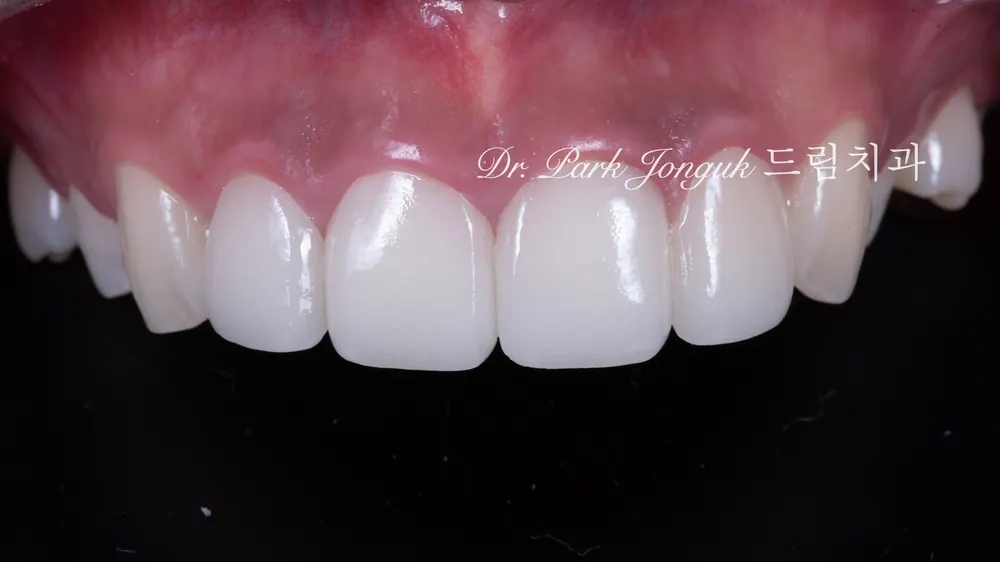
Since aesthetics reflects personal taste,
there are people who do like this kind of tooth appearance.
However, it's somewhat different from the direction we pursue at Dream Dental Clinic.
We aim for teeth that clearly carry the feel of natural teeth
while also being beautiful,
and what we mean by the feel of a natural tooth
is dimensionality in the shape
together with a variety of color expression and living translucency.
The teeth above were a single flat, opaque color,
lacking even symmetry or consistency.
Preparation for retreatment begins.
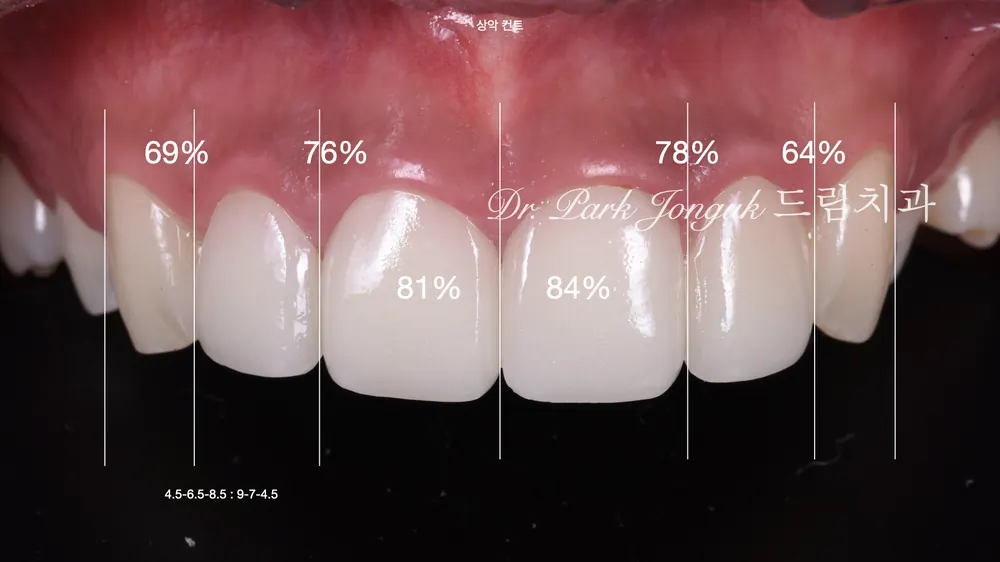
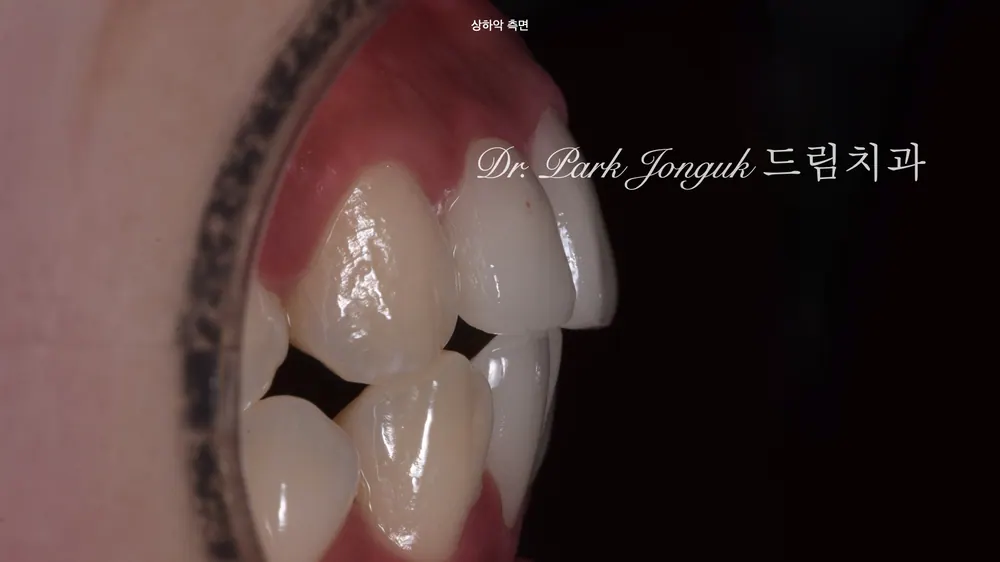
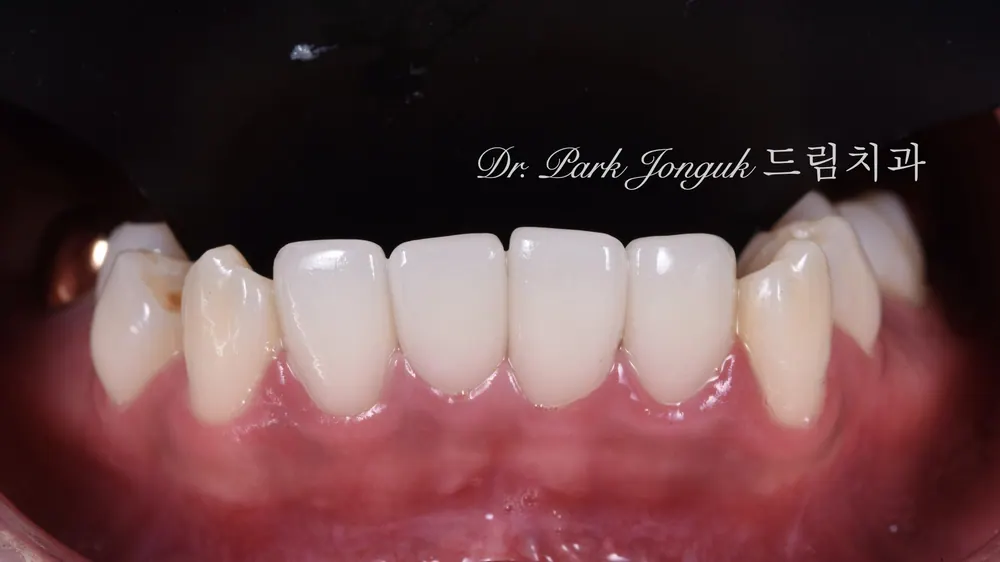
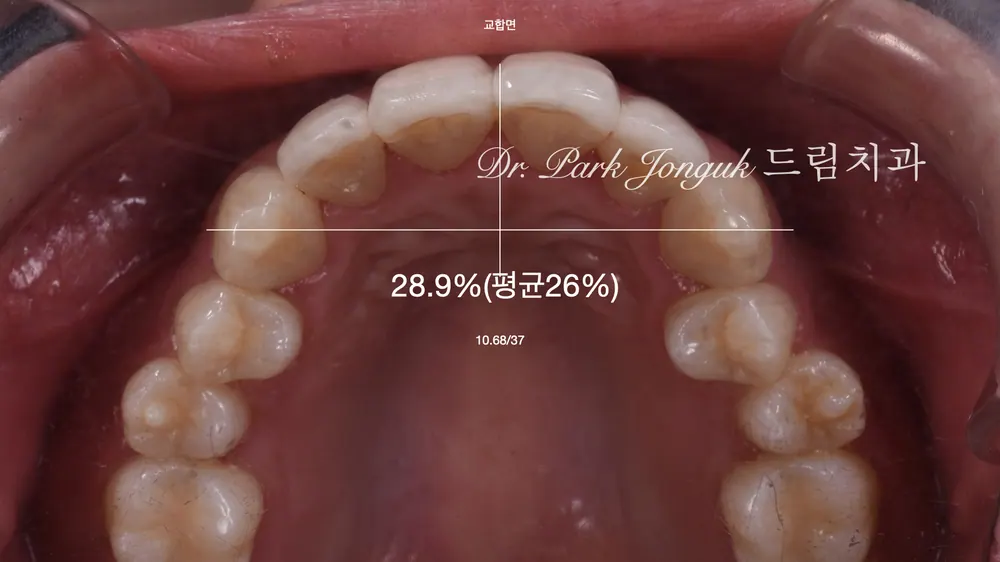
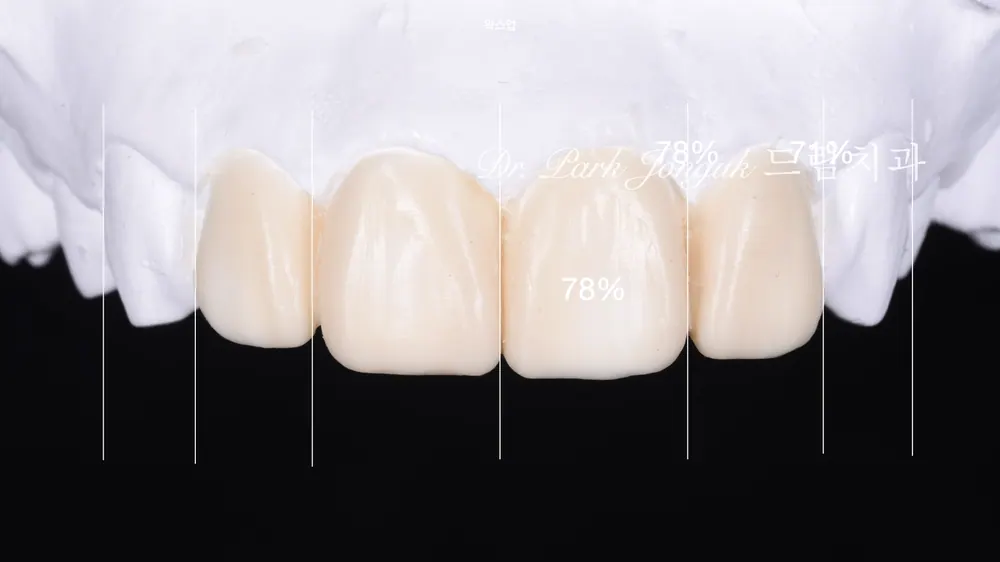
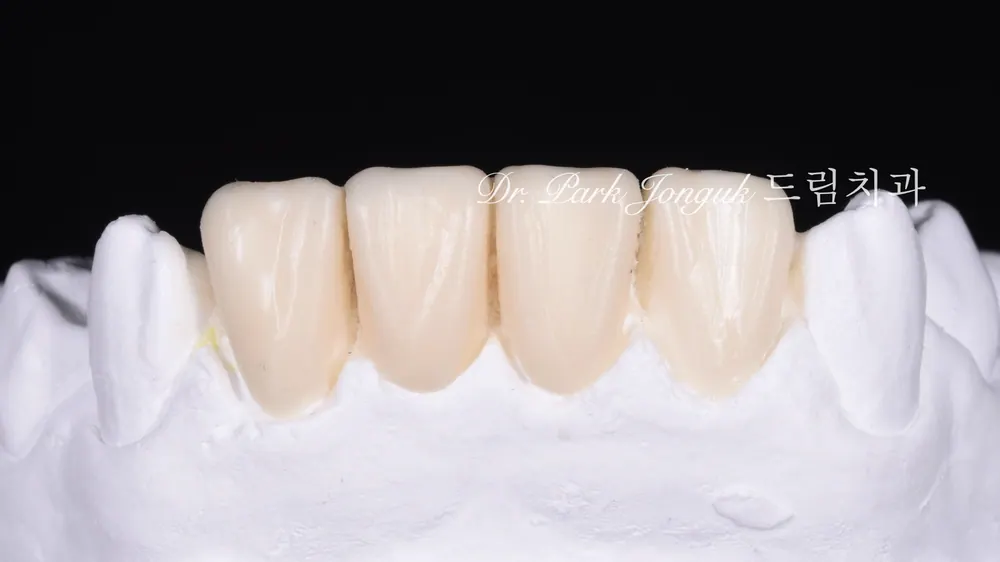
Before starting retreatment,
we diagnose the current condition of the teeth
and establish a treatment plan.
This process is called a precision wax-up diagnosis.
We measure the current proportions of the teeth, their harmony with the face, and how much tooth shows when speaking or smiling,
and then, based on how we plan to improve this,
we build the teeth in wax to see the result in advance.
This is essential in every veneer treatment,
and it's just as essential in retreatment.
Now, to proceed with retreatment, the veneer needs to be removed.
The better a veneer was made, the harder it is to remove.
Because it's similar in color to the tooth, it's hard to tell them apart,
and if it's ground off using an ordinary method,
tooth damage becomes easy to cause.
Removing it with a laser instead minimizes damage to the tooth.
Please refer to the link below for more on this.
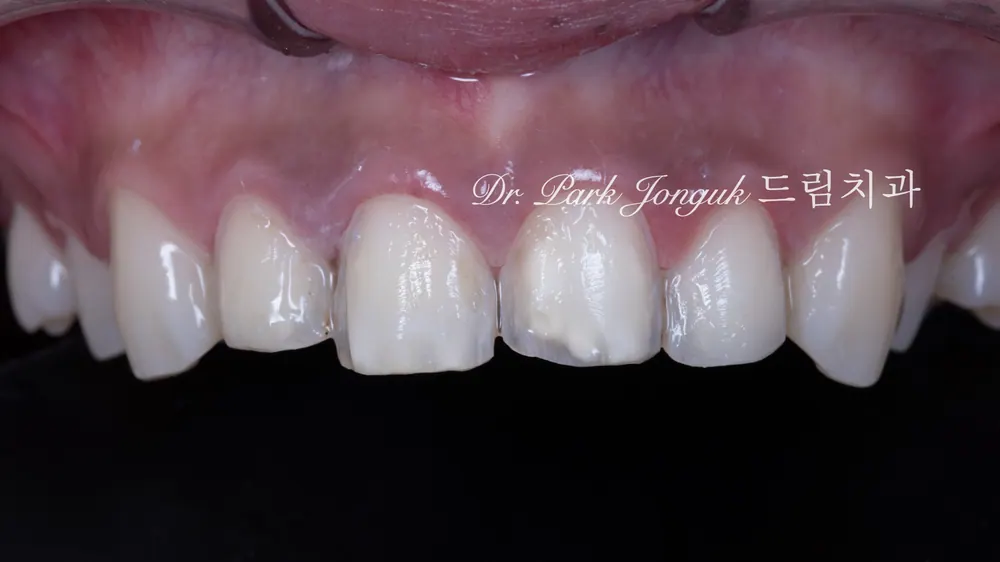
This is the state after removing the veneer for retreatment.
Among one-day methods,
this one hadn't required all that much reduction, comparatively.
Typically, far more reduction than this is required.
Of course, the photo above still shows
considerably more reduction than the hand-made method would require.
I do have the equipment for the one-day method as well,
but after various tests and trials
I decided it falls short for aesthetic front-tooth treatment, meaning veneers,
so I don't use it for front teeth.
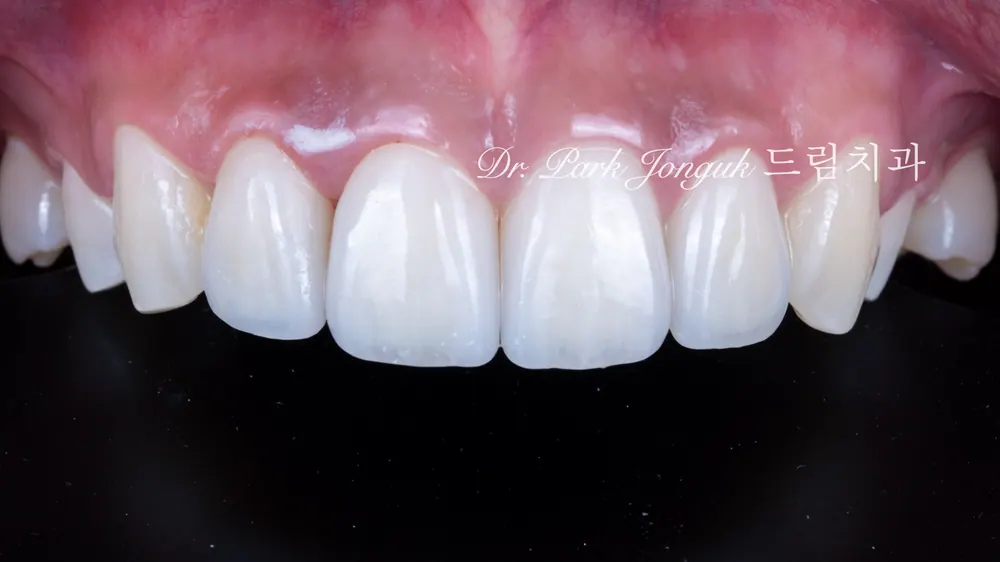
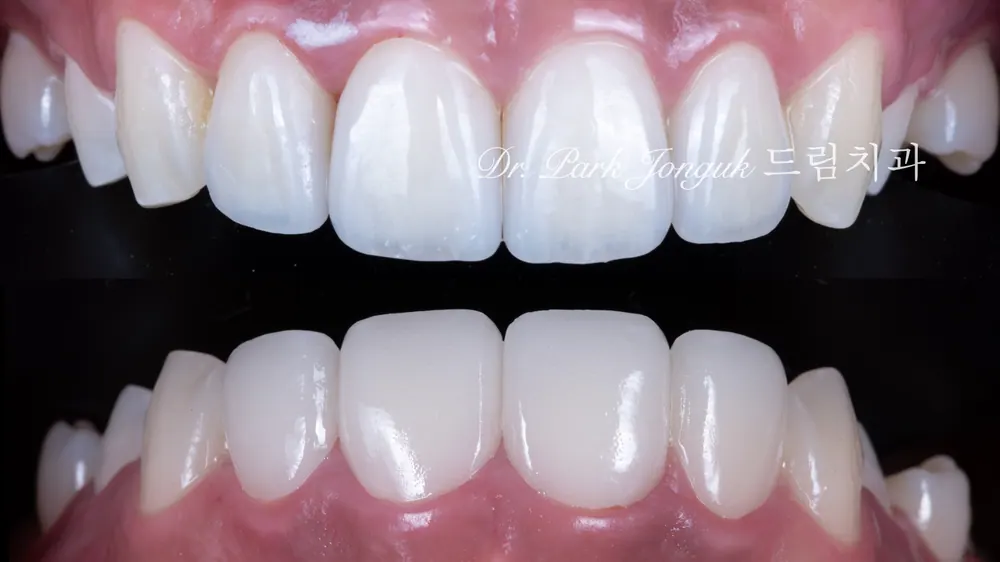
The veneer retreatment has been completed.
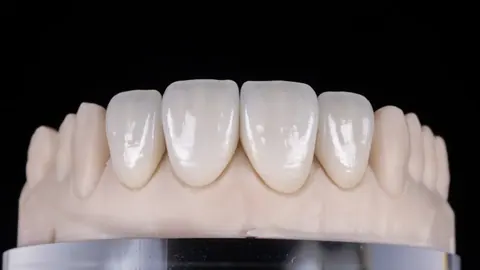
I think you can now get a feel for what I mean by "natural."
Making an entire tooth a single, opaque color is a very simple thing to do.
A natural tooth has quite a variety of shades across its different areas.
There are brighter spots and darker spots, sometimes a yellowish tint,
and it needs to combine translucency with a variety of other expressions.
This kind of expression isn't achieved in one step;
it can only be achieved by building up multiple layers.
Each layer has to be fired at high temperature, much like firing pottery.
That's part of why it takes so much time.
Building it up layer by layer is also a highly demanding task that only a skilled ceramist can carry out.
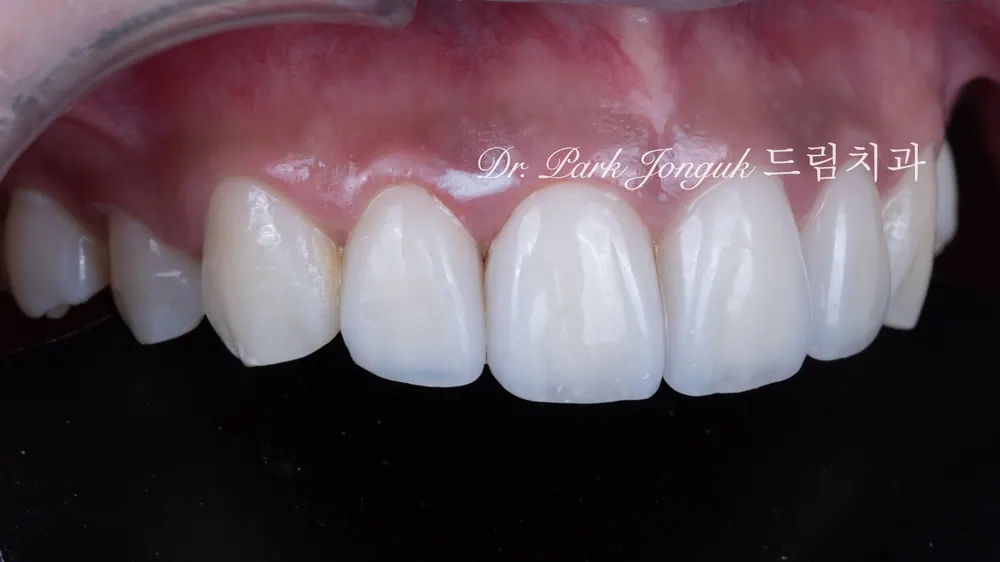
The teeth show clear dimensionality.
A hallmark of natural teeth
is natural dimensionality.
Comparing this to the shape before retreatment, you can see a stark difference.
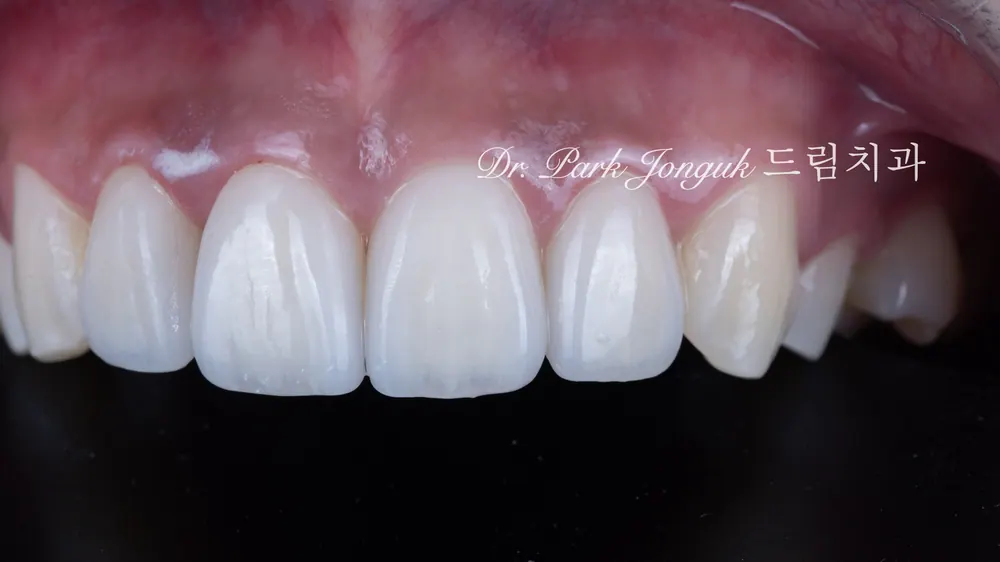
After retreatment, even the surface texture of the teeth is fully expressed.
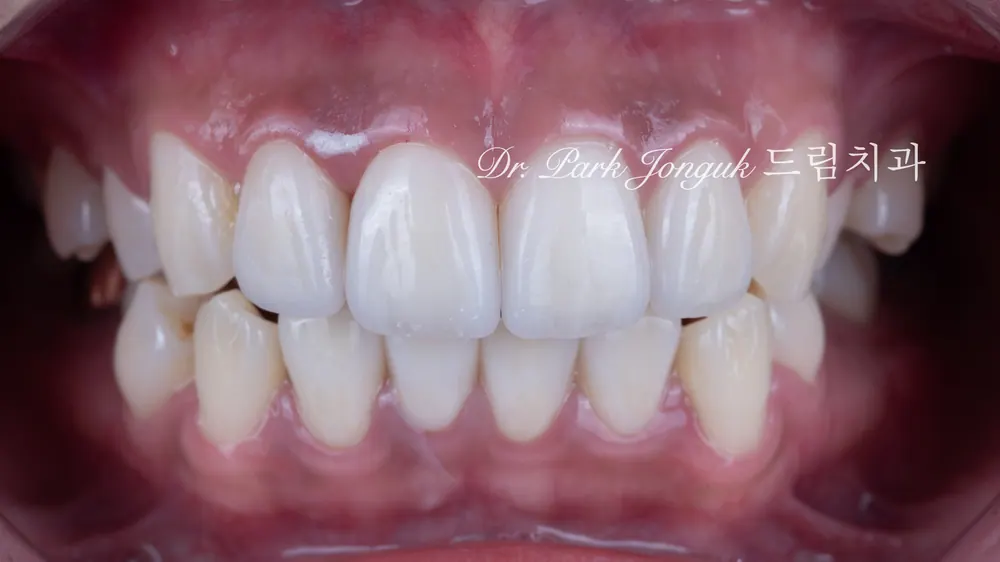
Both the upper and lower teeth were retreated to a natural finish.
Natural beauty
Since 2006, Dream Dental Clinic
This article is a clinical note written by Dr. Park Jonguk of Dream Dental Clinic, Gangnam; the original was published on his blog. The photographs shown are real cases he treated. Results vary with each patient’s condition, and every procedure carries the possibility of individual variation and side effects.
Quick Consult
Request a Callback
Leave your number and we will call you back during clinic hours.
Request Received
We will contact you during clinic hours. For urgent matters, please call +82-2-3448-0028.