
Ultimate Beauty with Feldspathic Laminate Veneers
Hello. I am Park Jonguk, DDS, MS, director of Dream Dental Clinic.
Various materials are used to make laminate veneers.
The material selected
can make an enormous difference in the outcome.
Materials that are easy to fabricate
inevitably have limitations in their results
and impose various constraints on the process.
Most materials that produce good results
are difficult to handle and require considerable experience
to fabricate properly.
Using a good material alone does not mean that anyone, anywhere, will achieve a good result.
First, laminate veneers recently promoted as being made in a day or 2-3 days
are designed and fabricated by computer.
They are produced by milling ceramic blocks with a machine.
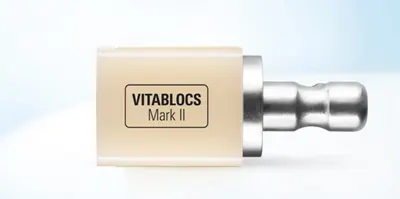
This is the type of ceramic block used.
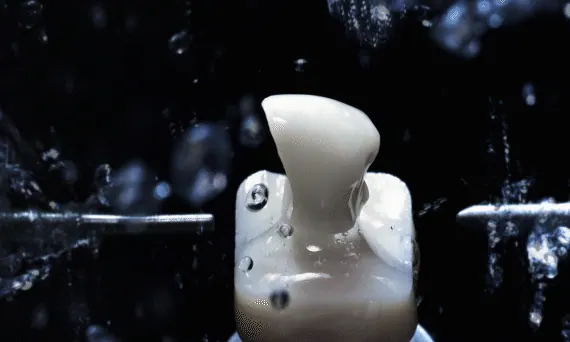
It is milled and fabricated by a machine,
and because a single laminate veneer is usually produced in about 15 minutes,
multiple veneers can be made in a very short time,
shortening treatment time and often allowing same-day completion.
There are advantages, but also several disadvantages.
First, machine milling requires the ceramic to maintain sufficient thickness.
It generally needs to be about 0.5-0.6mm thick for stable fabrication,
so substantial tooth reduction is often necessary.
This method is not suitable for no-prep or ultra-minimal-prep laminate veneers.
Another issue is that maximizing the advantage of rapid fabrication
makes detailed finishing difficult,
so the result can look quite awkward and artificial.
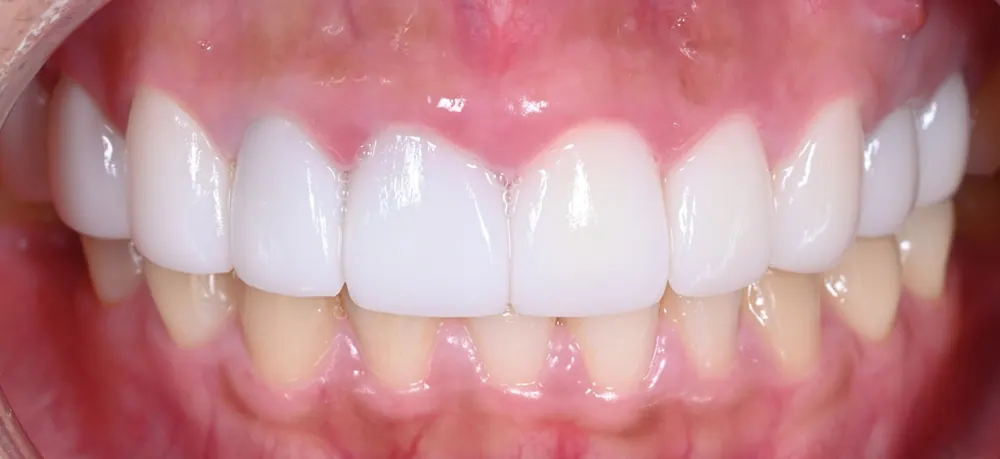
Preferences may differ on this point.
The teeth often end up looking white, artificial, and unnatural in this way.
In contrast to this computer-based method,
some laminate veneers are fabricated by hand.
Handmade laminate veneers can also
look awkward, as in the case above.
Because the skill of the person fabricating them is critical,
not all handmade restorations are the same.
Among handmade laminate veneers, the most technically demanding
are feldspathic laminate veneers.
The process is exceptionally difficult,
only a few places in Korea can fabricate them this way,
and pursuing this extreme level of esthetics is not easy.
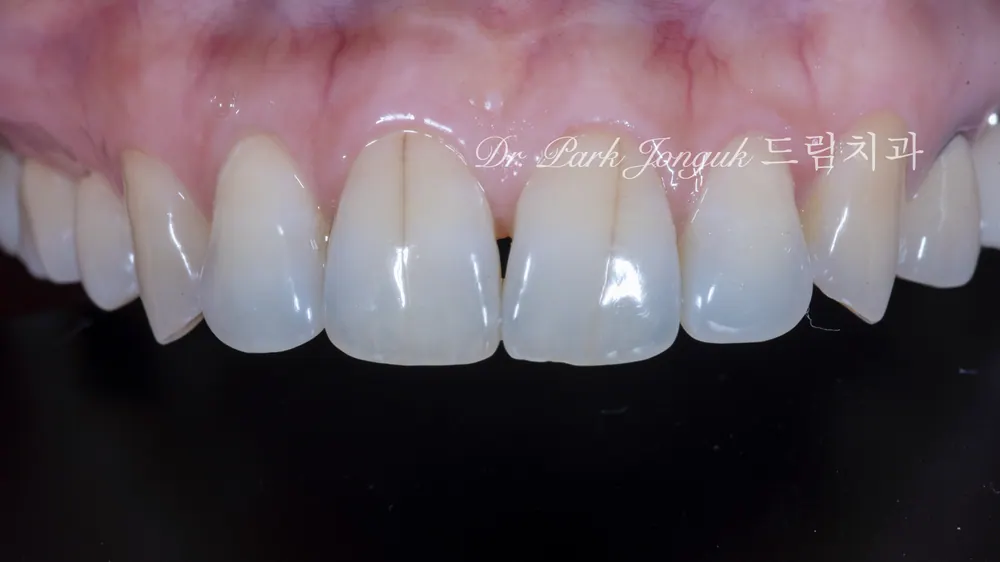
Discoloration developed from cracks in 2 anterior teeth,
so we decided to place laminate veneers on only those 2 teeth.
No-prep laminate veneers are not possible in such a case,
so minimal-prep laminate veneers are used.
Matching their shade and form to the other natural teeth is crucial.
With the computer-based method described above,
patients are generally required to have 6-8 laminate veneers.
The reason is that the shade and form cannot be matched to natural teeth,
so all visible teeth have to be made equally unnatural.
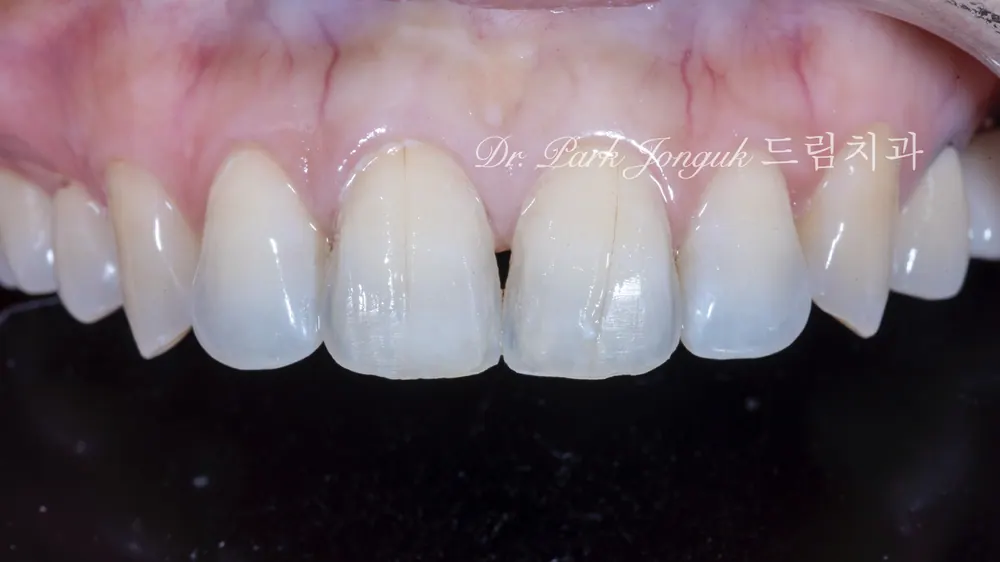
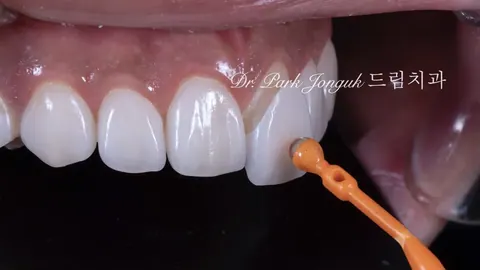
The teeth are prepared for laminate veneers.
Because feldspathic laminate veneers are handmade from multiple ceramic layers,
they can preserve the appearance of natural teeth
while also effectively masking discoloration from cracks.
Because they are made through the long, demanding process shown in the video above,
they require a considerable amount of time.
At every stage, they must be
fired, much like pottery.
Just as a ceramic artisan creates a masterpiece through an extremely meticulous process,
the fabrication involves a technically demanding and difficult process.
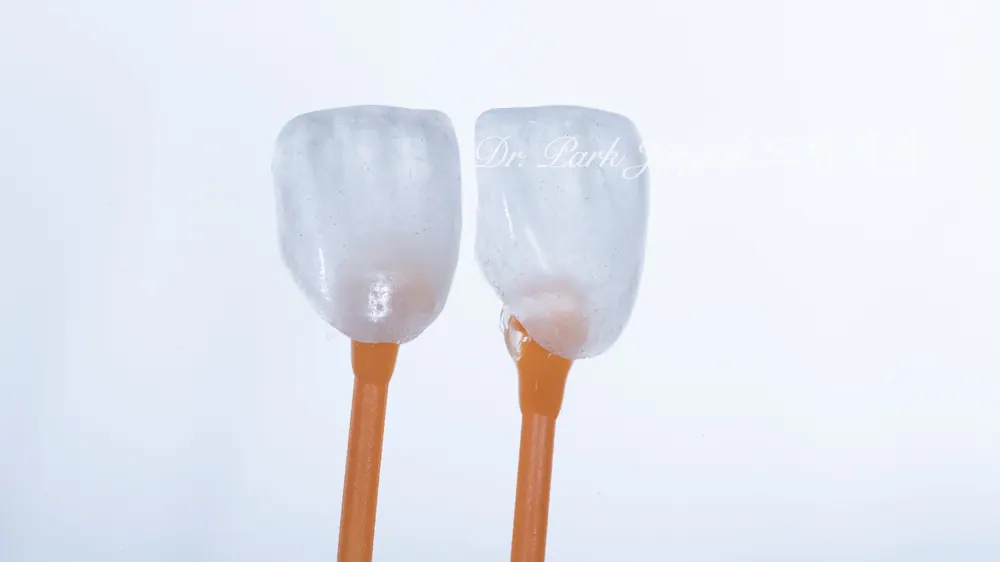
The completed laminate veneers are very thin.
Their thickness varies by area.
Some areas are as thin as about 0.1mm.
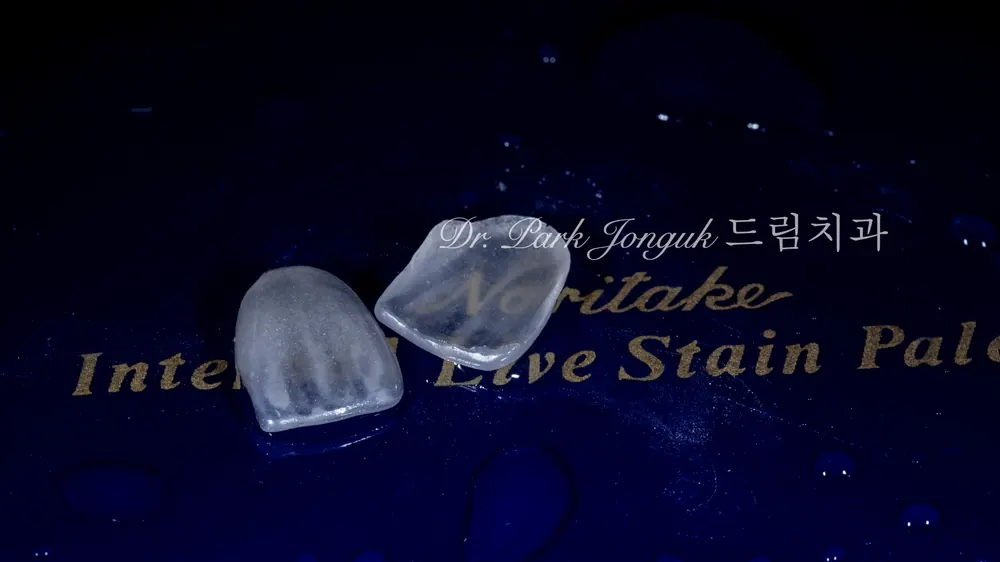
It is extremely important
to incorporate a wide range of characterization into such thin ceramic.
Computer-fabricated laminate veneers
generally use a single shade and a single level of translucency throughout each tooth, making them white and opaque,
but these handmade feldspathic laminate veneers
are on a different level.
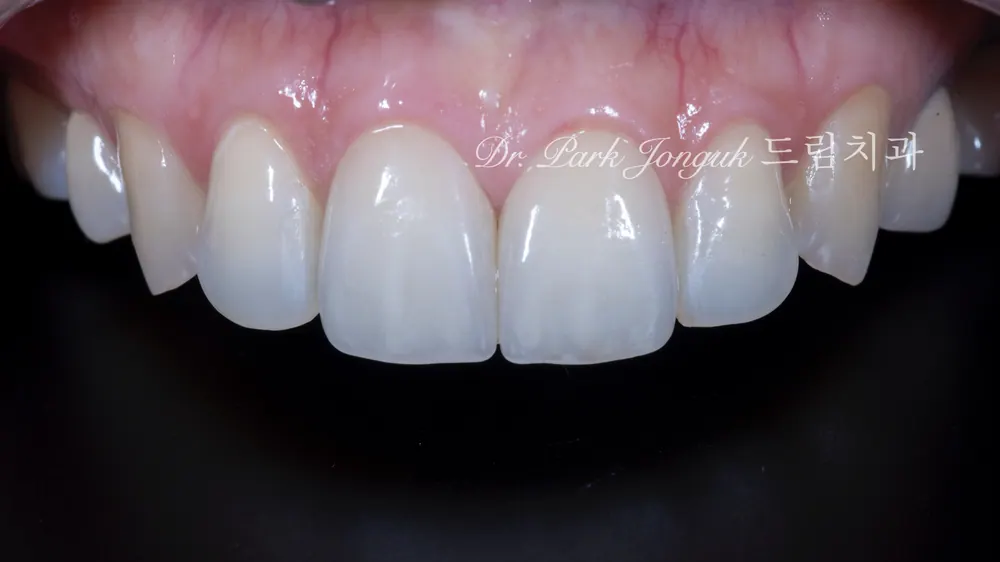
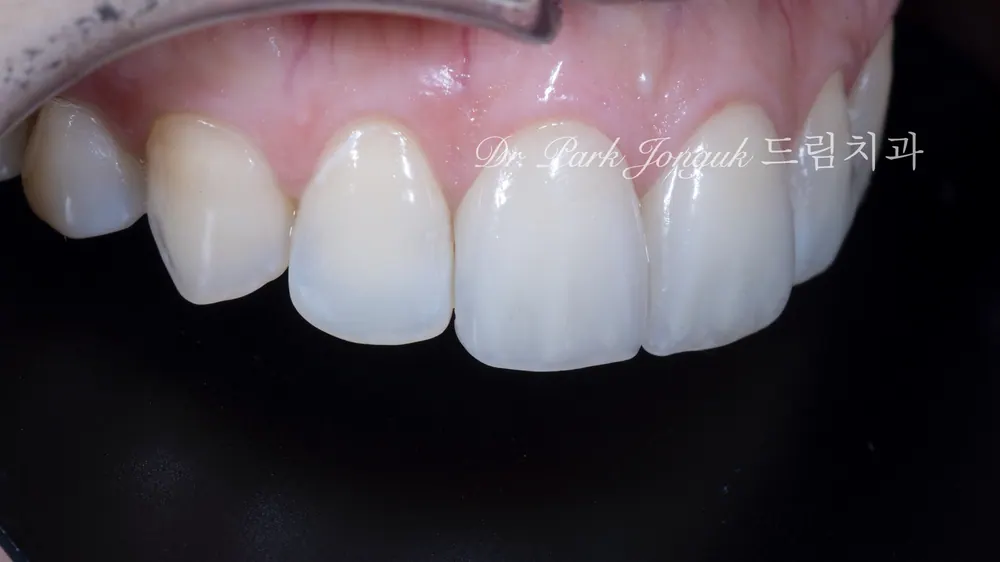
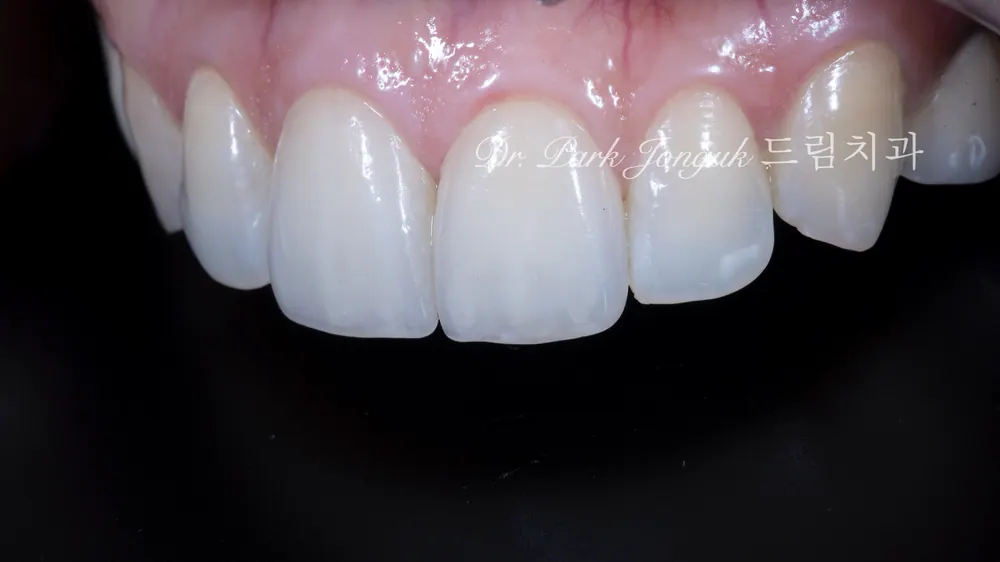
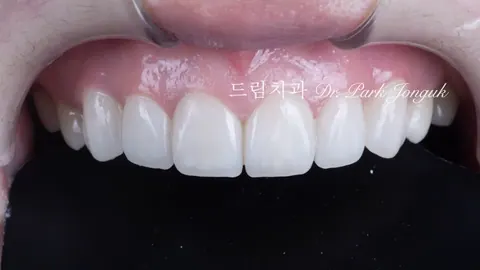
Treatment was completed.
If I had shown you this photo first,
you probably would not have been able to tell which teeth were laminate veneers and which were natural teeth.
Even a single small tooth
requires an extensive range of characterization.
The shade varies in every area,
as does the translucency.
In particular, the restoration must harmonize with the adjacent natural teeth,
and only feldspathic laminate veneers can reproduce all of these characteristics.
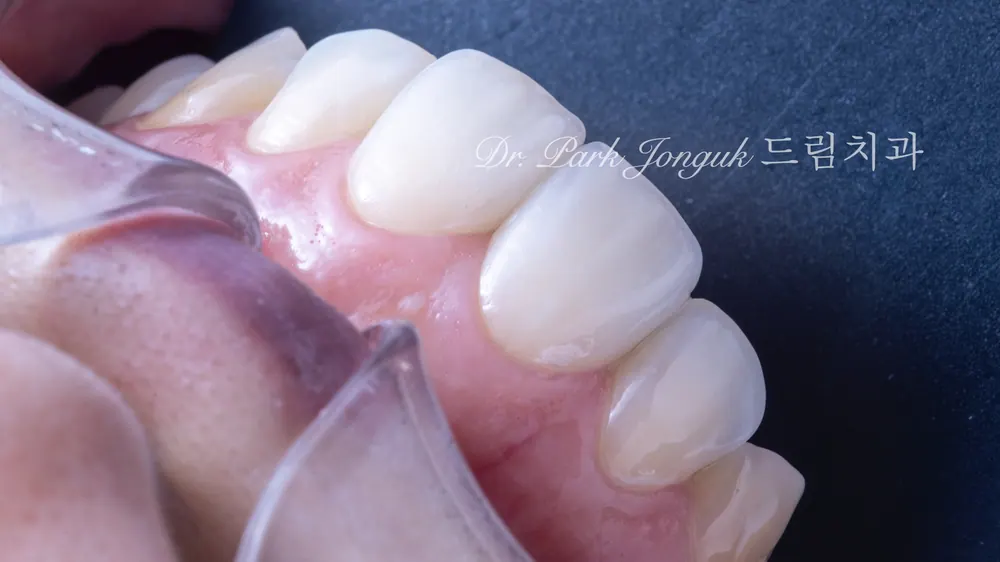
Even the surface texture
retains all the detail of a natural tooth.
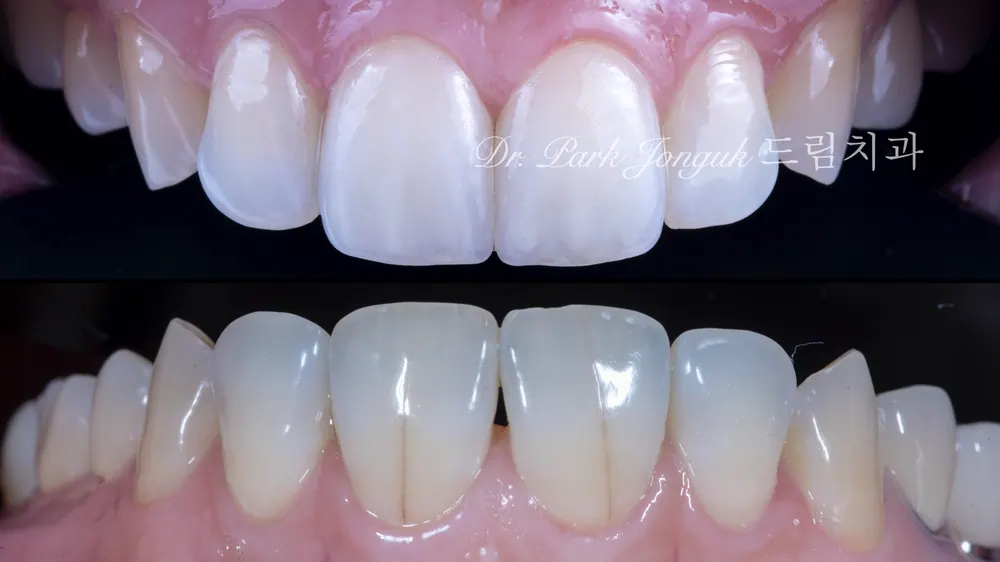
Natural beauty
Since 2006, Dream Dental Clinic
This article is a clinical note written by Dr. Park Jonguk of Dream Dental Clinic, Gangnam; the original was published on his blog. The photographs shown are real cases he treated. Results vary with each patient’s condition, and every procedure carries the possibility of individual variation and side effects.
Quick Consult
Request a Callback
Leave your number and we will call you back during clinic hours.
Request Received
We will contact you during clinic hours. For urgent matters, please call +82-2-3448-0028.