
Feldspathic Laminate Veneer Case Study
Hello. I am Park Jonguk, DDS, MS, director of Dream Dental Clinic.
Many materials can be used to make laminate veneers.
More than 20 years ago, feldspathic ceramic was the only material available.
It was so difficult to handle
that we did not provide laminate veneers except in truly exceptional cases.
However, it offers the highest degree of translucency
and allows a wide range of characterization,
making it the ultimate ceramic esthetically.
It can also be processed to the thinnest dimensions,
which allows tooth reduction to be minimized.
Despite these advantages, however, as I mentioned,
it is extremely difficult to handle.
Two developments led to the explosive increase
in laminate veneer treatment.
One was the introduction of a ceramic called e-max.
It is quite strong,
and offers good translucency as well as the ability to add a degree of characterization.
The other was computer-based milling.
Fabrication is very simple,
but the restorations do not fit teeth well, and adding form or detail is virtually impossible,
so most results look very artificial.
Its one advantage is that treatment can be completed in just a day or two,
and this is promoted extensively.
Both methods began to become widely used 10-15 years ago.
Of these two approaches, adding a feldspathic buildup to an e-max base
combines strength and esthetics
and can be considered the best method.
It is also the method we use most often at Dream Dental Clinic.
A key feature of the newer materials
is that they are somewhat easier to fabricate.
Although feldspathic ceramic is unmatched in esthetics,
fewer and fewer people can work with it,
so even among dentists and dental technicians,
when feldspathic laminate veneers are mentioned,
most have never even seen them.
As expected from such a highly demanding fabrication method,
the distinct advantage is a clearly superior result.
Feldspathic laminate veneers are not necessary in every case.
Their greatest advantage
is that they most closely resemble natural teeth.
For that reason, they are used when placing one or two laminate veneers
that must match the remaining natural teeth.
When 4 or more laminate veneers are placed at once,
it is difficult to perceive much difference from an e-max + buildup technique.
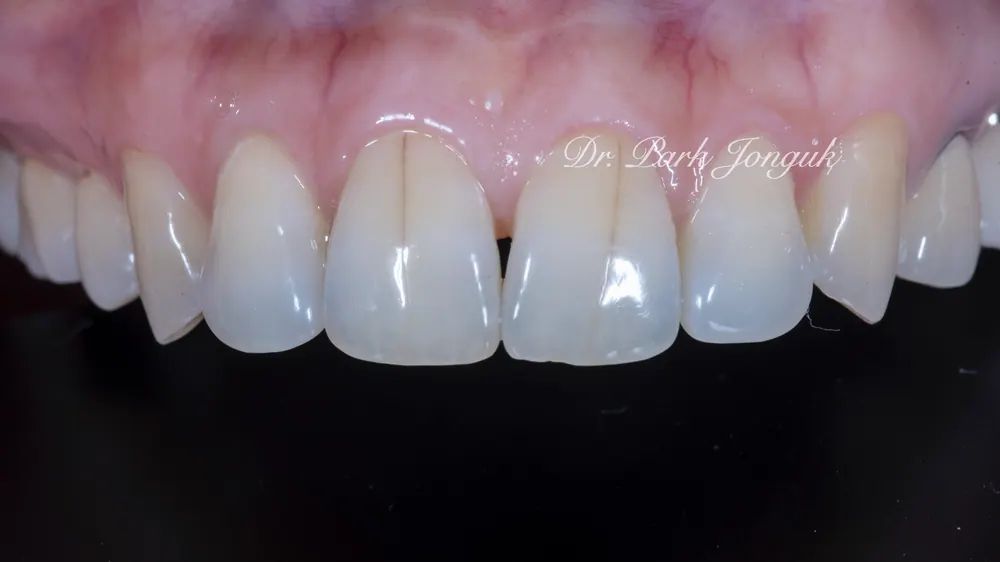
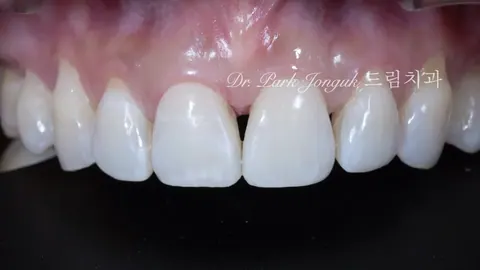
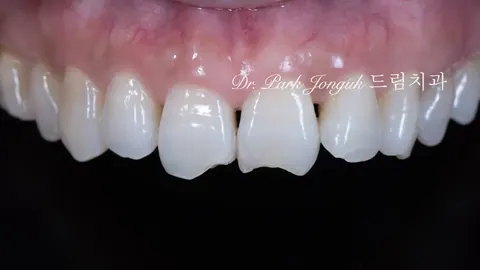
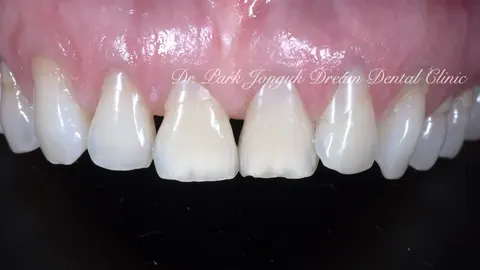
This patient presented with cracks in the anterior teeth.
All the other natural teeth were healthy,
but 2 teeth had developed cracks,
which became stained and caused an esthetic concern.
There was also a black triangle,
so the patient wanted laminate veneers on only 2 teeth.
While covering these discolored areas,
with minimal tooth reduction
and achieving very harmonious integration with the other natural teeth,
the appropriate method is feldspathic laminate veneers.
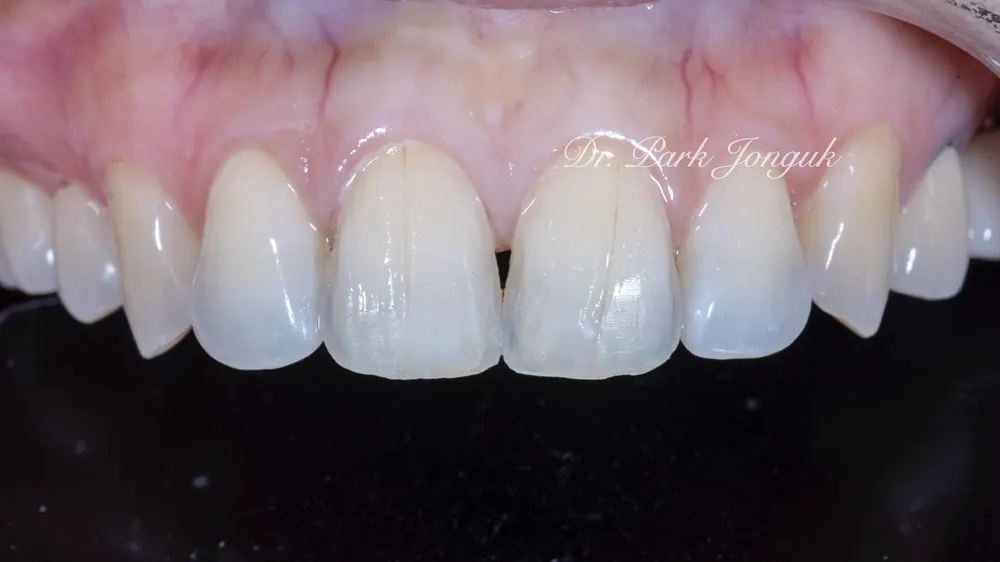
The teeth were prepared according to a textbook approach for laminate veneers.
Approximately 0.3mm was removed from the facial surface, tapering to about 0.1-0.2mm near the gums.
Slightly more reduction is needed between the teeth
so the ceramic can wrap around them naturally.
I will show the fabrication of feldspathic laminate veneers in a video.
It looks brief in the video,
but the process actually takes about 2 weeks.
At each stage, processing in a furnace is required, much like firing pottery.
It is almost the same as
a ceramic artisan making pottery,
but because the thickness is about 0.3mm,
the difficulty is so high that fabrication is challenging.
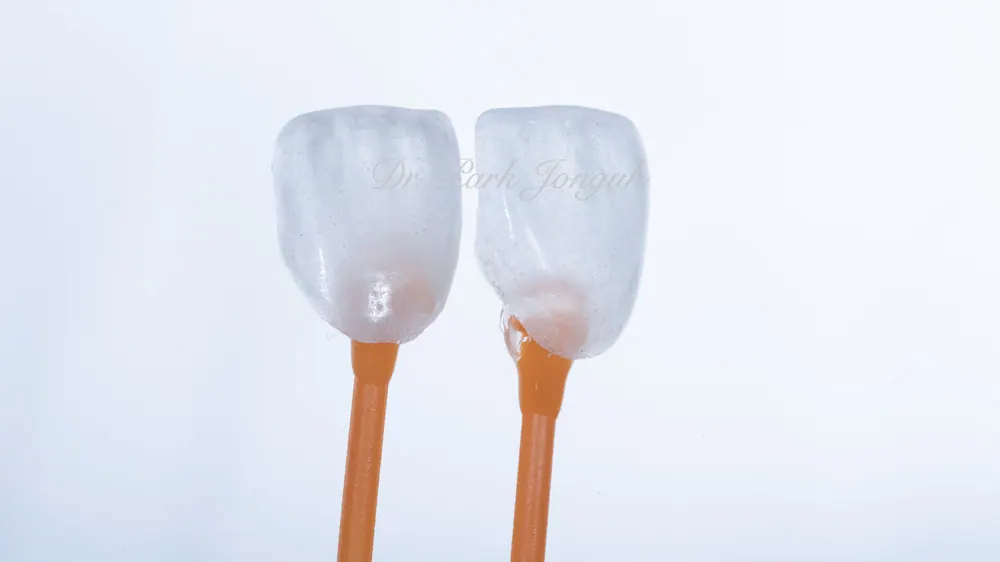
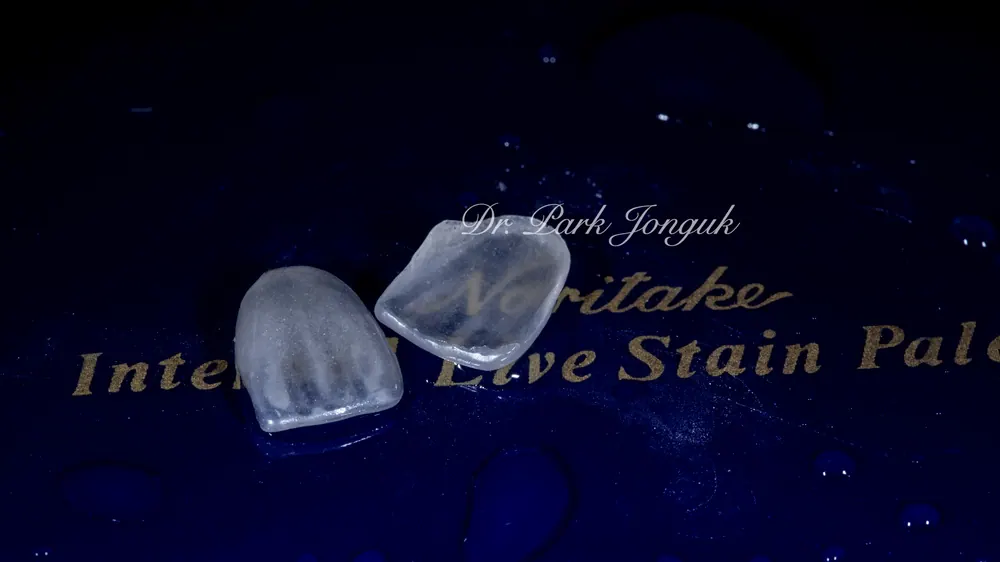
This is how these extremely thin ceramic laminate veneers are created.
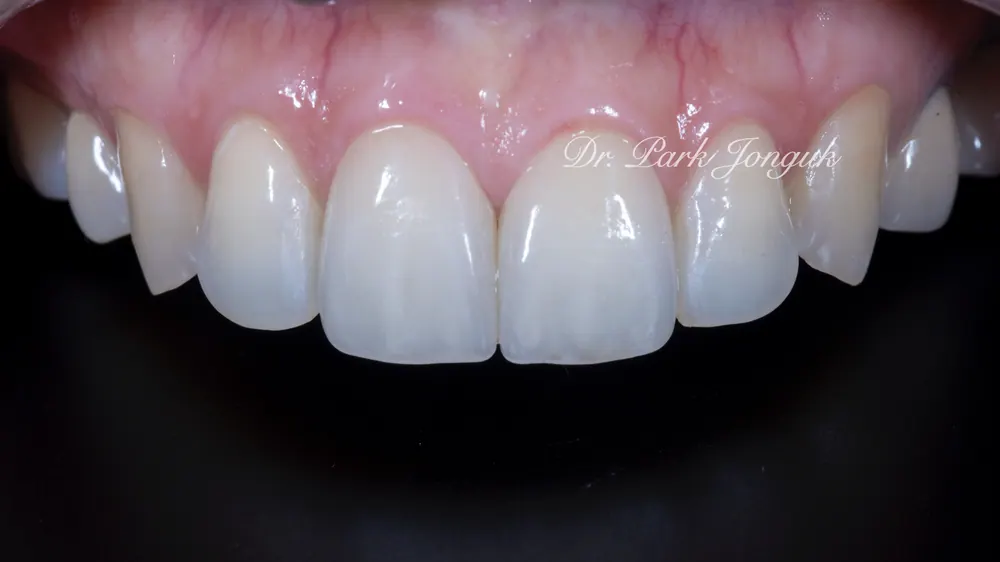
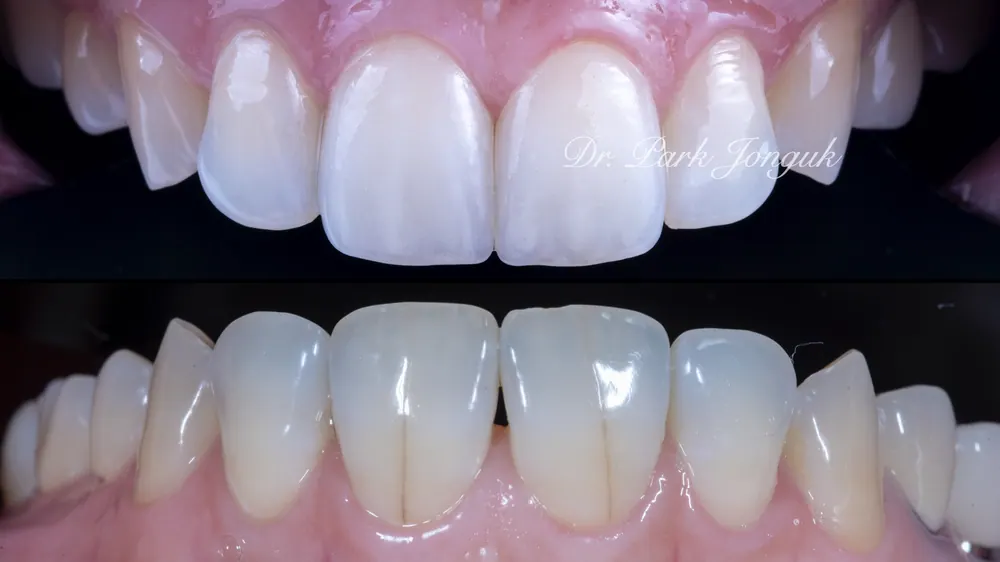
They blend with the natural teeth on either side
to the point that it is difficult to tell which are laminate veneers and which are natural teeth,
reproducing the highly complex and varied characteristics of natural teeth
within a thickness of just 0.3mm.
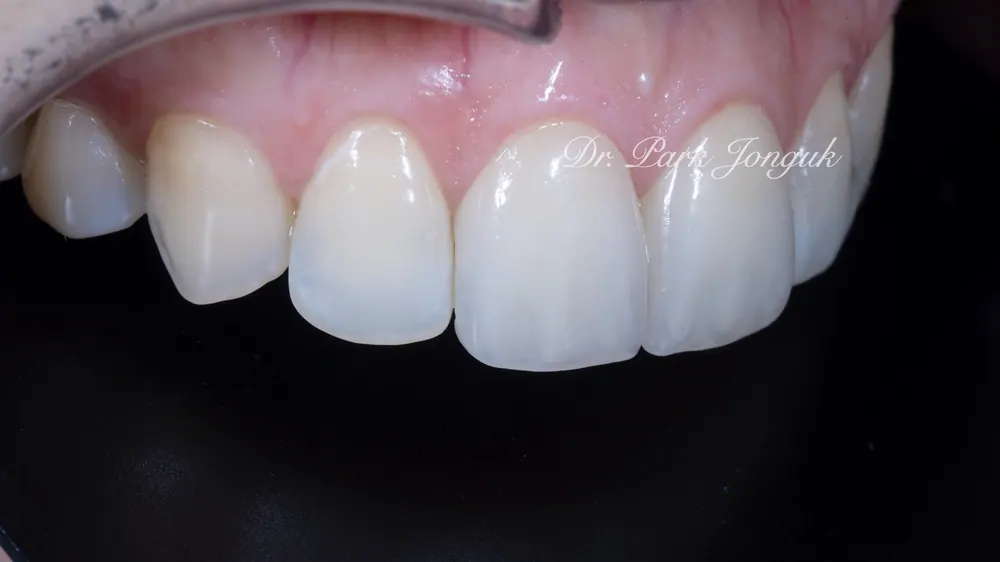
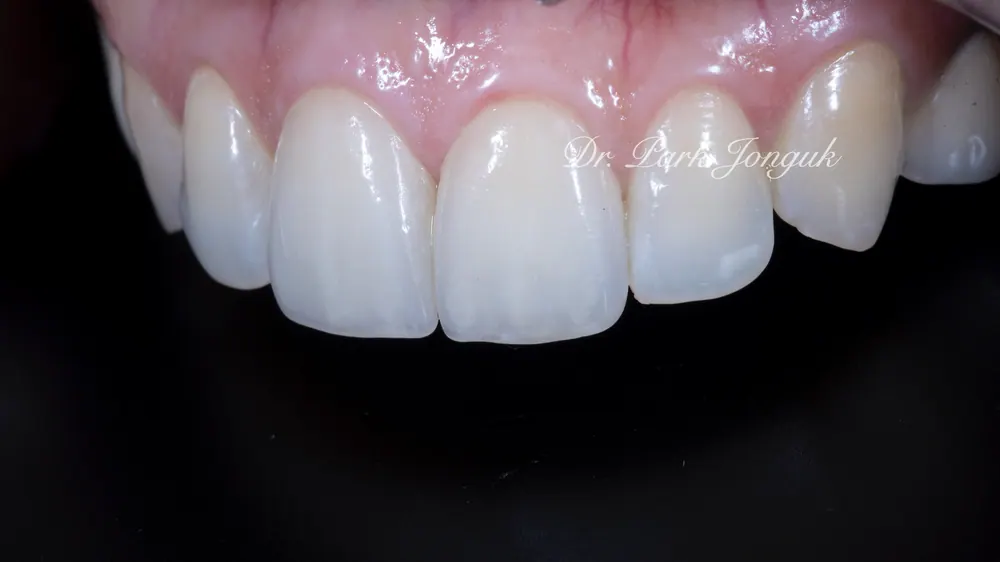
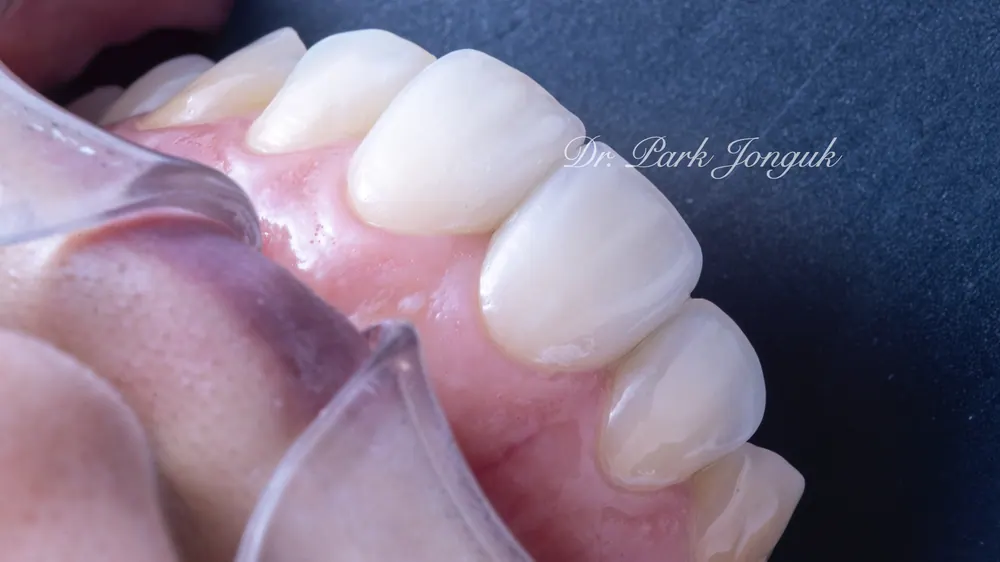
Because these laminate veneers require such a demanding process,
they are also called the ultimate laminate veneers.
It is an old method, but it produces the most beautiful laminate veneers.
Because the process is lengthy and requires considerable skill and expertise,
there are almost no dental clinics able to provide it.
Since 2006, Dream Dental Clinic
This article is a clinical note written by Dr. Park Jonguk of Dream Dental Clinic, Gangnam; the original was published on his blog. The photographs shown are real cases he treated. Results vary with each patient’s condition, and every procedure carries the possibility of individual variation and side effects.
Quick Consult
Request a Callback
Leave your number and we will call you back during clinic hours.
Request Received
We will contact you during clinic hours. For urgent matters, please call +82-2-3448-0028.