
Black Triangle Treatment: Resin or Veneers—Which Is Right for You?
Hello, I'm Dr. Park Jonguk, director of Dream Dental Clinic in Apgujeong.
Today I'd like to talk about black triangle treatment.
"I can see a dark triangle between my teeth."
"Black triangles appeared after I finished my braces."
"Which treatment would be best for this?"
Depending on the case, either resin or veneers may be the more suitable option.
What Is a Black Triangle?
A black triangle is a dark, triangular gap that forms between teeth.
It occurs when the gums recede or the tooth shape prevents the interdental papilla from filling the space.
It commonly appears after orthodontic treatment.
It can also appear as gums recede with age.
It's a common cosmetic concern for many patients.
When dark gaps show while smiling, the teeth can look sparse and uneven.
Two Ways to Treat Black Triangles
Black triangles can be treated with either resin bonding or veneers.
The right choice depends on the individual case.
When Resin Treatment Works Well
If the goal is simply to close the black triangle and there's enough space, resin can be a good option.
This applies when the tooth color and shape have no other issues—when only the triangular gap needs filling.
It's affordable, straightforward, and can usually be completed in a single visit.
When Veneers Are the More Effective Choice
If more than the black triangle needs correcting—if the tooth color and overall shape need improvement too—
veneers are the more effective option.
When tooth color needs improvement
When tooth shape needs correcting
When tooth position needs adjusting
When multiple problems need to be solved at once
Today's case is exactly this kind of situation.
Case: Black Triangles and Retroclined Teeth After Braces
Before Treatment
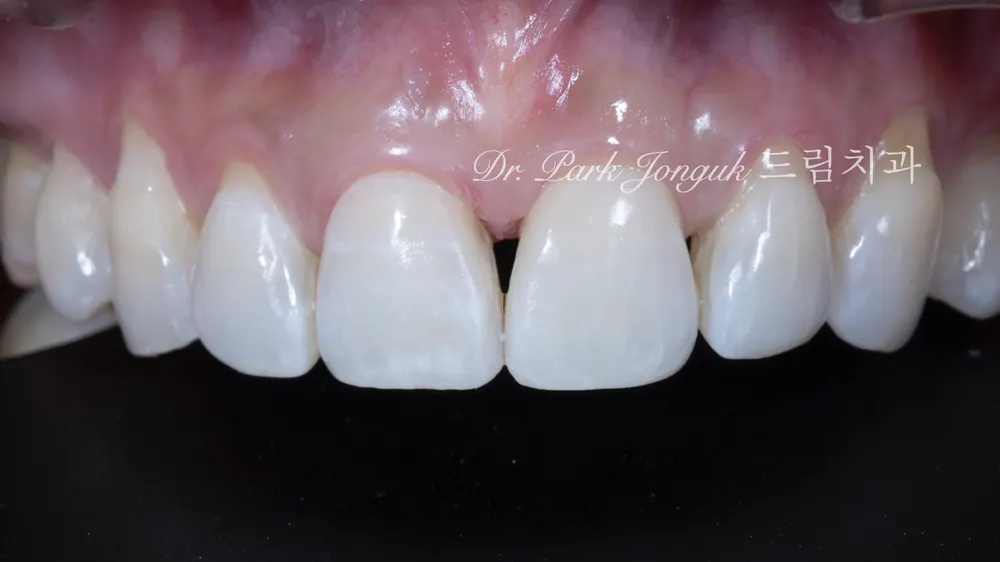
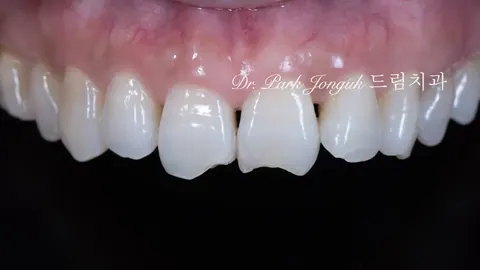
Photo 1 shows the condition before treatment.
The patient came to us after black triangles appeared following orthodontic treatment.
But there was one more problem.
During orthodontic treatment, the teeth had moved too far inward, becoming retroclined.
The teeth were tilted backward.
Both the black triangles and the retroclined teeth needed to be corrected together.
In cases like this, veneers are the better choice over resin, because resin cannot correct tooth position and angulation.
Proceeding With No-Prep Veneers
We proceeded with no-prep treatment.
Since the teeth were positioned inward, adding veneers to the front surfaces wouldn't make them protrude excessively.
In fact, it corrects them to a more normal position—an ideal indication for no-prep veneers.
Extremely Thin Ceramic
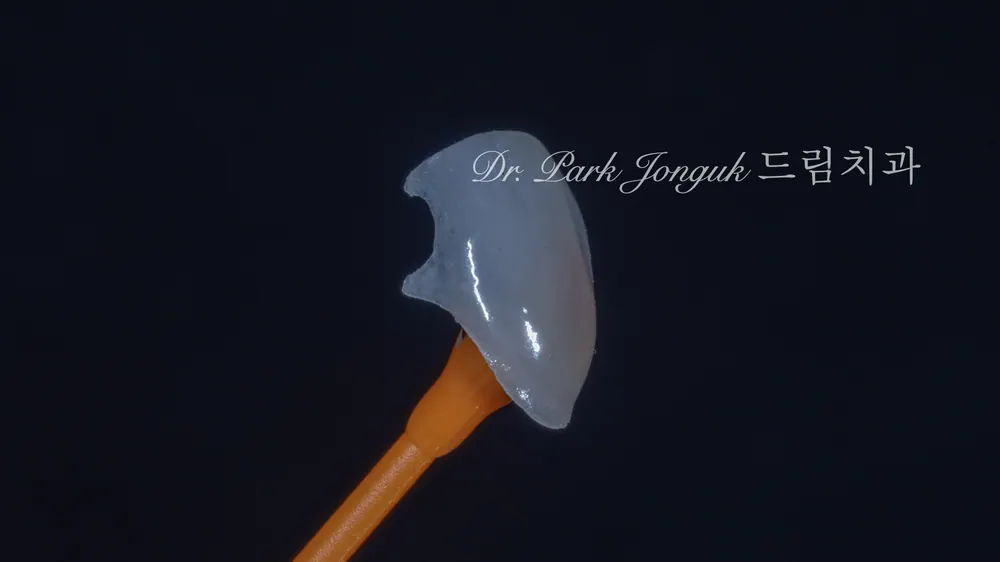
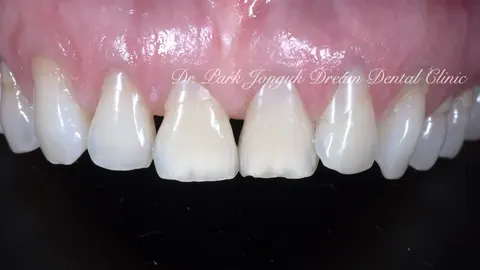
Photo 2 shows the finished veneers.
The ceramic that fills the black triangle area needed to be extremely thin.
It has to fill the gap between the teeth while still looking natural. If it's too thick, it feels foreign and makes it harder to keep clean.
Though thin, it was made to completely close the black triangle.
This requires the precise skill of an experienced dental technician.
Veneer Try-In
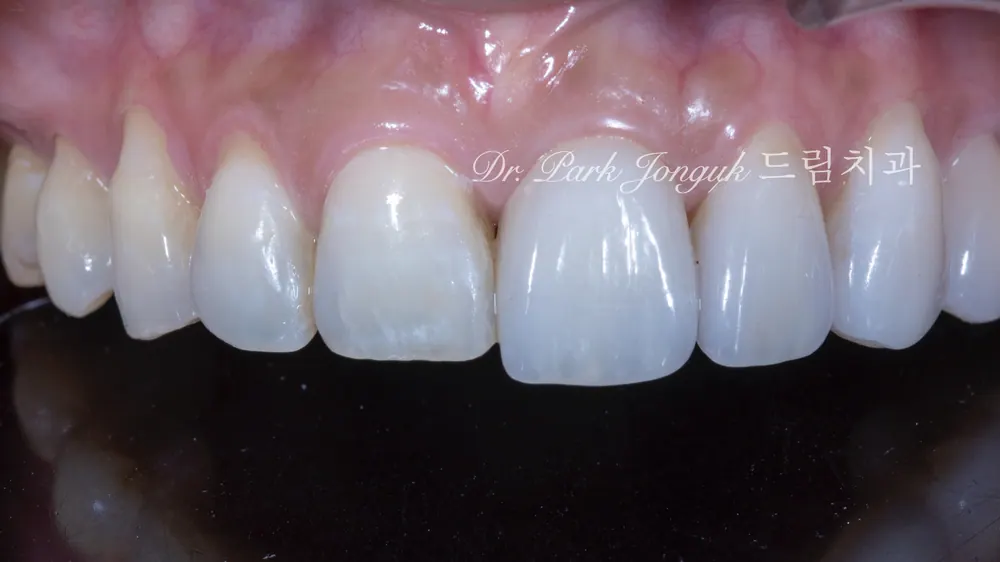
Photo 3 shows the veneers placed on only the left-side teeth.
Once the veneers are placed, the black triangles disappear.
The dark space between the teeth has been filled. The difference is clear when compared with the natural teeth on the right.
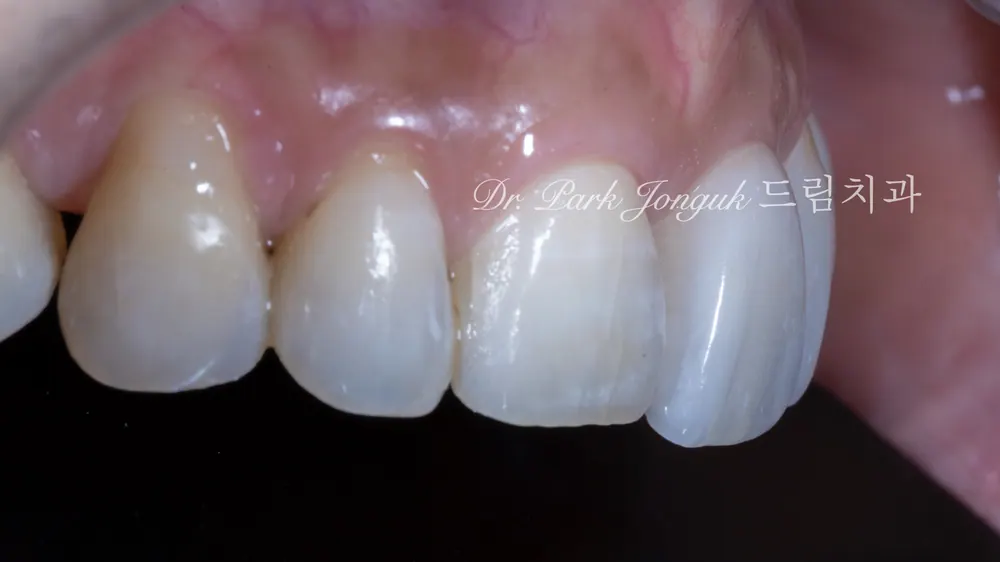
Photo 4 shows the view from the side.
You can see how the veneer wraps precisely around the side of the tooth. It completely fills the black triangle area while keeping a natural shape, made with precision all the way to the interproximal surface.
Preparing for Seating
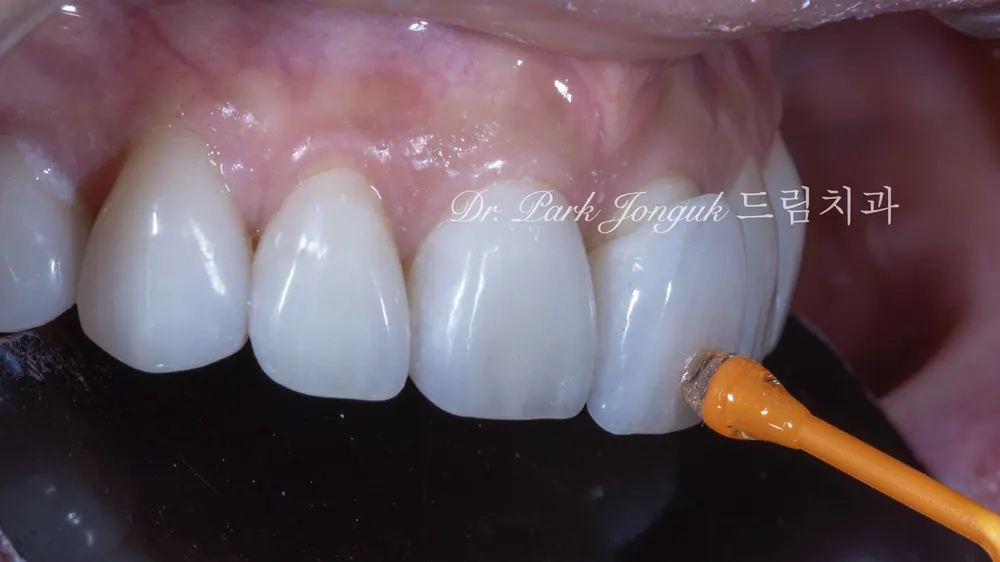
Photo 5 shows the preparation process before seating.
This is the state just before the veneers are permanently bonded.
We check the position and fit of every veneer.
The patient is also given a mirror to check the result herself.
Treatment Complete
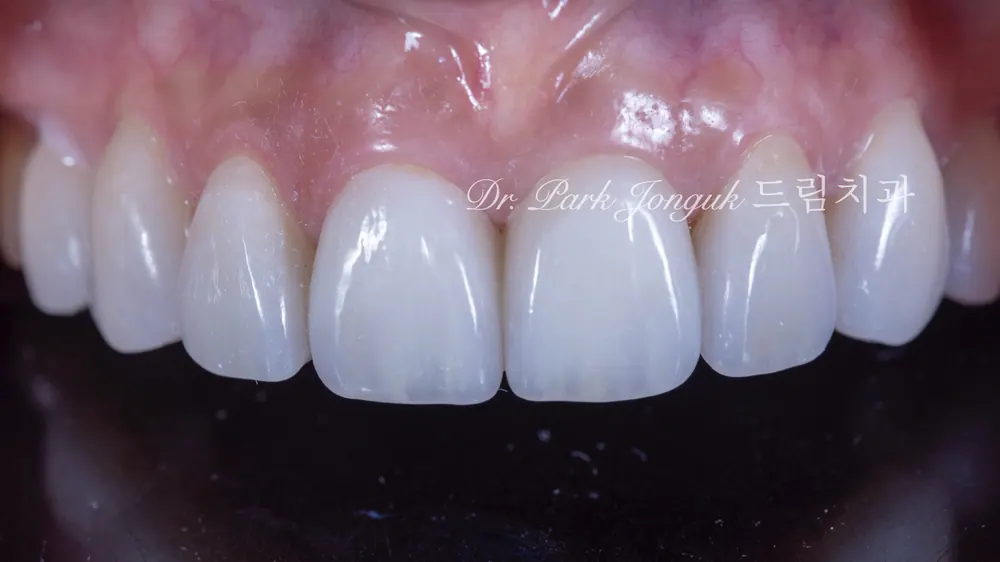
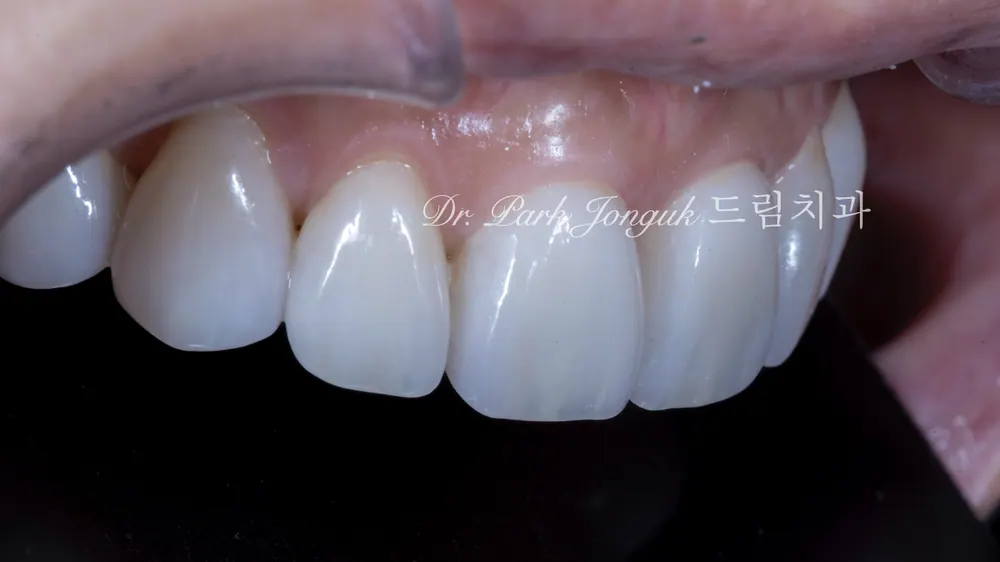
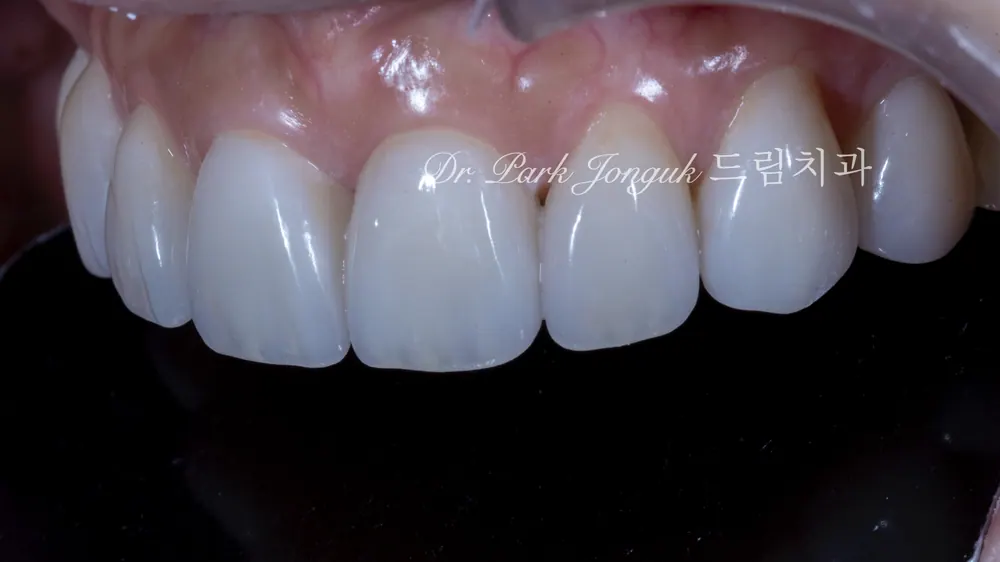
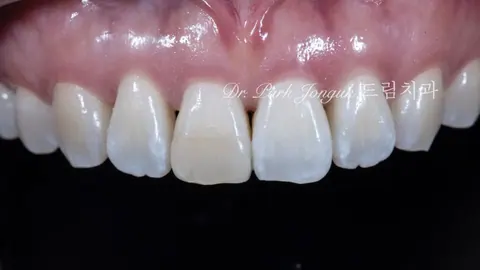
Photos 6, 7, and 8 show the result after the veneers were seated.
Both the black triangles and the retroclined teeth were corrected without any tooth preparation.
The black triangles have completely disappeared.
No dark triangles are visible between the teeth anymore. The teeth now appear seamlessly connected.
The retroclined teeth were also corrected. The teeth that had been tilted inward were brought to a normal position.
Viewed from the side, the angle of the teeth now looks natural.
The treatment was done without any tooth reduction—not a single tooth was cut.
Both problems were resolved at once while preserving 100% of the natural tooth structure.
Key Points in Black Triangle Veneer Treatment
Handling the Interproximal Surface Matters
To close a black triangle, the veneer must extend to cover the interproximal surface of the tooth.
It's not just about covering the front surface. The veneer must wrap around the side to fill the triangular gap.
This is what makes it more challenging than a standard veneer.
Making It Extremely Thin
The ceramic covering the black triangle area must be extremely thin.
If it's too thick, it feels foreign, makes flossing difficult, and food tends to get trapped.
It must be thin yet strong—this requires a high level of dental laboratory skill.
A Natural Shape
It's not just about filling the space.
A natural tooth shape must be created—one that looks as if the interdental papilla is actually there.
It should never look artificially patched.
Resin or Veneers—How Do You Choose?
When We Recommend Resin
When it's a simple case where only the black triangle needs correcting.
When there are no issues with tooth color or shape.
When you want to minimize cost and prefer a simple, quick treatment.
When We Recommend Veneers
When there are other problems besides the black triangle.
When tooth color needs improving, or tooth shape or position needs correcting.
When you want long-lasting results, or when retroclined teeth also need correcting, as in this case.
Precise Diagnosis Is Essential
Which method is suitable varies from case to case.
The optimal method should be chosen only after a precise diagnosis.
Simply choosing the cheaper option can lead to an unsatisfying result.
Black Triangle Treatment at Dream Dental Clinic
Dream Dental Clinic in Apgujeong has been treating black triangles for 20 years.
We choose the method best suited to each case—resin when resin is appropriate, veneers when veneers are needed.
We have the know-how for interproximal contouring and fabricating extremely thin ceramic, closing black triangles naturally while also giving the teeth a beautiful shape.
When a case allows for no-prep treatment, we proceed without any tooth reduction. Preserving natural tooth structure always comes first.
Frequently Asked Questions (Q&A)
Q1. Why do black triangles form?
A. There are several causes. The most common is after orthodontic treatment—as the teeth move, the interdental papilla can't keep up, leaving a gap. Age-related gum recession is another cause, as is loss of gum and bone tissue from periodontal disease. If a tooth's shape is naturally triangular, a black triangle can even be present from the start.
Q2. Which lasts longer, resin or veneers?
A. Veneers generally last longer. Resin can discolor or wear down over time, while ceramic veneers resist discoloration and hold up well. That said, resin can also last a good while with proper care. If you're simply closing a black triangle, resin alone can still give a good result.
Q3. How do I floss around a treated black triangle?
A. You can still floss even after a veneer has closed the black triangle. The veneer doesn't seal the space between teeth completely—it fills the triangular gap naturally, leaving room for floss to pass through. It may feel slightly tight at first, but this eases once you get used to it.
This article is based on the real clinical experience of Dr. Park Jonguk, director of Dream Dental Clinic in Apgujeong. He has practiced cosmetic dentistry for 20 years, treating many cases of black triangles, and authored Korea's first laminate veneer textbook.
This article is a clinical note written by Dr. Park Jonguk of Dream Dental Clinic, Gangnam; the original was published on his blog. The photographs shown are real cases he treated. Results vary with each patient’s condition, and every procedure carries the possibility of individual variation and side effects.
Quick Consult
Request a Callback
Leave your number and we will call you back during clinic hours.
Request Received
We will contact you during clinic hours. For urgent matters, please call +82-2-3448-0028.