
Worried About Darkened Veneers? Retreat Them with Hand-Layered Veneers
Hello, I'm Park Jonguk, director of Dream Dental Clinic.
There are several reasons a tooth's color can be dark, or discolored.
The most common one is discoloration of the tooth after root canal treatment.
Whether it's a front tooth or a molar,
root canal treatment leads to some degree of discoloration,
though the extent varies.
The causes of discoloration vary too.
In the past, discoloration was caused by problems with the materials used in root canal treatment,
and it can also happen due to how bleeding was managed during the procedure.
As materials have improved recently,
the likelihood of discoloration has decreased somewhat,
but discoloration caused by root canal treatment itself
still can't be prevented entirely.
Another cause of discoloration is
trauma or decay.
A tooth that's suffered an impact is prone to discoloring,
and decay is also a cause of tooth discoloration.
There are also congenital causes, where several teeth are dark together.
There can also be discoloration caused by medication taken in childhood.
In any case, if the discoloration can't be reversed,
an all-ceramic crown or veneer treatment is needed.
Compared with other cases,
the amount of tooth reduction ends up being somewhat greater.
In order to cover the discoloration,
the ceramic needs to be thicker.
But even after a large amount of tooth reduction,
there are still cases where the discoloration isn't effectively covered.
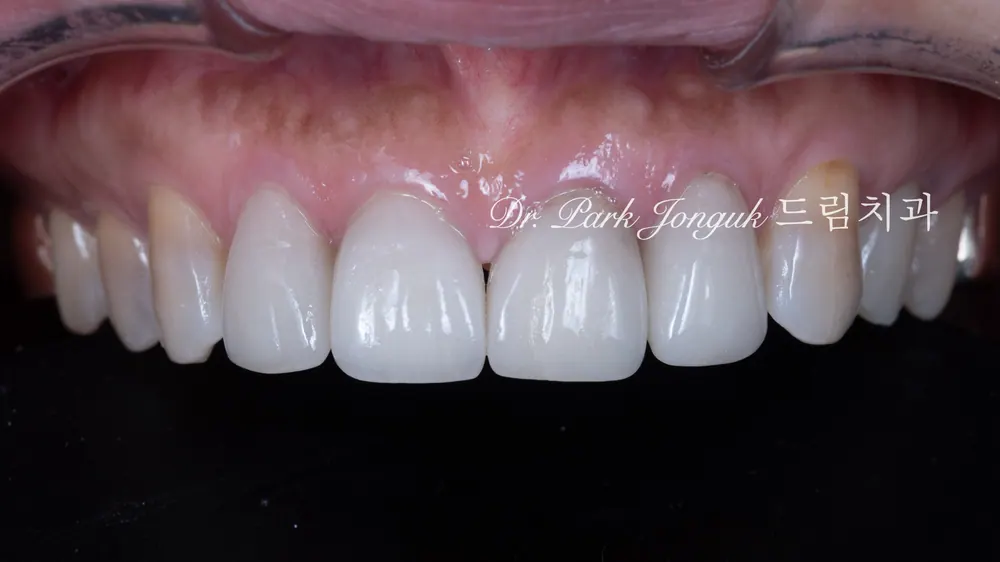
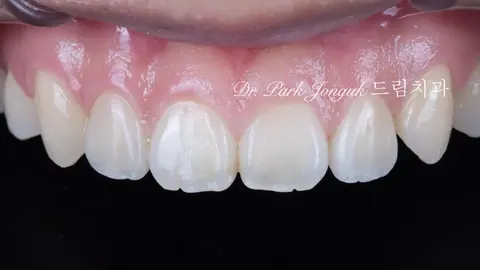
Because her teeth were congenitally dark,
this patient had already had four teeth treated with veneers.
Even with the veneers in place,
the teeth still had a strong, dark grayish tint.
When talking about how bright or dark a tooth's color is,
what people often confuse
is the difference between value and chroma.
Value refers to how light or dark a color is, while chroma refers to whether it's achromatic or chromatic.
The reason the teeth didn't look bright even though the veneers were white and light
is that the grayish tint showing through lowered the chroma.
If you try to brighten dark tooth color
by simply making the veneers whiter,
this drop in chroma occurs,
and the result ends up light in value but not actually looking bright.
For this reason, through veneer retreatment,
we need to give the teeth a more natural, brighter feel.
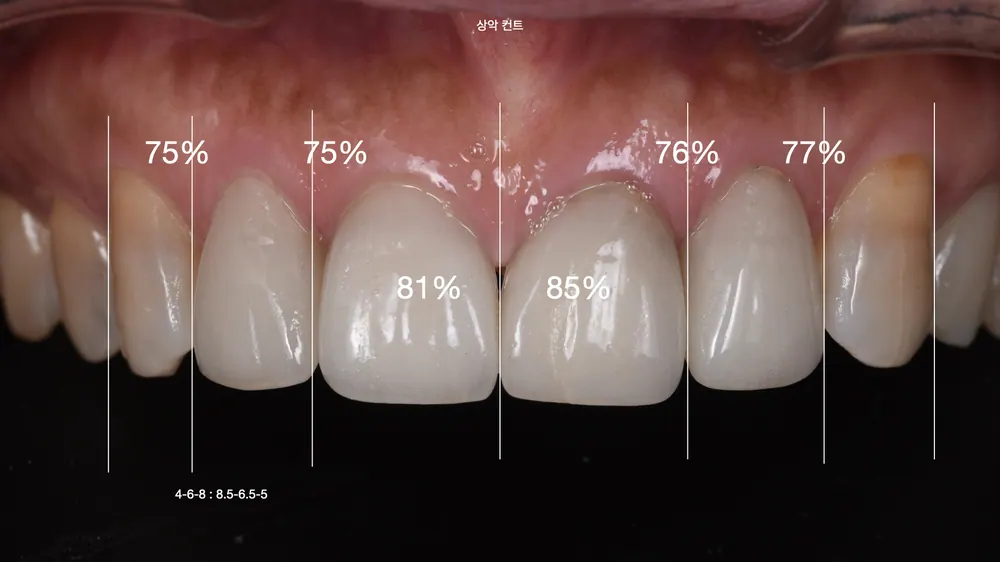
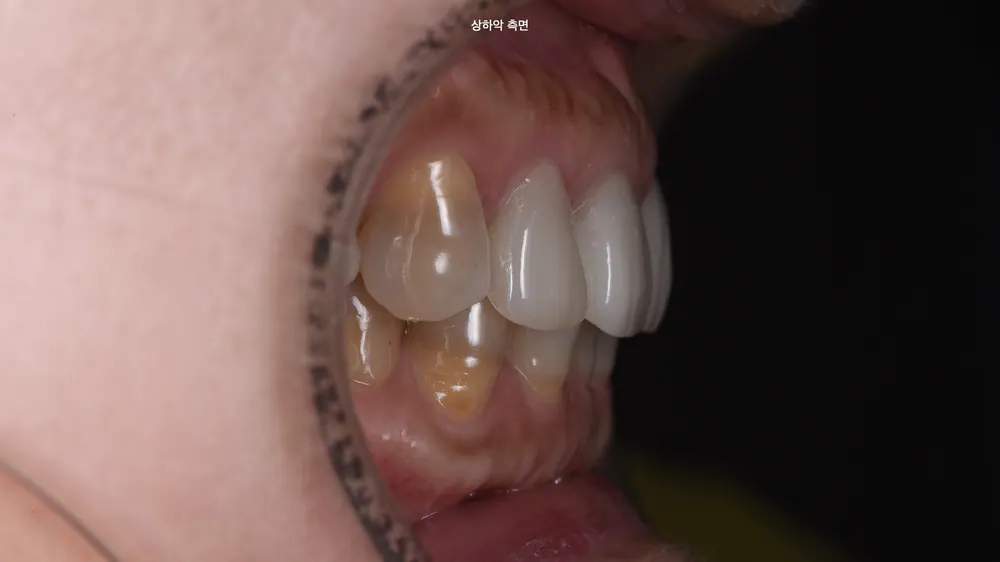
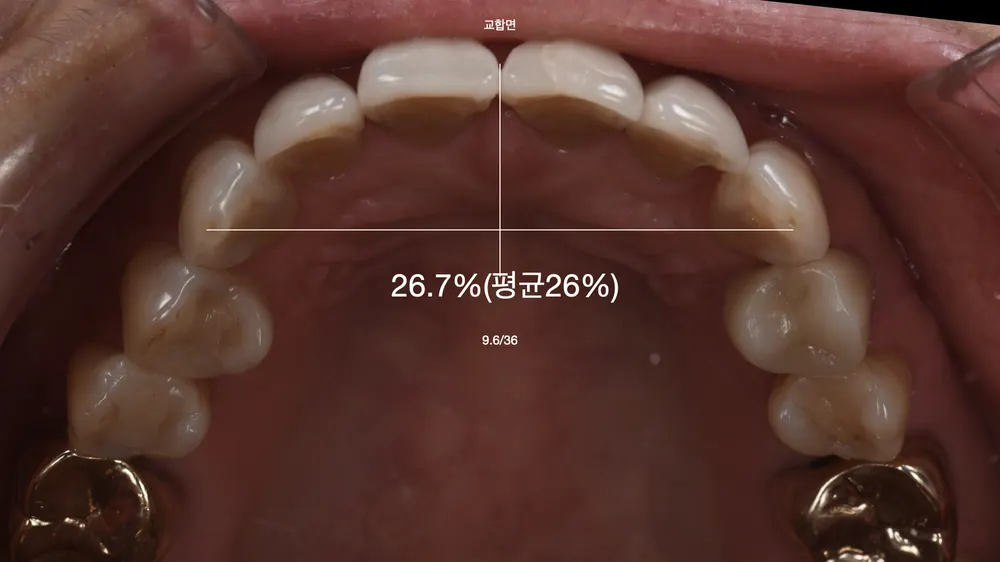
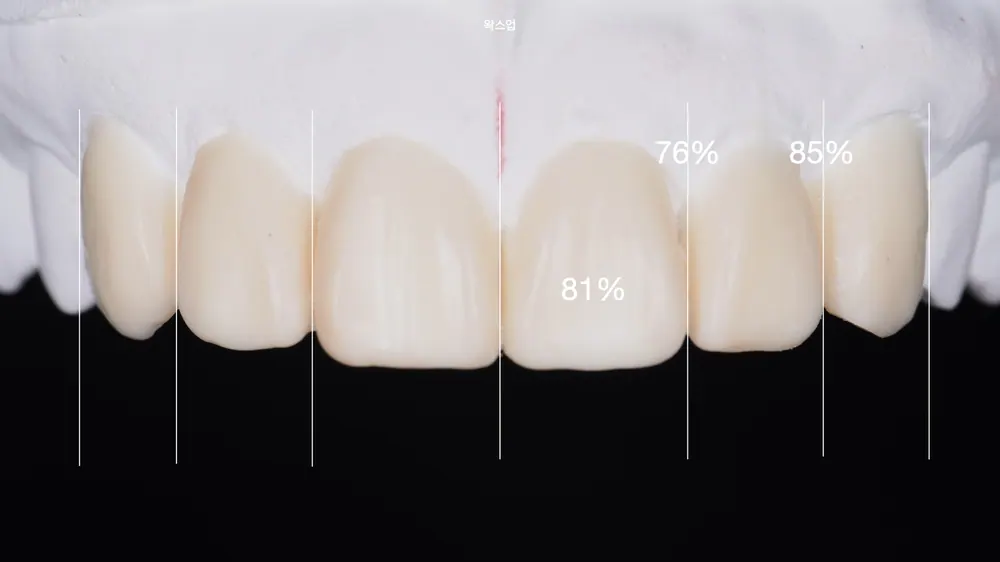
Before retreatment, we analyze the current condition of the teeth.
We check the proportion between teeth, the proportion of each individual tooth, harmony with the face, and more,
and we also need to check the teeth's protrusion and occlusion.
Then we decide
how to proceed with treatment and set a plan.
This process is called a precise wax-up diagnosis.
Please see the link below for more detail.
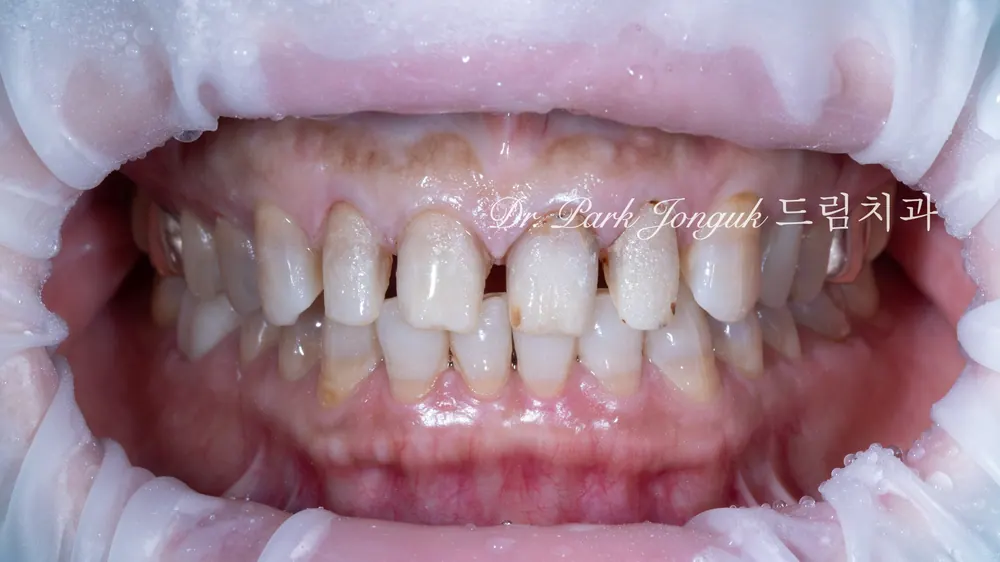
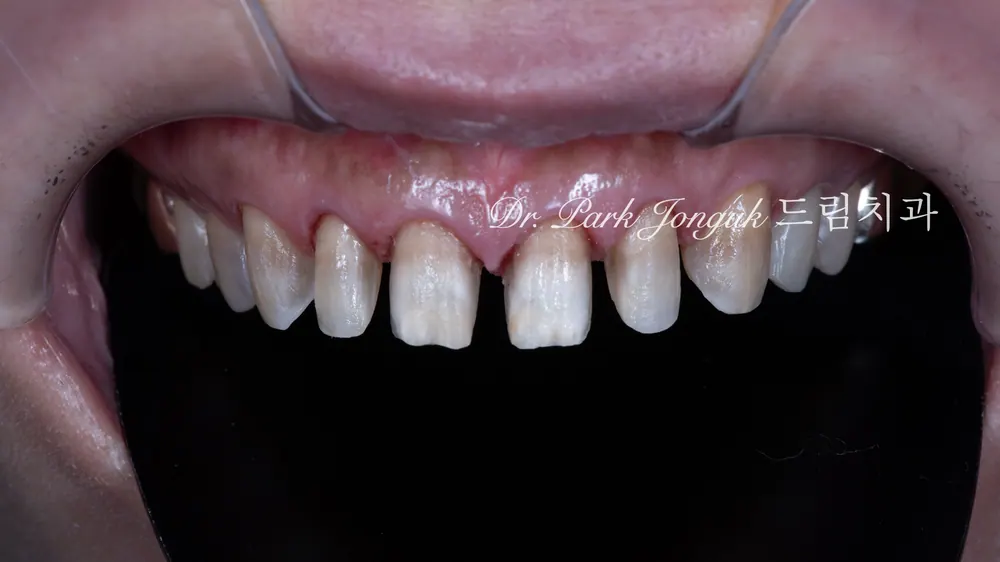
For veneer retreatment, we use a laser to remove the existing veneers.
Simply grinding the veneers off can damage the tooth,
so removing them with a laser minimizes damage to the tooth the most.
Once they've been removed for retreatment like this,
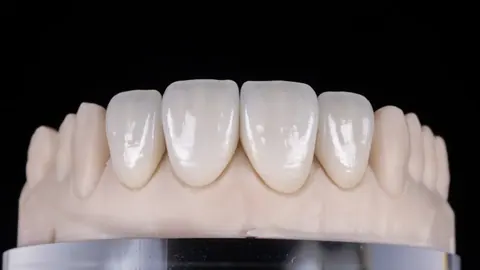
we begin fabricating the new veneers in ceramic.
Because veneer treatment itself uses such a thin layer of ceramic,
it has to be made up of multiple layers — translucent and opaque —
so that it can cover the discoloration
while still making the tooth look bright and translucent.
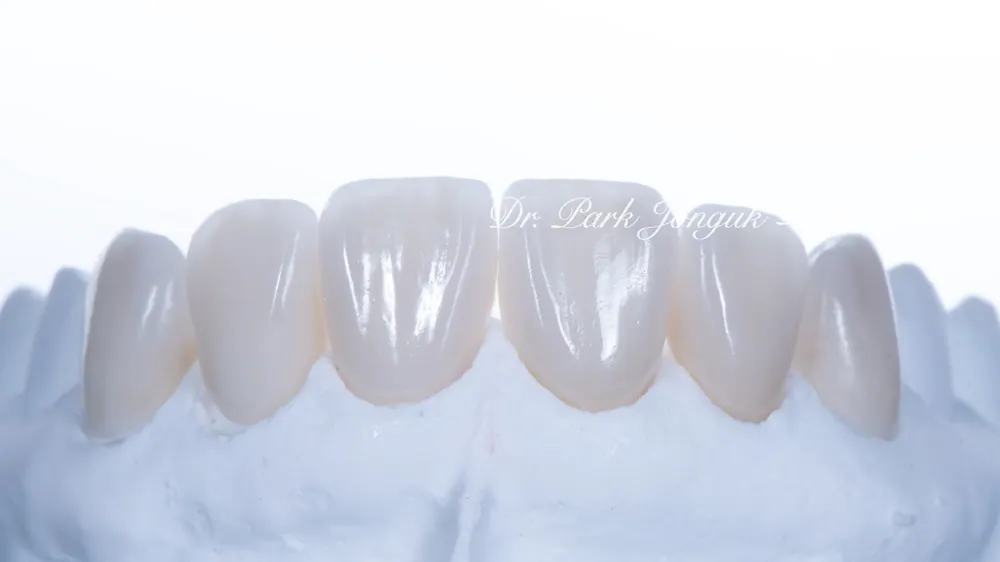
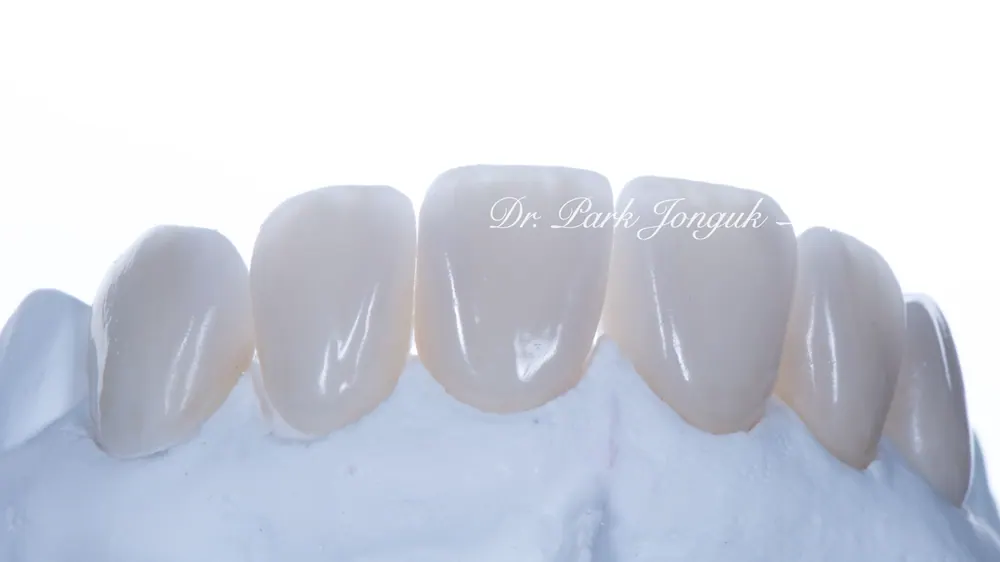
On the darker side of the tooth,
an opaque layer is added,
and yellow staining is applied on top of it to raise the chroma.
A translucent layer is added at the tip of the tooth
to express a young, beautiful tooth.
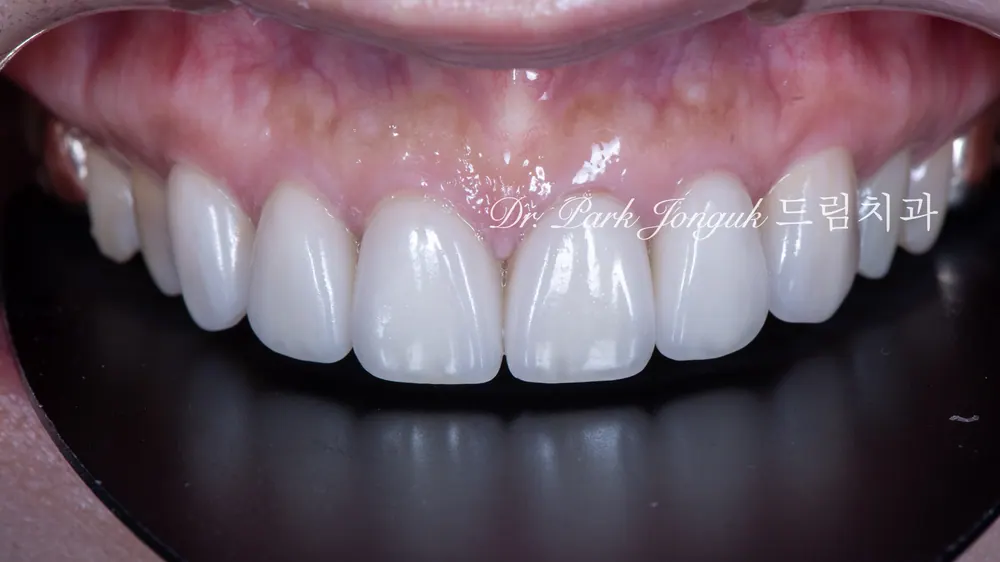
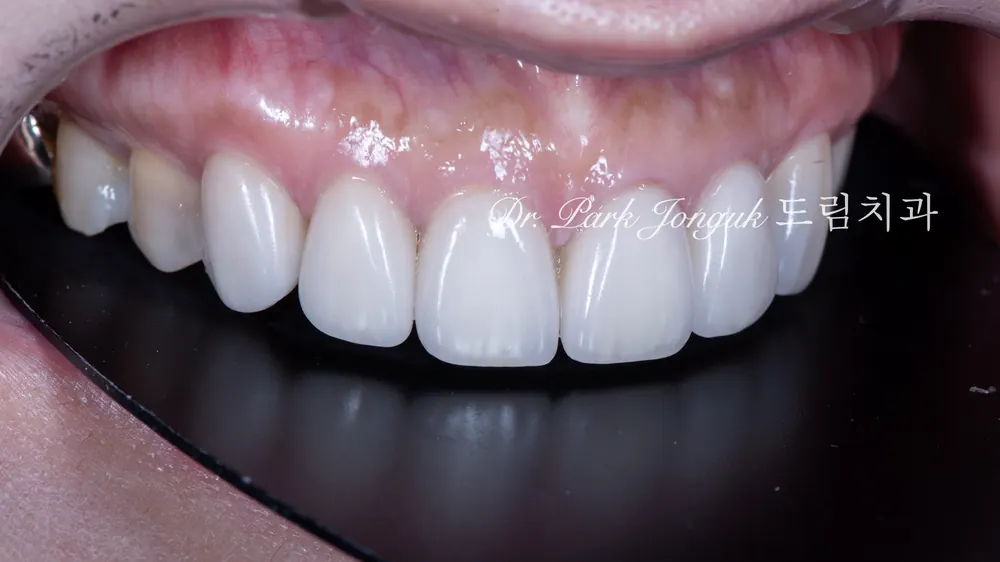
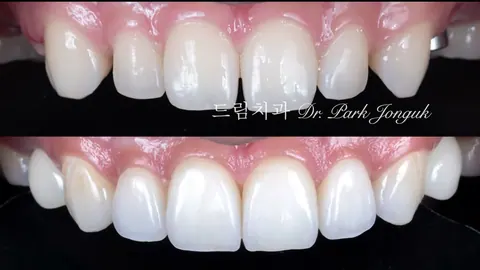
The veneer retreatment has been completed.
The tooth color is bright, clear, and translucent.
The tooth discoloration is effectively covered,
so there's no drop in chroma.
Only a multi-layered ceramic veneer
can achieve a result like this.
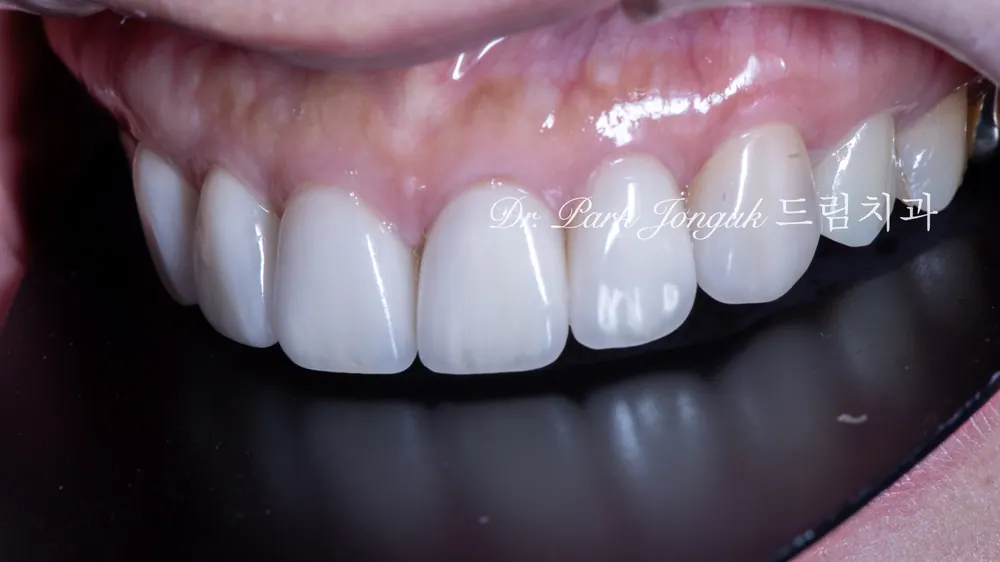
The shape of the teeth as well
clearly conveys the feel of natural teeth,
and the result is teeth that anyone can see are young, bright, and beautiful.
Natural beauty.
Since 2006, Dream Dental Clinic
This article is a clinical note written by Dr. Park Jonguk of Dream Dental Clinic, Gangnam; the original was published on his blog. The photographs shown are real cases he treated. Results vary with each patient’s condition, and every procedure carries the possibility of individual variation and side effects.
Quick Consult
Request a Callback
Leave your number and we will call you back during clinic hours.
Request Received
We will contact you during clinic hours. For urgent matters, please call +82-2-3448-0028.